European Starlings: Why They Swarm and How to Deter Them
Contents[hide]
European starlings are an invasive species in North America that descends in huge flocks, bullies native birds out of nest holes, fouls buildings with droppings, and strips fruit crops. Because they are not native, starlings have no federal protection and can be controlled legally. The fix is sealing cavities and making feeders and roosts unwelcoming.
In this article, we’ll cover how to identify European starlings, why they are so aggressive at feeders and vents, and how to legally remove their nests.
How to Identify a European Starling
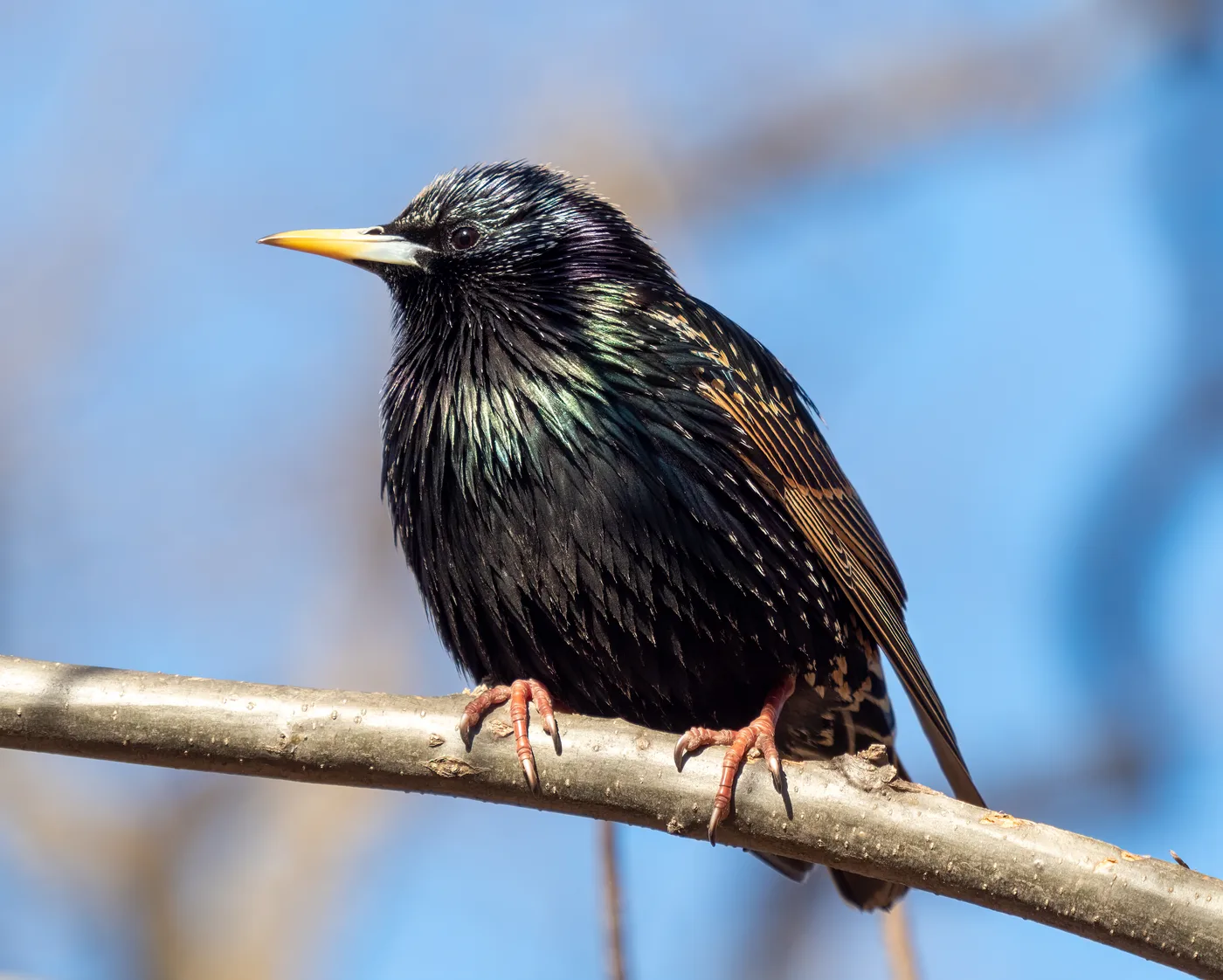
A starling is a chunky, short-tailed, blackbird-shaped bird with a fast, waddling walk. In summer the plumage is glossy black with a green and purple sheen, and the bill turns bright yellow. In winter the same bird looks browner and is covered in white speckles, and the bill goes dark.
People often mix starlings up with blackbirds and grackles. Starlings are smaller and stubbier with a much shorter tail. In flight their wings look pointed and triangular. A lone bird is easy to miss.
It is the enormous, wheeling flocks that give them away.
Why Starlings Are a Problem
The damage shows up at scale. They gather in flocks of hundreds or thousands that foul buildings, sidewalks, and feeders with droppings, and a big winter roost is loud and filthy. The droppings piling up under a large roost can harbor the fungus behind histoplasmosis, and near airports the flocks are a real aircraft-strike hazard.
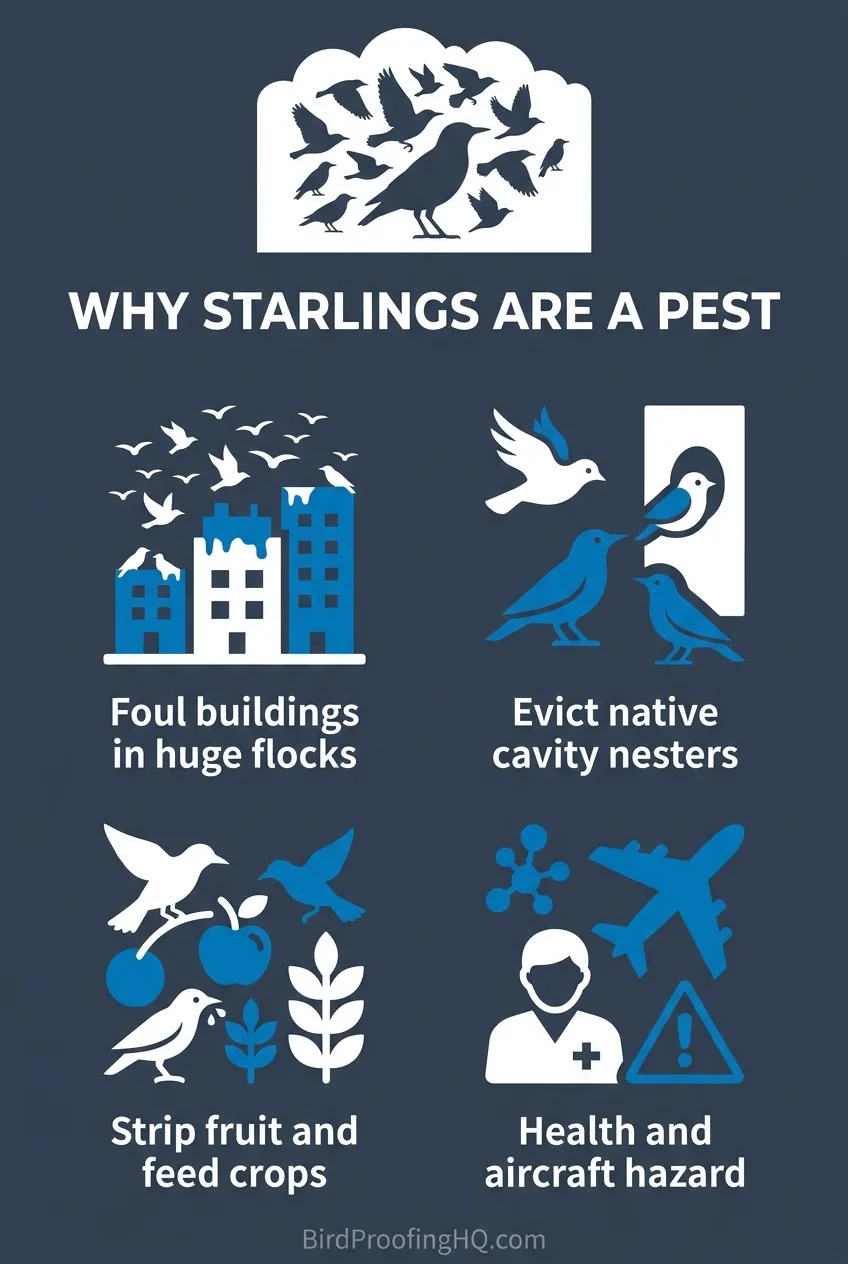
On farms the damage is worse. They strip fruit and berry crops and raid livestock feed right out of the trough. Worst of all for backyard birders, they are aggressive cavity nesters. They evict native birds like bluebirds, woodpeckers, and tree swallows from nest holes and boxes.
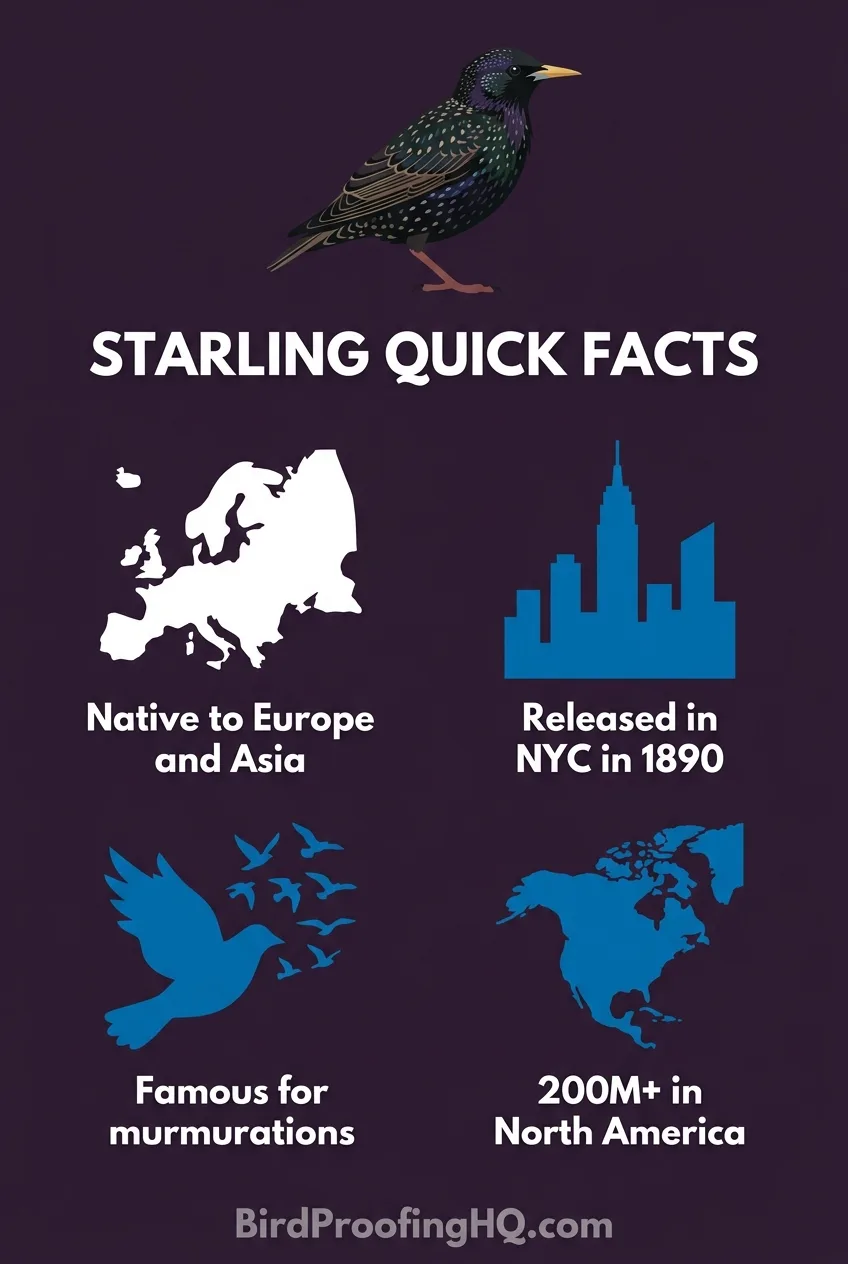
A starling will fight a smaller native bird for a cavity and usually win, which pushes down the species that cannot compete. The Cornell Lab of Ornithology tracks how far they have spread since that first NYC release.
What Starlings Eat
These birds eat almost anything, and that adaptability is a big reason they spread so fast. In spring and summer they hunt insects and grubs, probing short grass with their bills, so lawns, pastures, farms, and golf courses draw them in. The rest of the year they switch to fruit, grain, seeds, livestock feed, and human scraps. At feeders they go straight for suet, cracked corn, and cheap mixed seed.
When Starlings Gather
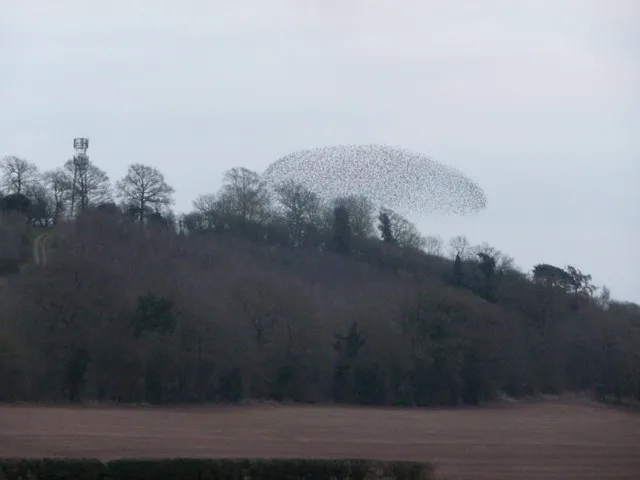
Fall and winter are the worst seasons. Once breeding ends, they merge into communal roosts. A single roost can hold tens of thousands of birds, sometimes far more, packing into a stand of trees, a reed bed, or a warm building ledge for the night. The famous murmurations happen in the minutes before they drop in to roost, when the whole flock wheels and folds across the sky to throw off hawks and falcons.
Those big roosts are where most complaints start. Droppings pile up fast underneath, the noise runs from before dawn to after dusk, and the sheer mass of birds strips nearby feeders and fields. The roost cycle is worth knowing. Break up a roost early, before thousands of birds commit to the spot, and it scatters far more easily than it will once deep winter sets in.
Are Starlings Protected?
No. Unlike almost every other bird in the US, the starling has no legal protection, because it is non-native and invasive. Control is legal. Even so, humane exclusion is the smart approach, since killing a few birds does nothing about the flock.
Because they are unprotected, you can legally clear a starling nest or eggs from a vent or nest box at any time of year. That is the rare case where touching an active nest is allowed. Even then, sealing the empty cavity beats pulling the nest. Remove a nest from an open hole and the next pair just moves in, while a sealed vent ends the problem for good.
How to Keep Starlings Away
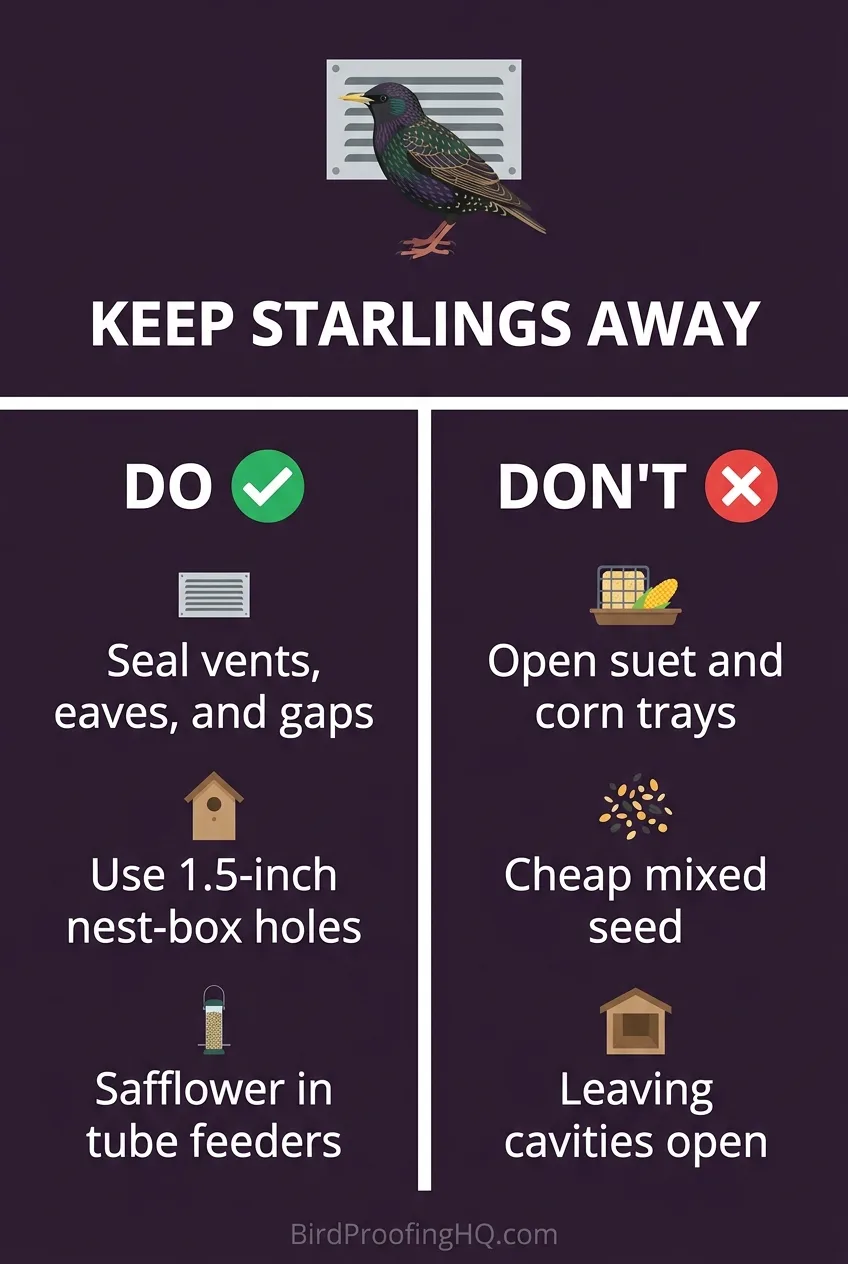
The fix is exclusion plus cutting the food. Seal vents, eaves, and wall gaps with metal mesh so they cannot nest. For nest boxes, use an entrance hole of about 1.5 inches, which lets bluebirds in but keeps starlings out.
Switch to safflower seed and tube feeders with short perches, which starlings struggle with. Skip the cracked corn and open suet trays they flock to. Upside-down suet feeders help too, since starlings dislike feeding head-down while woodpeckers and chickadees manage it fine. The same logic scales up on a farm: cover feed troughs, sweep up spillage, and net fruiting trees before the flocks find them.
For a big winter roost, the goal is to make the trees uncomfortable so the flock disperses to a less annoying spot. Thinning the roost trees, hanging reflective deterrents, and playing recorded starling distress calls at dusk all help move them along. No single trick clears a roost on its own, so combine a few. Larger roosts may need the full starling removal plan.
Images: European starling by Rhododendrites, CC BY-SA 4.0. Starling murmuration by Jeremy Bolwell, CC BY-SA 2.0. Both via Wikimedia Commons. Infographics by BirdProofingHQ.
.jpg)

Free: The 5-Step Bird-Proofing Checklist
Work through the right steps in the right order, before spending money on the wrong deterrents. Printable PDF, straight to your inbox.
No spam. Unsubscribe any time.