How to Get Rid of Woodpeckers (Humane Methods That Work)
Contents[hide]
- 1. Why Woodpeckers Peck Your House
- 2. Fix the Food Source: Bugs and Rotting Wood
- 3. Offer a Better Option: Suet and Feeders Away From the House
- 4. Scare Them Off: Reflective Objects and Noise
- 5. Block the Wall: Physical Barriers
- 6. Repair the Damage
- 7. Give Them Somewhere Else to Nest
- 8. When to Call a Professional
- 9. Frequently Asked Questions
To get rid of woodpeckers, hang reflective, moving deterrents where they are pecking, then fix what drew them: patch the holes, repaint, and clear out any wood-boring insects. Put a suet feeder well away from the house so they feed there instead. Woodpeckers are federally protected, so every method here is humane and legal.
In this article, we’ll cover how to get rid of woodpeckers, why the reason they are pecking changes the fix, and which deterrents actually hold.
Why Woodpeckers Peck Your House
Woodpeckers have special feet, with two toes forward and two back, so they cling to a wall as easily as a tree. They also drum, which is a fast, loud burst of pecking used to mark territory and attract a mate. The woodpeckers species page goes deeper on telling one kind from another.
For a homeowner, the pecking comes down to three motives. The bird is feeding on insects in the wood. It is digging a nest hole. Or it is drumming on something loud, like metal flashing or a gutter, to claim territory.
Spring drumming is almost always territorial, not feeding, which is why it stops once mating season ends.
Knowing the motive saves you effort. Feeding damage means you have bugs to treat. A nest hole means you act before eggs arrive, since the nest becomes protected the moment they do. Drumming means a scare deterrent will usually do the job on its own.
Fix the Food Source: Bugs and Rotting Wood
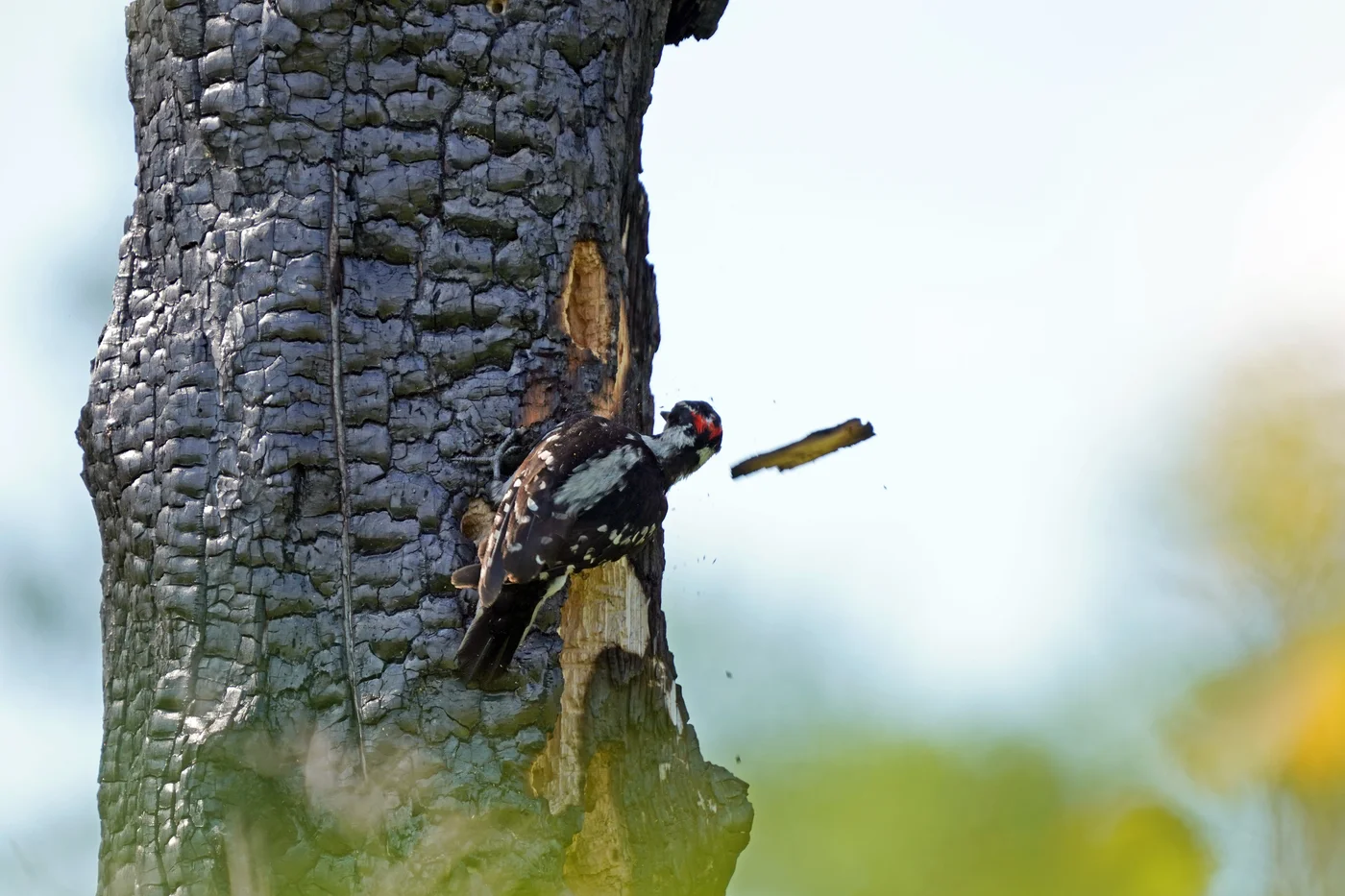
The most common reason a woodpecker keeps returning is food, usually an insect problem in the wall. Carpenter bees, wood-boring beetles, and ants all live inside siding, and a woodpecker can hear them. Clear the bugs and you remove the main draw.
Treat any insect infestation, or call a pest control company if it is widespread. Replace rotting or soft wood, since it both holds bugs and pecks easily. Remove dead trees and dead limbs near the house, because that is where the insects breed first.
Insecticides have limits. They can hit beneficial insects, and they often fail on a heavy infestation inside a wall. Still, dealing with the bugs is what keeps the birds from coming back, so it is worth doing properly rather than spraying once and hoping.
Offer a Better Option: Suet and Feeders Away From the House
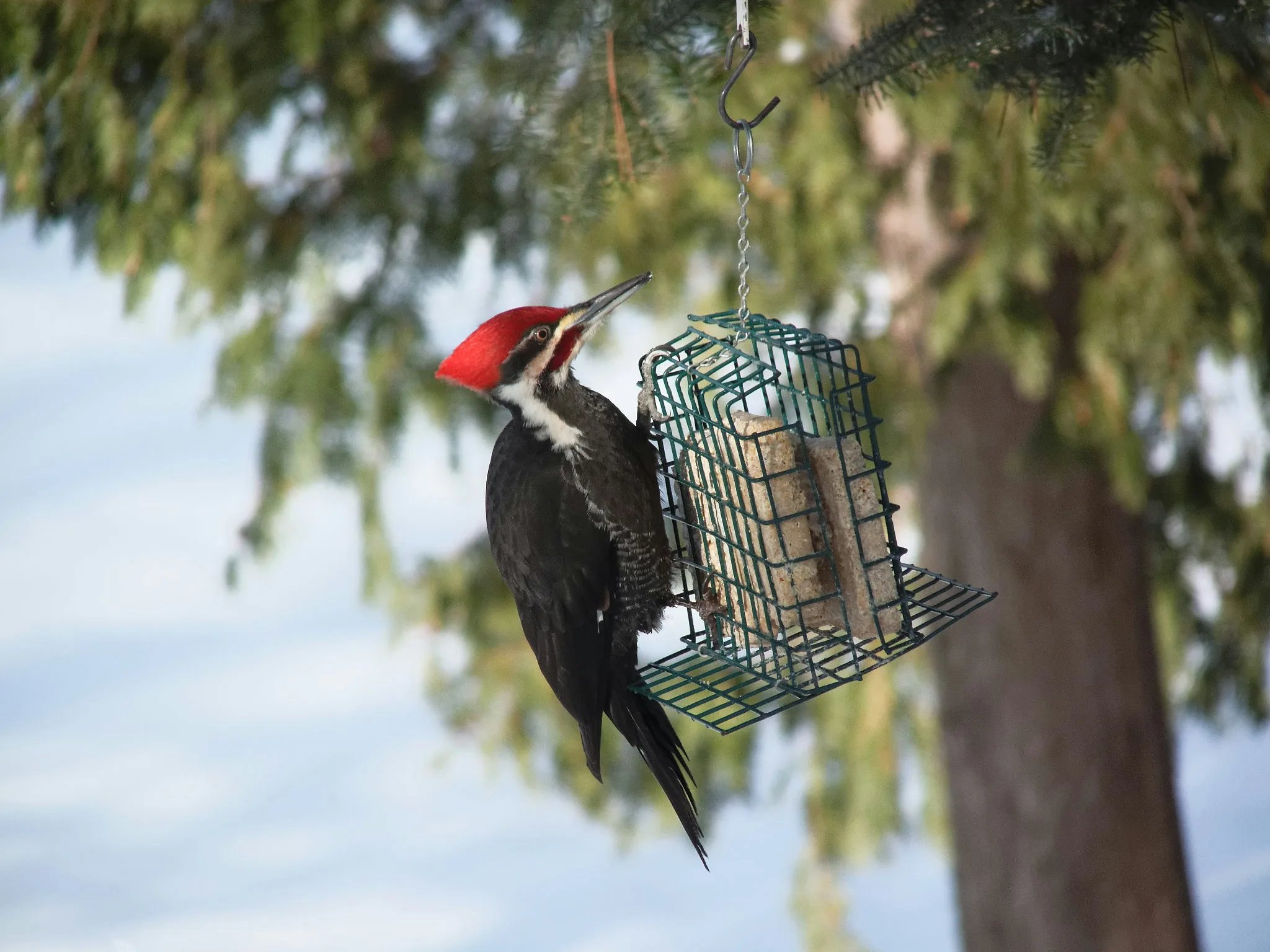
Sometimes the simplest fix is to give the woodpecker somewhere better to eat. Suet is the block of fat you hang out for clinging birds, and woodpeckers love it. A suet feeder placed well away from the house pulls them off your siding and toward the feeder instead.
Berry bushes and fruit trees planted away from the wall do the same job over time. Stock a feeder with their favorites too: black oil sunflower seeds, mealworms, and peanuts. Keep all of it at the far end of the yard, not next to the wall you are trying to protect, or you just invite them closer.
Scare Them Off: Reflective Objects and Noise
Reflective and Moving Deterrents
Reflective, moving objects are the fastest deterrent for a bird that is drumming or testing a spot. Hang reflective tape, old CDs or DVDs on strings, foil strips, pinwheels, or Mylar balloons right where the woodpecker is active.
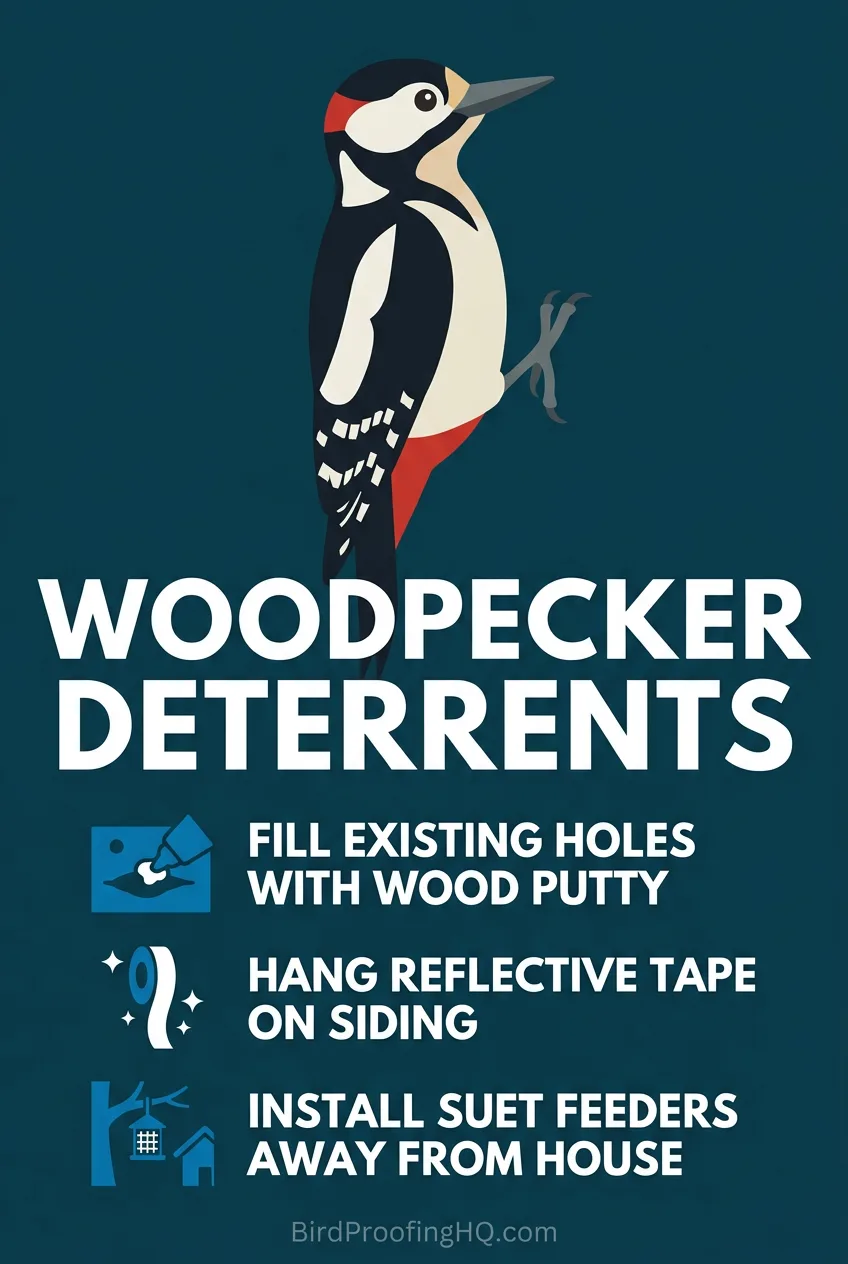
The flashes of light and constant movement make the wall feel exposed and unsafe. Reflective tape near a fresh hole also crinkles in the wind, which adds to the effect. Hang a few extra pieces near the spots they favor, and move everything every few days so the birds do not learn it is harmless.
Sound Deterrents
Sound helps too. A sudden clap, an electronic noisemaker, or wind chimes will startle a working bird. Recorded predator calls or woodpecker distress calls make the area feel dangerous, and a bird that hears alarm signals over and over looks for quieter ground. Keep noise deterrents to daylight hours so you do not annoy the neighbors.
Block the Wall: Physical Barriers
When a woodpecker keeps hitting one spot, deny it a foothold. Bird netting hung a few inches off the wall stops the bird from reaching the surface at all. Burlap or hardware cloth works on smaller areas. Fasten any barrier to the exterior with nails, screws, or clips so there is no gap behind it.
Predator decoys add pressure. Life-sized plastic owls, fake hawks, and rubber snakes near the damage will spook a woodpecker, at least for a while. Move the decoys every few days, or the birds quickly figure out they never move and ignore them.
Repair the Damage
Repair the holes and the bird loses both its food and its drum. Fill the holes and drill marks in your wood siding with wood putty or a filler stick, sand it smooth, and repaint so the patch matches. Fresh paint also makes the siding less appealing.
Cedar siding is the stubborn case, because a woodpecker will reopen old holes if it can find them. Seal every one, then treat the carpenter bees or wood-boring bugs underneath. Move fast, before rot or splitting invites a second round of insects and starts the cycle over.
Give Them Somewhere Else to Nest
If the bird is drilling a nest hole, a nest box can redirect it. Put up a box built for woodpeckers, mounted on a tree trunk away from the house, near a tree that already shows pecking. That mimics the spot they would choose naturally.
Match the box to the species, since each woodpecker needs a different size, so confirm which bird you have first. A feeder, fruiting trees, and seed-bearing flowers nearby make the new site more appealing than your wall. For the broader timing on protected birds, treat a nest hole the same way you would any nesting problem and act before eggs appear.
When to Call a Professional
If you have tried several methods for at least four weeks with little success, or the damage is getting costly, it is time to call a pro. A wildlife or pest control company will confirm the cause first. Pecking that wrecks siding is often a red-headed woodpecker or a northern flicker drumming for a mate, not feeding.
Every woodpecker in the US is protected under the Migratory Bird Treaty Act, so it is a federal offense to kill, trap, or harm one without a permit. As a last resort, and only for serious structural damage, the US Fish and Wildlife Service can issue a depredation permit (special permission to act against a protected bird). That is special permission to act against a protected bird, and a wildlife service handles the process. Skip woodpecker deterrent sprays, since they can be toxic to the birds and do little that reflective tape and repairs do not do better.
Frequently Asked Questions
How do you get woodpeckers to stop pecking at your house?
Hang shiny, moving objects where the woodpeckers are working: reflective tape, old CDs, pinwheels, or Mylar balloons. The flashes and movement make the spot feel unsafe, and most birds move on within a few days. Pair it with patching the holes and clearing any bugs in the siding so they have no reason to come back.
Why is a woodpecker pecking my house?
Three reasons: it is hunting insects in your siding, drilling a nest hole, or drumming to mark territory and attract a mate. Loud spring drumming on metal gutters or trim is usually territorial, not feeding.
What time of day do woodpeckers peck?
Mostly early morning. In spring they drum on whatever is loudest, like metal pipes, gutters, and flashing, because the sound carries farther and warns off rivals.
What are some effective methods for discouraging woodpeckers?
Scare them with reflective tape and movement, and wrap or net the wood they target. Patch the holes, treat the bugs that draw them, and put a suet feeder well away from the house as a decoy.
How can I eliminate food sources that attract them?
Woodpeckers come for the insects in your wood. Treat carpenter bees and wood-boring bugs, replace any rotting wood, and clear out dead limbs and trees where those insects breed.
If woodpeckers are not your only visitors, the how to get rid of birds hub covers every species we write about.
Images: Hairy woodpecker excavating a burned tree by USFWS Midwest Region, public domain. Infographic by BirdProofingHQ.
.jpg)
Free: The 5-Step Bird-Proofing Checklist
Work through the right steps in the right order, before spending money on the wrong deterrents. Printable PDF, straight to your inbox.
No spam. Unsubscribe any time.