Woodpeckers: Why They Drill and How to Stop the Damage
Contents[hide]
Woodpeckers are black-and-white birds that drill into wood to find insects, excavate nest holes, or drum to claim territory. The most common house-pest species are the downy, hairy, and northern flicker. They are federally protected under the Migratory Bird Treaty Act, so any fix has to be humane.
In this article, we’ll cover how to identify the woodpeckers most likely on your house, why they are pecking, and the fixes that actually stop them.
The Woodpeckers You Are Most Likely to See
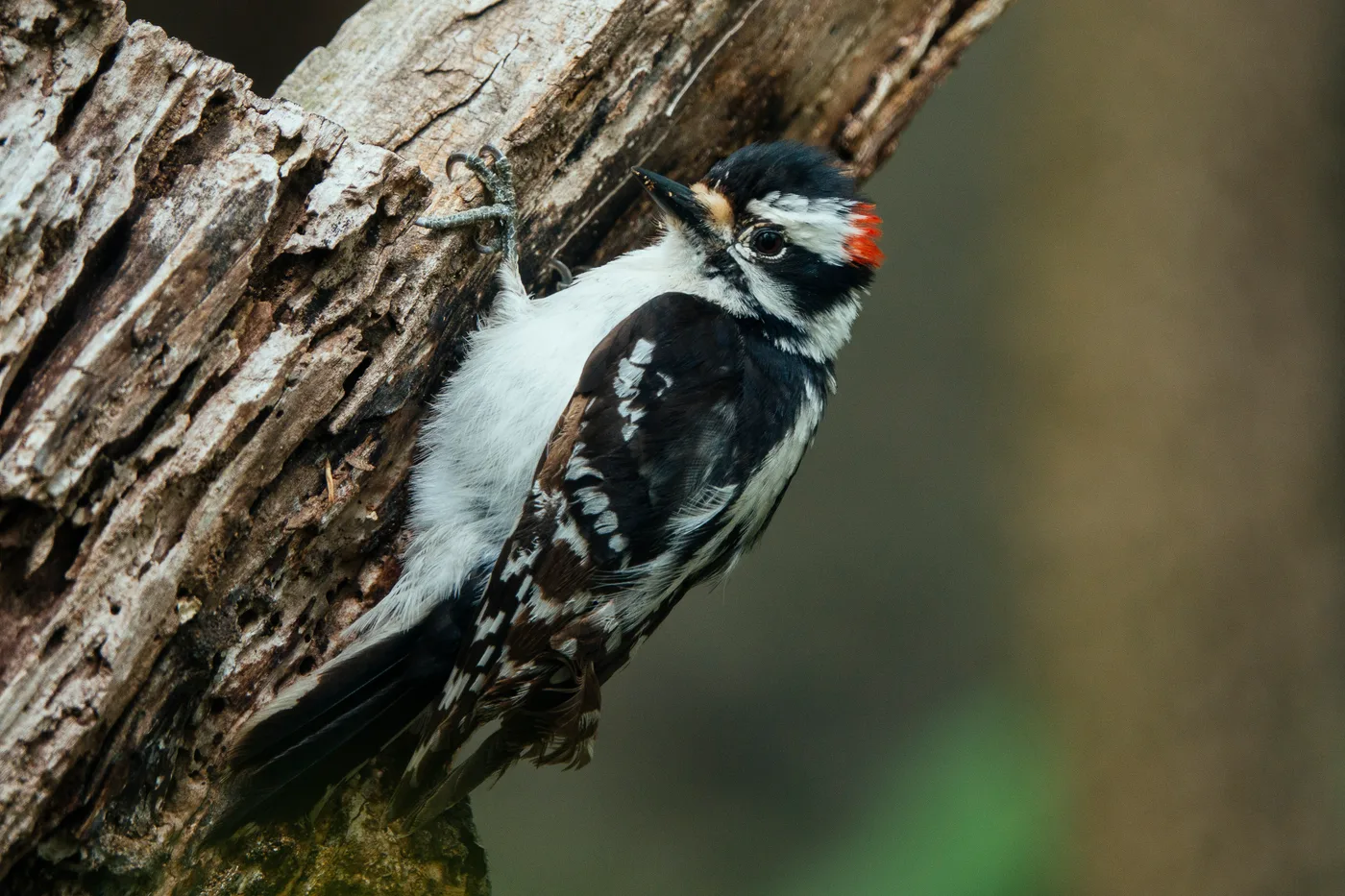
Four show up around homes in the US. The downy woodpecker is the smallest, about six inches, black and white with a short bill, and the tamest at feeders. The hairy woodpecker looks almost identical but is bigger, around nine inches, with a longer, heavier bill. The northern flicker is a large brown woodpecker that often feeds on the ground, where it digs for ants.
The pileated woodpecker is the giant of the group, nearly crow-sized with a flaming red crest. It chisels big rectangular holes in dead wood. Knowing which one is on your siding helps. A small downy is mostly harmless, but a pileated can do real damage.
Why Woodpeckers Peck on Houses
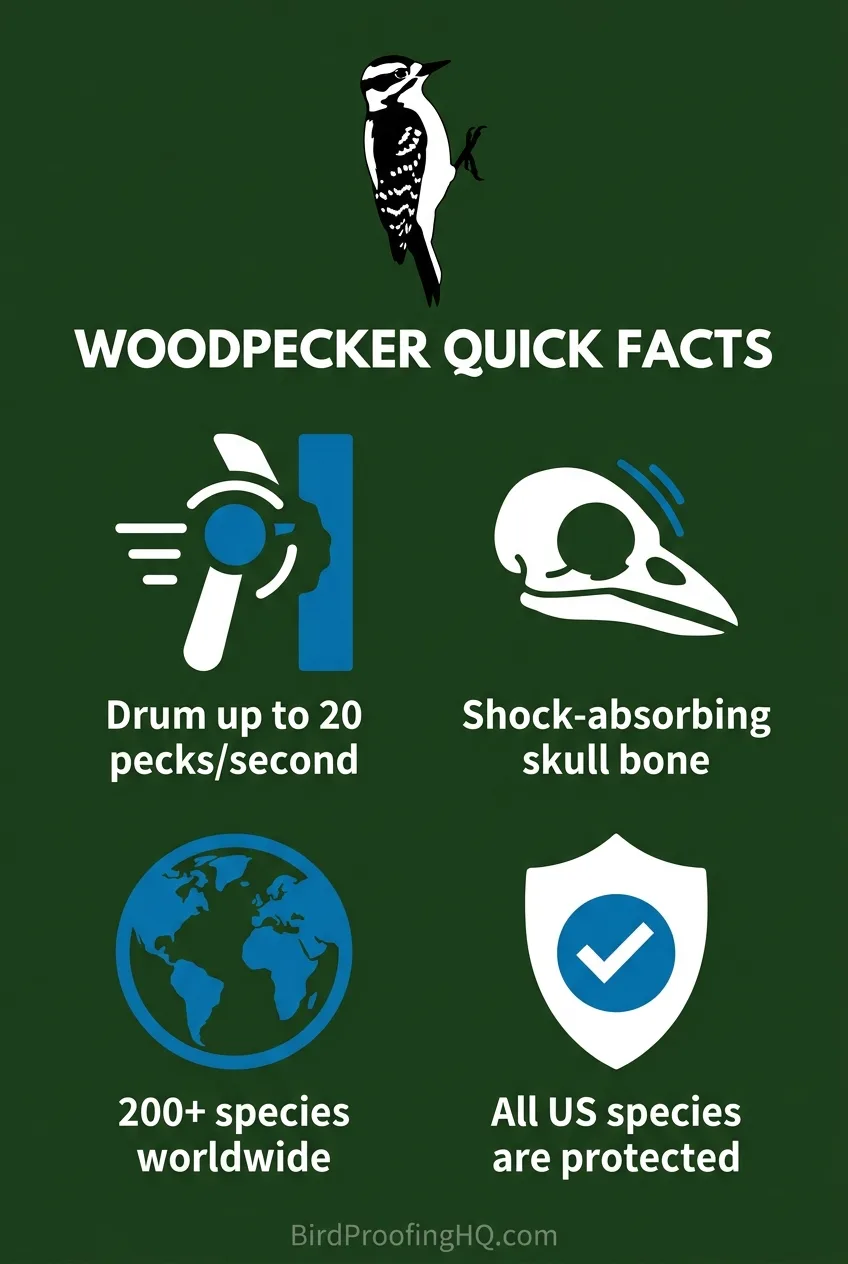
There are three reasons, and each needs a different fix. Drumming happens in spring, when males hammer on anything loud, even metal flashing and gutters, to claim turf and attract a mate. Feeding is the reason a bird chips at siding, usually because insects like carpenter bees or beetle grubs are living inside. Nesting is the deepest damage: a rounded hole dug into the wall.
The Cornell Lab of Ornithology is a good place to identify which bird is doing it.
What Woodpeckers Eat
Woodpeckers are mostly insect eaters, and that is the key to why they hit houses. Their favorites are carpenter ants and the wood-boring beetle larvae living inside trees and siding. They also take sap, nuts, berries, and suet from feeders. If a woodpecker drills one spot over and over, bugs are usually living in the wood there.
Treating the insects often ends the pecking.
Where Woodpeckers Nest and Roost
Woodpeckers chisel a fresh nest cavity each spring, usually in a dead or dying tree. Many also dig separate roosting holes to sleep in over winter. Those abandoned holes later become homes for other birds like bluebirds and small owls.
The trouble starts when a woodpecker decides your siding or a wooden post is a fine substitute for a dead tree. Then it begins digging a cavity in the wall.
Are Woodpeckers Protected?
Yes. Every woodpecker in the US is protected under the federal Migratory Bird Treaty Act, so you cannot harm the bird or disturb an active nest. That rules out lethal control and means the answer is always deterrence and repair.
How to Stop Woodpecker Damage
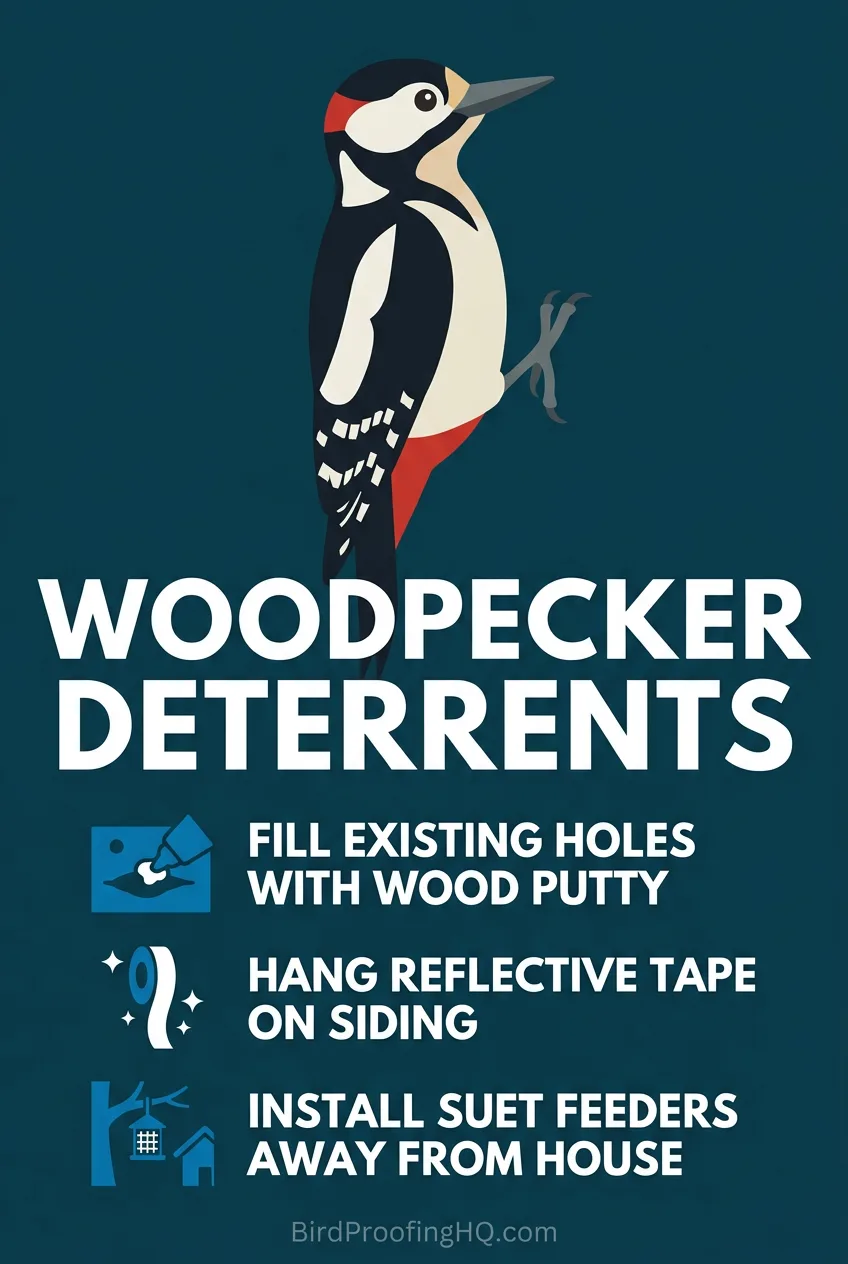
Match the fix to the reason. If bugs are the draw, treat them so the buffet closes. Repair and cover holes so the wood stops being easy. Then hang reflective tape or another moving deterrent over the spot while the bird looks elsewhere.

Skip a plastic owl that never moves; a woodpecker learns it is fake within days. Then work through getting rid of woodpeckers for the full method by damage type.
Images: Downy woodpecker on a tree by Mvrcie, CC BY-SA 4.0. Via Wikimedia Commons.

Free: The 5-Step Bird-Proofing Checklist
Work through the right steps in the right order, before spending money on the wrong deterrents. Printable PDF, straight to your inbox.
No spam. Unsubscribe any time.