Bird Repellent Tape: Does Reflective Flash Tape Work?
Contents[hide]
Reflective flash tape is cheap, humane, and works well on skittish birds for the first few weeks. Hang twisted strips where they catch sun and wind so each one spins and crackles. Bolder birds get used to it fast, so pair it with netting or spikes for anything lasting.
In this article, we’ll cover how to hang bird repellent tape so it lasts, which birds it actually moves, and what to pair it with.
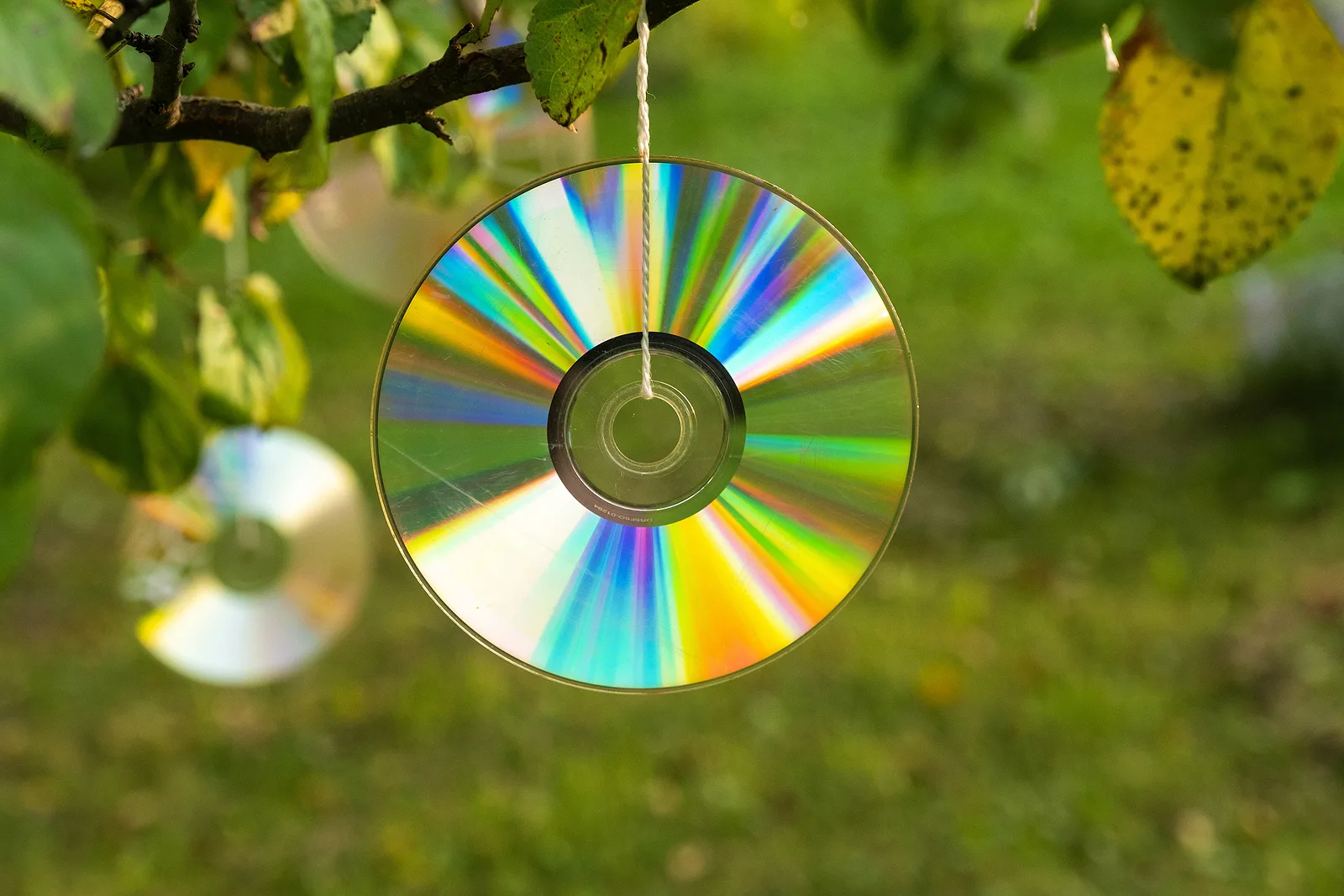
Tape is a great first try and a poor last resort. Use it for the right job and it earns its couple of dollars. Lean on it alone for a stubborn bird and you will be disappointed.
Tape is only one option in a wider family of reflective bird deterrents. Spinners, holographic rods, and scare eye balloons work the same trick from a different angle.
What Bird Repellent Tape Is and How It Works
Bird repellent tape is a thin strip of shiny material you hang where birds are a problem. Most of it is reflective Mylar, often sold as flash tape or holographic scare tape. One side is silver, the other is usually red or a rainbow sheen.
It scares birds two ways at once. In sunlight the tape throws bright, moving flashes that birds read as danger. In a breeze it twists and snaps with a metallic crackle that adds to the alarm. The light and the sound together make a spot feel unsafe, so birds move on to somewhere calmer.
The key word is moving. A strip of tape pinned flat against a wall does nothing. It has to spin and flap in open wind and full light, which is why placement makes or breaks the whole thing.
Where Reflective Tape Works Best
Tape shines outdoors, in the open, where there is sun and wind to power it. The classic jobs are fruit trees, vegetable gardens, and grape vines, where birds strip a crop right before you get to it. A few strips strung through the branches can buy a harvest some breathing room.
It also helps on patios, balconies, garden beds, and over a doorway where droppings collect. Anywhere birds perch or feed in the open is fair game. Hang the strips so they hover right over the spot you want birds to avoid, not off to the side.
Tape struggles in tight or sheltered spots. Under an eave, inside a covered porch, or in a still corner, there is not enough wind or light to keep it alive. For those places a physical barrier like spikes or netting does more than any shiny strip.
Which Birds Tape Actually Deters
Tape works best on cautious, open-country birds and worst on bold, city-wise ones. That split decides whether it is worth your time.
Skittish birds give tape the best results. Crows, swallows, grackles, and small songbirds tend to flush from the flashing and stay wary for a while. Woodpeckers are a strong case too. Hanging flash tape over a spot a woodpecker is drilling is one of the fixes Cornell Lab of Ornithology lists for siding damage.
It pairs well with the rest of a plan to stop woodpecker damage.
Bold birds are the weak spot. Pigeons and house sparrows live around people and learn quickly that nothing bad follows the flash. They may scatter for a few days, then settle right back in. If pigeons are your problem, treat tape as a stopgap and plan for a real barrier.
How to Hang Bird Scare Tape
Setup is simple, but a few details decide whether it works at all.
First, cut the roll into strips about two to three feet long. Give each strip a few twists along its length before you tie it off, so it catches the wind and spins instead of hanging stiff. Then hang the strips three to six feet apart over the area you are protecting, whether that is a row of branches, a garden bed, or a railing.
Hang them high enough to move freely and low enough to sit right over the birds’ landing spot. Leave plenty of slack. A strip pulled tight cannot flap, and a strip in the shade cannot flash. Run it where it gets direct sun for as much of the day as you can.
One more trick keeps tape working longer. Move the strips every week or two, and add or swap a few. Birds get used to a flash that never changes, so a little variety buys you more time before they ignore it.
Where Tape Falls Short
The honest weakness of tape is habituation, a fancy word for birds getting used to it. With no other change, many birds figure out within a week or two that the flashing strip is harmless. After that it is just decoration.
It also wears out. Sun and weather dull the shine and tear the strips over a few months, so plan to replace it each season. And it only guards open, breezy spots. Calm corners, covered ledges, and indoor spaces are dead zones for it.
None of that makes tape useless. It makes it a short-term tool. The fix is to rotate it, and to back it up with something birds cannot simply get bored of.
Tape vs Other Deterrents
Think of tape as the cheap opener, not the closer. It costs a few dollars and goes up in minutes, which is exactly why it is worth trying first. But every other major deterrent outlasts it.
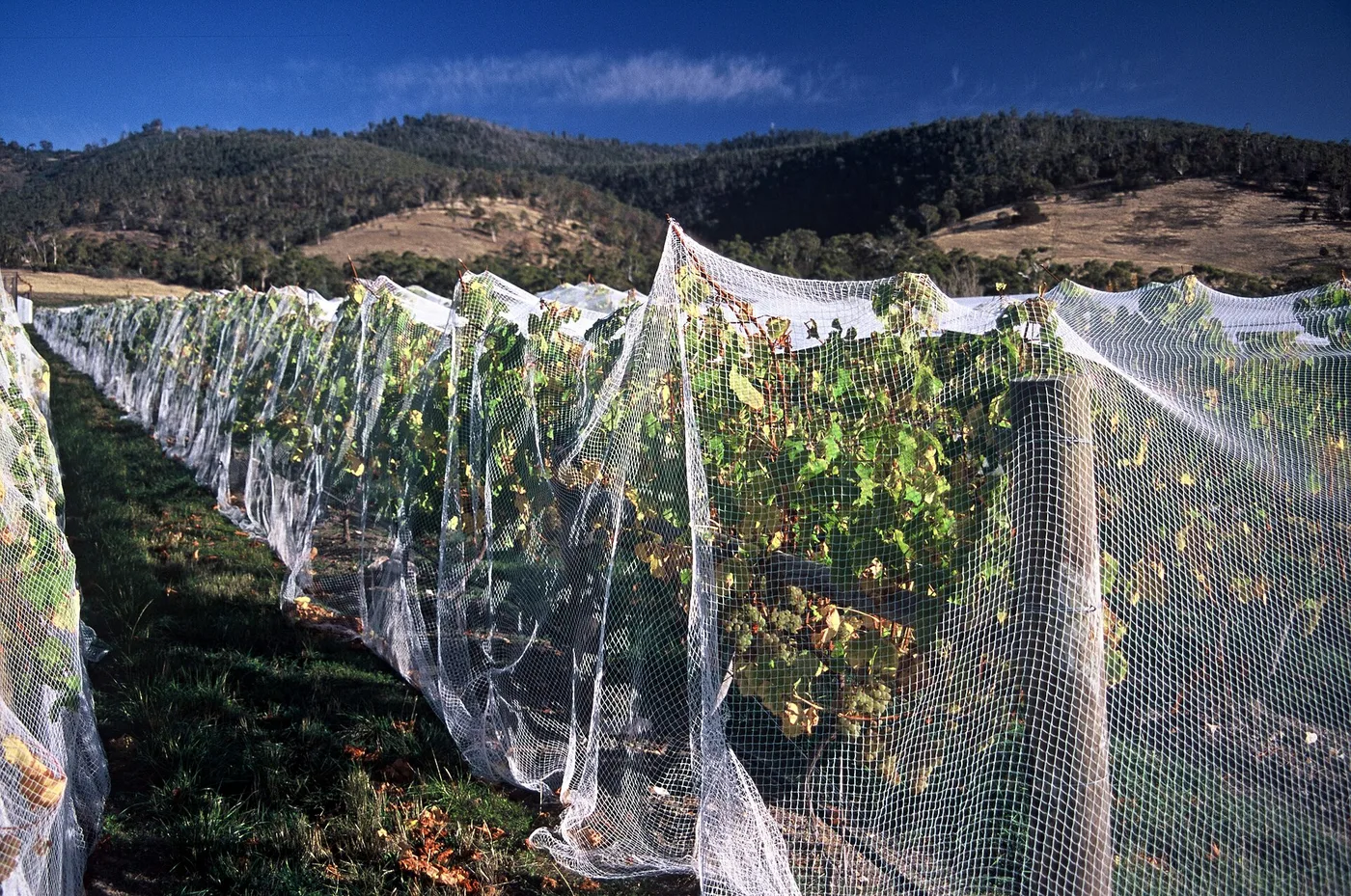
For a crop you actually want to save, draping netting over the fruit is the only method that physically keeps birds off. On a ledge or beam where birds roost, spikes that make the surface impossible to land on do what tape cannot. For a narrow railing, a sticky or optical gel holds longer than a flapping strip. And a static decoy owl fails the same way tape does, because birds learn it never moves.
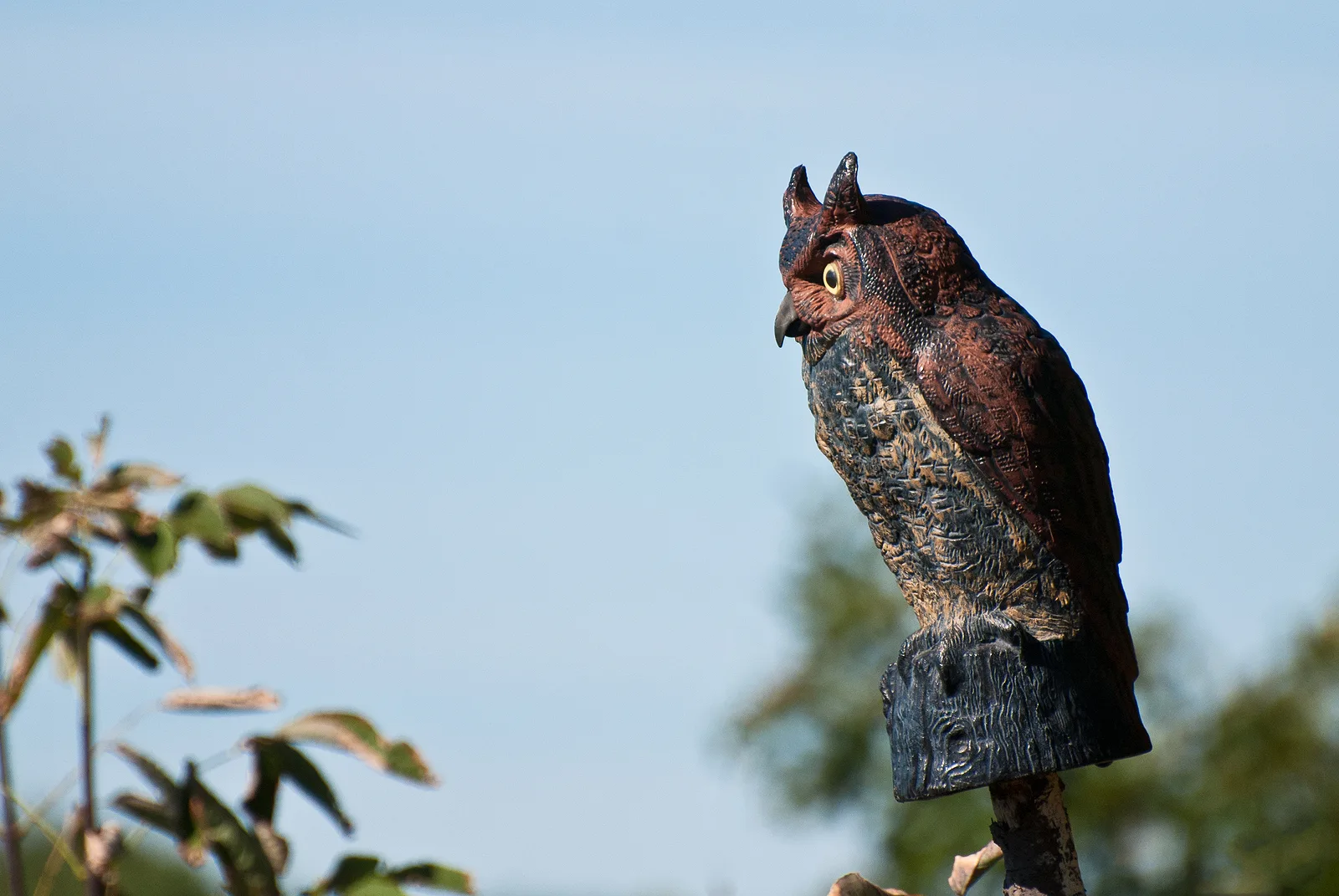
The smart play is to combine them. Use tape to scatter the birds now, then put up the barrier that keeps them gone. Layered with a scent-based repellent or other humane methods, tape becomes one tool in a kit instead of a lonely fix that fades.
Is Bird Repellent Tape Worth It?
For a few dollars, yes, as long as you know what you are buying. Reflective flash tape is a cheap, humane, fast scare that works well on skittish birds and on a fruit tree or garden in the short run. It is one of the easiest things to try when birds first show up in the garden.
Just do not expect it to win on its own. Hang it right, move it often, and pair it with a barrier for any bird that sticks around. Used that way, a cheap roll of tape pulls real weight.
Images: reflective CD and decoy owl photos via BirdProofingHQ. Bird netting on grapevines near harvest by Mark Smith, CC BY 2.0, via Wikimedia Commons.

Free: The 5-Step Bird-Proofing Checklist
Work through the right steps in the right order, before spending money on the wrong deterrents. Printable PDF, straight to your inbox.
No spam. Unsubscribe any time.