Best Bird Spikes: Do They Work and What to Buy?
Contents[hide]
- 1. How Bird Spikes Work
- 2. Stainless Steel vs. Plastic Bird Spikes
- 3. Which Bird Spikes Should You Buy?
- 4. Which Bird Species Do Spikes Stop?
- 5. Bird Spikes vs. Other Bird Control Methods
- 6. Where Bird Spikes Work Best
- 7. Bird Spikes for Commercial Buildings
- 8. Choosing the Right Size
- 9. How to Install Bird Spikes
- 10. How to Compare Bird Spike Cost
- 11. Where Bird Spikes Don’t Work
- 12. Maintaining Your Bird Spikes
- 13. Why Birds Ignore Spikes
- 14. What to Look for When Buying Bird Spikes
The best bird spikes have stainless steel tines, a firm UV resistant base, and enough rows to block the whole landing surface. They work best on narrow ledges, sills, beams, and parapets. They fail when a gap remains, debris fills the tines, or birds can land just behind them.
In this article, we’ll cover the best bird spikes for each surface, why stainless steel outlasts everything else, and the one install mistake that lets birds back in.
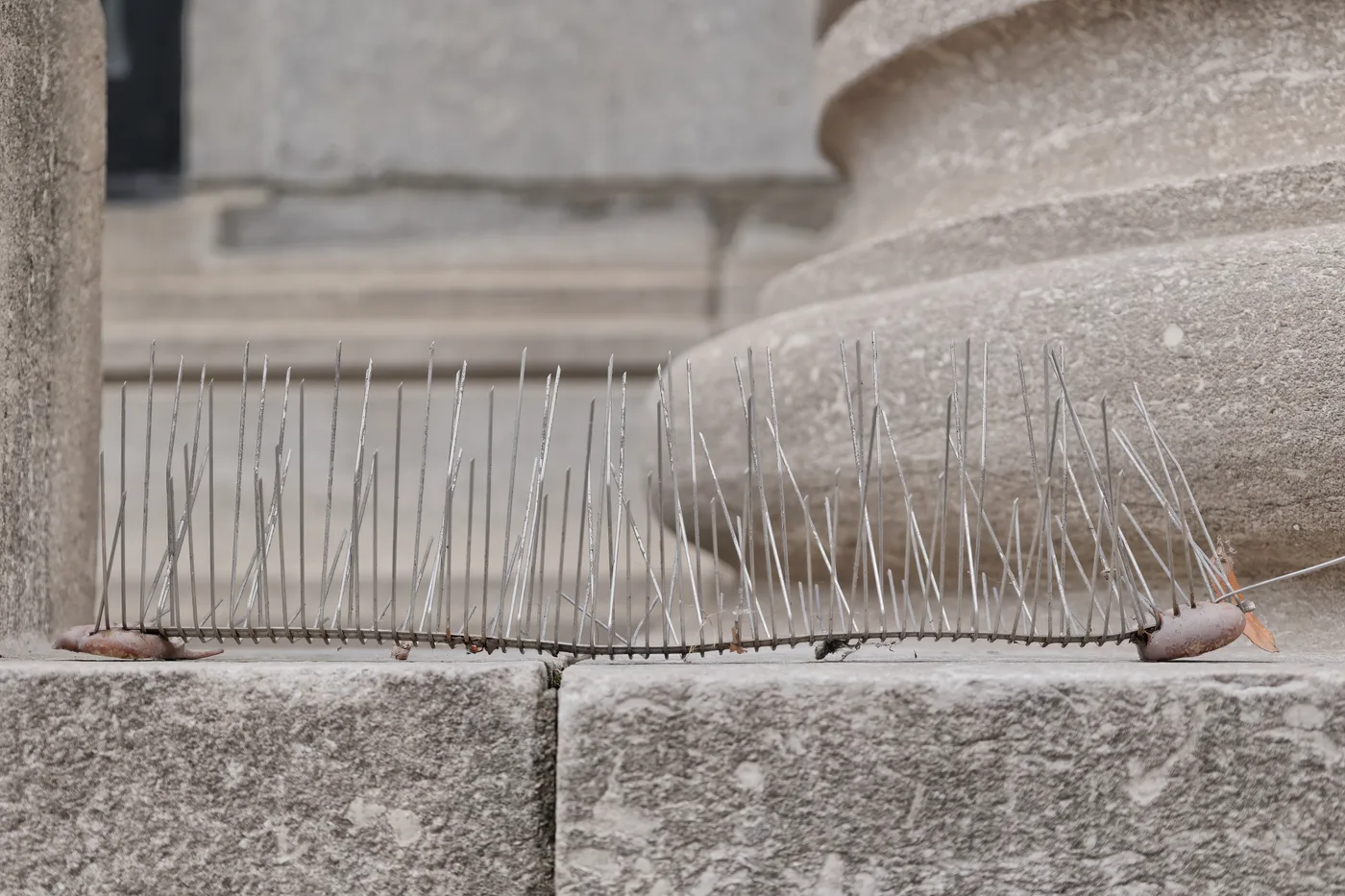
How Bird Spikes Work
Bird spikes are a physical bird deterrent. Angled steel or plastic tines take away the flat spot a bird needs to land and settle. A sound strip deters birds without trapping them or causing harm.
The spikes mount to a flat base strip, usually around 12 inches long per section. Pigeons may test the ends and edges before moving to another open perch. This is why full coverage matters more than a dramatic looking row of long tines.
Bird spikes are most effective against bird species that need a stable, elevated perch before roosting, loafing, or nesting. Pigeons, seagulls, and starlings are the primary targets. These larger birds are heavy enough that even a short row of tines makes settling on the surface awkward.
The design of the base strip matters as much as the tines. A quality base holds the tines firmly at the right angle and fits flat against the surface. It has mounting holes or a flat bottom that works with adhesive, screws, or nails.
Cheap designs use thin, flexible bases that bow in the middle. That bow creates a low point where birds can land between the tines.
Stainless Steel vs. Plastic Bird Spikes
The main product decision comes down to material: stainless steel or plastic. Both work, but the right choice depends on the installation environment, budget, and inspection schedule.
Stainless steel bird spikes are the better default for a permanent outdoor job. The metal tines handle sun and temperature changes better than one-piece plastic tines. Still, stainless grades vary, and salt air is hard on fasteners. Check the base material, adhesive, and hardware instead of judging the tines alone.
Plastic bird spikes can suit a short, easy-to-check run. Their main weakness is sun damage. A brittle or cracked tine leaves a landing gap, so plastic bird spikes need close checks in exposed spots. Dark plastic bird spikes can also become less noticeable against some rooflines, but color does not improve their durability.
Do not buy a short pack of better spikes if it leaves half the ledge open. Complete coverage with a sound strip beats premium material on one small patch.
Which Bird Spikes Should You Buy?
Start with the bird, surface, and access. Brand comes after those three checks.
- Pigeons on a narrow sill: Start with narrow or regular stainless steel. Match its coverage to the usable sill depth.
- Gulls on a parapet: Use wide, multi-row steel. Leave no landing line in front or behind it.
- Starlings on a beam: Choose dense rows or another barrier. Cover nearby beams and small gaps too.
- Sparrows in a recess: Use netting or another full barrier. Spikes may support their nest material.
- Pipe or round rail: Pick a narrow base with tie points. Make sure it cannot roll aside.
- Wide flat roof or deck: Skip spikes. Birds can walk around a strip on an open surface.
Count every straight run, corner, downpipe, and break before ordering. Add a small allowance for cuts and damaged pieces. Do not assume the pack length equals the usable length after fitting around obstacles.
Which Bird Species Do Spikes Stop?
Bird spikes are a broad tool, but bird behavior and body size affect the result. Knowing which bird species the spikes will stop, and which they won’t, helps you pick the right product.
Pigeons are the primary target for most spike installations. Pigeons are heavy birds that need a solid, flat landing surface. They can’t hover, and they need a stable spot before they can roost or build nests. Spikes take that stable spot away, so they work especially well on pigeons.
Seagulls are larger birds with a similarly strong need for a flat landing surface. Seagulls roosting on parapets, rooftops, and balcony railings cause substantial damage with their waste. Wide-format spikes (five inches or wider) are the correct choice for seagull control. Narrow bird spikes designed for pigeons may leave gaps wide enough for a seagull to settle on.
Starlings are medium-sized pest birds that roost in large flocks. A single spiked ledge won’t move a flock, since the rest of the birds just shift to the next open ledge over. Spiking the whole roof line at once, not one ledge at a time, is what actually moves them off the building.
Sparrows and other smaller birds can sometimes squeeze between tines, or use the spikes as a frame for a nest. Spikes with tighter tine spacing help, but for a heavy sparrow infestation, netting is usually the better fix. It acts as a full barrier for smaller birds, not just a landing deterrent.
Crows and ravens are smart birds. Birds quickly adapt when part of a favorite ledge remains open. A crow will walk the edge of a spiked ledge looking for a gap, then hop to any bare spot it finds. They’re patient testers, more so than pigeons or starlings, so check back after the first week to confirm they haven’t found one.
Swallows, robins, and other protected native birds need a nest check before any work starts. The U.S. Fish and Wildlife Service says you cannot destroy a nest with eggs or chicks. Young birds may also depend on a nest after leaving it. Stop work and get local wildlife advice if you are unsure.
Bird Spikes vs. Other Bird Control Methods
Some homeowners consider barbed wire as a cheaper alternative to bird spikes. Other traditional methods include reflective tape and chemical sprays, but those address different settings and often require repeated attention. Barbed wire is inexpensive and widely sold, but it doesn’t work well as a bird deterrent.
Wire is designed to prevent large animals from crossing a barrier, not to prevent birds from perching. The spacing between barbs is wide enough for most birds to land comfortably. Pigeons routinely perch on wire tops without difficulty.
Wire also rusts quickly in outdoor conditions, creating an eyesore without solving the bird problem. It can also harm birds that get tangled in it, which is another reason pest control professionals avoid it as a deterrent.
Stainless steel bird spikes are built specifically to keep birds from settling on a surface. The tine spacing, tine angle, and base design give birds no stable foothold. This bird deterrent solves the problem barbed wire doesn’t, and without the rust or the risk of a tangled bird. For narrow ledges used by larger birds, it is a more targeted bird deterrent than moving visual devices.
Where Bird Spikes Work Best
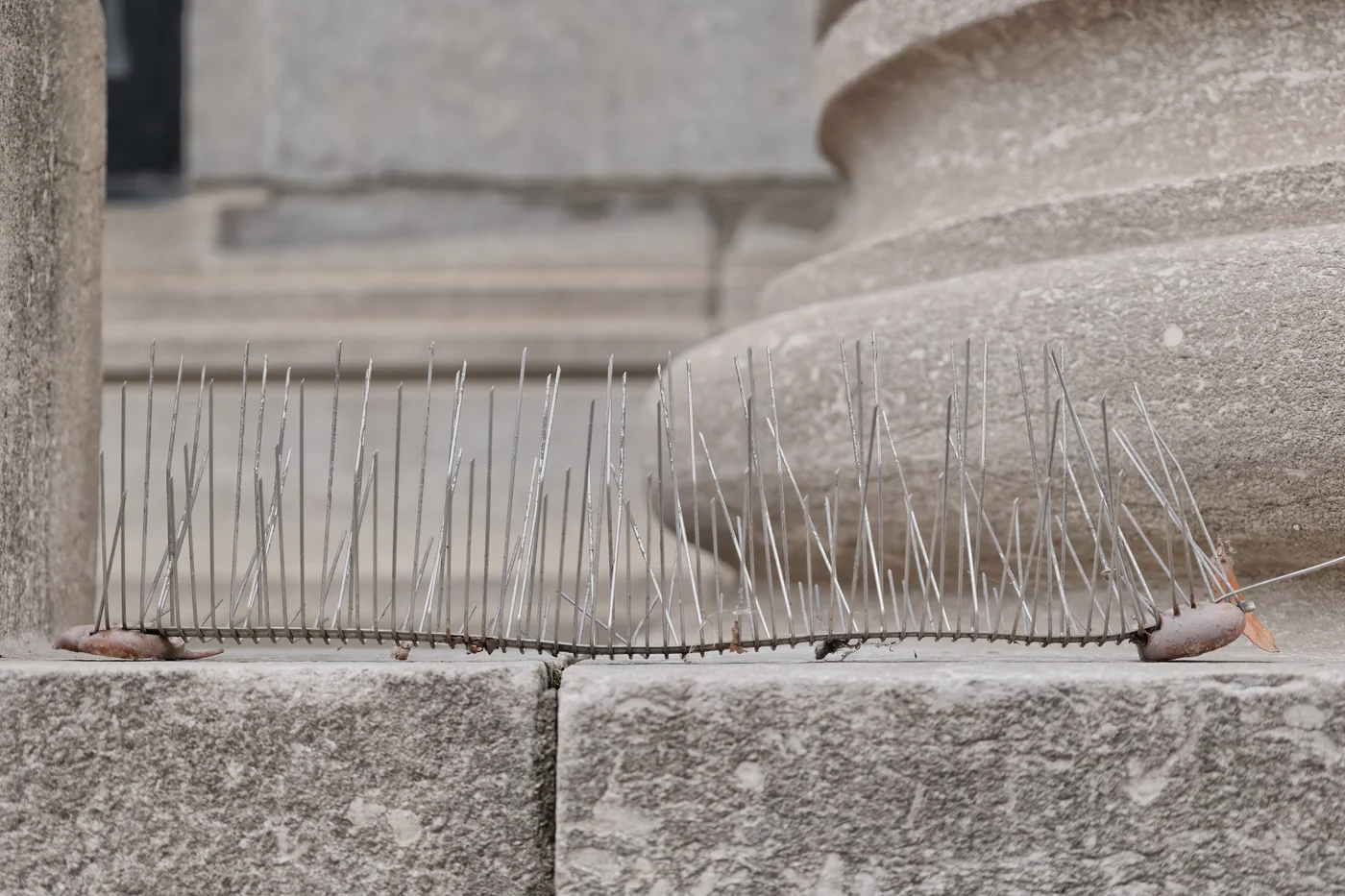
Bird spikes are the right tool for hard, narrow surfaces where birds land before roosting or nesting. Installed correctly, this bird deterrent blocks the perch while leaving the bird free to move away.
Window ledges and sills are where spikes shine. Measure the flat top, not the trim below it. Keep weep holes and drainage paths open. Also check that the window can still open and a cleaner can reach the glass.
Roof edges and parapets are high-traffic roosting spots for pigeons and seagulls. A parapet gives birds a wide, sheltered perch with a clear view, ideal for loafing and staging. Running stainless steel spikes along the parapet removes that advantage. For large birds like seagulls, choose a wide strip so they can’t settle on either side of it.
Structural beams and exposed pipes attract birds because they’re elevated, stable, and often sheltered. A strip of spikes along the top of a beam, I-beam, or pipe is clean and nearly invisible. It deters birds without getting in the way of the structure. This is common in warehouses, barns, and other industrial settings where pigeons find beams attractive for nesting.
Fence Tops and Balcony Rails
Fence tops can take spikes when birds use one clear rail as a perch. They are a poor fit beside gates, play areas, or any place people may grab the rail. Do not expect bird spikes to serve as a safe or proven barrier for climbing animals.
Balcony railings are a persistent problem for apartment residents dealing with pigeon droppings. A run of stainless steel spikes along the railing top is one of the few options that works on a railing without blocking the view. Balcony spikes bought specifically for railing tops are among the most popular residential spikes.
Bird Spikes for Commercial Buildings
A commercial building needs spikes across a lot more surface than a house does, and that changes both the buying plan and the installation.
A single roofline, parapet, or loading dock facade can run hundreds of feet. At that scale, buy stainless steel in bulk from a specialist distributor instead of single retail packs. Distributors quote per-foot pricing that beats retail well before you hit 100 feet, and they can match spike width to a blueprint instead of guesswork. In commercial environments with heavy bird pressure, mapping every connected perch matters more than selecting one oversized strip.
Height and access decide whether this is a DIY job or a professional one. A single-story storefront ledge is no different from a house install. A multi-story facade or a warehouse roofline is a different story.
Anything needing a lift or scaffold calls for a licensed pest control or bird-control contractor. Most commercial insurance and liability rules require it anyway, on top of the fall risk.
The payoff scales with the building. Once birds run out of ledges anywhere on the structure, they stop treating it as home entirely. The most common mistake on a commercial job is spiking only the worst-hit spots and leaving the rest, so the flock just shifts a few feet over.
For a property manager dealing with pigeons across a full roof, the pigeons-off-roof playbook covers the ridge, chimney, and parapet angles a residential guide skips. For the full DIY-versus-contractor decision and real pricing, commercial bird control covers the whole job.
Choosing the Right Size
Getting the right size starts with the usable surface depth. Measure from the front landing edge to the wall or rear edge. Then note drains, brackets, pipes, corners, and access points.
- Narrow strips: Pipes, signs, and slim rails where the base can sit firmly.
- Regular strips: Most sills and ledges with one clear landing line.
- Wide or multi-row strips: Parapets and deep ledges where birds could stand behind one row.
Coverage labels vary by maker. Use the stated protection width, not a generic size name. A deep ledge may need parallel rows. Leave no safe lane at the wall, but never cover a drain or create a contact risk below.
Make a Simple Coverage Plan
Sketch the surface from above. Mark each place a bird can put both feet, including corners and strip ends. Set the rows so their protected widths overlap without tangling the tines.
For an L shaped ledge, measure both legs separately. Do not stretch one strip across the inside corner. Cut the base at its marked cut points and fit each leg tight to the corner.
How to Install Bird Spikes
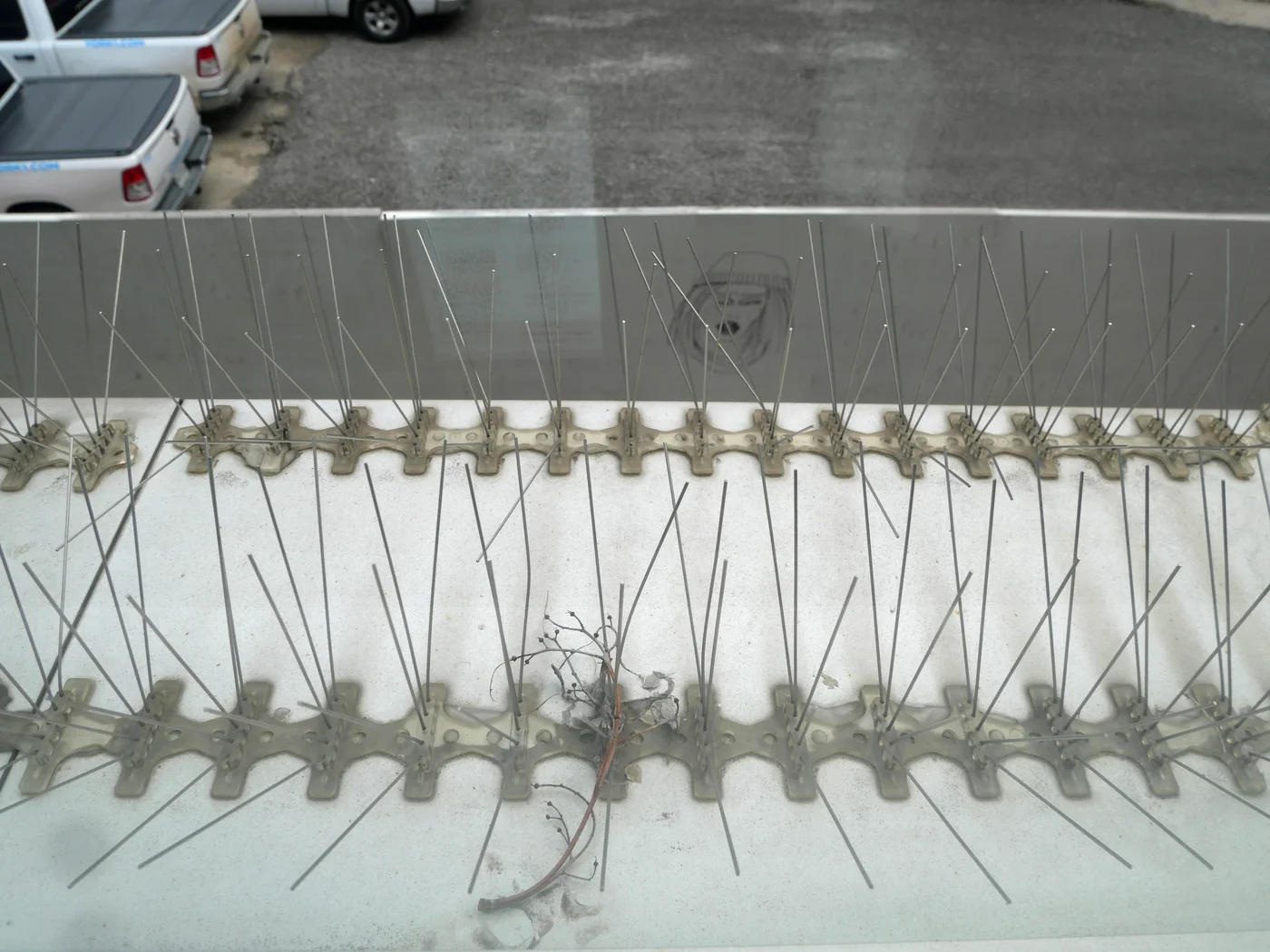
Read the product instructions before you open the adhesive. Strip length, cut points, fastener holes, and cure time vary. Dry fit the whole first run before fastening anything.
1. Check the Site Before Cleaning
Look for eggs, chicks, and birds carrying nest material. Do not install spikes over or around an active nest. Check for loose masonry, live wires, open flames, and a safe way to reach the surface.
2. Clean and Dry the Surface
Wear gloves and avoid raising dust from dry droppings. Lightly wet small deposits before removal. Large accumulations or enclosed roosts call for a trained cleaner.
Scrape off old adhesive, grease, moss, and nest material. Then wash the strip path and let it dry. Adhesive bonded to dirt will leave with the dirt.
3. Choose the Fastener for the Surface
Adhesive installation avoids drilling, but only use a product approved by the spike maker and surface maker. Painted, dusty, damp, sealed, or crumbling surfaces can release. Follow the label for bead size, temperature, and cure time.
Mechanical fasteners suit sound wood and some metal surfaces. Use the holes and fastener spacing in the instructions. Check what sits below before drilling. Water lines, wiring, flashing, and brittle stone turn a small job into an expensive one.
Cable ties or clamps work on some pipes and rails. Use outdoor rated ties, trim the tails, and place enough ties to stop the base from twisting. Do not attach spikes to electrical conduit or any pipe you have not identified.
Do not improvise with household hot glue or random sealant. Heat, cold, moisture, and the wrong surface can make the bond fail without warning.
4. Fit the Ends and Test the Result
For long runs, keep each joint tight and fasten each section as you go. Cut only at the maker’s marked points. A crushed base or loose joint makes a useful foothold.
Once the installation is complete, look from the bird’s approach angle. Check the ends, wall line, corners, and any gap around a bracket. Confirm that doors, windows, drains, and service access still work. This final check is part of a secure installation, not an optional cosmetic step.
How to Compare Bird Spike Cost
Prices move, and pack lengths are rarely equal. Compare the cost of a complete job instead of one box.
First, divide the pack price by its stated linear coverage. Then add the approved adhesive, fasteners, cleaning gear, and waste allowance. A cheap strip is not cheap if its narrow coverage forces a second row.
For a small, reachable sill, material may be most of the cost. On a tall facade, safe access can cost far more than the spikes. Get an itemized quote that lists cleaning, access equipment, surface repairs, materials, and follow-up visits.
For a commercial order, ask whether corners, short offcuts, access, and failed adhesive are included. Confirm who owns inspection and repair after the install.
Treat a warranty as one clue, not proof of fit. Read what it covers. Some warranties exclude the base, adhesive, labor, salt exposure, or damage caused by poor installation.
Where Bird Spikes Don’t Work
Bird spikes are a targeted physical barrier. They only work on surfaces birds need to land on before doing whatever you’re trying to prevent.
Large flat surfaces (a flat roof with no defined landing zone, a patio, a lawn) can’t be effectively covered with bird spikes. There’s no narrow edge to line with a strip, so birds just walk or hop a foot to either side. Bird netting or a combination of deterrents handles these open spaces better than spikes alone.
Gardens and trash areas aren’t spike territory. Birds walking across a garden or raiding a trash container are after food, not a perching spot. Pest birds attracted to a food source won’t be deterred by bird spikes mounted nearby on a structure. Remove the food source first, then install spikes to prevent birds from returning to roost on adjacent surfaces.
Trees and shrubs can’t be effectively spiked. Birds just find different branches. If birds roost in a tree near your house, thinning the dense cover works better than spiking individual branches.
Active nests of protected birds require a legal check before installing anything. If protected birds have an active nest with eggs or young birds, federal law prohibits disturbing or blocking the nest. Once the nest is empty and the birds have left, install bird spikes to prevent the location from being reused.
When spikes are not the right fix, a few other deterrents cover the range, from netting to repellent gels to sonic devices, and when each one fits. For ledges and facades where looks matter and spikes would be too obvious, bird wire is the low-profile alternative worth a look.
Maintaining Your Bird Spikes
Bird spikes need maintenance. USDA Wildlife Services notes that nesting birds may drop material onto spikes until they form a nest base. Inspect at least twice a year, before nesting season where practical, and after severe or otherwise harsh weather conditions.
Before removing nest material, make sure the nest is not active. Clear safe debris with gloves and a stiff brush. Refasten a lifted strip with the approved method before birds find the gap.
Check drains, joints, end gaps, bent tines, cracked bases, rusting fasteners, and failed adhesive. Look for fresh droppings behind the row. They show where the coverage plan failed.
Plastic bird spikes need extra checks for sun damage. Replace cracked or brittle plastic sections as a complete piece. Do not leave one broken gap in an otherwise sound run.
Why Birds Ignore Spikes
Spikes that seem useless usually have a fit or maintenance problem. Watch the birds for a few minutes before buying more. Fresh droppings and birds attempting to settle show exactly where the layout fails.
- Birds stand behind the strip: Add another row or change to a wider layout.
- Birds land at each end: Extend the run to the true edge and close corner gaps.
- Smaller birds sit between tines: Use a denser product or a full barrier such as netting.
- Birds build on top: Check nest status, then clear loose material and keep inspecting.
- The strip lifts or rolls: Clean the surface and refasten it with the approved method.
- Birds move one ledge over: Cover the connected landing sites or accept that the job only protects one spot.
If the whole area is broad and open, stop adding rows. Spikes are the wrong tool for that surface.
What to Look for When Buying Bird Spikes
These are the specs to check when shopping for spikes:
Named stainless grade or clear corrosion claim: Avoid vague metal tines with no material detail. A coastal environment also needs corrosion resistant fasteners.
UV-stabilized base: The base is exposed to more direct sun than the tines. A cheap plastic base yellows and cracks within a few years. Plastic bird spikes with a UV-stabilized polycarbonate or fiberglass base are the better plastic option. Polycarbonate is lightweight, strong, and ships without risk of bending or cracking in transit.
Mounting hardware included: Some products sell with adhesive, screws, cable ties, and mounting hardware included. Others sell the strips only. Note what’s in the box before adding to your cart to avoid buying duplicate hardware that already shipped with the product.
Warranty terms: Check whether the base, tines, labor, adhesive, and weather exposure are covered. A long headline warranty can still have narrow terms.
Returns policy: Ensure the supplier has a clear returns policy in case the purchased strips don’t fit your specific surface. Measuring is straightforward, but it’s easy to choose the wrong size on a complex ledge. A good returns policy makes the decision less stressful and lets you add a second order easily if you need more coverage.
Bird Spikes We Recommend
These two stainless steel options fit the permanent ledge work described above. Compare the strip width and fit against the surface you measured.
Bird-X stainless steel bird spikes are one option for ledges and parapets.
As an Amazon Associate, we earn from qualifying purchases.
Nixalite Premium Model S stainless steel bird spikes are another option when comparing strip width and fit.
Do not install spikes over or around an active nest. For unsafe roof access, hire a professional to install bird spikes instead.
The full pigeon control plan covers what to pair spikes with when pigeons are the main problem. For every other species, the bird removal hub breaks down the tools that work. Many jobs do best layering two or three methods, like spikes alongside netting or a repellent gel, rather than relying on one alone.
Images: Bird control spikes on ledge by Cephas, CC BY-SA 4.0. Bird spikes at Toronto Reference Library by Jim.henderson, CC BY 4.0. Bird control spikes on stone ledge, via Wikimedia Commons.
_01.jpg)

.jpg)
Free: The 5-Step Bird-Proofing Checklist
Work through the right steps in the right order, before spending money on the wrong deterrents. Printable PDF, straight to your inbox.
No spam. Unsubscribe any time.