How to Get Rid of Pigeons: Humane Methods That Actually Work
Contents[hide]
To get rid of pigeons, block their landing spots and cut the food. Spikes or netting on every ledge they use, plus clearing pet food and fallen seed, removes both reasons to visit. Reflective tape or a moving decoy helps while the hardware goes in. With nowhere to land and nothing to eat, the flock moves on.
In this article, we’ll cover how to get rid of pigeons by stripping their landing spots, cutting off food, and which physical deterrents hold a stubborn flock.
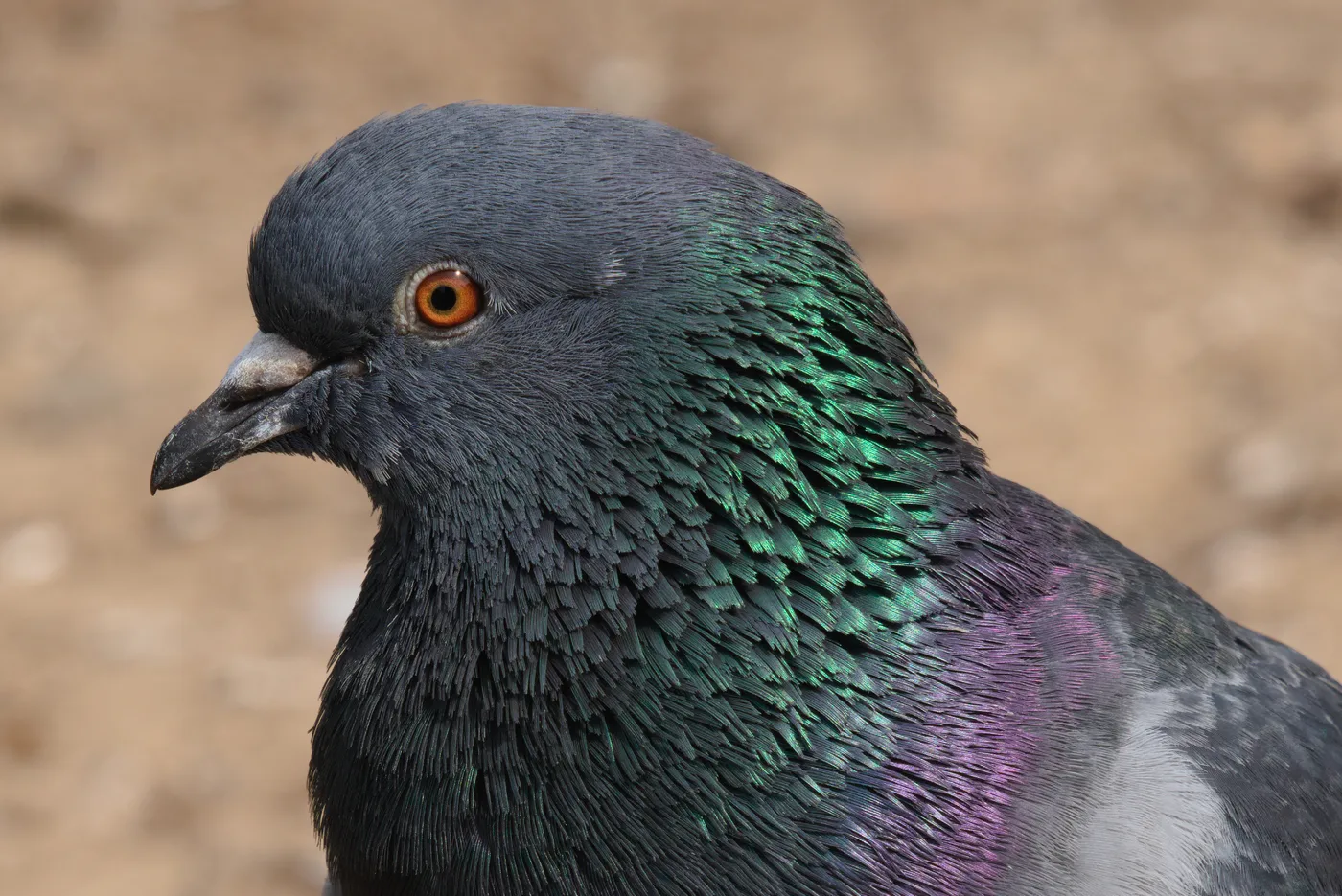
Why Pigeons Pick Your Building
Pigeons roost wherever a flat surface gives them a view and some shelter from rain. That means the roof, window sills, ledges, gutters, fences, and balcony planters. They land on the same spots every day and leave the droppings to match. A flock will claim a roof or a covered ledge as its own.
Rock pigeons were the first bird people tamed, kept for thousands of years. Their long history with people helps explain why they live so comfortably on our buildings.
The droppings are more than a mess. Dried pigeon droppings can carry diseases like histoplasmosis, and the birds bring ticks and other parasites with them. Knowing where they roost is the key to stopping them, because every fix below targets a landing spot.
A good plan starts with watching where they land. Then:
- Stop feeding them, and clear away any food left outside. It only draws more birds.
- Act fast, since pigeons can do expensive damage to a roof or balcony in a short time.
- Block the spots they actually use, not just the obvious ones.
Do that and your home stops being worth the trip, even if a neighbor keeps feeding them.
Block the Landing Spots: Netting and Spikes
Physical barriers are the most reliable fix, and they last. Lethal control does not: the survivors just breed back to replace the rest, so the roost never really clears.
Bird netting walls pigeons out of balconies, rooftops, and outbuildings. Use a 50 mm (2-inch) mesh, the standard for pigeons, strung along sheds, eaves, and rafters. Installed properly, it is hard to notice and blocks the roost completely.
For a balcony specifically, keeping pigeons off a balcony covers the railings and the nesting in detail. If the trouble is the roof itself, the ridge, chimney, and solar panels each need their own fix.
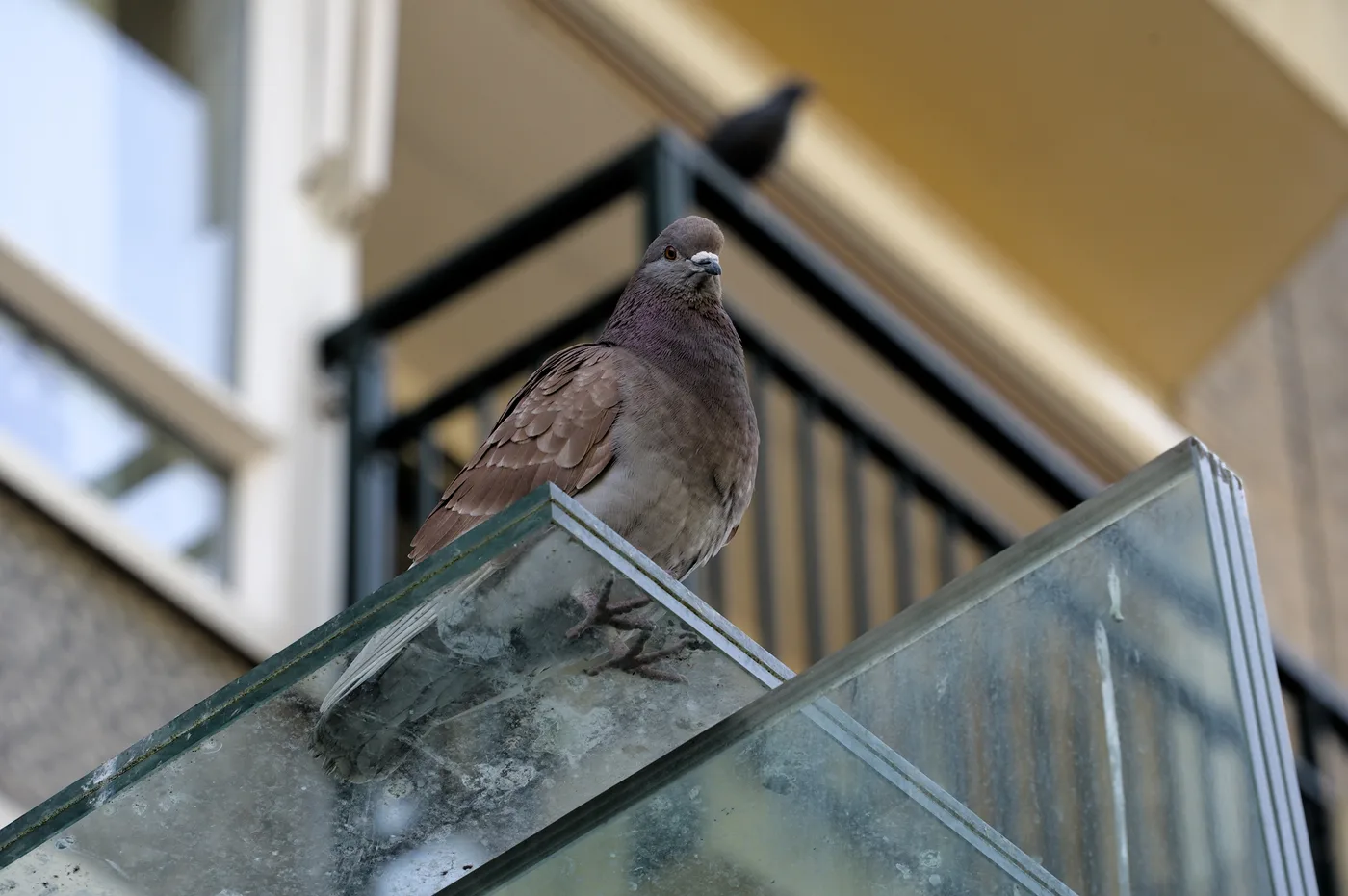
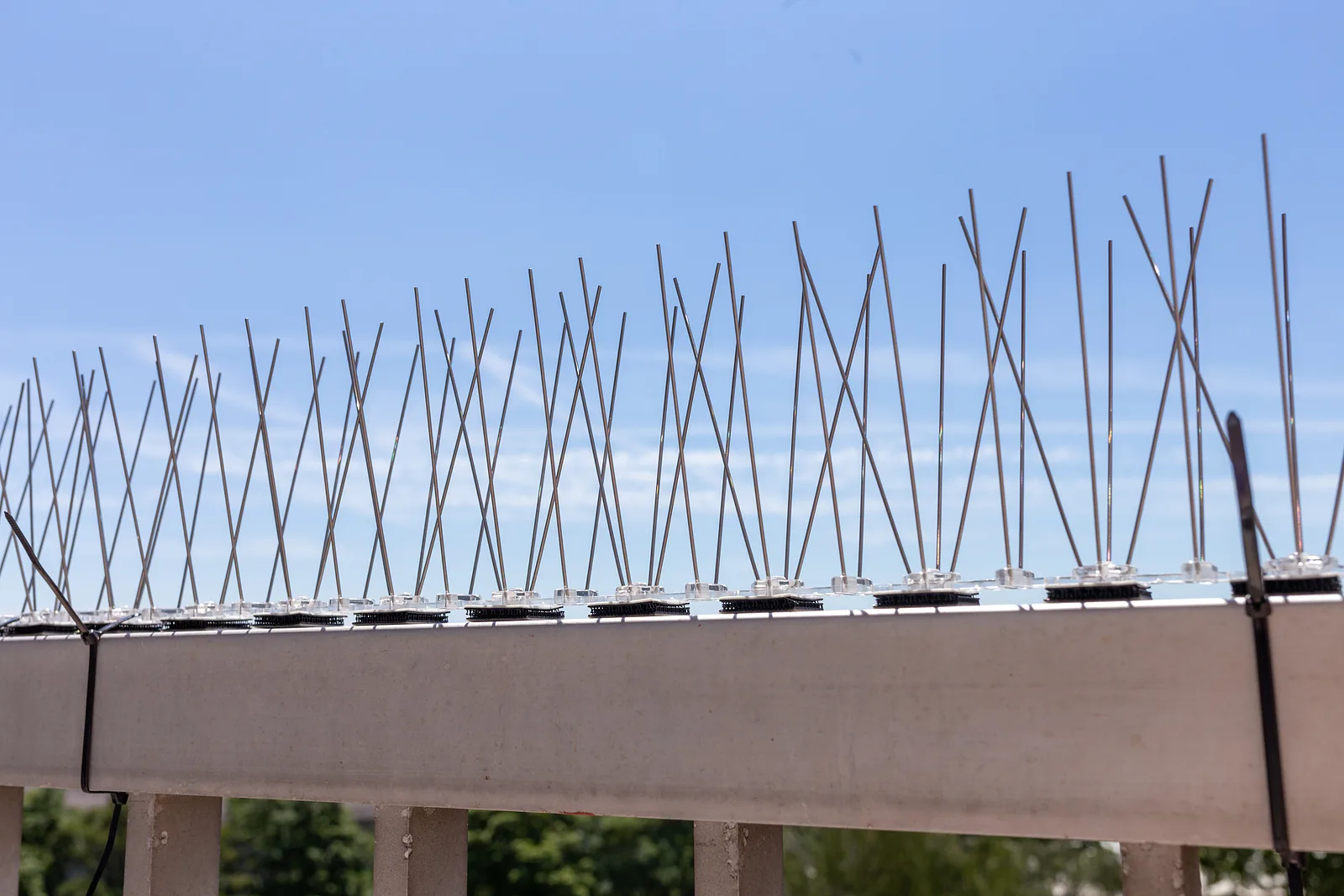
Bird spikes go on ledges, window sills, and any flat surface pigeons land on. They do not hurt the birds; they just take away the foothold.
Placement is everything: spikes set too far apart let pigeons land between them and nest anyway, so cover the whole ledge end to end.
Shock strips deliver a mild jolt when a pigeon lands, teaching it to stay off. They cost more than netting or spikes and can have battery or wiring issues. So they work best as a backup to the other two, not the main fix.
Scents and Scares That Help
Barriers do the heavy lifting, but a few deterrents speed things up and keep pigeons from settling back in.
Pigeons dislike strong smells. A spray of cinnamon, peppermint oil, or cayenne pepper on the spots they perch puts them off, though you have to reapply it every few days. A natural repellent made from those ingredients is the humane route, and a dab of bird gel on a narrow ledge adds another layer.
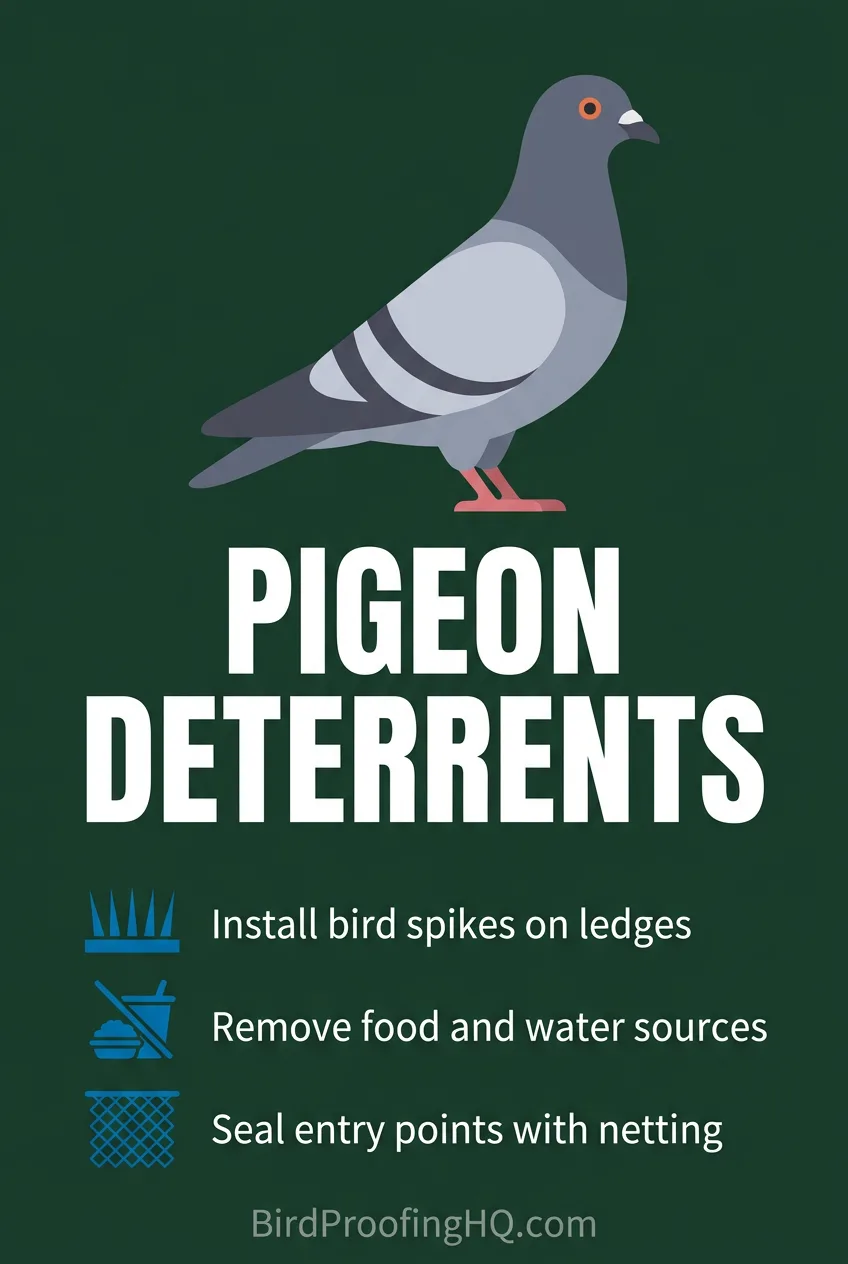
For scares, reflective tape, old CDs, and aluminum foil flash light that unsettles pigeons near a roost. Move them every few days or the birds learn to ignore them. An owl or hawk decoy helps on the same terms. Reposition it often, since a decoy that never moves fools nothing for long.
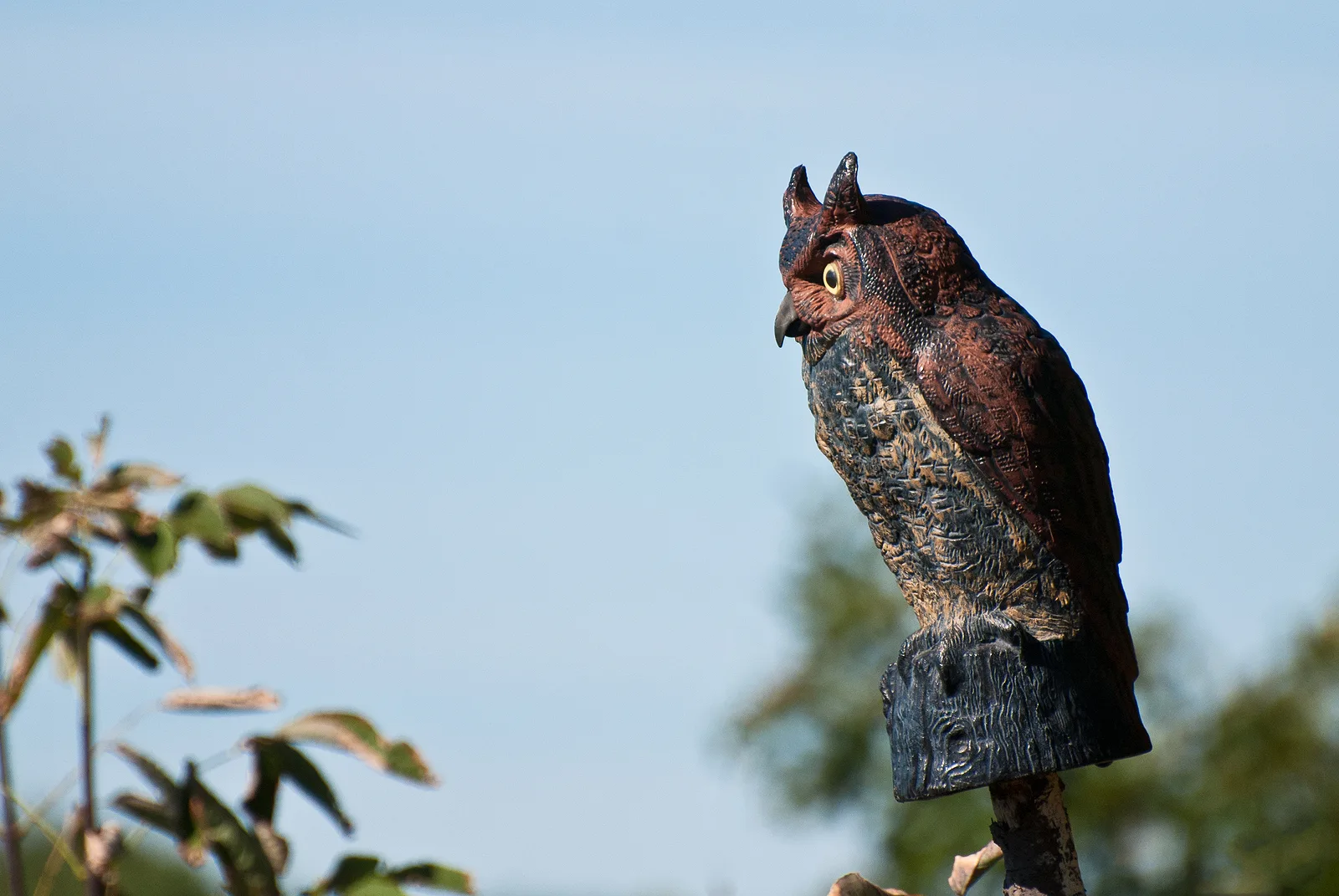
The serious scare option is falconry, where a trained hawk patrols the area. It works well for a big commercial roost, but it needs a professional falconer, so it is overkill for most homes.
Stop Them Coming Back
Preventing a pigeon problem beats fighting one, and it comes down to housekeeping more than hardware.
Clean up outside and bring in pet food and bird feeders. Seal vents and gaps with metal screening so pigeons cannot get into an attic or soffit (the small gap under roof eaves). Find what is drawing them in and deal with that, and a flock never gets established in the first place.
When to Call a Professional
Most pigeon problems come down to spikes, netting, and patience. A few cases are worth a call to a pest control specialist. One is a large flock that has taken over. Another is droppings that have built up into a real health hazard.
A third is a building where it is not safe to install netting yourself. A pro can assess the roost, fit commercial-grade netting and screening, and arrange falconry if it comes to that.
Mourning doves are pigeons’ close cousins and respond to the same tactics, so the same playbook covers them if both are working your property. For any other bird, the bird removal guides point you to the right fix.
Frequently Asked Questions
How can I make pigeons go away?
Make their favorite landing spots unusable and take away the food. Put bird spikes or netting on the ledges, sills, and rails they roost on, and clear away any pet food or spilled seed. Add reflective tape or a moving decoy for a while. With nowhere to land and nothing to eat, the flock moves on.
What do pigeons hate the most?
Strong scents like cinnamon or cayenne may bother pigeons briefly, but the smell fades fast and pigeons are not very scent-driven. Removing food and blocking perches with netting or spikes does far more.
Why are pigeons so hard to get rid of?
Pigeons are fast, smart, and loyal to a roost. They fly at up to 60 mph, see in almost every direction, and keep returning to a spot they have claimed. That is why one deterrent rarely works. You have to block every landing spot and cut off the food at the same time.
What diseases can pigeons transmit?
Dried pigeon droppings can carry histoplasmosis, cryptococcosis, and psittacosis, all lung infections. The birds also bring ticks and other parasites. Wear a mask and gloves when you clean up droppings, since these risks are real.
What are some humane methods for controlling pigeon populations?
Humane options include bird netting, spikes, and shock strips, all of which block pigeons without harming them. Scent repellents, sound devices, and falconry add pressure but fade or need upkeep, so pair them with a physical barrier rather than relying on them alone.
Images: Feral pigeon by Satdeep Gill, CC BY-SA 4.0. Pigeon on a balcony rail by Benoit Brummer, CC BY 4.0. Via Wikimedia Commons.

.jpg)
Free: The 5-Step Bird-Proofing Checklist
Work through the right steps in the right order, before spending money on the wrong deterrents. Printable PDF, straight to your inbox.
No spam. Unsubscribe any time.