Mourning Doves: Identification, Diet, Nesting, and Laws
Contents[hide]
Mourning Doves are slim, tan birds with black wing spots, small heads, and long pointed tails. They feed mostly on seeds found on bare ground. Their low coo comes from the voice. The sharp whistle you hear when they take off comes from their wings.
In this article, you'll learn to identify Mourning Doves and understand their feeding, nesting, and legal protection. We'll cover field marks, ground feeding, and federal protections.
How Do You Identify a Mourning Dove?
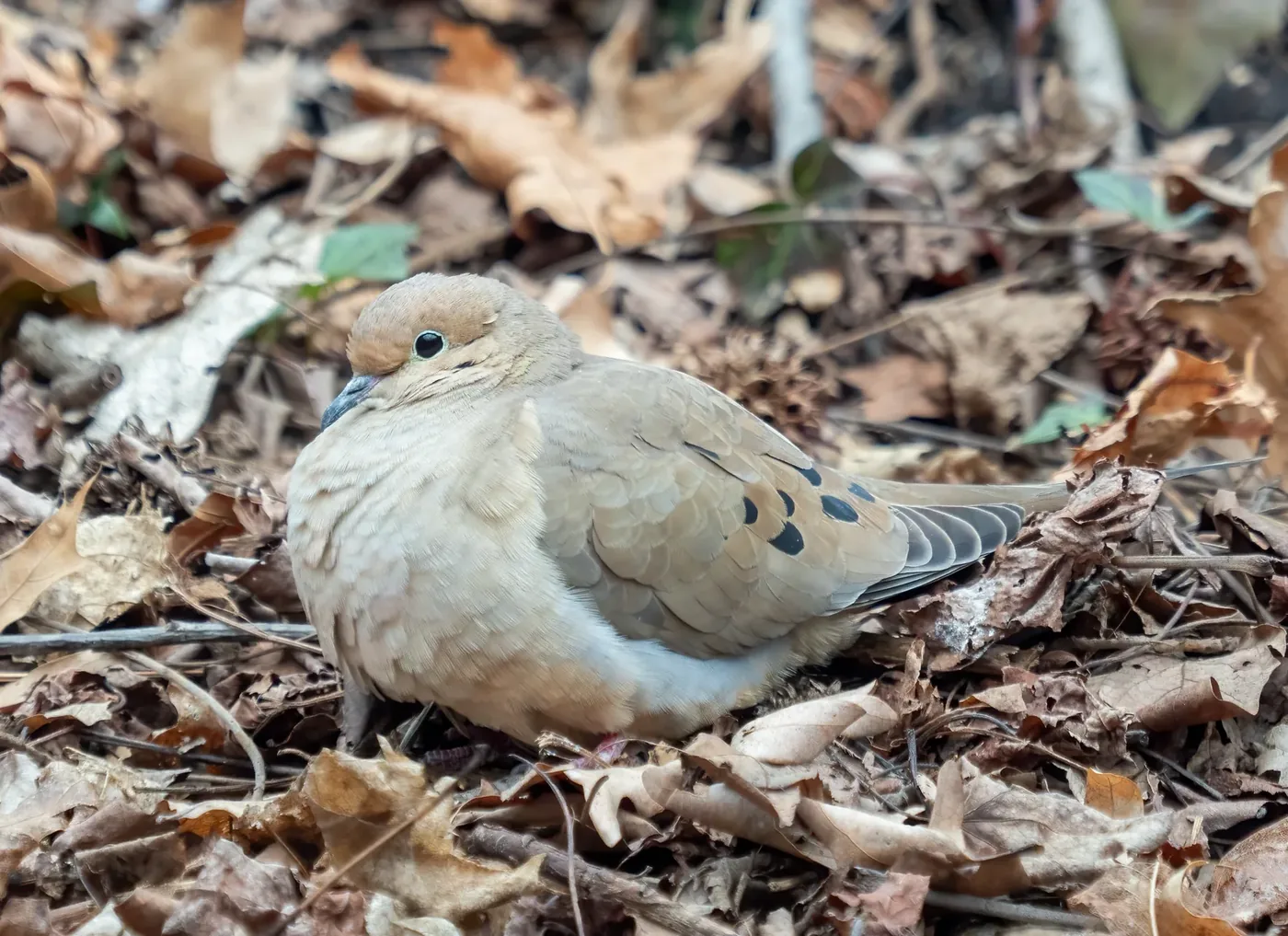
The Mourning Dove’s scientific name is Zenaida macroura. Adults are about 10 to 13 inches long. Most weigh between 3.5 and 5 ounces.
Look for a slim gray brown body and a small head. Black spots mark the wings, and the tail is long and pointed. Its white tipped outer tail feathers flash when the bird flies. The bird often looks delicate beside a pigeon, but its fast, direct flight is anything but weak.
Do Male and Female Mourning Doves Look Different?
Males may have a rosier breast and a blue gray crown. Females look browner and plainer, but the sexes are much alike. Both can show a small black spot below the eye.
Light changes how warm or gray the feathers look, so color alone is a weak clue. Watch the bird from the side and in flight if you can. The Pennsylvania Game Commission species profile has more field marks and measurements.
What Does a Mourning Dove Sound Like?
The familiar low coo comes mainly from the male. People sometimes mistake it for an owl calling in the distance. The repeated notes carry well across an open yard, especially early in the day.
The sharp whistle during takeoff is different. Air moving through the wing feathers makes that sound. It is not another call.
What Do Mourning Doves Eat?
Mourning Doves eat almost nothing but seeds and waste grain. They pick food from open ground instead of clinging to seed heads. Unlike a chicken, a dove does not scratch through leaf litter to find a meal.
The Pennsylvania Game Commission puts weed seeds and waste grain at about 98 percent of a dove’s diet. Common foods include seeds from grasses and other low plants. Doves also swallow grit, which helps break down hard seeds. Audubon once counted 17,200 bluegrass seeds in the crop of a single dove.
Why Do Mourning Doves Feed Under Bird Feeders?
Mourning Doves are built to collect food from the ground. They walk across bare soil or short grass and pick up seeds one at a time. A hanging feeder is less useful to them than the seed scattered below it. They show up often enough that Project FeederWatch, Cornell’s winter feeder survey, tracks them across the country.
Spilled sunflower seed, millet, cracked corn, and other small grains can turn one patch of ground into a regular feeding site. A dove beneath your feeder is usually eating what other birds dropped. It may stay longer when the ground is open enough to spot food and watch for predators.
Sweep up wet or spoiled seed if a large flock gathers every day. That cuts waste and crowding without treating a few visiting doves as a pest.
Where Do Mourning Doves Live?
Mourning Doves favor open places with trees or shrubs nearby. Farms, orchards, roadsides, woodland edges, and suburban yards all suit them. They usually avoid thick forest because they feed and take off more easily from open ground.
Do Mourning Doves Migrate?
Their range covers the lower 48 states, southern Canada, Mexico, and areas farther south. Some northern birds move south for winter. Birds in warmer places may stay all year.
Local numbers change with the season even where doves stay all year. Food, snow cover, and weather all shift where the flocks gather.
How Do Mourning Doves Drink?
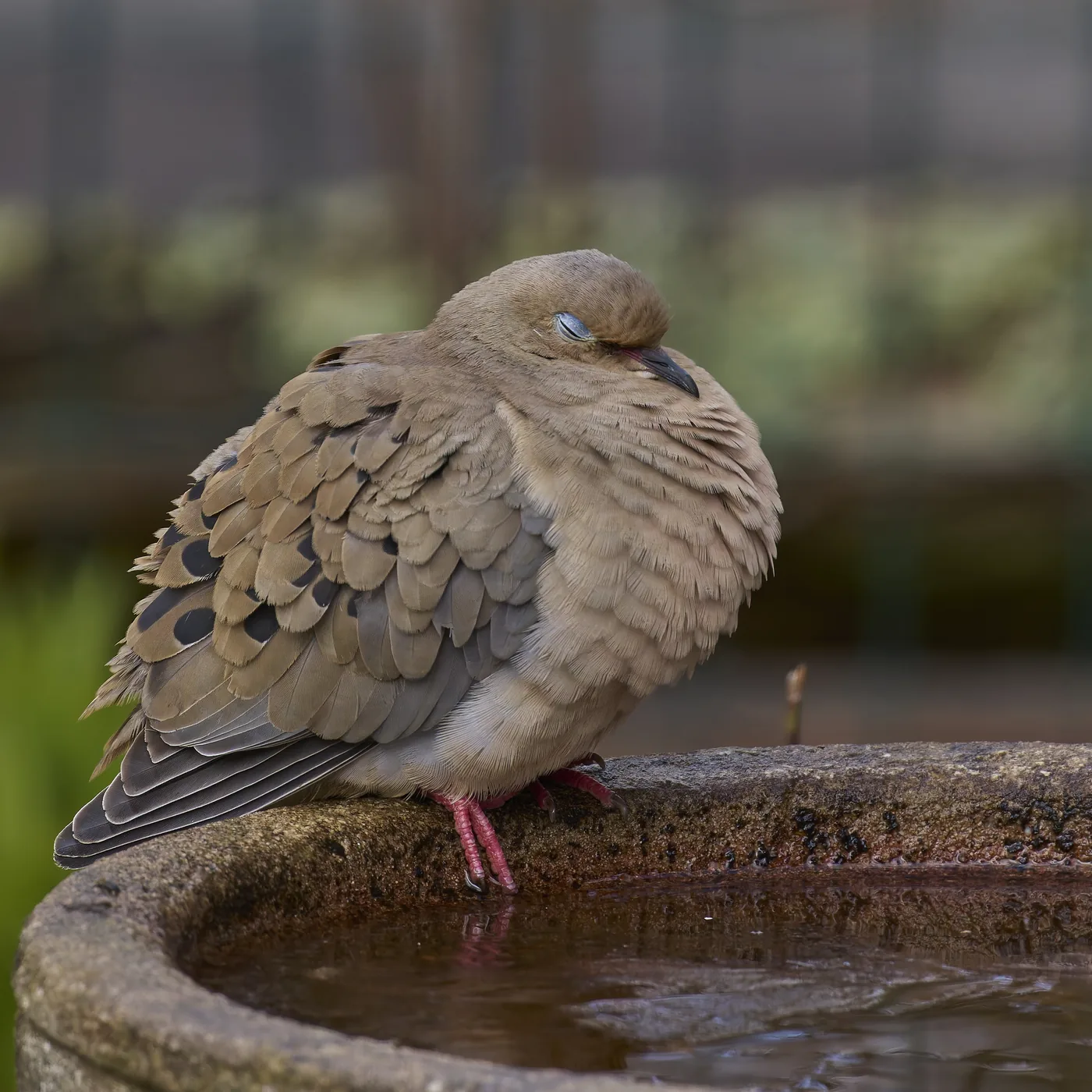
Mourning Doves drink often, and they visit water daily where they can. Most birds tip the head back to swallow. A dove pumps its tongue instead and draws the water straight up. Its head stays down, so its eyes stay on the yard.
They favor shallow water with a clear view, so keep a backyard birdbath shallow and clean. Dirty standing water collects droppings and debris. Put the bath where a dove has an open route in and out, not tight against dense cover.
Where Do Mourning Doves Nest?
What Does a Mourning Dove Nest Look Like?
A Mourning Dove nest is a loose platform of sticks with little lining. You may see one in a tree, shrub, or vine. Porch supports, deck beams, and hanging flower pots also give them a flat base. The simple construction can look unfinished, but it is normal for the species.
A pair builds the platform over about four to six days, usually 10 to 25 feet off the ground. The nest may be partly hidden by leaves or tucked against a beam. Watch from a distance instead of reaching in to check it. Repeated adult visits are a strong sign the site is still being used.
How Many Eggs Do Mourning Doves Lay?
The usual clutch is two plain white eggs. Both parents take turns sitting on them. The male often covers the day shift, while the female sits through the night.
Eggs usually hatch after about 14 to 15 days. Both adults feed the chicks crop milk, a rich fluid made in the crop. The young depend on that food early in life, so an adult flying away does not mean the nest has been abandoned.
Young doves leave the nest about two weeks after hatching. How many nesting attempts a pair makes depends on where it lives. Pennsylvania records up to five in a season, and Missouri as many as seven.
So do not use a national calendar to decide that a nest must be empty. Check the actual site and the current activity.
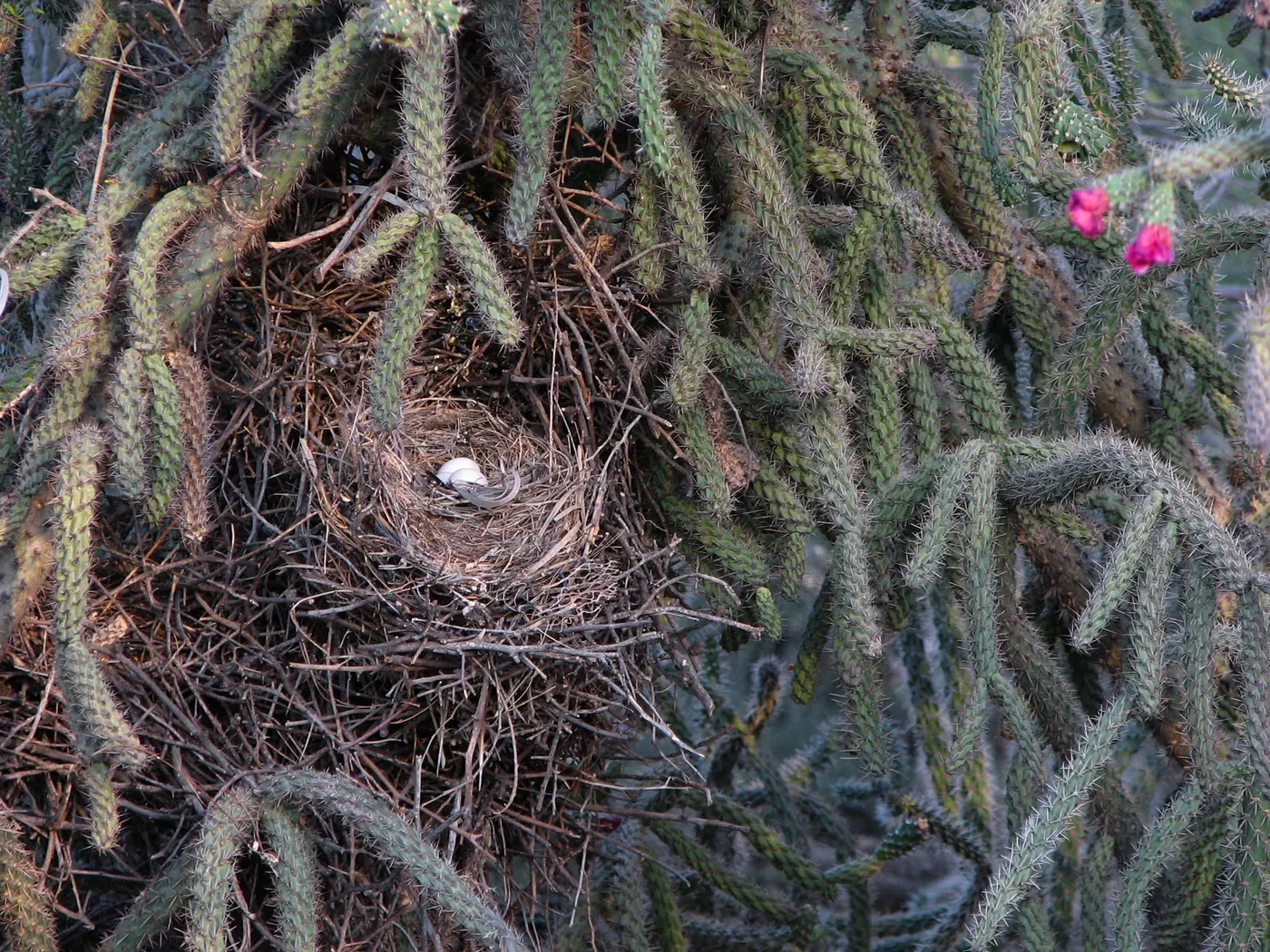
A nest with eggs, chicks, or dependent young is active. Leave it in place and avoid work nearby. You can learn more about common nest shapes and locations before trying to identify one.
Mourning Dove or Pigeon?
Mourning Dove vs Rock Pigeon
Mourning Doves are slimmer than Rock Pigeons. They have tan bodies, black wing spots, and pointed tails. Rock Pigeons have broad chests, shorter tails, and many color patterns.
Rock Pigeons also look heavier through the neck and chest. In cities, they often stand on roofs and broad ledges in groups. Mourning Doves are more likely to be seen on open ground, a wire, or a narrow branch.
Mourning Dove vs Eurasian Collared Dove
Eurasian Collared Doves are larger and paler than Mourning Doves. Look for a black collar across the back of the neck. Their tails are also more square.
The collar shows best from behind or from the side. If the neck is hidden, compare the tails. A Mourning Dove tapers to a long point, while a collared dove looks squared off.
Mourning Dove vs White-winged Dove
White-winged Doves have a bold white stripe on each wing. Their tails look rounded instead of pointed. The white wing patch can show even while the bird is perched, then becomes much more obvious in flight.
Farther west you may also meet the Band-tailed Pigeon. It is a chunky forest bird with a pale tail band and no black wing spots.
Are Mourning Doves Protected?
Mourning Doves are protected migratory birds under federal law. They are also regulated game birds. States may allow hunting only during set seasons and under current rules.
A hunting season does not allow someone to kill or trap a backyard bird at will. Licenses, bag limits, locations, and allowed methods still matter. The U.S. Fish and Wildlife Service explains how federal and state dove rules work together.
Do not harm a Mourning Dove or remove a nest containing eggs, chicks, or dependent young. If an occupied nest creates a safety problem, contact your state wildlife agency or USFWS before acting. State and local rules may add limits. This is general information, not legal advice.
The broader bird protection rules explain active nests, permits, and state law.
Are Mourning Doves Pests?
A few doves feeding under a feeder are normal backyard wildlife. Trouble usually comes from spilled seed, repeat nesting on a structure, or droppings in one small area. Identify what is attracting them before choosing a response.
If seed is the issue, clean the feeding area and adjust how much you put out. If a ledge or porch support keeps attracting nests, wait until the site is inactive before changing it. Then work through the humane dove deterrence steps that fit your setup.
Images: Mourning Dove perched and Mourning Dove on the ground by Rhododendrites, CC BY-SA 4.0. Mourning Dove at a birdbath by Paul Danese, CC BY-SA 4.0. Mourning Dove nest with eggs by Katja Schulz, CC BY 2.0. Via Wikimedia Commons.


Free: The 5-Step Bird-Proofing Checklist
Work through the right steps in the right order, before spending money on the wrong deterrents. Printable PDF, straight to your inbox.
No spam. Unsubscribe any time.