How to Get Rid of Doves and Mourning Doves: Humane Methods
Contents[hide]
- 1. Why Do Doves Keep Coming to Your Property?
- 2. How Do I Stop Doves From Eating My Bird Seed?
- 3. What Can I Use to Block Dove Nesting Spots?
- 4. What Are Mourning Doves Afraid Of?
- 5. What Smell Keeps Doves Away?
- 6. How Do I Keep Doves Away From My House Long Term?
- 7. Are Mourning Doves Protected?
- 8. When to Call a Pest Control Professional
To get rid of doves, cut their food first. They come back because something is feeding them, usually spilled seed. Once the food is gone, put spikes or netting where they roost and hang reflective tape. Block nest sites under the eaves before spring. Doves give up fastest when the seed is gone and their favorite roost is blocked.
In this article, we’ll cover how to get rid of doves humanely, why they keep returning, and when a physical barrier is the only fix.
Here is what actually works, starting with the feeder itself.
Why Do Doves Keep Coming to Your Property?
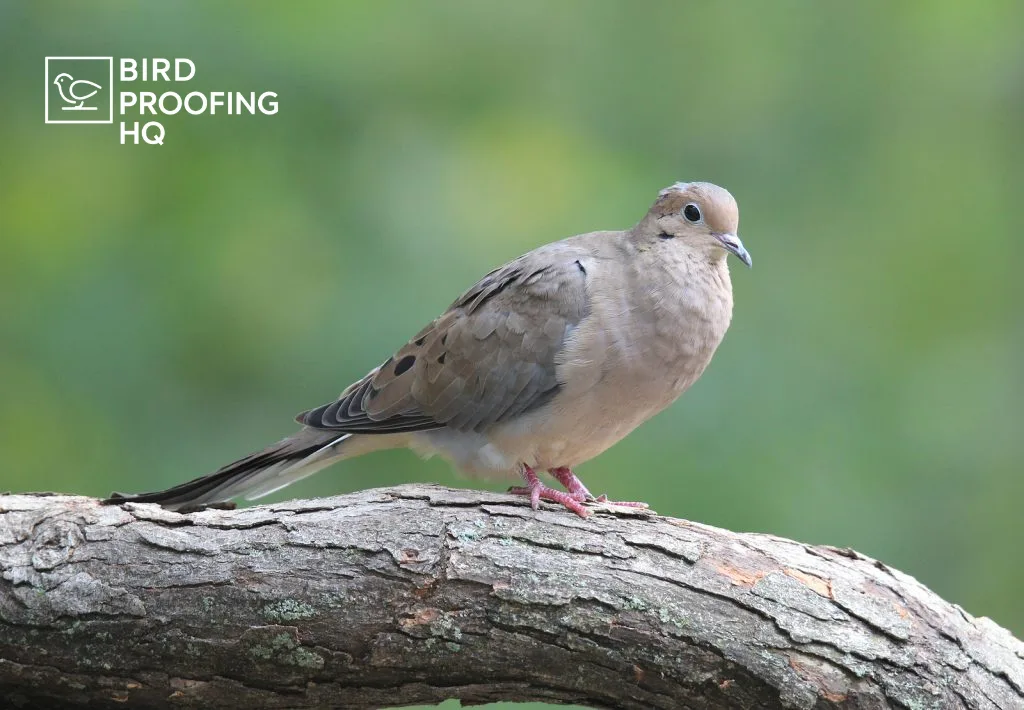
Mourning doves are creatures of habit. Once they find a reliable source of food and a safe place to nest, they return day after day, year after year. They belong to the same family as pigeons, called Columbidae, and share the same persistent habits. If you have a dove problem, you often have a pigeon problem brewing right behind it.
These birds are drawn to areas with plenty of seed, water, and sheltered spots to perch and nest. Their preferred foods include millet, cracked corn, striped sunflower seeds, and bread crumbs. Doves eat right off the ground, so spilled birdseed under your feeders is basically a dinner invitation. The easier the food is to reach, the longer they stay.

Mourning doves start nesting as early as March. They build loose nests of twigs on gutters, eaves, roof ledges, balcony rails, and even disused machinery. A dove will build a flimsy nest in a day or two. A single pair can lay eggs several times a year, raising brood after brood in one season.
That is how one nest can turn into several doves using the same area.
How Do I Stop Doves From Eating My Bird Seed?
The single most important step is cutting off what feeds them. If nothing is feeding them, they have no reason to stay.
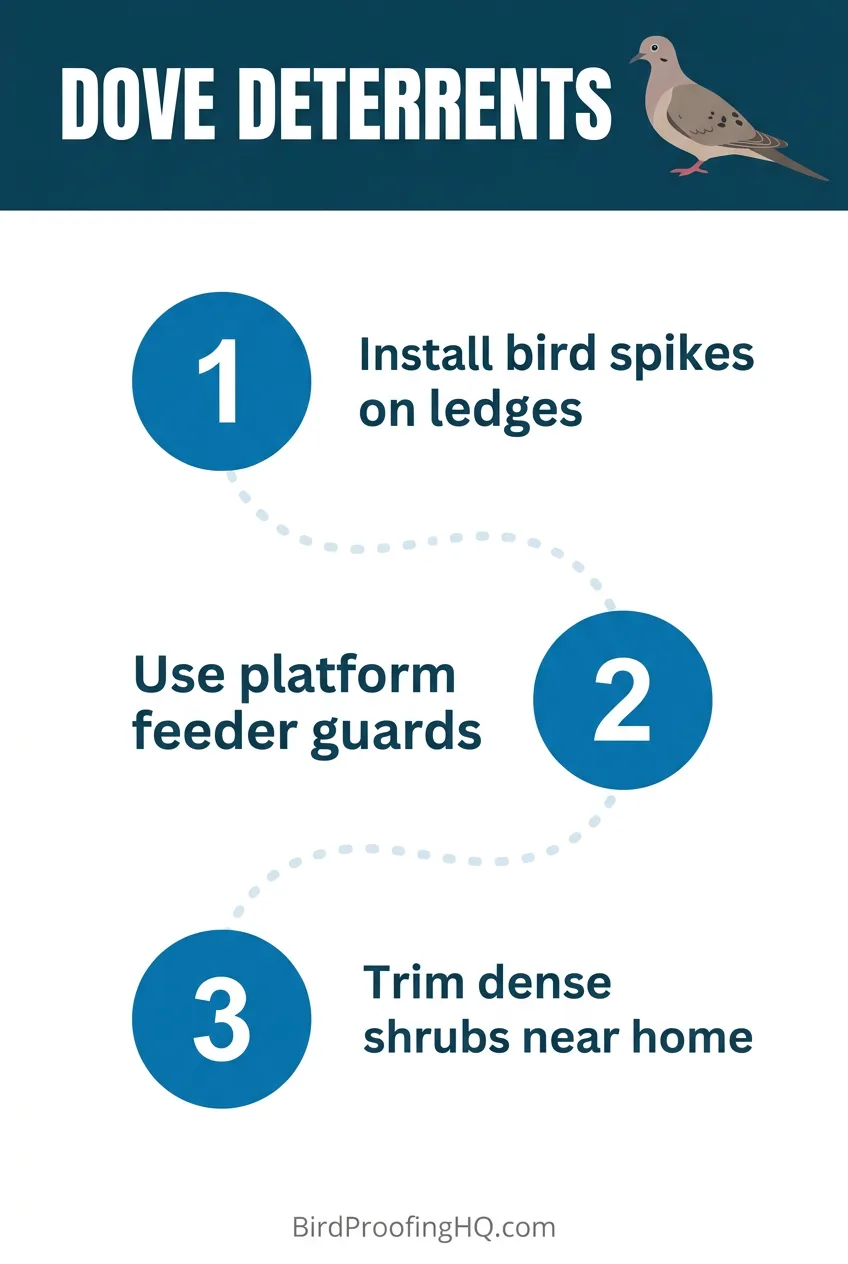
Start by removing or modifying your bird feeders. Doves and pigeons love to eat on the ground or on flat platform feeders and open hopper feeders, where they can land easily and eat from an open tray. A hopper feeder or wide tray full of mixed seeds is the worst offender, so retire it first.
Switch to tube feeders or caged feeders that smaller birds can use but they cannot. Offer foods they tend to avoid too, like shelled peanuts, suet (the fat cakes hung out for woodpeckers), mealworms, and nectar.
Doves eat constantly, and a yard full of loose seeds keeps them feeding from dawn to dusk. Keep your yard clean. Rake up fallen seeds and seed debris under feeders, pull weeds that produce seed, and use mulch or gravel over bare ground where they forage and eat. Pick up fallen fruit.
Secure your trash so animals cannot scatter scraps.
If you still want to feed other birds, special feeders made for finches, chickadees, or hummingbirds will draw the species you want. The goal is to feed the birds you like while shutting out the ones you do not. Striped sunflower seed in a tube feeder attracts finches and jays without pulling in doves the way open platform food does.
What Can I Use to Block Dove Nesting Spots?
When food removal alone is not enough, a barrier is your next line of defense. These methods stop them from landing, perching, and nesting on your property.
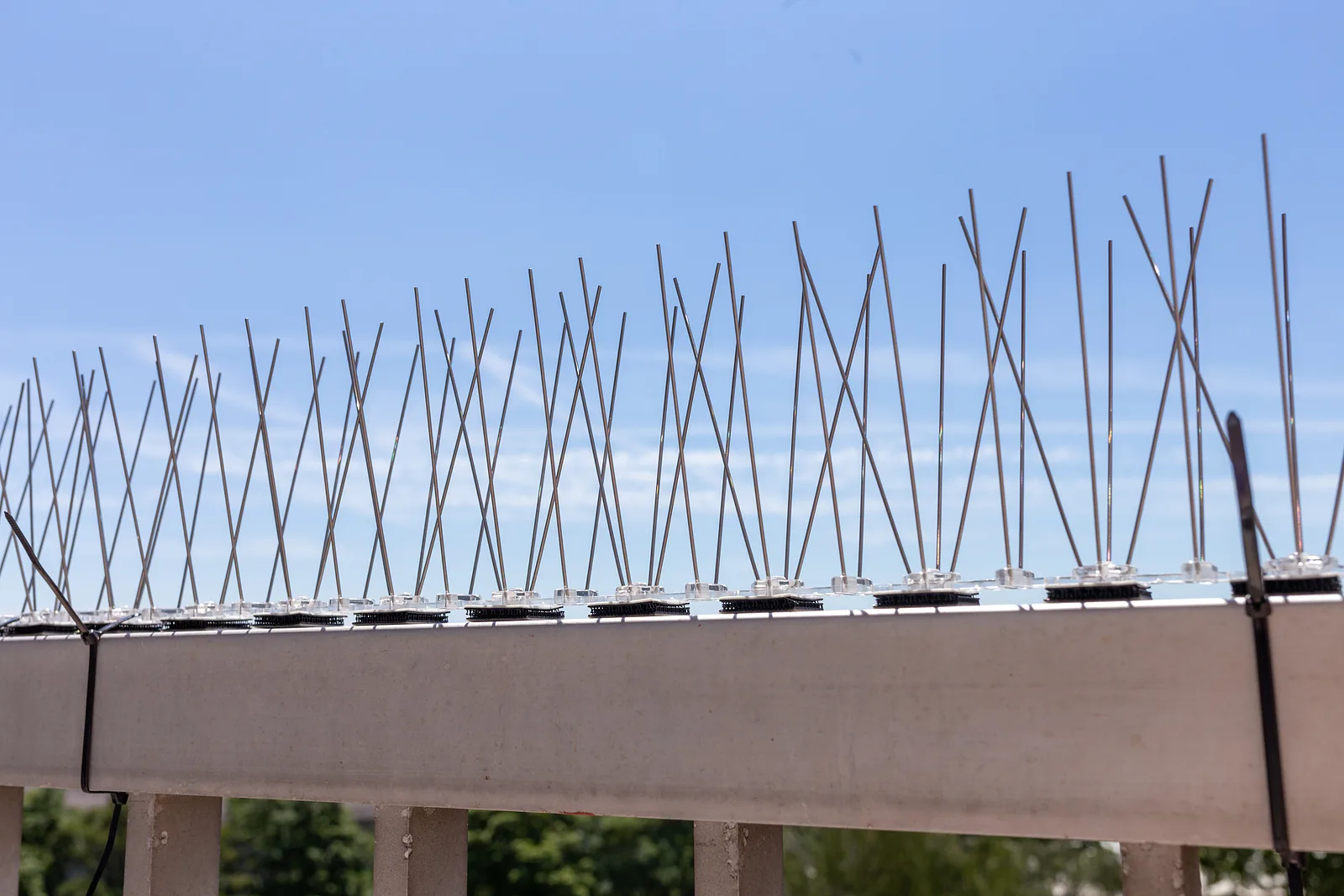
Stainless steel bird spikes are a popular fix, and it is worth comparing steel against plastic before you buy. Stainless and plastic deterrent spikes attach to ledges, window sills, roof edges, and balcony rails, or any flat surface where doves like to land.
One option is Bird-X stainless steel spike strips.
As an Amazon Associate, we earn from qualifying purchases.
Spikes are humane when installed correctly: birds simply cannot get a foothold, so they move somewhere else on their own. Do not install spikes over or around an active nest. Wait until any eggs or chicks have fledged before you put spikes in that spot.
Bird netting is ideal for larger areas, and getting the mesh size right matters more than people expect. Poly or knotted netting can cover gardens, patios, decks, balconies, rooftops, and barn openings.
For larger open areas, one option is Bird Barrier StealthNet netting.
Install the netting taut, never draped. Loose netting can entangle birds if it hangs slack. Secure it to walls or the ground with nails or staples so it stays tight. Never cover or seal an active nest with netting.
If you are not sure whether a nest is still active, check with your state wildlife agency or a licensed wildlife control professional before you touch it.
Wire mesh works well for sealing specific openings. Galvanized wire mesh can cover vents, chimney openings, gaps in buildings, and other entry points where they might try to nest. This is especially important in older homes with gaps under the roofline.
What Are Mourning Doves Afraid Of?
Visual and sound deterrents make the area feel unsafe to doves. Doves are cautious birds, and anything that mimics a predator or creates unexpected movement will make them think twice about landing.
Reflective tape and shiny objects are cheap and easy to set up. One option is Dalen reflective scare tape.
You can also hang old CDs or small mirrors near the places where doves land. The flashing light startles them, but this is a temporary measure only. Move the tape and other reflective objects every few days, or doves get used to them and stop reacting.
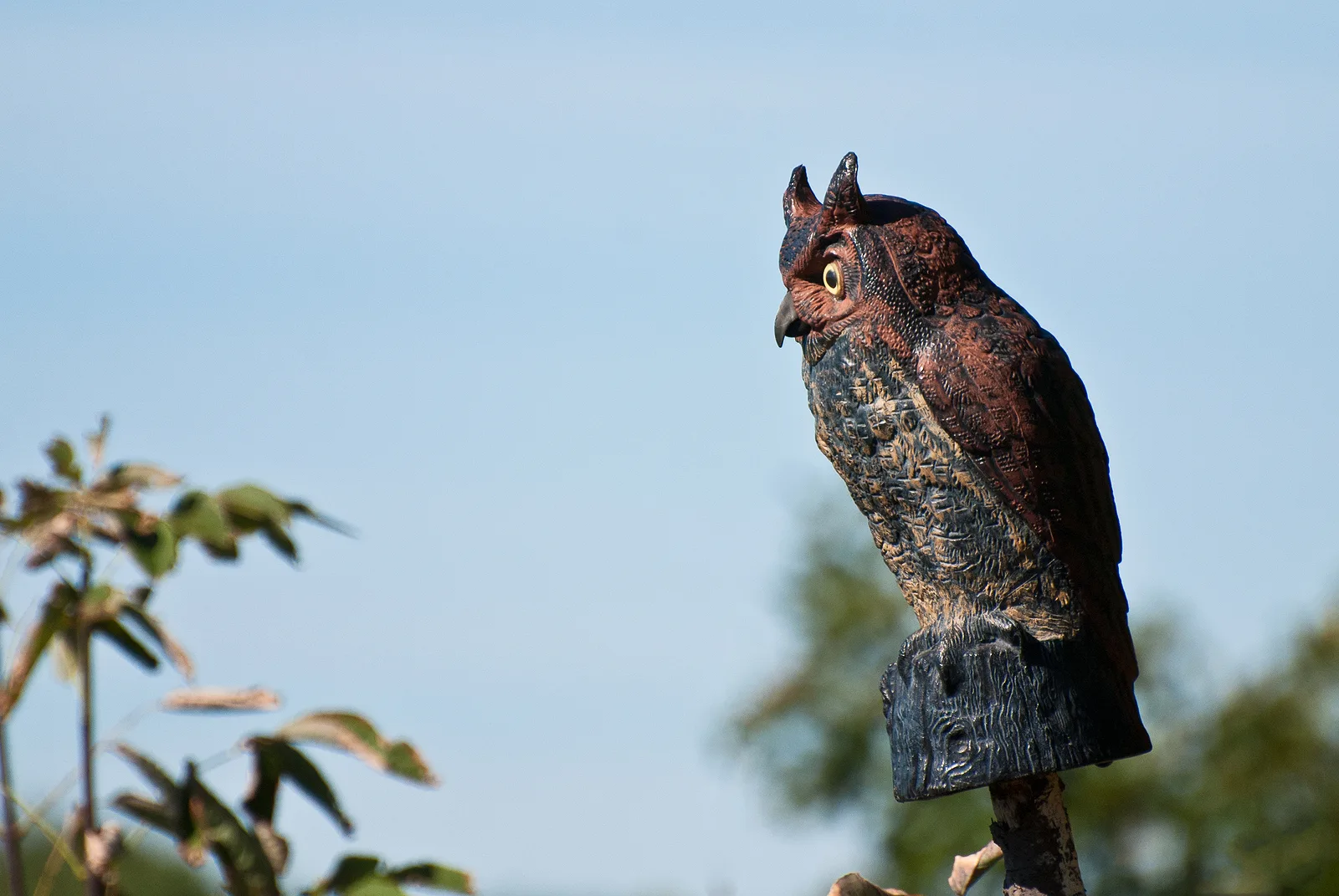
Plastic owls and owl statues are the most common predator decoy for doves. Place one where it is visible from the air and move it to a new spot every two to three days. A decoy that holds still too long stops working quickly because doves will figure out it is not real.
Ultrasonic sound devices emit high-frequency sounds that are unpleasant to birds but inaudible to humans. Used alone, results are inconsistent. Pair one with a spike strip or netting and it adds a real extra layer.
Wind chimes also help. The noise and movement scare nearby birds, especially in quiet areas where they are used to feeling safe.
What Smell Keeps Doves Away?
When physical barriers and deterrents are not enough on their own, chemical repellents can fill the gaps.
Bird repellent gel is a sticky substance you apply to ledges, rails, and other surfaces where they perch. The sticky feel is unpleasant on their feet, and most products are non-toxic. Gel is especially useful on balcony rails, window sills, and narrow ledges where spikes are not practical.
Store-bought bird-repellent sprays use scents that mimic predators or create an irritating smell. They work for a limited time and need to be reapplied, especially after rain.
Homemade Dove Repellents
For a homemade approach, these scents bother doves, though the effect is mild and fades fast outdoors:
- Chili pepper spray: grind about 40 peppers, mix with a gallon of water, let it sit in the sun for a week, add vinegar, and spray
- Peppermint oil: mix a few drops with water in a spray bottle
- Garlic spray: crush garlic cloves, steep in water overnight, strain and spray
- Cinnamon: sprinkle ground cinnamon near nesting areas
- Cayenne pepper spray: mix a few tablespoons with water, strain, and spray on ledges and railings where doves land. The smell puts them off without touching the bird directly.
Keep homemade sprays away from areas pets touch or lick, since chili, cayenne, garlic, and oils can irritate them. Reapply after rain.
How Do I Keep Doves Away From My House Long Term?
Getting rid of doves once is easy compared to keeping them gone. Here is how to prevent reinfestation.
Seal all entry points. Check your roof, chimney, walls, and the ledge above your front door for openings. Doves nest in the sheltered space over a front door more than almost anywhere else, so look there first. Even a small gap can become a nest site, and they love a covered ledge or porch light.
Use wire mesh or caulk to close them up.
Inspect your property regularly, especially from March through summer when nesting peaks. Look for twigs, droppings, and other signs that a dove has started to build. Clear nest debris early, before eggs are laid (check local laws first).
Watch the quieter corners of your yard too. Doves will nest in a palm tree, in the cover of flower beds, or in an overgrown hedge. Trim dense shrubs and trees near your house, since the less cover nearby, the less attractive your property becomes.
A single deterrent rarely works alone because these birds adapt fast. Running two or three together holds up best, especially through spring when the nesting drive is strongest.
Are Mourning Doves Protected?
Yes. Mourning doves are protected under the Migratory Bird Treaty Act, which makes it illegal to trap, harm, or kill them outside a regulated hunting season. They are a legal game bird in most states with their own season and bag limits, but that permit process has nothing to do with a backyard nuisance problem. You also cannot remove active nests with eggs or young birds inside.
This is not as limiting as it sounds. The deterrent and prevention methods described above are fully legal, and they are more effective than trying to remove birds anyway.
Before nesting season peaks in March and April, clear old nest material from ledges, gutters, and window overhangs. Once a mourning dove has eggs in the nest, wait until the young birds can fly. Then remove the nest material and block the spot so they cannot rebuild.
Rock pigeons (the city pigeon most people recognize) are in the same family as mourning doves but are not federally protected. If you have both species on your property, the same deterrent methods work on rock pigeons too. Only mourning doves carry federal protection.
House sparrows and European starlings are not protected either, so if you are dealing with a mix of species, the rules are different for each one. For most suburban dove problems, this does not come up. The passive deterrents here pose no legal risk.
When to Call a Pest Control Professional
Most dove problems can be handled on your own. But there are situations where professional help makes sense.
Call a pest control professional if:
- The dove population is large and causing damage to your roof, balcony, or buildings
- Bird droppings have built up into a real health risk
- You have tried multiple methods and they keep coming back
- You are unsure about local wildlife protection laws
Professionals can install commercial-grade barriers, apply professional-strength repellent gel, and advise on long-term strategies. They also know the rules in your area, which vary by state and city. Some doves are protected by the Migratory Bird Treaty Act, so any removal has to stay on the right side of the law.
Getting rid of doves comes down to three things: cut off their food, block their favorite spots, and make your property feel unsafe to them. Start with the basics like cleaning up spilled seed and sealing nesting areas, then add deterrents as needed. Be patient and combine multiple methods for the best results. If the problem is beyond what you can handle, a pest control professional can step in with stronger solutions.
Dealing with more than doves? Our how to get rid of birds hub covers every species on the site.
Free: The 5-Step Bird-Proofing Checklist
Work through the right steps in the right order, before spending money on the wrong deterrents. Printable PDF, straight to your inbox.
No spam. Unsubscribe any time.