Pigeon Nests: Identification, Timing, and What to Do
Contents[hide]
- 1. What a Pigeon Nest Looks Like
- 2. Where Pigeons Build Nests
- 3. Check Whether the Nest Is Active
- 4. What to Do at Each Nest Stage
- 5. Cleaning and Closing the Site After the Birds Leave
- 6. Check the Rules Before You Remove Anything
- 7. Frequently Asked Questions
- 8. When to Call a Rehabilitator or Bird-Control Professional
Quick Answer
A pigeon nest is usually a shallow, flimsy platform of loose plant debris on a sheltered flat ledge. If the nest is still active, do not move it casually. Mark the location, keep people and pets back, confirm local rules, and wait for the young to leave or call a wildlife rehabilitator. Once the nest is inactive, damp-clean the residue and block the exact spot before the pair tries to rebuild.
In this article, you'll learn to identify pigeon nests, judge their stage, and respond safely. We'll cover nest identification, active-nest timing, and safe exclusion.
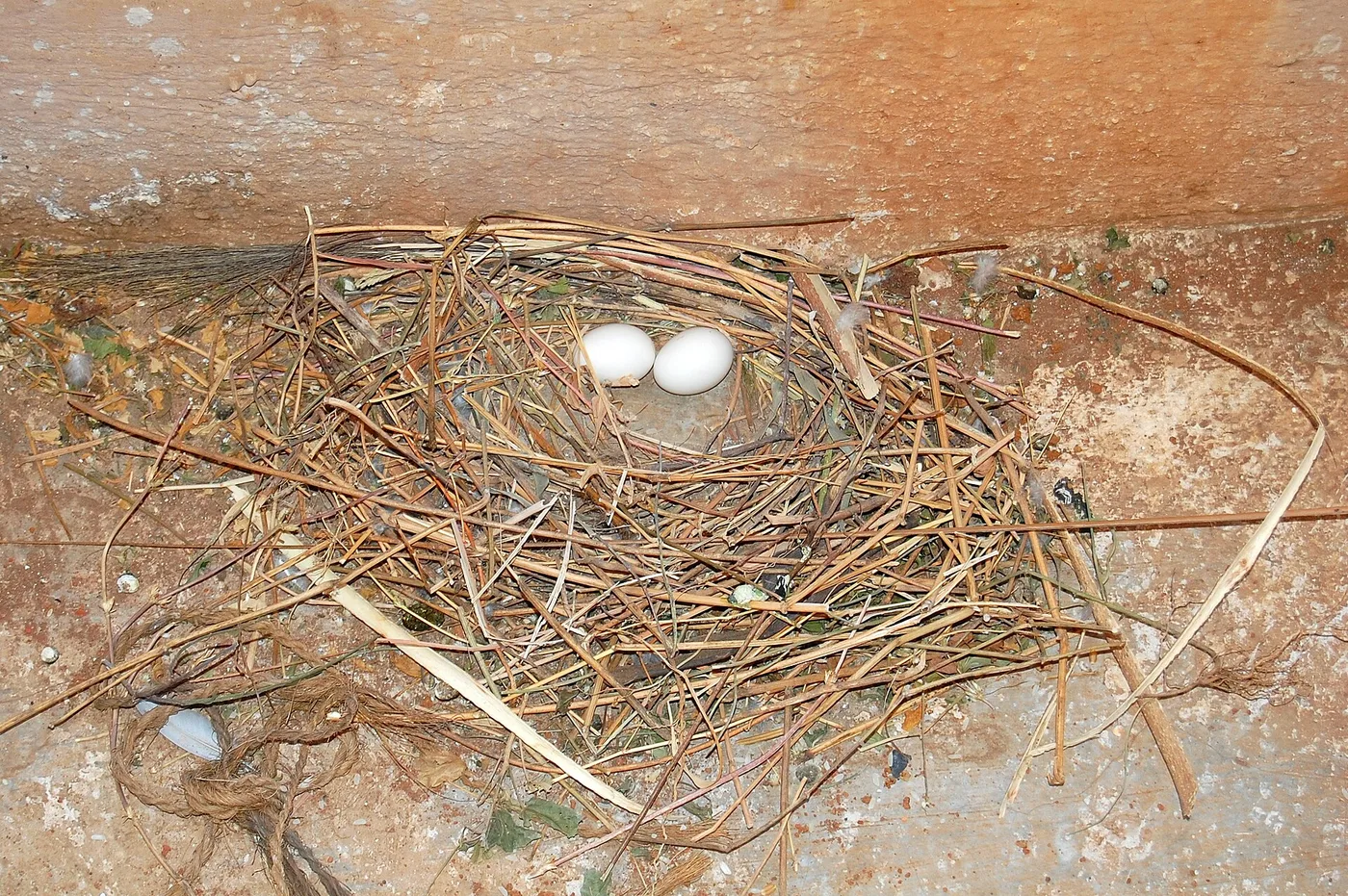
What a Pigeon Nest Looks Like
Pigeon nests are not much to look at. The female builds a shallow, flimsy platform from straw, stems, and sticks that the male carries over one piece at a time, according to Cornell’s Lab of Ornithology. The result looks loosely stacked, closer to a scattered pile than a woven cup, and that’s normal. A messy-looking nest hasn’t failed.
Look for one or two white eggs sitting low in the middle of the pile, or later, chicks with pink skin and sparse yellow down. Fresh droppings, bits of down, and a flattened, packed center all point to a nest in active use rather than old debris left over from a previous season.
Where Pigeons Build Nests
Pigeons naturally nest on rock ledges and cliff faces, where overhead cover and a flat surface underfoot shield the nest from weather and predators. A building offers the same shape of shelter, and Cornell lists building ledges, gutters, stairwells, and abandoned rooms as typical sites. That’s why the same handful of spots keep turning up: a sheltered balcony corner, a recessed ledge under a roofline, the back of a lit sign, or inside an air-conditioner cage or rooftop equipment enclosure. Any flat, covered surface out of the wind and rain qualifies as a nest site.
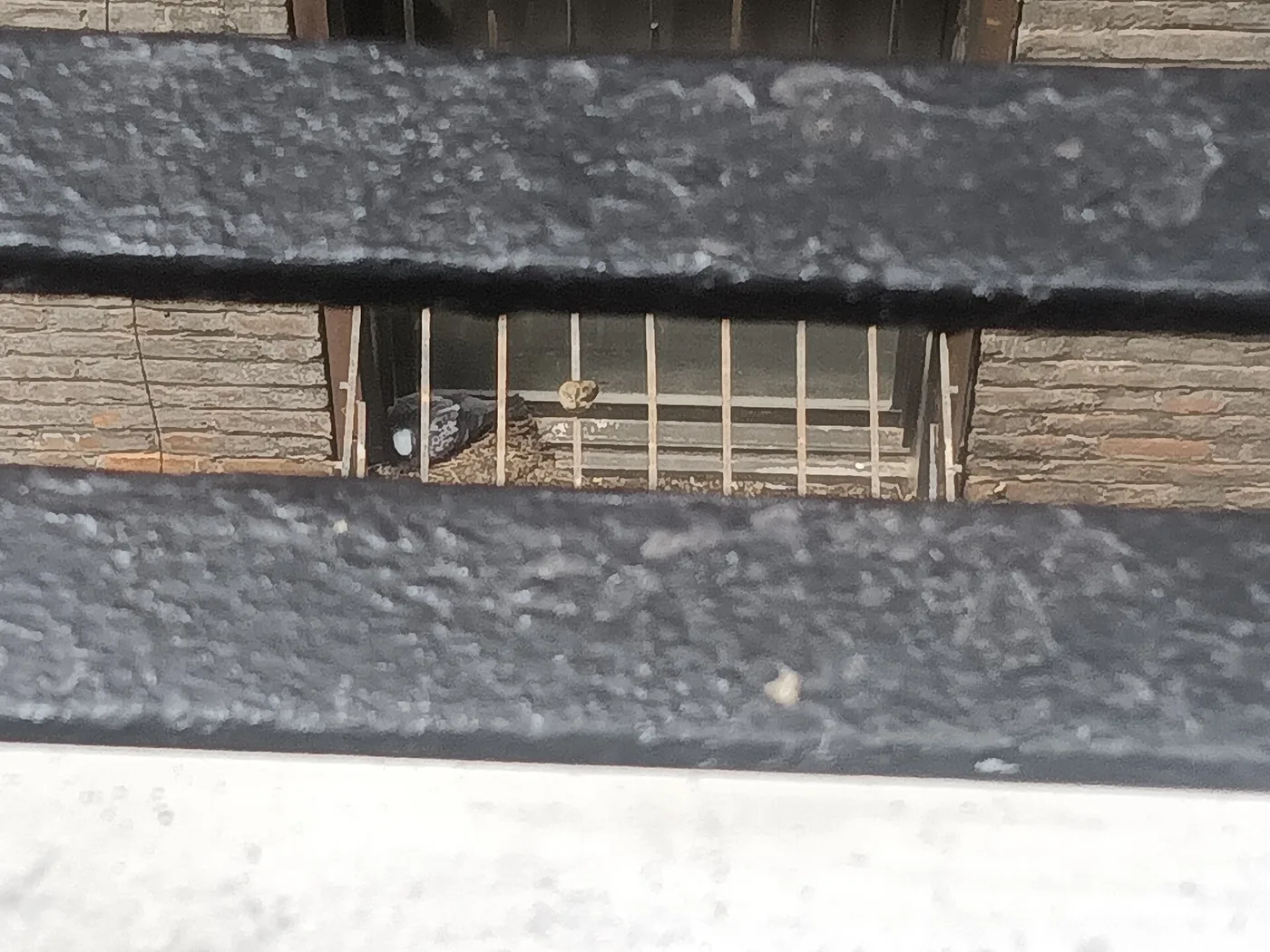
Balconies are especially attractive to pigeons because they combine everything a nest site needs: an overhang for cover, a flat floor, and a corner sheltered from wind on at least two sides. Once a pair raises a brood successfully on a balcony, their nests tend to reappear in that same corner season after season, and the presence of humans nearby rarely discourages them the way it discourages more skittish birds. Simply using the space, closing the door, or moving furniture around is usually not enough to prevent pigeons from resettling on balconies that stay physically open; the site has to be closed off before they’ll look elsewhere.
If you’re not certain the bird you’re watching is actually a pigeon, confirm the identification first. Doves can also build loose platform nests, while sparrows and finches often use gaps and cavities. Nest shape and location are clues, not proof. Identify the adult bird before you treat the site as a pigeon nest, because other birds nesting in a similar spot may be protected.
Check Whether the Nest Is Active
Before you do anything else, find out what stage the nest is in. Look for eggs first. They’re usually white, laid one or two at a time, and incubation runs about three weeks, according to the Toronto Wildlife Centre. Do not touch an egg to check its temperature; that tells you nothing reliable and risks damaging it.
A parent that’s out of sight doesn’t mean the nest is abandoned. Pigeons leave to feed and can be away for stretches even during incubation. Watch quietly from a distance across a few visits, at different times of day, for an adult returning to sit or feed chicks before you assume no one’s coming back.
If you see chicks, look at their appearance instead of counting days from when you first spotted the nest. Closed eyes and pink skin mean they hatched recently. Feathered wings and standing chicks mean they’re close to fledging.
What to Do at Each Nest Stage
Pigeon nests move through three fairly predictable stages, and what you do next depends entirely on which one you found.
A Nest Site Before the First Egg
If the nest site holds only loose material and nothing has been laid yet, this is the easiest stage to act on. Brush the material away, wipe down the surface, and block the spot right away so the pair doesn’t simply rebuild overnight. Since there are no eggs or chicks to protect yet, there’s no welfare concern at this stage, but waiting even a day or two risks the first egg showing up before you close the gap.
Eggs in the Nest
Once the clutch is present, leave the nest exactly where it is. Moving it, even a short distance, can cause the parents to abandon it instead of following it, according to the Toronto Wildlife Centre. If a nest genuinely has to move for safety reasons, that call belongs to a wildlife rehabilitator, not a DIY relocation. Mark the area so household members, tenants, or maintenance crews know to stay clear, and keep pets away from that section of the balcony or roof. Incubation runs about three weeks, so plan on the site staying active that long before hatching, and longer after that before it’s empty. Check the rules that apply to your situation before you plan any removal; see checking local rules below.
Chicks in the Nest
Once the clutch hatches, the parents keep tending the nest closely, and the chicks stay put until they can fly. Cornell reports a nestling period of 25 to 32 days, and the Toronto Wildlife Centre puts it at under four weeks in most cases. Treat that as a rough window, not a countdown, and confirm the nest is empty by watching rather than counting days. Keep people and pets back, avoid handling the chicks, and leave the nest undisturbed. This is also why you rarely see a baby pigeon out in the open: chicks stay hidden in the nest until they’re nearly full grown, unlike many songbird chicks that leave while still partly feathered.
Cleaning and Closing the Site After the Birds Leave
Before you touch anything, remember that a quiet nest isn’t the same as an empty one. A parent can be away foraging even late in the season, so a single quick look isn’t enough to call it clear.
Once you’re sure no birds are using the site, closing it well comes down to four steps:
- Confirm it’s empty. Watch across several visits, at different times of day, with no adults returning and no chicks visible.
- Protect yourself before cleaning. Disturbing dried droppings can throw contaminated dust into the air. The CDC recommends dust-suppressing methods such as wetting material before removal instead of sweeping or shoveling it dry. For a large accumulation or an enclosed space like a stairwell or equipment room, call a trained cleanup professional rather than treating it as routine housekeeping.
- Clear the debris and clean the surface. Wipe down the ledge or recess and let it dry. Cleaning up bird droppings safely walks through the full process.
- Block the exact spot. Before you install anything, check the immediate site once more. Pigeon pairs sometimes start a new nest before the first brood has even fully fledged, according to the Toronto Wildlife Centre, so a second nest can turn up right next to the one you just watched empty out. This is the step that actually keeps pigeons from coming back; cleaning alone does not prevent them from rebuilding nests in the same corner within days.
Netting and spikes are the two most common exclusion methods, and they work differently. Netting closes off the whole recess or balcony, so it’s effective almost anywhere pigeons can land, but it has to go up taut; loose netting can entangle birds, per the Toronto Wildlife Centre. Spikes only guard a narrow ledge, so they work well on rails and beams but leave open corners unprotected. For a balcony, exclusion options that hold up over time are worth setting up once the nest is gone; pigeons that raised one brood successfully in a spot will keep building nests there unless it’s physically closed off.
Check the Rules Before You Remove Anything
Rock pigeons, the common city pigeon, aren’t on the federal list of species protected under the Migratory Bird Treaty Act. That doesn’t mean anything goes. State and local wildlife rules, lease terms, condo or building bylaws, sanitation codes, and general animal-welfare duties can still limit what you’re allowed to do and when, so check those before removing active nests.
Species identification matters here too. If you’re not fully sure the nest belongs to a pigeon and not a native bird, stop. Most native migratory bird nests are protected while they hold eggs or dependent young, according to the US Fish and Wildlife Service, and disturbing one can harm the birds inside and bring real legal penalties. When in doubt, get a positive identification before you act. Distinguishing pigeon nests from other protected species covers the birds most often mistaken for one another.
Frequently Asked Questions
What Does a Pigeon Nest Look Like?
A pigeon nest is a shallow, loosely stacked platform built mostly of straw and stems, usually on a flat, sheltered ledge. The female builds it from material the male brings her, so it often looks messy or unfinished next to a woven songbird nest. Look for one or two white eggs, or later, chicks with sparse yellow down, sitting low in the center.
How Long Until the Young Leave?
Pigeon chicks usually leave nests in under four weeks. Cornell’s Lab of Ornithology puts the nestling period at 25 to 32 days, but treat that as a rough window rather than a countdown. It’s important to confirm the nest is empty by watching for continued adult activity before assuming the young are gone.
Can I Move an Active Pigeon Nest?
No, you should not move an active pigeon nest. Even shifting it a few feet can cause the parents to abandon it instead of following it. Wait for the young to fledge naturally, or contact a wildlife rehabilitator if the nest genuinely has to move for safety reasons.
How Do I Know a Pigeon Nest Is Empty Before I Seal the Site?
Watch the site across several visits, at different times of day, for returning adults, feeding activity, or chicks still visible in the nest. A parent’s brief absence is not proof the nest is empty, since pigeons leave to forage even during incubation. Only close the site once you’ve confirmed nothing is left in it and no adults are returning, over multiple checks.
When to Call a Rehabilitator or Bird-Control Professional
Call a wildlife rehabilitator if you find a chick that looks injured, is out of the nest before it can fly, or seems orphaned after a full day of watching. Call one too if you’re not sure the species is a pigeon at all.
Call a bird-control professional once the nest is empty and closed, if pigeons keep rebuilding nests on the same ledge or balcony, or if droppings have built up across a large area. A professional can install exclusion that actually holds up and walk you through a full pigeon control plan if this is more than a single nest.
Images: Pigeon nest with eggs by Sanjay Acharya, CC BY-SA 3.0. Pigeon nesting in an air-conditioner cage by Jay Dobkin, CC BY-SA 4.0. Both via Wikimedia Commons.


Free: The 5-Step Bird-Proofing Checklist
Work through the right steps in the right order, before spending money on the wrong deterrents. Printable PDF, straight to your inbox.
No spam. Unsubscribe any time.