Bird Proofing Your House: How to Do It Right (Step by Step)
Contents[hide]
- 1. When Is the Best Time to Bird Proof Your House?
- 2. How Do You Bird Proof Your House? (Step by Step)
- 3. How to Stop Birds Landing on Ledges and Rooflines
- 4. How to Bird Proof Solar Panels
- 5. What Attracts Birds to Your House in the First Place?
- 6. Which Birds Cause the Most Problems?
- 7. How Much Does Bird Proofing Cost?
To bird proof your house, block every landing and nesting spot before birds move in. Seal gaps around vents and eaves, cap the chimney, and add spikes or netting to ledges. Remove the food drawing them. Act before nesting season: once eggs appear, most nests are federally protected and your options shrink.
In this article, we’ll cover how to seal every entry point birds use, which surfaces need spikes or netting, and why timing beats everything else.
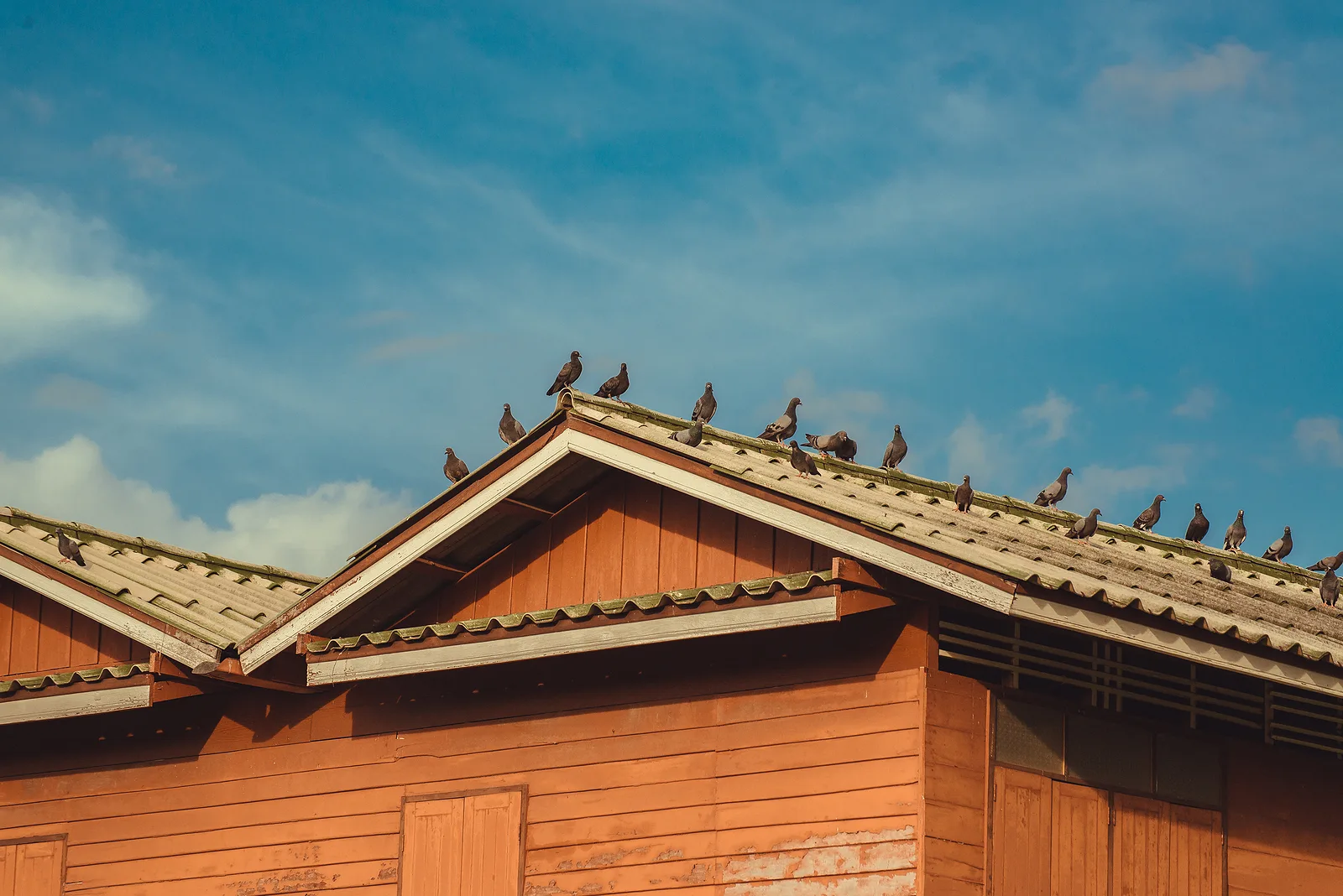
The whole game is prevention. A blocked ledge keeps birds out for years; a scare device buys you days before they adapt. So the job runs in order: time it right, seal the openings, block the perches, then take away what drew the birds in.
When Is the Best Time to Bird Proof Your House?
The best time to bird proof is late winter or early spring, before birds start nesting. Do the work in fall or winter when ledges and vents are empty, and you avoid both the mess and the legal problem of disturbing an active nest.
That law matters. Most native birds in the US are protected by the federal Migratory Bird Treaty Act. It is illegal to harm them or disturb an active nest with eggs or chicks. There is a key exception: pigeons, house sparrows, and European starlings are non-native, so they are not protected and their nests can be removed any time.
Those three happen to be the most common house pests. Even so, humane methods are the point here, so the goal is always to block and deter, never to harm. If birds are already building, stopping them from nesting is the next job before you seal anything.
How Do You Bird Proof Your House? (Step by Step)
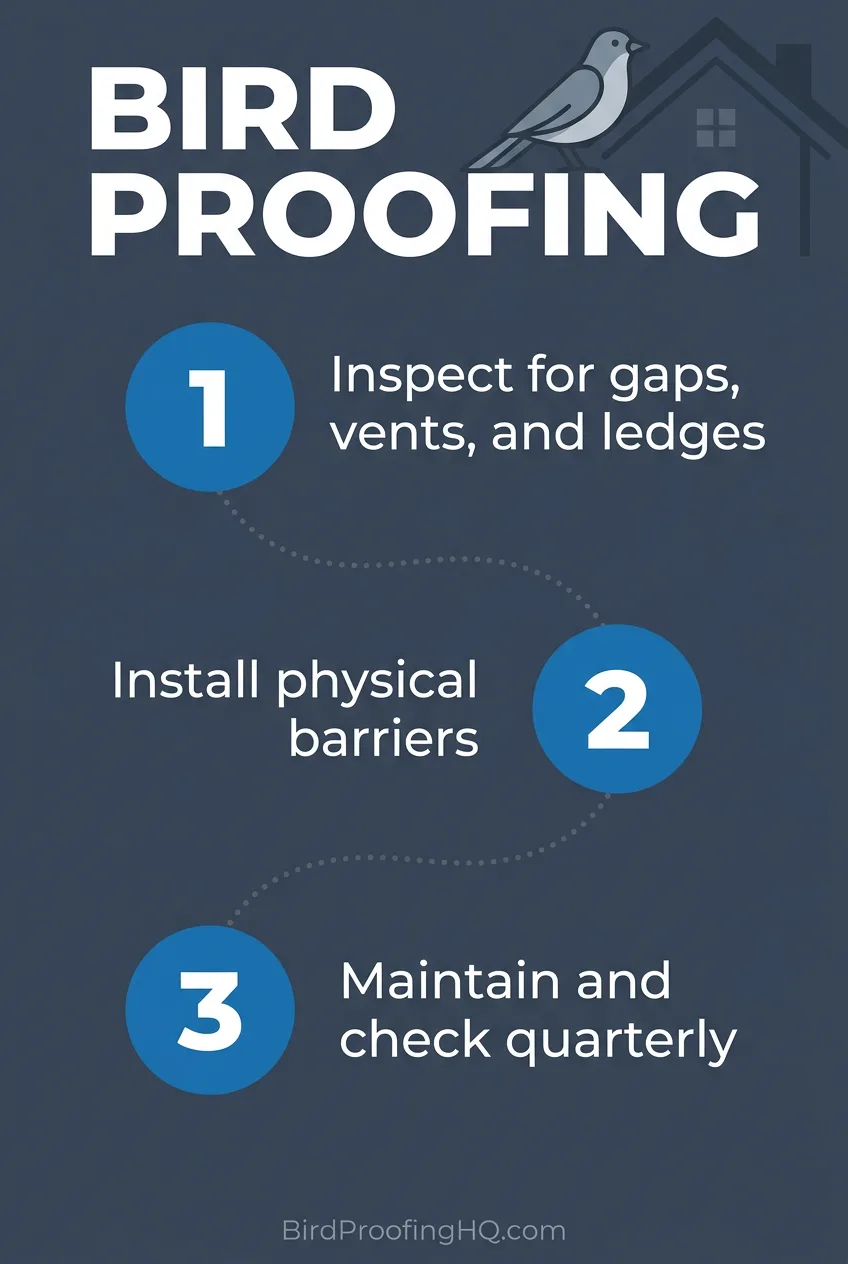
Birds get inside through gaps you stop noticing. Walk the outside of the house and look up at the spots that lead into a cavity.
The usual ways in are open or broken vents, gaps under the eaves and soffits, loose fascia boards, and the chimney. Cover dryer and attic vents with sturdy metal guards, since birds tear through flimsy plastic and screen. Cap the chimney with a proper spark-and-bird cap. Seal gaps under the roofline with mesh or hardware cloth, not expanding foam, which birds and rodents chew through.
If a bird has already gotten into the attic or a vent, get it out first. Confirm the cavity is empty before you seal it, or you will trap the bird inside. Getting a bird out of your house starts with closing the room and opening a clear exit.
Sealing Chimney Openings and Vent Covers
A chimney without a cap is an open door. Fit a steel cap that covers the whole flue and blocks birds without stopping the draw. For dryer vents, bathroom fans, and attic vents, swap plastic flap guards for heavy steel mesh covers. Birds tear through plastic in a morning, and any hole bigger than a quarter-inch lets a sparrow in.
While you are up there, run your hand along the overhangs and soffits. Any gap wider than your thumb is wide enough for a starling.
Blocking Gaps Under Eaves and Overhangs
Walk the roofline and look for the gap where the soffit meets the fascia board. Birds squeeze into these overhangs and pack the space solid with nesting material. Seal with galvanized hardware cloth cut to fit and screwed flush, not stapled.
Staples work loose in one winter. Use expanding foam only as a backer behind the mesh, since birds and rodents chew through foam on its own.
How to Stop Birds Landing on Ledges and Rooflines
Once the openings are shut, take away the outdoor perches birds use to roost and scout. This is where most of the corrosive droppings come from.
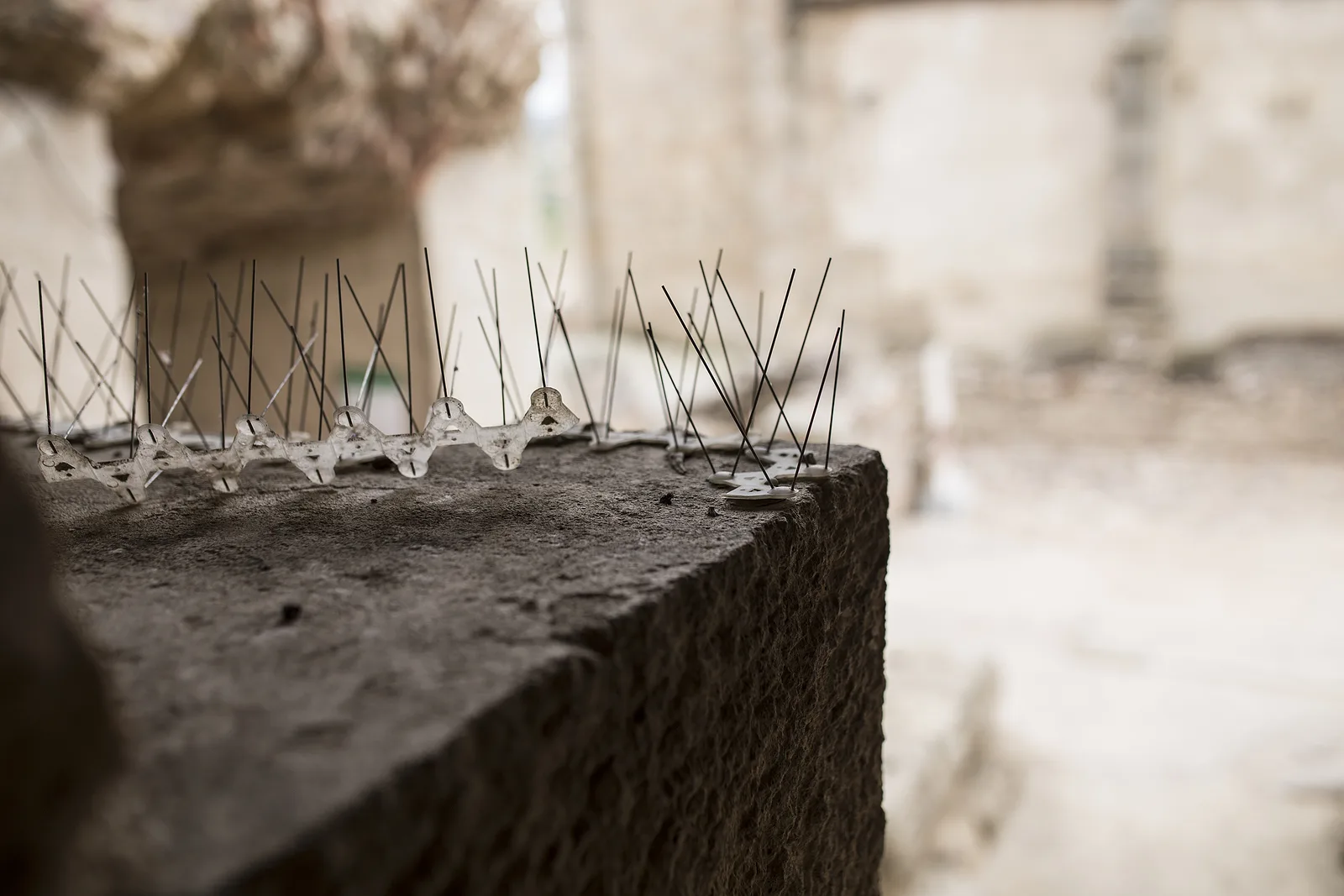
Bird spikes on ledges, beam tops, and rooflines make a flat surface impossible to stand on, without hurting the bird. Roof and ridgeline treatment is the same idea at a larger scale. Larger openings like a carport, balcony, or the underside of solar panels need netting that seals the whole gap instead. On a narrow sign or ledge where spikes look clunky, a sticky or optical gel makes the spot uncomfortable to land on.
Match the tool to the surface, and treat the whole run, since one bare patch is all a determined pigeon needs.
Using Gel and Wire Coils on Narrow Ledges
On a narrow sign, window sill, or ledge where spikes look too bulky, a sticky gel or a coiled wire makes the surface uncomfortable to land on without blocking anything. Wire coils spring up when a bird lands and tip them off. Gel variants leave the surface tacky, so birds stop coming back. Both work best on ledges under 4 inches wide.
Bird Spikes vs. Netting: Which Works Better?
Spikes work on narrow ledges, beam tops, and roofline edges. They stop birds landing without blocking light or airflow, and steel spikes outlast plastic ones by years. Netting works better for larger areas such as a porch ceiling, an open balcony, or the gap under solar panels.
On wide flat surfaces where birds roost, netting seals the whole space instead of treating each landing spot individually. Use spikes for lines and edges; use netting for enclosed areas.
How to Bird Proof Solar Panels
The gap under solar panels is prime nesting real estate: warm, sheltered, and hidden. Birds nesting there foul the panels and chew the wiring, which drags down output. A solar panel bird guard clips a mesh skirt around the array to seal the gap without drilling the panels or voiding the warranty.
What Attracts Birds to Your House in the First Place?
Barriers work better once the house stops being a buffet. Birds come for easy food and stay for the shelter.
Clean up spilled seed and fallen fruit, keep trash closed, and store pet food indoors. Empty standing water from saucers, clogged gutters, and birdbaths near the house. And clean up droppings promptly, both because the uric acid in bird droppings corrodes paint, metal, and stone and because a fouled ledge smells like home to the next bird. A clean, dry, sealed house simply offers birds less.
Which Birds Cause the Most Problems?
The right fix depends on the bird. You will most often proof against the three unprotected non-natives. Pigeons take ledges and rooftops, house sparrows pack into vents and signs, and starlings squeeze into any cavity they can find. Pigeons are the most common and the boldest, so they usually need physical barriers rather than scares.
Start with bird deterrents to match spikes, netting, or scares to the right surface and situation.
How Much Does Bird Proofing Cost?
A DIY job costs less than most people expect. A steel chimney cap runs $20 to $80. A bag of bird spikes covers ten feet for around $15 to $30.
Hardware cloth and vent covers add another $10 to $30 per opening. Most people spend under $100 on a basic seal-and-block job across the main problem areas.
Professional bird proofing costs more because of the labor and the ladder work involved. A single-family home roof and eave treatment typically runs $200 to $600, with larger or harder jobs going higher. If there is an active nest of a protected species involved, a licensed wildlife pro is the legal path and adds to the total.
How Often to Check Your Bird Proofing
Bird proofing is not one and done. Check the spikes, nets, and vent covers a couple of times a year, especially before spring, and patch anything that has come loose. A ten-minute inspection beats a season of cleanup. Keeping birds away from the whole property covers the yard, garden, and everything beyond the house.
Images: roof, bird spike, and bird-proofing step photos and infographic via BirdProofingHQ.
Free: The 5-Step Bird-Proofing Checklist
Work through the right steps in the right order, before spending money on the wrong deterrents. Printable PDF, straight to your inbox.
No spam. Unsubscribe any time.