How to Get Rid of Birds: Find the Right Fix for Your Bird
Contents[hide]
To get rid of birds, identify the species first: the method depends on it. Then work in order: remove the food, add physical exclusion where they land or nest, then rotate deterrents to keep the area feeling unsafe. Check legal status before touching any nest: most birds are federally protected, but pigeons, house sparrows, and starlings are not.
In this article, we’ll cover how to get rid of birds legally, how to match the fix to the species, and where to find each guide.
The Playbook That Works on Every Species
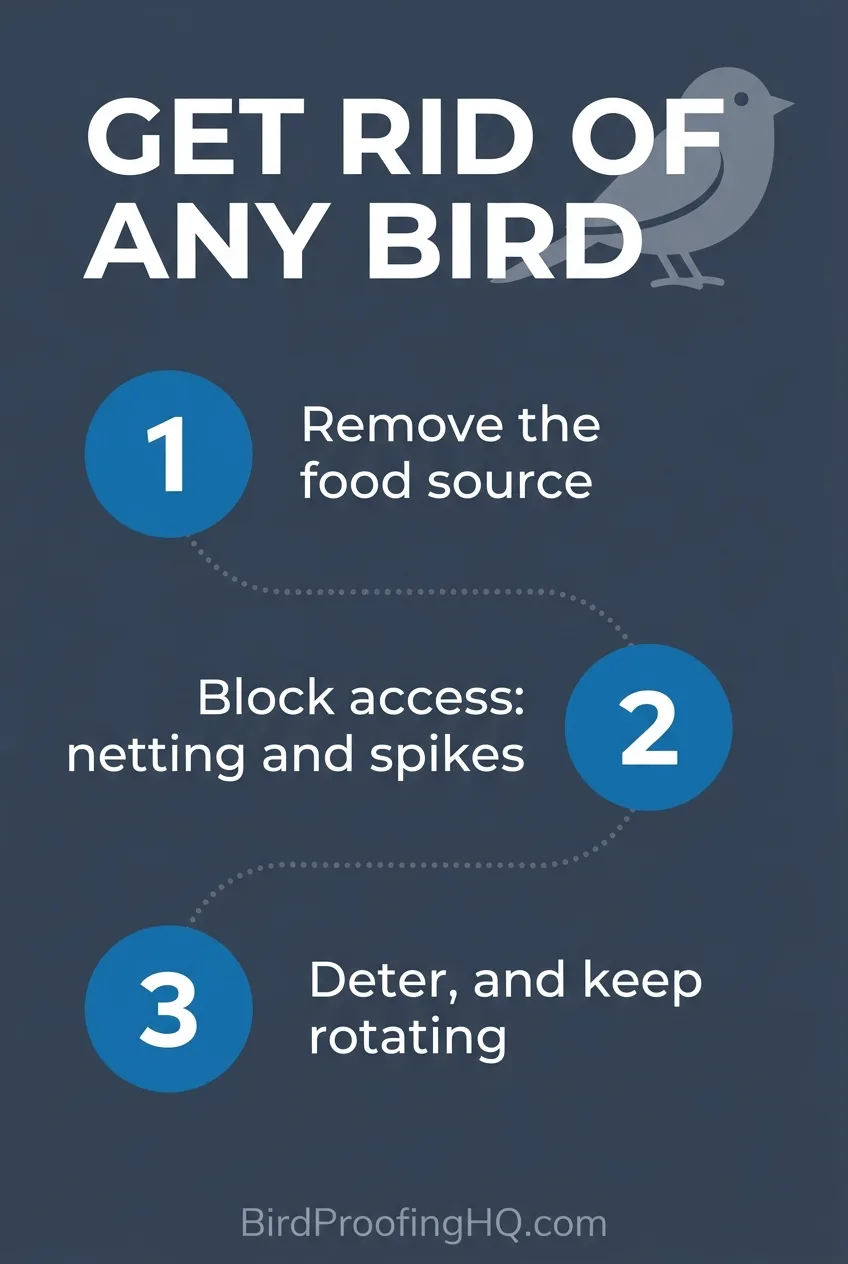
Before the species-specific guides, the universal sequence. Every bird problem responds to the same three moves, in this order:
1. Remove the food. Birds are on your property because something feeds them: unsecured trash, pet food, spilled birdseed, fruit trees, a buggy lawn. Remove the reward and most birds leave on their own. This is the step people skip, and it is why their gadgets fail.
2. Exclude. Physical barriers are the only deterrent that truly lasts, because a bird cannot use a spot it cannot reach. Netting blocks eaves and gardens, spikes clear ledges, vent covers close nesting cavities, and caged feeders protect the birdseed you actually want to offer. Our bird-proofing guide covers exclusion by structure, and bird deterrents covers the full hardware toolkit.
3. Deter. Visual and sound deterrents (reflective tape, decoys, distress calls) push hesitant birds along, but only if you rotate them; every bird habituates to a static prop within days. Natural bird repellents covers what works and what is folklore.
Find Your Bird by Problem Type
Jump to the group that fits your problem, then open the guide for your exact bird.
Feeder and Yard Bullies
Birds dominating your feeders or tearing up the yard:
House sparrows are invasive, unprotected, and the main threat to native nest boxes. Feeder changes and safflower seed solve most sparrow problems.
Starlings descend in flocks and empty feeders in minutes. Also invasive and unprotected. Caged and upside-down feeders exclude them.
Blue jays are loud, smart, and pushy at feeders but native and protected. Feeder design and food choice move them along humanely.
Mockingbirds are fully protected and fiercely territorial. They claim feeders, sing all night, and attack car mirrors during breeding season. Spacing feeders apart and covering reflective surfaces are the main fixes.
Grackles flock like starlings but are protected. Tube feeders with short perches and safflower do the work.
Cowbirds are brood parasites that lay eggs in other birds’ nests. Protected; switch to safflower and skip tray feeders, and protect the songbirds they target.
Crows are too smart for static tricks. Securing trash and rotating deterrents is the only combination that holds.
Magpies raid feeders, gardens, and other birds’ nests in the western states. Protected; deterrence only.
Birds on the Building
Birds roosting, nesting, or drilling on the structure itself:
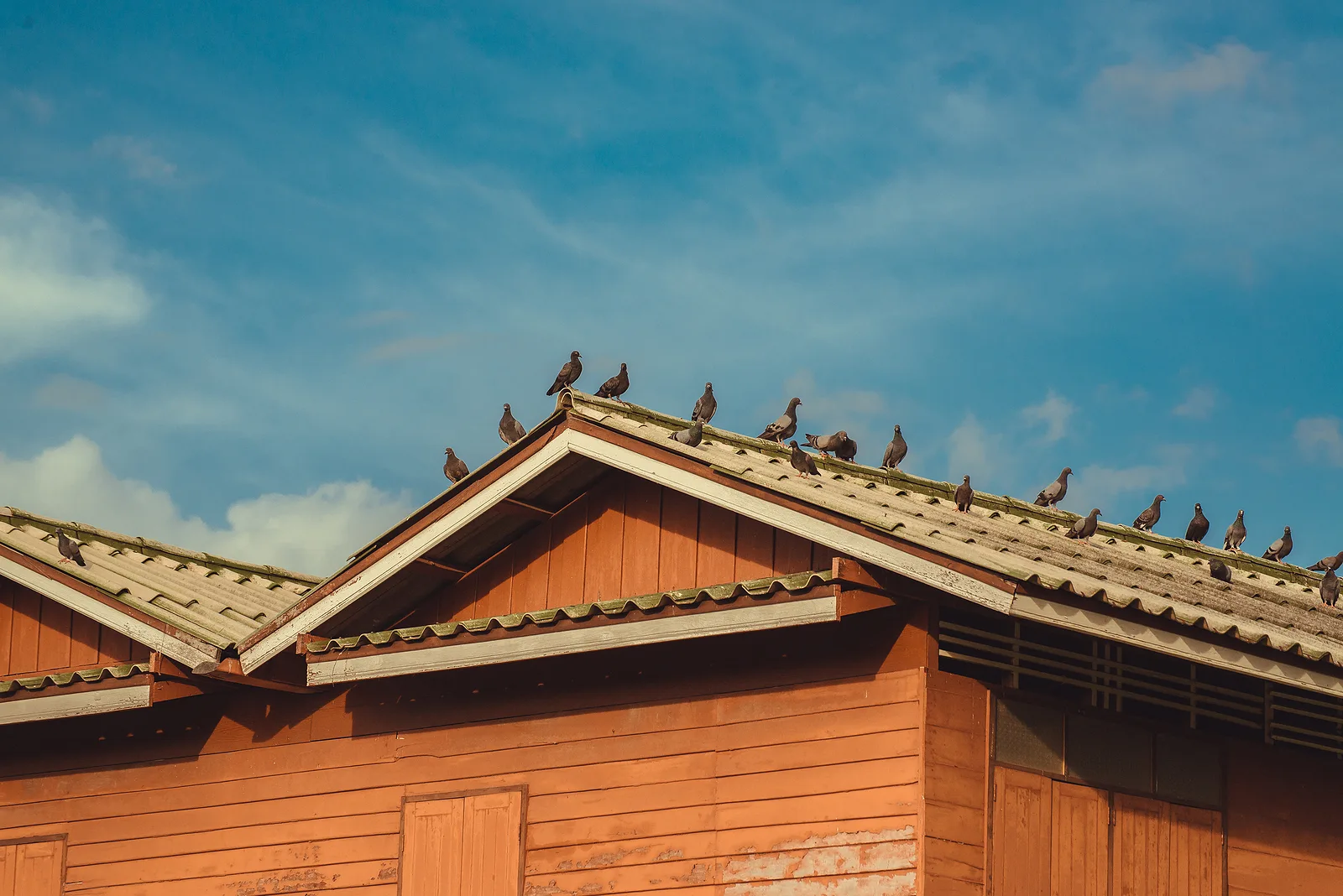
Pigeons claim ledges, balconies, and rooflines, and their droppings do real damage. Unprotected; spikes, netting, and ledge exclusion are the fix.
Swallows glue mud nests under eaves. Federally protected once eggs are laid, so the window to act is before spring.
Woodpeckers drill siding for food, nests, and territorial drumming. Protected; exclusion and deterrents only.
Doves nest on ledges, gutters, and porch lights with famously flimsy nests. Protected and persistent; block the ledge, not the bird.
Seagulls nest on flat roofs and raid trash and outdoor food. Protected; cut the food and block the roof with wire or netting.
Birds on the Lawn
Canada geese graze lawns bare and leave a mess behind. Protected, but hazing is legal: taller grass, barriers at the waterline, and trained dogs work.
Robins patrol lawns for worms and nest on every flat ledge. Protected; manage the lawn and block the ledges.
Wild turkeys and other occasional visitors respond to the general deterrent playbook, and ducks have a guide of their own.
Birds of Prey and Scavengers
Hawks hunting your feeder birds or chickens are fully protected. The answer is cover and enclosure for the prey, never action against the hawk.
Vultures roosting on roofs and towers are also protected. Roost deterrents and patience.
The Legal Line
Worth repeating, because it decides what you can do:
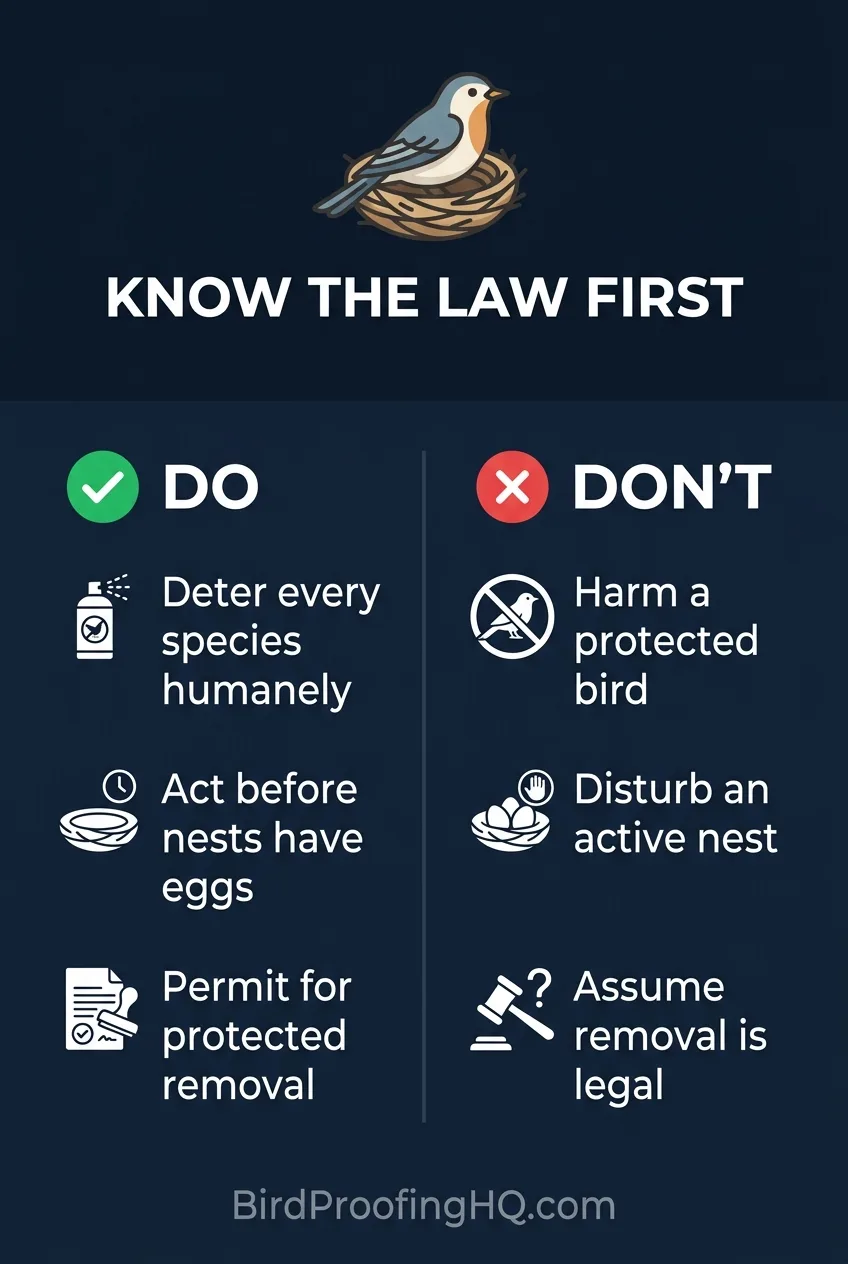
- Protected (almost everything): robins, swallows, crows, hawks, doves, geese, woodpeckers, blue jays, grackles, magpies, vultures, and nearly every other native species fall under the Migratory Bird Treaty Act. You may deter them; you may not harm them or disturb an active nest without a federal permit.
- Not protected (the big three): pigeons, house sparrows, and European starlings are introduced species. Their nests, eggs, and adults can be dealt with at any time.
If birds are building nests right now, how to stop birds from nesting covers the timing rules. If you have found a nest and want to know who built it, types of bird nests identifies the builder.
Specific Trouble Spots
Some problems are about the place, not the species. Birds roost on the porch or nest under your car hood, and the broad fix lives in how to keep birds away. Once the birds are gone, bird droppings cleanup and the mites a nest can leave behind handle the aftermath.
When to Call a Professional
Call a pro for the big jobs. That means birds nesting inside the structure in numbers, a roost grown beyond a few dozen, or droppings piled into a real health hazard. It also means a protected species that needs a depredation permit, which is written permission to remove protected birds. Everything smaller than that, the guides above will get you through.
Here is the honest summary of this whole site. Identify the species, take away the food, and block the access. Then stay consistent for two to three weeks. Birds are not stubborn, they are practical.
Make the place not worth their time and they leave.
Infographics by BirdProofingHQ.
Free: The 5-Step Bird-Proofing Checklist
Work through the right steps in the right order, before spending money on the wrong deterrents. Printable PDF, straight to your inbox.
No spam. Unsubscribe any time.