How to Get Rid of Hawks: Humane Ways to Keep Them Away
Contents[hide]
To get rid of hawks, take away what they hunt. Cover your feeders, protect chickens and small pets, and cut the rodents and open perches that make your yard easy pickings. You cannot trap or harm a hawk, since every hawk in the US is federally protected, so the whole job is making your yard a poor place to hunt.
In this article, we’ll cover how to get rid of hawks legally, what removes the prey they are hunting, and how to protect chickens and small pets.
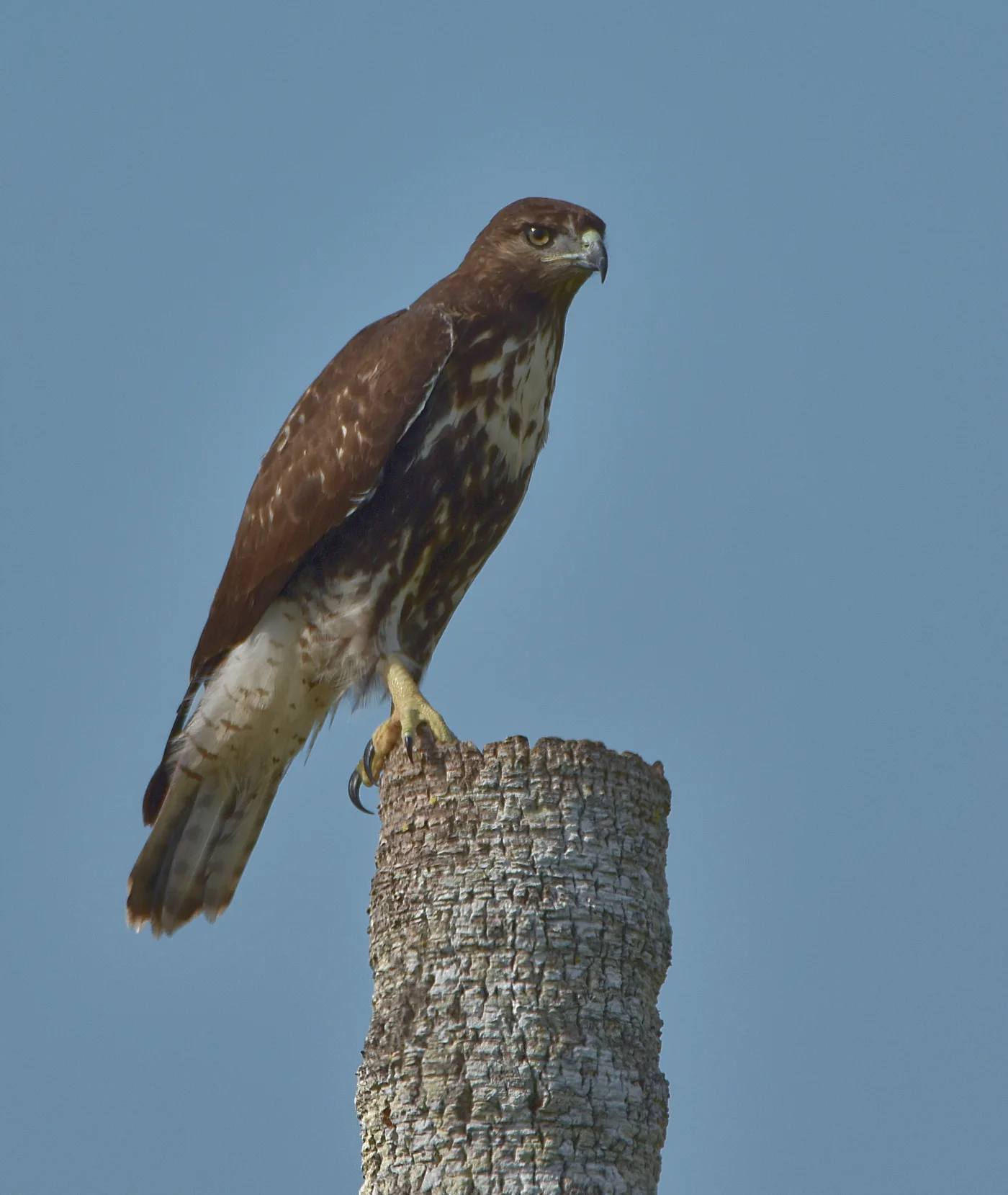
What Hawks Hunt (and Why They Picked Your Yard)
Hawks are birds of prey. They catch food with their talons and eat rodents, large insects, frogs, snakes, small mammals, and other birds. Whatever your yard offers in numbers is what draws a hawk in.
The red-tailed hawk is the one most people see in a yard or suburb. Cooper’s hawks and sharp-shinned hawks matter more if you feed birds, because they specialize in hunting songbirds right at the feeder. All of them hunt the same way: perch somewhere high, watch, and drop on prey below.
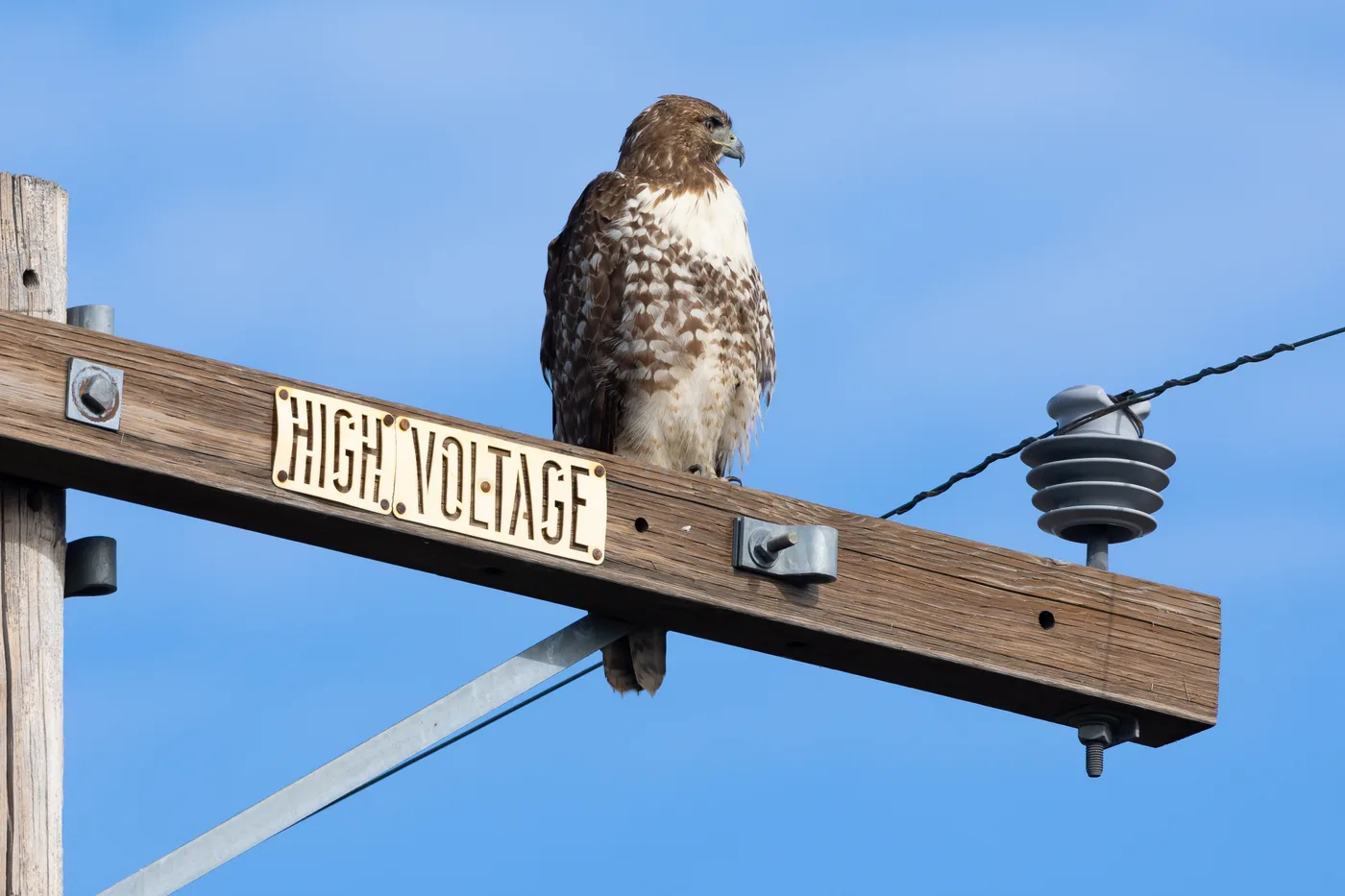
That is why a yard with a busy feeder, long grass full of mice, or open lawn next to tall trees is a magnet. The hawk gets both the prey and the perch in one spot.
Take Away the Prey and the Perches
A hawk hunts where the food is, so cut the food. Keep the yard tidy and the trash sealed, since both feed the rodents a hawk hunts. If hawks are raiding your feeder, take it down for a week or two and the songbirds, and the hawk, scatter.
Then remove the high spots. A hawk likes a tall, exposed perch to hunt from, like high tree branches, a fence post, or a utility pole. Trim back the tree branches it favors. A few bird deterrents like roosting spikes on a flat ledge or post make a landing spot uncomfortable enough that the hawk looks elsewhere.
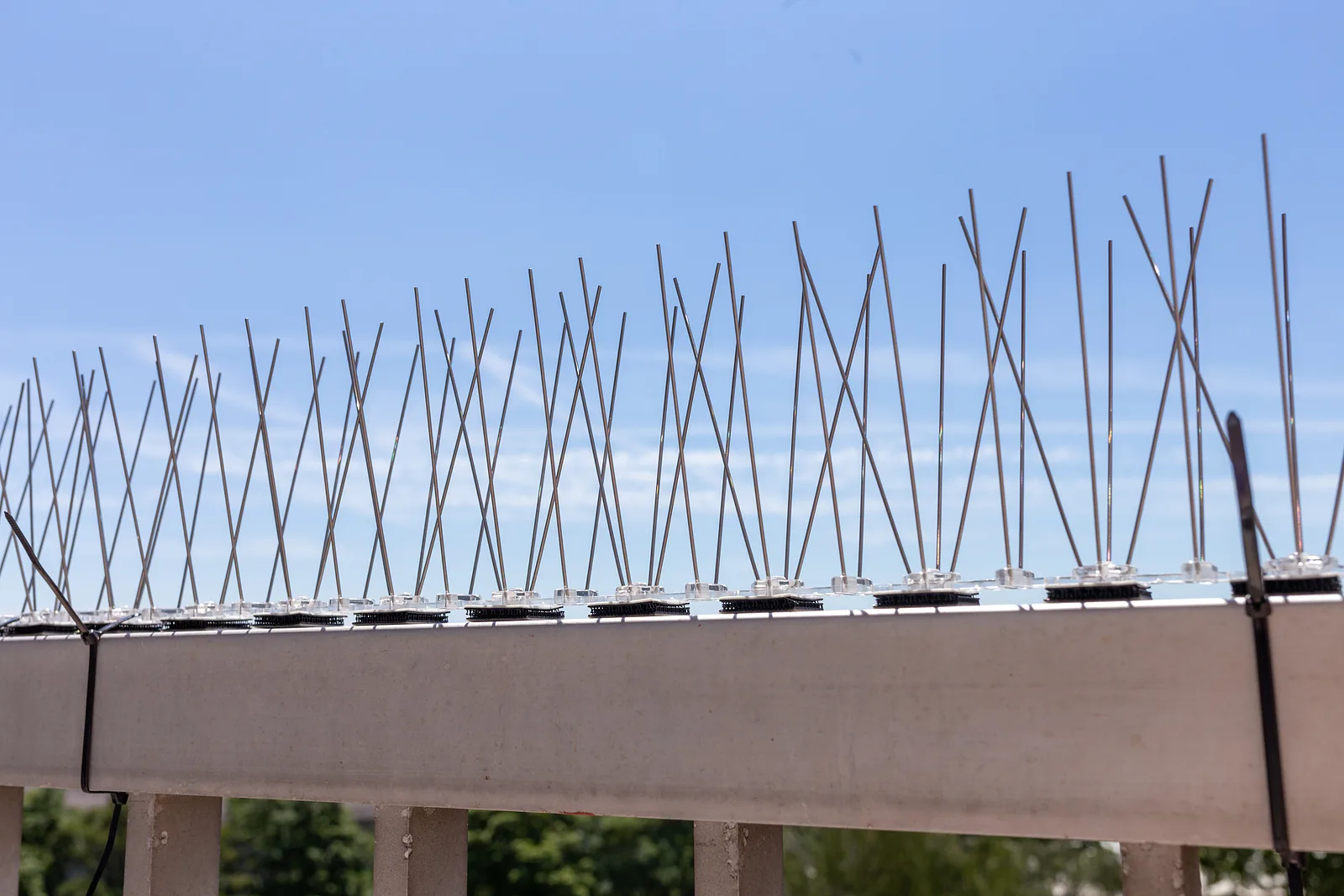
It is worth knowing which spikes hold up under a hawk’s weight and which plastic strips just flatten before you buy.
Scare Them Off: Decoys, Reflectors, and Noise
Scare tactics work best as a backup to taking away the prey. None of them holds on its own, but together they make the yard feel unsafe.
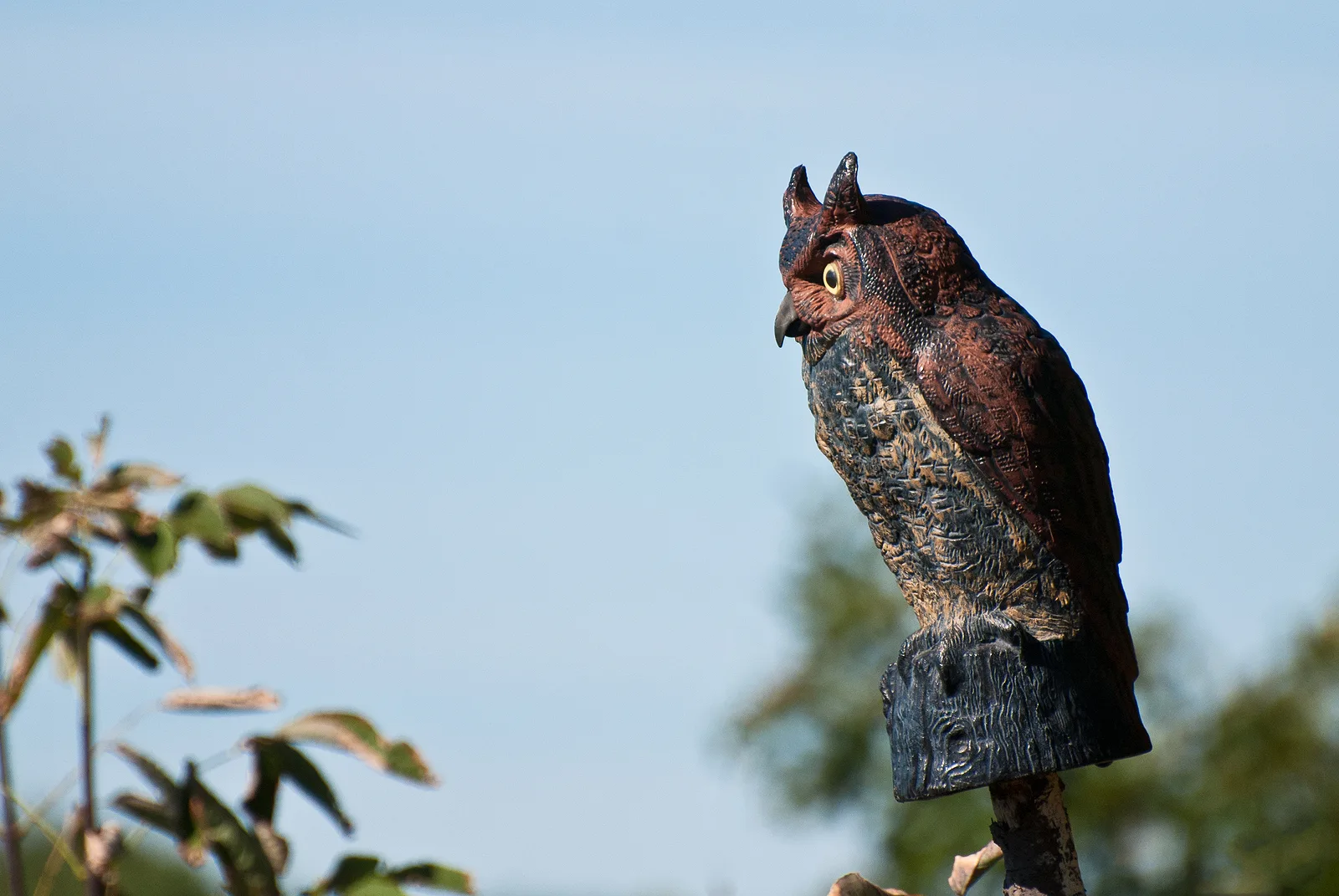
An owl decoy plays on the hawk’s own wariness of bigger birds of prey. Move it every few days, or the hawk learns it never moves and ignores it. Reflective objects like old CDs, mirrors, or strips of tape flash and spin in the wind, which disorients a hunting hawk. One catch: the same flash can scare off the songbirds you want, so use it where that is not a problem.

Noise helps near a coop or run. Wind chimes, a sudden clap, or an ultrasonic device all unsettle a hawk that is lining up a strike.
Protect Small Pets
A hawk cannot carry off a 10-pound dog, despite the stories. It weighs only a few pounds itself and cannot lift much more. But it can injure a small pet by attacking, so a cat or a dog under about 5 pounds should not be loose and unwatched when hawks are around. Supervise them, or give them a covered space to be outside in.
Protecting Backyard Chickens
If you keep backyard chickens, a hawk is the predator you will actually lose birds to. Red-tailed hawks and Cooper’s hawks both take hens, and a free ranging flock in an open yard is easy prey. The fix is cover.
A covered run is the single best protection. Roof the run with hardware cloth or aviary netting so no hawk can stoop in, and the hens can free range underneath without watching the sky. If your flock free ranges the whole yard, give the birds low cover every few feet. A shrub, a pallet on blocks, a picnic table: anywhere a chicken can dash under when a hawk flies over.
Chickens caught in the open are the ones that get hit.
A rooster earns his keep here. Roosters watch the sky and sound the alarm, sending the whole flock running for cover, and a few guinea hens do the same job. Hanging old CDs or reflective tape over the run adds a flash that makes a hungry hawk think twice. A fake owl or two on the fence helps as well, as long as you move them every few days.
A hawk that never catches an easy meal at your place moves on to better hunting grounds. Make every chicken a hard target and the flock stays safe.
The same covered run also protects against the nighttime threat: owls hunting after dark need a solid roof over the run, not just walls, since they attack from directly above.
The Law: Hawks Are Federally Protected
Every hawk in the US is protected under the Migratory Bird Treaty Act, as are nearly all birds of prey. It is a federal offense to harm, kill, trap, or even possess one without authorization, and the penalties run to heavy fines and jail. So every method here is built around deterrence, never harm. If a hawk is a persistent problem you cannot solve, call a licensed wildlife control professional, who can assess the site and act within the law.
Frequently Asked Questions
What attracts hawks to your yard?
Prey and perches. A yard with songbirds at the feeder, rodents in the grass, or free-ranging chickens gives a hawk something to hunt. Tall trees and utility poles give it a vantage point to hunt from. Take away both and the hawk has no reason to stay.
Can a hawk pick up a 10 lb dog?
No. A hawk cannot lift much more than its own weight. Even a big red-tailed hawk weighs only 2 to 4 pounds, so it cannot carry off a 10 lb dog. It can still injure a small pet by attacking, so supervise dogs and cats under about 5 pounds when they are outside.
Do hawks hunt at night?
No. Hawks hunt by day, and a few keep going until dusk, but none hunt in the dark. Night hunting is owl territory. During the day a hawk circles high or watches from a perch and drops on prey below.
What types of hawks are commonly found in residential areas?
Red-tailed hawks are the most common in yards and suburbs. Cooper’s hawks and sharp-shinned hawks turn up too, and they are the ones that hunt birds right at your feeder.
What are some humane methods to deter hawks?
Cover chickens and small pets, cut the rodents and feeder spill that draw prey, remove open perches, and use moving scare tactics like owl decoys, reflective tape, and noise. All of it is legal; harming a hawk is not.
Different bird at the feeder? Start with the bird removal guides.
Images: Red-tailed hawk perched by Kate Perez, CC BY-SA 4.0. Red-tailed hawk on a power pole by Frank Schulenburg, CC BY-SA 4.0. Via Wikimedia Commons.


Free: The 5-Step Bird-Proofing Checklist
Work through the right steps in the right order, before spending money on the wrong deterrents. Printable PDF, straight to your inbox.
No spam. Unsubscribe any time.