How to Get Rid of Owls (Protect Chickens and Pets Legally)
Contents[hide]
- 1. Why Do Owls Hunt Around Your Property?
- 2. Are Owls Protected by Law?
- 3. How to Get Rid of Owls Around Chickens and Pets
- 4. Do Owl Decoys Work?
- 5. How to Reduce the Rodents That Attract Owls
- 6. Can Owls Hurt Cats or Small Dogs?
- 7. Can You Remove an Owl Nest?
- 8. What If You Find an Injured or Trapped Owl?
- 9. A Five-Point Property Walkthrough
- 10. Losses Are Still Happening After You Sealed the Run
- 11. When to Call a Professional
- 12. Related Reading
To get rid of owls, protect what they hunt rather than target the owl, since every species is federally protected. Build a fully enclosed coop with a solid roof, bring small pets in after dusk, and cut the rodents drawing owls to your yard. Decoys do little against a real predator.
In this article, you'll learn how to keep owls away from chickens and pets legally. We'll cover enclosed runs, nighttime protection, and lawful hazing.
Why Do Owls Hunt Around Your Property?
Owls hunt at night, using sound and low-light vision to find prey most people never see moving. A yard with mice, rats, or other small mammals is a reliable hunting ground. An owl will keep returning as long as that food source holds up.
Tall trees, utility poles, and roof peaks give an owl a perch to scan from before it drops on prey below. Cover to hunt from, plus rodents to hunt, is what draws one in and keeps it coming back.
Great Horned Owl vs. Barred Owl: Which One Do You Have?
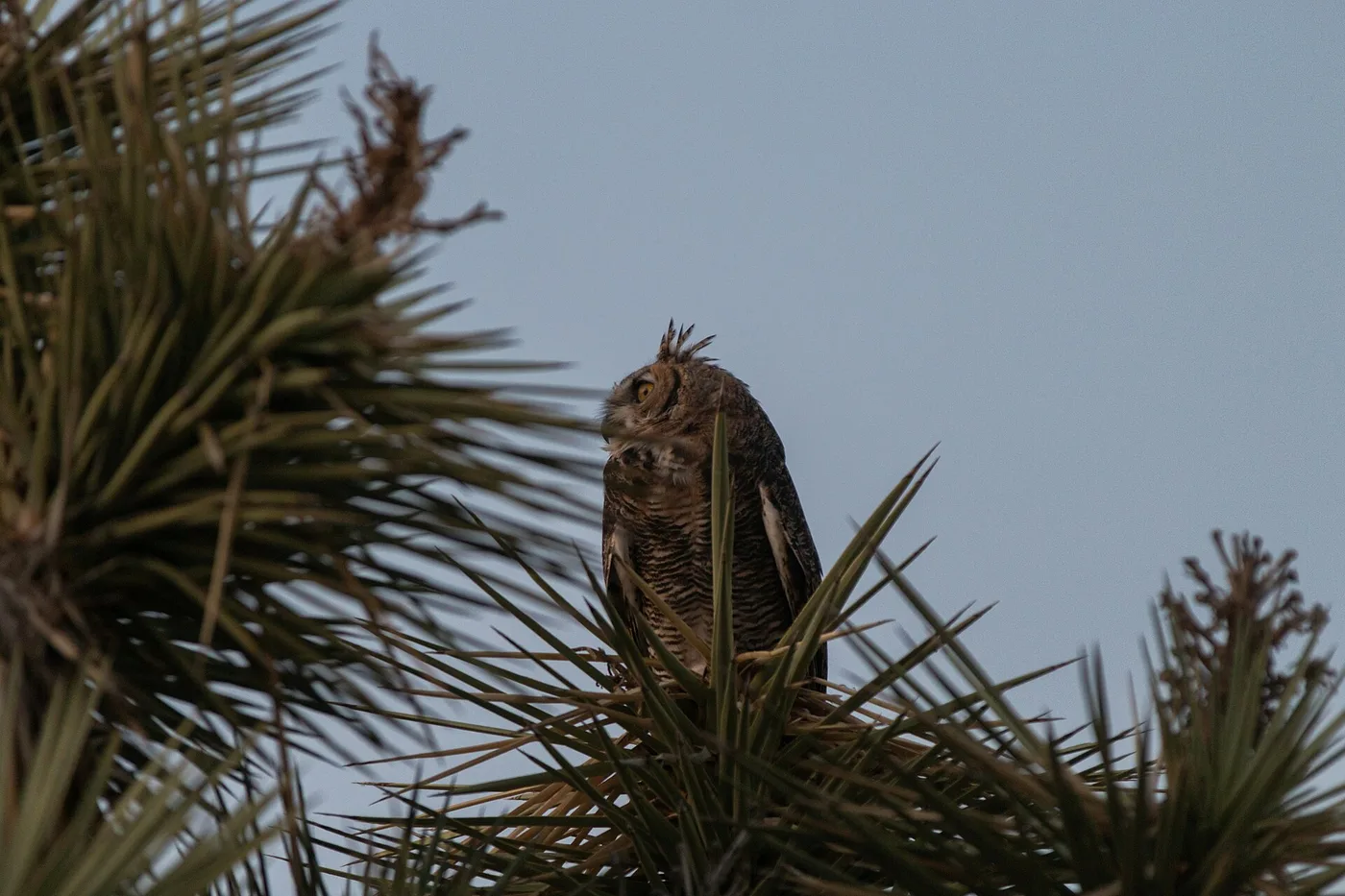
The two most common yard-visiting owls in the US look and sound different. A great horned owl has prominent ear tufts, yellow eyes, and a deep, rhythmic hooting call. A barred owl has a rounder head with no ear tufts and dark eyes. Its call is often described as sounding like “who cooks for you.”
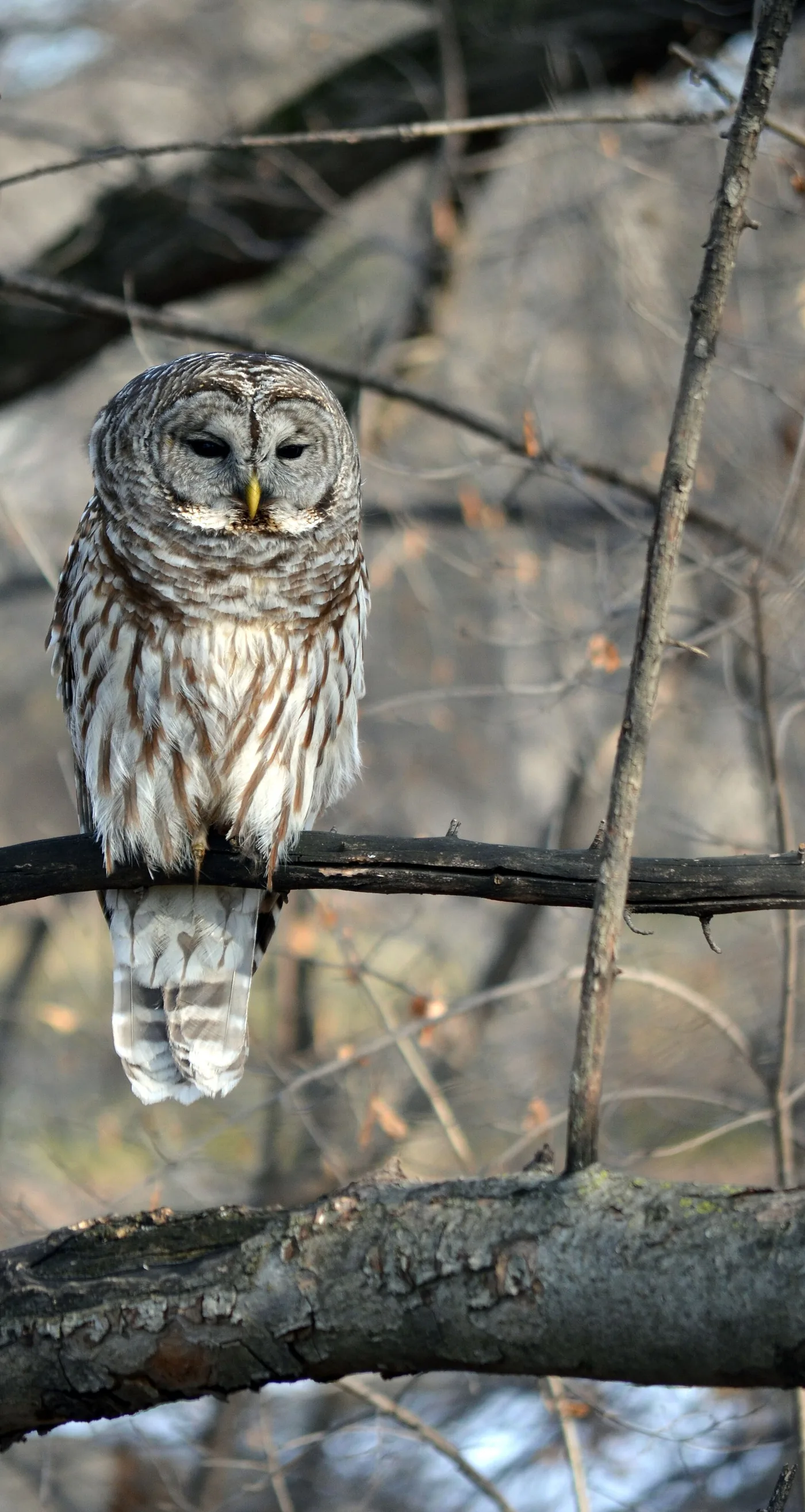
Both are fully protected, and both will take small pets or poultry given the chance. The species matters less for legal purposes than for knowing what you are dealing with.
Take Away the Perch, Not Just the Prey
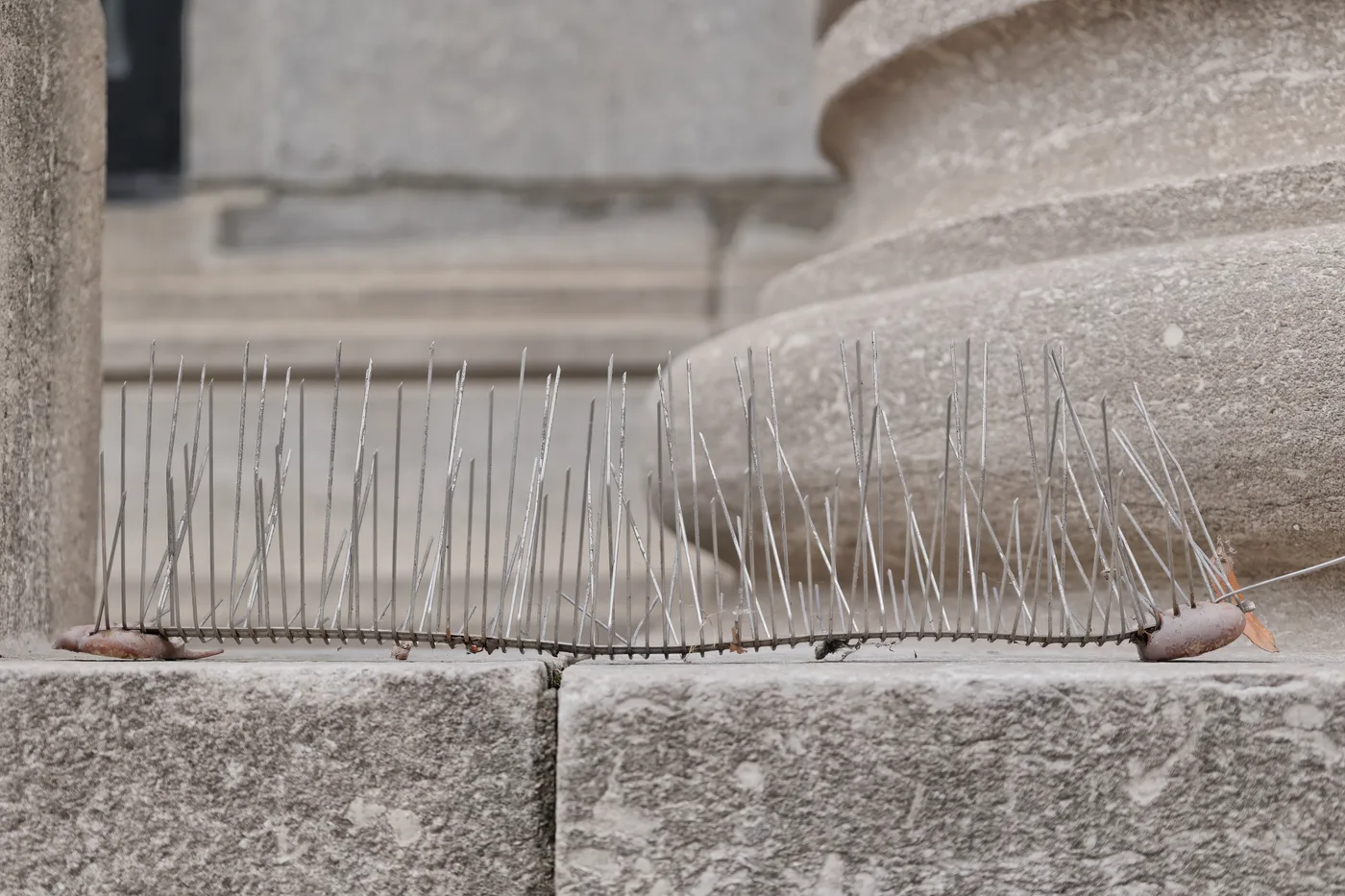
An owl needs a clear vantage point above open ground to hunt effectively. Trim back tall, isolated trees near a coop or pet area. Add a spike strip or angled board to a favorite fence post or roof peak to remove the launch point it depends on. This will not stop an owl from hunting your property, but it pushes the easiest attack angle out of reach.
When Is Owl Activity Highest?
Great horned owls start courting and claiming nest sites as early as December and January, well before most other birds. Eggs typically follow by February or March in much of the US. That puts the hardest hunting and most aggressive nest defense in late winter, exactly when coop upkeep is easiest to let slide.
Activity picks up again in late summer and fall as that year’s young owls disperse and learn to hunt on their own. They often show up in yards an adult owl would normally avoid. A secure coop and clean feeding area matter year-round, but these two windows are when problems tend to start.
Are Owls Protected by Law?
Yes, without exception for native species. Every owl in the United States falls under the Migratory Bird Treaty Act, the same federal law that protects robins and hawks. Killing, trapping, or relocating an owl is illegal without a federal permit, and those permits are reserved for genuine safety emergencies, not routine nuisance cases.
This rules out the instinct some people have to deal with a problem owl directly. The legal path is always to make your property less appealing to hunt or nest on, never to act against the bird.
A depredation permit for a genuine emergency comes from the U.S. Fish and Wildlife Service, not a local animal control office. Your state wildlife agency is the right first call for a specific situation, since some states add extra rules on top of the federal baseline.
How to Get Rid of Owls Around Chickens and Pets
An owl attacks from directly above, dropping silently onto prey with almost no warning. That single fact should drive every part of a coop’s design.
Build a Fully Enclosed Coop and Run
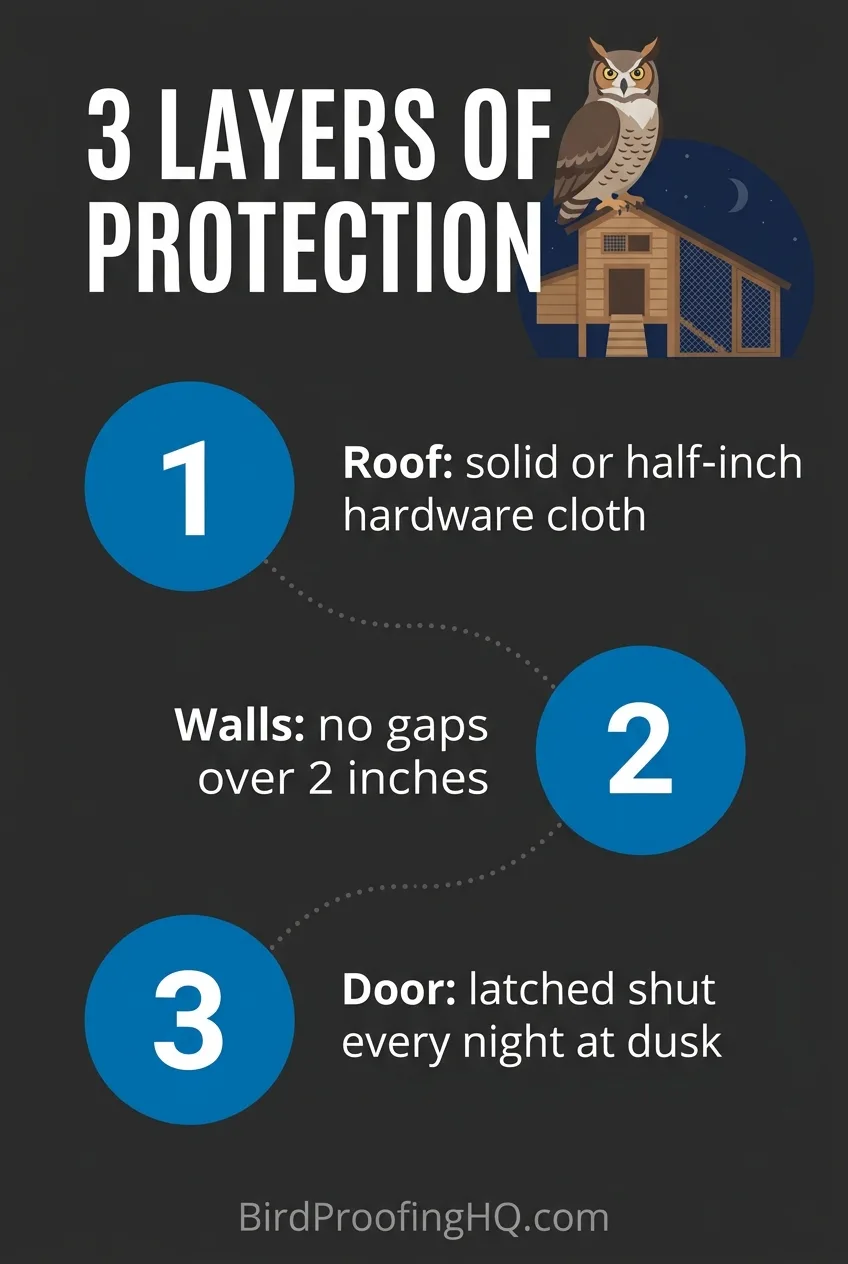
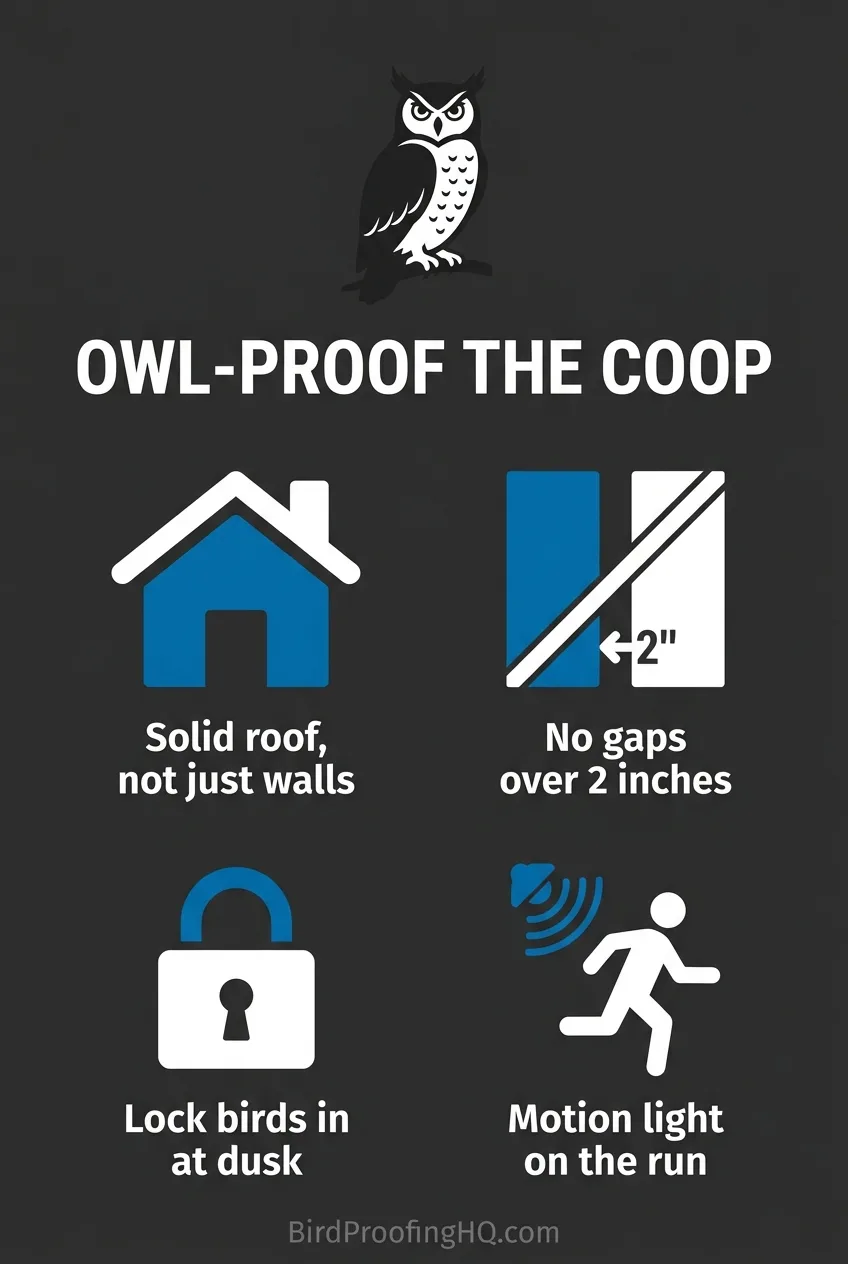
A coop with solid walls but an open-top run stops ground predators like raccoons but does nothing against an owl. The run needs a real roof made from solid material or heavy-gauge wire mesh pulled tight. Half-inch hardware cloth is the standard choice, since chicken wire alone bends and tears under a large owl’s weight and talons.
An owl should not be able to force a wing or talon through any gap. Check for gaps larger than about 2 inches, since that is enough room for a determined predator to reach through.
Lock Up at Dusk
Owls begin hunting right around sunset, so chickens left in an open run at dusk are at the highest risk of the day. Close and latch the coop door before dark, every night, not just when you remember. A motion-activated light aimed at the run adds a startle factor for whatever gets close. It is a supplement to the enclosure, though, not a substitute for one.
How to Tell If an Owl Killed Your Chicken
An owl kill looks different from a raccoon, fox, or hawk kill, and knowing which one you have changes the fix. Owls typically take the head and neck and leave most of the body behind, often inside the coop or run itself, since they rarely drag a carcass far. A kill that happens overnight, with the rest of the flock undisturbed and no sign of digging or a torn fence, points to an owl rather than a ground predator.
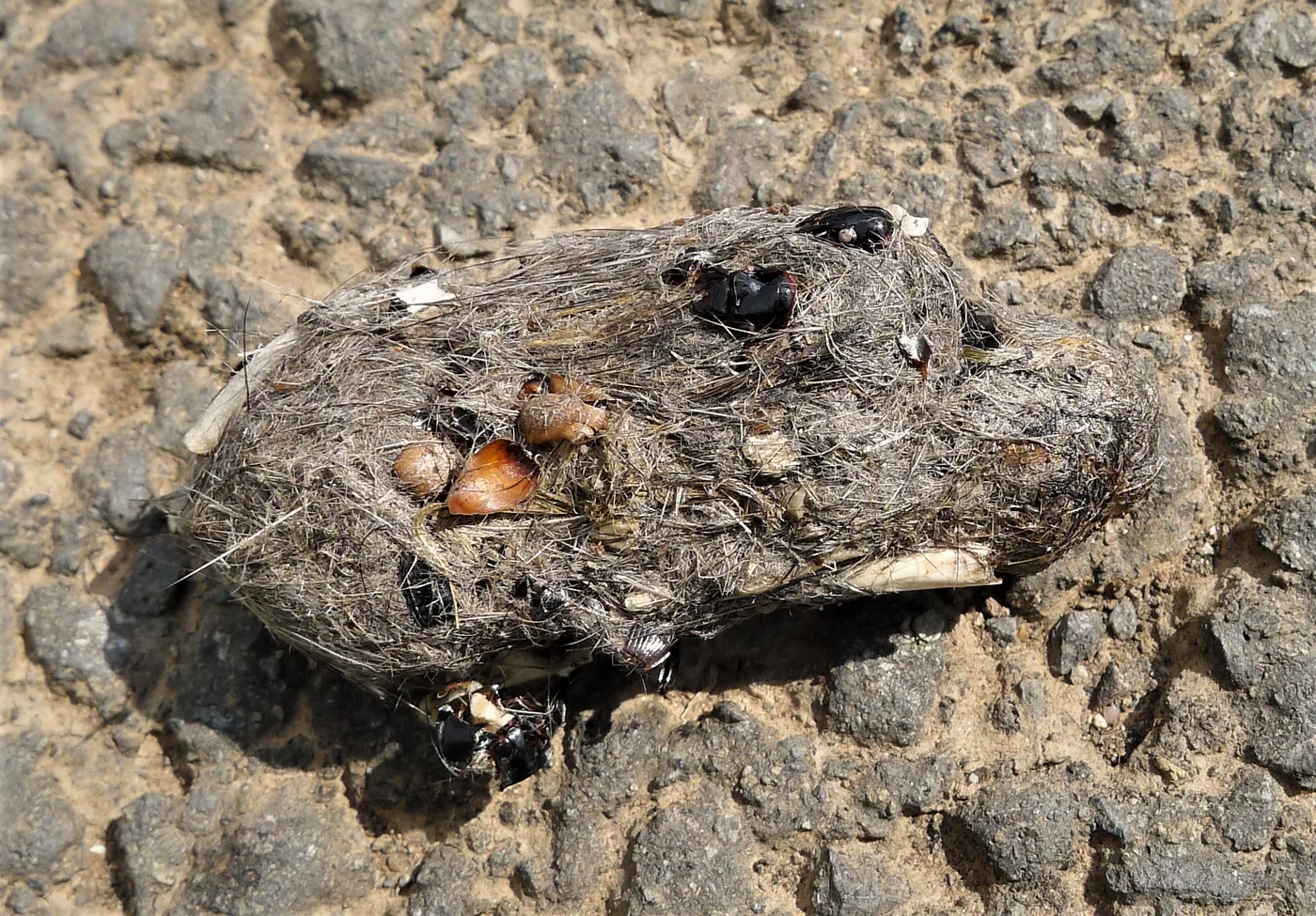
Owl pellets are the clearest confirmation. An owl cannot digest fur, feathers, or bone, so it coughs up a compact pellet of the leftover material a few hours after eating. Finding one on a fence post, under a favored perch, or near the coop confirms an owl has been hunting there recently.
What to Do Right After an Attack
Check the rest of the flock or your pet for injuries first, even ones that look minor, since talon wounds can carry infection. A vet visit is worth it for any animal that was actually grabbed and got free.
Secure the coop or yard for that same night before you do anything else. An owl that succeeds once often returns the next evening to the same easy spot. Close any gap you can find right away rather than waiting for a full rebuild. Use the coop checklist above as a same-night stopgap, then come back and do the job properly in daylight.
Do Owl Decoys Work?
No, and this is where people waste money. A plastic owl or hawk decoy relies on smaller birds having an instinctive fear response to a predator silhouette. A real owl has no such instinct to trigger. It is a predator itself, and a motionless plastic lookalike does not read as a threat for more than a glance, if that.
Skip the decoy budget and put it toward coop hardware instead. That money buys something that actually works.
What Actually Holds Up Over Time?
Physical exclusion, meaning a roofed run, hardware cloth, and a closed coop door at dusk, is the only category that keeps working indefinitely. It does not depend on the owl staying fooled or scared. Everything else on this page is temporary at best. Scare tactics, loud noises, and motion lights lose effectiveness within days to weeks as an owl learns the property poses no real threat.
That does not make temporary measures useless. A motion light or noise deterrent buys time while you finish a coop repair, or adds one more layer during the high-risk nesting weeks in late winter. Just do not rely on any of them as your only line of defense.
Hazing: The Legal Term for Scaring an Owl Off
Wildlife agencies call non-lethal scare tactics hazing. It is the only form of pressure you can legally apply to a protected owl. Hazing covers everything already listed here: lights, noise, decoys, and simply making a spot feel unsafe. It never includes touching the bird or blocking its escape route, since that crosses into illegal harassment.
Hazing works best paired with exclusion, not alone. Use it to push an owl away from a specific spot while your permanent fix goes in, not as the fix itself.
How to Reduce the Rodents That Attract Owls
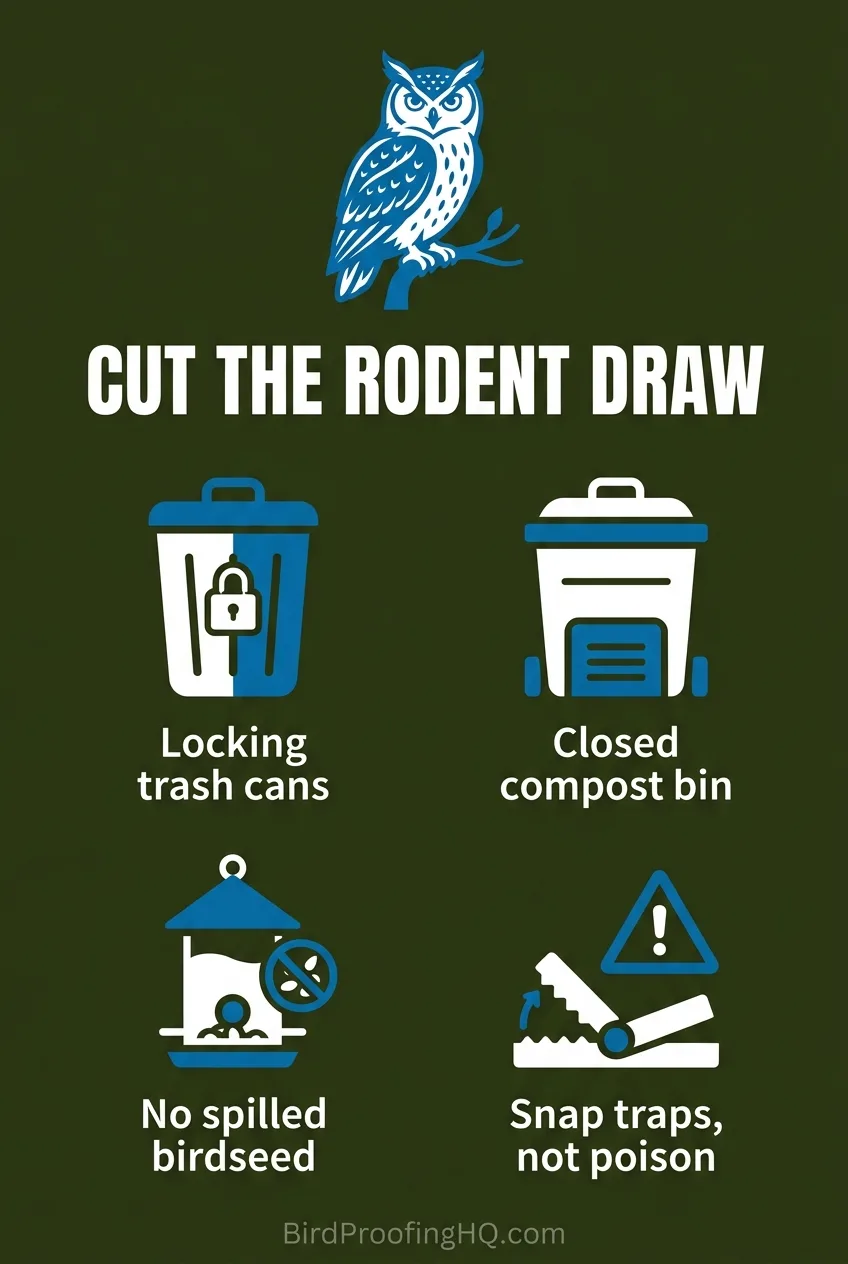
Since owls hunt where the food is, cutting off that food source works better in the long term than any deterrent aimed at the bird itself. Secure trash cans with locking lids, keep compost in a closed bin rather than an open pile, and clean up spilled birdseed under feeders promptly.
A property with a thin rodent population is a less interesting hunting ground. An owl that cannot find easy prey moves its range elsewhere on its own.
Is Rodent Poison Safe to Use Around Owls?
No, and this is worth knowing before you reach for a bait station. An owl that eats a poisoned rodent takes in that poison too, a problem called secondary poisoning. Anticoagulant rodenticides in particular build up in a bird’s system over several meals and can kill the owl that was otherwise doing your rodent control for free.
A snap trap kills the rodent directly without leaving poison in its body, making it the safer choice where an owl is active. Better still, removing the food and shelter that draws rodents in the first place avoids the poison question entirely and keeps the owl working in your favor.
Can Owls Hurt Cats or Small Dogs?
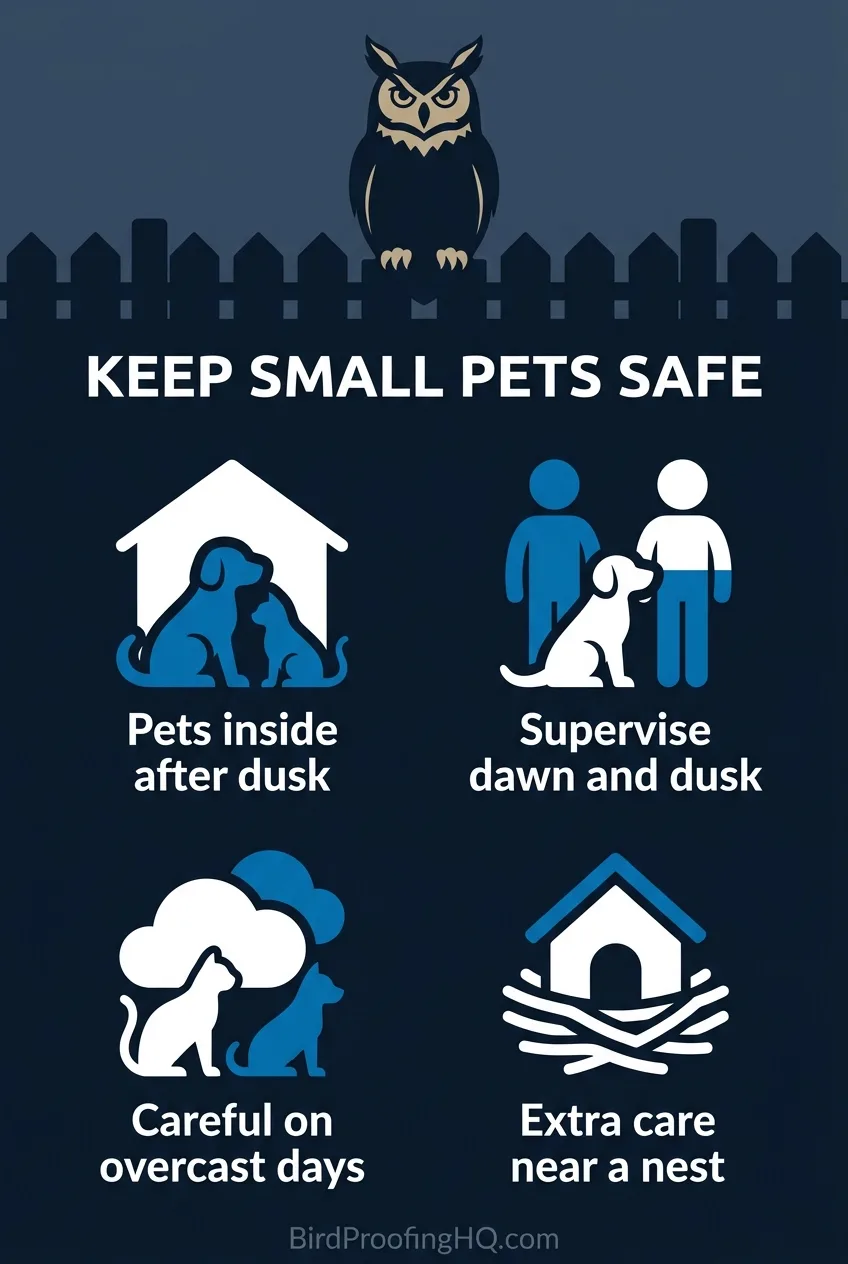
Yes, though it is less common than the rodent-hunting that brings them around in the first place. A great horned owl is large and strong enough to take a small cat or a toy-breed dog, particularly after dark when the pet is out alone. Keep small pets indoors once the sun goes down. If they need to be outside, stay out with them in any yard where you have heard or seen owls.
Do not assume daylight makes a pet safe either. An overcast day, a nesting owl defending chicks, or the low light right around dawn can all bring an owl out earlier than usual. If you have confirmed an active nest or repeated hunting nearby, keep the same precautions through the early morning and late afternoon too.
Can You Remove an Owl Nest?
Only if it is confirmed empty. Great horned owls do not build their own nests. They take over an old nest built by a hawk, crow, or even a squirrel. Once eggs are in it, that nest is protected under the same law that covers the adult birds.
Wait until the breeding season has fully ended before removing an old nest. Confirm no eggs or chicks remain first, and check your state’s specific timing, since it varies by region.
What If You Find an Injured or Trapped Owl?
Do not attempt to handle it yourself. An injured owl is still armed with sharp talons and a strong grip. Handling a protected bird incorrectly, even with good intentions, is both a safety risk and a legal problem. Keep pets and children away from the area.
Call a licensed wildlife rehabilitator or your state wildlife agency instead. Describe exactly what you see: whether it can stand, whether a wing looks broken or hangs unevenly, and where it is located. They will tell you whether to wait, cover it loosely with a box until help arrives, or stand by for a rescuer.
A Five-Point Property Walkthrough
Do this once when you first suspect an owl problem, then again each fall before nesting season starts.
- Look up before anything else. Note every tall, isolated tree, utility pole, or roof peak an owl could perch on near the coop or pet area.
- Check the coop or run roof for gaps, loose mesh, or open sections, not just the walls.
- Measure any gap in the fencing or mesh. Anything over 2 inches is wide enough for a reaching talon.
- Walk the yard for rodent attractants: unsecured trash, an open compost pile, spilled birdseed, or pet food left outside.
- Check for owl pellets or feather scatter near fence posts, under trees, or by the coop, since either one confirms recent activity.
Losses Are Still Happening After You Sealed the Run
Check the roof first. A run walled in but open on top, or covered with mesh too wide or loose, still lets an owl reach through or drop in at a seam. Walk the perimeter at dusk. Look for any gap a hand could fit through, since a reaching talon needs far less room than a landing bird.
If the enclosure genuinely has no gaps and losses continue, check your own schedule next. An owl may be catching pets or poultry let out before dawn or after dusk, outside the hours the coop actually protects.
When to Call a Professional
Most owl situations resolve with a secured coop and reduced rodent access. Call a licensed wildlife control operator if an owl is nesting somewhere that puts people or pets at ongoing risk. The same goes for repeated losses despite a fully enclosed run, or if you need help confirming a nest is truly vacant before removing it.
Related Reading
Owls are one of several birds of prey people deal with around a property. How to get rid of hawks covers the daytime counterpart, and bird deterrents breaks down the full toolkit for yard and coop protection.
Images: Great horned owl by Joshua Tree National Park, public domain. Barred owl by U.S. Fish and Wildlife Service, public domain. Owl pellet by gailhampshire, CC BY 2.0. Bird control spikes on ledge by Cephas, CC BY-SA 4.0. Via Wikimedia Commons.
.jpg)
.jpg)
.jpg)
_01.jpg)
Free: The 5-Step Bird-Proofing Checklist
Work through the right steps in the right order, before spending money on the wrong deterrents. Printable PDF, straight to your inbox.
No spam. Unsubscribe any time.