In this guide9 sections
Quick Answer
Fake owls scare birds only briefly, because birds learn that a decoy never moves or attacks. Use one for a short interruption while you remove food and block access.
In this article, you'll learn when a fake owl helps and when it fails. We'll cover best owl placement, when to move it, and fixes that last.
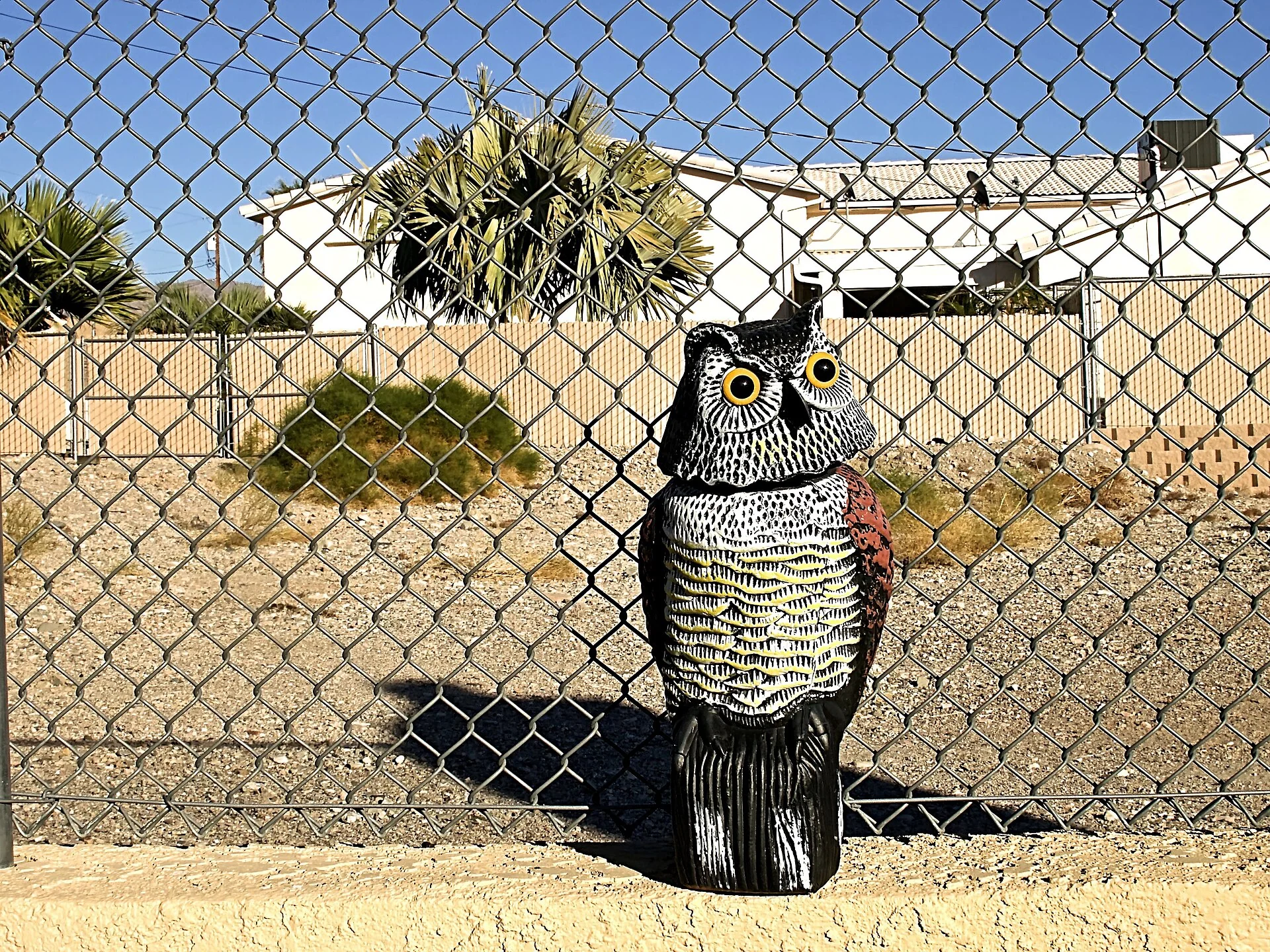
A plastic owl can make a yard look unsafe for a while. It can’t make a railing impossible to land on or keep a bird out of ripe fruit. That difference decides whether a decoy is worth buying.
Treat the owl as a quick interruption. If it becomes the whole bird deterrent plan, expect disappointment.
What a Fake Owl Does at First
Some birds do react when a fake owl first appears. It looks like a predator in a place that was safe the day before, so birds may pause, call, change direction, or avoid the immediate area.
A field study from Linfield College found that a plastic owl can trigger an initial but limited response. That is not reliable, lasting control.
A review of scarecrows and raptor models is less encouraging. It found that stationary models can lose their effect as birds adjust to them.
Those results don’t give you a countdown for your yard, and none of them set a timetable for pigeons, crows, or the birds at your feeder. What they support is a possible short response, not reliable control from a motionless owl.
Why Birds Stop Reacting
A real owl shifts position, tracks prey, flies, and attacks. A molded owl stays on the same post through feeding time, rain, and people walking past it. When birds see the object again and again without any consequence, they learn to ignore it. This is called habituation, and it turns an apparent predator into ordinary yard furniture.
The reward on the other side matters too. Spilled seed, pet food, ripe berries, standing water, a sheltered beam, or a nest cavity gives birds a reason to test the danger. The stronger that reward, the less one visual scare is likely to hold them back.
That’s why a decoy can look successful on day one and then lose its effect. The owl didn’t break. The birds gathered more information.
Which Birds Are Poor Targets for an Owl
Species differ, and individuals of the same species may react differently depending on the site, so no decoy works on every bird.
Some birds may react at first, but a reaction from some birds doesn’t mean every bird left.
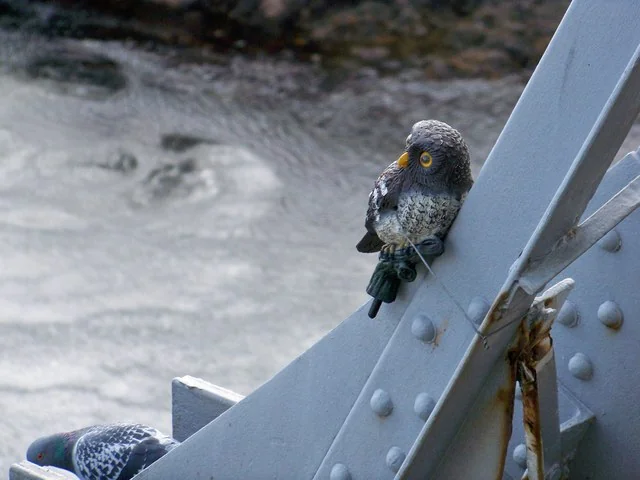
Pigeons are a poor target for an owl model alone. The Internet Center for Wildlife Damage Management says owl models and similar visual devices have little or no effect on pigeons. If pigeons are your problem, skip the decoy and go straight to the fixes below.
Herons at a pond need a different approach, and protecting a pond from herons is a separate job from scaring them.
For crows and other birds these sources don’t cover, assume the owl may interrupt a new pattern at most. It won’t make an established food source, roost, or nesting site unavailable.
Where to Put a Fake Owl
Placement can’t solve habituation, but poor placement wastes the little scare value a decoy has.
- Find the exact problem spot. Watch where the birds land, feed, enter, or wait before approaching. Put the owl near that zone rather than in the most decorative corner of the yard.
- Keep it visible from the approach. A bird needs to see the model before it reaches the feeder, crop, railing, or ledge. Leaves, patio furniture, and rooflines can block the view.
- Use a plausible perch. An exposed post, roof edge, or branch-like mount looks more like a hunting position than an owl tucked behind a pot on the ground.
- Match the coverage to the site. One owl can’t stay convincing across a front ledge, a backyard feeder, and a fruit tree at once. Protect the small area that matters most.
- Mount it safely. Secure the base so wind can’t drop it onto people, pets, traffic, glass, or power lines.
Keep the owl away from a bird feeder if you want songbirds to keep using that feeder. A decoy can’t tell the birds you enjoy from the ones you want gone.
Do Moving Owls Last Longer?
Movement can make a predator model look more lifelike. The review found that stationary models can lose their effect, and that motion may strengthen the initial impression.
That doesn’t prove every bobble head or spinning owl works. Birds can learn to expect repeated mechanical motion just as they learn to ignore a static model. Motion may make the initial impression stronger, but it does not remove the reason birds visit.
When to Move the Owl
Research doesn’t support moving it every three days, once a week, or on any other fixed interval. The response varies too much by species and situation for one calendar to be honest.
Watch the birds instead. If they resume their normal approach, feed in full view of the model, or perch beside it, that position has stopped working. Move the owl to a visible, plausible perch closer to the exact problem spot. If that doesn’t change their behavior, retire it rather than shuffling the same failed scare around for weeks.
Oregon State University Extension recommends combining visual deterrents with other tactics and varying them over time. Even so, rotating the decoy only manages the visual scare. Use any break in bird activity to fix the site.
What to Do Instead of Relying on the Owl
The durable options don’t depend on a bird staying afraid. They remove the reward or block access.
Remove food and water
Clean up spilled birdseed, secure trash, feed pets indoors, pick ripe fruit, and empty unnecessary standing water. If a feeder is attracting the problem flock, pause feeding and clean the ground below it. A decoy has little leverage while an easy meal remains.
Cover crops and close openings
For berries, fruit trees, garden beds, rafters, and other spaces you can cover, use properly supported bird netting that closes every route in. Loose netting can trap wildlife, so keep it taut, inspect it, and repair gaps.
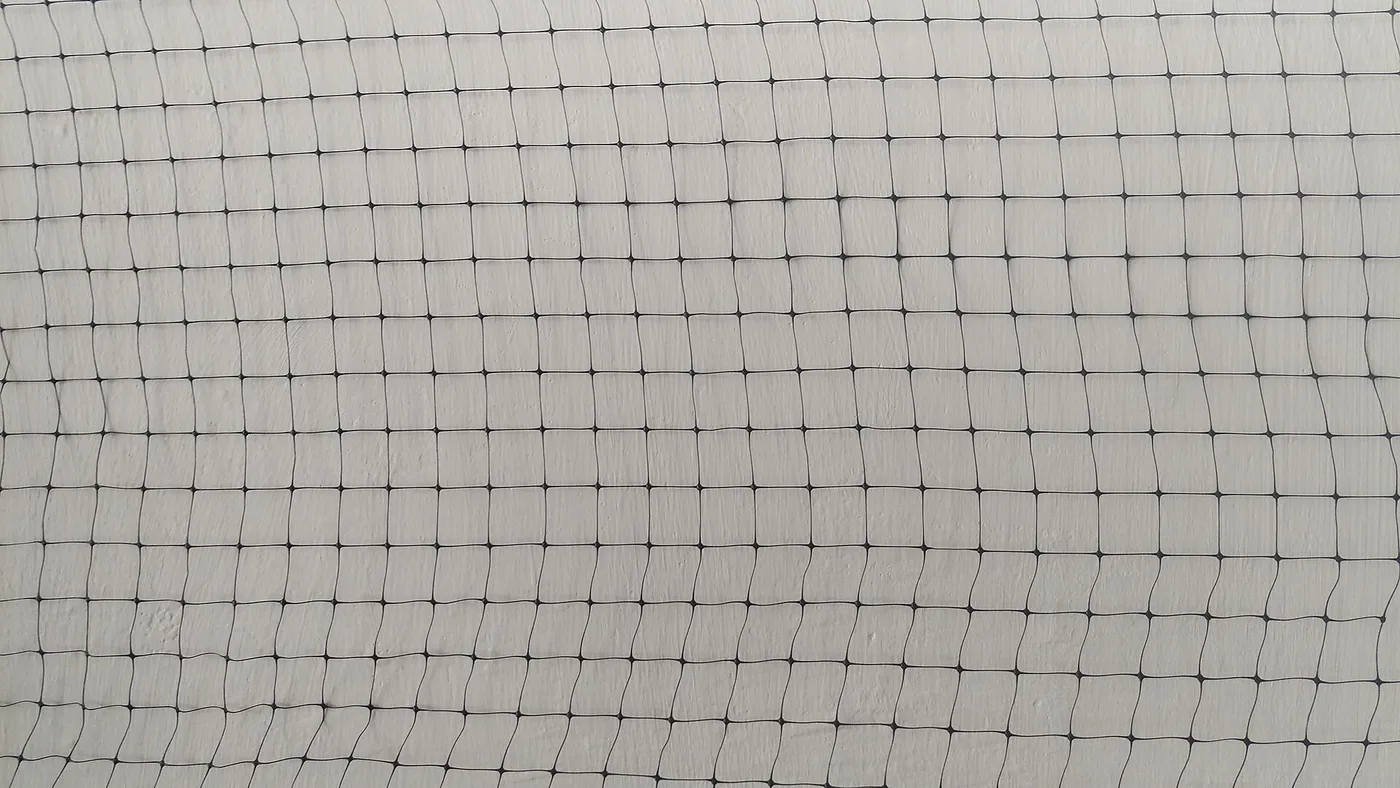
Screen vents and eaves or seal entry points only after confirming that no bird, egg, chick, or dependent young uses the site. If there is an active nest or dependent young nearby, identify the species and check the law before disturbing it.
Make ledges unavailable
On an empty ledge or beam, install the barrier that fits the surface. Bird spikes can stop larger birds from landing, while tensioned wire or a sloped cover may suit other sites. A barrier keeps working even after a pigeon has learned every detail of it.
Keep visual scares as backup
An owl decoy, flash tape, or another visual cue can help while you make those changes. Reflective deterrents also rely on surprise and movement, so they share the same habituation limit. Layering two temporary scares doesn’t close a gap or remove the food.
When a Fake Owl Is Worth Buying
A decoy is worth trying if the problem is new, the area is small, and you treat it as a temporary tool. Put it where the birds actually approach, watch the response, and be ready to reposition or remove it.
It’s a poor buy as the main answer for established pigeons, an active nest, a daily feeding flock, or a crop you can’t afford to lose. In those cases, spend your time and budget on the reason birds are there, starting with bird proofing the site so birds cannot keep using it. If a nest is active, identify the species and check the law first, and block access only after confirming no eggs, chicks, or dependent young remain.
Images: Plastic owl decoy by Dorian Wallender, CC BY-SA 2.0; Pigeon beside an owl decoy by James T M Towill, CC BY-SA 2.0; anti-bird netting close-up by SaturninoOpi, CC BY-SA 4.0. Via Wikimedia Commons.
Frequently Asked Questions
Do fake owls really scare birds?
Fake owls scare birds only briefly. Birds can react when the decoy first appears, but they often return after learning that it never moves or attacks. Use it as a short interruption while you remove food and water and block access to the site.
How long do fake owls keep birds away?
No length of time is reliable for every site. The research we cite supports an initial, limited response, and stationary models can lose their effect as birds adjust. Watch what your birds do instead of trusting a fixed schedule.
Where should I place a fake owl to scare birds?
Place it in clear view near the exact spot where birds land, feed, or approach. An exposed post, roof edge, or branch-like mount looks more plausible than a decoy sitting on the ground. Mount it securely, and do not expect one owl to guard several separate problem spots.
How often should I move a fake owl?
Move it when birds start returning, landing near it, or feeding in its view, because no evidence-based schedule fits every yard or bird. If a better position does not bring back the avoidance, retire the decoy and use exclusion or site changes.
Do fake owls scare pigeons?
Not reliably. Wildlife-damage guidance says owl models have little or no effect on pigeons. Removing food and water, blocking entry points, and installing the right ledge barrier are more dependable than trying to keep pigeons frightened.
What scares birds away for good?
No visual scare is permanent. Lasting results come from removing the reason birds visit and physically blocking the problem area. Netting, screening, spikes, wire, and sealing confirmed-empty entry points keep working after birds stop feeling afraid.
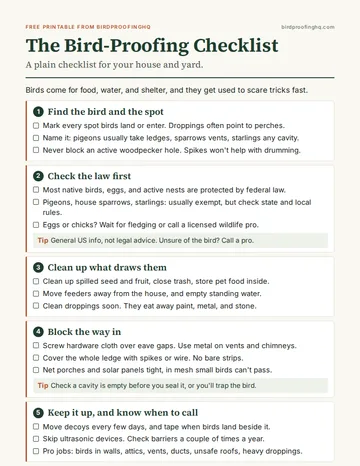
Free printable PDF
The Bird-Proofing Checklist
Find the bird and the spot, check the law, then block access in the right order before you spend money on gadgets.
Free download right after you sign up. No spam. Unsubscribe any time.