Reflective Bird Deterrents: Do Spinners and Balloons Work?
Contents[hide]
Reflective bird deterrents work well for a few weeks on cautious birds. Spinners, holographic rods, and scare eye balloons all fade once a bird learns nothing follows the flash. Bold birds like pigeons shrug them off fastest. Move them often and pair one with a real barrier for anything that keeps coming back.
In this article, you'll learn whether reflective deterrents work and how to use them. We'll cover deterrent types, placement strategies, and rotation tactics.
Do Reflective Bird Deterrents Actually Work?
Yes, with a catch. Every reflective deterrent trades on the same trick: a sudden flash of light or an unexpected shape reads as danger to a bird’s eye. A spinning disc catches the sun, a rod twists in the wind, and a pair of painted eyes stares up from the grass. All three trigger that flinch.
The catch is habituation. A bird that sees the same flash day after day learns nothing bad ever follows it. Once that happens, the threat reads as fake.
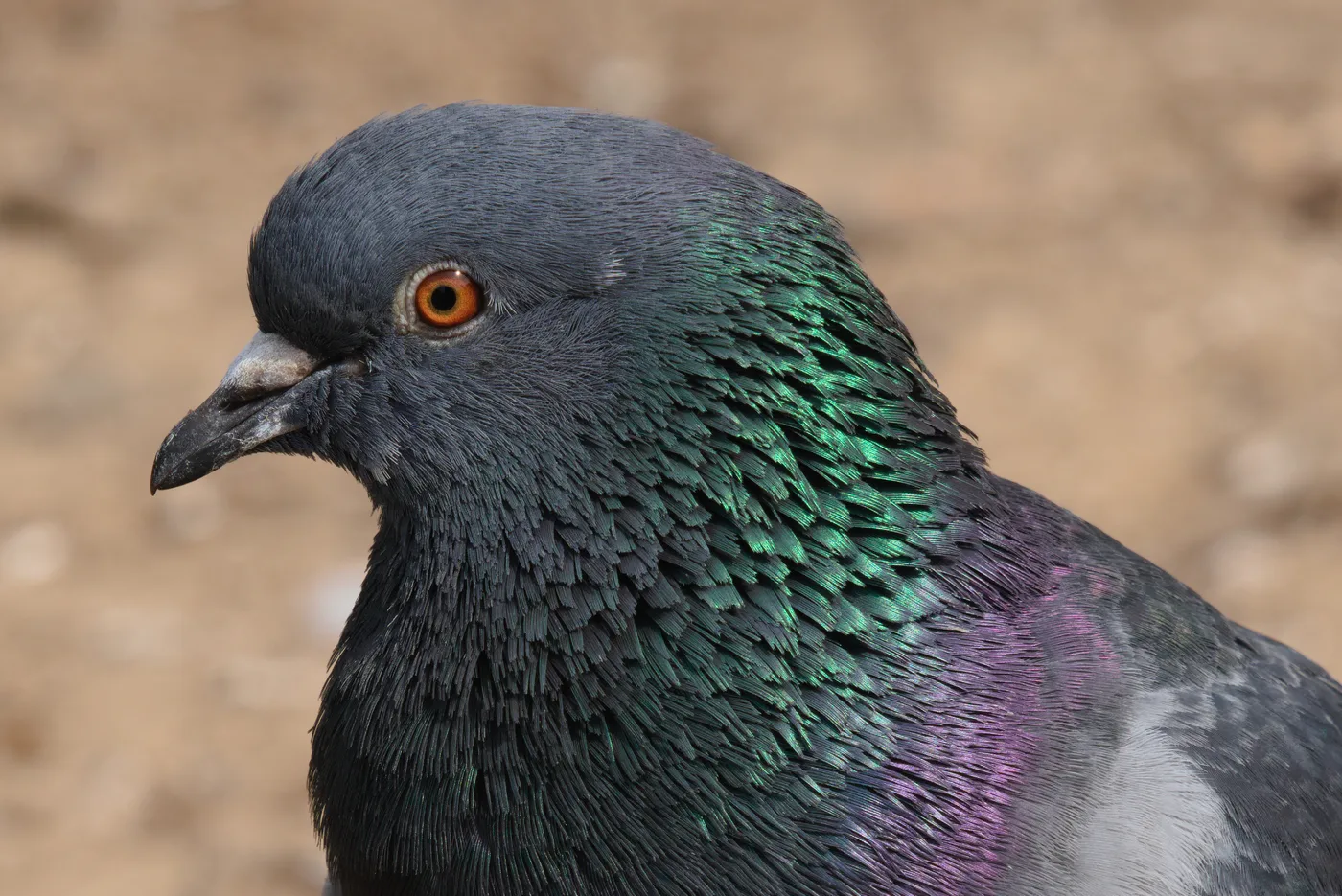
Cautious birds like crows and songbirds hold off longer, often a few weeks. Bold birds that live around people, especially pigeons, catch on in days.
None of that makes these products useless. It just means the job is to keep the threat feeling fresh, not to hang one spinner and forget it.
The Types of Reflective Deterrents
Spinners, rods, balloons, and tape all lean on the same trick. Each has its own strengths depending on the spot and the budget.
Spinners and Discs
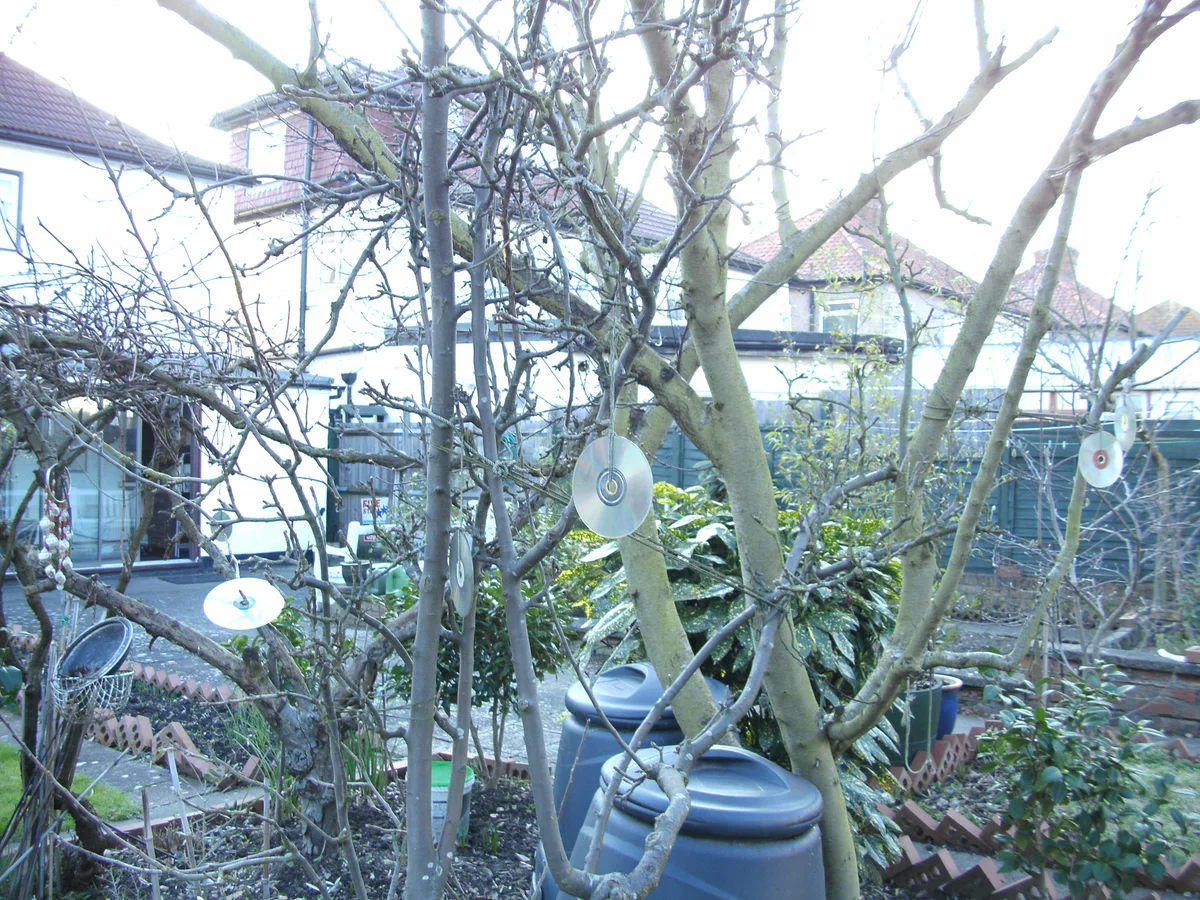
A spinner is usually a small reflective disc or pinwheel on a string or a stake. It is built to catch wind and throw light in random directions. Old CDs strung from a branch work on that exact principle. Homeowners have used them for decades, long before anyone sold a version in a box.
Discs shine in gardens, over patios, and along fence lines, anywhere there is open sun and a breeze to keep them spinning. A still, shaded spot defeats them just as it defeats reflective tape, since a spinner that hangs limp throws no light at all.
Hang a few at different heights rather than one in a single spot. A single point of flash is easy for a bird to fly around. Several, spaced a few feet apart, make the whole area feel unpredictable.
Holographic Rods and Streamers
Rods and ribbon-style streamers are the step up from a flat disc. The holographic foil catches light from more angles, so it keeps flashing even when the sun is lower or the wind is light. That extra range is why these tend to outlast a plain silver spinner outdoors.
They work in the places discs do: fruit trees, garden beds, and open ledges. They fail in sheltered spots too, since a rod stapled flat against a wall behaves like any dead strip of foil.
Cost is low and setup takes minutes. That makes rods worth trying anywhere a spinner might work, especially if you want a bit more staying power.
Scare Eye Balloons
A scare eye balloon is an inflatable sphere painted with a large predator eye. It is usually yellow with a black pupil, meant to look like a hawk or owl staring down. Hung a few feet above a garden bed or a young crop, it startles birds much like a real predator would.
Every visual scare shares this one weak point. Birds notice fast when a balloon hangs in one fixed spot and never turns to follow anything. Spinning versions that rotate in the wind hold up longer than the fixed kind, since the eye actually seems to track.
Balloons work best over open beds and young plants, not sealed structures. For a rooftop or a ledge, a decoy predator mounted where birds actually land does more than a balloon floating over open ground.
Reflective Tape
Reflective tape belongs in this family too. Thin strips of shiny mylar flash and crackle in the wind just like a spinner does. For hanging patterns, placement, and how long a roll lasts, bird repellent tape breaks it down in full.
The short version: tape is the cheapest entry point into reflective deterrents. It belongs in the same rotation as spinners, rods, and balloons, not as a separate strategy.
Where to Hang Reflective Deterrents for the Best Results
Placement decides whether any of these earns its keep. A few rules apply across spinners, rods, and balloons alike.
Put them where sun and wind both reach. A shaded corner or a covered porch starves a reflective product of the light and movement it needs to work at all. Hang each one loose enough to spin or sway freely, since a taut line kills the motion.
Position them directly over the spot you are protecting, not off to the side. Pigeons and other roosting birds will simply land a few feet away from a deterrent that misses the actual landing zone.
Space several units through the area rather than relying on one. Birds that fly around a single flash often settle right next to it.
How to Keep Birds From Getting Used to Them
Habituation is the one problem every reflective deterrent shares, and one fix covers all of them. Move each unit every week or two, even a few feet in any direction. A bird that has mapped out exactly where the flash sits stops reacting to it. Move it somewhere new, and the bird has to relearn the threat from scratch.
Rotate types as well as position. Swap a spinner for a rod, or add a balloon to a spot that only had tape before. New shapes and movements read as new threats, which resets a bird’s guard even faster than moving one product around.
Combine reflective deterrents with a sound-based scare where you can. Wind chimes or distress and predator calls work on a different sense entirely. A bird ignoring the flash may still react to the noise.
What to Pair Reflective Deterrents With
Reflective deterrents earn their keep as an opening move, not a closer. Use them to scatter birds and buy time, then put up something birds cannot simply get used to.
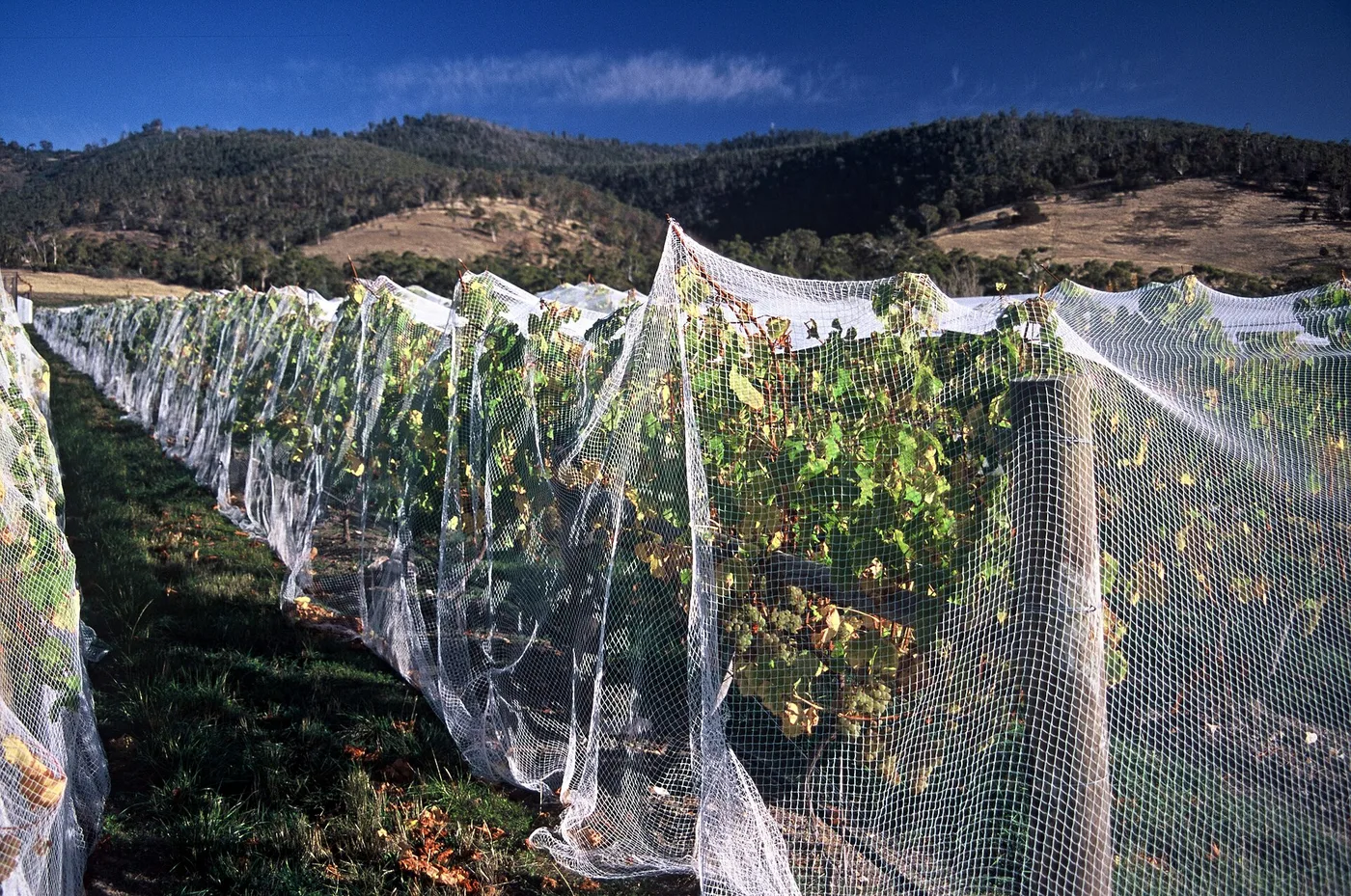
For a crop or a garden bed, netting the whole area does what no amount of flashing light can. On a ledge or a roofline where birds keep landing, spikes that remove the perch entirely solve the problem for good. Crows and other smart birds especially need that follow-up, since they learn a static trick faster than almost any backyard bird.
Used this way, a cheap spinner or a foil rod stops being a lonely fix. It becomes the first layer of a plan that actually holds.
Images: Compact disc bird scarers by KTo288, CC BY-SA 3.0. Feral pigeon roosting by Satdeep Gill, CC BY-SA 4.0. Bird netting on grapevines by Mark Smith, CC BY 2.0. Via Wikimedia Commons.


Free: The 5-Step Bird-Proofing Checklist
Work through the right steps in the right order, before spending money on the wrong deterrents. Printable PDF, straight to your inbox.
No spam. Unsubscribe any time.