How to Get Rid of Crows (5 Proven Methods That Work)
Contents[hide]
To get rid of crows, cut the food first. Crows will ignore any deterrent if something worth eating keeps rewarding them. Once trash, pet food, and spilled seed are gone, rotate reflective tape, a moving fake predator, and recorded crow distress calls. The rotation is what most people skip, and it is why single tricks stop working within a week.
In this article, we’ll cover how to get rid of crows the smart way, what rotating deterrents hold them back, and how to cut off their food.
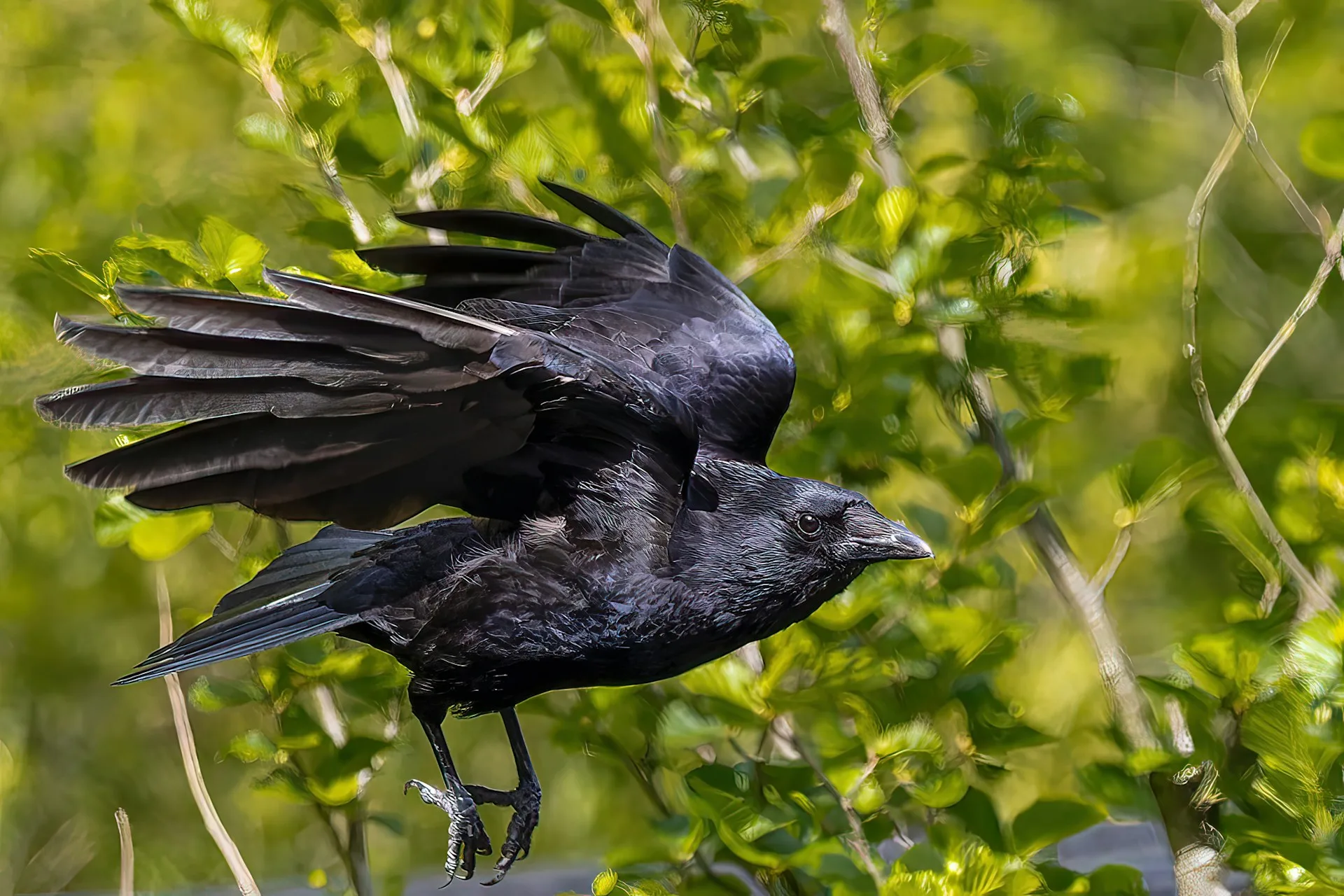
Why Crows Keep Coming Back
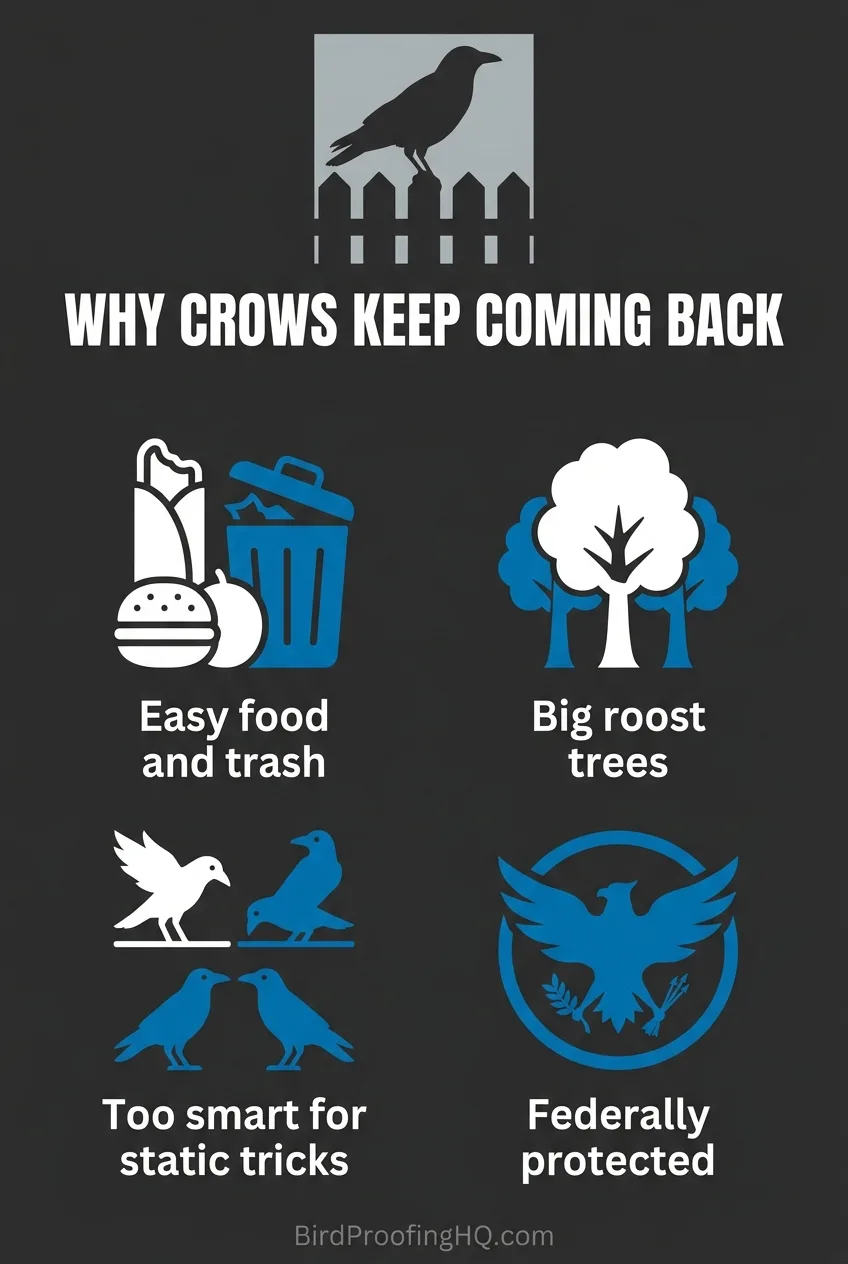
Crows return to your property because it is rewarding them with something, almost always food. These birds are adaptable omnivores, clever enough to work around most of what you try. Unsecured trash containers, pet bowls left outside, fallen fruit, food scraps in open compost, and birdseed spilled under bird feeders are all legitimate targets. In urban areas, a reliable trash day is enough to anchor a whole family group to a block, and the droppings under their perches pile up fast.
Beyond food, crows have strong site fidelity. They form communal crow roosts in tall trees and return to the same locations year after year. A family group that treats your yard as foraging territory will persist for weeks even after the reward is gone, testing whether conditions have returned to normal. That persistence is why crow activity often continues after you fix the obvious attractant.
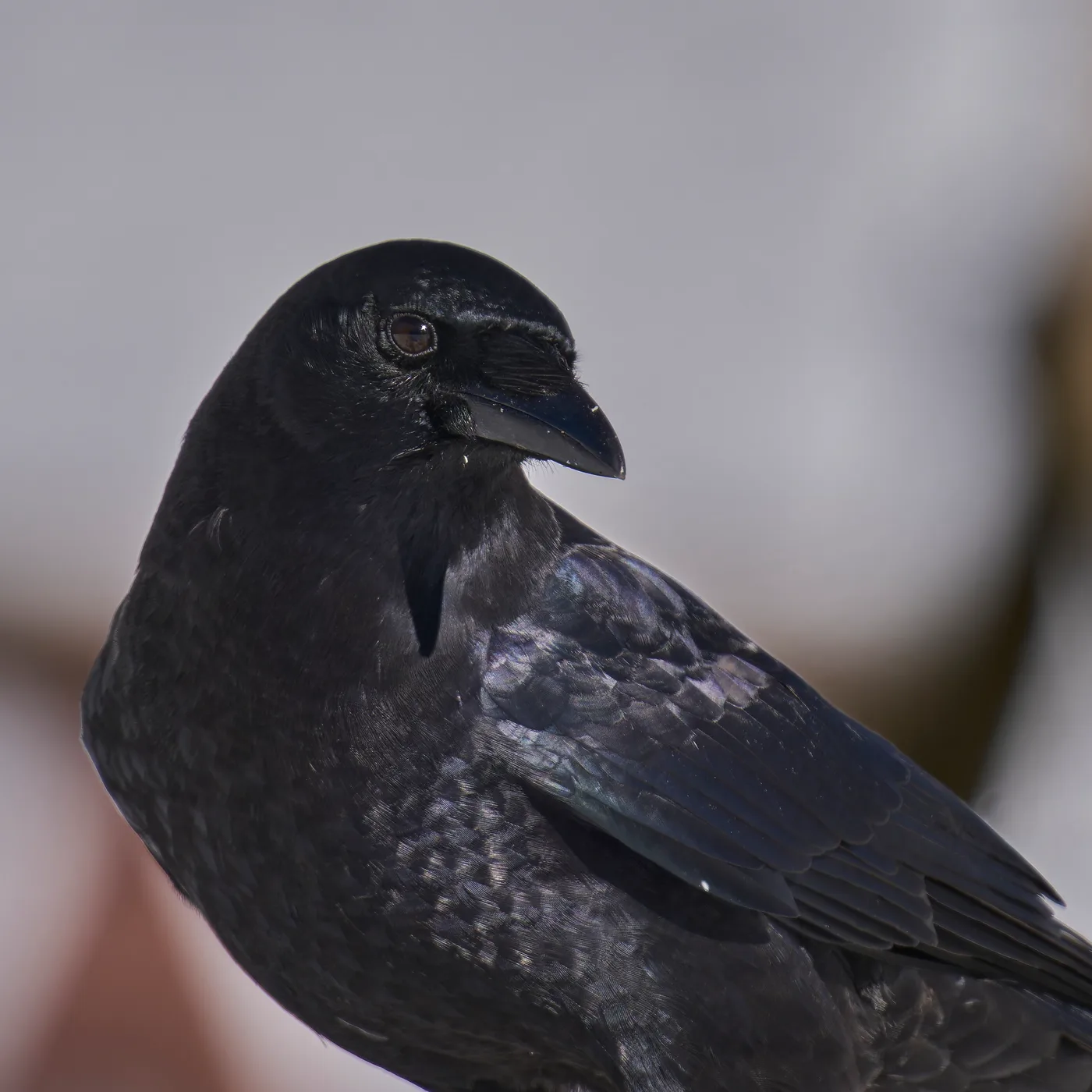
Crows also recognize human faces and remember anyone who has hassled them. This is worth knowing if you are tempted to chase them off. Chase a crow once and it can scold you on sight for months, and tip off the rest of the flock about you.
Effective Methods Beat Scare Tactics
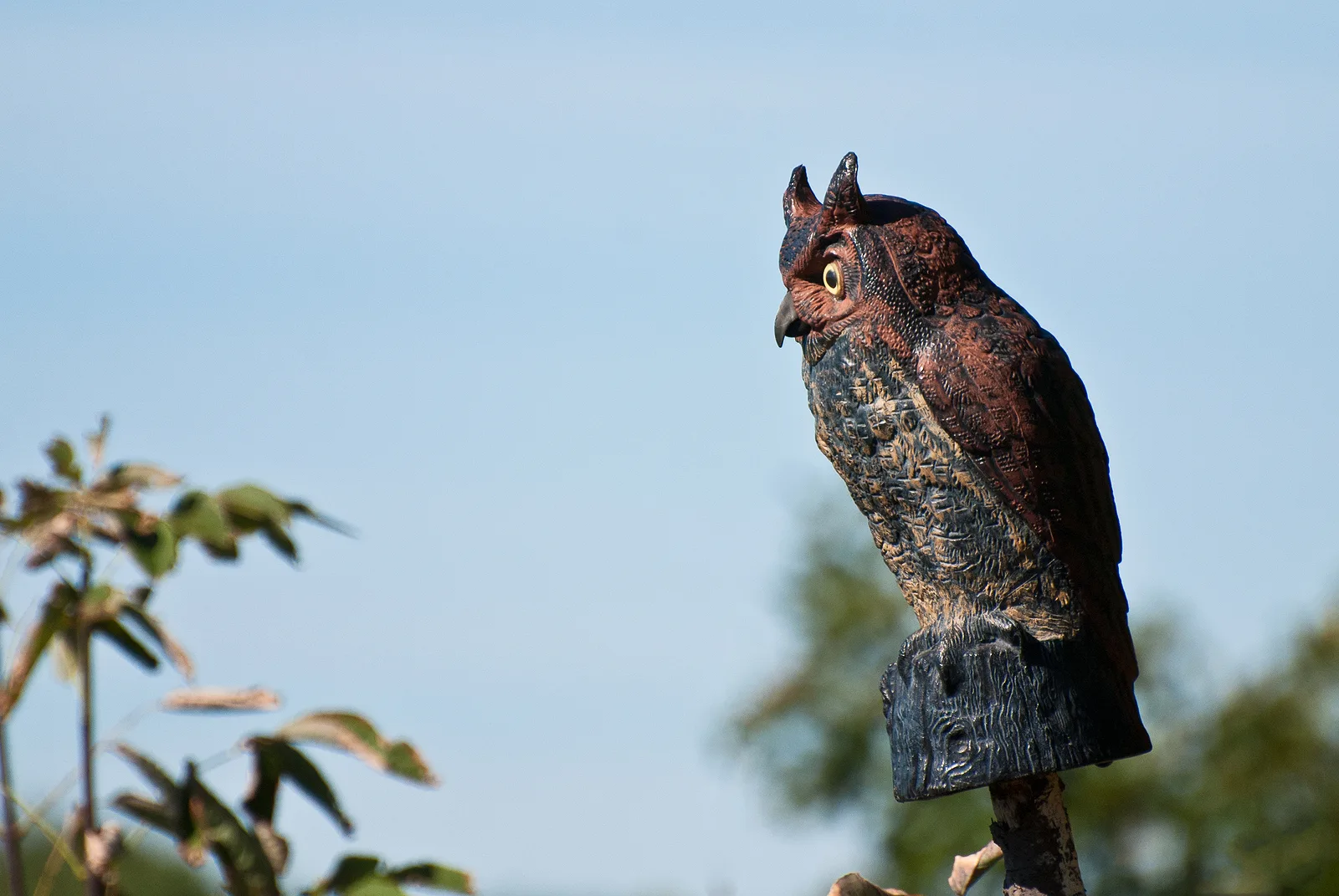
Most advice starts with a scarecrow or a fake owl. Those scare tactics work for a few days at best. Crows are intelligent birds with excellent pattern recognition. A decoy that never moves gets reclassified from real danger to harmless lawn ornament within a week.
That does not mean visual deterrents are useless. It means no single one is enough on its own. The methods below are in this order for a reason. Remove the reward first, then layer deterrents on top.
Rotate everything so the birds never get a stable pattern to learn.
Step 1: Remove Their Food Sources
This is the only step that matters on its own. Everything else is supplementary. Removing food sources is also the most humane method, because it convinces crows to move on rather than fighting them spot by spot.
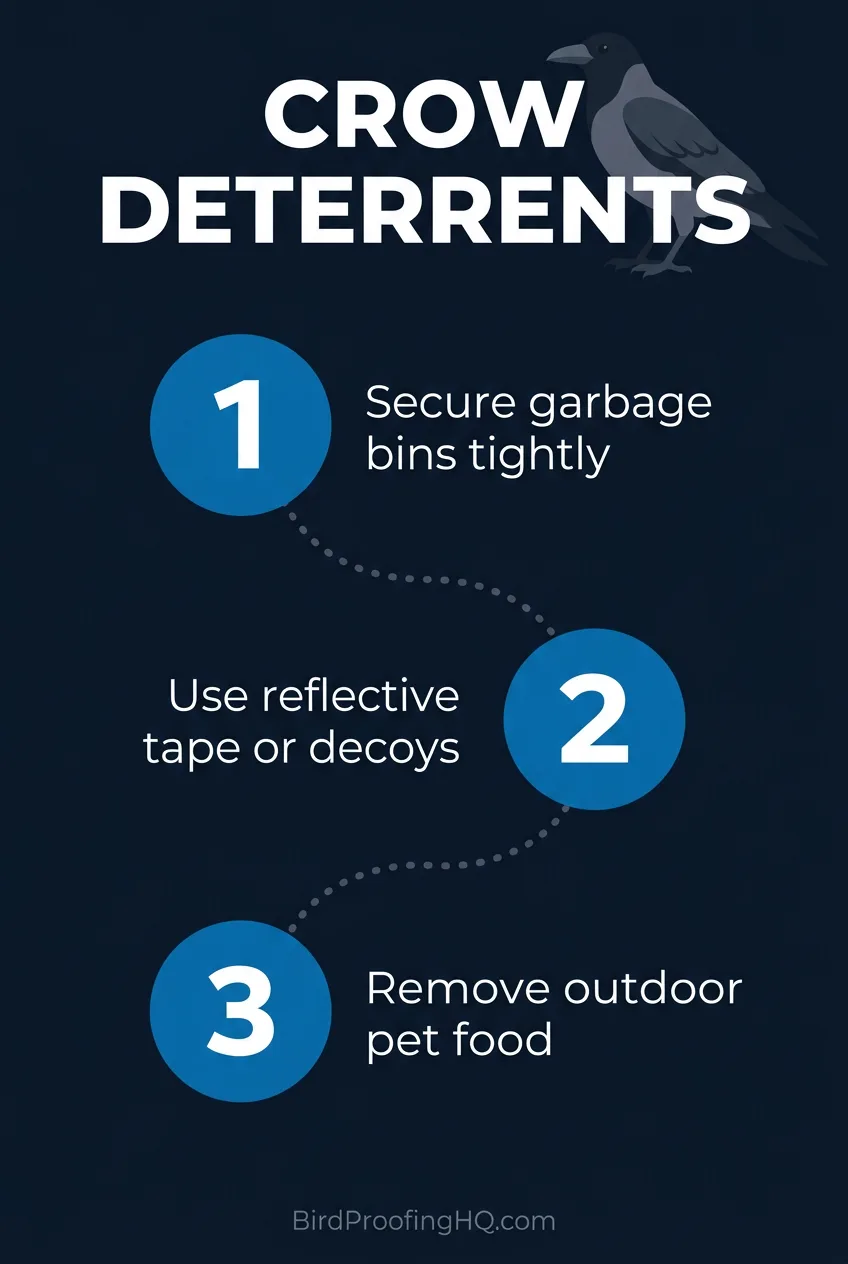
Secure your trash. Use trash containers with locking lids or bungee cord standard lids shut. Store bins inside a garage or shed until collection day if crows are persistent. Avoid putting trash out overnight.
Remove bird feeders or switch designs. Crows easily raid platform feeders and most standard tube feeders. If you want to keep feeding other birds, use a caged tube feeder or a weight-activated design that excludes large birds while smaller birds feed normally.
Pick up pet food. Never leave pet food outside unattended. A bowl of kibble on the porch is a reliable daily reward, and it draws raccoons and other animals too, which gives crows even more reasons to visit.
Clean up fallen fruit. Fruit trees and berry bushes are a significant draw during harvest season. Pick up drops regularly or net the canopy before the fruit ripens.
Manage compost and water. Keep compost in a sealed bin rather than an open pile. Meat and cooked leftovers in open compost will draw crows reliably. Dump standing water where you can, since a dependable water source makes a foraging territory more valuable.
Step 2: Visual Crow Deterrents (With Rotation)
Visual deterrents work on crows because of their natural wariness toward unfamiliar things. The critical rule is that every visual deterrent must be moved and changed regularly, typically every two to three days, or crows will habituate and ignore it. Rotation is what separates crow deterrents that keep working from ones that quietly become part of the scenery.
Reflective tape and reflective objects are cheap and effective for short periods. Hang strips of reflective flash tape near problem areas. Old CDs and small mirrors work the same way. These reflective surfaces create flashes of light that unsettle crows, and tape that flutters in the breeze beats tape hung taut because it adds movement and noise.
Predator decoys positioned where crows can see them from the air deter landing. Move the decoy to a completely different location every two to three days. A realistic fake owl that stays put for a week stops deterring crows entirely.
Crow effigies are the most crow-specific option available. Fake dead crows hanging upside down with wings spread signal danger in a way crows instinctively recognize. Hang one near a problem roosting or foraging area and move it regularly. It looks grim, but it hurts nothing and it works on stubborn groups.
Step 3: Sounds That Scare Crows
Sound-based deterrents work well when combined with visual methods and when they are not played on a continuous loop that crows can pattern-match and dismiss.
Crow distress calls and predator calls (particularly owls and hawks) are the most effective options. Predator sounds deter crows because the threat is one they already take seriously. Outdoor bird deterrent speakers that play these sounds at irregular intervals beat systems on a fixed schedule. Move the speaker or rotate the sound type every few days so the noise never becomes background.
Wind chimes and other intermittent noise deter crows in quiet areas where they expect calm. Occasional loud noises, like banging two pots together when crows land, reinforce the message that your yard is unpredictable. The goal of every sound deterrent is the same: make the location feel less safe and settled than the birds expect.
Step 4: Bird Netting and Physical Barriers for Crops
If crows are targeting a specific spot like a garden bed or fruit tree, physical barriers are the most reliable form of bird control. Barriers do not rely on fear, so crows cannot habituate to them, which makes them the best long-term play for protecting crops.
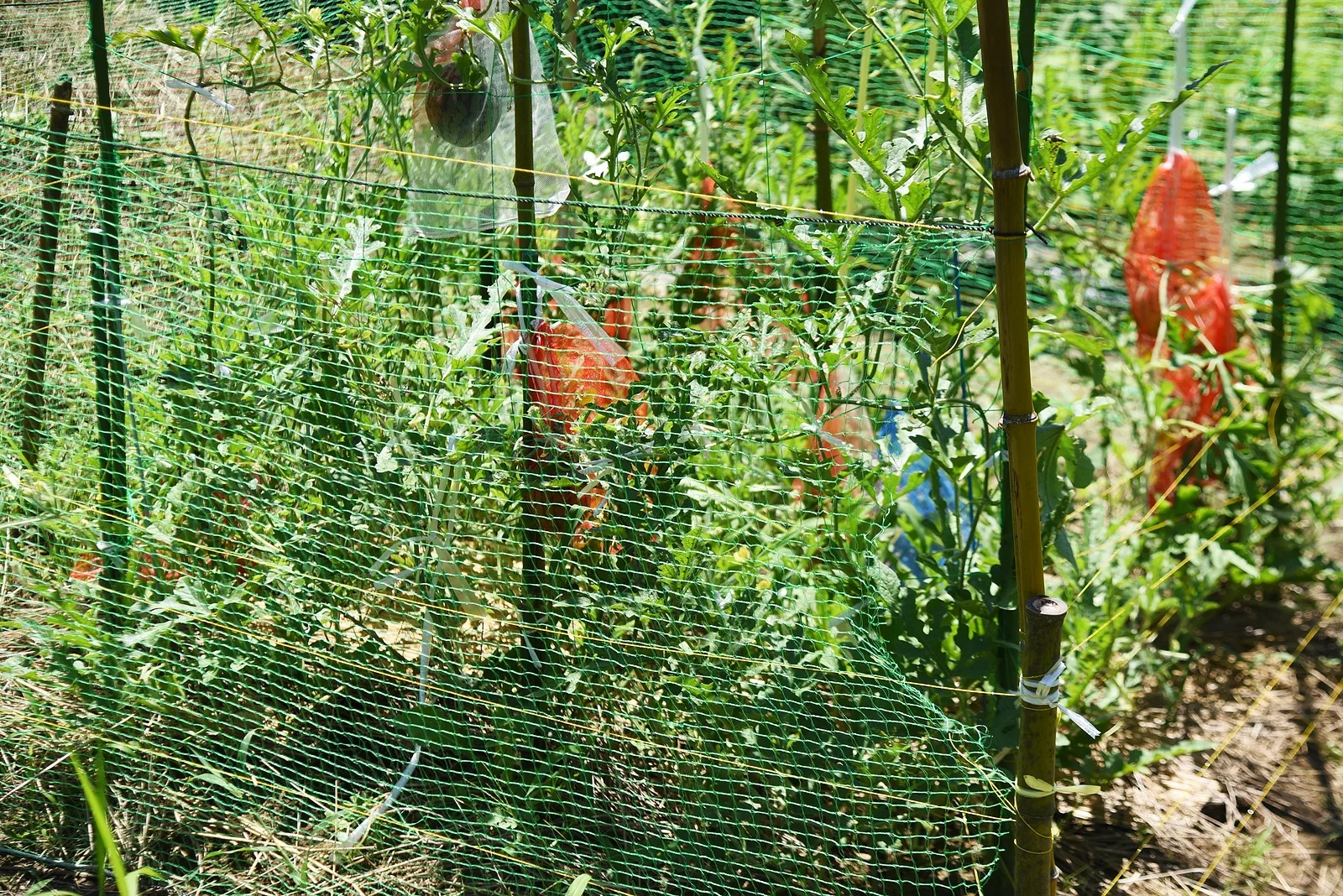
Bird netting draped over plants and secured at the base will block access to fruit, seedlings, and vegetables. Use netting with a mesh size no larger than an inch and pin the edges so crows cannot walk underneath. Bird netting also protects fruit trees when draped over the canopy and tied around the trunk.
Row covers protect seedlings and young plants. Place them early in the season before crows establish a feeding pattern. Anyone growing corn knows this one. Crows will strip the ears days before harvest. Cover or net the block before the corn silks, not after the damage starts.
Motion-activated sprinklers cover open areas where netting is impractical. The sudden burst of water deters crows without harming them or other wildlife, and unlike a decoy, the trigger is unpredictable. Physical barriers and sprinklers also protect fruit from crows and smaller birds alike, which matters if several species are working your garden at once.
Step 5: Break Up Crow Roosts in Your Trees
Crows prefer tall trees with dense canopy for roosting. Habitat modification, which here just means pruning trees that crows use regularly, makes roost sites less attractive. Thinning the canopy and trimming branches reduces wind protection and warmth retention, which matters to a winter roost deciding where to settle.
Remove dead branches too. Crows use them as lookout perches, and droppings accumulate underneath. Do any significant pruning in late fall or winter when no birds are actively nesting, and the roost is choosing between sites.
Deterring Crows for Good: Rotate and Combine
None of these methods is a one-time fix. Deterring crows long term comes down to two habits.
First, combine categories. A visual deterrent plus a sound deterrent plus locked-down food sources beats any single method by a wide margin. Crows can talk themselves past one odd thing in the yard. Three changing threats at once reads as genuinely risky.
The whole game is rotating faster than they can adapt.
Second, keep rotating until the birds stop testing. Crow numbers at a problem site usually drop sharply in the first week, then a few birds keep checking back. If you relax at that point, the whole group returns. Hold the rotation for two to three weeks after their last regular visit.
That keeps crows from resettling. Check again each season, because crow numbers shift between summer territories and big winter roosts. Crows eat almost anything, so a new food source can restart the cycle at any time. Feeding habits change with the seasons, and so should your bird control routine.
If crows are wrecking your garden, pair the barriers above with a spray repellent. Capsaicin spray on the landing surfaces does put crows off, as long as you reapply it after rain.
How Long Before Crows Give Up?
Most yards see the most persistent crows stop testing after two to three weeks of consistent deterrent rotation. The first few days usually produce the biggest drop in activity, because crows react fast to new threats. The holdouts are the stubborn scouts checking whether conditions have returned to normal.
The mistake is relaxing too early. If activity drops sharply in the first week and you ease up, the whole group usually returns within a few days. Hold the rotation for at least two weeks after their last regular visit. A flock with a long-established food source may take four to six weeks.
Are American Crows Protected by Law?
Yes. American crows are protected under the federal Migratory Bird Treaty Act of 1918. That means you cannot legally trap, harm, or kill them without a permit, and cannot remove an active nest that contains eggs or young birds. The protection applies to the birds, their eggs, and active nests across the United States.
This sounds more limiting than it actually is. Every deterrent described on this page is fully legal. You are not harming the birds, only making your property less attractive.
Crows have limited hunting seasons in some states, but only under specific agricultural damage conditions and with proper permits. As a homeowner dealing with crow problems in your yard, the deterrent methods here are your only legal options and they are the ones that actually work long term.
When Can You Legally Remove a Crow Nest?
You can legally remove an empty or abandoned crow nest. Once the young birds have fledged and left, clearing the nest material and blocking the site is allowed and the right move. Crows return to proven nesting spots year after year, so removing the nest and sealing the spot breaks that cycle.
Timing matters. Crows nest from February through July across most of the US. If you find an active nest with eggs or chicks, you must wait until the young leave, usually around five to six weeks after hatching. Act at that point, before the following nesting season.
When to Call a Bird Control Professional
Most residential crow problems respond to persistent food removal combined with rotating deterrents. Call in help when the scale outgrows DIY: a communal roost of dozens to hundreds of black birds, structural damage to buildings, or agricultural losses you cannot prevent with netting.
A licensed bird control professional can assess the property and explore commercial-grade options. For agricultural situations, USDA Wildlife Services advises on depredation permits that allow management options beyond what homeowners can use. American crows are federally protected under the Migratory Bird Treaty Act, so lethal control requires permits and is not a standard option. Every method above works within those rules, and most crow problems never need to go further.
The same playbook scales up to the whole yard in keeping birds away. If crows are nesting rather than just foraging, the nesting rules and timing matter, because an active nest is protected. And to stop crows coming back next season, keep the food locked down. That is the whole game.
Blue jays are crows’ smaller, louder cousins. The same smarts make them just as stubborn at the feeder. For any other troublemaker, find the guide that matches the bird you are dealing with.
Images: American crow (portrait) by Paul Danese, CC BY-SA 4.0; American crow on branch by O mores, CC BY-SA 3.0. Infographic by BirdProofingHQ. Via Wikimedia Commons.


Free: The 5-Step Bird-Proofing Checklist
Work through the right steps in the right order, before spending money on the wrong deterrents. Printable PDF, straight to your inbox.
No spam. Unsubscribe any time.