How to Keep Crows Away From Bird Feeders Without Harming Them
Contents[hide]
- 1. Start by Taking Away the Easy Reward
- 2. Make the Feeder Fit the Birds You Want to Feed
- 3. Change Food and Access Before You Add a Scare Device
- 4. Keep the Ground Under the Feeder Boring
- 5. Use Movement as a Backup, Not the Main Fix
- 6. Do Not Turn a Feeder Problem Into a Wildlife Problem
- 7. When the General Crow Problem Needs a Bigger Plan
Quick Answer
To keep crows away from bird feeders without harming them, remove easy food first. Then use a feeder that smaller birds can enter but crows cannot comfortably reach.
In this article, you'll learn how to keep crows away from bird feeders without harming them. We'll cover food removal, crow-resistant feeders, and legal boundaries.
Start by Taking Away the Easy Reward
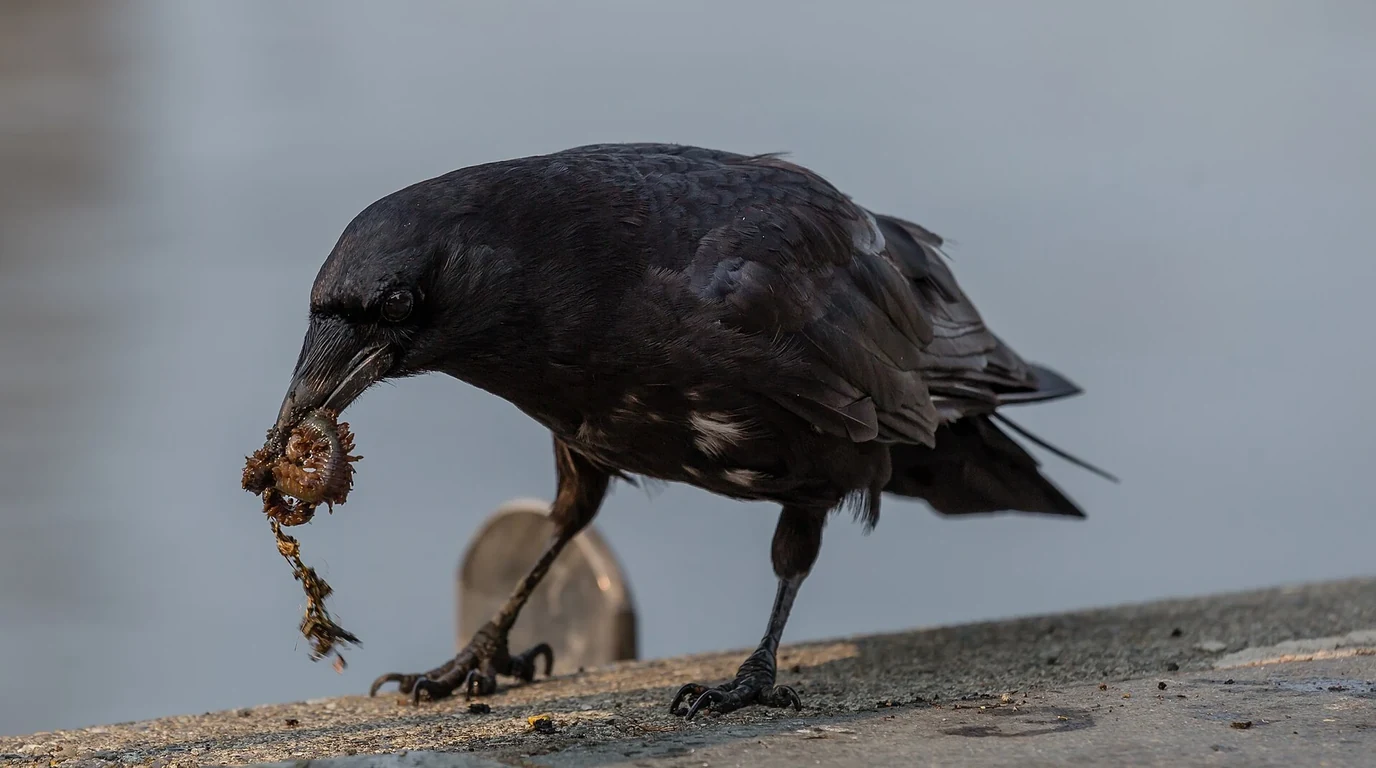
The safest answer to how to keep crows away from bird feeders without harming them is to remove the easy reward. Crows are opportunistic feeders that go wherever food is easiest to reach.
American Crows eat an unusually wide range of food. The Cornell Lab lists compost, garbage, and pet food among the things that pull them into a yard.
Picture a yard that also offers a dog bowl on the porch, an open compost pile, and a trash can with a loose lid. The feeder is then just one stop out of four. A feeder is easier to defend when other easy food is not reinforcing the same visit.
What to Check in the Yard
Walk the yard once and be honest about what is available.
- Pet food and water bowls left outside between meals
- Open or loosely covered compost, especially anything with kitchen scraps
- Trash and recycling bins without a latching lid
- Fallen fruit under trees, and food left after outdoor meals
- Seed hulls and other food debris left on the ground
Fix those before you spend money on the feeder itself. Utah State University Extension’s crow damage guidance puts the same emphasis on removing food attractants before harsher control.
Removing those extra food sources makes the feeder a weaker draw on its own. You will not need any single fix to carry the whole job.
Make the Feeder Fit the Birds You Want to Feed
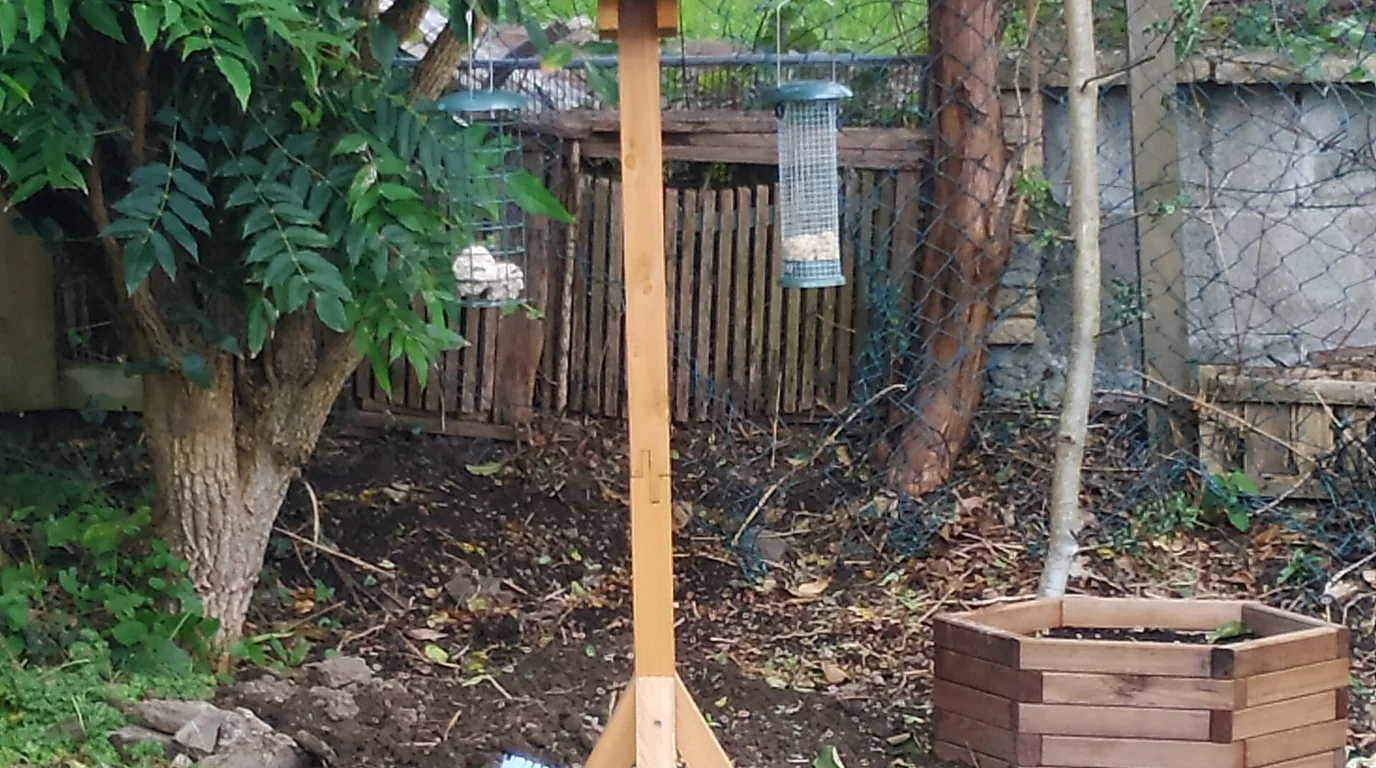
The most reliable tool you have is physical. A crow is a large bird with a long reach and a body that needs a real perch or a stable platform.
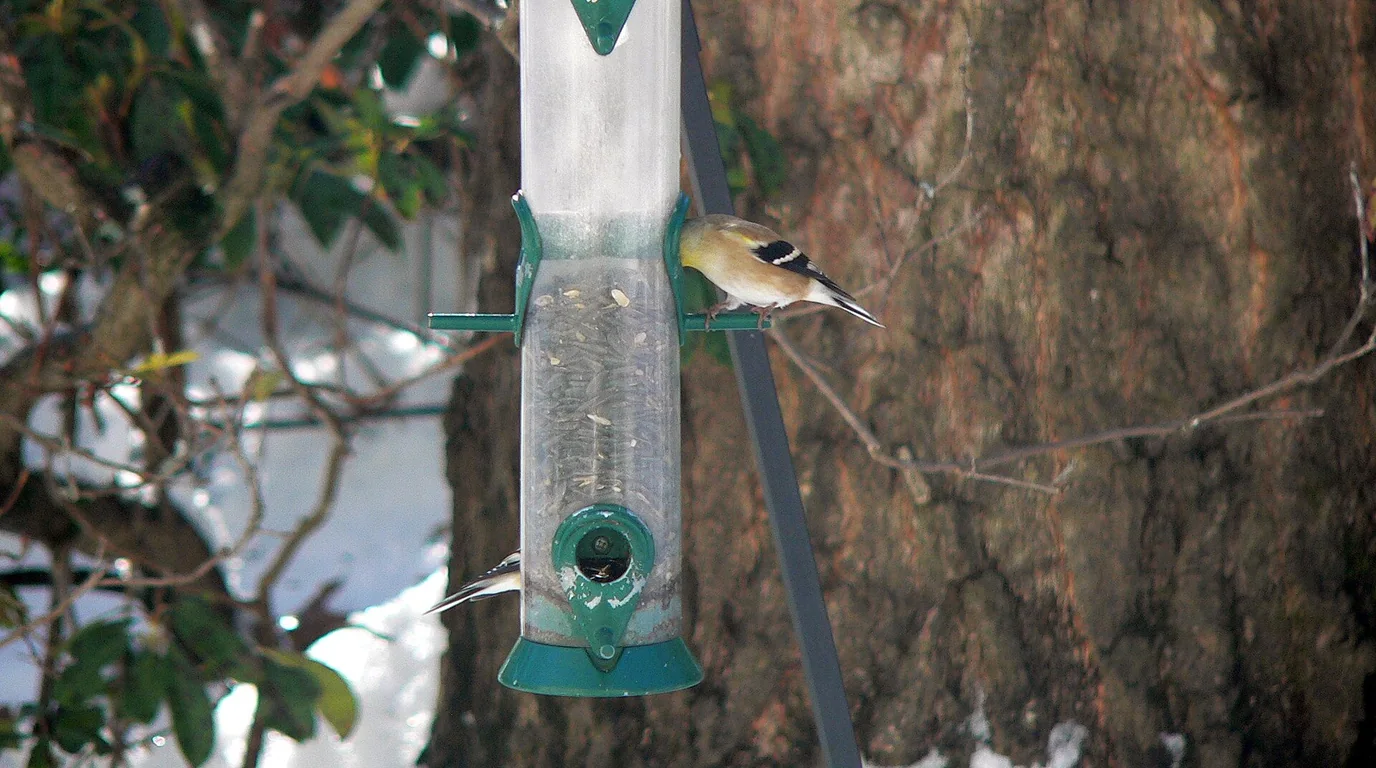
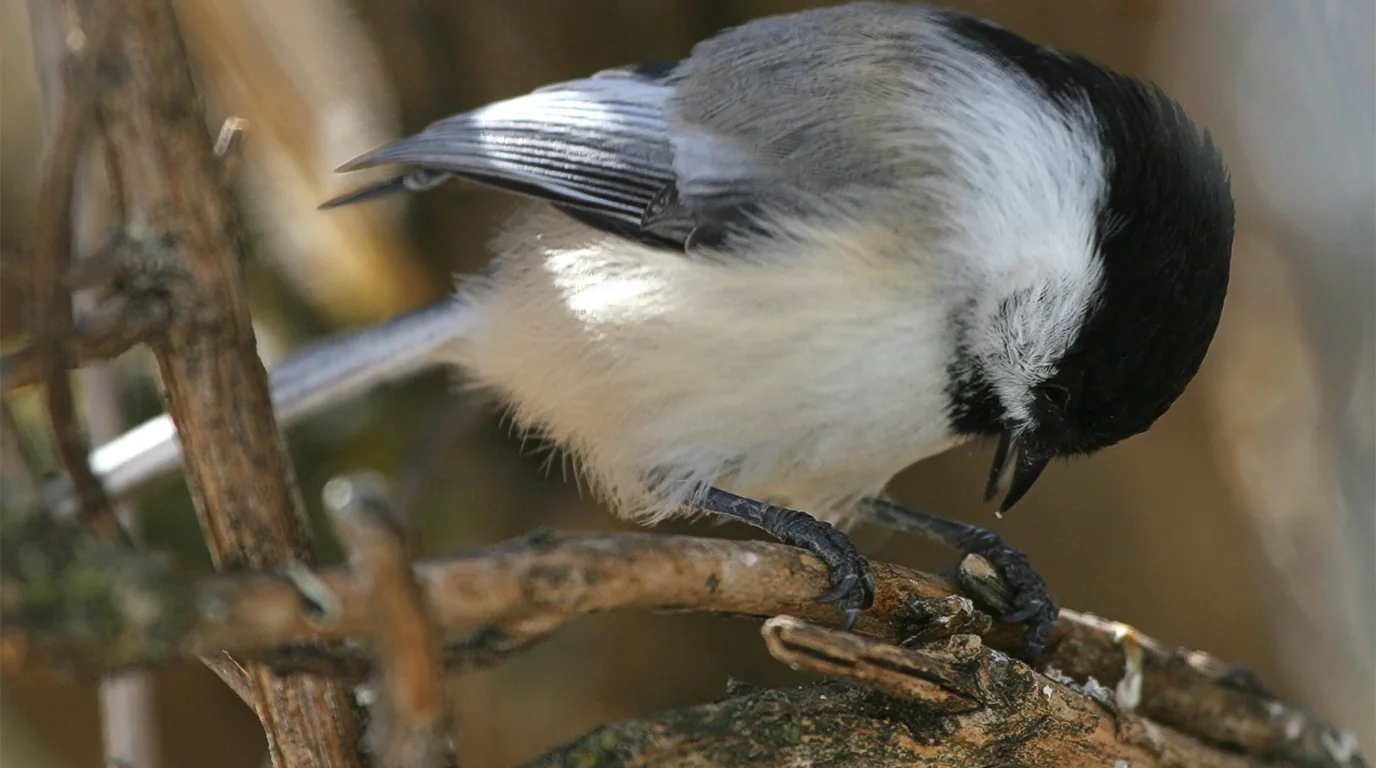
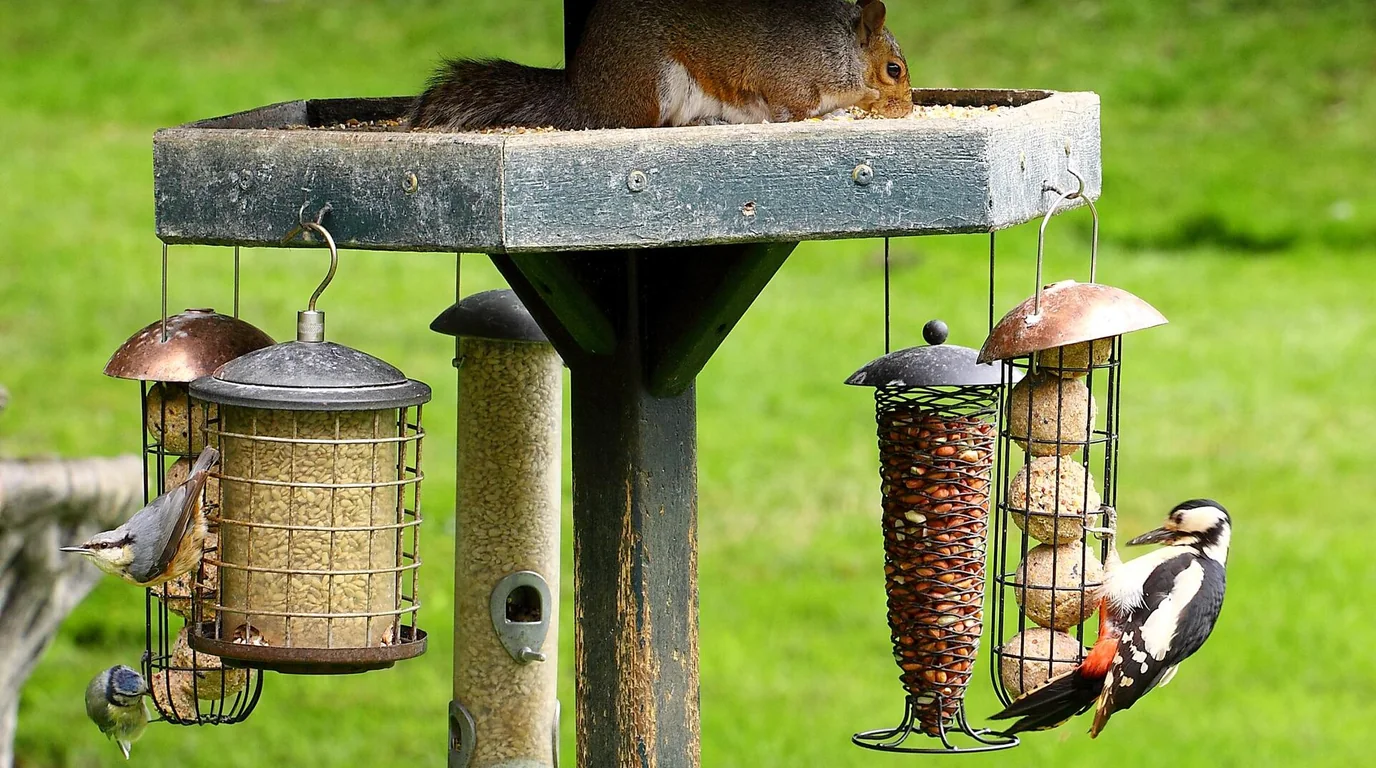
Chickadees, finches, titmice, and nuthatches do not need any of that. Feeder design and seed type already sort birds into groups, as Penn State Extension covers in its winter bird feeding basics.
Choose the feeder around the birds you want to serve. Then make the crow’s landing and reaching problem harder.
Watch one feeding session before changing hardware. Note where the crow lands, what it reaches, and whether it feeds from the port or spilled seed. That quick check shows which access point actually needs fixing.
Caged and Enclosed Feeders
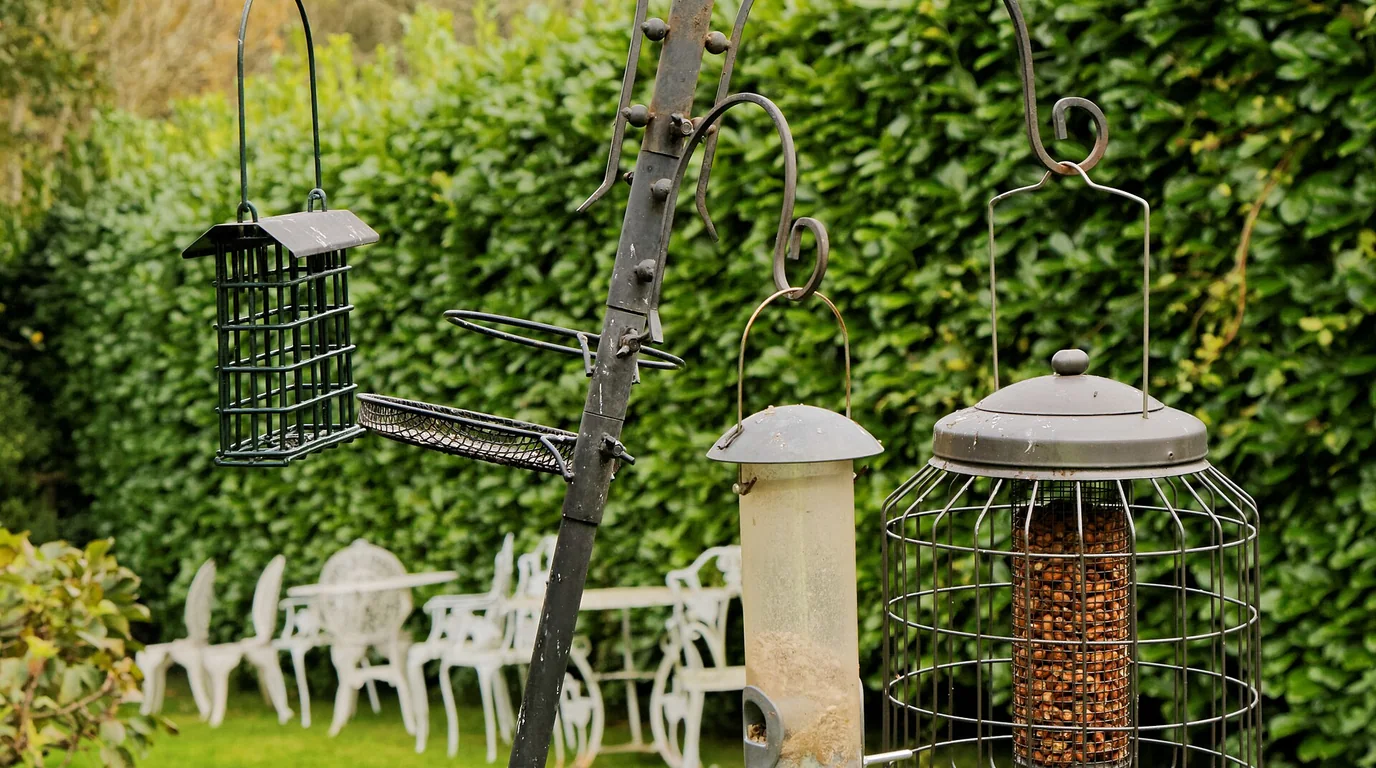
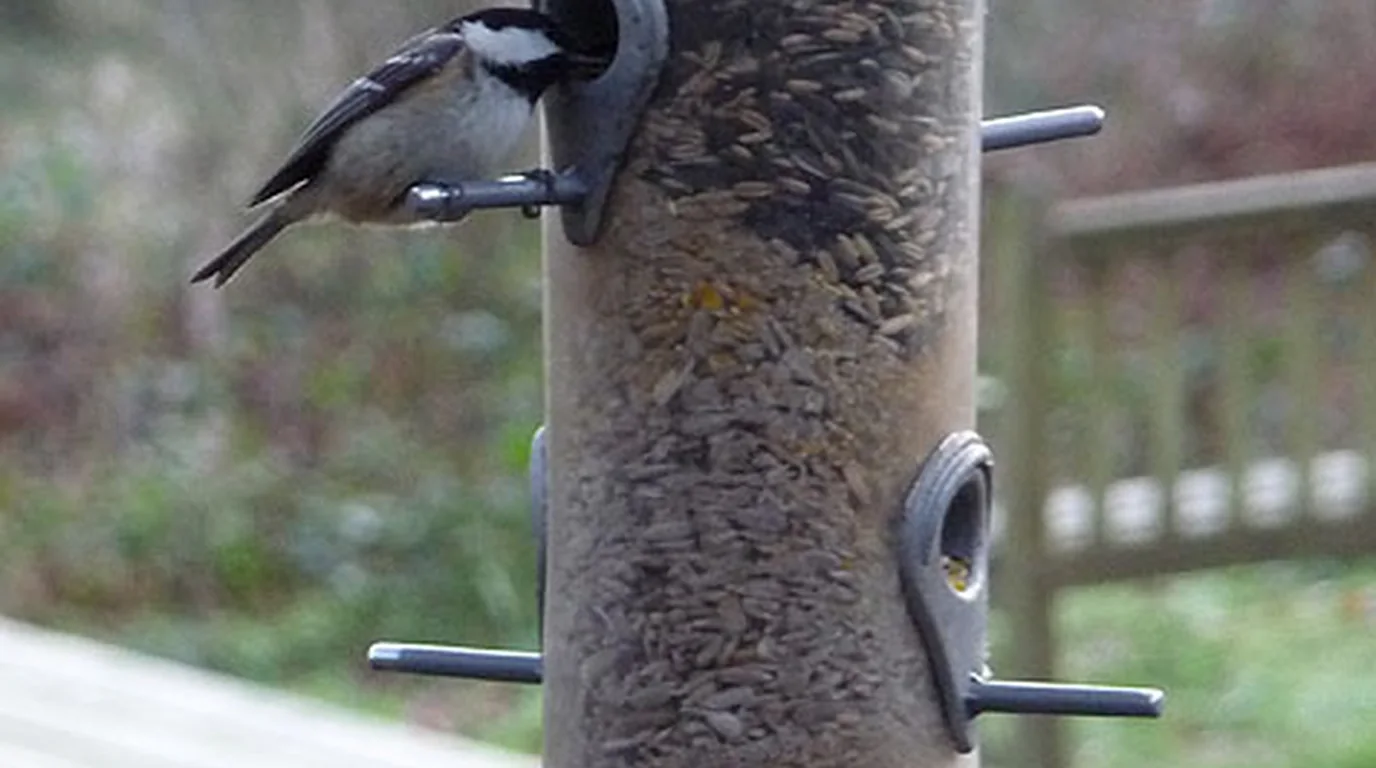
A cage around a tube feeder is a size-fit test, not magic. It works only if the mesh openings are too small for a crow to reach through.
The cage also needs to sit far enough from the seed ports that a long bill cannot bridge the gap. Measure or eyeball both of those before you assume any cage is crow-proof.
Some cages are sized for squirrels, not birds. A crow can still work a wide opening from an awkward angle.
Two safety points come with any cage or guard. Check it for sharp cut wire ends or pinch points that could injure a bird.
Check on it periodically too, since a bird can occasionally get inside a cage feeder and have trouble finding its way back out. If you find an injured or trapped bird, do not try to treat it yourself. Call a licensed wildlife rehabilitator or your state wildlife agency.
Open Platforms and Ground Feeding
Platform trays and ground scatter are the easiest crow targets you can build. If crows are your problem, these are the first things to pull.
If you want to keep serving ground feeders like juncos or doves, put out a small amount at a time. Take up what is left before evening instead of leaving a standing buffet.
Change Food and Access Before You Add a Scare Device
Work through this in order, and give each change time before you judge it.
- Cut portion size. Fill the feeder with what your small birds will finish in a day instead of topping it to the brim. A feeder that runs empty by mid-afternoon is a weaker draw than one that is always loaded.
- Match the food to the feeder and the bird. Offer the food your target species normally eats, in a feeder built for their size. Avoid food that spills easily or piles up within easy reach on the ground or an open tray. Less spill and less open access give a crow less to work with.
- Move the feeder. Space away from a fence rail, deck edge, wide branch, or roofline removes the staging perch crows use to survey and launch.
- Use timing carefully. If you watch and find crows working your feeder in a consistent window, pull the feeder or leave it empty during that window and put it back after. There is no universal schedule here, so go by what you actually see. Do not stretch this so far that your small birds lose real feeding access, which matters most in hard winter weather and during nesting season.
Keep the Ground Under the Feeder Boring
Spilled seed under the feeder is a second feeder. Crows can exploit it without needing to perch or balance.
Sweep the Drop Zone
Sweep or rake the drop zone regularly. Rake in a wider circle than feels necessary, since hulls and kernels scatter further than you would guess.
Penn State Extension’s guidance on reducing disease risk at feeders recommends limiting food on platforms to about a day’s worth. It also recommends cleaning feeders so mold and residue do not build up.
Offer only what the birds will finish promptly, sweep up the spill, and clean the feeder on its normal schedule. A seed tray under the feeder catches the drop, but only if you empty it. A wet tray of swollen seed is exactly the reward you were trying to remove.
Check the Hardware Too
While you are down there, check the pole, hanger, and any guard for rust, loose hardware, or a bent edge that has become sharp.
Use Movement as a Backup, Not the Main Fix
Reflective tape, spinners, and plastic owls have a real but short life. Utah State University Extension notes that plastic owls and hawk silhouettes lose their fear value once birds get used to them.
A fake owl that sits in the same spot without ever moving or reacting eventually reads as just another fixture in the yard.
So if you use one, treat it as a patch, not a fix. A decoy or reflective item only interrupts crows for a while.
Move it and vary it rather than leaving it fixed in one place all season. There is no set schedule for how often. What matters more is that access control and cleanup keep doing the real work.
If nothing about your feeder access or ground cleanup has changed, the crows come back once the novelty wears off. Our overview of bird deterrents covers what each category can and cannot do.
Do Not Turn a Feeder Problem Into a Wildlife Problem
Everything above stops at deterrence, and that line matters legally. Under the Migratory Bird Treaty Act, unauthorized take of protected migratory birds is prohibited, and take includes killing and capturing.
Rules and protections can vary by species and by state. Check with your state wildlife agency before any control step that goes beyond deterrence. Do not trap, poison, shoot, injure, or disturb an active nest.
Boundaries That Matter
A few practical boundaries sit alongside the actions above.
- Sticky or glue products are not a feeder tool. They foul feathers and cause injury.
- Do not handle a crow, and do not try to relocate one.
- If you find a bird injured, entangled in a guard, or trapped inside a cage feeder, contact a licensed wildlife rehabilitator or your state wildlife agency rather than treating it yourself.
- If crows are nesting nearby and behaving defensively, leave the nest alone and give it distance until the young fledge.
We cover the broader rules on protected birds and nests in are birds protected by law.
When the General Crow Problem Needs a Bigger Plan
Feeder management solves a feeder problem.
If crows are getting into your trash, gathering on the roof, roosting in nearby trees, or making noise across the property, you are dealing with a bigger job. That is a different job, with a different set of tools.
Start with how to get rid of crows for the property-wide approach. Keep the feeder steps here running alongside it. A well-managed feeding station removes one of the anchors holding crows on your lot.
Images: American Crow eating by Michal Klajban, CC BY-SA 4.0, Via Wikimedia Commons; garden bird feeder by Llewee, CC BY-SA 4.0, Via Wikimedia Commons; Goldfinch at tube feeder by Pbtflakes, CC BY-SA 4.0, Via Wikimedia Commons; garden bird feeders by Acabashi, CC BY-SA 4.0, Via Wikimedia Commons; Black-capped Chickadee eating seed by Talshiarr, Public Domain, Via Wikimedia Commons; busy birdfeeder by Tim Felce, CC BY-SA 2.0, Via Wikimedia Commons; feeding tube at RSPB Ynyshir by Nigel Brown, CC BY-SA 2.0, Via Wikimedia Commons.

.jpg)


.jpg)

Free: The 5-Step Bird-Proofing Checklist
Work through the right steps in the right order, before spending money on the wrong deterrents. Printable PDF, straight to your inbox.
No spam. Unsubscribe any time.