Bird Deterrent Sounds: What Actually Scares Birds Off
Contents[hide]
Predator calls and distress calls of the same species work best. Both signal real danger. Ultrasonic gadgets barely register to birds and are a waste of money. The catch is habituation: sounds stop working once birds learn nothing bad follows. Rotate the calls, trigger on motion, and pair with a visual scare to keep the threat believable.
In this article, we’ll cover which bird deterrent sounds work, why ultrasonic devices do not, and how to keep birds from adapting.
Do Sound Deterrents Work?
Yes, the right ones do, with one big condition. A sound only scares a bird if the bird believes it means danger. A hawk’s screech or a flock’s panic call carries real meaning, so birds react. Random beeps, music, or a radio left on do not, and birds tune them out within hours.
Every sound deterrent has the same enemy: birds get used to it. Scientists call that habituation. A noise that plays on a timer and never comes with an actual threat becomes background within days. Birds are smart enough to learn that the scary sound has never once hurt them.
So sound works best as a short, sharp scare you keep fresh, not a set-and-forget machine. Use it to break up a roost or protect a crop for a few weeks, and plan to change it up before the birds catch on.
Which Sounds Work
The Sounds That Scare Birds
Three kinds of sound earn their keep.
Predator calls come first. The cry of a hawk, falcon, or owl tells small and medium birds that a hunter is near. Distress and alarm calls work even better. These are the panic sounds a bird makes when a predator grabs one of its own, and they clear an area fast because they are species-specific.
A starling flock scatters from a starling distress call far quicker than from a generic noise.
Sudden loud noises round out the list. A bang, a clap, or a propane cannon on a farm startles birds into flight. Birds stop flinching at a bang faster than at any other sound here, often within a day or two. Sudden noise is a tool for the first few days, not a long-term plan.
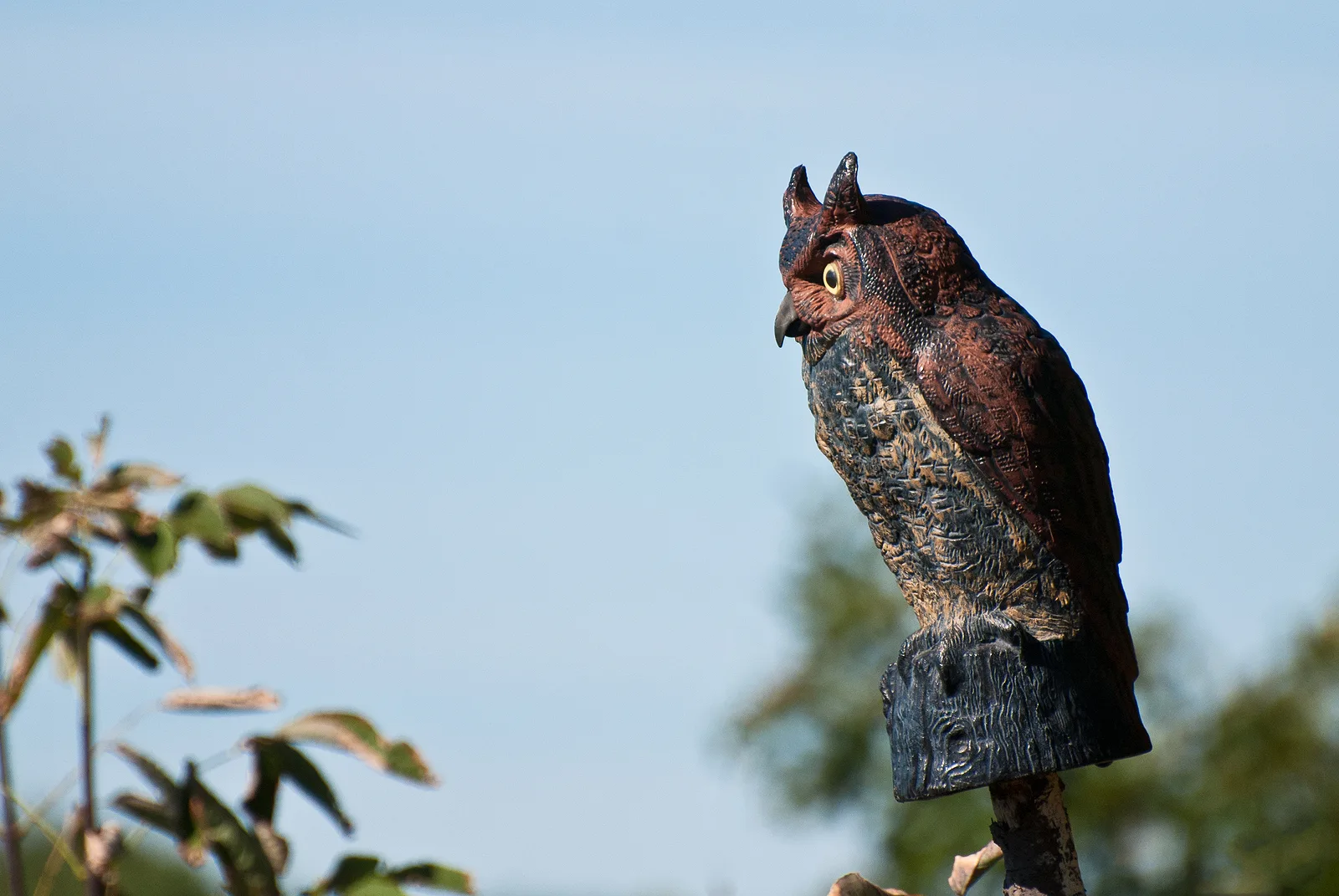
The best sounds mirror the best visual scares. A hawk call and a decoy owl both say the same thing to a bird: a hunter is here. Rotate which one is active so the bird never gets long enough with either to relax.
Which Sound Repels Which Bird
Matching the sound to the species is what separates a working setup from noise pollution. A quick rundown of the common troublemakers:
- Crows and other corvids: Smart and social, so their own distress calls work well, paired with a hawk or owl call. They learn fast, though, so rotate often and pair sound with the other tricks that outsmart crows.
- Starlings and grackles: Flocking birds that respond strongly to species distress calls. This is why airports and farms use recorded starling alarm calls.
- Woodpeckers: A hawk call or distress call can interrupt drumming on your siding, but sound alone rarely solves it. Treat it as one piece of a woodpecker plan.
- Geese: Respond to predator calls and, even better, a dog. Border collies are a known goose deterrent because the threat is real and it moves.
- Gulls: Distress calls are the standard tool on coasts and rooftops, which is why you see seagull scarers at marinas and warehouses. Coastal flocks already tune out boat engines and crowds, so it takes a genuinely startling call to register at all.
- Small songbirds: A hawk call clears a feeder or porch quickly, since hawks are their main daytime threat.
- Pigeons: The hard case. Bold and city-wise, pigeons shrug off most sounds within days. For them, lean on physical barriers, not audio.
Ultrasonic Bird Repellers: Do They Work?
This is where most money gets wasted. Ultrasonic repellers claim to drive birds off with high-frequency sound you cannot hear. The problem is birds cannot really hear it either.
Birds hear in roughly the same frequency range as humans, sometimes a bit narrower. The very high pitches an ultrasonic device puts out are faint or silent to them. Independent field tests have repeatedly found little to no lasting effect on birds outdoors. Some units add audible sound on top, which works a little, but that is the sonic part doing the job, not the ultrasonic.
If a device is marketed mainly on the word ultrasonic, save your money. The Cornell Lab of Ornithology and most wildlife agencies put far more stock in real predator and distress calls than in ultrasonic gadgets.
If you are buying a sound deterrent, choose a sonic one that plays varied, real bird calls, ideally on a motion trigger. Skip anything that leans on ultrasonic claims.
Simple Noise: Wind Chimes and Foil
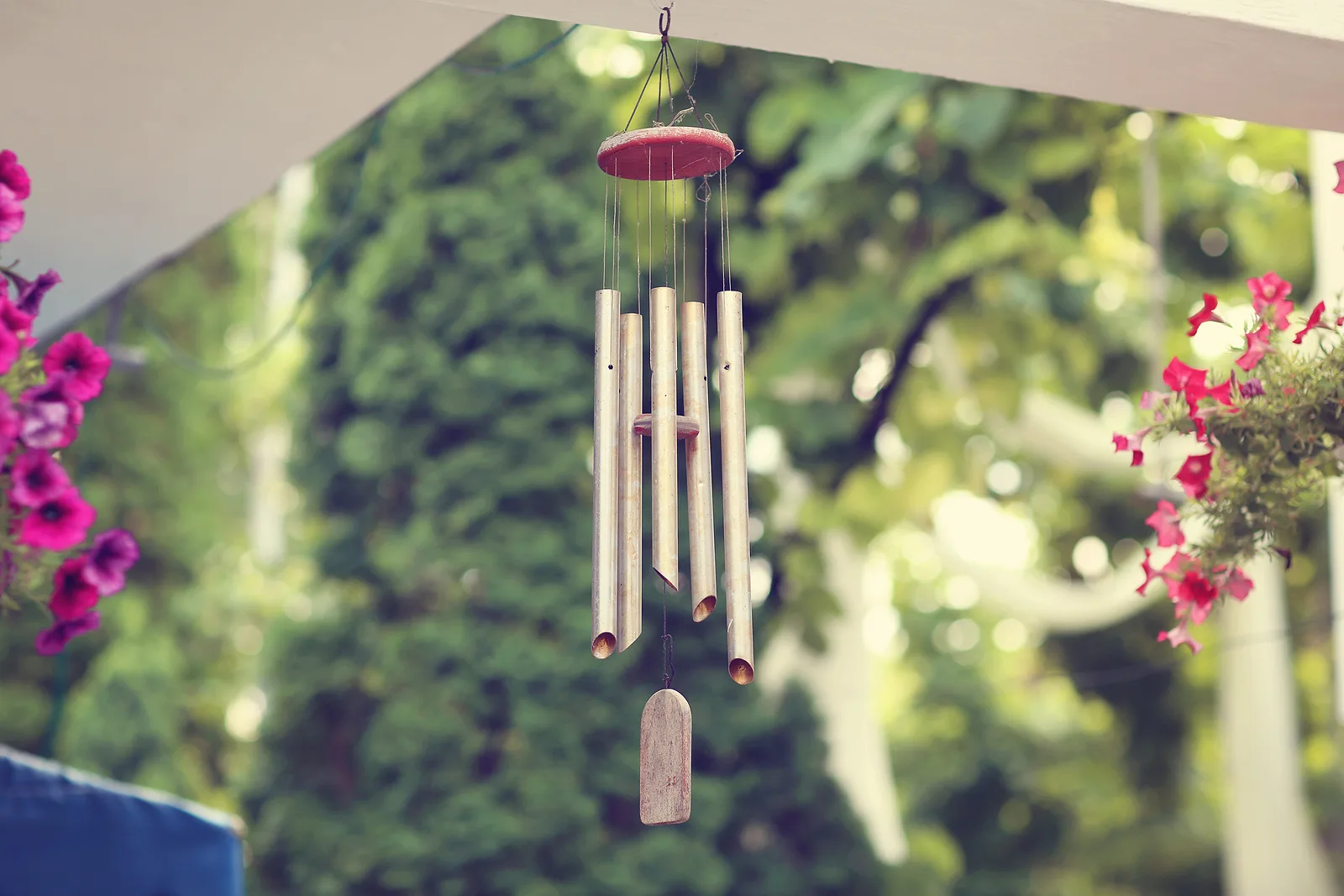
You do not always need an electronic unit. Metal wind chimes add unpredictable sound and a flash of movement that unsettles birds near a porch. They are mild, not a heavy hitter, but they help and they are pleasant to live with. It is worth knowing how far wind chimes really go before you rely on them.
Other low-tech noisemakers work on the same idea. Strips of foil or reflective scare tape that crackles and snaps in the wind add a bit of sound to their flash. None of these will clear a determined flock, but they raise the general unease of a spot for very little cost.
How to Use Sound Without Annoying the Neighbors
Audible deterrents can wear on people as much as birds, so a few rules keep the peace.
Keep the volume only as high as the area needs. Use a motion-triggered unit so it fires when a bird shows up, not on a loop all day. Avoid running it at night, when birds are roosting anyway and the noise only bothers neighbors. Vary the calls too, since a single sound on repeat is the fastest way to grate on the people next door.
If you live close to others, a quiet visual deterrent may keep the peace better than any speaker. Match the tool to the setting.
When Sound Is Not Enough
Sound is a scare, not a wall. It moves birds, but it cannot physically keep them off a ledge, and the smartest, boldest birds learn around it. For a lasting fix, back it up with something they cannot argue with.
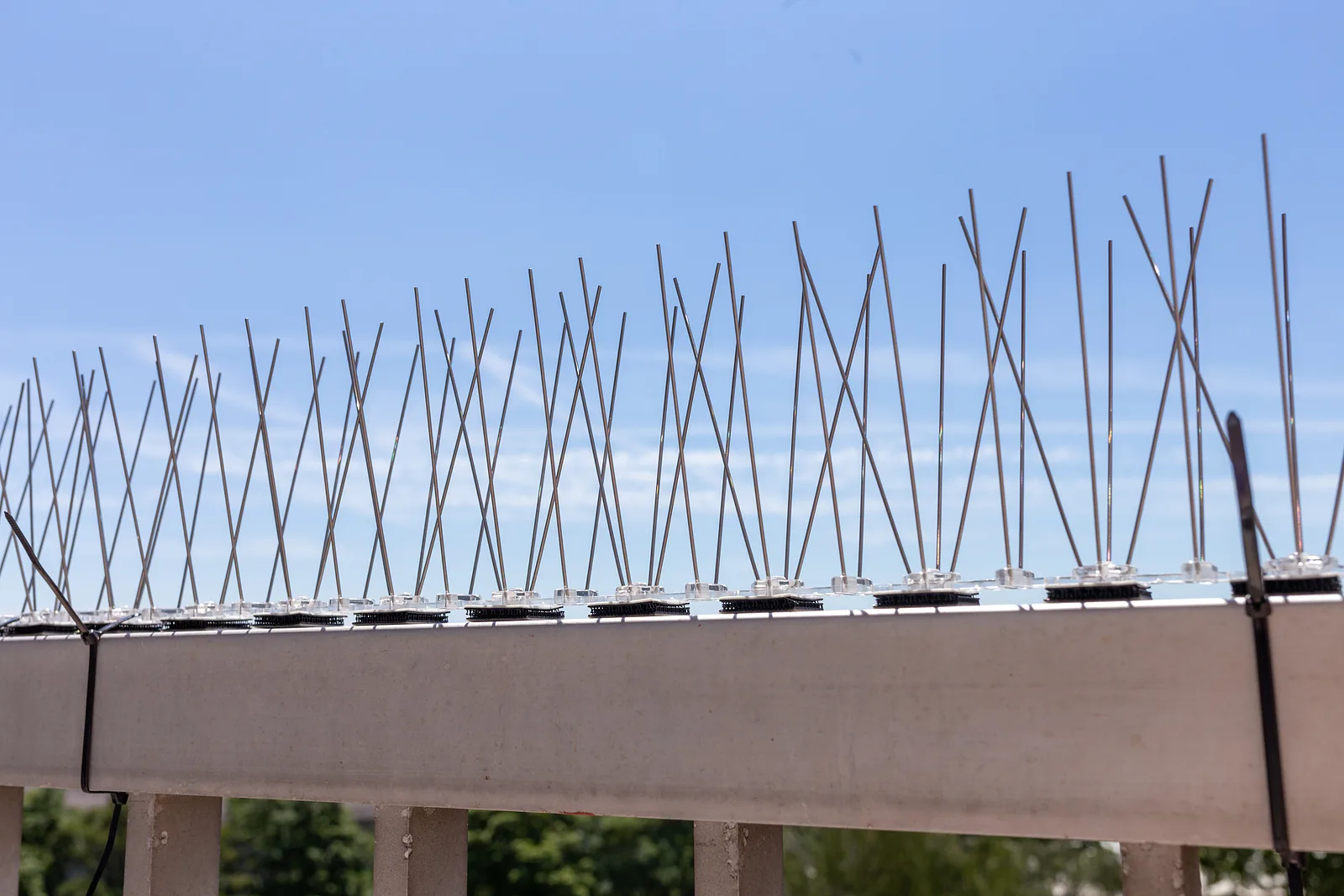
Spikes that make a ledge impossible to perch on and netting that seals off a roost or a crop do what sound cannot. A scent repellent or one of the other humane deterrents adds another layer. The strongest setups stack methods: a sonic scare to move the flock now, plus a barrier and a visual to keep them gone. For the full picture, start with the menu of bird deterrents or the broad guide to keeping birds away.
Images: wind chimes, decoy owl, and bird spike photos via BirdProofingHQ.
Free: The 5-Step Bird-Proofing Checklist
Work through the right steps in the right order, before spending money on the wrong deterrents. Printable PDF, straight to your inbox.
No spam. Unsubscribe any time.