Skip to content

How to Get Rid of Vultures: Effective Solutions for 2026

/ By David Carter

Have you ever had the unnerving experience of seeing large, dark birds circling ominously above your property? If so, you’ve likely encountered turkey vultures, also known as buzzards. These scavengers can be a nuisance and even pose health risks due to their droppings. Fear not, for this blog post serves as a comprehensive guide on how to get rid of vultures, understanding turkey vultures, navigating the legal landscape, and implementing effective solutions to deter them from your property.

Key Takeaways

  • Gain an understanding of turkey vultures’ behavior, habitat and characteristics to prevent them from nesting on one’s property.
  • Implement legal and humane measures for removal with noise-based solutions, visual scare tactics or physical barriers.
  • Take preventative measures such as removing roosting sites & food sources while cleaning droppings promptly to mitigate potential health risks.

Understanding Turkey Vultures: Behavior and Habitat

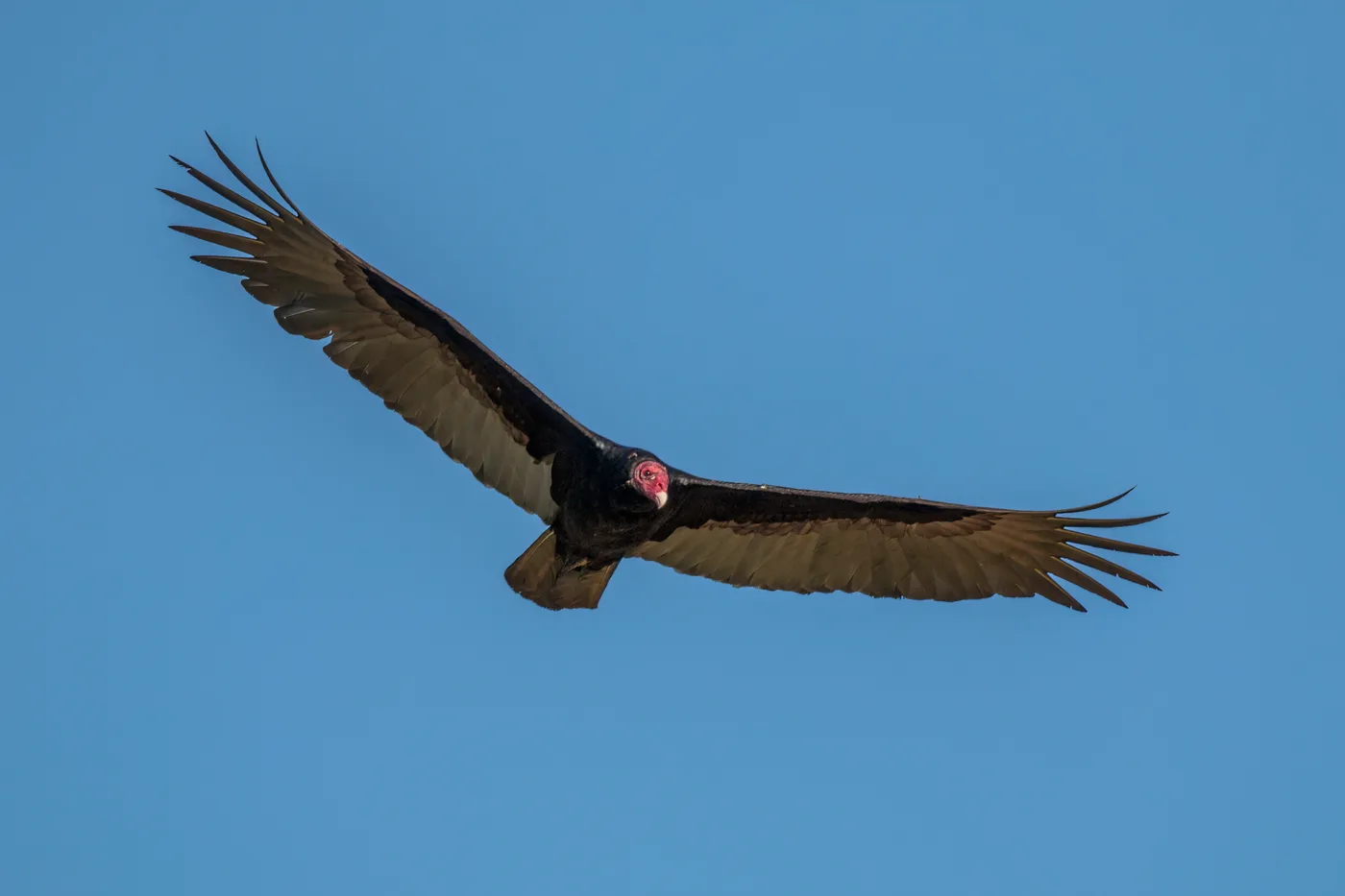
Turkey vultures, a fascinating bird species, are often referred to as large dark birds due to their size and color. These heavy birds are characterized by their long, broad wings that span up to 6-1/2 feet. These scavengers primarily feed on the flesh of deceased animals, which they can easily locate with their keen sense of smell. Although they are not known to attack humans or pets, their presence can still be disconcerting, especially when they bring carcasses onto people’s lawns. In addition to their unsettling appearance, they can cause property damage by tearing up window caulking, roof shingles, or vent seals. This has led to a turkey vulture problem in some areas where their population is high.

Turkey vulture soaring in flight

Turkey vultures inhabit North and South America, with two species commonly observed in the United States: the turkey vulture and the black vulture. They typically roost on:

  • poles
  • towers
  • dead trees
  • fence posts

Making these areas prime targets for deterring their presence. Gaining insight into their behavior, habitat, and characteristics will enable you to take the necessary steps to discourage turkey vultures from taking up residence on your property.

Turkey vulture perched

Awareness of legal implications is vital before taking any action against turkey vultures, which are considered migratory birds. Protected under the Migratory Bird Treaty Act, harming or killing them is illegal and could result in significant fines or even imprisonment. As such, employing humane methods for turkey vulture removal, like those outlined in this blog post, is imperative.

While traps and poison may seem like viable options for dealing with turkey vultures, they are not recommended due to their potential harmful effects on the vultures and other animals. Moreover, employing such methods could lead to legal repercussions. Instead, focus on implementing the legal and humane deterrents discussed in the following sections.

Effective Deterrents for Turkey Vultures

There are various ways to deter turkey vultures, with some of the most effective methods involving noise-based solutions, visual scare tactics, and physical barriers. While keeping turkey vultures away is important, it’s essential to choose the right approach for your specific situation, rather than resorting to extreme measures like attempting to kill turkey vultures.

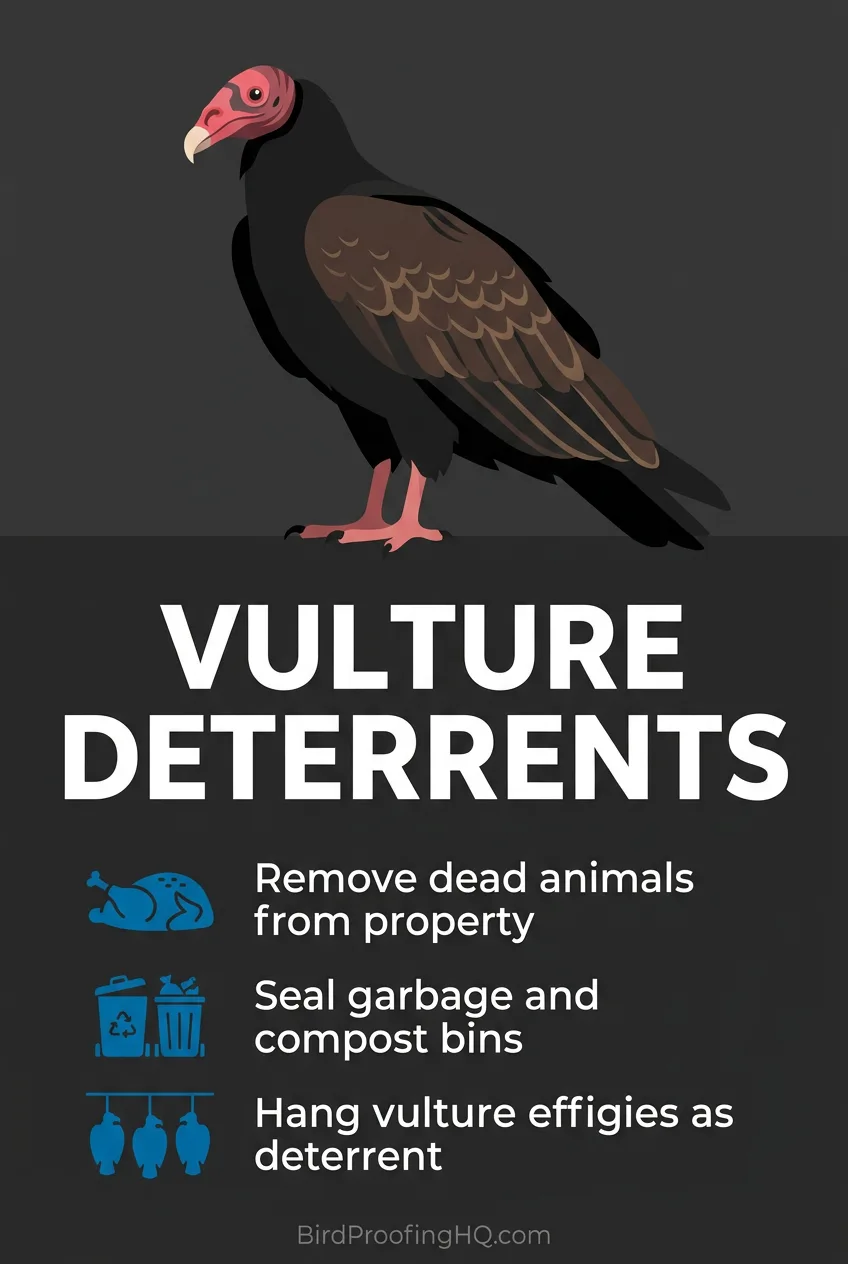
Vulture Deterrents — Remove dead animals from property, seal garbage and compost bins, hang vulture effigies

Each of these strategies will be discussed in more detail in the following subsections, with practical implementation tips provided.

Noise-Based Solutions

Noise-based solutions can be a powerful tool in scaring away turkey vultures. Motion-activated alarms, propane cannons, and recordings of predator noises can all help to deter these big birds from your property. The BroadBand PRO by Bird-X is a product that combines high-frequency sound waves and audible noises, which are inaudible to humans, to protect buildings, yards, parks, pools, and ponds from bird damage and the spread of diseases.

While loud noises can effectively deter turkey vultures, consideration for your neighbors and adherence to local noise ordinances is indeed necessary. Be sure to communicate your intentions with those nearby and consider using noise-based solutions in conjunction with other deterrent methods.

Visual Scare Tactics

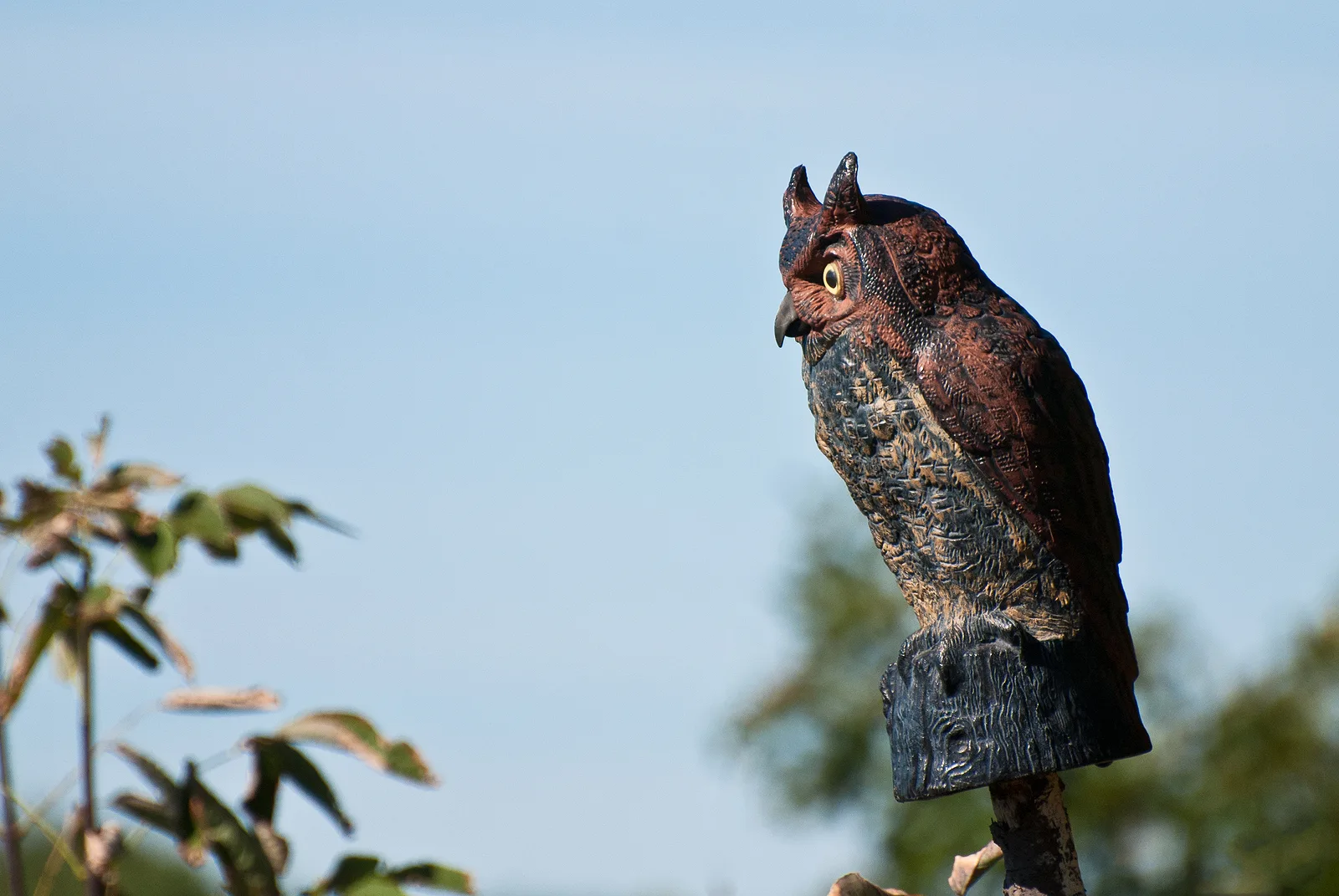
Visual scare tactics can be remarkably successful in dissuading turkey vultures from your property and effectively scare turkey vultures away. Predator decoys, such as those resembling owls, hawks, and eagles, can be strategically placed around your property to frighten away vultures. Reflective objects, like balls of aluminum foil, used twine, or fishing line, and used CDs, can also be employed to create confusion for turkey vultures and make their navigation more difficult.

Owl decoy used as a visual scare tactic

Another effective visual deterrent is the use of predator balloons. These balloons are designed with patterns and colors that mimic the gaping mouths and eyes of birds of prey, making them unappealing to turkey vultures and other birds. Additionally, they are reflective and can be suspended from strings, giving the illusion of gliding in the wind.

Physical Barriers

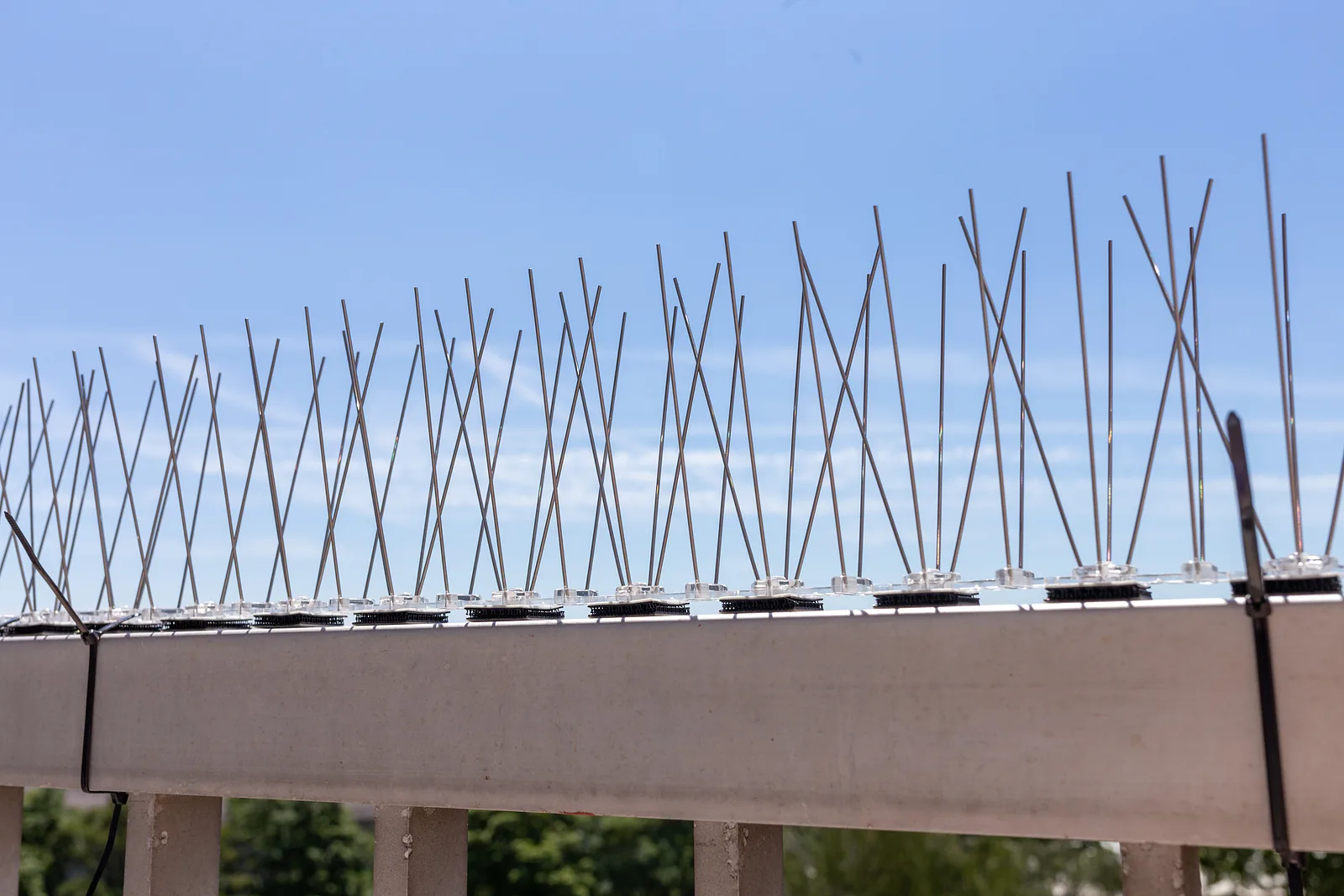
Physical barriers can play a significant role in preventing turkey vultures from roosting on your property. Bird spikes, available in plastic or stainless steel, can be installed on surfaces to deter birds from landing or roosting on them. Electrified shock tracks, such as Bird-Shock and Bird Fence systems, can also be employed to repel pest birds, including turkey vultures.

Bird spikes installed to block roosting

Bird netting is another option, acting as a physical barricade to enclose areas where vultures are perching. By obstructing access to their preferred roosting sites, you can effectively discourage turkey vultures from settling on your property.

Removing Attractants: Dead Animals and Garbage Management

Eliminating attractants like dead animals and managing garbage effectively are further steps in deterring turkey vultures from your property. Promptly disposing of animal carcasses can significantly reduce the likelihood of vultures gathering on your property. Be vigilant in cleaning up any meat scraps and other refuse that may be attractive to vultures.

Proper garbage management is also crucial in deterring vultures. Use tightly sealed trash cans and dispose of garbage regularly to limit access to potential food sources. By removing attractants and managing waste effectively, you can make your property far less appealing to turkey vultures.

Advanced Solutions for Persistent Vulture Problems

If you’ve tried the deterrent methods mentioned above and are still experiencing persistent turkey vulture problems, it may be time to consider advanced solutions, such as laser deterrent systems and professional assistance.

These options, along with guidance on when to seek help, will be discussed in more detail in the following subsections.

Laser Deterrent Systems

Laser deterrent systems emit random light patterns that have been proven effective in keeping vultures away from your property. These systems can cover an area of up to a quarter of an acre with a single unit, providing a wide range of protection. Companies such as Bird-X, Bird B Gone, and Bird Control Group manufacture laser deterrent systems that can be used outdoors to safeguard crops, livestock, rooftops, and other areas from vultures and other pest birds.

Mindfulness of potential security concerns, such as laser light being directed at passing planes — a significant issue in the United States and Canada — is necessary. Like any deterrent method, the safety and legality of employing laser deterrent systems require careful consideration.

Professional Assistance

In extreme cases where vultures persist despite your efforts, it may be necessary to seek professional assistance. Wildlife and pest control companies can provide bird control services, which may include clean-up and humane trapping for turkey vulture removal. Be sure to choose a professional who adheres to legal and humane methods, avoiding contractors who advocate for the use of poisons or toxic chemicals.

Consultation with state and provincial wildlife management agencies for referrals and advice should precede contacting a professional. It remains important to adhere to the law and prioritize the well-being of turkey vultures, as they are a protected species.

Preventative Measures: Making Your Property Less Appealing to Vultures

Taking preventative measures can be an effective way to make your property less appealing to turkey vultures. Removing potential roosting sites, such as dead trees or fence posts, can significantly reduce the likelihood of vultures settling on your property. Limiting access to food sources, such as pet food or fruit trees, can also help discourage vultures from being attracted to your property.

A clean, well-kept yard that discourages vultures

Regular disposal of garbage and storage in a plastic container that can at least partially neutralize the smell is recommended. By making your property less appealing to vultures through preventative measures, you can minimize the chances of encountering these unwelcome guests.

Dealing with Vulture Droppings: Cleaning and Health Risks

Vulture droppings, a type of bird droppings, near homes, pools, and drinking water sources, can be hazardous for human health. This poses a serious concern for both individuals and municipalities. Prompt and thorough cleaning of these droppings is necessary to mitigate potential health risks. Be sure to wear protective gear, such as gloves and a mask, during the cleaning process to avoid direct contact with the droppings.

In addition to the potential health risks, vulture droppings can also cause property damage. For example, in Florida, vultures’ droppings have been known to mar glass balcony walls and damage the balconies themselves. By addressing the issue of vulture droppings and implementing the cleaning and deterrent methods discussed in this blog post, you can protect your property and maintain a healthy environment.

Summary

In conclusion, dealing with turkey vultures can be a daunting task, but with the right knowledge and strategies, you can effectively deter these large scavengers from your property. By understanding their behavior and habitat, adhering to the Migratory Bird Treaty Act, implementing a combination of deterrent methods, and taking preventative measures, you can minimize the presence of turkey vultures and maintain a safe, clean, and vulture-free property. So, soar above the problem and take action today!

Frequently Asked Questions

How do I keep vultures off my roof?

Keeping your property clean, installing a “trip wire,” hanging a vulture “scarecrow,” scaring the vultures away, and calling wildlife control are simple and effective ways to keep vultures off your roof. Additionally, having your roof inspected is important to detect any damage caused by the birds.

What is a vulture’s natural enemy?

Eagles and hawks are the natural predators of vultures. This is why vulture decoys modeled after these predatory birds are so effective as deterrents. Additionally, golden eagles have been observed hunting and occasionally killing vultures in the wild.

What does it mean when vultures are on your house?

When vultures are on your house, it typically means they are roosting or searching for food sources in the area. Vultures are drawn to properties with dead animals or accessible garbage. The presence of vultures on your house does not necessarily indicate an immediate threat, but it does suggest that attractants should be removed and deterrent measures should be implemented.

Are turkey vultures dangerous to humans or pets?

Turkey vultures are not known to attack humans or pets. They primarily feed on carrion and are not aggressive toward living animals. However, their droppings can pose health risks, and their presence can be unsettling. Additionally, large vulture populations can cause property damage.

Can I legally kill a turkey vulture to deter them from my property?

No, it is illegal to kill turkey vultures. They are protected under the Migratory Bird Treaty Act, and harming or killing them can result in significant fines or even imprisonment. Instead, focus on implementing the legal and humane deterrent methods outlined in this guide.


Images: Turkey vulture in flight by Charles J. Sharp, CC BY-SA 4.0. Turkey vulture perched by Frank Schulenburg, CC BY-SA 4.0. Via Wikimedia Commons.

Photo credit: Charles J. Sharp (CC BY-SA 4.0), via Wikimedia Commons