Skip to content

How to Get Rid of Grackles: The Most Effective Tips

/ By David Carter

Are you tired of grackles dominating your backyard and bird feeders? Fret not, for we have the perfect guide on how to get rid of grackles and help you make your home a grackle-free haven. Grackles are fascinating birds, but their assertive behavior and adaptability can make them unwelcome guests in our gardens. It’s time to reclaim your yard and enjoy the company of other beautiful birds in peace.

In this insightful blog post, we will explore the world of grackles, their distinctive features, behavior, and species. We’ll also provide you with valuable tips and strategies on how to get rid of grackles while still attracting a diverse array of other avian visitors. So, let’s embark on this journey towards a harmonious backyard haven.

Key Takeaways

  • Identify and manage grackles for a balanced environment
  • Use weight-sensitive, caged, or adjustable perch feeders to deter grackles
  • Utilize yard maintenance and visual/auditory deterrents for a peaceful backyard experience

Identifying Grackles: Know Your Unwanted Guests

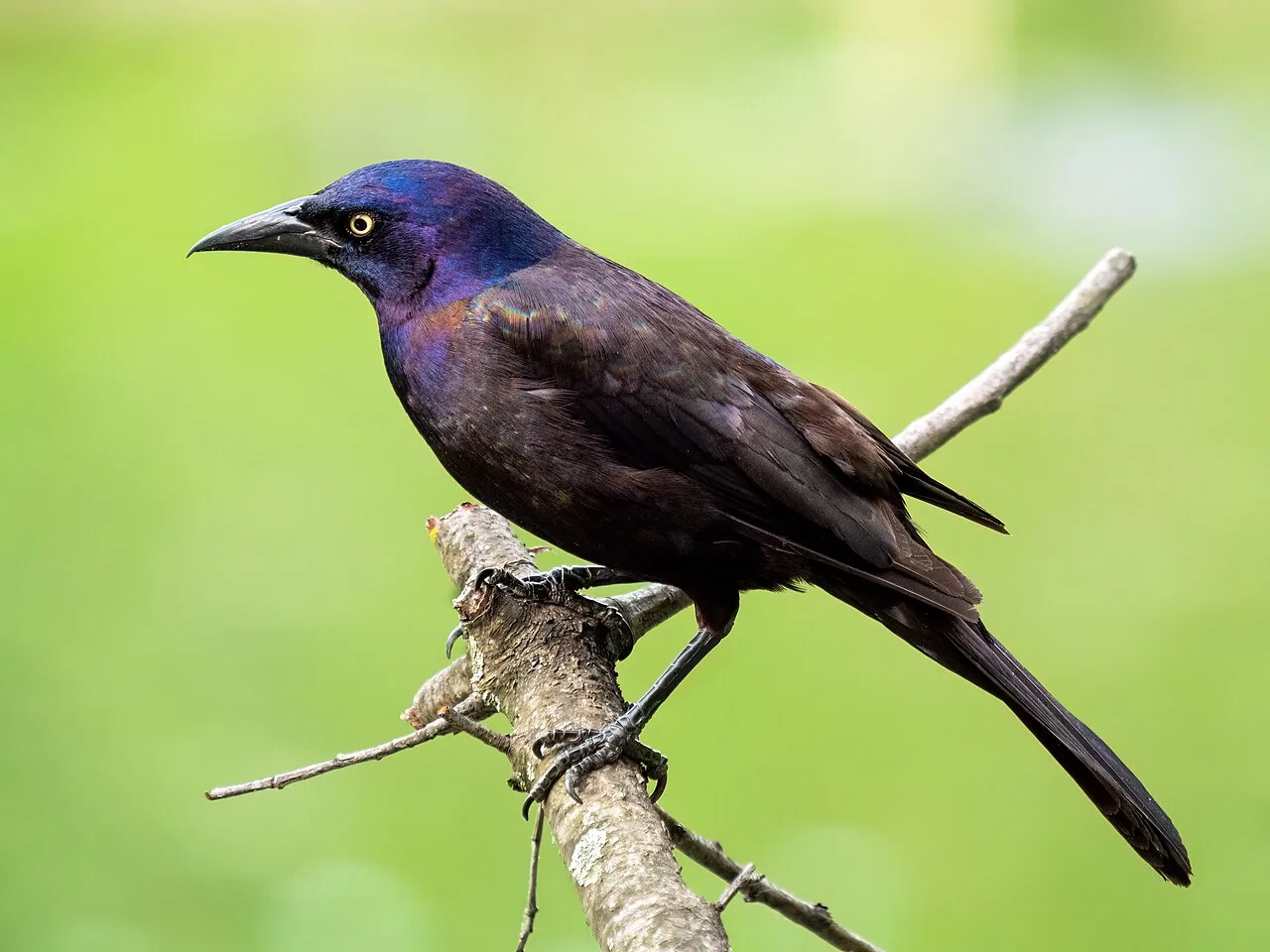
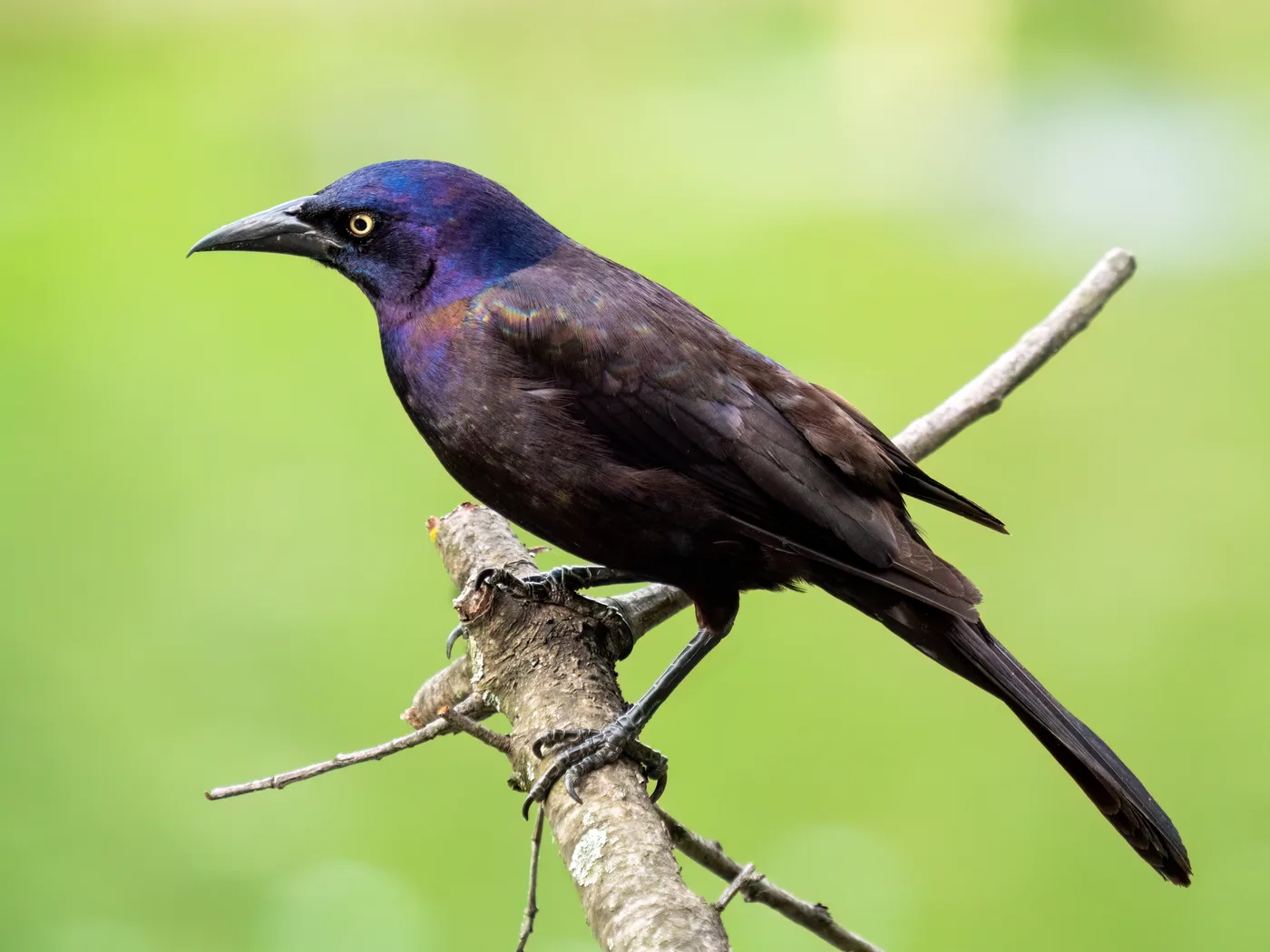
Grackles are indeed a unique bird species, belonging to the blackbird family. They possess distinct features like long legs, tails, and flat heads, making them easily identifiable among native species.

Common grackle showing its long tail and flat head

While they provide a valuable service by helping to keep the songbird population in check, their assertive behavior can sometimes label them as nuisance grackles. They are an enjoyable challenge to manage, as they demonstrate their versatility in feeding on various food sources and adapting to different habitats.

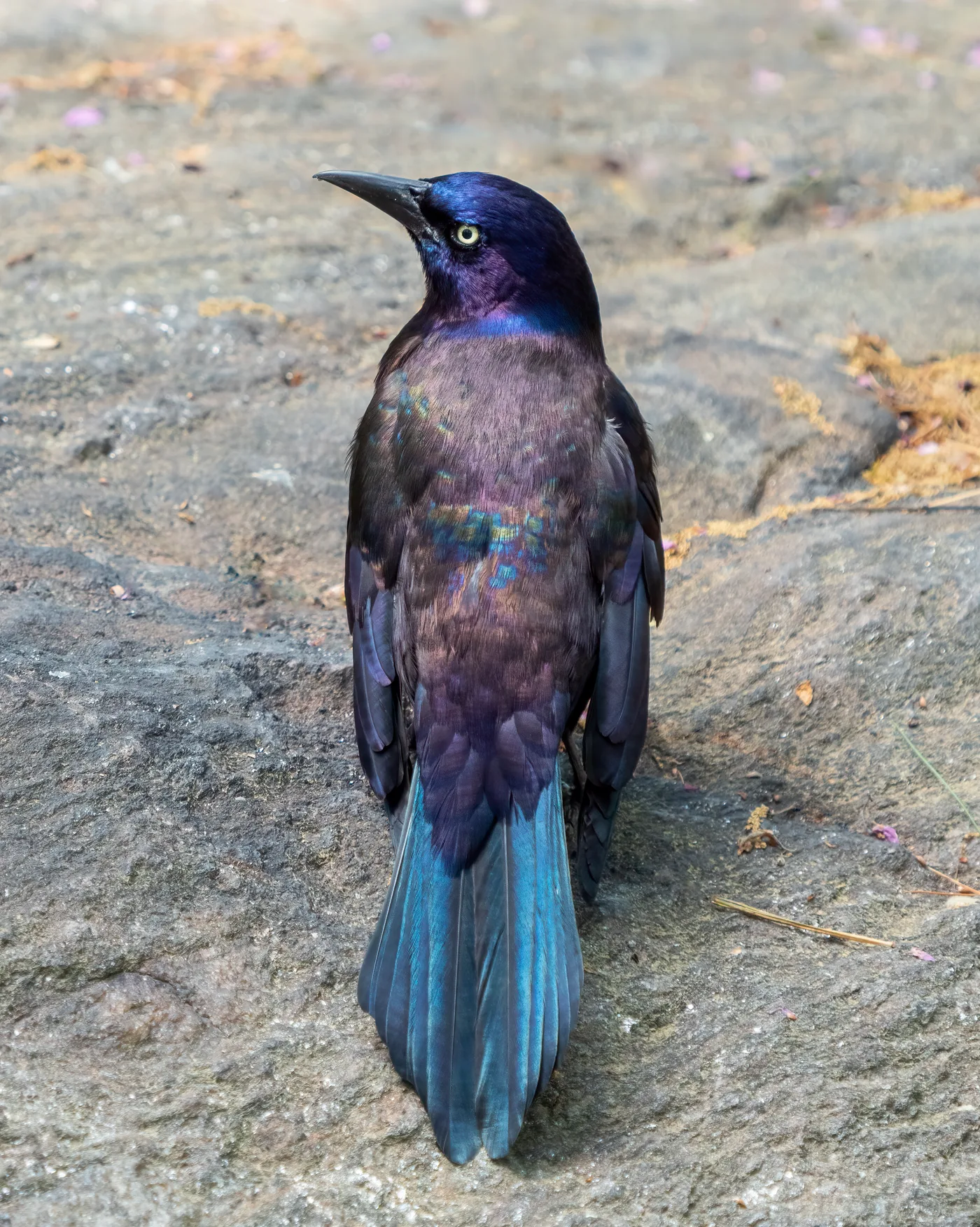
Iridescent plumage of a common grackle

Physical Characteristics of Grackles

Grackles are larger than typical blackbirds and have a more elegant tail and a longer, slender bill. Their stunning glossy-iridescent bodies make them a sight to behold, but can also make them a challenge to keep away from caged bird feeders. They boast an impressive long, dark bill, beautiful pale yellow eyes, and a long, elegant tail. Male grackles have a stunning iridescent appearance on their head and striking yellow eyes.

Their unique physical characteristics set them apart from other birds. Although they may be visually appealing, their assertive behavior often leads to them being classified as aggressive birds, a category of pest birds. Thus, understanding how to identify these birds is a vital step towards managing them effectively.

Grackle Behavior and Intelligence

Grackles are intelligent birds, known for their ability to thrive in an area and outcompete other birds. Originally inhabiting vast farmland areas, they have now adapted to urban settings, such as city parks. They assert themselves around other birds, confidently taking over an area and becoming the dominant species.

Their remarkable adaptability contributes significantly to their success. However, their assertive behavior may negatively influence other birds, forcing them to seek new habitats and enabling grackles to become the dominant species in an area. Comprehending their behavior and intelligence plays a pivotal role in managing these unwelcome guests.

Grackle Species in the United States

There are three incredible species of grackles in the United States:

  1. Common Grackles: medium-sized birds with beautiful glossy black feathers and a long tail.
  2. Boat-tailed Grackles: larger than Common Grackles and boast a distinctive boat-shaped tail.
  3. Great-tailed Grackles: the largest of the three species and have an impressive long, fan-shaped tail.

Grackles are commonly found in the eastern United States, the south, and the midwest, and are now spreading throughout the country. Knowing the different species of grackles can aid in identifying them correctly and finding effective ways to deter them.

Effective Bird Feeder Strategies to Deter Grackles

If you want to deter grackles while still attracting other birds, adopting bird feeder strategies that cater to smaller birds is beneficial. Employing tactics like weight-sensitive feeders, caged feeders, and adjusting perch lengths can prove effective in deterring grackles. Such strategies contribute to a healthy bird feeding environment, enabling other birds to enjoy food without the dominating presence of grackles.

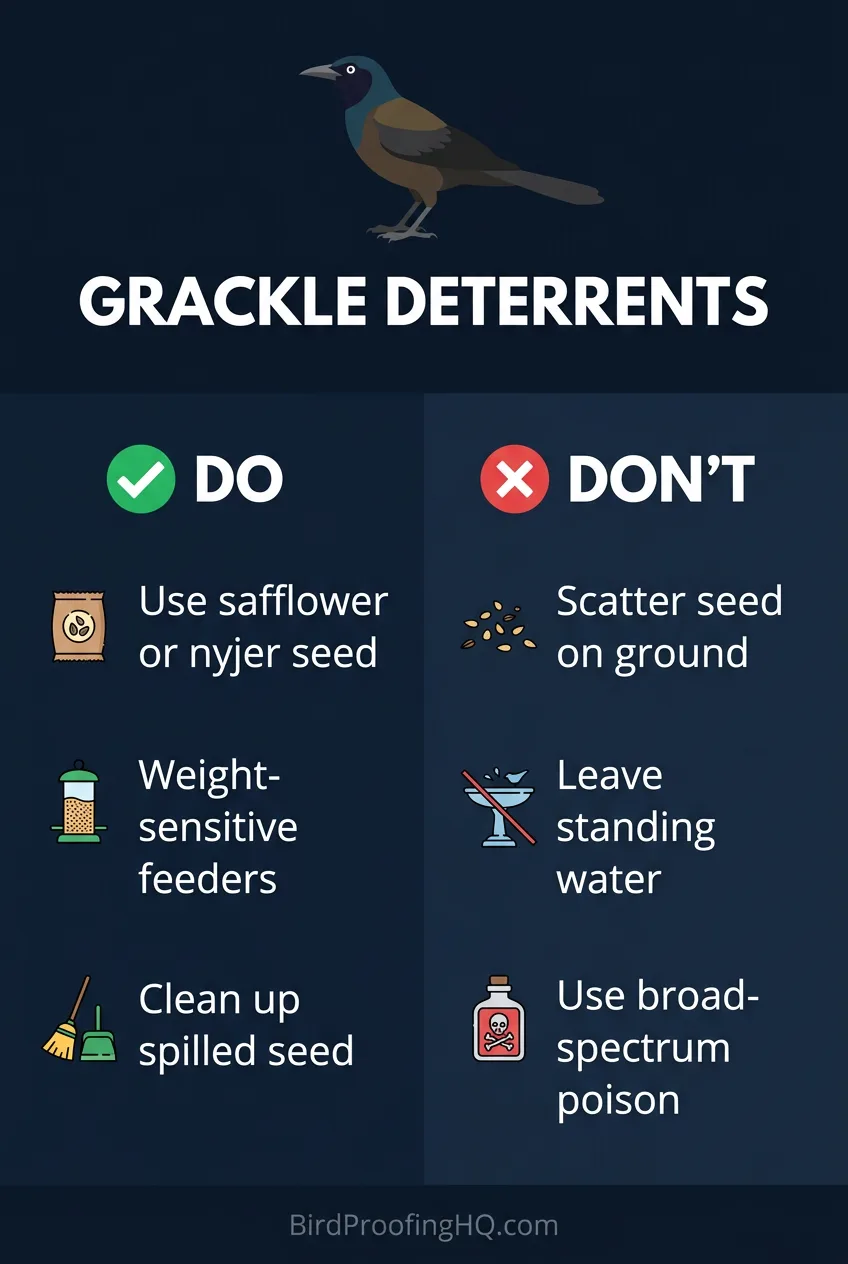
Grackle Deterrents — Do: use safflower seed, weight-sensitive feeders, clean up spilled seed. Do not: scatter seed, leave standing water, use poison

These bird feeder strategies not only help in keeping grackles at bay but also contribute to a more diverse and enjoyable backyard birding experience. Let’s dive into each strategy and explore how they can be implemented effectively.

Weight-Sensitive Feeders

Weight-sensitive feeders are designed with a mechanism that closes off the seeds from heavier birds, such as grackles. This allows smaller birds to enjoy the food without being bullied by the larger grackles. By making the feeders incredibly sensitive to weight, they can be adjusted in such a way that only one medium-sized bird, like a grackle, can feed at a time.

The Squirrel Solution 200 Bird Feeder is a cleverly designed weighted feeder that helps protect the seeds from being accessed by heavier birds like grackles, making it an excellent alternative to suet feeders.

Benefits of the Squirrel Solution 200 Bird Feeder:

  • Weight-sensitive design prevents larger birds from accessing the seeds
  • Promotes a harmonious bird feeding environment
  • Ensures smaller birds have a fair chance to feed

Caged Feeders

Caged feeders are another effective strategy to deter grackles while still accommodating smaller birds. These feeders have a protective cage around them, allowing smaller birds to access the food while keeping larger birds like grackles out. This provides a safe haven for other birds to enjoy the bird feeder without the worry of grackles dominating it.

The Audubon caged tube feeder is a great solution for keeping grackles away from your bird feeders. By providing a feeding space exclusively for smaller birds, a caged bird feeder helps maintain a balanced and enjoyable bird feeding ecosystem.

Adjusting Perch Lengths

Adjusting the perch lengths on bird feeders can help make it difficult for grackles to access the food, providing a positive outcome. By using perch rings, perch baffles, or perch extenders, you can easily modify the length of the perches on your bird feeders.

This simple yet effective strategy ensures that smaller birds can feed without being disturbed by grackles. By making it difficult for grackles to perch and feed, you can encourage them to find food elsewhere, leaving your bird feeders open for other birds to enjoy.

Selecting Bird Food to Discourage Grackles

The selection of appropriate bird food plays a significant role in discouraging grackles without deterring other birds. Safflower seeds and Nyjer seeds serve as excellent alternatives that grackles find unappealing, yet provide a nutritious meal for other birds like cardinals, finches, chickadees, titmice, jays, wrens, downy woodpeckers, and nuthatches.

By providing bird food that grackles find less appealing, you can maintain a diverse and vibrant bird community in your backyard while keeping grackles at bay.

Safflower Seeds

Safflower seeds and sunflower seeds are fantastic options to deter grackles while still attracting other birds. These seeds have a tough outer shell that grackles can find rewarding to crack open, but they are less appealing to them compared to other food sources.

Aside from their ability to deter grackles, safflower seeds are highly enjoyed by birds like cardinals and chickadees due to their high protein and fat content. Offering safflower seeds in your bird feeders can help maintain a balanced and diverse bird population while keeping grackles at a distance.

Nyjer Seeds

Nyjer seeds, also known as niger seeds or thistle seeds, are another excellent choice for deterring grackles. These small, thin, black seeds are packed with energy-rich oil, making them ideal for small birds like finches to consume. Grackles find them less appealing due to their size. The feeders used to distribute Nyjer seeds usually have small openings, which are too tiny for a grackle to fit their beak into..

By providing Nyjer seeds in your bird feeders, you can successfully attract finches and other small birds while keeping grackles away. This helps maintain a harmonious and diverse bird community in your backyard.

Avoiding Milo in Seed Mixes

When choosing bird food, it’s advisable to steer clear of seed mixes containing milo, as they attract grackles and could be detrimental to songbirds. To ensure your birdseed mix is milo-free, pay close attention to the label during purchase.

By providing food that is less appealing to grackles, you can encourage a diverse bird population while keeping these assertive birds at bay.

Yard Maintenance and Habitat Alterations

Effective yard maintenance and habitat alterations can discourage grackles from nesting and feeding. Some strategies to create a less appealing environment for grackles include:

  • Regular cleaning to remove food sources and debris
  • Pruning trees and shrubs to reduce nesting sites
  • Using bird netting to protect plants from grackle damage

By implementing these measures, you can still provide a welcoming space for a diverse array of other birds.

By taking care of your yard and making thoughtful changes, you can enjoy a beautiful, grackle-free haven filled with songbirds and other delightful avian visitors.

Regular Cleaning and Debris Removal

One way to discourage grackles is by regularly cleaning your yard and removing debris, such as leaves, twigs, and branches. This reduces food sources for grackles and keeps your yard looking neat and beautiful.

By maintaining a clean yard, you can enjoy a grackle-free environment while providing a welcoming space for other birds to thrive.

Pruning Trees and Shrubs

Pruning trees and shrubs is another effective way to deter grackles from using your yard as their roosting and nesting sites. Pruning during the dormant season, usually in winter or early spring, depending on the type of tree or shrub, can help improve the growth and safety of your plants.

By keeping trees and shrubs well-maintained, you can create a less appealing environment for grackles while still providing a welcoming space for other birds.

Bird Netting for Plant Protection

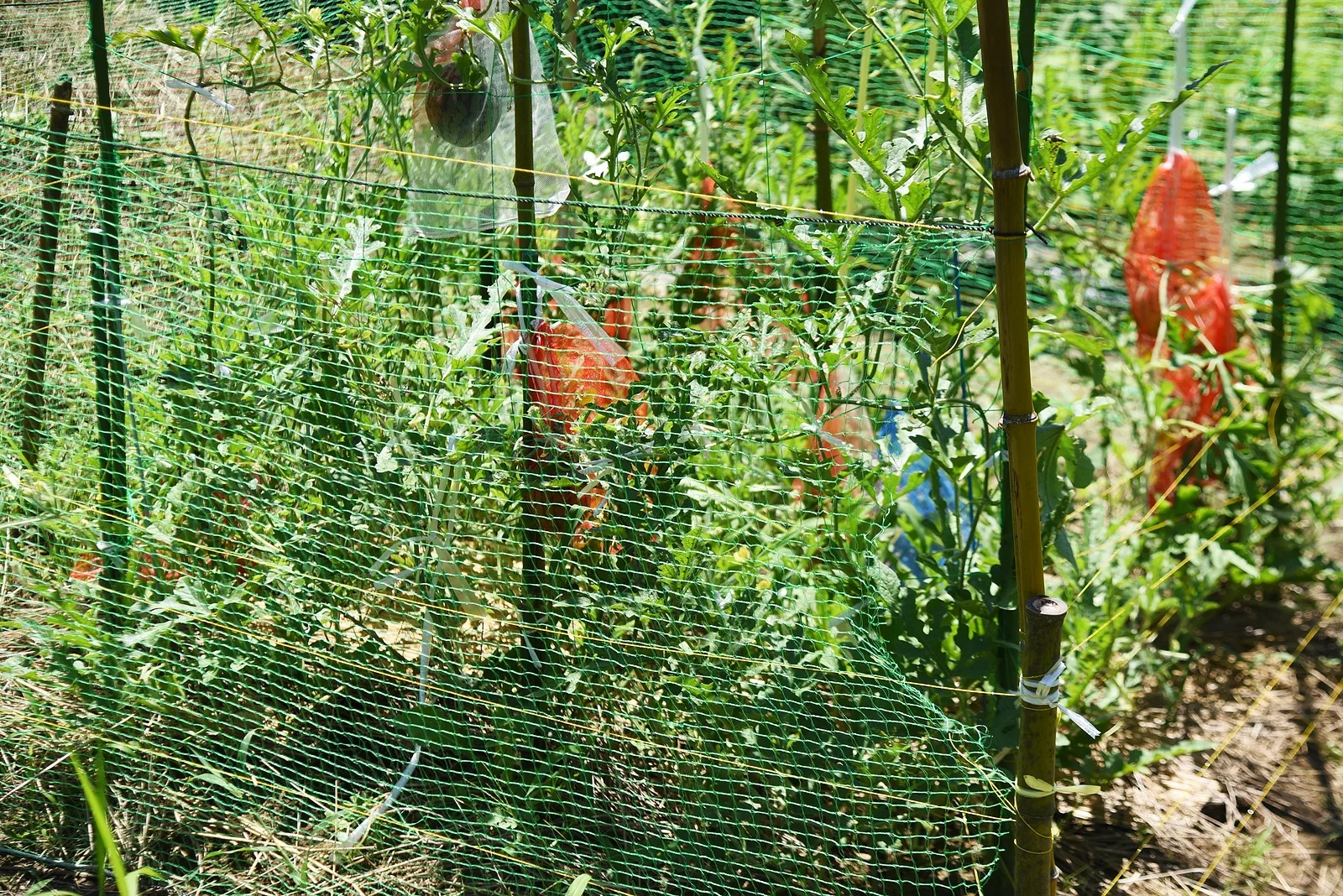
Using bird netting is a practical solution to protect your plants and crops from grackles and other pests. Bird netting is a strong and lightweight mesh netting that can be draped over plants or attached to structures like trellises to effectively prevent birds from accessing and damaging them.

Bird netting draped over plants

By protecting your plants with bird netting, you can ensure a healthier and more vibrant garden while keeping grackles at bay.

Utilizing Visual and Auditory Deterrents

The use of visual and auditory deterrents can be effective in scaring away grackles without causing harm to them or other birds. Predator decoys, kites, and sound repellents are some techniques that can aid in keeping grackles off your property, whilst maintaining a safe environment for other birds.

By using these non-invasive deterrents to deter birds, you can create a harmonious bird-friendly space and enjoy the company of a diverse array of avian visitors without the presence of grackles.

Predator Decoys and Kites

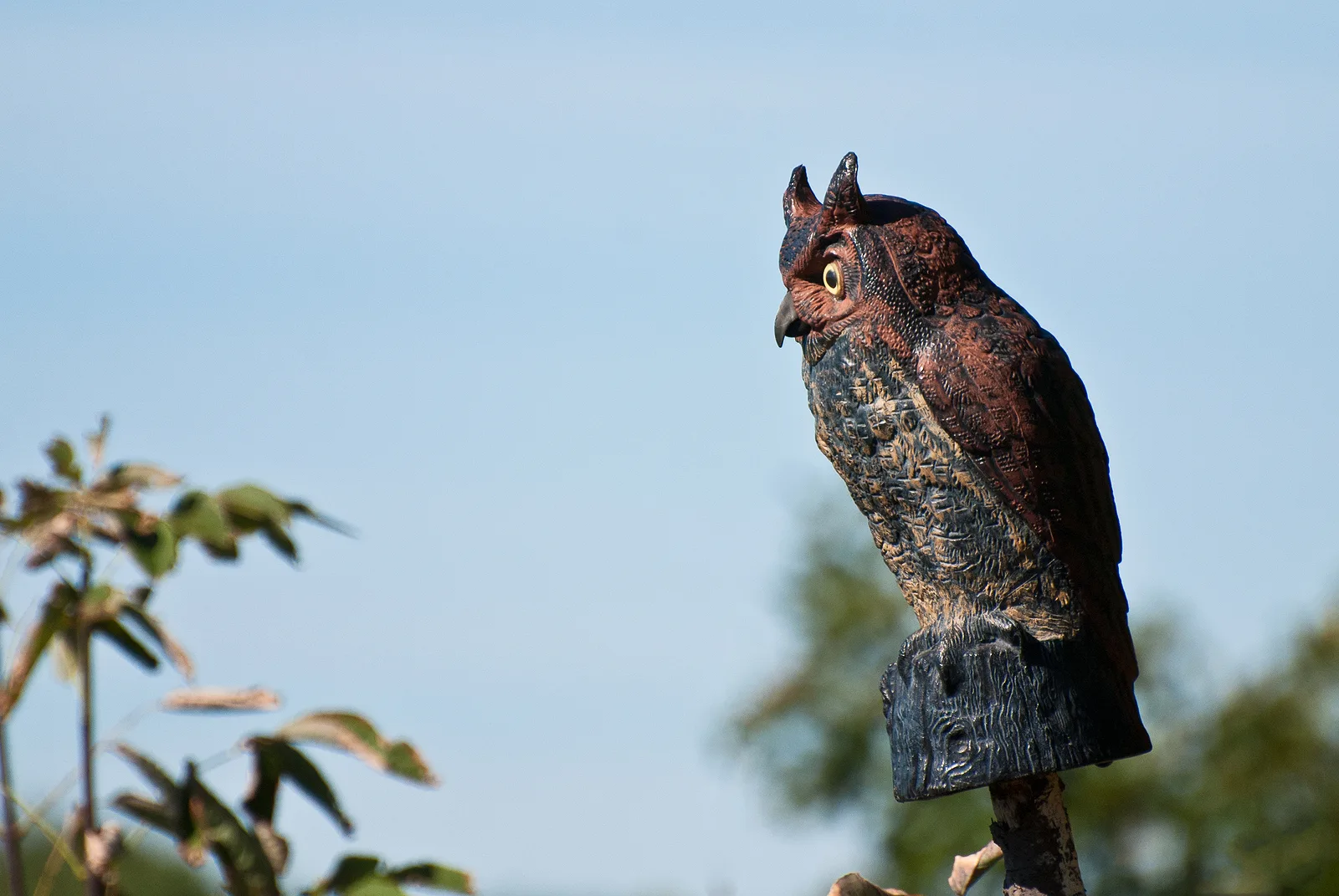
Predator decoys and kites can be highly effective in scaring grackles away from your property. Holographic bird tape and predator decoys like owl decoys can help deter grackles by creating the illusion of a predator in the area. Flying visually-impressive kites, such as those mimicking birds of prey, can also deter grackles by making them feel threatened.

Owl decoy used to scare grackles

Using these visual deterrents can help keep grackles away from your property without causing harm to them or other birds, ensuring a balanced and enjoyable backyard birding experience.

Sound Repellents

Sound repellents, such as ultrasonic bird repellent devices, can help deter grackles without affecting smaller birds. These devices emit high-frequency sounds that are inaudible to humans and pets but intolerable to pests like grackles.

Sonic bird control is a well-known technique for deterring grackles. This method uses naturally recorded distress calls and predator cries to keep birds away. By incorporating sound repellents into your bird control arsenal, you can effectively deter grackles while ensuring a safe and harmonious environment for other birds to thrive.

Summary

In conclusion, dealing with grackles can be a challenging but rewarding endeavor. By understanding their distinct features, behavior, and species, and implementing effective bird feeder strategies, choosing the right bird food, maintaining your yard, and using visual and auditory deterrents, you can successfully deter grackles while still attracting a diverse array of other birds.

Embrace the opportunity to transform your backyard into a harmonious haven for various avian visitors, and enjoy the beauty and serenity they bring. With the right knowledge and strategies, you can create a grackle-free paradise that both you and the birds will love.

Frequently Asked Questions

How do you get rid of grackles but not other birds?

Installing grackle-resistant feeders with smaller openings and/or using upside-down feeders are effective methods to deter grackles, while still allowing small birds like chickadees, House Finches, and American Goldfinches to feast on the seed.

What is a predator of grackles?

Grackles are at risk of predation from domestic cats, raccoons, hawks, and owls. Squirrels and snakes also pose a threat, as they are the primary nest predators who steal and eat grackle eggs and young.

How long do grackles hang around?

Grackles are commonly seen in urban and suburban areas during the spring, remaining in their warm territories throughout the year in certain states such as Texas and Florida. Although they can be a nuisance for a few weeks, grackles generally only hang around for the summer months.

What are some physical characteristics that make grackles unique?

Grackles stand out with their long legs, flat heads and dark feathers, making them uniquely identifiable in their native habitat.

What types of bird feeder strategies can deter grackles?

Weight-sensitive feeders, caged feeders, and adjusting perch lengths on bird feeders are all great strategies for keeping grackles away from your bird feeders.


Images: Common grackle and grackle iridescence by Rhododendrites, CC BY-SA 4.0. Via Wikimedia Commons.

Photo credit: Rhododendrites (CC BY-SA 4.0), via Wikimedia Commons