How to Get Rid of Blackbirds (and Keep the Songbirds)
Contents[hide]
To get rid of blackbirds, switch to safflower seed first. Blackbirds avoid it, but cardinals and finches eat it happily. Take the feeders down for a week to break the flock's routine, clean up spilled seed underneath, and swap to caged or weight-activated feeders that shut out heavier birds. Red-winged blackbirds are federally protected, so deter rather than harm.
In this article, we’ll cover which blackbirds are actually protected, how to change your feeder so the flock moves on, and which scare tactics hold.
Which “Blackbirds” Are You Dealing With?
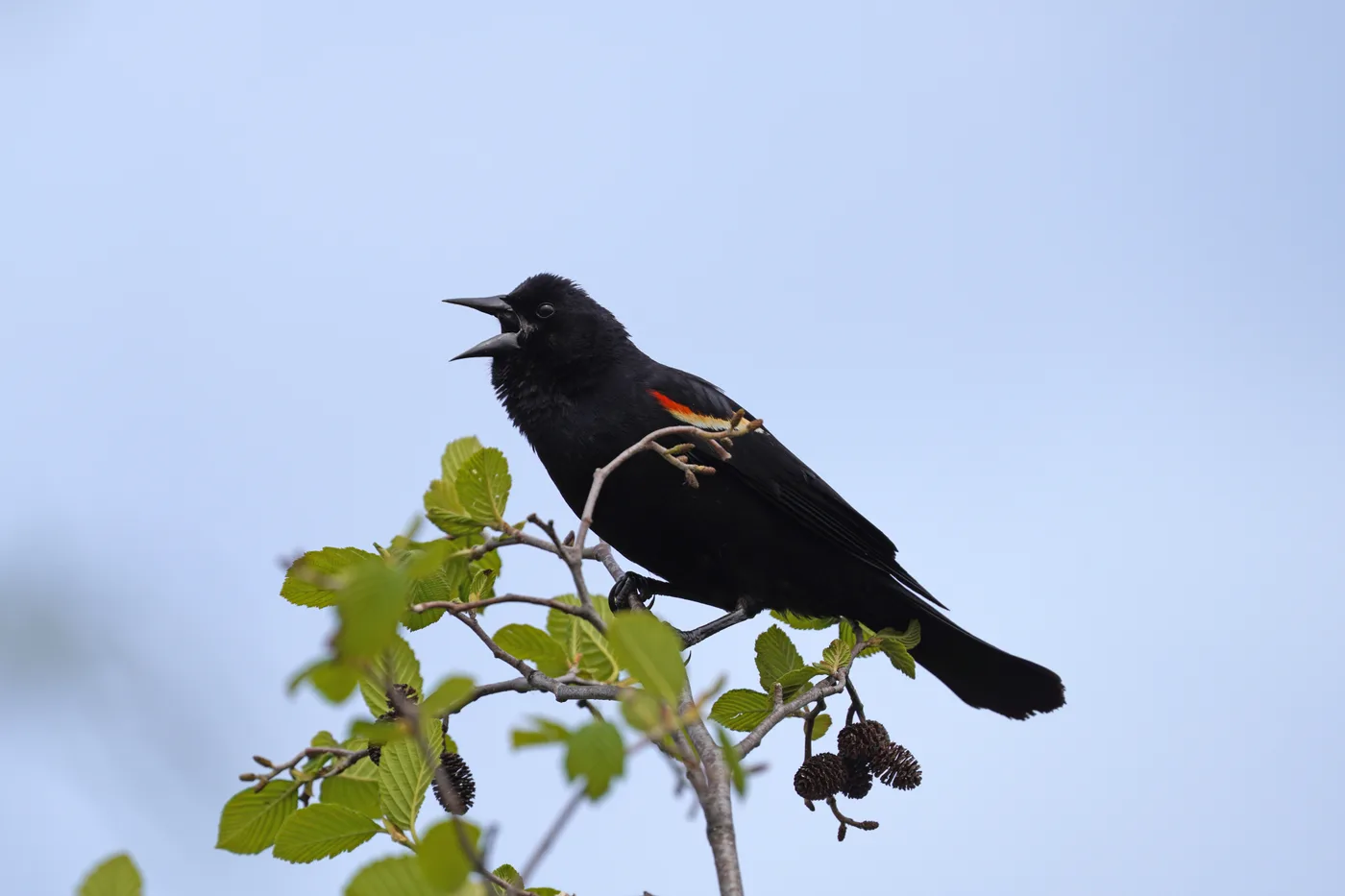
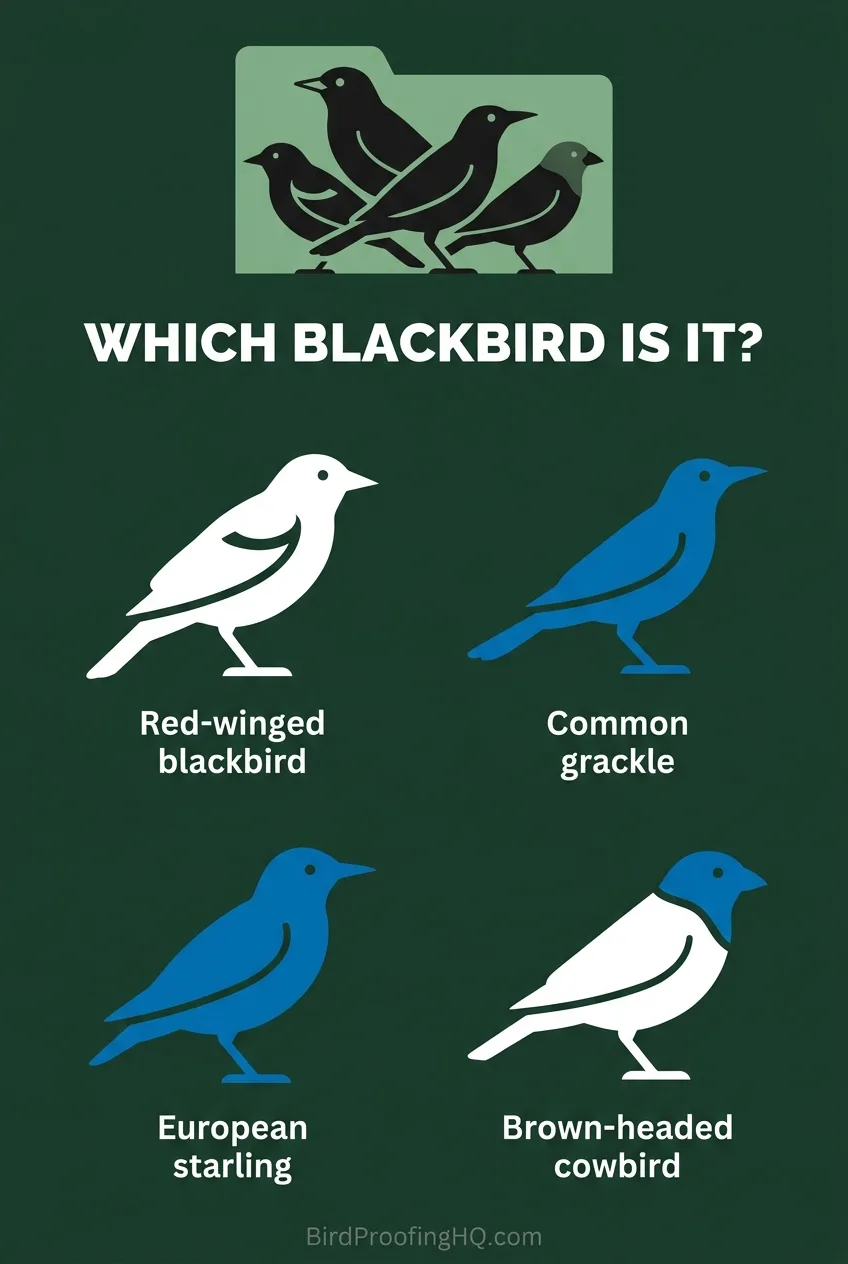
Blackbird is a catch-all for several birds that flock together, and they all respond to the same tactics. The usual suspects are red-winged blackbirds, common grackles, brown-headed cowbirds, and European starlings. Red-winged blackbirds are the ones with the red shoulder patches. In fall and winter they form huge mixed flocks that roam together looking for food.
A couple of them stand out. The big shiny bullies that take over a feeder are usually grackles. The speckled, stocky ones raiding it and nesting in vents are starlings. Both cause their own headaches, but the feeder strategy below works on all of them.
Why Blackbirds Swarm Your Feeders
Blackbirds go where the easy food is, and a backyard feeder is about the easiest meal in the neighborhood. They love cheap mixed birdseed, milo, cracked corn, and sunflower seeds. Spilled seed on the ground is fair game too. Add water and an open lawn to land on, and a passing flock has no reason not to stop.
The flock is the real headache. One blackbird you would hardly notice. But a winter flock runs into the dozens or hundreds, and it muscles the smaller birds right off the feeder. Take away the steady meal and that flock has no reason to keep coming back.
How to Get Rid of Blackbirds
It comes down to the seed, the feeder, and the spill underneath. Work these together.
Switch the Seed
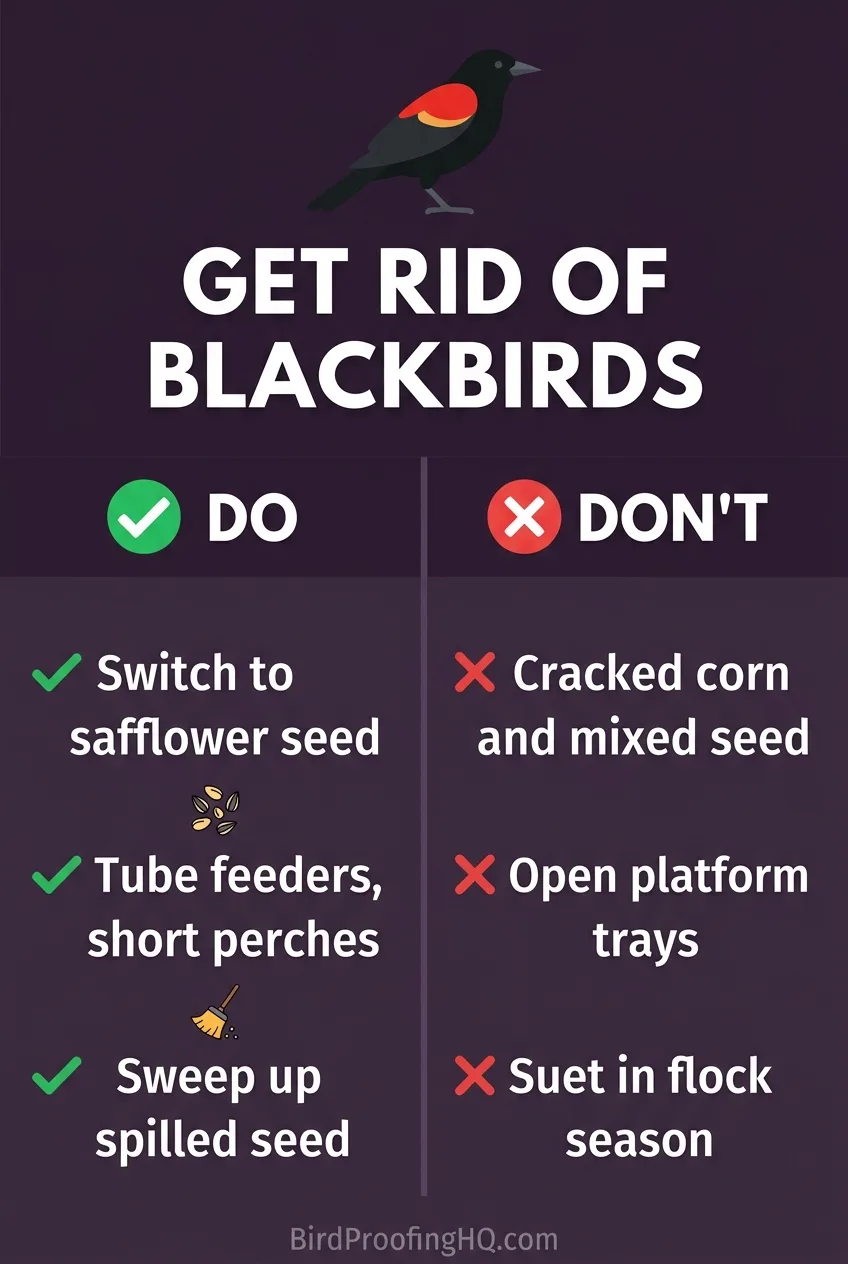
The most effective change is what you put in the feeder. Blackbirds dislike safflower seed, while cardinals, chickadees, finches, and titmice eat it happily. Switching your mix to straight safflower is the single biggest change you can make. Nyjer, or thistle, seed in a finch feeder is another one they tend to ignore.
What you take away matters just as much. Cheap mixed seed, milo, cracked corn, and loose sunflower are blackbird magnets, so cut them out. Changing the seed alone often thins a flock within a week.
Switch the Feeder, and Take It Down for a While
How you offer the food matters as much as what you offer. Caged feeders let small birds through a wire mesh and block larger blackbirds and grackles. Weight-activated feeders close the ports when a heavier bird lands. Tube feeders with short perches suit little songbirds and frustrate bigger birds.
Here is an underused trick: take the feeders down entirely for one to two weeks. Flocks run on routine, so a feeder that suddenly vanishes breaks the habit and sends them looking elsewhere. Put it back with safflower in a caged feeder, and the flock usually does not bother to rebuild. It is the same gear that keeps grackles out, so one setup covers both.
Clean Up the Ground Buffet
Even the best feeder fails if the ground below it is covered in spilled seed. That is where a blackbird flock really feeds. Rake up fallen seed often, or fit a seed catcher tray below the feeder. Pull weeds that make seed, pick up fallen fruit, and store any livestock or pet feed.
The cleaner the ground, the less a flock gets out of stopping.
Scare Tactics That Help
Habitat changes do the heavy lifting, but a few deterrents speed things up and keep blackbirds from settling back in. Reflective tape, old CDs, and other shiny moving objects unsettle them near feeders and gardens. Predator decoys like owls and hawks help, as long as you move them every few days. A motion-activated sprinkler clears them off a lawn, and trimming dense roost trees near the house makes the place less inviting at night.
If you would rather spray, a homemade mix of peppermint or chili is the humane way to go.
The Law: Most Blackbirds Are Protected
Here is the part people skip, and it matters: most of these birds are protected. Red-winged blackbirds, grackles, and cowbirds are all native species, covered by the Migratory Bird Treaty Act. That means you cannot harm them or tear down an active nest, full stop. There is a federal exception for real crop damage, but that is for farmers losing a harvest, not the backyard feeder you are tired of refilling.
At home, the humane route is the only legal one, and lucky for you, it is also the one that actually works. The lone exception is the European starling. It is non-native and unprotected, so the law leaves it out, though the gentle methods here send it packing just the same.
When to Call a Professional
Most blackbird problems are really feeder problems, and the steps above clear them up within a couple of weeks. A few situations are worth handing off, though. If a giant roost of hundreds of birds settles in, that is a job for a wildlife or pest control pro. The same is true once their droppings pile up into a real health worry.
Call one too if you are not sure which species you have, or what the law lets you do about it.
A good pro can clear out even a big roost humanely and keep you on the right side of the law.
Blackbirds are not the only bully at the feeder. Blue jays pull the same routine, and whatever flock has taken over your yard, our bird removal guides point you to the right fix.
Images: Red-winged blackbird by the U.S. Fish and Wildlife Service. Public domain, via Wikimedia Commons.
.jpg)
Free: The 5-Step Bird-Proofing Checklist
Work through the right steps in the right order, before spending money on the wrong deterrents. Printable PDF, straight to your inbox.
No spam. Unsubscribe any time.