How to Get Rid of Cowbirds (and Protect Songbirds)
Contents[hide]
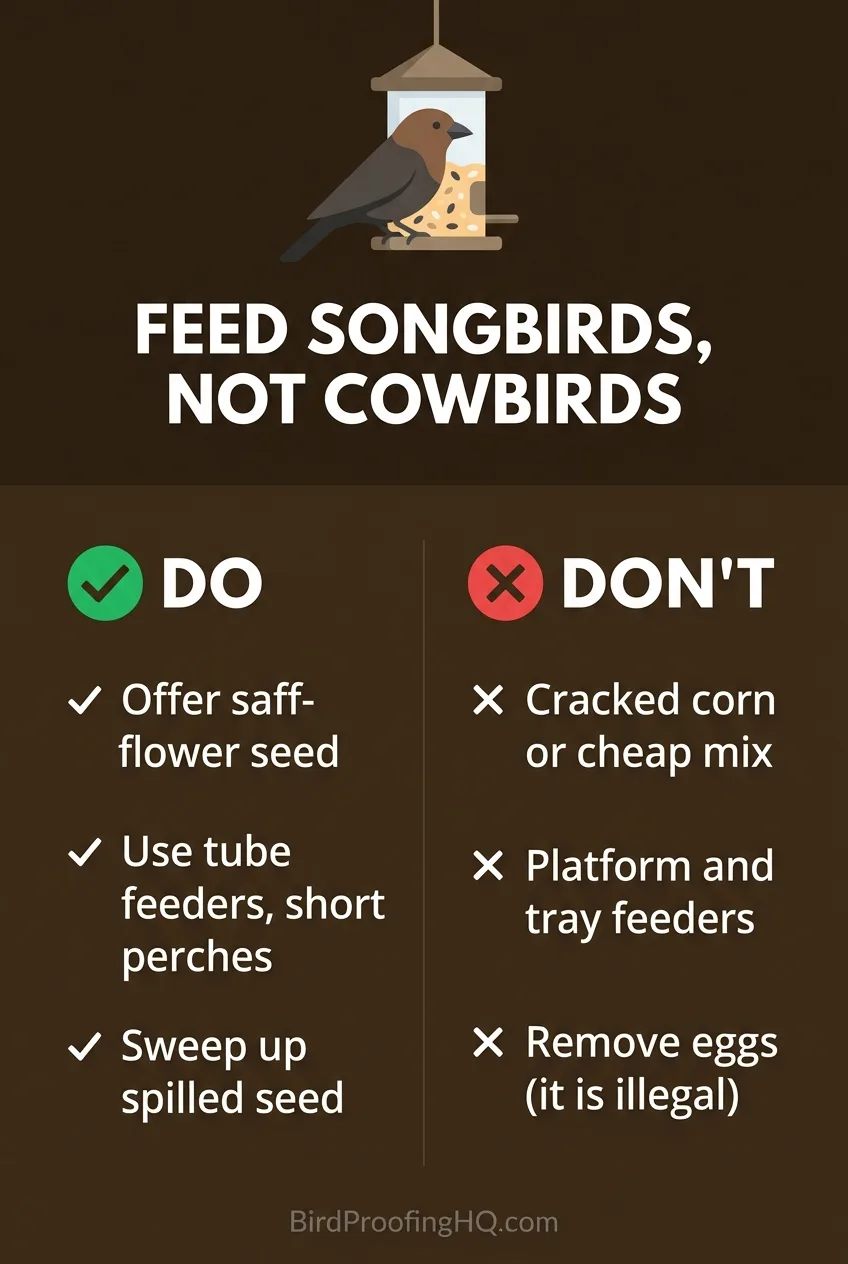
To get rid of cowbirds, switch to safflower seed, use tube feeders with short perches, and drop the platform trays and cracked corn. That makes your feeders unappealing to cowbirds without driving off your songbirds. Cowbirds are federally protected brood parasites, so you cannot remove their eggs from another bird's nest. The goal is protecting the songbirds they target.
In this article, we’ll cover how to get rid of cowbirds, why protecting songbirds is the real goal, and where the law draws the line.
There is also a legal catch most people do not expect: cowbirds are protected, so the obvious fix of removing their eggs is off the table. Here is what is actually going on, and what you can legally do about it.
What Makes Cowbirds Different
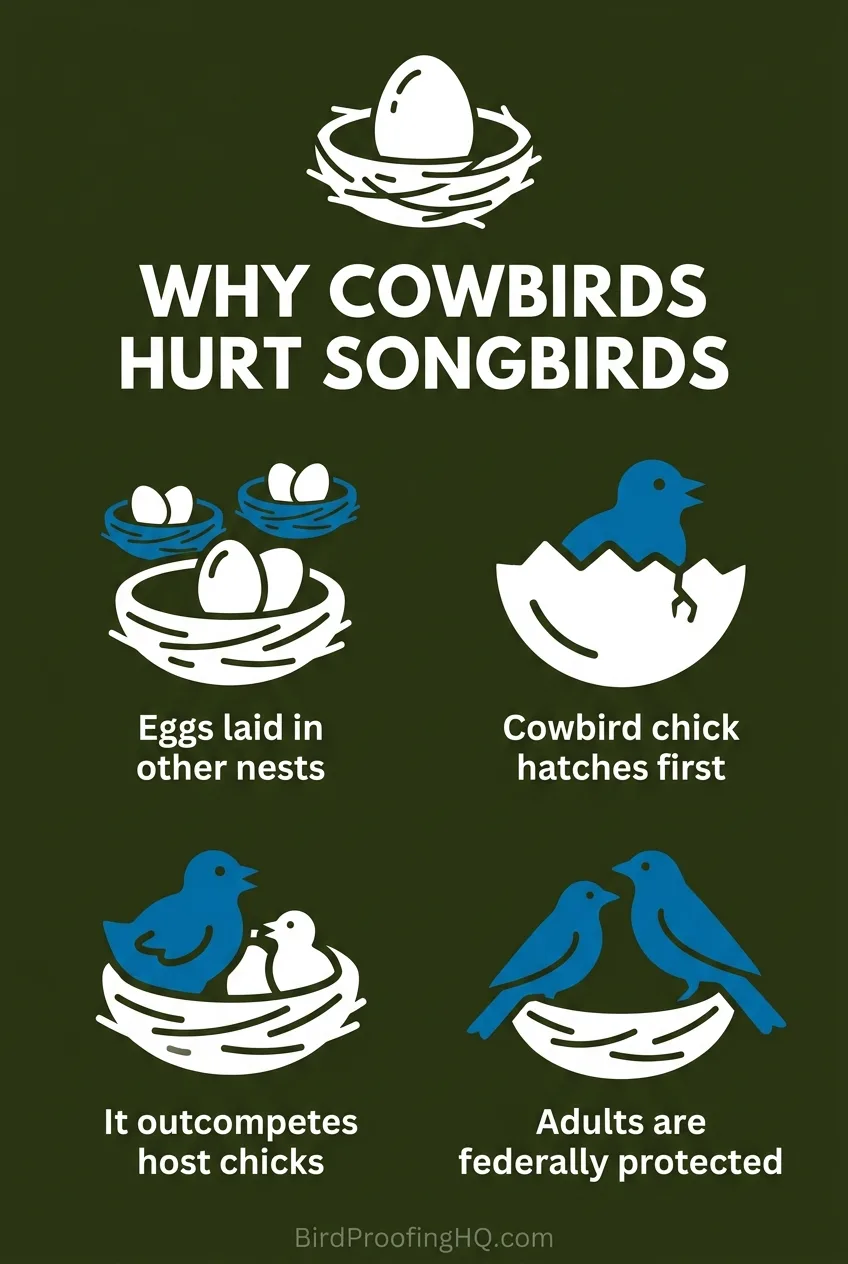
The brown-headed cowbird is a brood parasite, which is a fancy way of saying it makes other birds raise its young. The female does not build a nest at all. She slips into the nests of smaller songbirds, lays an egg, and leaves. One female can lay three to four dozen eggs in a season, scattered across many nests.
The damage comes after that. Cowbird eggs tend to have a shorter incubation period than the host’s, so the cowbird chick usually hatches first. It then grows fast and begs hard, hogging the food. The host’s own chicks frequently starve or get crowded out.
Over many nests and many years, that drags down songbird numbers, which is why cowbirds are a real conservation worry for some species like the Kirtland’s warbler.
They got the habit honestly. They once followed roaming bison herds across the Great Plains, eating the insects the herds kicked up. Always on the move, they never had time to sit on a nest, so they outsourced the job.
How to Identify a Cowbird
Telling cowbirds apart matters, because the female is the one doing the damage and she is easy to overlook.
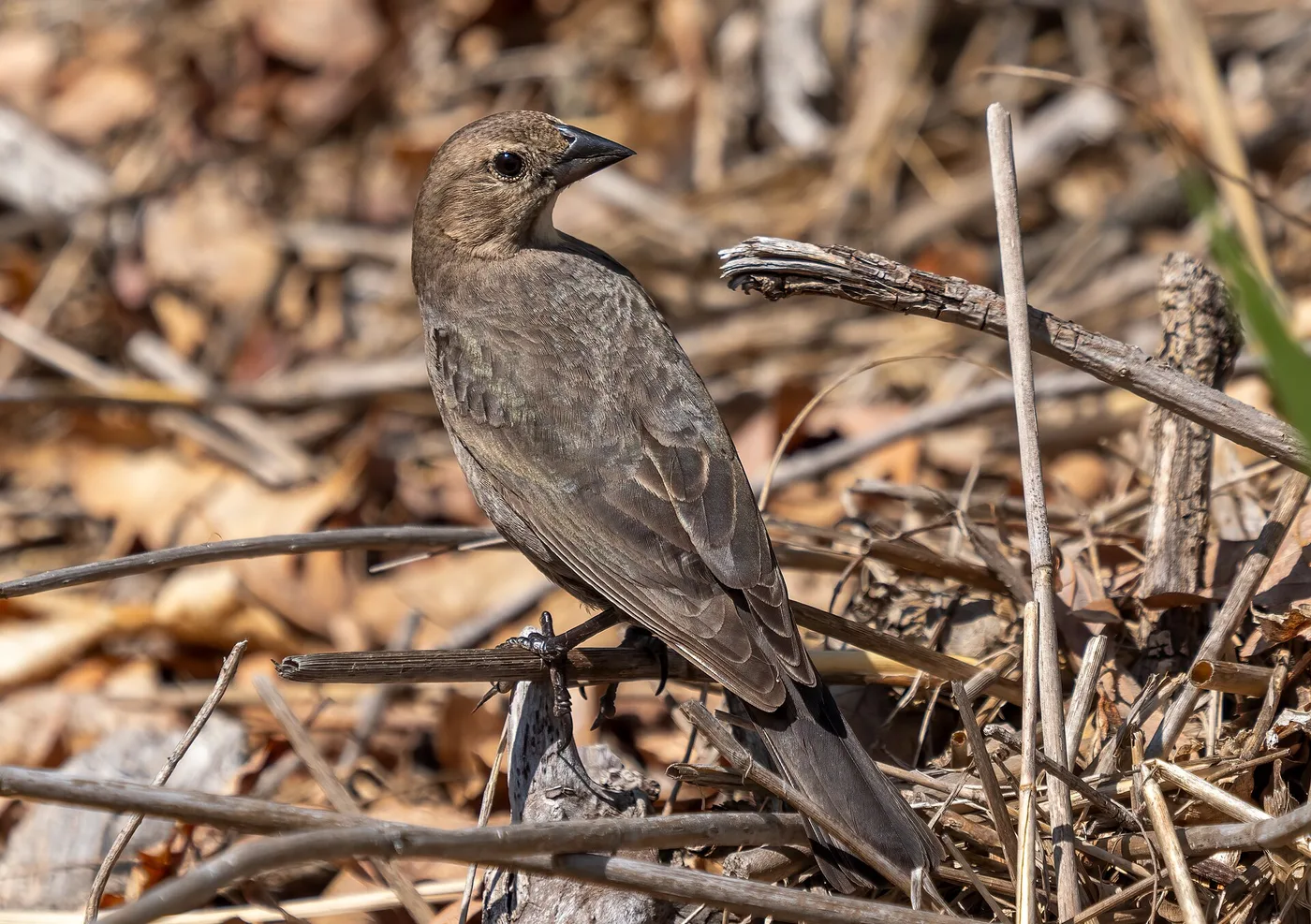
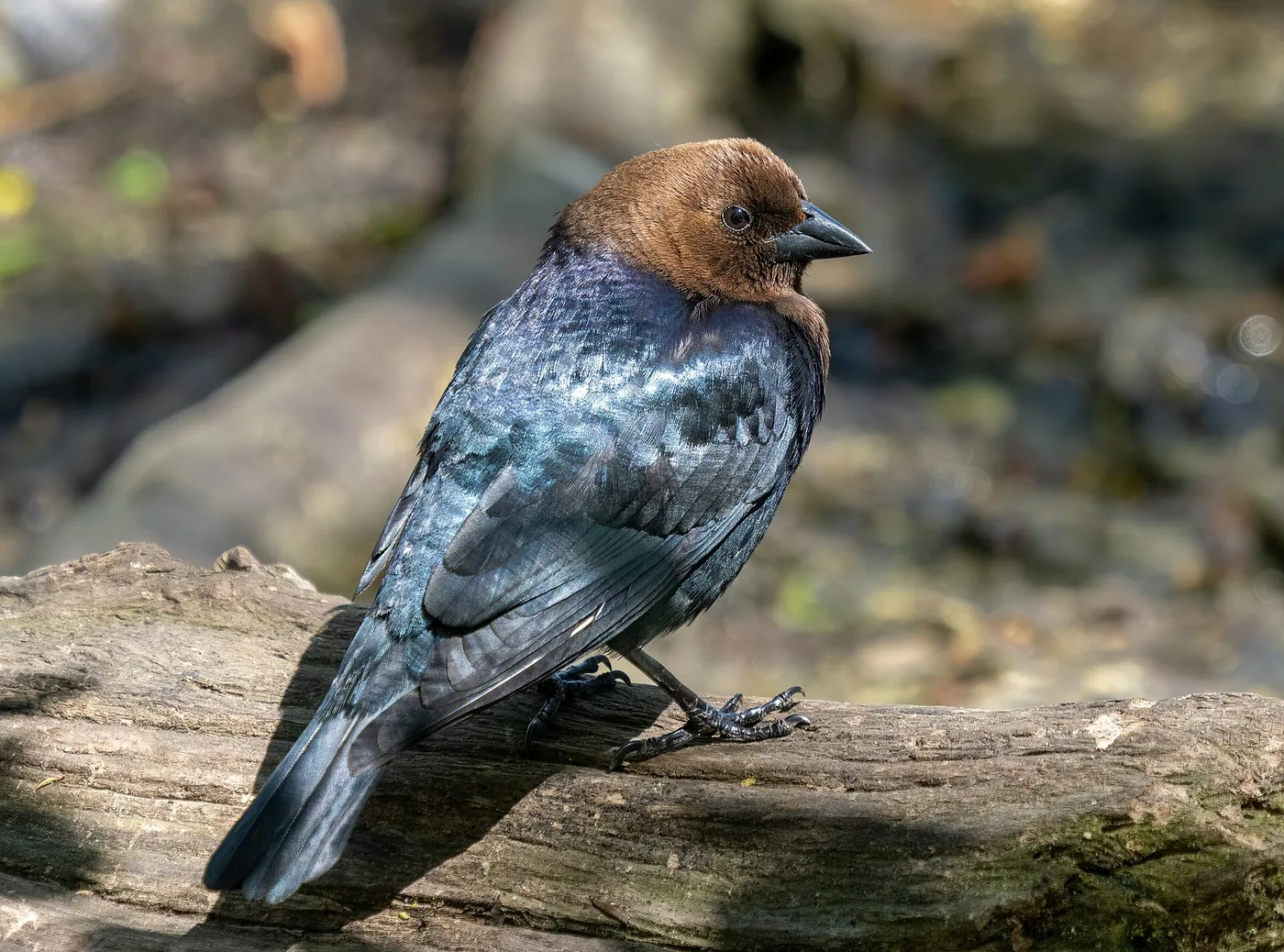
The male is the showy one: a glossy black body with a chocolate-brown head, a bit smaller than a robin. The female is the plain one, a drab gray-brown all over with a faint streaky chest, and she is often mistaken for a large sparrow or a finch. Both have a thick, cone-shaped, finch-like bill. If you see a plain brown bird skulking near other birds’ nests, look twice.
Are Cowbirds Protected?
Yes, and this changes everything you might do. The brown-headed cowbird is native to North America and protected under the federal Migratory Bird Treaty Act. That makes it illegal to harm the adults or to remove or destroy their eggs from a nest without a federal permit.
It feels backward, since the eggs are the problem. But the law does not carve out an exception for the backyard. Cowbird egg removal does happen, but only inside official wildlife programs that protect endangered songbirds, run under permit. For a homeowner, the legal and effective path is to make your yard a place cowbirds skip.
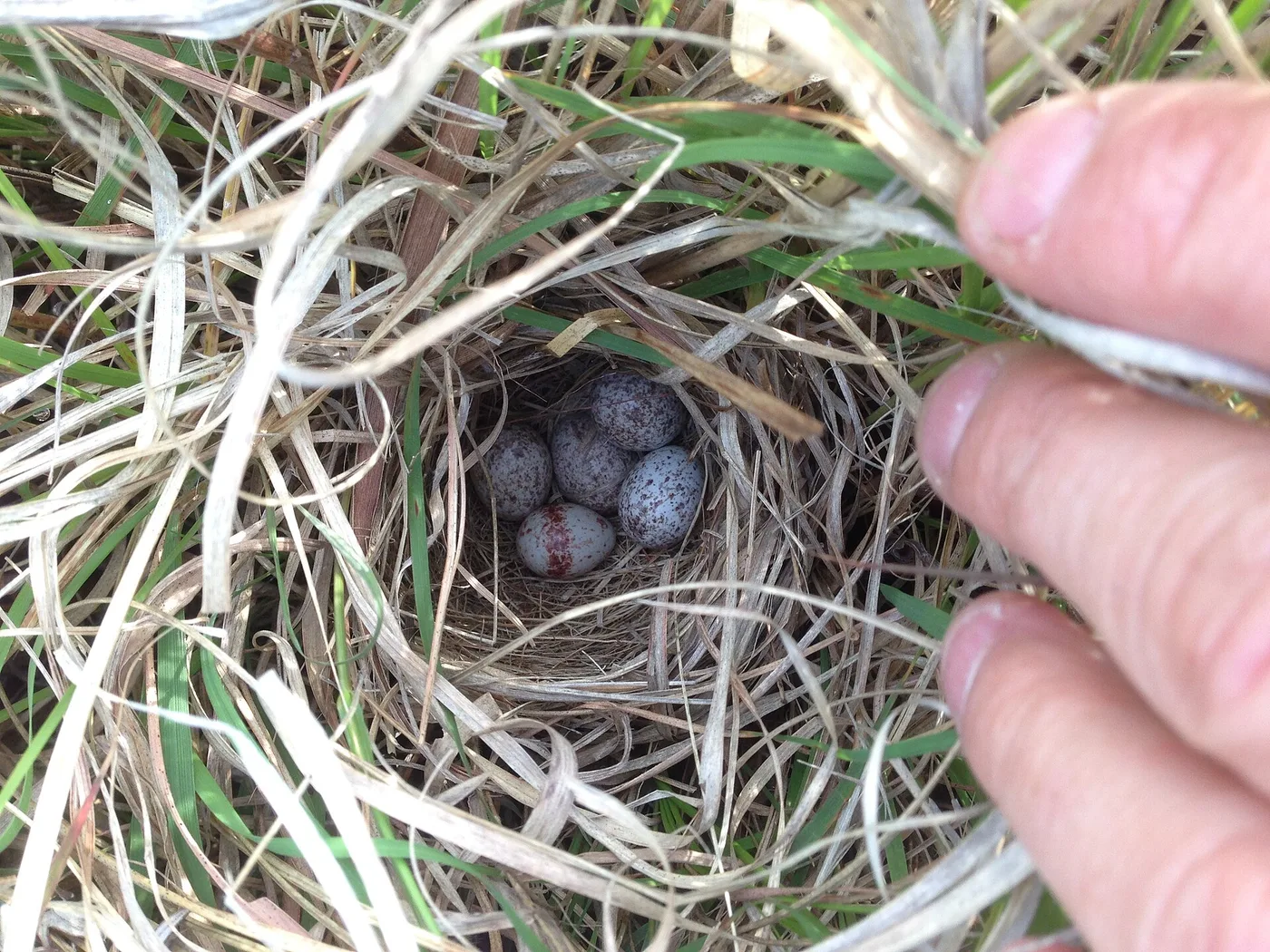
So what should you do if you find a speckled cowbird egg in a nest? The hard answer is to leave it alone. Pulling it is illegal without a permit, and poking around an active nest can spook the host into abandoning everything, including its own eggs. The payoff comes from the long game instead: make the yard less welcoming, so fewer cowbirds come around to lay in the first place.
One tampered nest changes nothing, but a yard they skip protects every nest in it.
How to Make Your Yard Less Cowbird-Friendly
Easy seed is what draws them, so your feeders are the lever. The trick is to keep feeding the songbirds you want while cutting off the cowbirds.
First, switch your seed to safflower. Cowbirds, grackles, and blackbirds dislike its bitter taste, but cardinals, chickadees, and finches eat it fine. They flock to sunflower seeds, cracked corn, and cheap mixed seed, so swapping those out is what really thins them. Use tube feeders with short perches, which suit small songbirds and frustrate bigger cowbirds, and take down the platform and tray feeders cowbirds prefer.
Finally, sweep up spilled seed, because cowbirds feed on the ground under feeders. A few other humane deterrents can help if cowbirds arrive in a mixed flock.
A weight-sensitive feeder helps too. It snaps shut under a heavier bird like a cowbird while still letting light songbirds feed, and a caged feeder does the same trick by size. Watch your feeders most closely from spring into early summer. That is when cowbirds are breeding and scouting for nests, so cutting off the easy seed then does the most good.
Protect the Songbirds They Target
Since the real cost is to other birds, aim your effort there. These birds usually arrive with blackbird and grackle flocks, so the same safflower-and-tube-feeder setup that thins those flocks thins cowbirds too.
They hit small open-cup nesters hardest: warblers, vireos, sparrows, and flycatchers. The more of those songbirds you can keep nesting safely in your yard, the more it pays to stop cowbirds from settling in.
Keep your yard good for nesting songbirds in other ways. Plant dense shrubs and native cover, since cowbirds prefer open edges and lawns and tend to skip thick plantings. The denser the cover, the more nesting spots stay hidden from a scouting female.
When Cowbirds Move On
These birds follow the easy food and the open ground. Take away the tray feeders and the cheap seed, thicken up your plantings, and the open buffet they were using disappears. They drift off to the next easy yard, and your songbirds get their nests back.
It does not happen overnight. Give it a few weeks of a safflower and tube-feeder setup, and the cowbirds usually thin out as they find easier food somewhere else. For the wider plan across every problem bird, start with the guide to getting rid of birds.
Images: Male brown-headed cowbird and female brown-headed cowbird by Rhododendrites, CC BY-SA 4.0. Cowbird eggs in a host nest by Birdfiddler, CC BY-SA 4.0. Via Wikimedia Commons.
.jpg)
.jpg)

Free: The 5-Step Bird-Proofing Checklist
Work through the right steps in the right order, before spending money on the wrong deterrents. Printable PDF, straight to your inbox.
No spam. Unsubscribe any time.