How to Get Rid of Magpies: Humane Methods That Actually Work
Contents[hide]
- 1. Why Do Magpies Keep Coming to My Garden?
- 2. Do Reflective Deterrents Keep Magpies Away?
- 3. Does Netting Keep Magpies Off Fruit and Vegetables?
- 4. How Do I Stop Magpies From Raiding My Bird Feeders?
- 5. What Food Sources Are Attracting Magpies to My Yard?
- 6. What Scares Magpies Away?
- 7. Are Magpies Protected by Law?
- 8. How Do I Keep Magpies Away for Good?
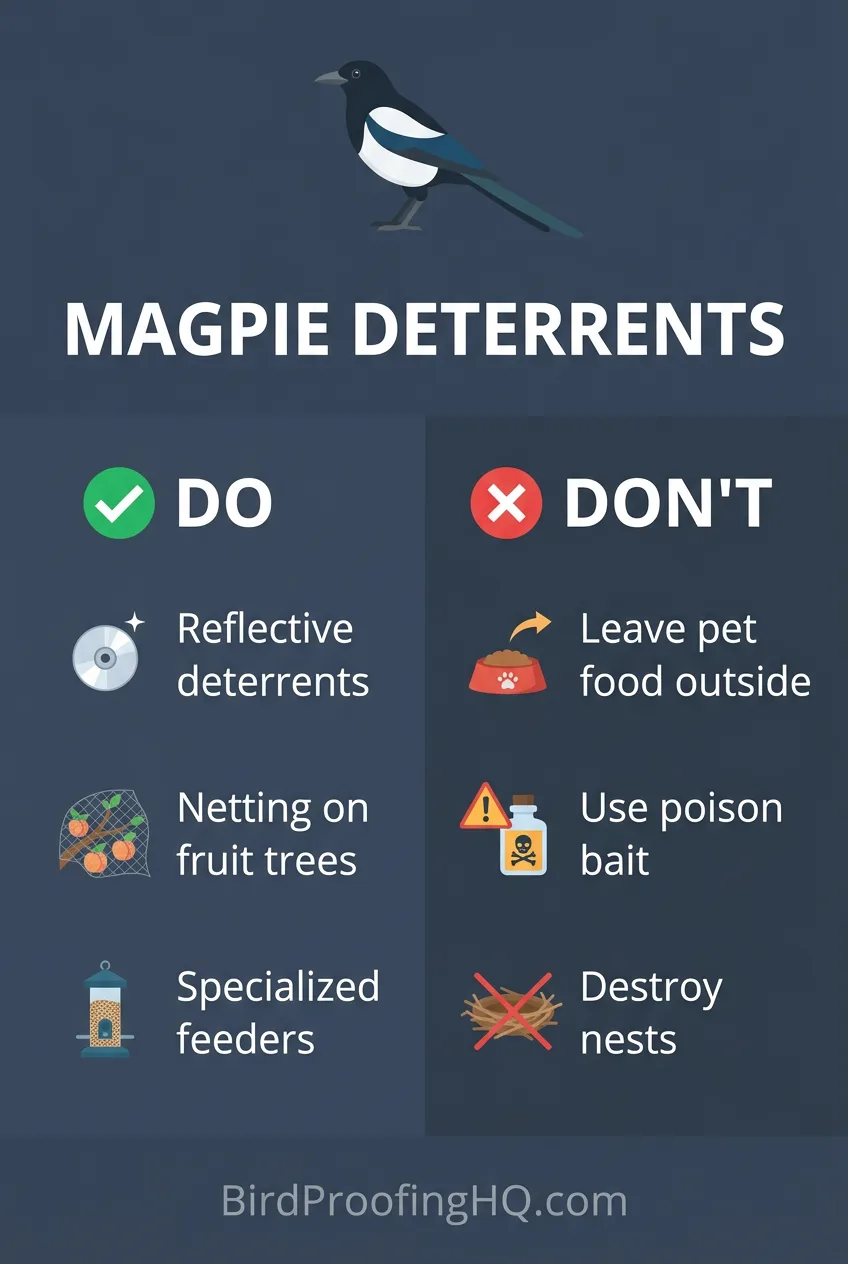
To get rid of magpies, cut their food first. Cover the pet food, lid the bins, and pick up fallen fruit. Then net your fruit and veg and hang reflective scares you rotate every few days so the magpies never settle. Magpies are protected by law in both the US and UK, so deterrence is the only legal route.
In this article, we’ll cover how to get rid of magpies, why they outsmart static deterrents, and which rotating mix actually holds.
Why Do Magpies Keep Coming to My Garden?
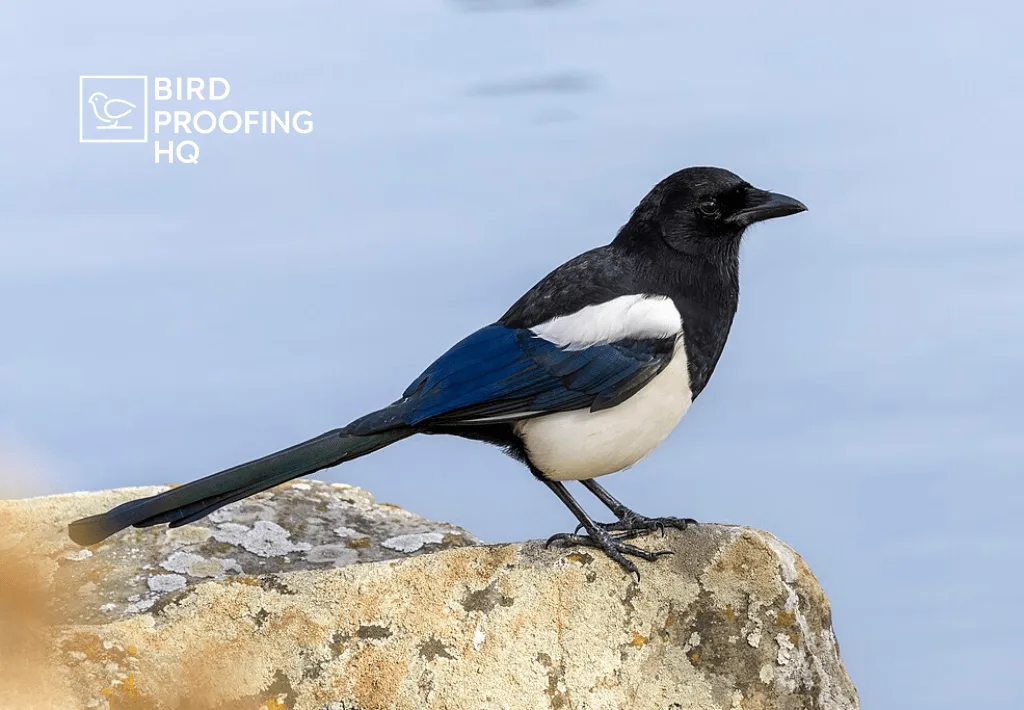
Magpies are corvids, the same clever family as crows and jays. They can recognize themselves in a mirror and hide food to come back for later. That kind of brainpower is exactly why they are hard to deter.
Magpies eat almost anything: insects, grubs, fruit, vegetables, seeds, eggs, and table scraps. That appetite is why they raid yards and bully smaller birds like robins, and why deterring them starts with the food. They are loud and pushy enough to chase off squirrels and crows when it suits them.
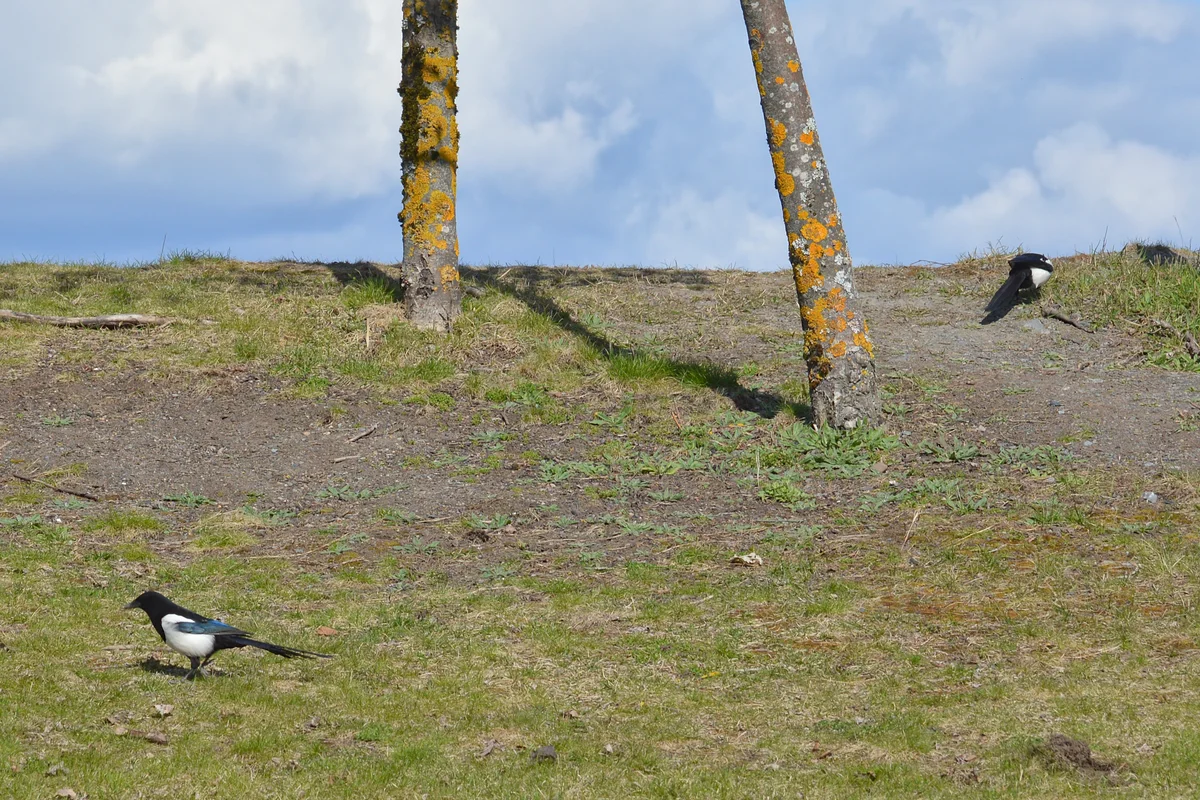
In spring they gather in groups to set up territories. They build big dome-shaped nests that shield the eggs from predators. In the UK they are also a species of conservation concern, so shooting them or wrecking nests is off the table. Either way, the humane route is also the more practical one.
Do Reflective Deterrents Keep Magpies Away?
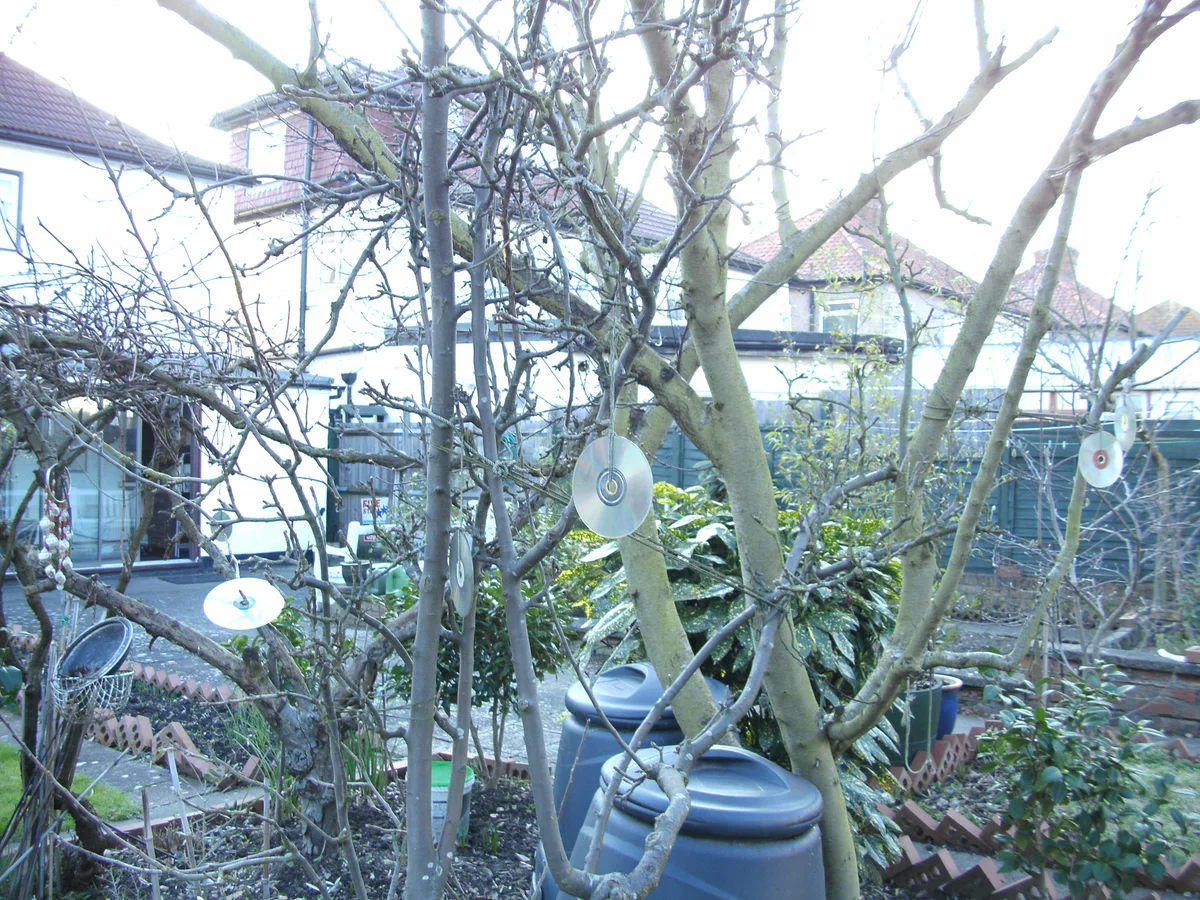
Magpies spook at sudden flashes of light. Hang old CDs or strips of reflective scare tape where they land, and move them every few days.
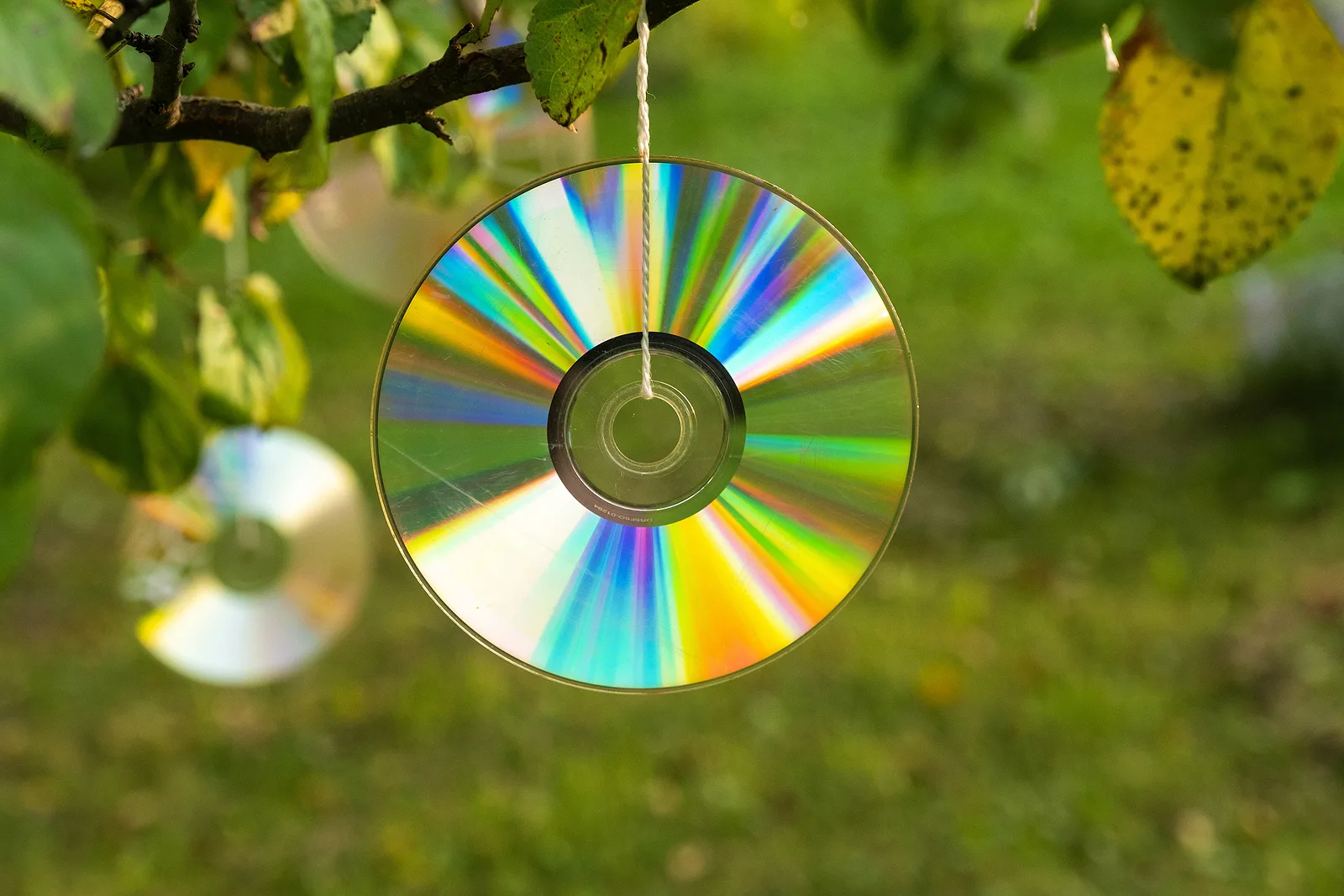
Old CDs work, but reflective scare tape is built for the job and holds up better outdoors.
Tape it up wherever the magpies keep landing. Hang a few pieces at different heights so the whole garden flashes, and they will pick somewhere quieter.
Does Netting Keep Magpies Off Fruit and Vegetables?
Netting is the surest way to keep magpies off a fruit or veg patch. Drape bird netting or wire mesh over the beds and pin it down at the edges.
A magpie will find any gap, so check the edges every so often. Unlike a scare, a barrier never stops working, which makes it the best long-term fix for a fruit patch.
How Do I Stop Magpies From Raiding My Bird Feeders?
A caged or weight-sensitive feeder lets small birds in and shuts magpies out. Some snap the seed ports closed when something as heavy as a magpie lands. Others wrap the feeder in wire mesh that only a small bird fits through.
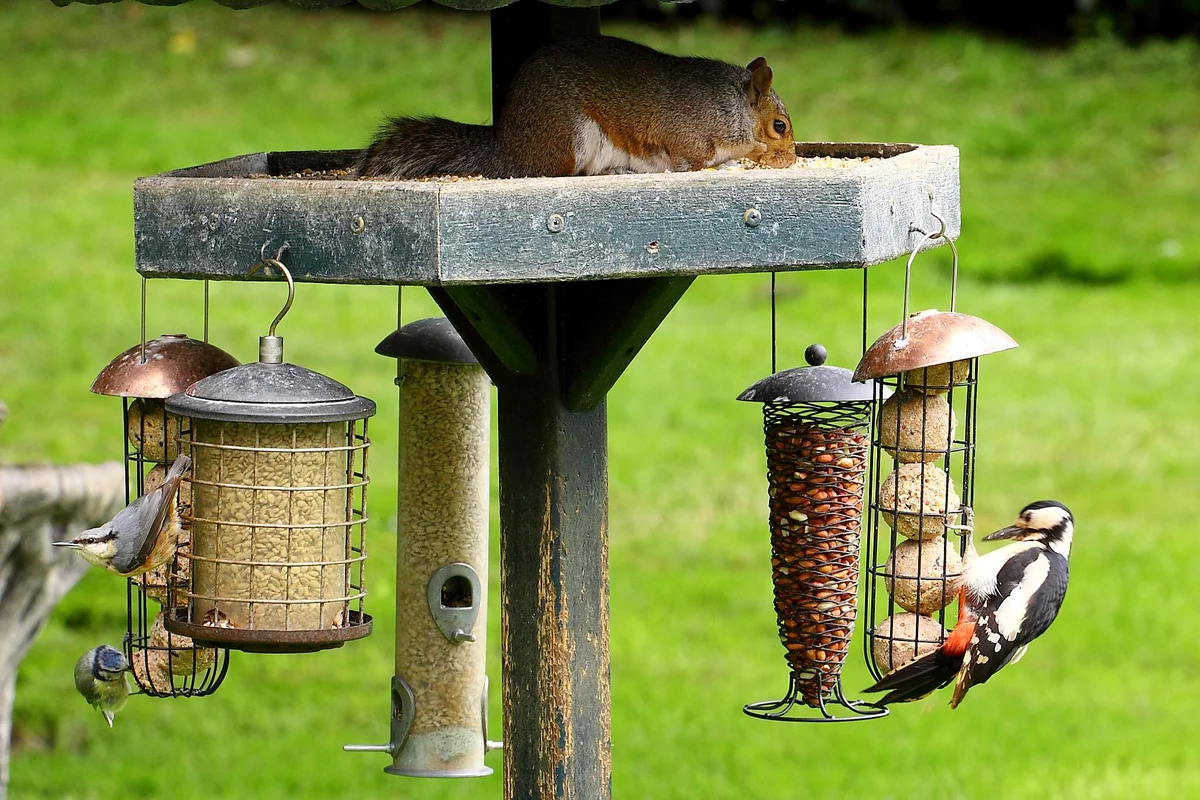
Hanging the feeder from a thin wire strung between two posts helps too, since a magpie cannot get a steady footing on it. The small birds you want carry on feeding while the magpies give up and move on.
What Food Sources Are Attracting Magpies to My Yard?
This is the simplest fix and the one that matters most. Magpies eat whatever is going: the dog’s bowl, fallen fruit, scraps in an open bin. Take those away and your yard stops being worth the trip.
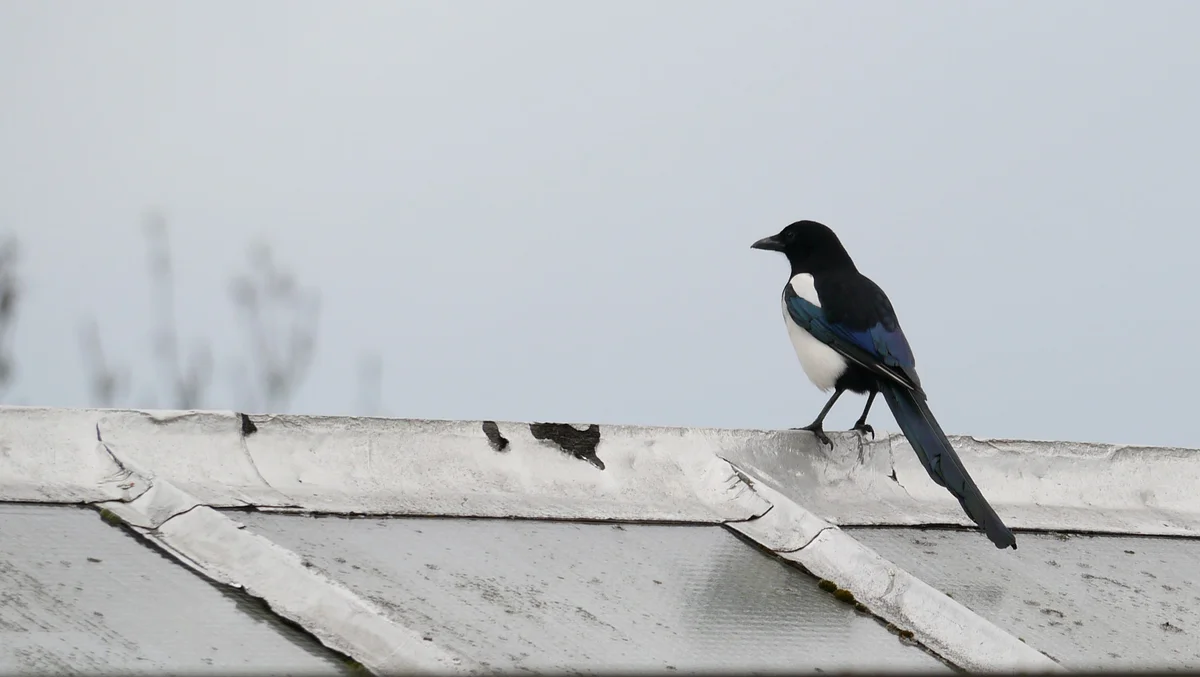
Cover the pet food, lid the bins, and rake up windfall fruit. Clean the gutters and tip out any standing water too, since a reliable drink makes a yard worth defending.
What Scares Magpies Away?
Audible Deterrents
Audible scare devices frighten magpies with predator calls or sudden loud noises. They work, but be ready for one catch: you will hear them too, and so will the neighbors.
Visual and Smell Deterrents
Visual scares work too: fake eyes and balloons with large eye patterns printed on them. The stare of a fake predator is enough to make a magpie think twice. Pair a visual scare with a noise one and you cover both senses at once.
For a cheap homemade magpie deterrent, mix water with hot sauce or chili and spray it on the fruit, vegetables, and surfaces they peck. The capsaicin in the hot sauce burns birds but not plants, and it rinses off in the next rain. Pair the hot sauce with loud noises and a few hanging CDs and most magpies move on to a quieter yard.
Are Magpies Protected by Law?
In the US, the black-billed magpie is protected under the federal Migratory Bird Treaty Act. You cannot harm the birds or destroy an active nest or its eggs. In the UK, magpies get similar protection under the Wildlife and Countryside Act of 1981. Either way, the only legal route is humane deterrence, not removal.
Shooting them or trying anything harmful is both illegal and likely to backfire.
How Do I Keep Magpies Away for Good?
Magpies are quick learners, so no single deterrent stays scary forever. Keep an eye on what they are doing and swap your methods around every week or two. Rotating the scares is what keeps them working.
Keep locking down the food too: bins, compost, pet bowls, and fallen fruit. If the noise bothers you, a device that only fires distress calls when a bird lands beats one that runs all day.
Magpies are too smart for one trick. Take away the food, add reflective scares and netting, and keep rotating them so the birds never settle in. Stay humane. It is the approach that actually sticks.
If magpies are one of several bird problems, our how to get rid of birds hub covers them all.
Images: Eurasian Magpies in Bærum, Norway by Ryan Hodnett, CC BY-SA 4.0. A busy birdfeeder by Tim Felce (Airwolfhound), CC BY-SA 2.0. Magpie on a roof by Grzegorz Chrupała, CC BY-SA 3.0. Compact disc bird scarers by KTo288, CC BY-SA 3.0. Via Wikimedia Commons.
_(Pica_pica)_-_B%C3%A6rum,_Norway_2024-04-27.jpg)
.jpg)
.jpeg)

Free: The 5-Step Bird-Proofing Checklist
Work through the right steps in the right order, before spending money on the wrong deterrents. Printable PDF, straight to your inbox.
No spam. Unsubscribe any time.