Pigeons: Habits, Risks, and How to Deter Them
Contents[hide]
Pigeons are the stocky gray birds you see on every ledge, roof, and sidewalk. They settle wherever food and a flat perch exist, breed year round, and a couple quickly become a flock. Their droppings are acidic, damage buildings, and can carry disease. Feral pigeons have no federal protection, but humane deterrence is still the standard approach.
In this article, we’ll cover how to identify pigeons, why their cliff ancestry makes buildings perfect for them, and what actually moves a flock that has claimed your roof.
How to Identify a Pigeon
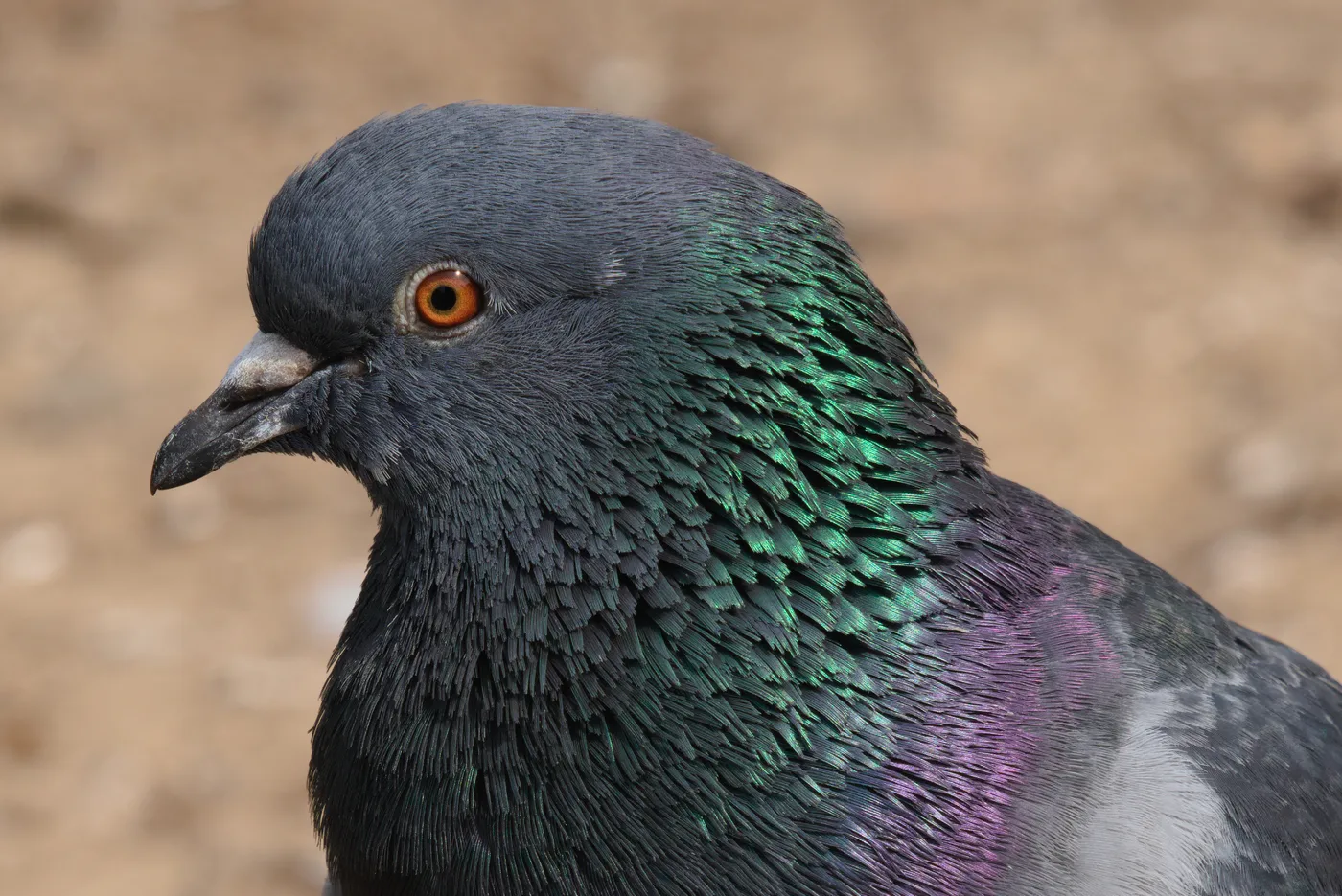
The bird everyone calls a pigeon is the feral pigeon, descended from the wild rock dove. It is the plump gray bird with a white rump, two black bars across each wing, and a soft cooing call. It has the short legs and bobbing walk you see on every sidewalk. Colors vary a lot in a feral flock, from blue-gray to brown to nearly white, because the birds descend from escaped domesticated and racing pigeons.
People mix pigeons up with a few cousins. The mourning dove is slimmer and tan with a pointed tail. The wood pigeon and stock dove are European birds you will not see in North America. All of them sit in the same family, Columbidae, so “dove” and “pigeon” really mean the same kind of bird at different sizes.
Why Pigeons Pick Your Building
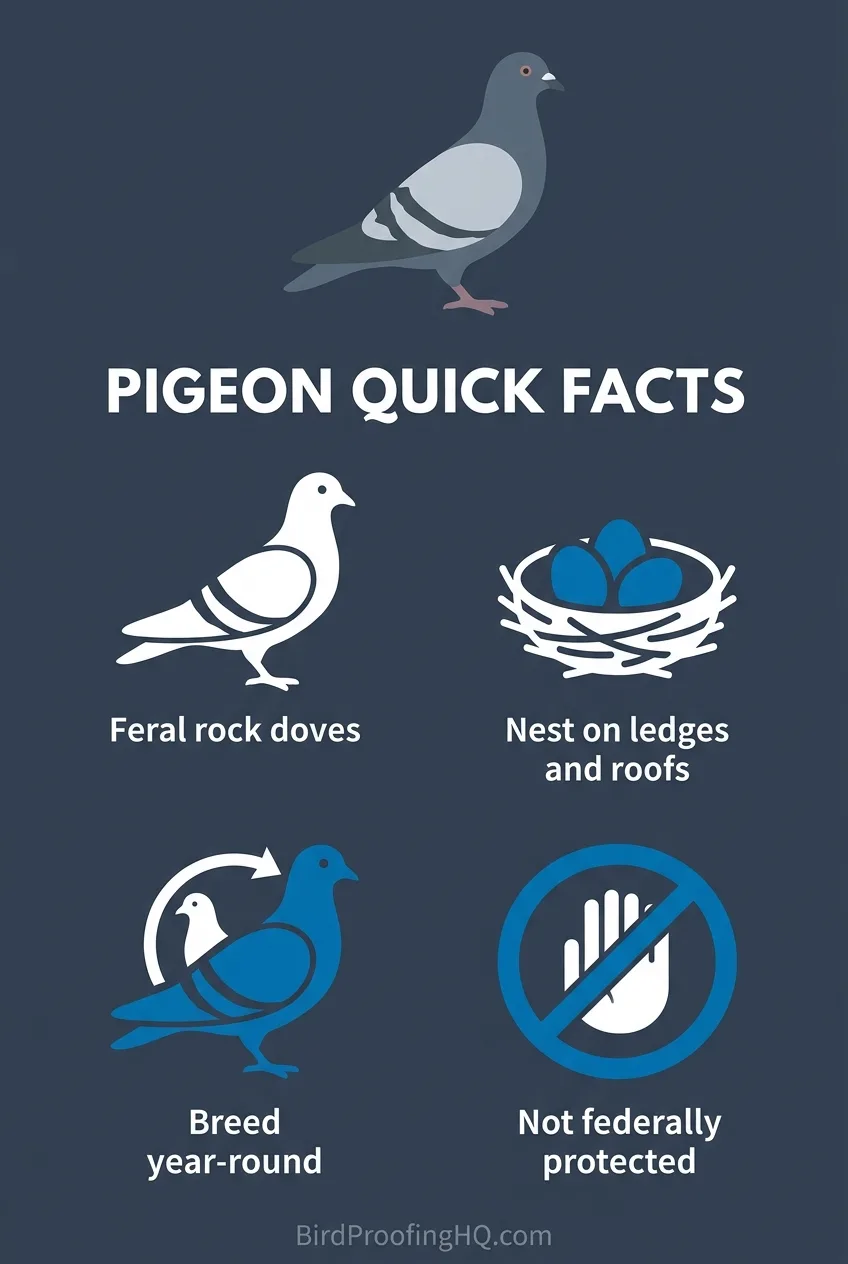
Pigeons want three things: food, water, and a flat, sheltered ledge. Open trash, spilled birdseed, and dropped food keep them fed. Window ledges, rooflines, balcony rails, and the gaps under solar panels give them somewhere to roost and nest. Because they nest in almost any month, a couple of birds can become a resident flock within a season.
Are Pigeons a Health Risk?
Their droppings are the real problem. They are acidic enough to corrode stone, metal, and paint over time. Dried droppings can also carry germs you do not want to breathe in while cleaning them up. Add the gutters they clog and the nests they pack into vents, and a flock gets expensive.
What Pigeons Eat and How They Breed
Pigeons eat seeds, grains, and berries in the wild, and dropped human food almost everywhere else. That flexible diet is why they thrive in cities. Their breeding is the real reason a few birds become a flock. They nest in almost any season when food is steady, raising small broods of two.
Both parents even feed the chicks a protein-rich “pigeon milk” they bring up from the throat, so the young grow fast and the cycle repeats. Cut the food and you slow the breeding, which is why feeding pigeons keeps the whole problem going.
Are Pigeons Protected?
Mostly not. Feral and domestic pigeons are generally not protected under the US Migratory Bird Treaty Act, unlike native birds. Some local ordinances still apply. Even so, humane control is the smart play.
Removing pigeons by force just opens space for new ones to move in.
How to Keep Pigeons Away
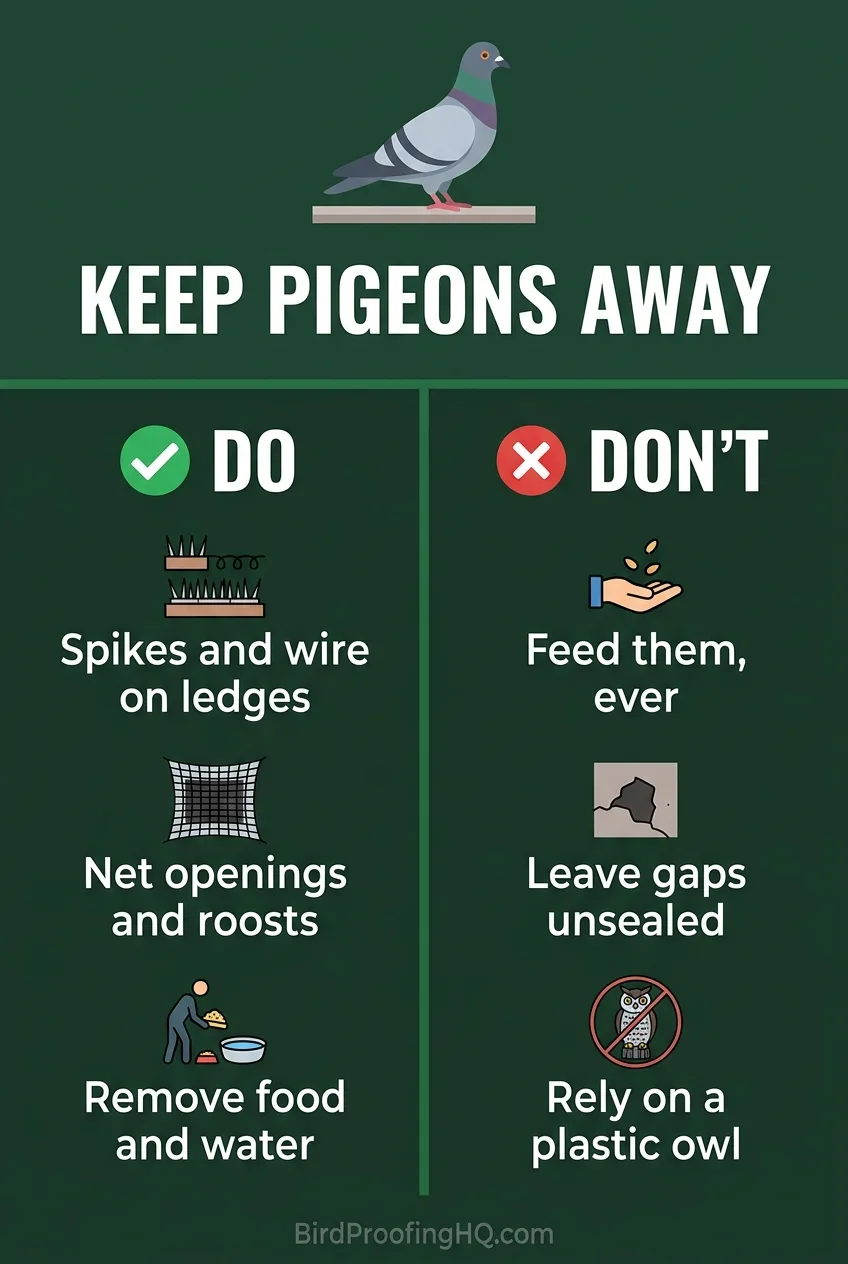
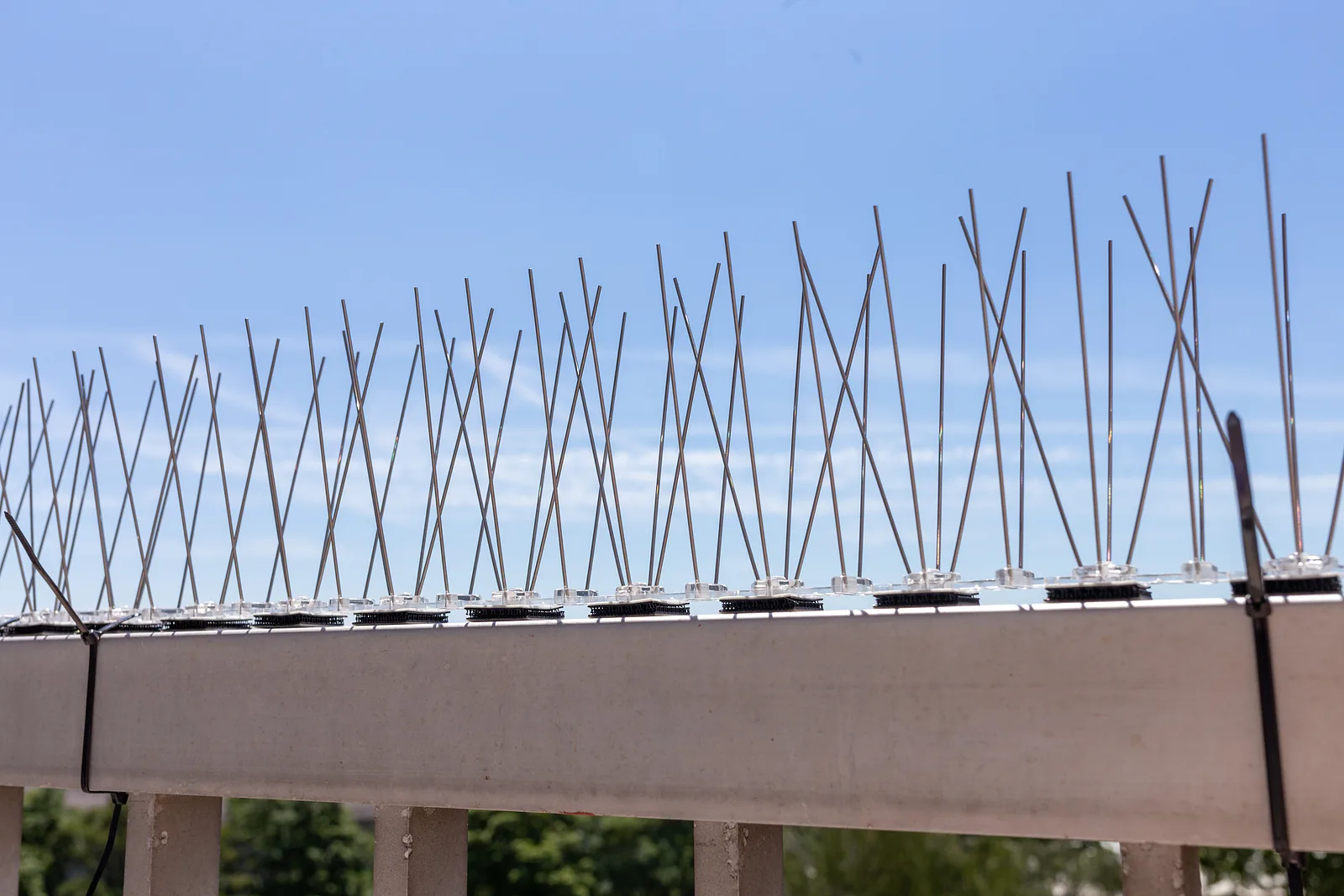
Pigeons are bold, so scares alone rarely hold them. Start with the trash, spilled birdseed, balcony rails, and rooflines, then put spikes, wire, or netting on the spots they roost and clean up whatever was feeding them.
The Cornell Lab of Ornithology notes how tightly feral pigeons are tied to people and buildings. Taking away the free meal does much of the work.
Images: Feral pigeon by Satdeep Gill, CC BY-SA 4.0. Via Wikimedia Commons.

Free: The 5-Step Bird-Proofing Checklist
Work through the right steps in the right order, before spending money on the wrong deterrents. Printable PDF, straight to your inbox.
No spam. Unsubscribe any time.