How to Keep Pigeons Off Your Roof (Ridge, Chimney, Solar)
Contents[hide]
To keep pigeons off your roof, block the spots they land on. Run spikes or wire along the ridge and any parapet, and mesh off the gaps under solar panels and eaves. Remove food and standing water at the same time. With nowhere to perch and nothing to eat, pigeons move on within a week or two.
In this article, we’ll cover how to keep pigeons off roof surfaces and ledges, which spots to target first, and when the job needs someone with a ladder.
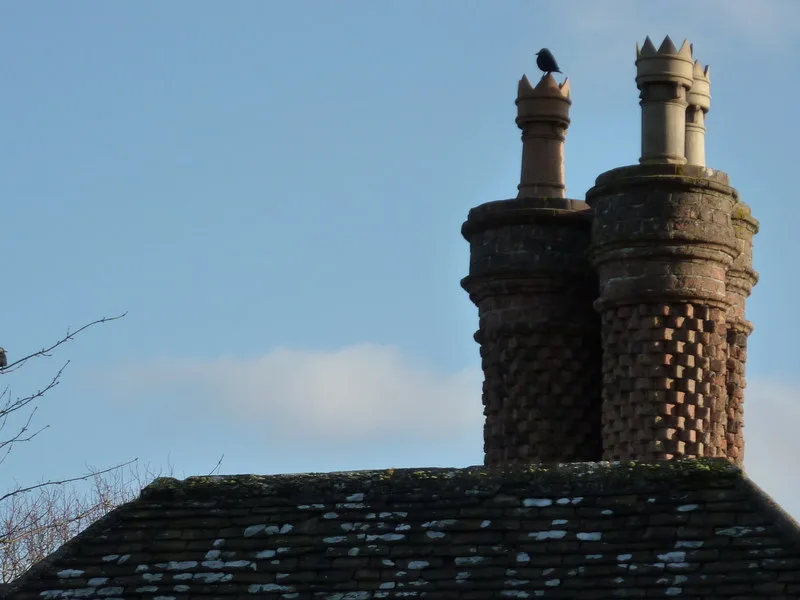
Why Pigeons Pick Your Roof
Pigeons want a high, flat spot with a clear view and some shelter. A roof gives them all three at once, which is why a flock will settle in and treat it as home.
A few spots draw them more than others:
The ridge line is the highest flat perch on the building. Pigeons line up there to sit, preen, and watch for food.
Chimney tops are warm, sheltered, and raised above everything else. Pigeons perch on the rim and sometimes drop nesting material straight down the flue.
Under solar panels. The gap between a solar panel and the roof is the single best pigeon real estate on a modern house. It is dry, warm, hidden from hawks, and almost impossible for the birds to be disturbed in. Pigeons nest under panels in big numbers.
Flat roofs and parapets. A parapet is the low wall around the edge of a flat roof. It gives pigeons a sheltered ledge, and a flat roof behind it gives them room to gather.
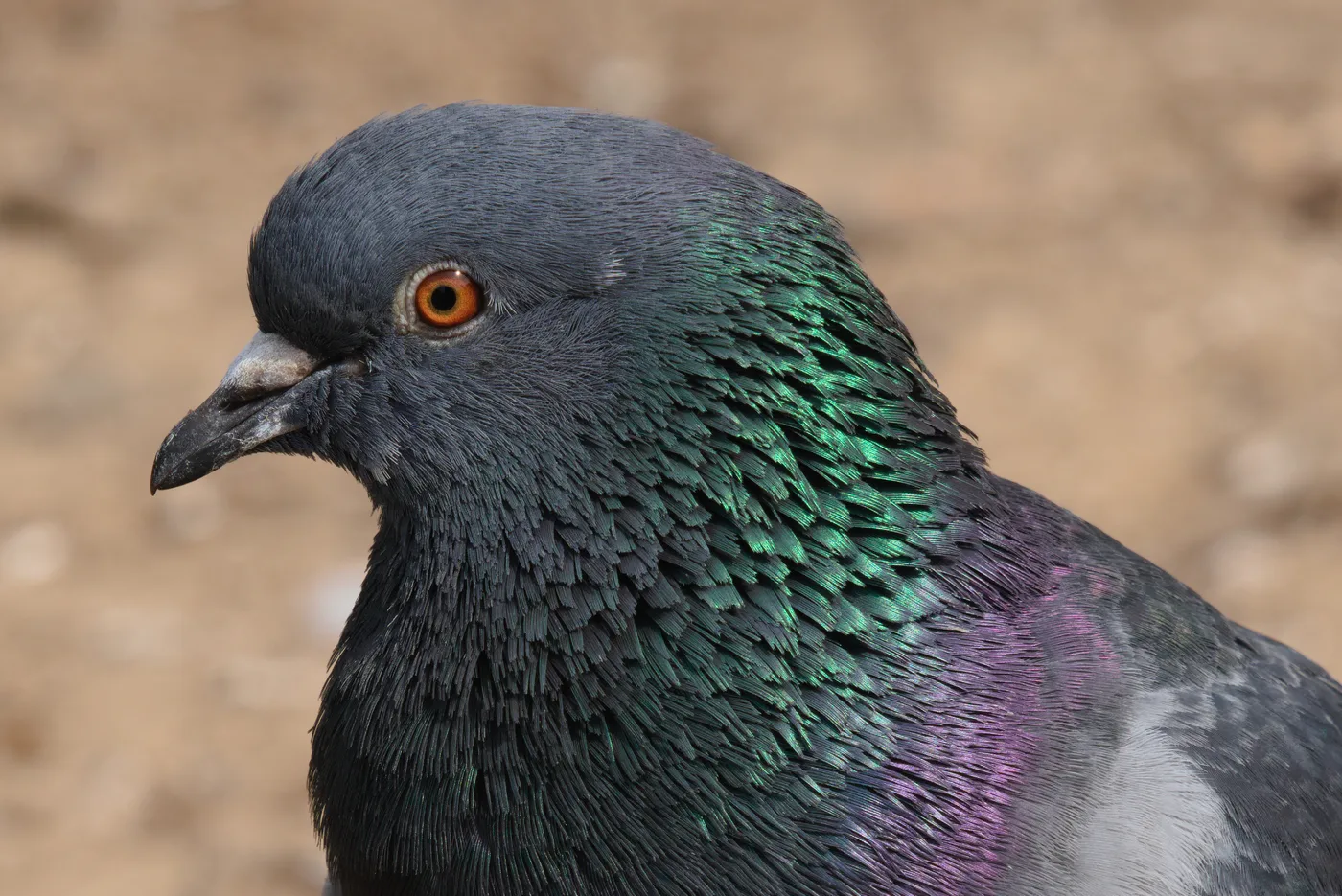
Take away the perch and the shelter, and the roof stops being worth their time. Rock pigeons have lived on human buildings for thousands of years, so they are very good at finding these spots. You have to be just as thorough about closing them.
Start by Removing the Food and Water
Before you climb up to block anything, cut off what is feeding the flock. Pigeons stay where the eating is easy.
Stop any feeding nearby, including birdseed meant for songbirds, and clear fallen fruit and food scraps from the yard. Keep trash in bins with tight lids. Clean your gutters too, since a clogged gutter holds water pigeons drink from and rotting leaves they pick through. A roof with no food or water nearby is far easier to keep clear.
Block the Ridge Line and Parapets
The ridge and any parapet are the easiest perches to remove, and usually the first thing to do.
Bird spikes along the ridge take away the flat surface pigeons sit on. Run the strip the full length of the ridge with no gaps, since pigeons will just shift to an uncovered section. Spikes work the same way on a parapet, a chimney rim, or a dormer ledge. Match the spike base width to the surface so nothing is left exposed.
Bird wire is a lower-profile choice for a ridge. It is a thin, tensioned wire strung a few inches above the surface on small posts. A pigeon that tries to land on it cannot get a stable footing and gives up. From the ground it is nearly invisible, which suits a roof where looks matter.
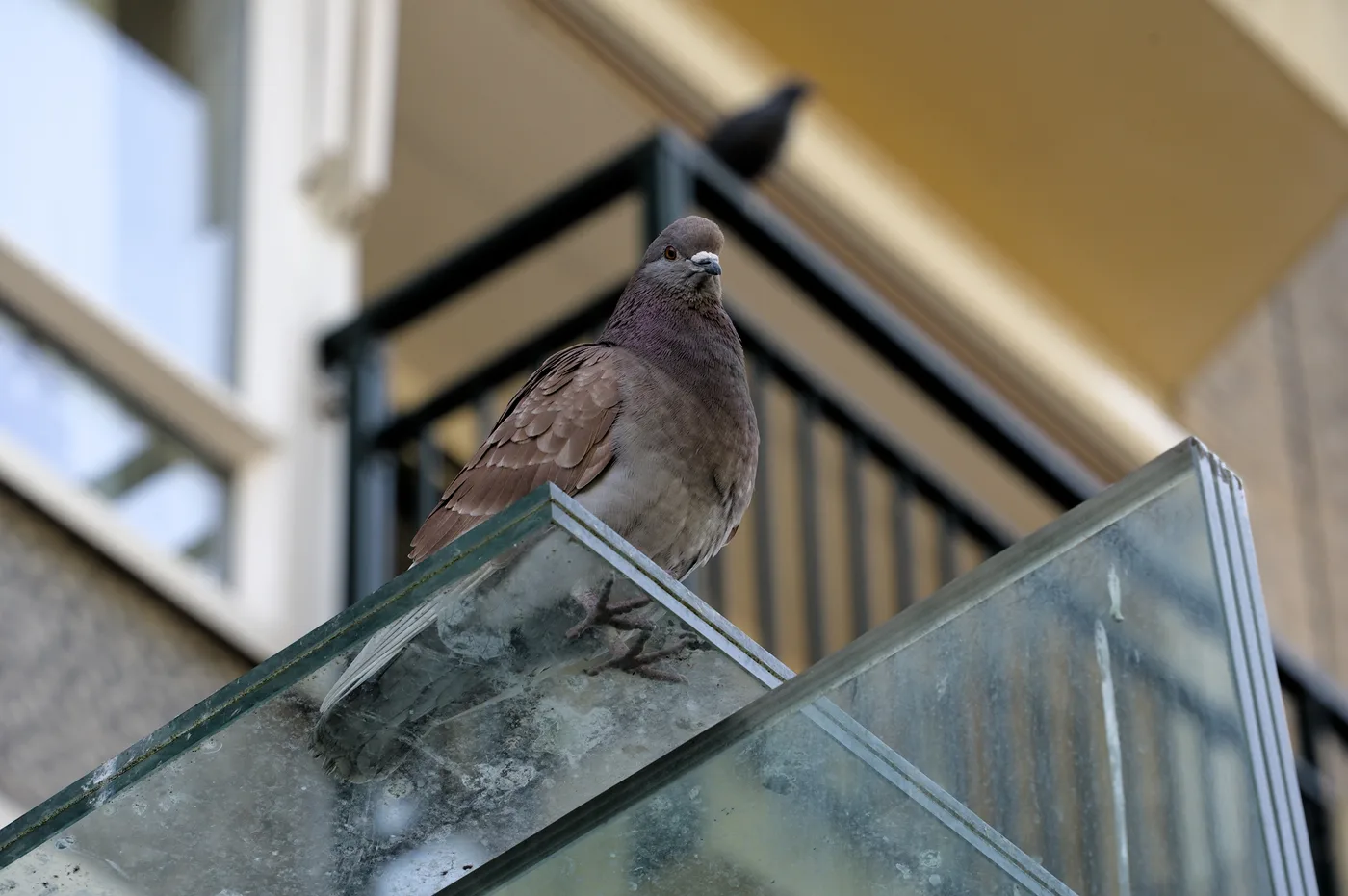
Stop Pigeons Nesting Under Solar Panels
If you have solar panels and pigeons, the space under the panels is almost certainly where they are nesting. This is the hardest roof problem to ignore. A nesting colony under your panels means constant droppings down the wall. It is also a real fire and damage risk, with nesting material packed against the wiring.
The fix is a mesh skirt that clips around the panels, often sold as a solar panel guard or pigeon proofing kit. It is a strip of galvanized or PVC-coated mesh that clips to the edge of the panel frame and closes the gap between the panels and the roof. Once the whole array is skirted, pigeons cannot get underneath at all.
Clear any nest and droppings before you fit the mesh, since pigeons head straight back to an old nest site. This is fiddly work on a sloped roof, so it is a common job to hand to a pro. A solar installer or a bird control company can skirt a full array in a few hours.
Net the Eaves, Dormers, and Open Roof Spaces
Sometimes pigeons use a larger open area: the underside of the eaves, a covered porch roof, or an open section of flat roof. There, bird netting is the complete fix. Netting walls the birds out of the whole space rather than just one perch.
Use a 50mm (2 inch) mesh, the standard size for pigeons. Anything larger lets them push through or get tangled. String it tight, with no sagging gaps, and anchor it along the full edge of the area you are closing off. Netting takes more effort to fit than spikes, but for a space pigeons are nesting in, it is the only thing that truly holds.
What to Do About an Active Nest
Feral pigeons are not protected under the Migratory Bird Treaty Act. Unlike native birds such as swallows or robins, their nests can be removed at any time, eggs or no eggs.
Clear the nest, then clean the spot before you block it. Dried pigeon droppings can carry germs, including the kind behind a lung infection called histoplasmosis, so wear gloves and a mask. Dampen the area first so nothing turns to dust, then disinfect the surface.
Then fit spikes, mesh, or netting over the exact spot. A pair that has nested somewhere is stubborn about coming back, so close the spot the same day you clear it. For the rules on timing and which birds are protected, stopping birds from nesting covers it across species.
A Word on Roof Safety and When to Call a Pro
A roof is not a balcony. Steep pitches, height, and loose tiles make roof work genuinely dangerous, and most of these jobs mean working right at the edge or on a slope. If the roof is steep, high, or more than a single story, hire a bird control company or a roofer. The cost is worth more than a fall.
Call a pro, too, in a few cases. One is pigeons nesting under a large solar array. Another is a droppings buildup that needs a respirator to clean safely. A third is birds that keep finding a new perch after you block the others.
A good company will spot the landing surfaces you missed, since a single open spot is all a flock needs to stay.
If the problem is really just your balcony rather than the whole roof, keeping pigeons off a balcony covers that contained space in detail. And for the full picture, from the ground up to the ridge, the pigeon removal guide walks through every option.
Images: Roof, chimney pots and bird by Peter Barr, CC BY-SA 2.0. Feral pigeon roosting by Satdeep Gill, CC BY-SA 4.0. Pigeon on a ledge by Benoit Brummer, CC BY 4.0. Via Wikimedia Commons.


.jpg)
Free: The 5-Step Bird-Proofing Checklist
Work through the right steps in the right order, before spending money on the wrong deterrents. Printable PDF, straight to your inbox.
No spam. Unsubscribe any time.