House Sparrows: Why They're a Pest and How to Stop Them
Contents[hide]
House sparrows are a non-native species that nests in vents and wall gaps, bullies native cavity-nesting birds out, and flocks in noisy crowds around feeders and buildings. They stay wherever seed and shelter are easy to find. Because they are non-native, house sparrows have no federal protection and can be controlled, but identify the bird first: native sparrows are protected.
In this article, we’ll cover how to identify sparrows, why house sparrows can legally be controlled while native sparrows cannot, and how to keep them out of nest boxes.
How to Tell a House Sparrow From a Native Sparrow
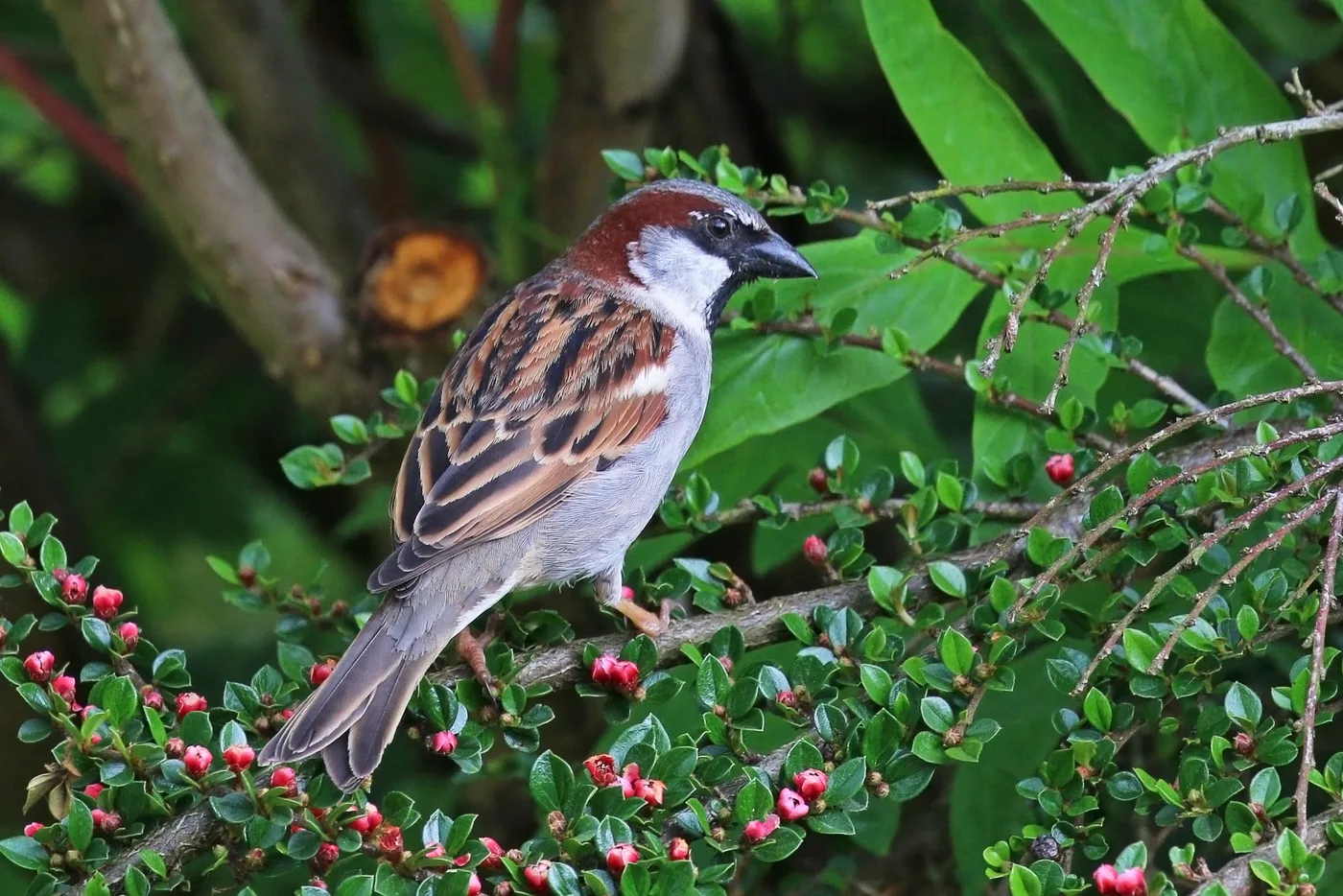
This matters, because the law depends on it. The house sparrow is not a true American sparrow at all. It is an Old World sparrow, sometimes called the English sparrow, brought to North America in the 1800s. The male is easy to spot: a gray crown, chestnut-brown back, and a black throat and bib.
His stout bill turns black in breeding season. The female is plainer, a streaky buff-brown with no bold markings.
Native sparrows look different, and they are protected. Song, savannah, and Lincoln’s sparrows are slimmer, browner, and heavily streaked. They tend to be shy birds of fields and edges, not bold flocks around your porch. If the bird is crowding a feeder or packing a vent in a noisy group, it is almost certainly a house sparrow.
If you are not sure, leave it alone.
Why House Sparrows Are a Problem
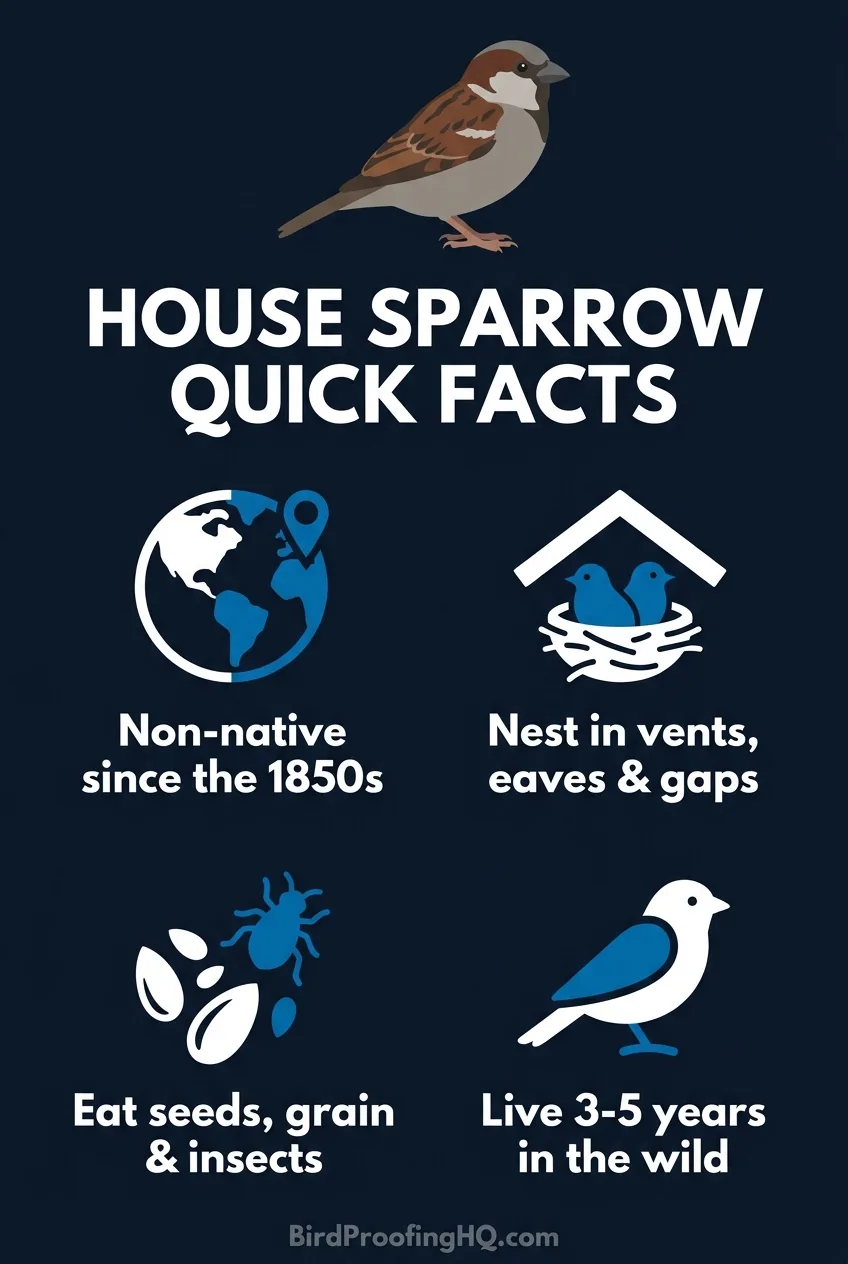
House sparrows are aggressive cavity nesters. They take over the birdhouses and wall vents meant for native birds, and they will evict, and sometimes kill, bluebirds and tree swallows to claim a nest box. The Cornell Lab of Ornithology documents this nest takeover. Add the noisy flocks around feeders, the droppings down a storefront, and the nests packed into dryer vents and signs.
A few birds turn into a real nuisance fast.
What House Sparrows Eat
House sparrows eat mostly seeds and grain, which is why they swarm feeders and spilled birdseed. In summer they add insects, especially to feed their chicks, and around people they happily take bread, crumbs, and scraps. Cheap mixed seed and millet are their favorites, so a feeder full of it is a standing invitation.
Where House Sparrows Nest
House sparrows are cavity nesters, and that is where the trouble starts. They cram bulky nests into dryer vents, eaves, signs, gutters, and any wall gap they can reach. They will also fight native birds for a nest box. They are known for taking over bluebird and tree swallow boxes, sometimes destroying the eggs to claim it.
They breed several times a season, so a pair in a vent becomes a colony fast.
Are Sparrows Protected?
Only some. The non-native house sparrow is not protected under the US Migratory Bird Treaty Act, so controlling it is legal. But native sparrows, like song and white-throated sparrows, are protected, so identify the bird before you act. When in doubt, treat it as protected and stick to humane deterrents.
How to Keep Sparrows Away
The fix is to close the cavities and cut the food. First, block the vents, eaves, and gaps where they nest. Take down or guard any nest box they are raiding, then switch feeders off the cheap mixed seed and millet they love.
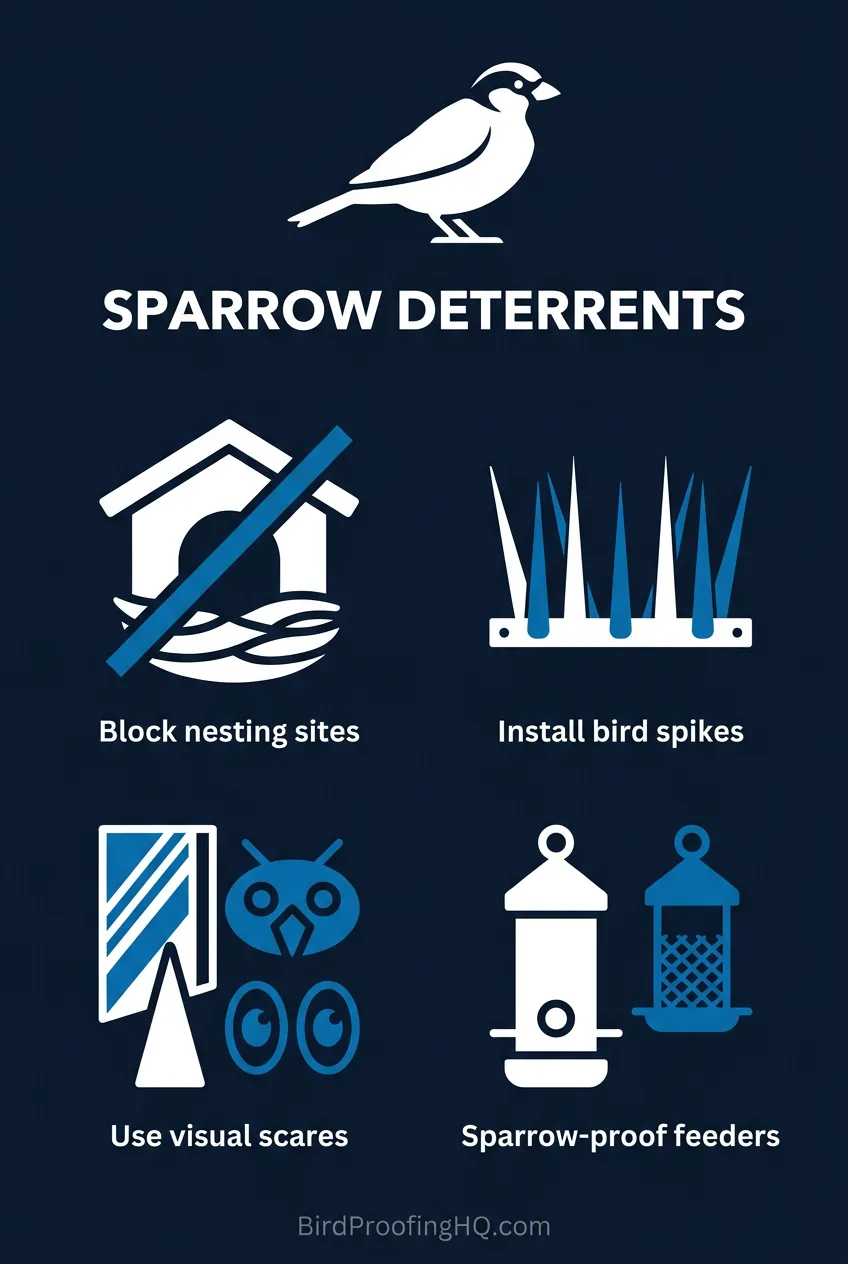
For the full step-by-step, work through getting rid of sparrows.
Images: House sparrow male by Charles J. Sharp, CC BY-SA 4.0. Via Wikimedia Commons.
_male_2.jpg)
Free: The 5-Step Bird-Proofing Checklist
Work through the right steps in the right order, before spending money on the wrong deterrents. Printable PDF, straight to your inbox.
No spam. Unsubscribe any time.