How to Get Rid of Wild Turkeys (Humane Methods)
Contents[hide]
To get rid of wild turkeys, stop feeding them and stop backing down. Turkeys follow a pecking order and bully anyone they read as timid, so remove feeders and fallen seed, then stand your ground. Wave your arms, shout, or spray them with a hose. Add a motion-activated sprinkler. Turkeys are protected game birds, so humane deterrents only.
In this article, we’ll cover how to get rid of turkeys, why feeding them makes everything worse, and how to reclaim a yard from a bold flock.
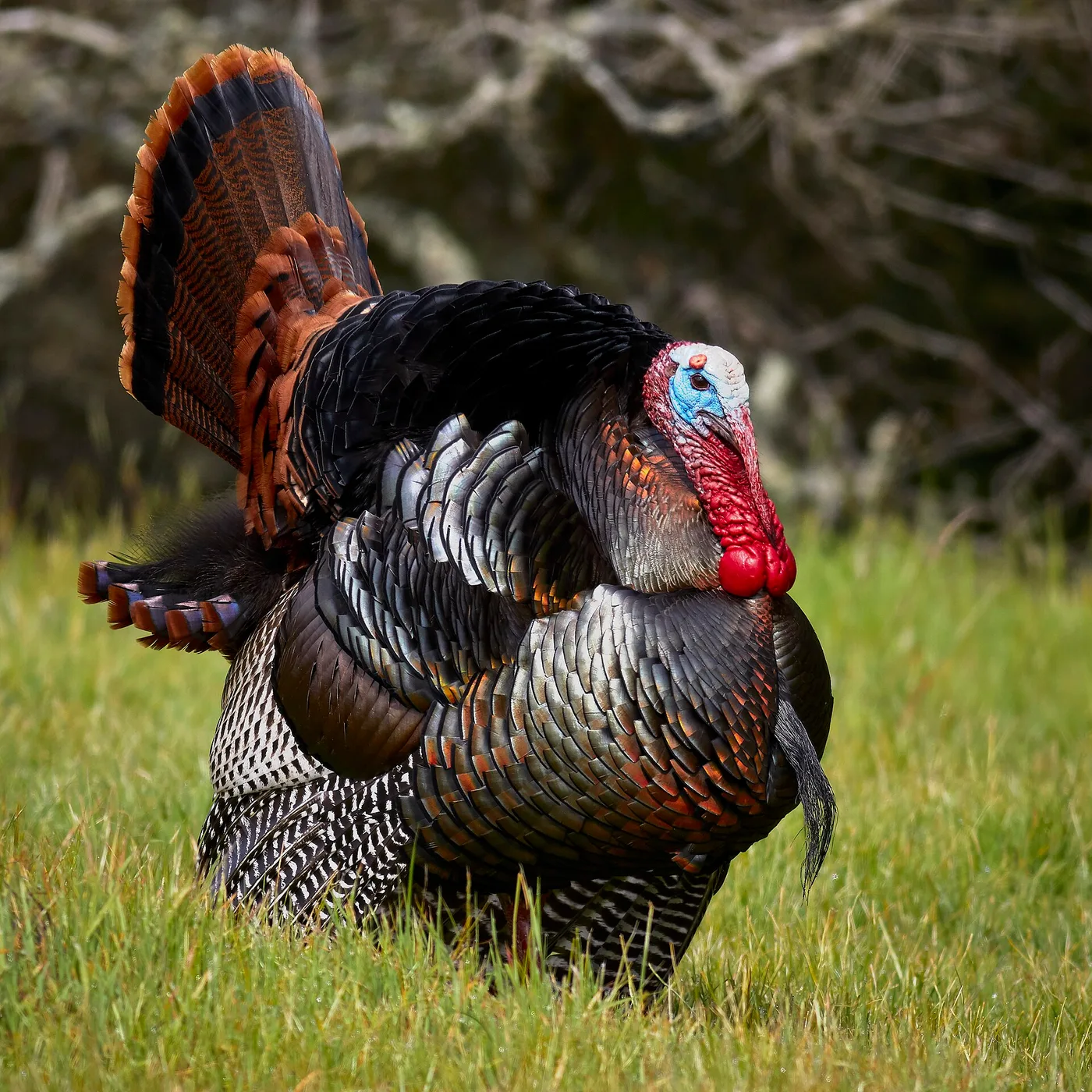
Why Wild Turkeys Take Over Your Yard
Wild turkeys want food, and a typical yard is full of it. They eat seeds, insects, grubs, berries, and fallen fruit, and they will happily clean up the spilled birdseed under your feeders. Add tall trees to roost in at night and open ground to feed and strut on, and your property looks like prime turkey habitat.
The real problem starts when turkeys associate people with food. A fed turkey loses its fear of humans, and a fearless turkey is a bold one. Because turkeys live by a strict pecking order, a bold bird starts testing whether it outranks you, which is when the chasing and aggression begin. Cut off the food and refuse to be intimidated, and you remove both reasons they stay.
Stop Feeding Them, On Purpose and By Accident
The single most effective step is to make sure no food is on offer. That includes the obvious and the accidental.
Take down bird feeders, or at least clean up the seed that spills underneath them, since that is a turkey magnet. Pick up fallen fruit, secure trash and compost, and never hand-feed turkeys or let neighbors do it. A turkey that gets a reliable meal at your place will defend that territory and bring the rest of the flock.
Turkeys also dig through lawns for grubs and insects. If your lawn is getting torn up, treating it for grubs removes that food source and the damage at the same time. The less your yard offers, the faster the birds move on.
Do Not Act Timid: Win the Pecking Order
This is the rule that surprises people, and it matters more than any gadget. Wild turkeys size up everyone they meet for rank, and they will dominate anyone who acts subordinate. State wildlife agencies like MassWildlife are blunt about it: do not let turkeys intimidate you.
When a turkey approaches or challenges you, stand tall, make yourself look big, and be loud. Wave your arms, shout, open an umbrella, bang pots, or spray the bird with a hose. The goal is to convince the turkey that you outrank it, every single time, with no exceptions.
If you back away, you confirm you are below it in the pecking order, and the bird only gets bolder. A leashed dog reinforces the message. This is especially important in spring, when breeding-season toms are at their most aggressive.
Scare Tactics and Deterrents
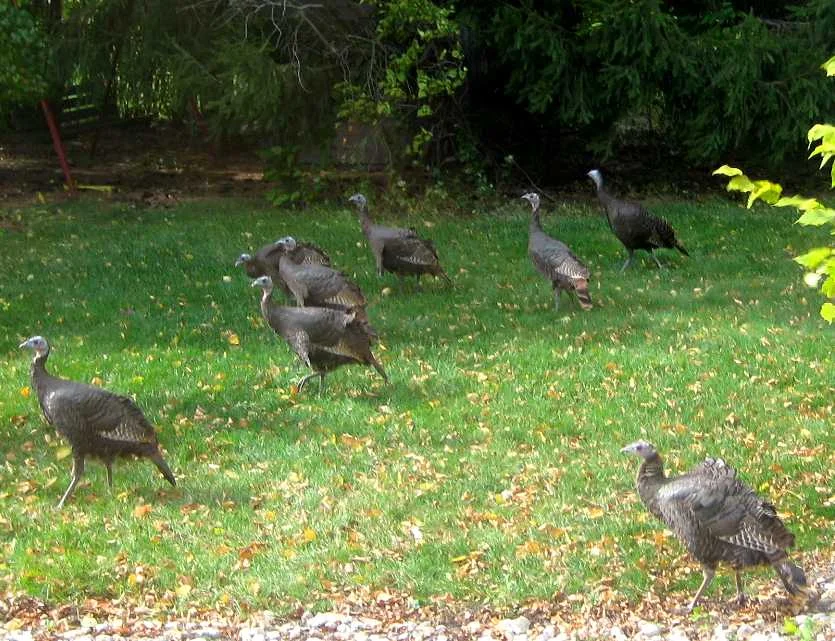
Habitat changes and dominance handle most turkey problems, but deterrents keep them from settling back in.
A motion-activated sprinkler is one of the best tools, since a sudden burst of water startles turkeys without harming them and they do not get used to it. Noisemakers, a barking dog, and even a leaf blower send a flock moving.
Reflective tape and other shiny, moving objects unsettle them in feeding areas. Removing low cover and trimming roost trees near the house makes the property feel less safe overnight. The bird deterrents guide compares the full range of humane options.
Protect Your Lawn, Garden, and Car
Turkeys cause three specific kinds of damage worth targeting directly.
For the lawn and garden, the grub treatment above stops the scratching. Bird netting over the beds and seedlings keeps them out of the harvest, the same way it keeps smaller raiders out of a vegetable garden.
For cars and windows, a turkey that pecks and scratches at the glass is attacking its own reflection, convinced it is fighting a rival. The fix is to kill the reflection. Cover the car or its mirrors, and park in a garage during breeding season. Put decals on the low windows the bird keeps hitting.
Once there is no rival to see, the attacks stop. Mockingbirds do the same thing, so the same fix works on them.
The Law: Wild Turkeys Are Game Birds
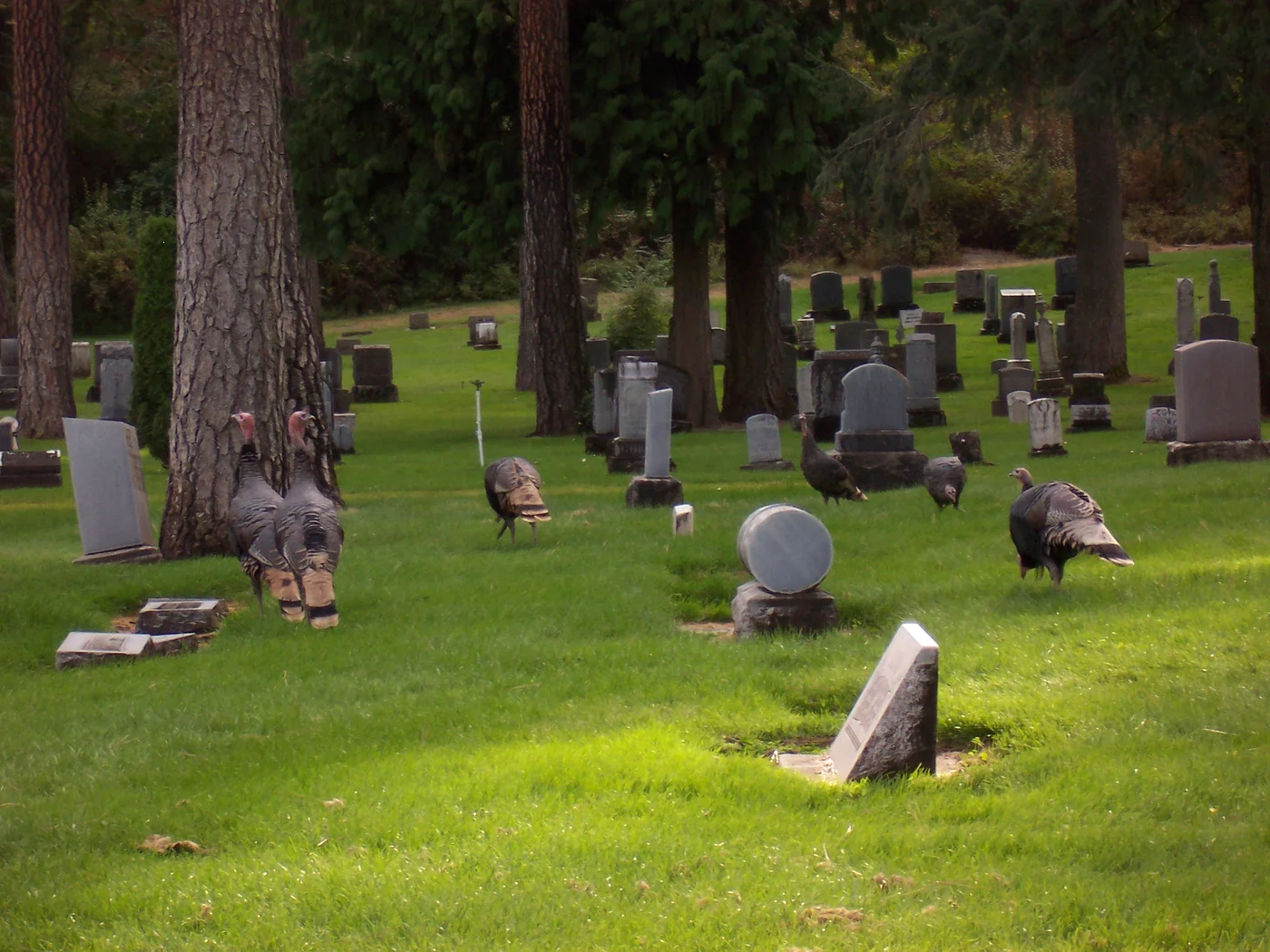
Before you consider anything beyond deterrents, know the rules. Wild turkeys are not protected by the Migratory Bird Treaty Act, because they are resident birds rather than migratory ones. Instead, they are managed as game birds by your state’s wildlife agency, with regulated hunting seasons and bag limits.
In practice that means you cannot legally kill or trap a wild turkey outside an open season or without the proper permit, and the rules vary by state. Humane deterrence, including scaring the birds and removing what attracts them, is legal everywhere and is what this guide is built around. If a turkey becomes genuinely dangerous, your state wildlife agency is the right authority to contact.
When to Call a Professional
Most turkey conflicts are solved with consistent hazing and removing food. A few cases are worth a call to your state wildlife agency or a licensed pro.
One is a flock that will not leave no matter what you try. Another is an aggressive tom threatening people or pets. They can advise on permits and the lawful, safe way to handle a bird that has lost all fear of people.
Geese are the closest match for similar habits and damage. For anything else in the yard, the bird removal guides point you to the right fix.
Images: Male wild turkey strutting by Frank Schulenburg, CC BY-SA 4.0. Flock of Turkeys in Sun Prairie Wisconsin by Firsttpt, public domain. Wild turkeys in cemetery by Ethan, CC BY 2.0. Via Wikimedia Commons.
_strutting.jpg)

.jpg)
Free: The 5-Step Bird-Proofing Checklist
Work through the right steps in the right order, before spending money on the wrong deterrents. Printable PDF, straight to your inbox.
No spam. Unsubscribe any time.