How to Stop Birds from Eating Grass Seed
Contents[hide]
- 1. Is It Really the Birds, or Something Else?
- 2. Press the Seed Into the Soil, Then Cover It Lightly
- 3. When a Secured Cover Earns the Extra Hour
- 4. Getting the Cover to Actually Hold
- 5. Scare Tactics Are a Backup, Not the Fix
- 6. What Not to Put Over Grass Seed
- 7. If Some Seed Is Already Gone
- 8. Signs It’s Working, and When to Call for Help
Quick Answer
To stop birds from eating grass seed, rake or press the seed into loosened soil. Add a thin 1/8- to 1/4-inch layer of compost or light straw, and keep the surface damp. If birds still remove seed, secure a breathable row cover over the patch at every edge. Remove it when new grass begins pushing against the fabric.
In this article, you'll learn how to stop birds from eating grass seed without harming them. We'll cover seed protection, lawn coverage, and safe deterrents.
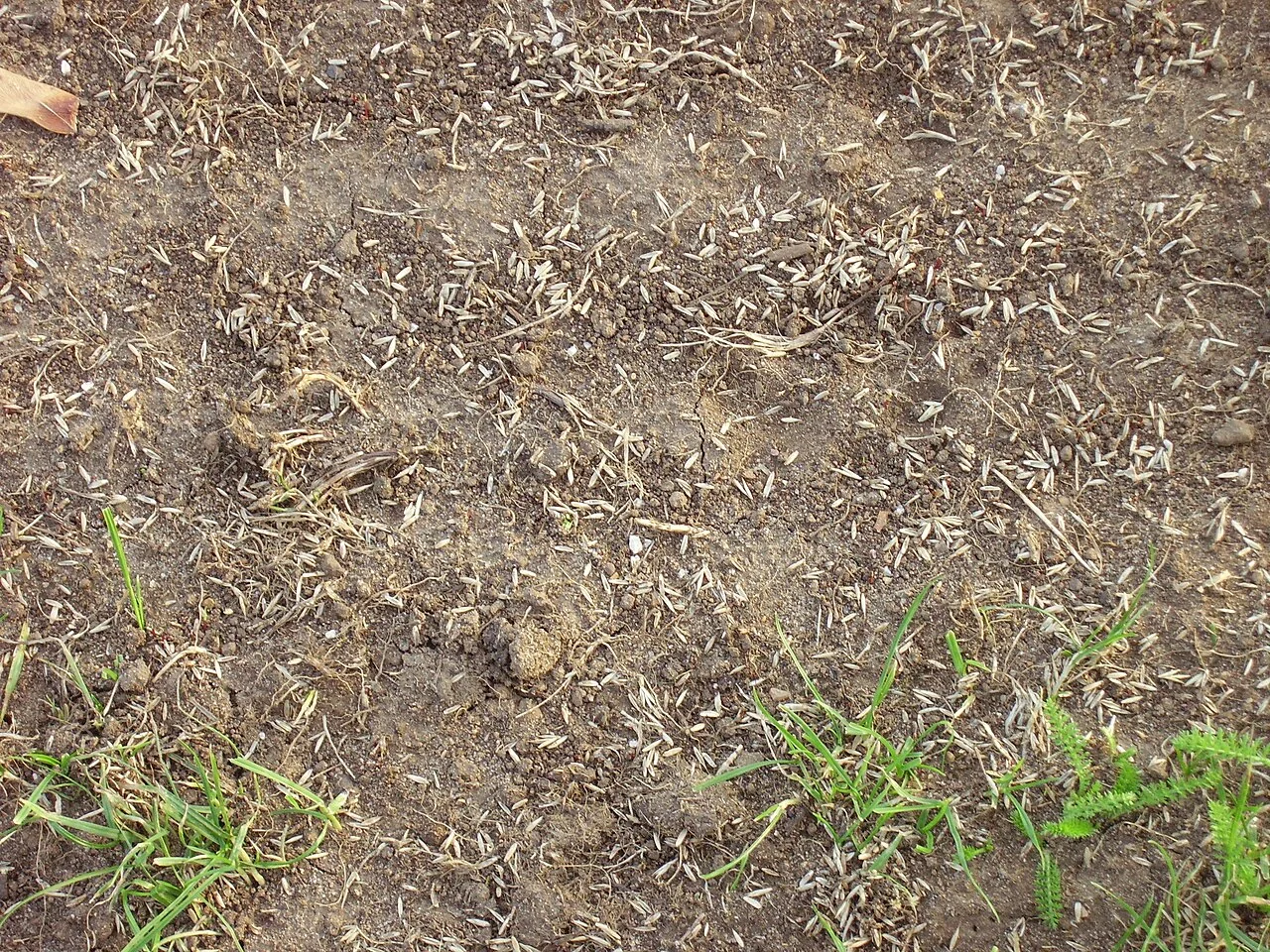
Is It Really the Birds, or Something Else?
A few birds hopping across fresh soil looks alarming, but visiting isn’t the same as damage. Sparrows and other ground feeders spend a lot of that time picking at insects and weed seed, not the grass seed you paid for. University of Minnesota Extension has looked closely at this with dormant seeding, and seed loss to birds and other critters isn’t something it typically observes. It only recommends a germination blanket or a change in timing when predation on bare soil is a genuine concern.
So the tell isn’t how many birds you see, it’s what’s happening to the soil. Two things are worth acting on. One is seed that’s visibly thinner or gone by evening. The other is the same patch pulling in a group of birds feeding together day after day, rather than one bird passing through.
Everything else that thins a new lawn looks the same as bird damage from a distance. Seed that never reached the soil, seed that dried out between waterings, and heavy rain that washed it downhill all leave bare patches too. Those causes are more common than birds.
One more distinction before you do anything: this is about turf, not a vegetable bed. If birds are working over seedlings, fruit, or crops instead of a lawn, that’s a different setup with a different answer. Keeping birds out of the garden is the better fit.
Press the Seed Into the Soil, Then Cover It Lightly
Most of what birds eat off a newly seeded lawn was never going to grow anyway. Virginia Cooperative Extension puts it bluntly: scattering seed over an unprepared surface is close to just feeding the birds. The fix is breaking up the surface, or running it through seeding equipment, so the seed actually makes contact with soil.
That single change solves both problems at once. Seed sitting loose on hard ground is easy to spot and easy to pick off, and it’s also unlikely to root. Seed pressed into loosened dirt is harder to see, harder to grab, and in position to actually grow.
Rake or scratch the top half inch of soil so it’s loose before you spread anything. Skip this and everything after it works less well. Spread seed at the rate the bag recommends, then press it in with a light raking, a roller, or by walking the area in overlapping passes. You want the seed sitting in the dirt, not resting on top of it.
The last piece is a thin topdressing, and both the amount and the material matter. Virginia Cooperative Extension recommends around 1/4 inch of compost, or a scattering of straw light enough that soil still shows through. Follow that with watering that’s light and frequent rather than one deep soak.
University of Idaho Extension, looking at turf establishment more broadly, lands on a similar range of 1/8 to 1/4 inch. It credits topdressing with more than just keeping seed away from birds. That thin layer also cuts down on seed getting displaced by wind, rain, and irrigation, holds more humidity around the seed, and helps the surface avoid crusting over. Idaho’s guidance treats topdressing as a helpful step rather than one every lawn needs, but it’s cheap insurance against exactly the kind of loss you’re trying to prevent.
Go thicker than that and you undo the benefit. A deep layer blocks the light and air seedlings need just as effectively as it blocks birds. It also holds moisture against the ground in a way that works against young grass instead of for it. If you can’t see hints of soil through the straw, there’s too much of it down.
When a Secured Cover Earns the Extra Hour
Topdressing is enough for most lawns. It isn’t enough for a small bare patch, like a repair spot, where every seed matters. It also isn’t enough for a spot where birds keep returning in groups even after you’ve topdressed, or a slope where topdressing just washes off before it does any good.
University of Maryland Extension recommends a lightweight floating row cover or open-weave cheesecloth for those situations. Water passes straight through it, the edges need landscape staples to hold against wind, and it comes off once the grass underneath starts pushing against the fabric.
The logic is simple once you think about it. Protection needs to work while you’re at work, asleep, or away for the weekend. Anything that depends on you standing in the yard at the moment birds show up isn’t really protection.
Getting the Cover to Actually Hold
Most cover failures come down to setup, not the material. Cut the fabric generously, with about six inches of extra material past the seeded area on every side. Lay it slack rather than pulled tight, so seedlings can lift it slightly as they grow.
Pin every edge with landscape staples spaced two to three feet apart, including any seam where two pieces overlap. An edge that isn’t pinned lifts in the first real gust, and a lifted edge undoes the whole point of the cover.
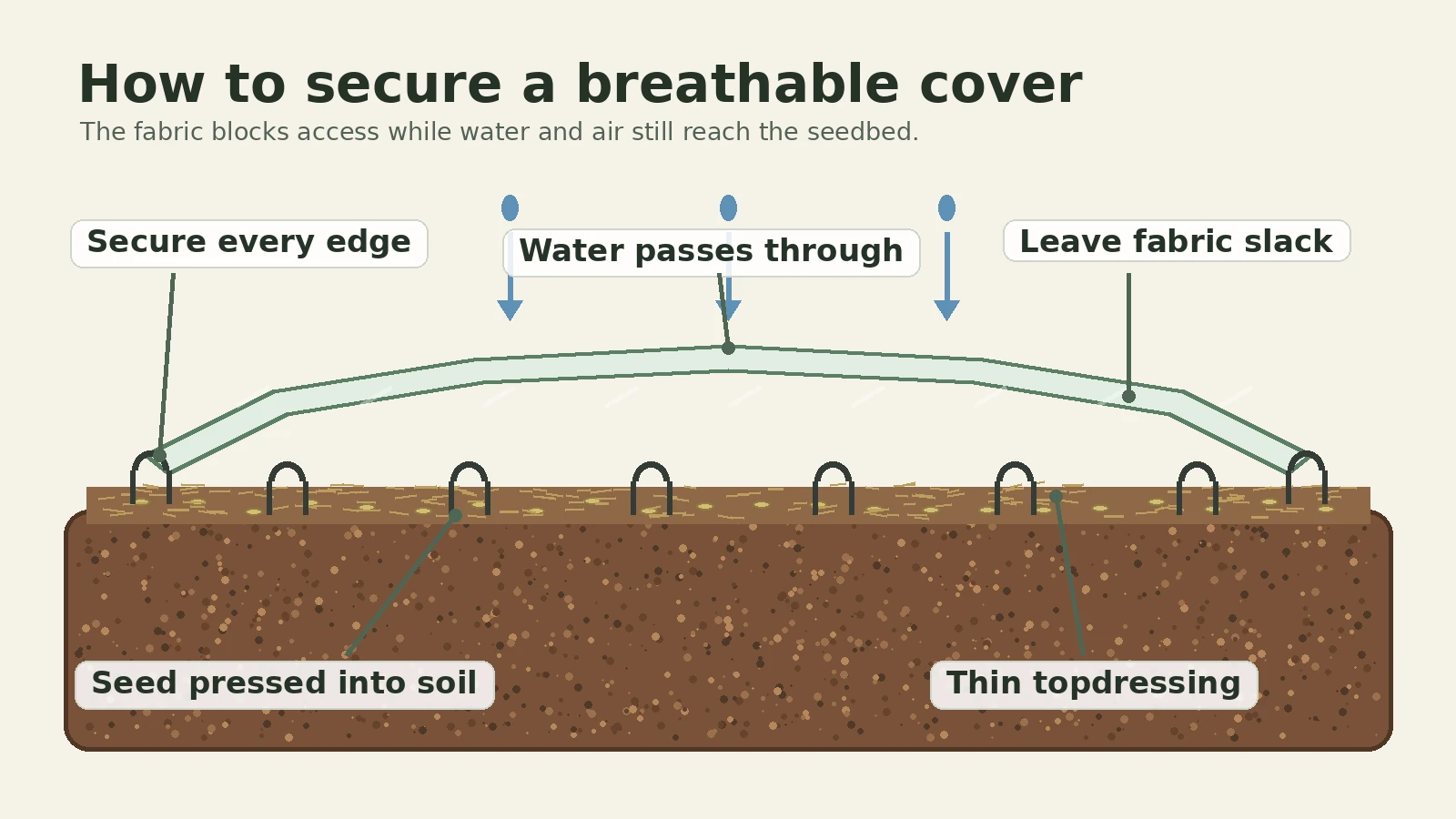
Water goes straight through the fabric, so keep watering as you normally would, aiming for damp rather than puddled. Check under a corner afterward to confirm the water is actually reaching the soil rather than beading on top. Glance at the cover once a day. It takes a minute to spot a lifted edge or standing water, and it’s also how you’ll catch the first green fuzz coming through.
Take the cover off when seedlings are pressing against it, not on a set number of days. Leaving it on longer bends and weakens the new grass and traps heat underneath it. Pull every staple as you go and count them so none end up under a mower blade later, and water again soon after removal. The surface dries out much faster once the fabric is gone, and that’s exactly when a young lawn is easiest to lose.
Scare Tactics Are a Backup, Not the Fix
Reflective tape, spinners, and a motion-triggered sprinkler can interrupt feeding for a while, but don’t count on them alone. UMass Extension notes that birds acclimate quickly to scare tactics and repellents, and points to lightweight row covers as the more dependable answer for birds pulling at germinating seed.
Use them as a supplement while topdressing or a cover does the actual work. A seeding window is short enough that moving a few reflective deterrents every couple of days can buy enough time to matter. If you want to see how the different options stack up, the bird deterrent rundown breaks that down.
What Not to Put Over Grass Seed
Skip loose plastic bird netting or interwoven mesh laid directly on the ground. University of Maryland Extension specifically warns against seed covers with interwoven mesh or plastic, because they can entangle wildlife. At ground level, that kind of netting doesn’t just catch birds. It catches snakes and small mammals too, and untangling an animal from it is a far worse outcome than losing a little seed. It also snags in the mower once grass grows through it.
Anything water can’t pass through belongs on that same list. Solid plastic sheeting keeps birds out, but it keeps water out too, and you’ll trade a bird problem for a dead patch. The same goes for deep mulch, thick mats of straw, or a heavy layer of soil. Burying seed to hide it from birds is one of the most common ways people lose a new lawn to their own protection. Skip poisons, sticky products, and traps entirely, too. None of them protect seed, and each one creates a problem that outlasts the two or three weeks you actually needed help for.
If Some Seed Is Already Gone
Don’t judge the result too soon. Germination is uneven, and a thin-looking area on day six will often fill in by day fourteen. Wait until the rest of the seeding has come up before deciding how much you actually lost.
If real gaps are still there once everything else has grown in, repair them the way you should have seeded in the first place. Scratch the surface, spread seed, press it in, topdress thinly, and pin a cover over that specific patch if birds worked it over before. Broadcasting more seed onto bare, unprepared ground just repeats the original mistake at a higher cost.
Timing matters more here than volume. The right reseeding window depends on your grass type and climate, so ask a local lawn-care professional about the best time for your area rather than following a date from a general article.
Signs It’s Working, and When to Call for Help
You’re in good shape when the seeded area looks about the same at dusk as it did that morning, and the topdressing stays damp between waterings. Birds pass through without stopping to feed, and an even haze of green shows up across the area within the normal window for your grass type. Under a cover, seedlings pressing against the fabric is both the success sign and the cue to take it off.
Ask a local lawn-care professional when you need help picking the right grass type, seeding window, or soil prep for your area. Get help too when you’re not sure the damage is from birds at all. Insects, disease, and washout all leave similarly patchy lawns, and treating the wrong cause wastes a whole season. Bring in a lawn professional for large areas, steep slopes, drainage problems, or a patch that’s failed twice despite good seed contact and steady watering. If solid prep keeps failing anyway, birds usually aren’t the real reason.
Images: Loose grass seed on soil by Simon Speed, CC0. Via Wikimedia Commons.

Free: The 5-Step Bird-Proofing Checklist
Work through the right steps in the right order, before spending money on the wrong deterrents. Printable PDF, straight to your inbox.
No spam. Unsubscribe any time.