Turkey Vultures: Identification, Range, Diet, and Nesting
Contents[hide]
Quick Answer
A Turkey Vulture is a dark scavenger with long, narrow wings, a long tail, and a bare head. It soars with its wings held in a shallow V and rocks unsteadily as it rides rising air. Adults have red heads, while young birds have gray heads, and pale flight feathers across the underwing help identify the bird at either age.
In this article, you'll learn to identify Turkey Vultures and understand their range, diet, nesting, and protection. We'll cover field marks, feeding habits, and legal limits.
How Do You Identify a Turkey Vulture?
Body Shape and Head Color
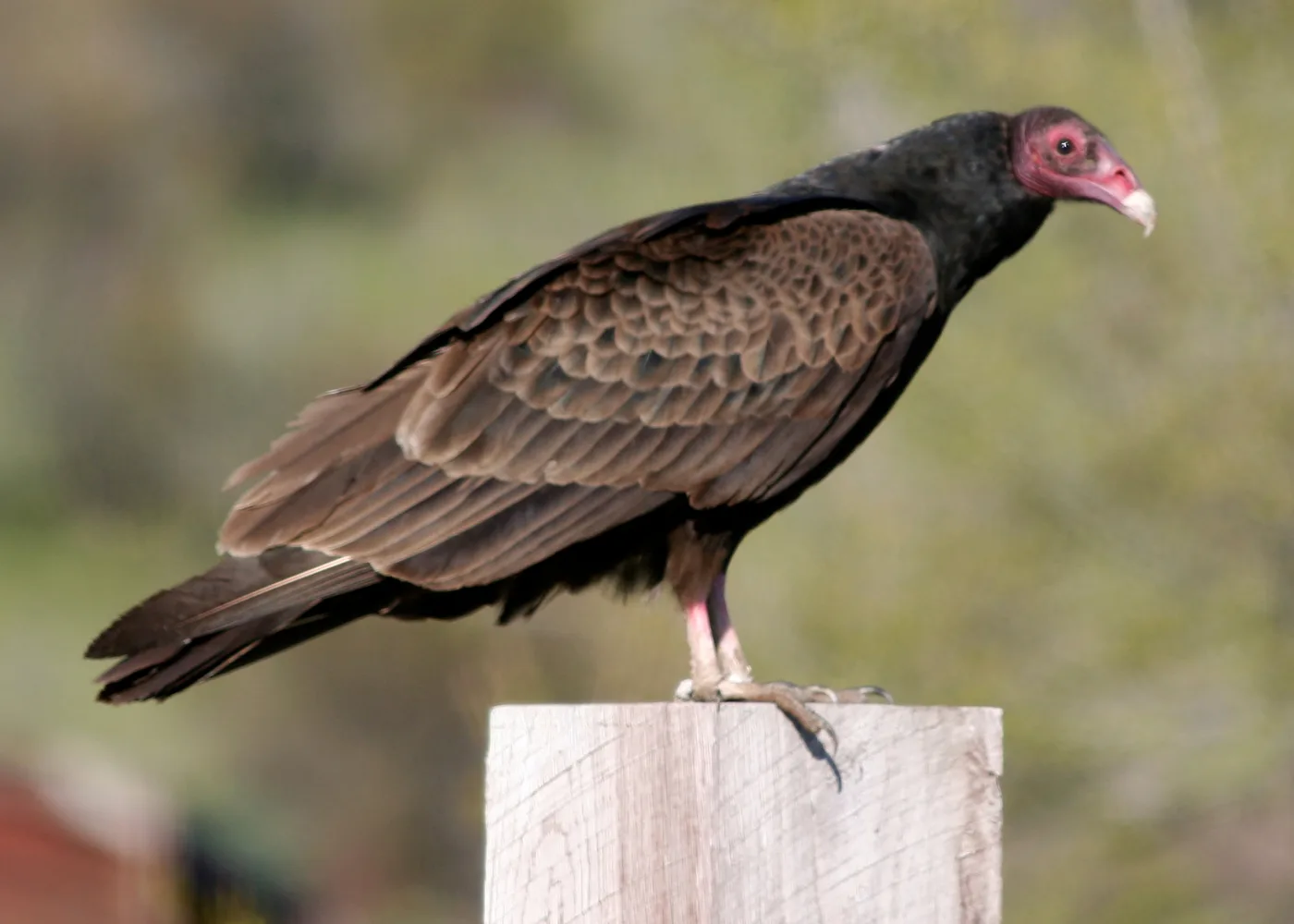
A Turkey Vulture is built for soaring, not speed on the ground. It has a small, bare head, long wings, and a long tail. The whole bird runs 25 to 32 inches from bill to tail, with a wingspan close to 6 feet.
From any distance it reads as a large, dark bird. Its silhouette is longer and narrower than most soaring birds you’ll see over a yard or field.
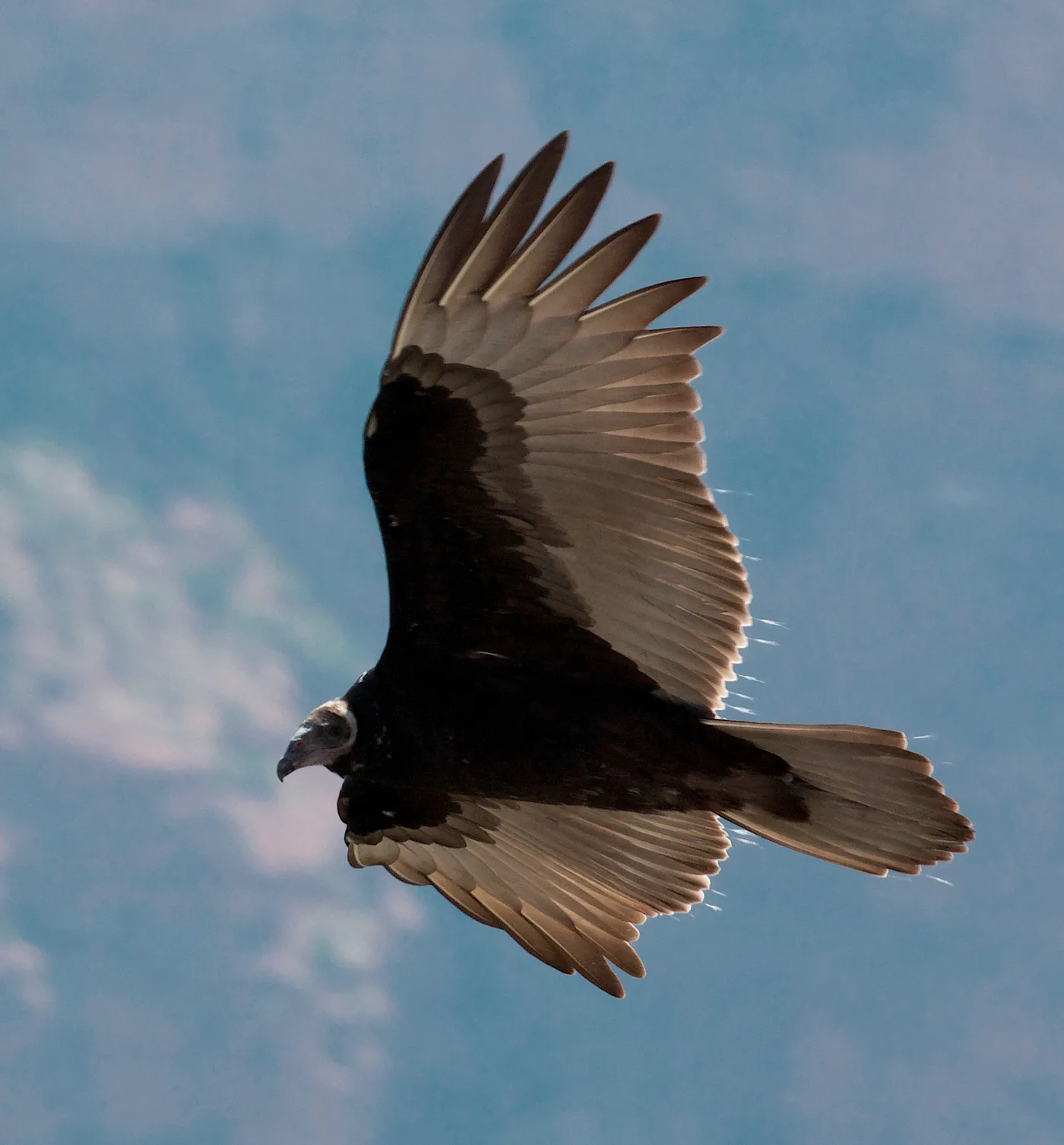
Head color tells you the bird’s age, not its sex. Adults carry a bare red head, while young birds keep a dark gray head until they mature. Males and females look alike at every age. A gray head on its own only means you’re looking at a juvenile, not a different species.
The Audubon Turkey Vulture profile backs up the same shape, wing, tail, and age cues. Together, those marks hold up better than any single field mark on its own.
In Flight
A soaring Turkey Vulture holds its wings up in a shallow V instead of flat. It tips from side to side as rising air pushes unevenly against the wings. That rocking, unsteady look is normal flight, not a bird in trouble.
From below, the wing splits cleanly into two shades. The front half, from the shoulder to the wrist, is dark. The long flight feathers running from the wrist through the trailing edge and tips are noticeably paler.
That makes the underwing look two-toned even at a distance. The tail is long enough to extend well past the back edge of the wings. The primary feathers at each wingtip spread apart like fingers.
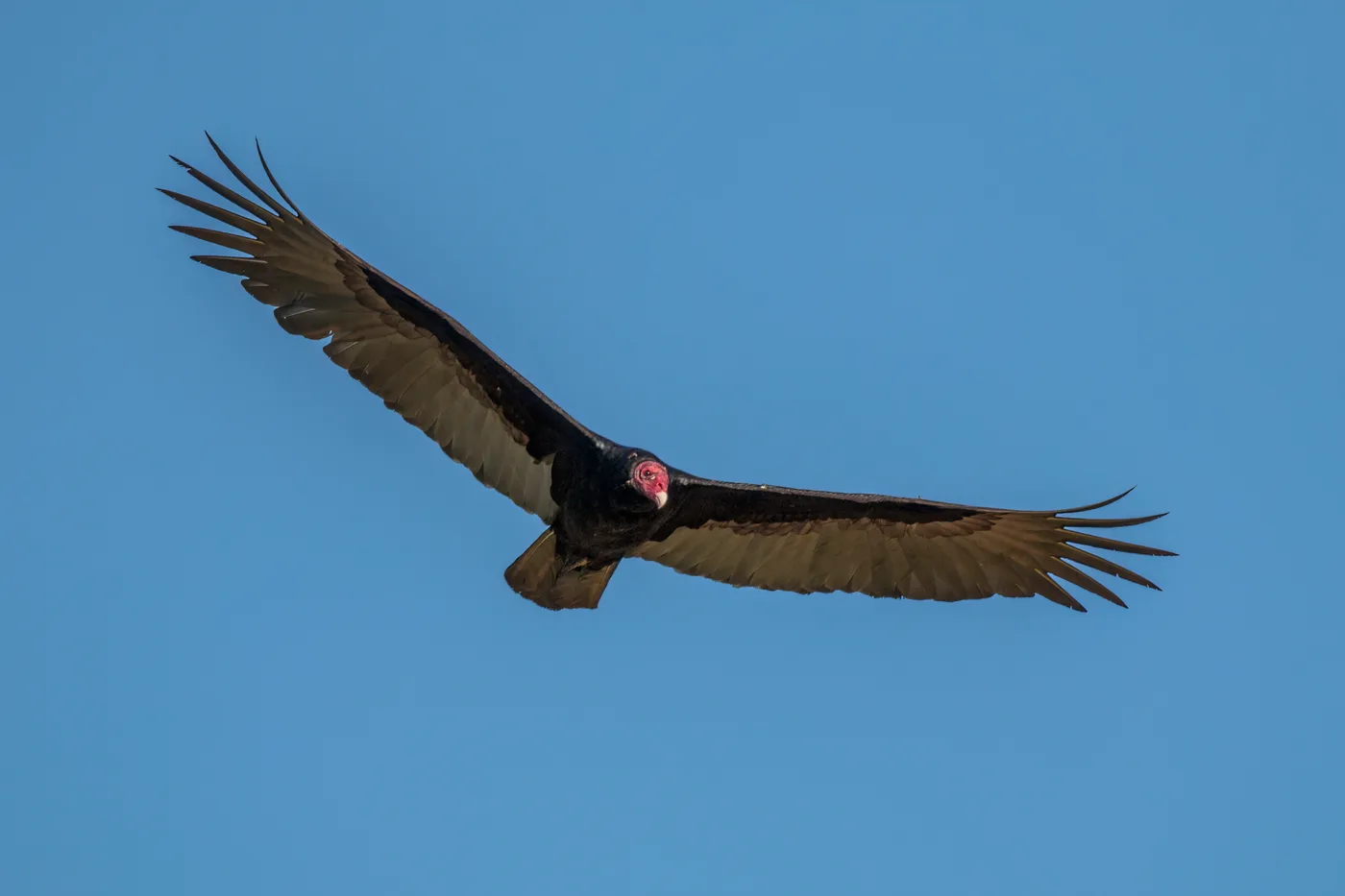
Wingbeats are slow and deep. A Turkey Vulture can glide for long stretches without flapping at all. These flight marks work at distances where head color is impossible to see. That makes them more useful than waiting for a good look at the head.
Turkey Vulture vs. Black Vulture
Turkey Vultures and Black Vultures often share the same sky, and sometimes the same roost. Head color separates an adult Turkey Vulture from a Black Vulture at close range. That mark fails the moment the Turkey Vulture is a gray-headed juvenile. Shape and wing pattern are the marks that hold up regardless of age.
- Tail: A Turkey Vulture’s tail is long and extends well past the feet. A Black Vulture’s tail is short.
- Wings: Turkey Vulture wings are long and relatively narrow. Black Vulture wings are broad and compact.
- Pale underwing: A Turkey Vulture shows pale flight feathers across most of the underwing. A Black Vulture shows pale patches only near the wingtips.
- Glide: Turkey Vultures hold their wings in a shallow V and rock as they soar. Black Vultures hold their wings flatter.
- Flapping: Turkey Vultures use slow, deep wingbeats. Black Vultures flap several times quickly between glides.
- Head: Adult Turkey Vultures have red heads, but juveniles have gray heads, so a gray head alone doesn’t rule out a young Turkey Vulture.
The Audubon Black Vulture profile describes that same short tail, broad wings, and pale wingtip patches. It sits right next to the Turkey Vulture profile. A gray-headed bird with a long tail and pale feathers across most of the underwing is still a Turkey Vulture. It isn’t a Black Vulture with an odd head.
Where They Live and What They Eat
Range and Migration
Turkey Vultures live across most of the Americas. In the United States, they’re year-round residents through much of the South. Birds that nest farther north, across the northern United States and Canada, head south for winter. Some travel as far as South America.
Migration can put dozens of birds in the air together. Turkey Vultures ride rising air to gain height, then glide toward the next lift. That lets a flock cover long distances while flapping very little.
They aren’t limited to wild, empty country. The University of Michigan species account notes that Turkey Vultures use forested land and open land alike.
They turn up over farms, suburbs, and other developed areas as readily as over untouched habitat. A vulture soaring over a neighborhood isn’t lost. It’s doing what the species has always done, just closer to houses.
Diet and Foraging
Turkey Vultures eat carrion, meaning animals that are already dead. They favor carcasses that are still relatively fresh. Roadkill is an obvious meal, but carcasses of many sizes end up on the menu.
They find food by watching from the air and by smell. While soaring, a Turkey Vulture scans the ground for a carcass directly and watches for other scavengers gathering. That’s often the faster tip-off. It also has a sense of smell that’s unusually well developed for a bird.
Most species lean almost entirely on sight. A Turkey Vulture can pick up a carcass by scent. That works even over open or partly wooded ground where a body might be out of view.
A circling vulture isn’t a sign that something below is about to die. It’s scanning for a meal that’s already dead. Finding one lets it clean up a carcass and cycle the nutrients back into the food web, instead of leaving it to rot in place.
Nests and Roosts
Where They Nest
A Turkey Vulture nest rarely looks like a nest at all. The pair picks a sheltered spot. Common choices include a hollow tree or log, a cliff crevice, a cave, a dense thicket, an old building, or a space beneath rocks.
They add little or no nesting material. The eggs often sit directly on debris or the bare floor of the site.
The usual clutch is two eggs. Both parents share roughly 34 to 41 days of incubation. Once the eggs hatch, they feed the chicks by regurgitating food. Young birds take their first flight at about 9 to 10 weeks old, according to Audubon.
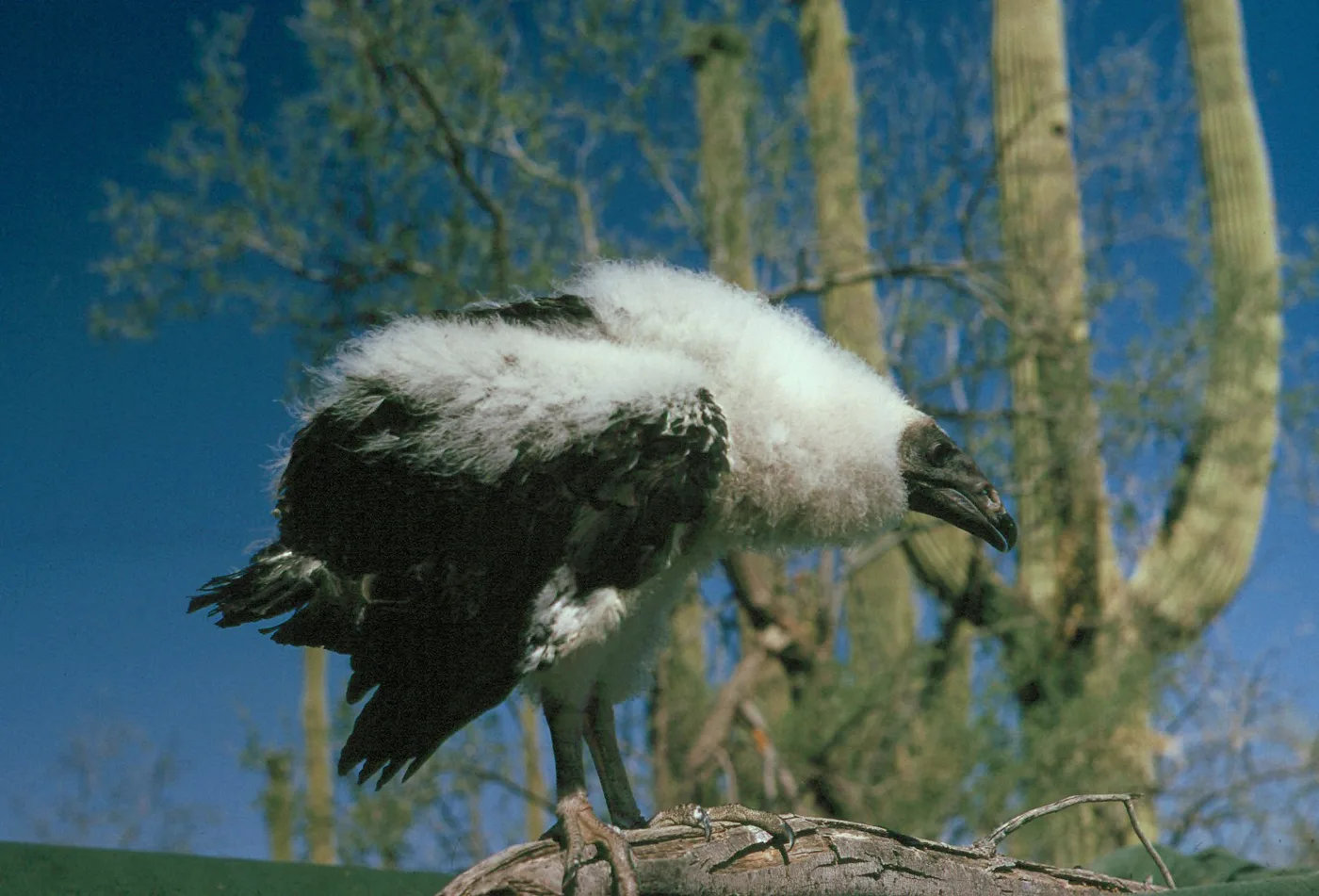
The chick pictured here is standing on a tree limb, not sitting in a nest. Young Turkey Vultures are covered in white down before their dark flight feathers grow in. The nest site itself is so bare that it’s easy to walk right past one. That’s worth keeping in mind next to the common bird nest types that other species build out in the open.
Communal Roosts
A roost is a place to rest, not a nest. Turkey Vultures often spend the night together in tall trees, towers, or other high perches. During the day, they split up to search for food on their own. Where their ranges overlap, Turkey and Black Vultures will use the same roost.
The University of Michigan account reports communal roosts that can hold several hundred birds. A morning gathering often looks social. Vultures may sit close together, preen, or hold their wings spread out while perched.
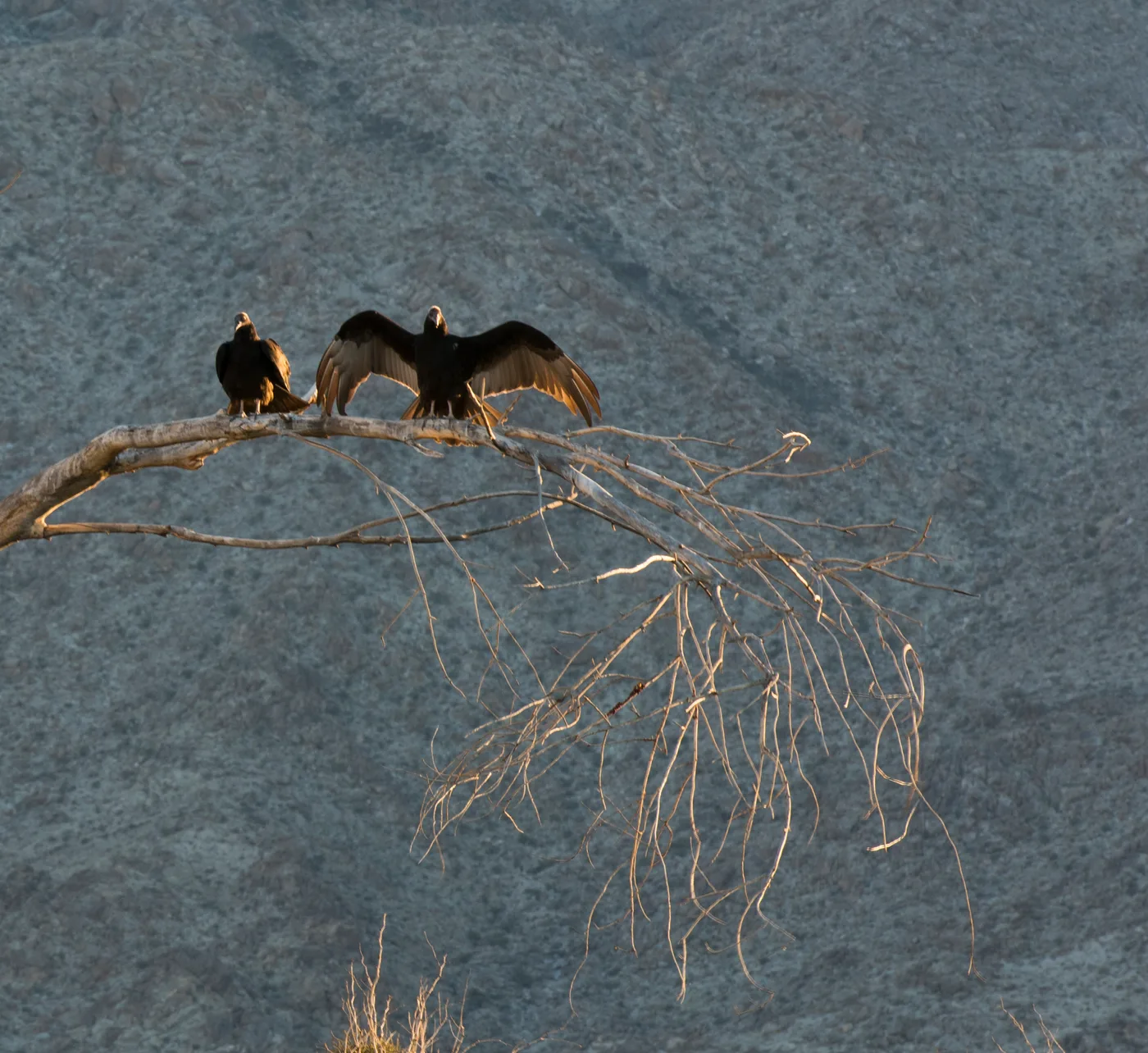
Seeing several vultures sharing a tree doesn’t mean they’re nesting there. A nest belongs to one breeding pair and holds eggs or young. A roost can hold many birds at once. The group can shift with weather, food, and migration.
Are Turkey Vultures Protected?
Yes. Turkey Vulture, Cathartes aura, is on the federal list of protected migratory birds in 50 CFR 10.13. That listing means you generally need federal authorization to take or possess the bird, its parts, its nest, or its eggs. 50 CFR 21.10 sets out that requirement.
There’s a narrow exception worth knowing about. 50 CFR 21.100 lets you scare or herd a depredating migratory bird, meaning one that’s causing property damage, without a federal permit. That exception applies only if the bird isn’t threatened, endangered, or an eagle. A Turkey Vulture generally qualifies.
An actual depredation permit is still required before any removal or control. State and local rules can add further limits. Check whether the birds, nests, or eggs are protected by law before acting.
When Is a Turkey Vulture a Nuisance?
A large roost can leave droppings piling up beneath a regular perch. That can make a roof, tower, or tree hard to use. The birds can also unsettle people simply by gathering close to a home. A Turkey Vulture’s normal diet is carrion, though, not anything alive on your property.
This page covers identification, not control. If vultures have settled on your property, see dealing with a vulture roost for the humane and legal steps to take next.
Images: Adult Turkey Vulture by Oregon Department of Fish & Wildlife, CC BY-SA 2.0. Turkey Vulture in flight by Charles J. Sharp, CC BY-SA 4.0. Juvenile Turkey Vulture by Gregory “Slobirdr” Smith, CC BY-SA 2.0. Turkey Vulture chick by Warren Garst, CC BY-SA 4.0. Turkey Vultures roosting at Oasis of Mara by Joshua Tree National Park, NPS photo by Brad Sutton, public domain. Via Wikimedia Commons.
.jpg)
_in_flight.JPG)
_-_Flickr_-_Gregory_Slobirdr_Smith,_crop.jpg)

.jpg)
Free: The 5-Step Bird-Proofing Checklist
Work through the right steps in the right order, before spending money on the wrong deterrents. Printable PDF, straight to your inbox.
No spam. Unsubscribe any time.