Do Ultrasonic Bird Repellers Work? (The Honest Answer)
Contents[hide]
Ultrasonic bird repellers don't work. Birds can't hear sounds above 20kHz, and that's exactly where these devices operate. The Federal Trade Commission warned over 60 manufacturers about misleading effectiveness claims. If you have a pest bird problem, physical barriers like netting and spikes are what the science actually supports.
In this article, you'll learn why ultrasonic bird repellers fail and what works instead. We'll cover hearing limits, sonic deterrents, and proven alternatives.
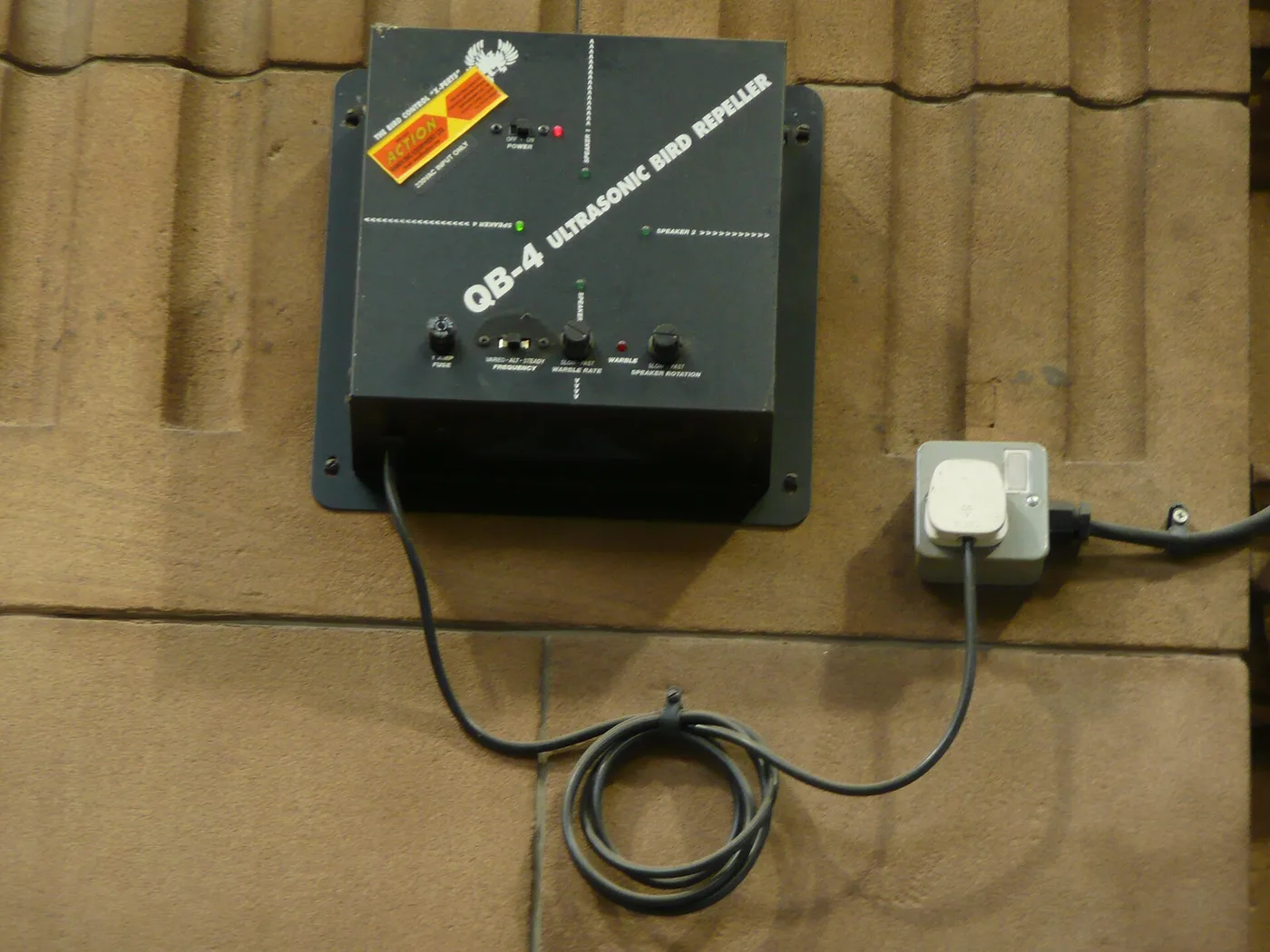
Do Ultrasonic Bird Repellers Actually Work?
The research has been clear on this since at least 1990.
The key reference is a 2004 paper by Robert C. Beason for the USDA Wildlife Services: What Can Birds Hear? It found that no bird species has shown sensitivity to ultrasonic frequencies above 20kHz. Birds hear roughly the same range humans do: about 300 Hz to 8 kHz. Ultrasonic devices operate above that ceiling entirely.
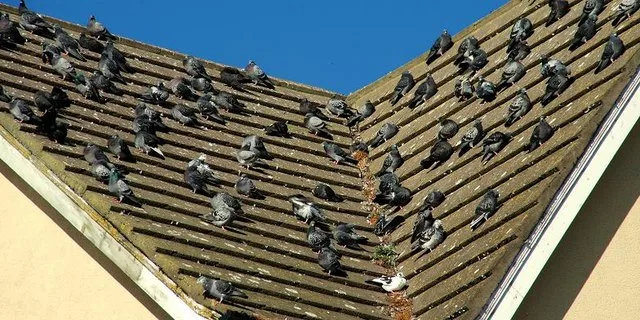
Bomford and O’Brien (1990) reviewed the research in Wildlife Society Bulletin. Their conclusion: “There is no scientific evidence that ultrasound provides effective bird control.” A USDA field trial ran an active unit at a pigeon roost for 20 days. The birds nested 7 to 20 meters from the device. Not one changed its behavior.
A 2025 peer-reviewed study from Universiti Sains Malaysia tested nine deterrent methods at an industrial site. The ultrasonic device produced 131 percent of the baseline bird count. Birds actually increased.
In 2001, the Federal Trade Commission sent warning letters to more than 60 manufacturers and retailers, requiring scientific proof for their effectiveness claims. Most could not provide it. Formal complaints and consent orders followed over the next two years.
Why Birds Cannot Hear High Frequency Sounds Above 20kHz
Birds evolved to communicate in the audible range. Their songs, alarm calls, and flock signals all fall between 1 and 8 kHz. Their hearing is tuned precisely to that band:
- Pigeons: up to about 10 kHz
- Sparrows and starlings: up to about 11 to 15 kHz
- Crows: up to about 4 kHz
- Seagulls: up to about 10 kHz
Ultrasound starts at 20 kHz, which puts it completely outside every range on that list. A device that markets itself as silent to humans is just as silent to the pigeons.
Some sellers mention bat echolocation as if it proves the concept. Birds don’t echolocate at all, so the comparison doesn’t hold up. It’s a marketing angle, not biology.
Will an Ultrasonic Device Affect My Pets?
Possibly, and that’s the real problem.
Dogs hear up to about 65kHz. Cats hear up to about 79kHz. A device emitting in the 20 to 25kHz range is inaudible to your bird problem and fully audible to your pets. Continuous exposure to sounds they can hear but you cannot is stressful for them.
So the typical ultrasonic repeller does nothing to the pigeons and may irritate your dog. That is worse than useless.
Are Sonic Deterrents Any Different?
Yes, and this is where the confusion comes from.
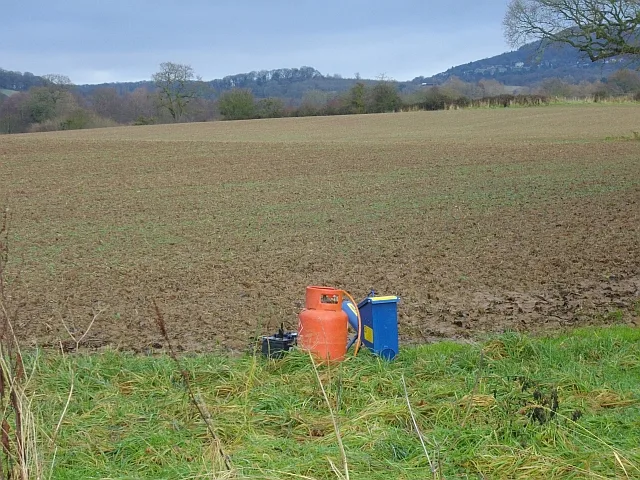
Sonic deterrents broadcast recorded bird distress calls and predator sounds in the audible range, typically 1 to 5 kHz. Birds hear these and react because they evolved to: an alarm call means real danger, and a predator call means get out now.
The limitation is habituation. Birds figure out quickly that a recorded sound is not followed by an actual attack. Most research shows the response fades within days to a couple of weeks. Moving the device and varying the call sequence slows the process.
Sonic devices are a legitimate short-term dispersal tool. Unlike ultrasonic devices, they work at least initially. Products like the Bird Chase Super Sonic use randomized species-specific calls specifically to slow habituation. They are most useful combined with physical barriers, not on their own.
What About Bird-X and Other Popular Brands?
Bird-X sells more ultrasonic units than almost any other brand. Their Ultrason X is a true ultrasonic device. Consumer reviews follow the same pattern: birds ignore it, roost near it, and sometimes sit directly on the unit. The USDA pigeon trial replicated this exactly.
Aspectek, Cleanrth, and similar brands show the same results. Any device marketed strictly as ultrasonic will produce the same outcome. The problem is the frequency, not the brand.
Occasionally a buyer reports short-term results. This is almost always audible leakage. The device makes some noise in a range birds can actually hear, and that novelty spooks them briefly before habituation sets in.
What Actually Works to Keep Pest Birds Away?
Physical exclusion is the only approach with consistent, long-term results. That means spikes, netting, and blocking access, rather than trying to scare birds off.
Netting seals a space entirely. The USDA calls it the most effective single method to reduce bird damage, and it has no habituation problem since the space is simply blocked.
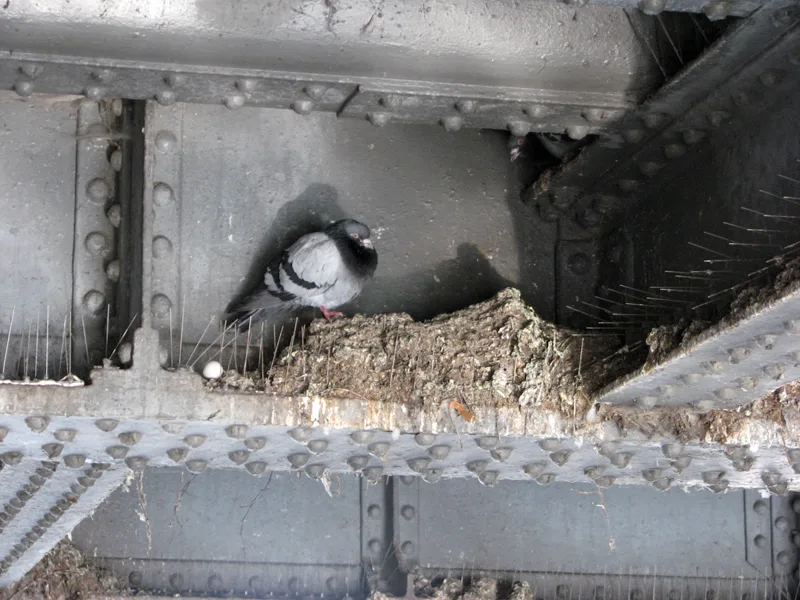
Spikes work for ledges, beams, rooflines, and rails. The 2025 Malaysian study found a 70 percent reduction in pigeon populations at spiked sites, the highest result of any method tested. Go with steel over plastic: steel lasts a decade or more, while plastic breaks down from UV within a couple of years.
Motion-activated sprinklers like the Orbit Yard Enforcer are the right call for gardens and open lawns. A short burst of water when a bird lands is surprising enough to break the habit, and moving them every few days keeps it that way.
The cheapest step is also the most underused: take away what drew the birds in. Stop hand-feeding, clear standing water from gutters and planters, trim the dense shrubs near the problem area. Cut the food source and most pest birds find somewhere easier. This costs nothing and does half the work.
The Bottom Line
Do not buy an ultrasonic bird repeller. The devices cannot work because birds simply cannot hear them, and that’s a physics limit no product in this category can engineer around.
Spend the same money on a spike strip for your ledge or a section of netting for your porch, and you will actually solve the problem. Not sure which physical deterrent fits your situation? The bird deterrents guide covers every method. Or start with the bird proofing guide for a full property walkthrough.
Images: Ultrasonic bird repeller by Nevit Dilmen, CC BY-SA 3.0; Feral pigeons, Belfast by Albert Bridge, CC BY-SA 2.0; Auditory bird scarer by Bob Embleton, CC BY-SA 2.0; Pigeons near spikes, Nottingham Canal by John Sutton, CC BY-SA 2.0. Via Wikimedia Commons.

_-_geograph.org.uk_-_1520078.jpg)


Free: The 5-Step Bird-Proofing Checklist
Work through the right steps in the right order, before spending money on the wrong deterrents. Printable PDF, straight to your inbox.
No spam. Unsubscribe any time.