How to Keep Birds Out of Fruit Trees (Save Your Harvest)
Contents[hide]
To keep birds out of fruit trees, net the whole tree before fruit ripens. Netting is the only method that reliably saves the crop. Back it up with reflective scares, pick ripe fruit promptly, and clear fallen fruit from the ground. Move the scares often so birds do not get used to them.
In this article, you'll learn how to keep birds out of fruit trees and protect your harvest. We'll cover netting installation, visual scares, and fruit bagging.
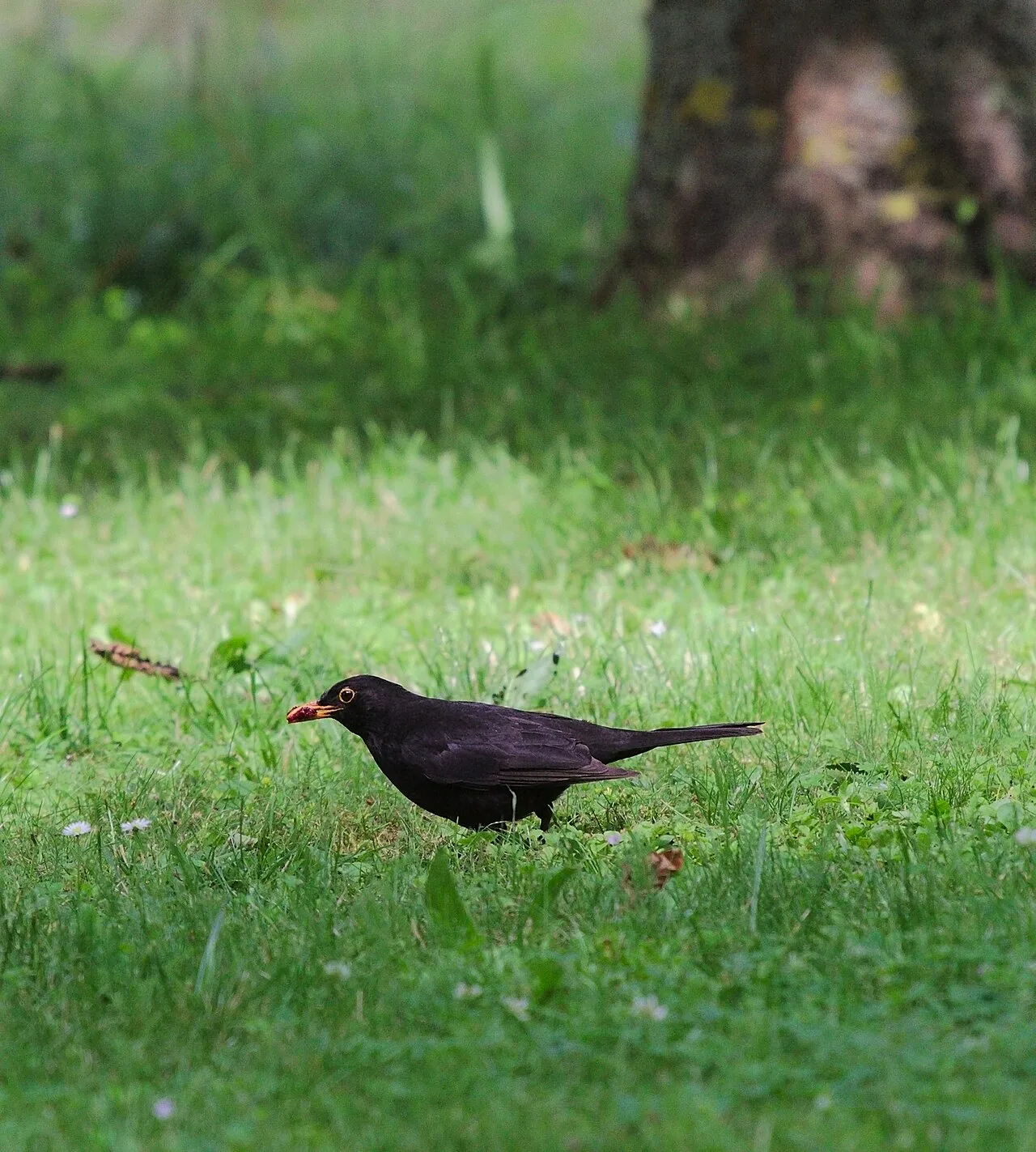
Birds go for soft, sweet fruit first: cherries, blueberries, figs, and ripe apples and pears. The closer the fruit gets to ripe, the harder they hit it.
Why Birds Target Your Fruit Trees
Birds are after the same thing you are: ripe, sugary fruit that is easy to eat. A loaded fruit tree offers a big, reliable meal in one spot, and word spreads fast once a few birds find it. Some birds also eat insects off the tree, which is a small upside, but the fruit is the real draw.
Soft fruit takes the worst of it. Cherries and berries have thin skin and high sugar, so robins, starlings, and waxwings target them first. Harder fruit like apples and pears gets pecked rather than carried off, but a pecked apple rots fast and draws wasps.
A tree that fed birds last year will be on their route again this year. Acting early matters more than any single gadget.
The raids run on the fruit’s schedule, not yours. Birds start sampling as the fruit turns from green to its ripe color, often a few days before you would pick it. That short window, when the sugar climbs but the fruit is still on the branch, is when a tree gets stripped fastest.
How to Keep Birds Out of Fruit Trees
Start with netting, then layer scares on top. The barrier does the heavy lifting, and the backups cover what it misses.
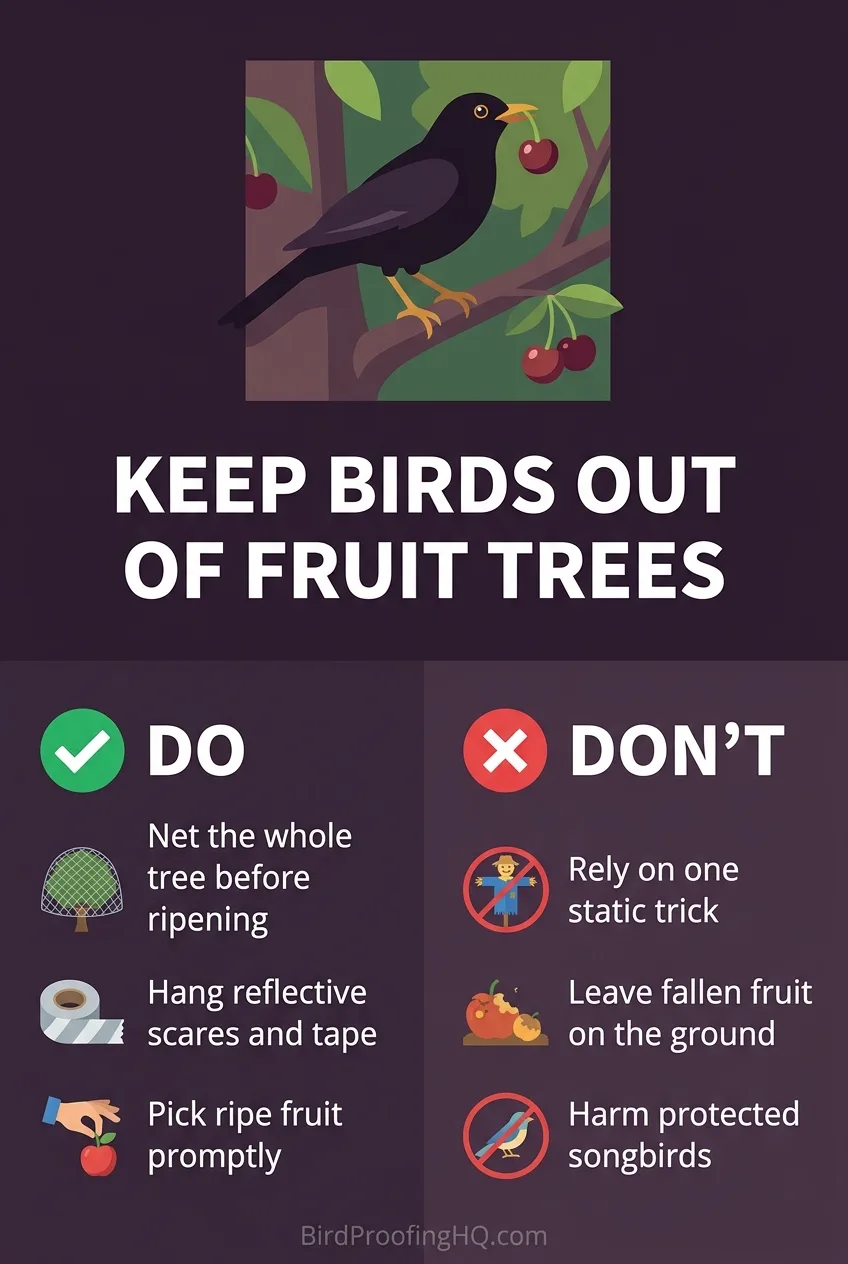
Net the Tree
Netting works because the birds simply cannot get to the fruit. Drape it over the whole tree and secure it at the trunk so nothing sneaks in from below. The trick is to keep the net off the fruit itself, since birds will peck anything pressed against the mesh. A simple frame of stakes, bamboo, or PVC holds the net out like a tent.
Use a mesh of about half an inch so small birds cannot slip through the gaps. Put the net up before the fruit ripens, not after the birds have already claimed the tree. Our bird netting guide covers the mesh sizes and framing in more detail. One rule keeps it humane: check the net daily and keep it taut, so a bird cannot get tangled in loose folds.
Reflective and Visual Scares
Birds dislike sudden flashes of light, so reflective scares are a cheap, useful backup. Hang strips of reflective tape, old CDs, or foil pie plates in the branches where they twist and flash in the sun. Scare-eye balloons and shiny wind spinners add that startling flash too.
The cheap commercial version is reflective scare tape that crackles in the wind, which adds a bit of noise to the glare. Hang several through the canopy at different heights. Like every scare, they fade as birds get used to them, so move them around every few days. On their own they will not save a crop, but paired with netting they help keep birds from even landing.
Decoys and Predator Kites
A plastic owl, a fake hawk, or a hawk-shaped kite on a pole taps into a bird’s fear of predators. A kite that moves in the breeze holds up better than a decoy that sits still, because the movement reads as alive. Rubber snakes draped in the branches work this trick on smaller birds too.
Every decoy has the same weak spot. Birds learn within days that a thing which never really moves is harmless. So shift it to a new spot every couple of days, and pair it with the reflective scares so there is always something changing.
Sound Deterrents
Noise can add pressure, though it is the deterrent birds tire of fastest. Recorded distress calls or a sonic unit that plays predator sounds work best at irregular times. Anything on a fixed schedule becomes background noise within days. Wind chimes give a mild, passive version of that idea.
Keep sound as a supporting layer, not the main plan. It also annoys neighbors if you overdo it, so use it sparingly and lean on the netting for the real protection.
Bag or Sleeve the Fruit
For a few prized branches, or a small tree, you can protect the fruit directly. Slip clusters into mesh drawstring bags, fine organza sleeves, or netting bags so the birds cannot reach them while the fruit still ripens normally. This is fiddly on a big tree but perfect for that one branch of early cherries you actually care about.
Protecting Berry Bushes and Vines
Berry bushes and vines need this playbook too, just sized down. Blueberry bushes, currants, and strawberries are robin and waxwing magnets. Drape fine netting over the whole bush on a frame, or grow them inside a simple walk-in fruit cage. A permanent cage is the gold standard for anyone who grows soft fruit every year, since it goes up once and protects everything inside.
Grapes ripen late and draw starlings and finches. Bag the bunches in mesh or net the whole vine once the fruit starts to color. A flock that has tasted your blueberry bushes comes back hard, so net that bush again every year without fail.
Pick Ripe Fruit Promptly
You and the birds are racing for that fruit, so do not leave ripe fruit hanging. Pick it as soon as it is ready, even a touch early for the softest fruit, and finish ripening it indoors. The less ripe fruit on the tree, the less reason birds have to keep coming.
Clean up windfalls too. Fruit on the ground feeds birds, draws more of them in, and rots into a wasp magnet. A quick sweep under the tree every few days removes a food source most people never think about. This is the trick that protects a whole vegetable garden from birds too: cut the easy food and the flock thins out.
Which Birds Are Raiding Your Tree
Knowing the raider helps you aim your effort. The fruit-eaters are usually the worst, and they tend to arrive in numbers.
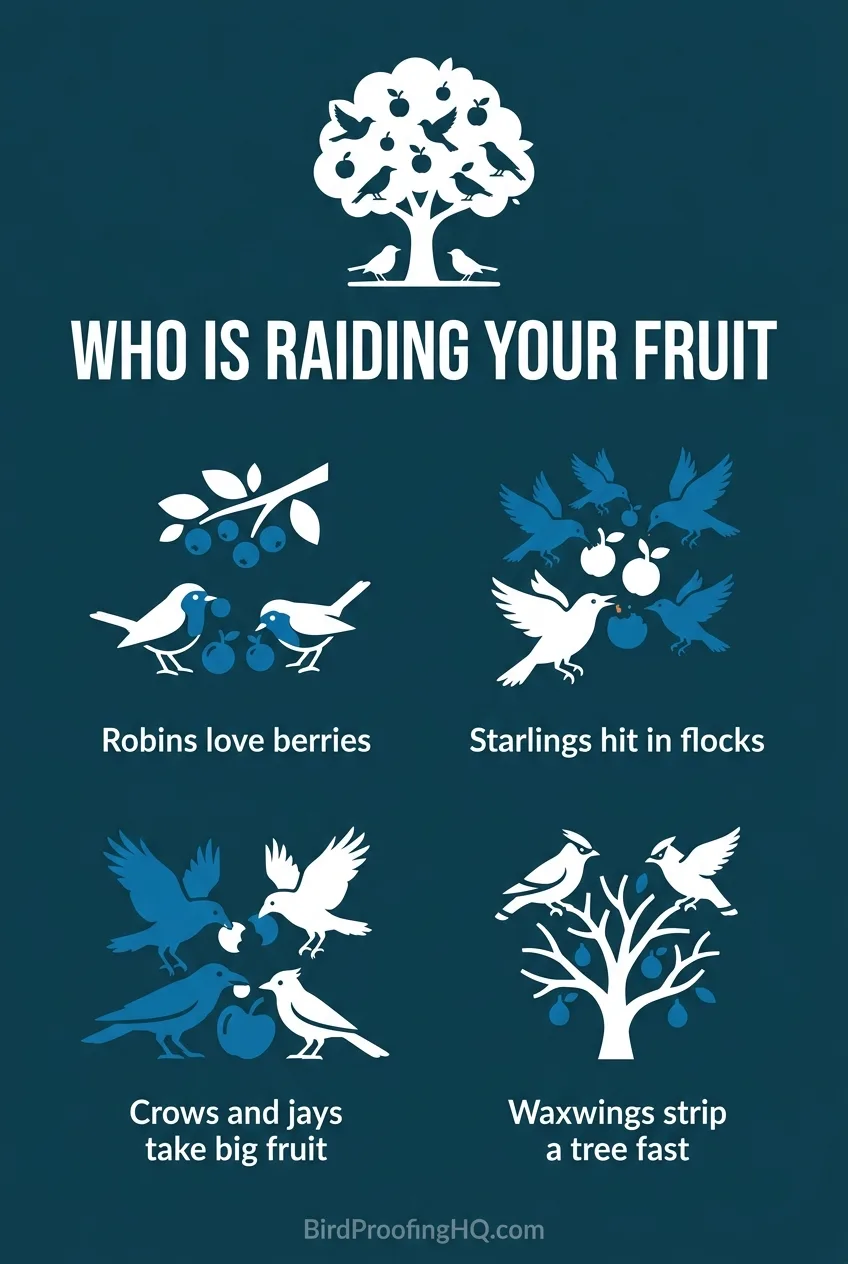
Robins and other thrushes go straight for cherries and berries. Starlings arrive in flocks and can clear a tree in a day, so they are the ones netting really pays off against. Crows and jays take bigger fruit and are smart enough to ignore static scares, so rotation matters most with them. Cedar waxwings travel in tight flocks and strip a fruiting tree astonishingly fast, often before you even notice them.
Whatever the bird, the law does not change. Nearly all of these are native species protected under the Migratory Bird Treaty Act. The goal is always to deter and exclude them, never to harm them.
Keep the Harvest for Good
The best plan is a mix you keep fresh: the netting doing the heavy lifting, reflective scares moved every few days, ripe fruit picked promptly, and windfalls cleared. Add a decoy or some sound if the pressure is heavy, and rotate everything so the birds never settle in.
Do that and you keep most of the crop without hurting a single bird. For the wider yard, the bird deterrents guide rounds out the toolkit, and the bird-by-bird hub covers every species you might run into.
Images: Blackbird eating a cherry by stanze, CC BY-SA 2.0, via Wikimedia Commons. Infographics by BirdProofingHQ.
.jpg)
Free: The 5-Step Bird-Proofing Checklist
Work through the right steps in the right order, before spending money on the wrong deterrents. Printable PDF, straight to your inbox.
No spam. Unsubscribe any time.