Why Do Woodpeckers Peck Wood? Drumming, Feeding, and Damage Clues
Contents[hide]
- 1. Why Do Woodpeckers Peck Wood?
- 2. Why Woodpeckers Like Loud Noise: Drumming
- 3. How Do Woodpeckers Peck Without Hurting Themselves?
- 4. Feeding: Insects, Sap, and Bark Disturbance
- 5. Cavity Excavation: Nests and Roosts
- 6. Food Storage: The Acorn Woodpecker Exception
- 7. Tree Damage: When to Watch and When to Call an Arborist
- 8. How to Prevent Woodpeckers From Damaging a House
- 9. The Legal Line You Can’t Cross
- 10. Frequently Asked Questions
Quick Answer
Woodpeckers peck wood for four reasons: drumming to communicate and defend territory, feeding on wood-boring insects and sap, excavating a nest or roost cavity, and, in a few species such as the acorn woodpecker, storing food. Sound, location, and hole shape are clues, not proof by themselves. Rapid hammering on metal surfaces is usually drumming rather than an infestation. A round, growing hole could be an active nest, protected by law until you know for sure.
In this article, you'll learn why woodpeckers peck wood and what the marks mean. We'll cover drumming clues, feeding damage, and next steps.
Why Do Woodpeckers Peck Wood?
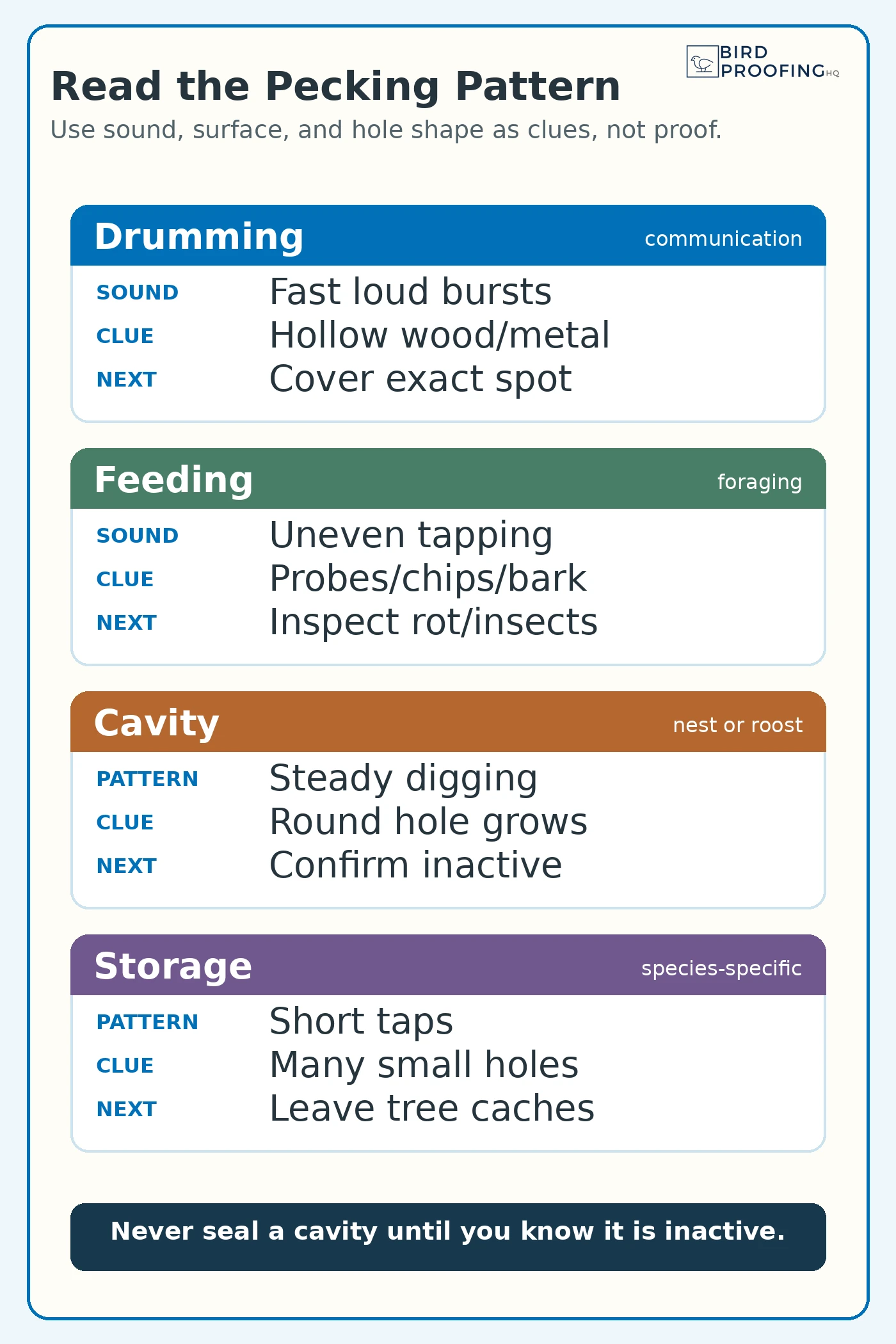
Woodpeckers peck wood, and sometimes metal or roof surfaces, for four main reasons: drumming as a mate signal and territory marker, feeding on wood-boring insects and beetle larvae under the bark, excavating a cavity for a nest or roost, and, in a handful of species, storing food. The table below matches sound and location to the likely reason, but the patterns are clues, not proof. Confirm before touching anything that might be an active nest.
| Sound | Location | Likely Reason | Next Move |
|---|---|---|---|
| Rapid, resonant bursts; little to no hole | Metal flashing, gutters, roof, chimney caps, hollow siding | Drumming (mate signal, territory) | Identify the surface, dampen or cover it |
| Irregular, softer tapping; scattered marks, or neat rows on live bark | Tree bark, wood trim, siding | Feeding (insects, larvae, sap) | Inspect the wood for insect activity or rot |
| Steady digging over several days; round hole that grows | Dead or dying tree trunks, eaves, siding | Cavity excavation (nest or roost) | Stop work at that spot; confirm occupancy first |
| Repeated short taps across many spots; small holes, sometimes holding acorns | Bark crevices, utility poles, occasionally trim | Food storage (acorn woodpecker) | Leave it alone on a tree; exclude the surface on structures |
A strike site can shift categories over time, so recheck it if the pattern changes.
Why Woodpeckers Like Loud Noise: Drumming
Woodpecker drumming is the fast, rattling burst of taps heard across a yard, often in early morning. It is a mate signal and territory marker, not feeding behavior. Most birds communicate mainly with calls, but these birds also use pecking sounds. A woodpecker looking to attract a mate seeks whatever surface produces the loudest resonance. A northern flicker may choose a chimney cap, vent, gutter, or telephone pole because the loud noise carries farther than tapping on a solid trunk.
This pounding on a house does not by itself mean insects live in the siding; the woodpecker may simply have found the property’s loudest object. Cornell Lab of Ornithology notes that birds hammering on houses are frequently signaling territory, and the behavior increases during spring breeding and nesting season.
Communication bouts are short and repeated, leaving little physical damage because the woodpecker is not trying to excavate. A bird that pauses after each burst, as if listening for a reply, is likely communicating rather than trying to enter the material.
How Do Woodpeckers Peck Without Hurting Themselves?
A woodpecker handles repeated impacts through several adaptations working together, not one magical shock absorber. Its compact skull and brain arrangement, strong neck muscles, straight posture, and specialized tongue-support system help control each strike. The hyoid bones supporting the woodpecker tongue curve around the skull and anchor near the nostrils. That long tongue can reach beyond the bill, and its barbed or sticky tip helps extract prey. Cornell Bird Academy explains how these features let the birds peck, probe, and pull insects from narrow galleries.
Feeding: Insects, Sap, and Bark Disturbance
Feeding pecking sounds different from communication: irregular, softer tapping with pauses as a woodpecker searches a trunk or trim for insects, beetle larvae, or sap. This pecking behavior leaves scattered marks, small chips, and shallow probes rather than one deep hole.
This activity is a clue, not proof, that wood boring insects are present. A woodpecker probing the same spot repeatedly justifies a closer look at the material underneath, especially if it is soft, damp, or damaged. The birds may also be general foraging with no infestation behind the pecking, so inspect rather than assume.
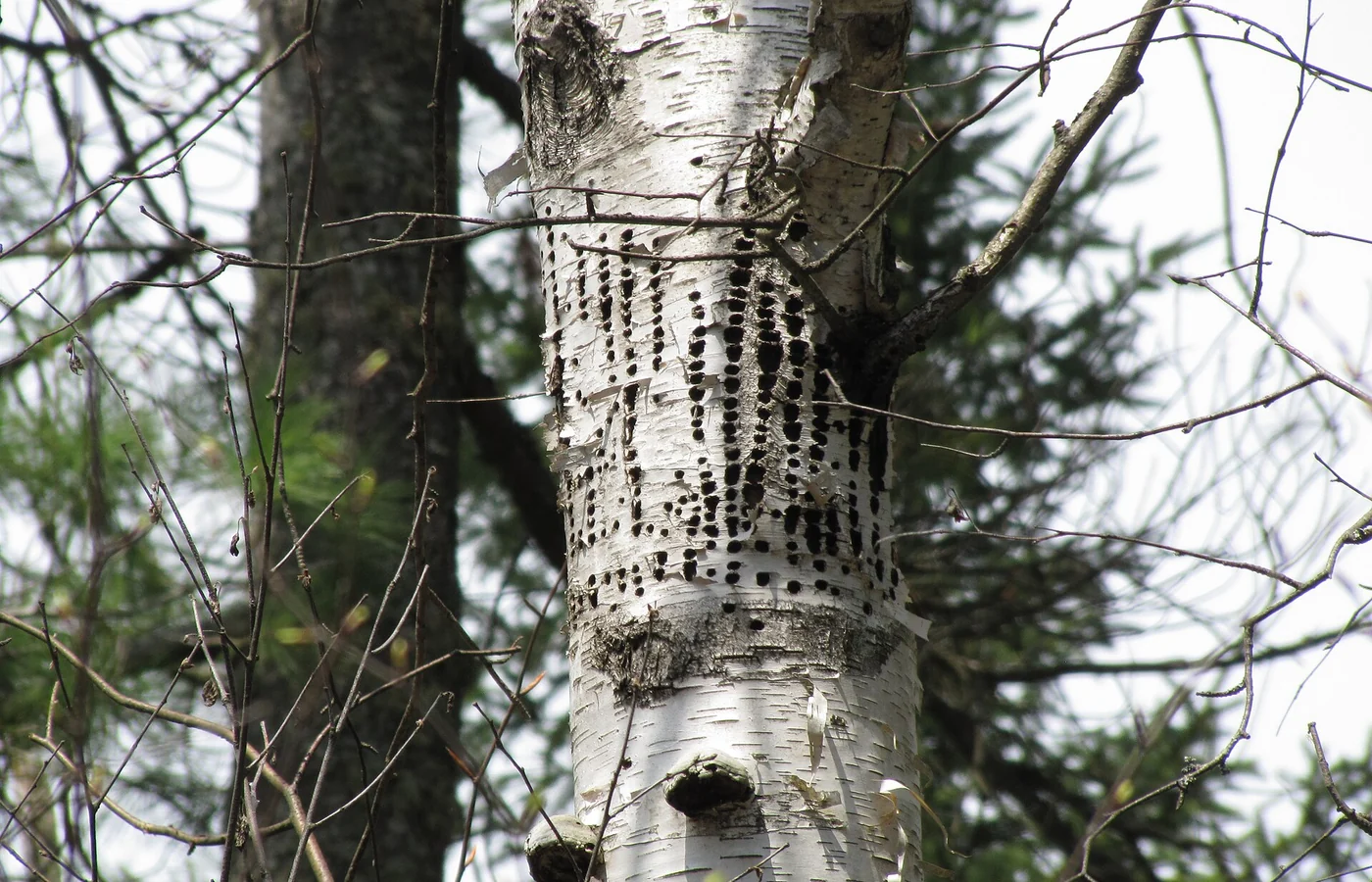
One feeding pattern is distinct enough to name on sight: yellow-bellied sapsuckers and a few relatives drill neat horizontal rows of shallow holes into living tree bark, then return to drink the sap and eat the insects it attracts. Cornell Lab’s sapsucker page covers the pattern. Occasional rows rarely threaten a healthy tree, but heavy, repeated drilling in one area can stress it and open a path for disease.
If you find soft, crumbling wood or small exit holes typical of wood-boring beetles, fix that underlying issue directly. It’s usually more effective long-term than trying to deter the bird alone.
Cavity Excavation: Nests and Roosts
Cavity excavation is the most consequential category, because a hole in progress can turn into a nest. Many species dig cavities in dead or dying trunks, which are easier to hollow and more likely to hold insects. The pileated woodpecker makes some of North America’s largest openings. After a woodpecker leaves, other birds such as owls and ducks may use the cavity for years. These birds depend on old excavation sites because they cannot create the same shelter themselves.
If a round hole is forming on a tree trunk, an eave, or wood siding, stop and observe before doing anything else, especially during nesting season. Listen for chick calls, watch for adults entering and leaving on a pattern, and check for fresh wood chips below the hole, a sign of active digging rather than an abandoned cavity. An active nest or roost should not be sealed, removed, or disturbed.
Food Storage: The Acorn Woodpecker Exception
One behavior gets misapplied to woodpeckers as a group, and it shouldn’t be. Acorn woodpeckers, found in oak woodlands across the western United States, drill small storage holes into tree bark, utility poles, and occasionally wooden structures, then wedge acorns into each hole one at a time. A tree used this way, called a granary tree, can hold a large number of these pits, built up over generations of the same family group.
Cornell Lab’s acorn woodpecker page describes the cooperative, multi-generational nature of granary trees. Outside acorn woodpecker range, or when you see one large round cavity rather than small pits packed with nuts, you’re most likely looking at excavation or feeding instead.
If an acorn woodpecker has chosen a building instead of a tree, exclude that surface rather than removing the cache, which often just moves the activity a few feet over.
Tree Damage: When to Watch and When to Call an Arborist
Weigh what you see against the tree’s overall condition, not just the pecking itself. A healthy tree with light, scattered activity, a little bark disturbance here, an occasional drumming session there, usually just needs observation. Note the date and area so you can tell later if things have changed.
A dead or dying section of a tree is different. Woodpeckers are drawn to it because it holds more insects and is easier to excavate, so heavy activity there is expected rather than a new problem you caused. Dead limbs can also make good cavity sites, so removing them without checking for occupants risks destroying an active nest.
Call a certified arborist when damage is extensive across a large area of trunk, the tree’s structural integrity looks compromised, or the tree is already declining from drought, root damage, or disease. An arborist can tell you whether the activity reflects an existing insect or decay issue worth treating, or whether the bird is simply taking advantage of dead wood.
How to Prevent Woodpeckers From Damaging a House
Photograph the exact strike site and note the surrounding material, then listen: rapid, resonant bursts point to drumming, softer irregular tapping points to feeding, and a steady rhythm of digging over several days points to a cavity in progress. None of these are certain on their own.
Inspect siding and trim for moisture and insect damage. Soft, water-damaged wood can attract wood-boring insects, which in turn attract woodpeckers; the bird is often a symptom of compromised wood, not the root cause. Check the attic or interior only if you can do it safely, looking for daylight through a wall or soffit, sawdust on insulation, or sounds of movement.
The most durable response is physical exclusion: bird netting or metal flashing at the exact strike site keeps the bird from landing and pecking there. Reflective streamers can help, but results vary. Cornell reports that streamers eliminated damage at about half the tested sites, while plastic owls and distress calls lost effectiveness as birds became used to them. Burlap can temporarily cover a damaged tree area. Move visual deterrents regularly and pair them with repair or exclusion rather than treating them as a permanent fix. The Cornell Lab guide to house hammering covers those trade-offs; see how to get rid of woodpeckers for a fuller breakdown by damage type.
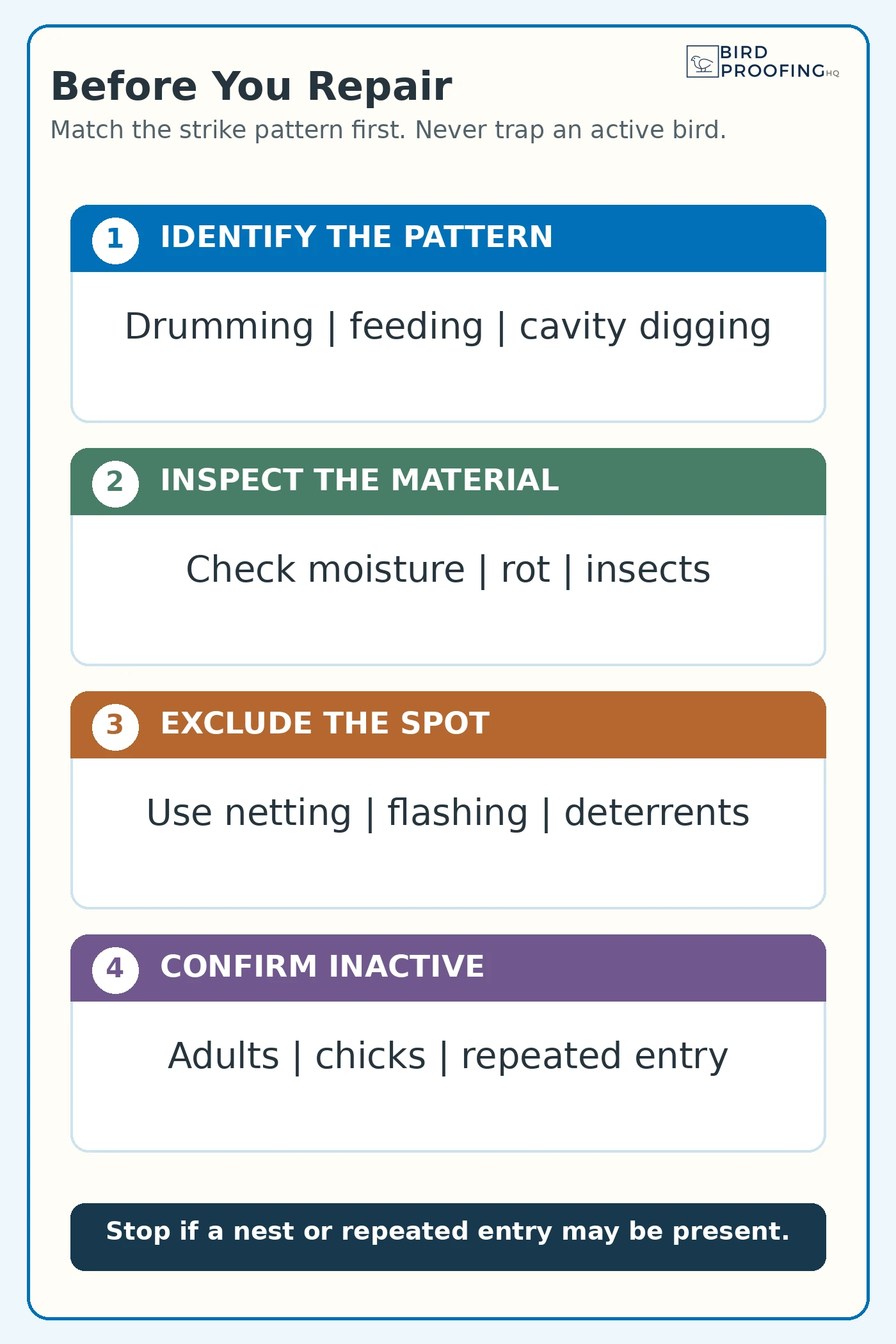
Don’t seal a hole or use sticky gels, poison, or traps until you’re sure no bird, nest, eggs, or chicks are using the spot; repairing too early risks trapping a bird or destroying an active nest.
The Legal Line You Can’t Cross
Nearly every native woodpecker species in the United States is protected under the federal Migratory Bird Treaty Act, which covers the birds and extends to active nests, eggs, and chicks, particularly during nesting season. You cannot legally disturb an active nest, remove eggs, or capture or harm a woodpecker, even one damaging a house or tree you care about.
Patience matters throughout the diagnostic process above: a round hole that turns out to be an active nest is off limits until the birds finish using it on their own schedule. The US Fish and Wildlife Service’s overview of bird nests and the law explains what counts as an active nest and what the law allows. When in doubt, wait, watch, and consult a wildlife professional.
Frequently Asked Questions
Should I Let a Woodpecker Peck My Tree?
Often yes, if the tree is otherwise healthy and the activity is light and scattered. That pattern usually points to normal feeding or an occasional drumming perch, not a tree in trouble. Watch for a change: heavy excavation in one area, a large round cavity, or a tree that’s already declining. Those signs are worth a call to a certified arborist, since the bird may be responding to real insect activity or existing decay rather than causing it.
What Time of Day Are Woodpeckers Most Active?
Woodpeckers tend to be most active in the early morning, with activity often picking up again later in the day. Drumming for territory and mates tends to be more frequent during breeding season. If you’re trying to catch a bird in the act to confirm a strike site on a house, morning is generally the better window to watch or listen, though timing varies by location and species.
What Does It Mean When You See a Woodpecker Pecking?
It depends on the sound and the spot. Rapid, resonant drumming on metal, a roof, or a chimney cap is usually a territory or mate signal rather than feeding. Scattered pecking or neat rows of small holes in bark or wood siding can point to feeding, and sometimes to insects living in the wood, though it isn’t proof on its own. A larger, growing round hole is more serious, since it can be the start of a nest or roost cavity.
How Do You Stop a Woodpecker From Pecking on Your Wood?
Identify the exact strike site, then cover it with bird netting, metal flashing, or another physical barrier the bird can’t grip. A reflective deterrent placed exactly at that spot and moved every few days can help, but isn’t a guaranteed fix on its own. Check the wood for moisture or insect damage that might be drawing the bird in, and address that directly. Don’t seal a hole until you’re sure no bird, nest, eggs, or chicks are inside, since most woodpeckers are protected under the Migratory Bird Treaty Act.
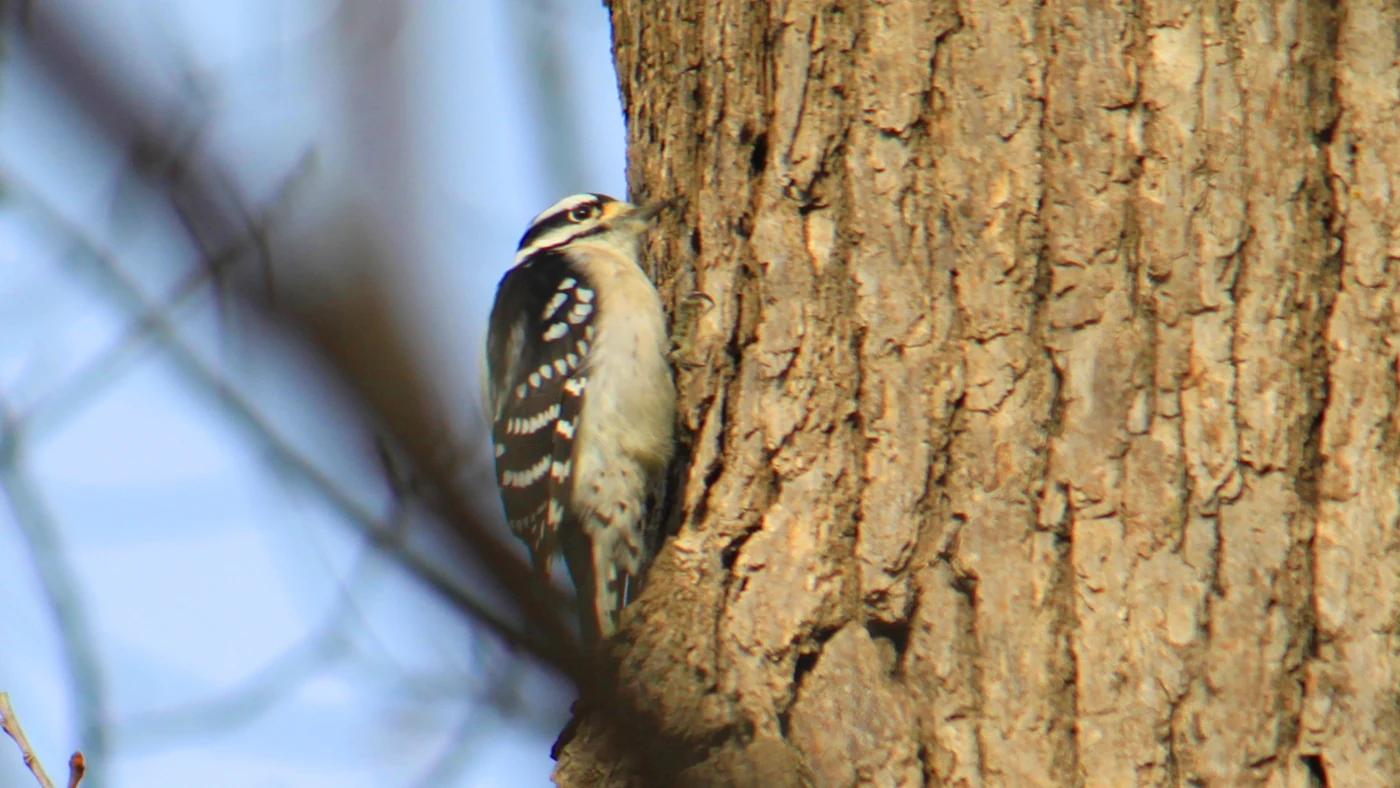
Featured image: Downy Woodpecker Pecking on a Tree by Dwight Burdette, licensed under CC BY 3.0. Sapsucker-hole image: Seney National Wildlife Refuge by Seney Natural History Association, credited to Sara Giles/USFWS, licensed under CC BY-SA 2.0. Diagnostic graphics by BirdProofingHQ.

.jpg)
Free: The 5-Step Bird-Proofing Checklist
Work through the right steps in the right order, before spending money on the wrong deterrents. Printable PDF, straight to your inbox.
No spam. Unsubscribe any time.