Bird Netting for Blueberries: Mesh, Frame, and Harvest Access
Contents[hide]
Quick Answer
To protect blueberries from birds, stretch bird netting over a frame so the mesh stays off the bushes, then seal every edge. Install it after flowering so bees can finish pollinating, and check it regularly for gaps or trapped wildlife.
In this article, you'll learn how to protect blueberries from birds while preserving harvest access. We'll cover mesh selection, support frames, and harvest access.
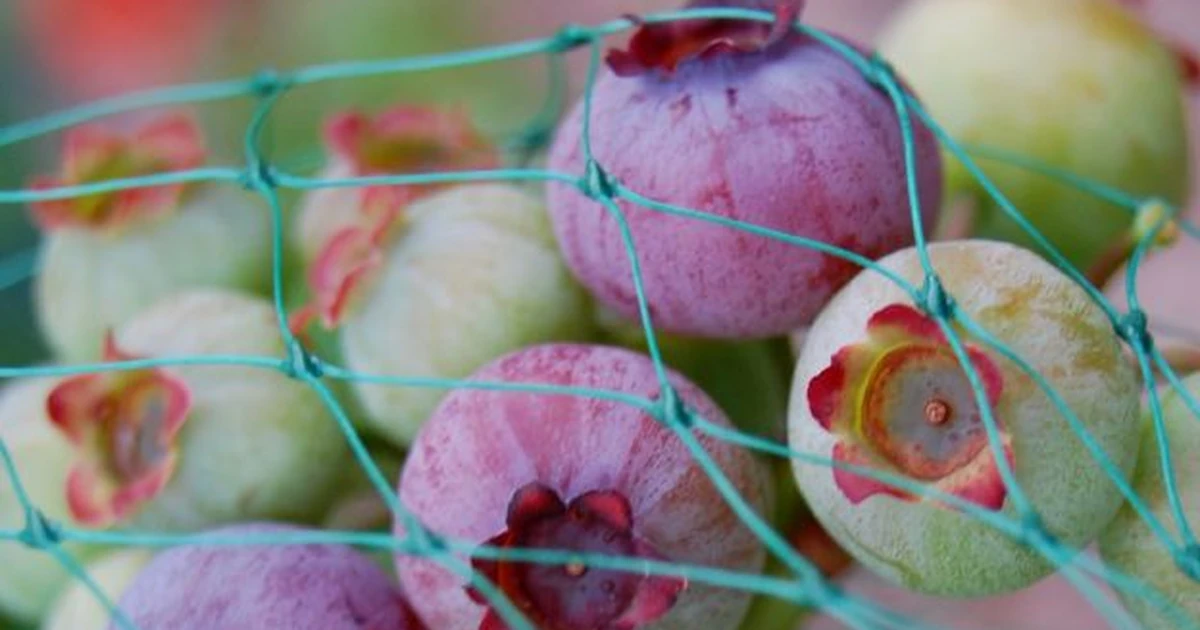
How to Tell Bird Damage From Other Blueberry Problems
Vanishing blueberries feels like a bird problem, and it often is, but check first. Bird damage usually means whole berries missing from the top and outer branches. Those are the parts birds can reach easily.
Fruit deep inside the plants often stays untouched. You may also spot droppings on the leaves or catch birds feeding at dawn.
Squirrels tell a different story. They strip whole clusters and leave bare stems behind, while deer browse leaves along with the fruit. Splitting or rotting berries still on the bush point to a growing problem.
No amount of netting fixes that. Sorting this out first keeps you from building a frame that can’t solve the problem you have.
Blueberry Netting: Mesh Size and Material
For bird netting for blueberries, 3/4-inch mesh is the safe default. Robins, catbirds, and cedar waxwings are the birds most likely to be after your blueberries. They are small enough to slip through anything bigger.
Sizing for the smallest culprit keeps the larger birds out too. Buy enough netting to overlap every seam. Choose a durable, UV-stabilized material you can reuse for years. Pick a color you can see against the foliage, so a tear does not go unnoticed.
Scare devices like reflective tape and decoys can buy you a little time, but blueberries ripen over weeks. That gives birds plenty of time to learn that a static object is harmless.
Blueberry netting is the more dependable solution because it keeps a physical barrier between birds and ripe blueberries. It continues to protect the plants after birds get used to the yard. For a few blueberry bushes, a lightweight frame is enough. Larger plantings need a stronger structure that keeps the blueberry netting tight and makes the berries easy to reach.
If you also protect cherries, grapes, or other fruit crops, compare netting materials and mesh sizes before buying one roll for every crop.
Before you buy a roll, measure the frame’s length and width. Then add material to reach the ground on every side. Netting comes in fixed sizes, so round up rather than leave a short edge.
Cut it only after a test drape. Keep the mesh clear of rough wire ends. Secure it with reusable clips along the frame, plus stakes or bricks at the ground.
Before you walk away, check three details: enough overlap at every seam, a tight edge at the ground, and clips where wind can lift the mesh.
A Frame Keeps Bird Netting Off Blueberry Bushes
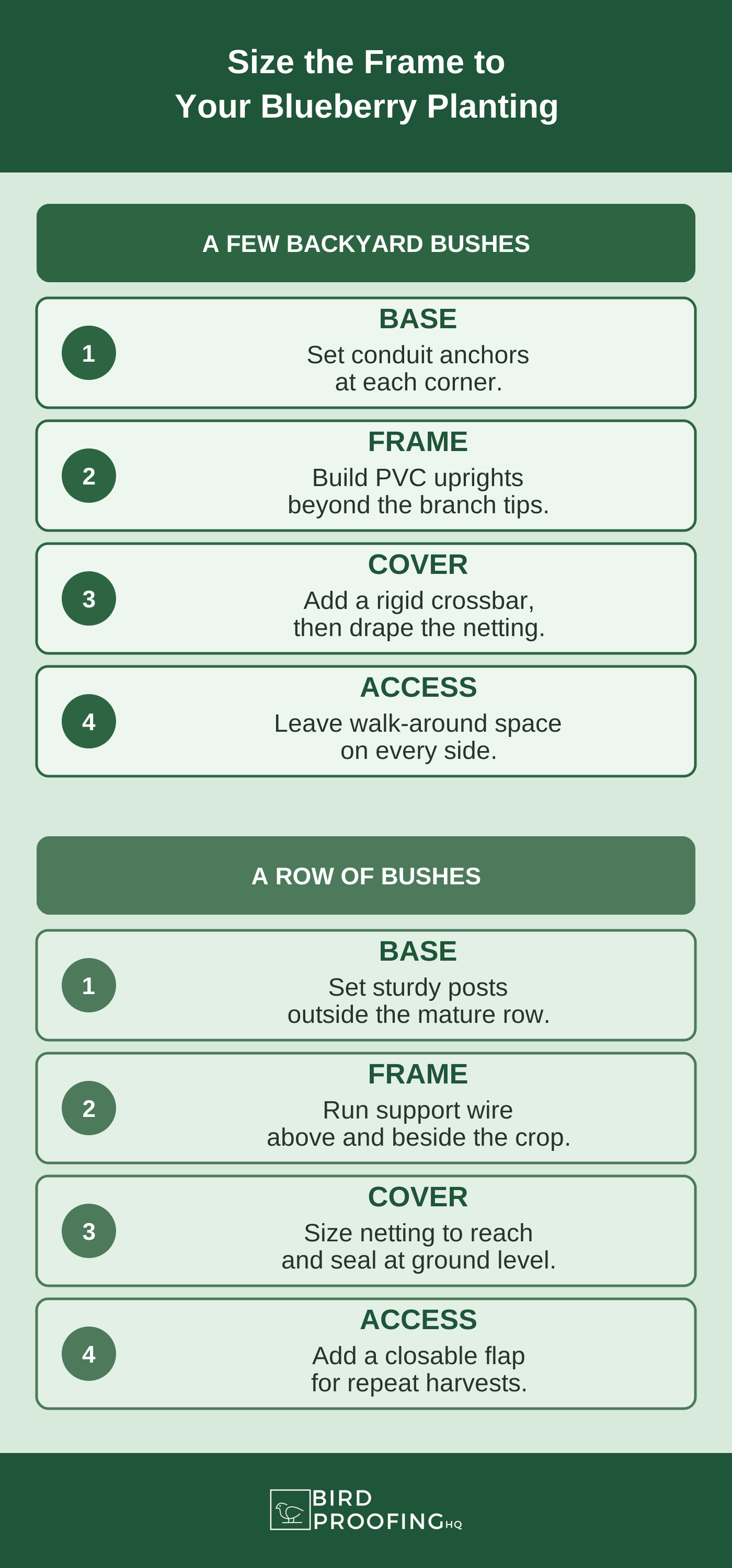
Bird netting draped straight onto bushes lets birds peck fruit through the mesh. It also snags on shoot tips when you cut it loose or remove it. A frame holds the netting clear of the plants and solves both problems. Size it for how much you are growing.
For one bush or a small cluster, Clemson Cooperative Extension’s Home & Garden Information Center describes a reusable frame. Drive 1-inch metal conduit anchors 8 inches into the ground at each corner. Cut half-inch PVC about a foot wider than the bush on every side, and add a crossbar for rigidity.
Build it at least 7 feet tall for a mature planting. Stake the netting to the ground near the end of flowering.
Start with the mature size of the bushes, not their size today. A young bush growing into an undersized frame becomes next season’s problem. Measure all sides, add working room, and place the frame outside the branch tips.
Then choose netting pieces large enough to cover the top and reach the ground without stretching. An irregular planting may need two overlapping pieces. Fewer seams make it easier to keep the cover fully closed. The goal is to keep birds out without making harvest a chore.
A full row needs a sturdier structure. Set long, pressure-treated posts deep enough to resist wind and frost heaving. Space them evenly down the row. Cross support wire between them rather than running it down the middle.
Michigan State University Extension’s Mark Longstroth, answering a question on a 3,000-plant Ontario planting, recommends multiple support wires. Tie the netting between them instead of resting it on one wire. Netting on a single wire snags shoot tips and tears the crop on removal. Build it high enough for mature bushes, with room to walk underneath while picking.
Whichever frame you use, keep the mesh far enough from the fruit that birds cannot perch on it and peck through to berries. Leave a little extra room for the plants to keep growing. Install it a line at a time and secure the netting as you go.
Do not drape a long loose section across the bushes while you work. Loose netting is a snag hazard and a wildlife risk. Keeping it taut is worth the extra care.
When Blueberry Netting Should Go Up
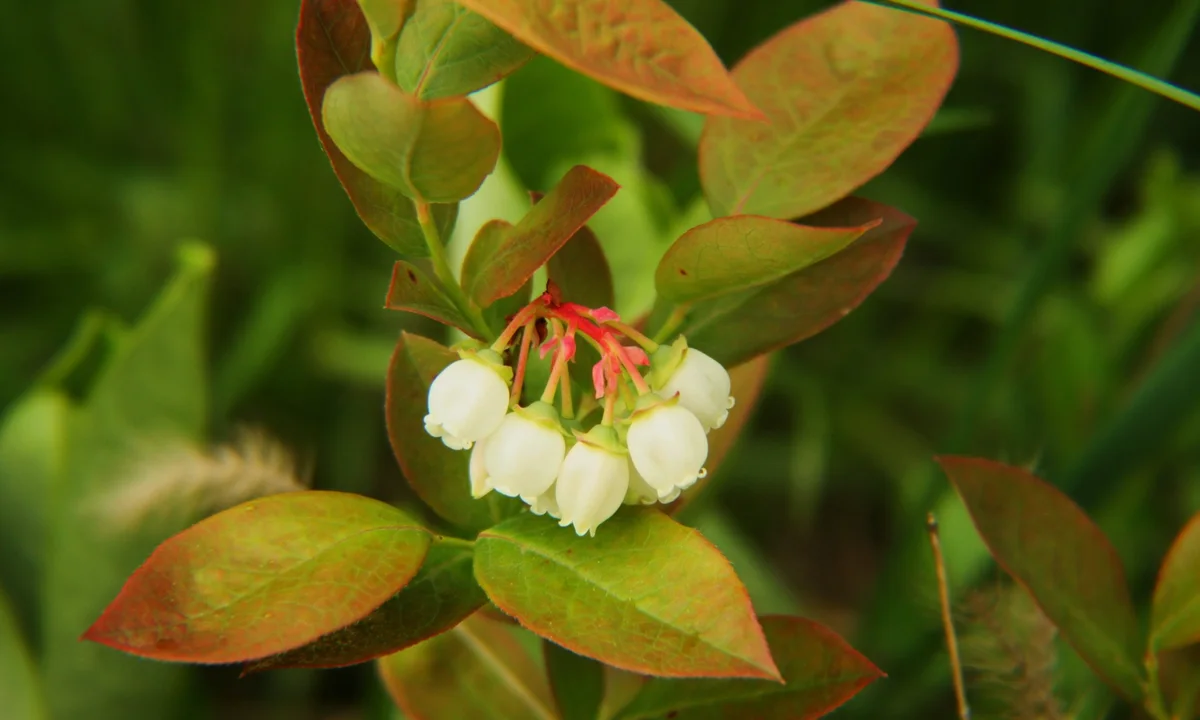
Blueberry flowers need bee visits to set fruit. Bumblebees and other native specialist bees perform buzz pollination that honeybees cannot manage. NC State Extension’s pollinator program notes that each flower needs dozens of pollen grains for a full-sized berry. Bushes sealed off during bloom simply produce less fruit.
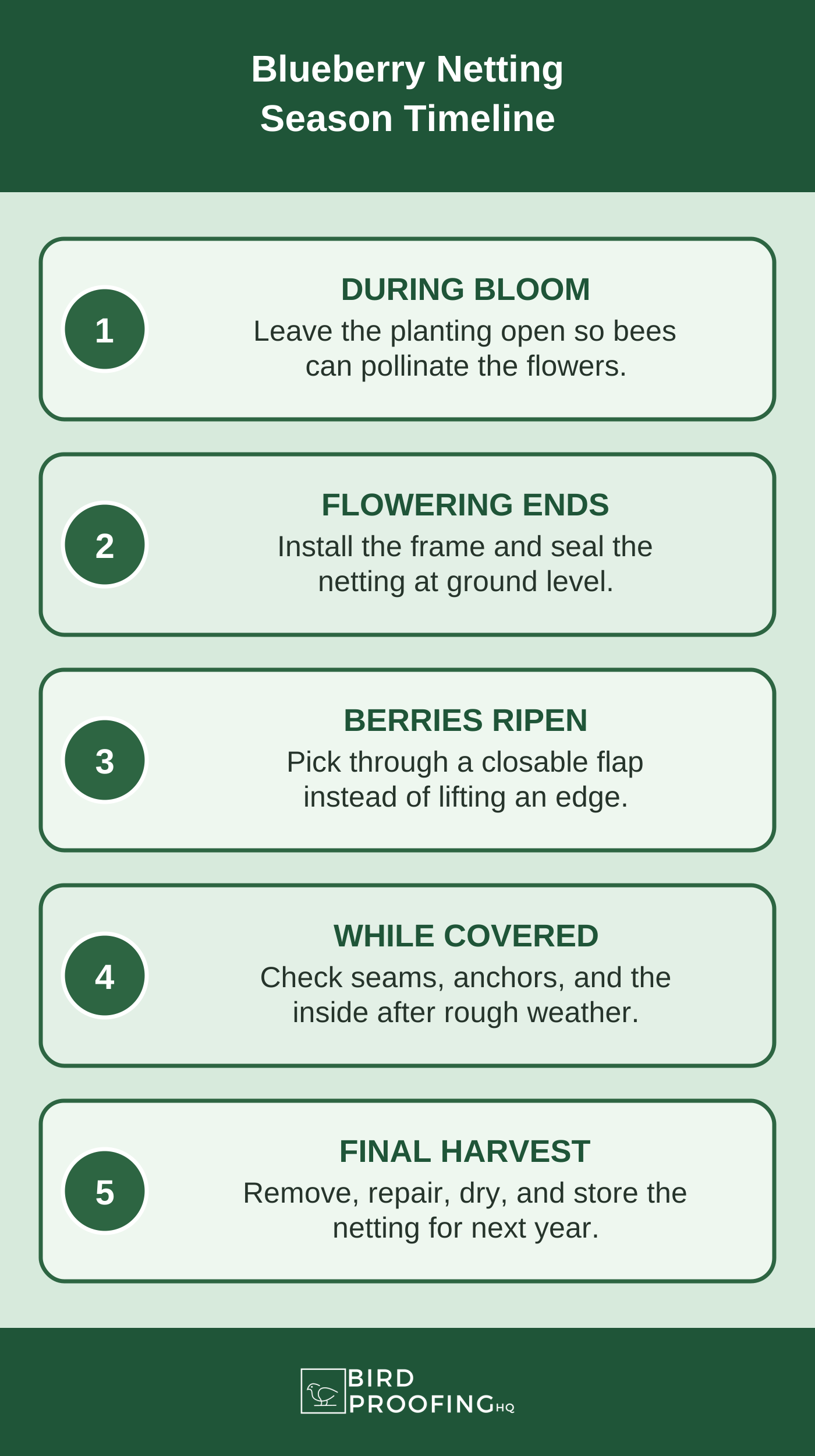
Leave the planting open through flowering. Close the barrier when the last blossoms drop and the first berries begin to color. Bloom timing shifts by region and variety, so watch your own bushes instead of a calendar date.
Have the frame built and ready before that point arrives. Once the netting goes up, leave it up through the ripening window. Blueberries do not all color at once.
Harvest Access Makes Blueberry Netting Easier to Check
A planting ripens over weeks, so you will be back picking again and again. Make repeat harvest easy. For a small framed bush, build in one flap you open, pick through, and reseal completely, even for a quick check.
For a row system, height is the access plan. You can walk or crawl under and pick from inside instead of removing the cover.
Walk the full length of the planting at least weekly, and again after wind or heavy rain. Check the ground seal first. Then look for sagging panels or a slack wire that lets the mesh drop onto the plants. It is an easy fix if you catch it early.
Keep the perimeter secure. Repair small holes or tears as you find them, since an established gap keeps drawing birds back.
Taut, well-sealed bird netting rarely traps birds, but sagging sections can. A bird loose inside but not caught in the mesh usually leaves once you open the access point and step back.
If one is tangled or hurt, do not free it yourself. Contact a licensed wildlife rehabilitator or your state wildlife agency.
The U.S. Fish and Wildlife Service recommends this route for any tangled or injured wild bird. Handling can worsen an injury you cannot see.
Once you have picked the last berries of the season, take the netting down. Rinse off debris and let it dry before you store it. Netting that goes into winter clean and free of tears is ready to go back up next year. It will not need replacing.
Bird Netting and the Legal Limits
Excluding birds with netting does not run into the same limits as harming them does. Native songbirds that commonly raid blueberry bushes are protected under the Migratory Bird Treaty Act. The law bars killing, capturing, or harming them without a permit.
That protection does not extend to every bird. European starlings are non-native and are among the common exceptions. This overview of which birds federal law protects explains the difference.
A well-built frame and netting keep protected and unprotected species out just the same. There is no need to touch either one.
Give the branches one last inspection before closing the frame. If you find eggs or chicks, wait until they have fledged before sealing off that section. Check with your state wildlife agency if you are not sure it is safe to move ahead.
Local rules can add another layer on top of federal ones. When in doubt, ask before you net.
Images: blueberries under netting by Vicky Brock, CC BY-SA 2.0; blueberry flowers by Jason, CC BY 2.0. Photos were cropped and resized. The frame-sizing and netting-timeline graphics are original BirdProofingHQ visuals.


Free: The 5-Step Bird-Proofing Checklist
Work through the right steps in the right order, before spending money on the wrong deterrents. Printable PDF, straight to your inbox.
No spam. Unsubscribe any time.