In this guide7 sections
Quick Answer
No. House Sparrows are not protected by the federal Migratory Bird Treaty Act because they are nonnative and human-introduced. State, local, and property rules can still apply, and native sparrows are protected, so identify the bird first.
In this article, you'll learn what federal law allows with House Sparrows. We'll cover telling them apart, rules beyond federal law, and humane nest timing.
What Federal Law Says About House Sparrows
The Migratory Bird Treaty Act is a federal law that protects wild birds. After a 2004 reform, the Act applies only to native species. The U.S. Fish and Wildlife Service (USFWS) was required to publish a list of nonnative, human-introduced species it does not cover. The House Sparrow is on that list. USFWS names it among the introduced species outside MBTA protection.
That is where the plain answer ends, and it is also where people get ahead of themselves. Being outside the federal act does not make every method acceptable, and it says nothing about the other birds sharing your eaves. If you want the wider picture for other species, the general rules on protected birds cover it.
Make Sure It Is Actually a House Sparrow
The legal status only helps you if the bird in front of you is the right one. The federal act covers native species, so native sparrows are protected, and a brown bird in a hedge is not enough to go on. Use these marks:
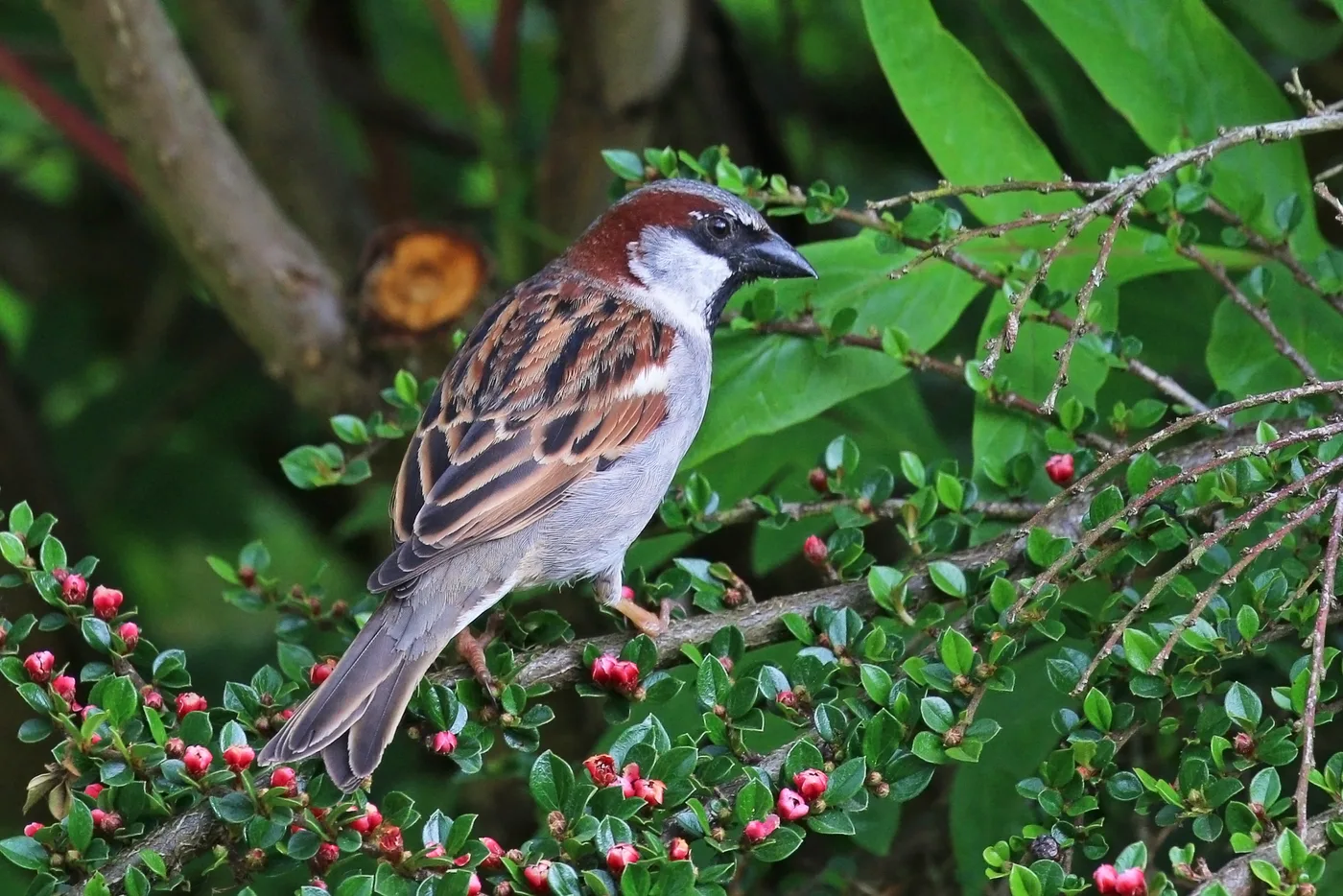
- Male: a gray crown, white cheeks, a black bib, and a chestnut or rufous neck.
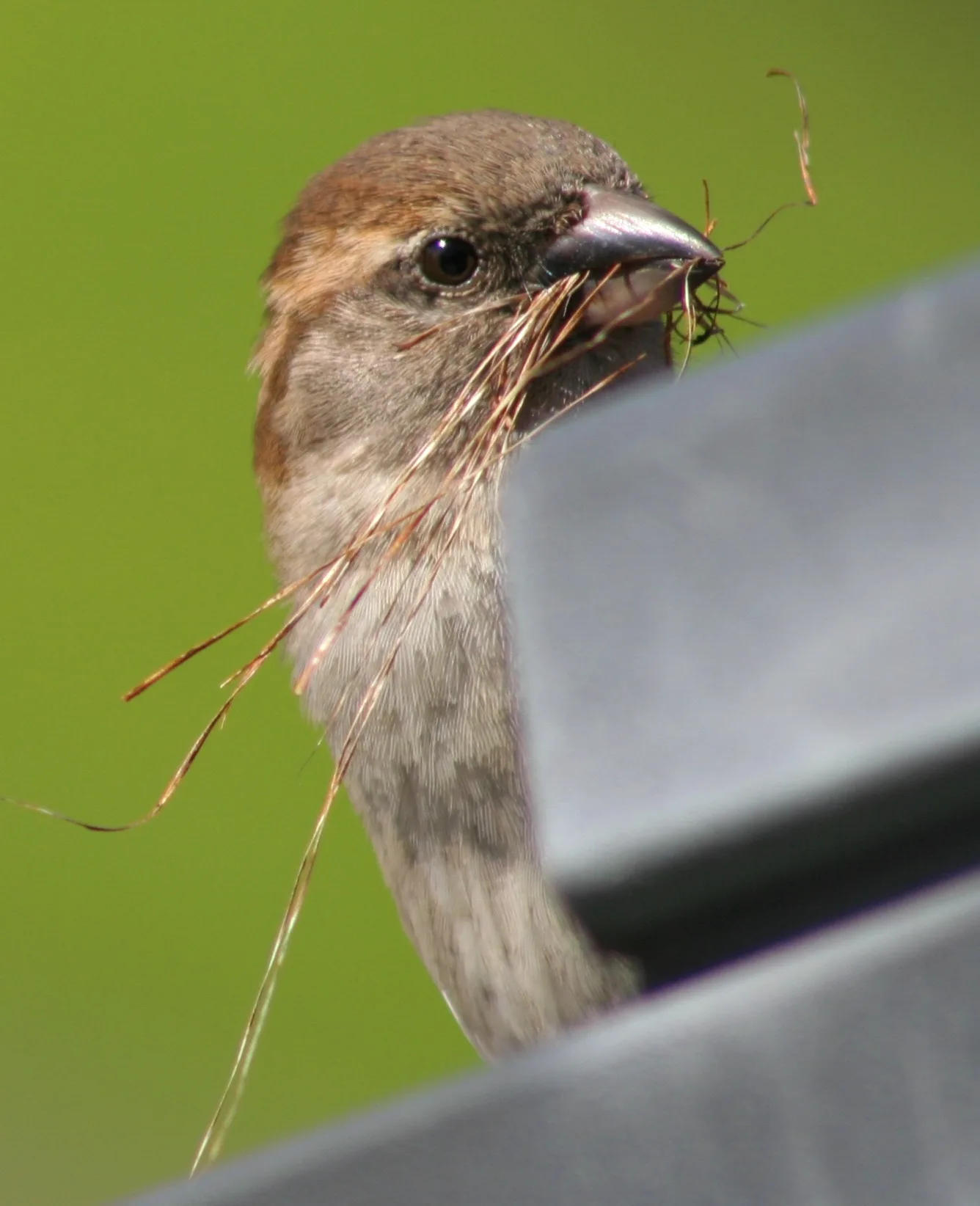
- Female: stocky and buffy-brown, with gray-brown underparts, a striped back, and a broad pale eyebrow. She is the easy one to get wrong, because she looks like a generic little brown bird.
If you cannot say with confidence that it is a House Sparrow, stop. Treat the bird as protected and ask your state wildlife agency or a qualified bird-control professional to identify it.
No Federal Protection Is Not No Rules
Federal law is one layer. State, local, and property rules can still apply, and USFWS listing the species as outside the MBTA is not a statement about any of them.
State and local rules vary by location. Before any hands-on step, call your state wildlife agency and ask whether anything beyond federal law applies to House Sparrows where you live. If you hire a bird-control company, ask them the same question.
Use non-lethal methods. Exclusion physically closes the entry points so sparrows cannot get back in.
Nest Boxes Are a Special Case
Nest-box monitors run into this more than anyone. House Sparrows take over boxes meant for bluebirds, swallows, and other native cavity nesters. Cornell’s NestWatch says that because House Sparrows are exotic and not protected by the MBTA, monitors may legally remove or harass them. It still recommends humane management and correct identification.
Take that second half seriously. Native birds can look similar at a glance, and the legal status above applies only to House Sparrows. Confirm the adult birds before you do anything, and read the NestWatch guidance for its recommended approach.
When to Wait and When to Act
Federal law doesn’t protect House Sparrows, but timing still matters. Humane World recommends letting House Sparrows finish the current nesting cycle when there is no urgent hazard, then excluding them afterward.
That advice fits a nest that looks active. If you see eggs or chicks, or adults still going in and out, the nest is in use. The kindest and simplest move is to wait until the young have left. Once the nest is quiet, you can clear it and close the entry.
If you think a nest is creating an urgent hazard, don’t improvise. Bring in a qualified bird-control professional and tell them what you’ve confirmed about the species.
What to Do After the Birds Have Left
Once you are sure the nest is inactive, the lasting fix is exclusion. That means closing the gap, screening the vent, or covering the ledge so the birds can’t get back in. For tactics, sizes, and products, see House Sparrow removal tactics. The general approach to blocking nest sites is in how to stop birds from nesting.
Here is the order in short:
- Identify the species and, if unsure, get a second opinion.
- Check for eggs or young, and wait out the cycle if there is no urgent hazard. A managed nest box where native birds are at risk is the exception, so use the NestWatch guidance above.
- Remove old nest material only after it is clearly inactive.
- Close the opening once the nest is cleared.
If you would rather hand the whole thing off, a bird-control professional can help confirm the species and install exclusion. Your state wildlife agency can tell you what applies locally.
Images: Male House Sparrow by Charles J. Sharp, CC BY-SA 4.0. Female House Sparrow carrying nesting material by John Haslam, CC BY 2.0. Via Wikimedia Commons. The files were resized and converted to WebP.
Frequently Asked Questions
Are house sparrows protected by federal law?
No. The Migratory Bird Treaty Act was limited to native species in 2004, and the U.S. Fish and Wildlife Service lists the House Sparrow as an introduced species outside that protection. State, local, and property rules can still apply, so check them before you act.
Can I remove a house sparrow nest?
Federal law doesn't protect House Sparrows, but identification and timing still matter. Humane World recommends letting them finish the current nesting cycle when there is no urgent hazard, then excluding them. Don't touch a nest unless you're certain it belongs to House Sparrows.
How do I tell a house sparrow from a protected native sparrow?
A male House Sparrow has a gray crown, white cheeks, a black bib, and a chestnut neck. A female is stocky and buffy-brown, with gray-brown underparts, a striped back, and a broad pale eyebrow. If the bird does not clearly match, treat it as protected and ask your state wildlife agency.
Can I remove house sparrows from my bird boxes?
Cornell's NestWatch says nest-box monitors may legally remove or harass House Sparrows because they are not covered by the Migratory Bird Treaty Act. NestWatch still recommends humane management and correct identification, and state or local rules can still apply.
Free printable PDF
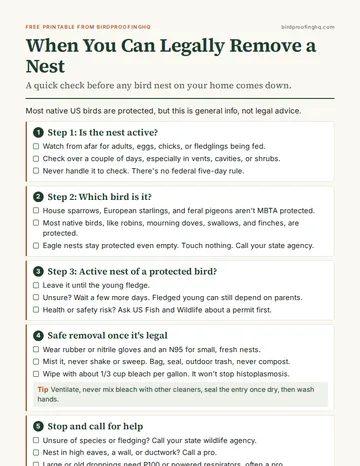
When You Can Legally Remove a Nest
A one-sheet check for active versus empty nests, which birds are protected, and what to do while you wait.
Free. We email it to you right away.