Are Canada Geese Protected? Federal Rules and Permit Basics
Contents[hide]
- 1. Yes, Canada Geese Are Federally Protected
- 2. Resident and Migratory Geese Have the Same Federal Protection
- 3. What You Can Usually Do Without a Federal Permit
- 4. When Nest and Egg Work Requires Registration
- 5. When You Need a Federal Depredation Permit
- 6. State, Tribal, and Local Rules Still Apply
- 7. A Simple Decision Checklist
- 8. Frequently Asked Questions
- 9. Who to Call Before You Act
Quick Answer
Yes. Canada geese are federally protected under the Migratory Bird Treaty Act, and that protection covers resident birds living on the same pond year round just as much as geese that migrate. Non-injurious deterrence and habitat changes are generally fine without a federal permit, but taking a goose or disturbing a nest and eggs needs specific legal authority. For resident goose nest and egg work in the lower 48 states and DC, eligible landowners and local governments can use the federal registration system after registering and checking any stricter state or tribal rules. Other actions may need a federal depredation permit.
In this article, you'll learn whether Canada geese are protected and when permits apply. We'll cover federal rules, nest registration, and state permits.
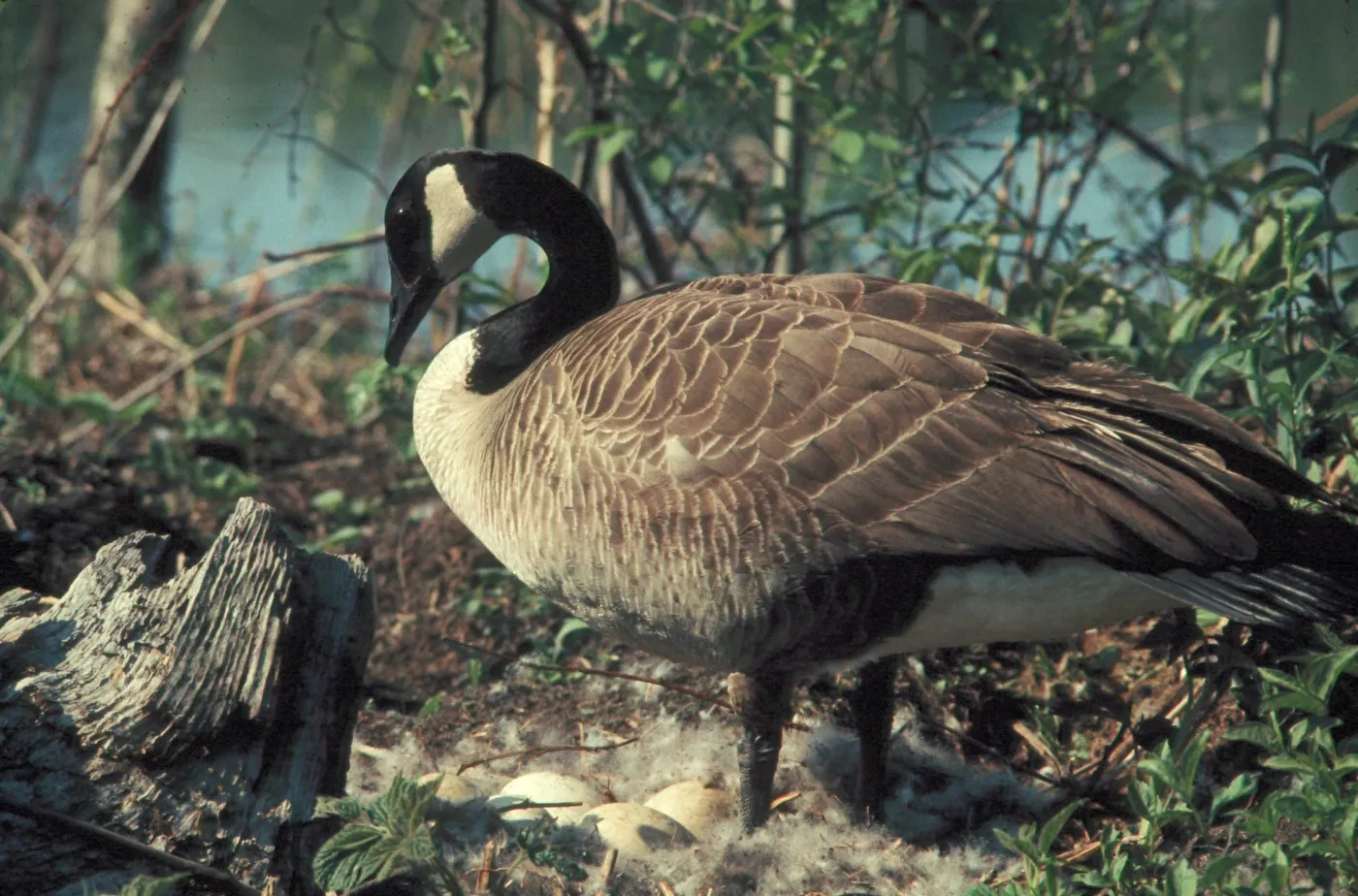
Yes, Canada Geese Are Federally Protected
Canada geese are protected. The Migratory Bird Treaty Act covers nearly every native wild bird species in the United States, Canada geese included, and it prohibits taking a protected bird without specific legal authority (USFWS MBTA overview). Take means killing, capturing, selling, trading, or transporting a bird without permission, and the same protection covers active nests and eggs. You cannot destroy a nest or move eggs just because the birds have become a nuisance.
That does not mean you are stuck living with geese on your lawn. The available tools split into two categories: deterrence that stays legal without paperwork, and nest, egg, or lethal control that needs registration or a permit first.
Resident and Migratory Geese Have the Same Federal Protection
Some Canada geese pass through on a longer journey, while others live on the same pond or office park all year. The federal government calls the second group resident Canada geese, defined for this program as geese that nest or otherwise reside in the lower 48 states and DC (USFWS Resident Canada Goose Registration FAQ). That label does not weaken their protection; resident geese are covered by the Migratory Bird Treaty Act exactly as fully as geese that migrate. The distinction only matters for which federal program applies to nest and egg work.
What You Can Usually Do Without a Federal Permit
Ordinary, non-injurious deterrence is available to almost any property owner without federal paperwork. Hazing geese off a lawn with noise or movement, running a motion-activated sprinkler, changing mowing height, fencing off a pond edge, and using decoys are habitat and behavior changes, not take. Both the New York DEC and the North Carolina Wildlife Resources Commission treat non-contact hazing as a legal option that generally needs no federal or state permit.
The practical line is physical contact or separation. As a welfare and safety rule, use deterrence that does not touch, trap, or corner a goose, and do not split an adult from goslings that cannot yet fly. If a family group cannot leave together, stop and contact your state wildlife agency for situation-specific guidance.
Nesting geese defend their space more than geese that are simply grazing. An adult on or near a nest may hiss, spread its wings, or charge if you get close. Treat that as a signal to back away and give the nest more room, not a reason to escalate hazing. For day-to-day exclusion and habitat changes before a nest ever appears, see how to get rid of geese and how to stop birds from nesting.
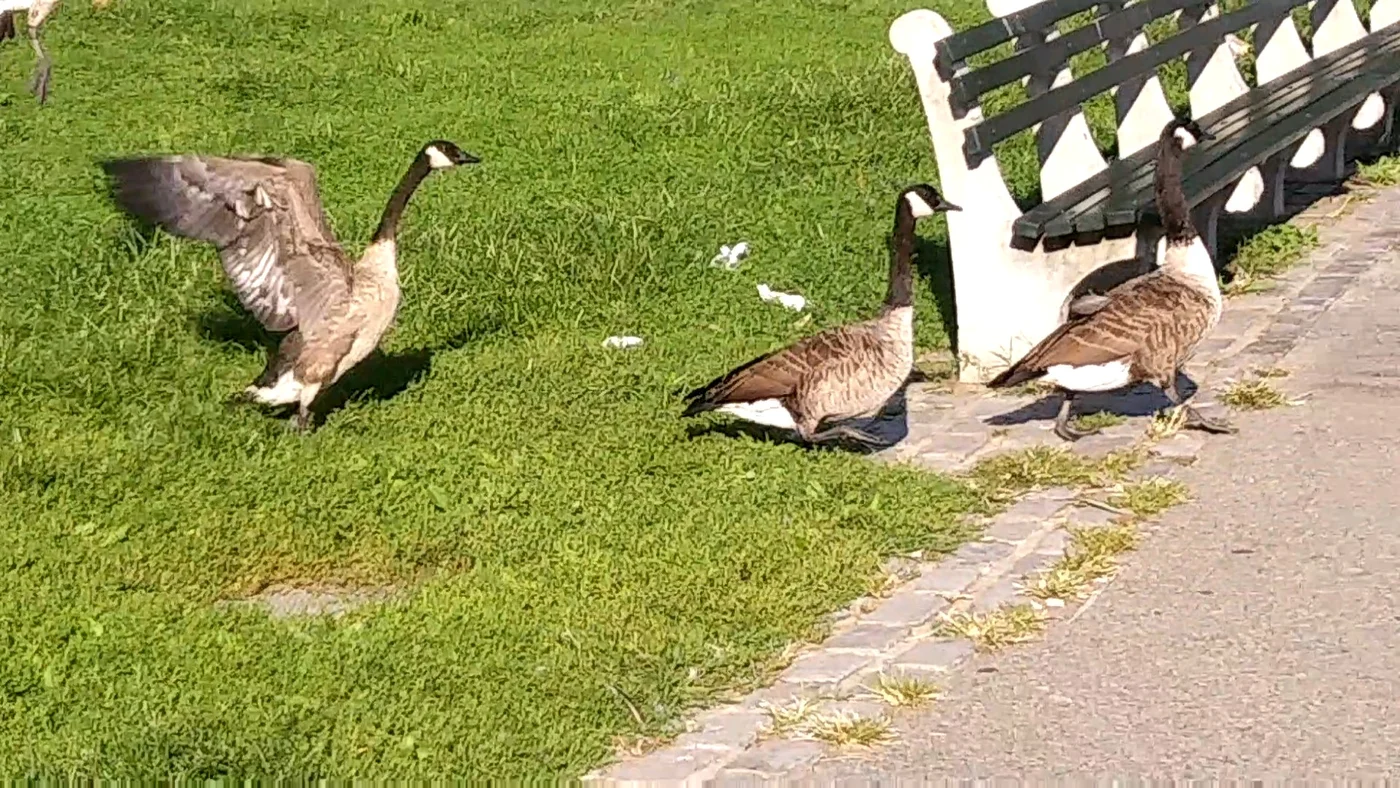
When Nest and Egg Work Requires Registration
Once eggs are in a nest, deterrence alone will not resolve a resident goose that keeps returning to the same spot. Federal law addresses that through the resident Canada goose nest and egg depredation order, currently codified at 50 CFR 21.162. It lets eligible, registered landowners and local governments address resident Canada goose nests and eggs on property under their own jurisdiction when the birds are creating a real problem for people, property, crops, or other interests.
Eligibility is specific: private and public landowners, public land managers, homeowners associations, and local governments. A landowner may name an agent to do the work but stays responsible for how that authority is used (USFWS Resident Canada Goose Registration FAQ). Registration must happen before any work starts, renews annually, has no fee, and carries ongoing reporting duties. Since the exact reporting process can change, check the current confirmation from the federal registration portal rather than an old date from somewhere else. The program also expects nonlethal methods first, wherever realistic.
What it does not cover matters just as much as what it allows. It does not extend to other bird species, authorize killing adult geese, or permit moving a nest or its eggs elsewhere. It does not apply to property you do not own or manage, and it does not waive stricter state, tribal, or local rules.
When You Need a Federal Depredation Permit
Some situations fall outside the nest and egg order entirely, such as taking adult geese or acting under circumstances the registration program does not cover. That kind of lethal control generally requires a standard federal migratory bird depredation permit from the US Fish and Wildlife Service, not just registration (USFWS depredation permit page).
The permit application asks for specifics: the property, the problem the geese are causing, what nonlethal options have failed, and the exact action requested. The agency reviews that evidence and can attach conditions to any permit it issues. This is the point to stop solving the problem alone; contact your US Fish and Wildlife Service regional office or state wildlife agency rather than attempting the work yourself.
State, Tribal, and Local Rules Still Apply
Federal registration or a permit is the floor, not the whole answer. States, tribes, cities, and even your own HOA or park district can layer stricter rules on top of federal law, and you follow whichever rule is more restrictive.
New York shows how this stacks up in practice: all Canada geese there, including resident flocks, are protected under both federal and state law. Non-injurious scaring generally needs no federal or state permit, nest and egg work runs through the federal registration path, and most other lethal control still needs specific authority beyond registration (New York DEC). Treat that as one state’s example, not a nationwide rule, and check your own state wildlife agency before acting.
An injured goose needs a licensed wildlife rehabilitator with the proper state and federal authority, not a well-meaning rescue attempt (North Carolina Wildlife Resources Commission).
Regulated hunting is a separate lane from everything above. States set Canada goose hunting seasons and bag limits within federal frameworks, and that path is for licensed hunters taking birds during an open season, not for a property owner who wants a nuisance flock gone from a lawn or parking lot. If geese are a problem outside hunting season, or on land where hunting is not allowed, the deterrence, registration, and permit routes described in this article are what actually apply.
A Simple Decision Checklist
Match your situation to the right lane before you act.
- Geese are grazing on your lawn or pond, not nesting. Non-injurious deterrence and habitat changes are almost always legal, with no federal permit needed.
- There is an active nest with eggs on your property. Keep your distance and do not touch it. Check whether nest and egg registration applies, and confirm current state rules, before anyone acts. The protected-nest decision guide walks through this same choice across other species.
- A goose looks injured. Do not try to catch or move it. Contact a licensed wildlife rehabilitator or your state wildlife agency.
- A goose is aggressive near a doorway, driveway, or road. Increase your distance rather than confront the bird, and contact your state wildlife agency if it keeps blocking safe access.
- The property is not yours to manage. Bring the issue to the property owner, HOA, or facility manager, and let them pursue registration or a permit if one is needed.
- Someone suggests hunting as the fix. That only applies to licensed hunters during an open season on land where it’s allowed. It is not a nuisance-removal option for a homeowner or business.
Frequently Asked Questions
Are Canada Geese Federally Protected?
Yes. Canada geese, including birds that live on the same pond or park year round, are protected under the Migratory Bird Treaty Act. You cannot kill, capture, or otherwise take a Canada goose, or disturb an active nest or its eggs, without specific legal authority.
Are Resident Canada Geese Protected the Same as Migratory Ones?
Yes. Resident Canada geese, the ones that nest or live in the lower 48 states and DC year round, carry the same federal protection as geese that migrate long distances. The resident label affects which federal program applies to nest and egg work, not whether the birds are protected.
Do I Need a Permit to Scare Geese off My Property?
Generally no. Non-injurious deterrence, like hazing, motion-activated sprinklers, decoys, and habitat changes that never touch a bird or separate it from its young, is usually allowed without a federal permit. Taking a goose or disturbing a nest and eggs is a different matter and needs specific legal authority.
Does Registering Let Me Remove a Canada Goose Nest?
Not automatically. Federal registration for resident Canada goose nest and egg work applies only to eligible registrants, on property they own or manage, for a qualifying resident Canada goose nest, for the purposes stated in the order, and alongside current state and tribal rules. It is not blanket permission to remove any nest you find.
Who to Call Before You Act
Your state wildlife agency is the first call for almost any Canada goose question beyond simple deterrence. They confirm current state rules, point you to the federal registration portal, and tell you when a situation needs a depredation permit instead. For larger nuisance Canada geese problems, especially at airports, farms, or commercial sites, your state agency or the US Fish and Wildlife Service may point you to USDA Wildlife Services for wildlife damage management information, rather than leaving a landowner to sort it out alone (USFWS Resident Canada Goose Registration FAQ).
A licensed wildlife control operator or rehabilitator is the right call for an injured bird or a nest situation you are not confident handling. For basic identification of resident Canada geese, see identifying Canada geese. None of this is legal advice; it is a starting point for finding the agency or professional who can answer for your property and state.
Images: Canada goose on nest by Warren Garst, CC BY-SA 4.0. Canada geese in Central Park by UrielAcosta, CC BY-SA 4.0. Both via Wikimedia Commons.


Free: The 5-Step Bird-Proofing Checklist
Work through the right steps in the right order, before spending money on the wrong deterrents. Printable PDF, straight to your inbox.
No spam. Unsubscribe any time.