Goose Poop: Health, Lawn, and Water Risks (Plus Safe Cleanup)
Contents[hide]
- 1. What Do Geese Droppings Look Like?
- 2. Why Is Goose Poop Different From Other Birds?
- 3. How Much Do Geese Poop?
- 4. Are Goose Droppings a Health Hazard?
- 5. How Do You Clean Goose Poop Safely?
- 6. Do Geese Damage Lawns and Water?
- 7. Why Do Dogs Eat Goose Poop?
- 8. When Should You Call a Vet?
- 9. How Do You Stop a Dog From Eating Goose Poop?
- 10. How Do You Keep Geese Away?
- 11. Frequently Asked Questions
- 11.1. What do geese droppings look like?
- 11.2. Are goose droppings a health hazard?
- 11.3. Is goose poop ok for dogs?
- 11.4. Why is goose poop different from other birds?
- 11.5. How much do geese poop?
- 11.6. When should I call a vet after my dog eats goose poop?
- 11.7. How do I stop my dog from eating goose poop?
Quick Answer
Goose droppings can carry bacteria and parasites, but a few deposits on an open lawn are not an emergency. Wear gloves, scoop and bag the material, dampen dried deposits before cleaning, and keep dirty water away from storm drains, ponds, and food gardens. Use more caution with heavy dried accumulations, vulnerable people, or a dog that develops symptoms after eating feces.
In this article, you'll learn what goose poop means for health, lawns, and water. We'll cover health risks, safe cleanup, and prevention steps.

What Do Geese Droppings Look Like?
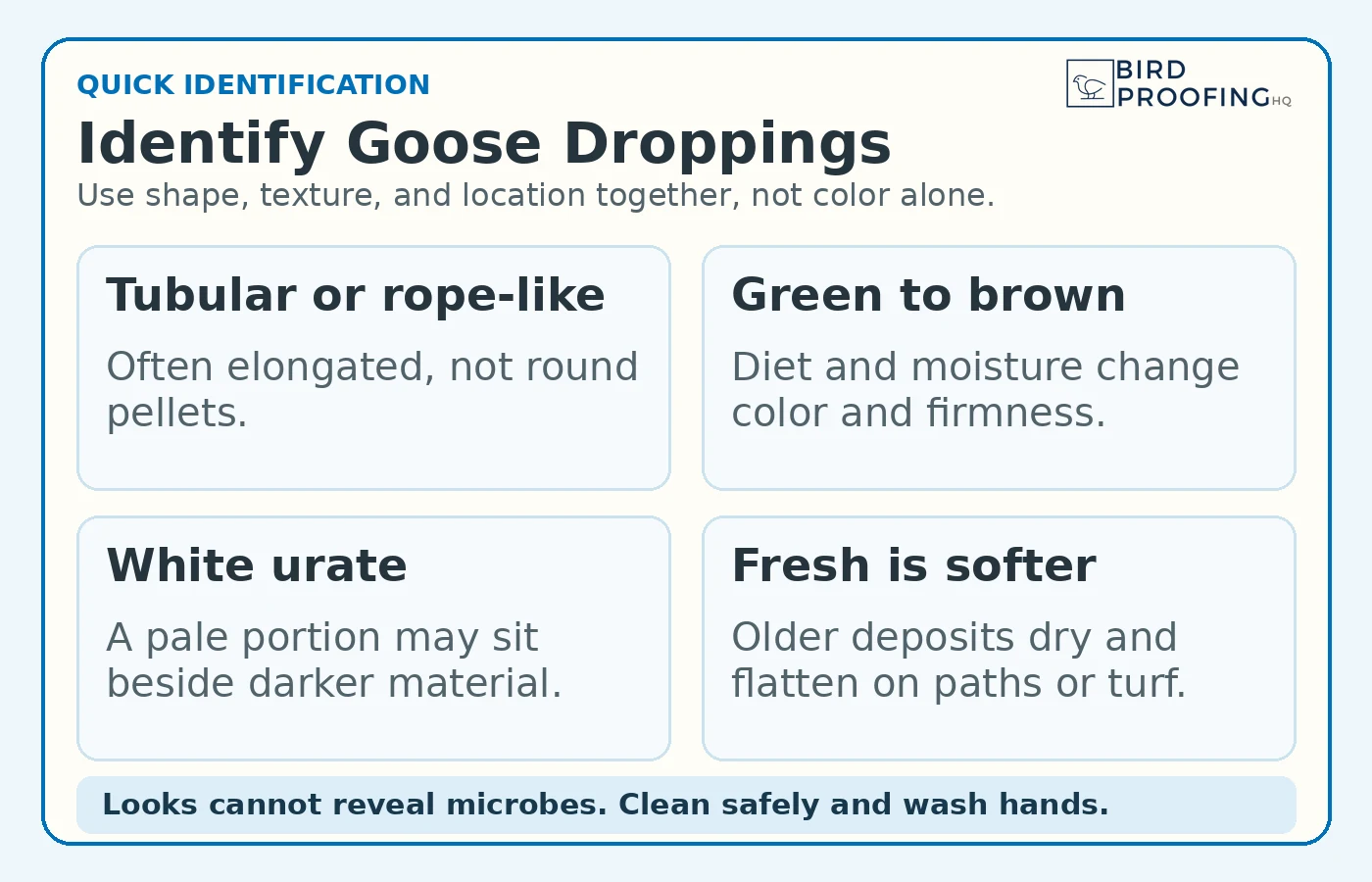
Geese droppings are usually elongated, tubular, or slightly coiled rather than round pellets. They often appear green to brown, sometimes with a pale or white urate portion. Fresh deposits are softer and moist; older ones dry and flatten. Diet, water intake, and weather can change the color and firmness.
Appearance cannot prove that a deposit is safe or contaminated. Identify it by the combination of shape, location, and nearby goose activity, then clean it with ordinary hygiene precautions.
Why Is Goose Poop Different From Other Birds?
Canada geese are large grazing birds that feed, rest, and walk in groups on the same open turf. Their behavior concentrates feces along shorelines, paths, parks, and golf courses where humans, dogs, and other animals also walk. Many smaller birds leave a lighter scatter because they do not spend all day grazing in one place.
The difference is therefore volume and location, not a special rule that every goose deposit is dangerous.
How Much Do Geese Poop?
A well-fed, healthy adult Canada goose can produce nearly one pound of fecal material per day, according to Virginia Tech Extension’s Canada goose management guide. The exact amount varies, but the management problem becomes clear when several resident geese return daily. Ten birds can leave several pounds of material across a property in one day without requiring an exaggerated deposits-per-hour claim.
Are Goose Droppings a Health Hazard?
Goose feces can contain bacteria and parasites, including E. coli in some samples, but illness is not automatic (Rutgers Cooperative Extension). Risk depends on what is present, the amount involved, the exposure route, and the person exposed.
Hand-to-mouth contact is more concerning than walking across affected grass. Young children face greater exposure because they play near the ground and put hands or objects in their mouths. Keep them away until cleanup is complete, cover cuts, and wash hands before eating. A heavy dried buildup under a covered dock or inside a shed deserves more care because disturbing it can create dust. CDC guidance recommends controlling substantial bird-dropping accumulations rather than treating every isolated outdoor deposit alike.
People with weakened immune systems should avoid handling large accumulations. Food-contact surfaces, drinking-water areas, and produce beds also deserve prompt cleanup.
Match the response to the location
| Situation | Practical response |
|---|---|
| A few deposits on open turf | Keep dogs and children clear, scoop the material, bag it, and wash your hands. |
| A busy walkway or play area | Block foot traffic until cleanup so humans and animals do not track residue indoors. |
| A vegetable or herb bed | Remove the material without splashing nearby plants, then wash any exposed produce before eating it. |
| A shoreline or storm-drain edge | Collect the material before rain where practical; do not hose it into the surrounding environment. |
| A heavy enclosed buildup | Dampen it first, use suitable protective equipment, and consider professional help. |
These responses scale with exposure. They do not require treating every outdoor deposit like hazardous waste.
How Do You Clean Goose Poop Safely?
Lawns and gardens
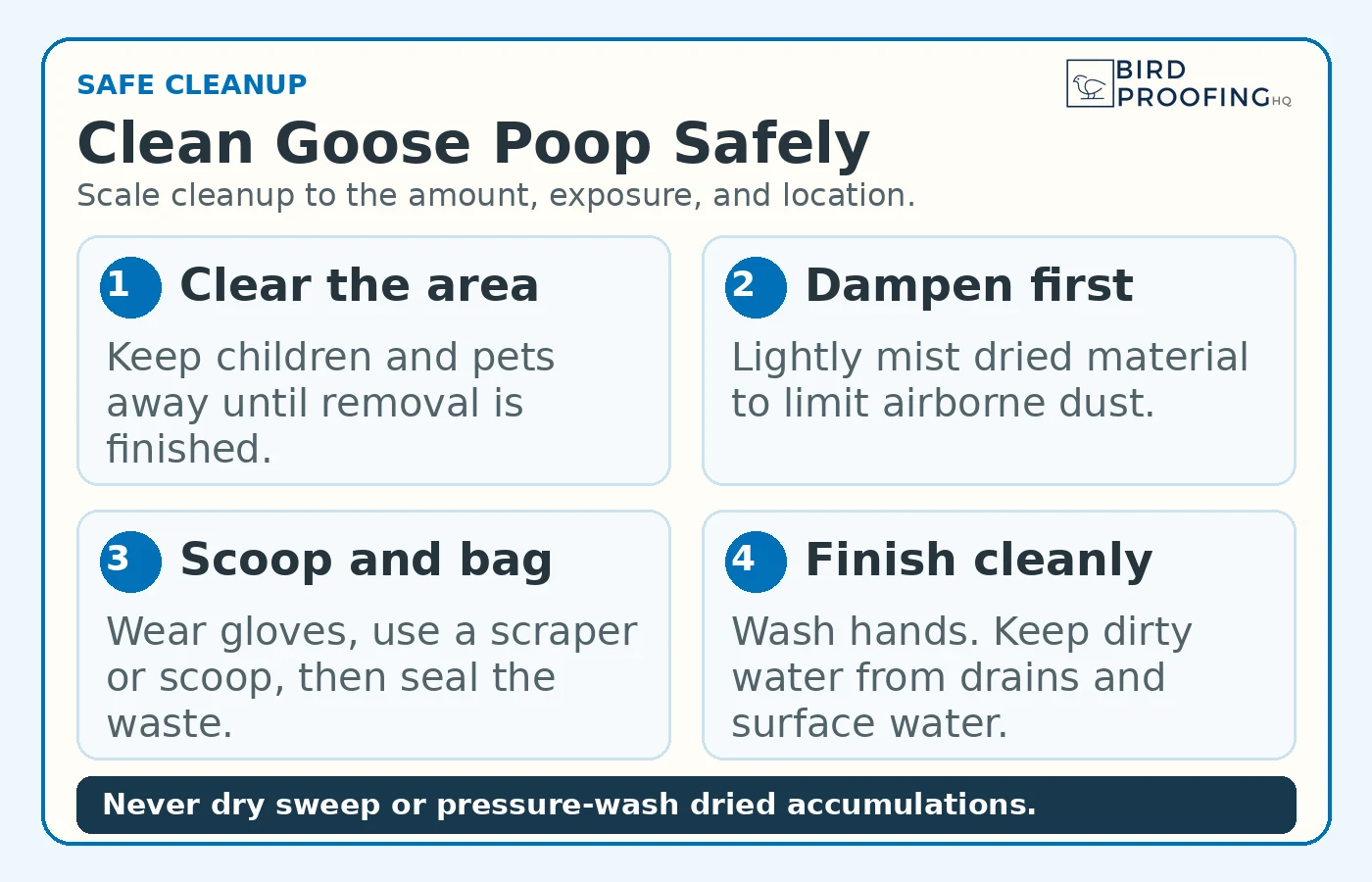
- Put on disposable or washable gloves.
- Scoop or rake up the material with a trowel, scraper, or pooper-scooper.
- Bag it and follow local household-waste rules.
- Use limited water only where runoff cannot enter a storm drain, pond, or food bed.
- Wash your hands when finished.
Do not apply bleach to turf. It can injure plants without replacing physical removal.
Patios, decks, and sidewalks
Keep people and pets away, lightly dampen dried material, then scrape and bag it. Wash the surface with water and a stiff brush. Use a surface-safe registered disinfectant only when the label supports that use, and never mix cleaning chemicals.
Avoid dry sweeping and high-pressure washing of dried accumulations. Both can spread dust or dirty water beyond the original area. For a heavy enclosed buildup, use gloves, eye protection, and an N95 or better respirator, ventilate the space, or hire a qualified cleanup service.
Do Geese Damage Lawns and Water?
An occasional deposit will not ruin a lawn. A resident flock can cause thin turf by repeated grazing, trampling, and soil compaction. Virginia Tech notes that well-manicured grass beside open water is especially attractive to Canada geese.
Feces add nutrients and microbes where runoff reaches surface water. Nitrogen and phosphorus can fuel eutrophication and algal blooms; dense blooms block light from aquatic plants and consume oxygen, sometimes contributing to fish kills (EPA). Repeated grazing can also strip shoreline vegetation and expose soil to erosion. Geese are not automatically the sole cause of a failed water test, so recurring problems need proper testing.
Why Do Dogs Eat Goose Poop?
Eating feces is called coprophagia. Dogs may investigate it through normal scavenging and scent-driven behavior; boredom or stress can also contribute. Eating goose feces may cause digestive upset. VCA Animal Hospitals recommends ruling out medical problems before assuming persistent coprophagia is purely behavioral.
Do not diagnose a nutritional deficiency from the behavior alone. Watch the dog and discuss repeated eating with your veterinarian.
When Should You Call a Vet?
Call if your dog develops repeated vomiting or diarrhea, lethargy, appetite loss, blood, dehydration, or symptoms that worsen or persist. Call sooner for a puppy, a medically vulnerable dog, or repeated exposure. Cornell advises veterinary care when diarrhea accompanies vomiting or lethargy, appears black or tarry, or does not resolve within 48 to 72 hours (Cornell canine diarrhea guidance).
How Do You Stop a Dog From Eating Goose Poop?
Keep dogs leashed where geese gather. Teach a reliable leave it cue, reward the dog for moving past deposits, and remove accumulations from the dog’s regular yard. If the habit becomes frequent or appears with appetite, weight, or behavior changes, ask your veterinarian to assess it.
How Do You Keep Geese Away?
Stop feeding geese and ask neighbors to do the same. Inspect high-use areas regularly and remove deposits mechanically before they become a heavy buildup. Reduce walking access between water and turf with fencing or native shoreline plants. Virginia Tech recommends a 20- to 25-foot vegetated strip where the site permits it. Visual or noise deterrents may help temporarily when moved and combined with habitat changes; USDA APHIS provides legal options.
Do not approach adults guarding a nest or goslings. Canada goose pairs defend nests, and parents continue defending their brood after hatching. Nests, eggs, and birds are federally protected, so check US Fish and Wildlife Service guidance and local rules before taking action. Use a wildlife professional for a persistent flock or active nest conflict.
Frequently Asked Questions
What do geese droppings look like?
Geese droppings are usually tubular or rope-like rather than round pellets. They often look green to brown, sometimes with a pale or white urate portion. Diet and moisture change their color and firmness, so appearance alone cannot tell you whether a deposit carries harmful microbes.
Are goose droppings a health hazard?
Goose feces can carry bacteria and parasites, but one outdoor deposit is not a health emergency. Risk rises with the amount, exposure route, and person involved. Avoid hand-to-mouth contact, use more caution with heavy dried accumulations, and wash your hands after cleanup.
Is goose poop ok for dogs?
A dog eating goose poop once is not automatically an emergency. Watch for repeated vomiting or diarrhea, lethargy, appetite loss, blood, or worsening symptoms. Contact your veterinarian if those signs appear or the behavior keeps happening. A leash, prompt cleanup, and a reliable leave-it cue reduce repeat exposure.
Why is goose poop different from other birds?
Canada geese graze and rest in groups on the same turf and shorelines. Their deposits therefore accumulate where people and dogs walk, unlike the lighter scatter left by many passing birds. Virginia Tech reports that a healthy adult Canada goose can produce nearly one pound of fecal material per day.
How much do geese poop?
A Virginia Tech Extension guide says a well-fed, healthy adult Canada goose can produce nearly one pound of fecal material per day. The exact amount varies, but even a modest resident flock can create a substantial daily accumulation on lawns, paths, golf courses, and shorelines.
When should I call a vet after my dog eats goose poop?
Call your veterinarian if your dog develops repeated vomiting or diarrhea, lethargy, appetite loss, blood, dehydration, or symptoms that worsen or persist. Call sooner for puppies, medically vulnerable dogs, or repeated exposure. A veterinarian can decide whether an examination or fecal testing is warranted.
How do I stop my dog from eating goose poop?
Keep your dog leashed where geese gather, teach a reliable leave-it cue, reward the dog for moving past deposits, and remove accumulations from your own yard promptly. If coprophagia becomes persistent or appears with appetite or weight changes, ask your veterinarian to rule out a medical contributor.
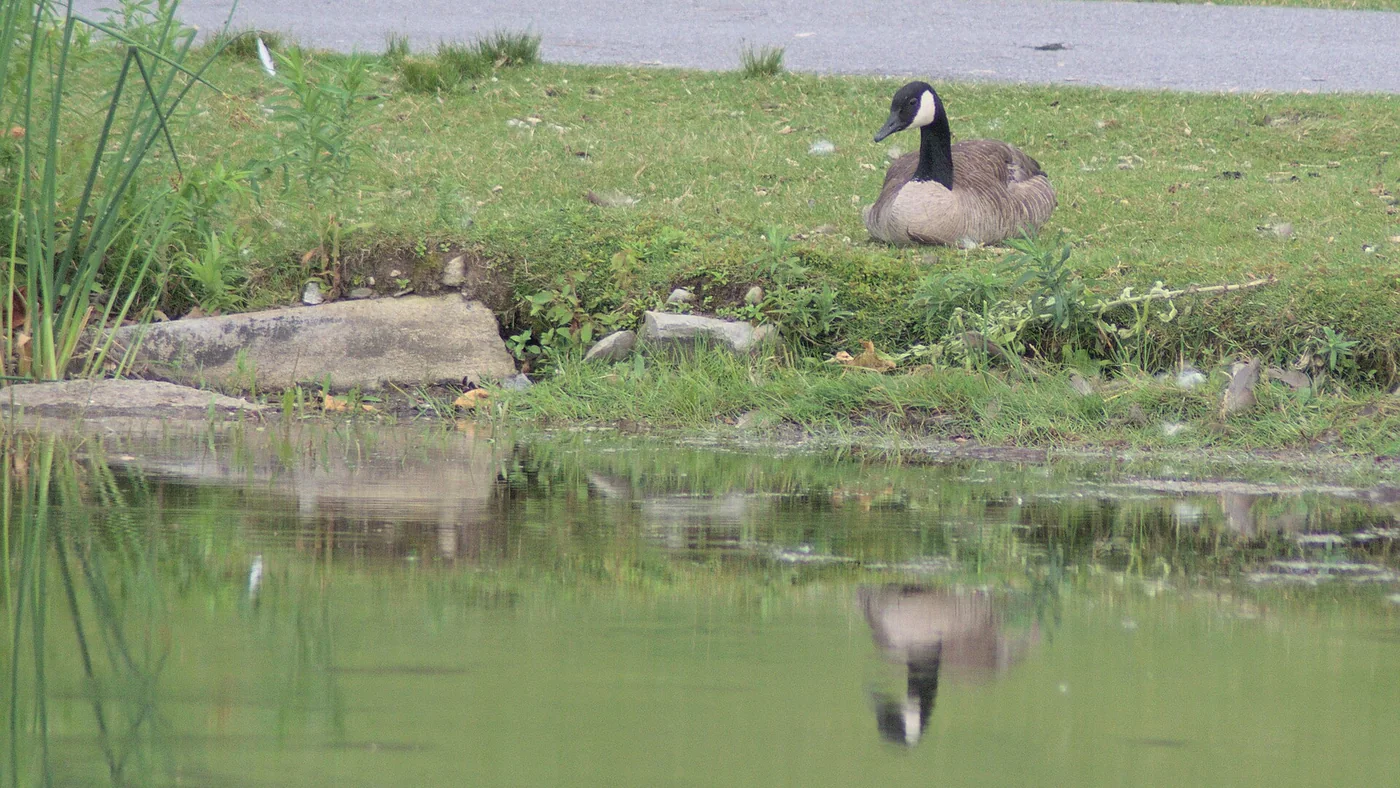
Featured image: Canada Geese on the Lawn in Front of the Orangery by stanze, licensed under CC BY-SA 2.0. Pond image: A Canada Goose Sits on Poop-Riddled Grass Next to a Pond by devyn.barrie, released under CC0. Identification and cleanup infographics by BirdProofingHQ.
.jpg)

Free: The 5-Step Bird-Proofing Checklist
Work through the right steps in the right order, before spending money on the wrong deterrents. Printable PDF, straight to your inbox.
No spam. Unsubscribe any time.