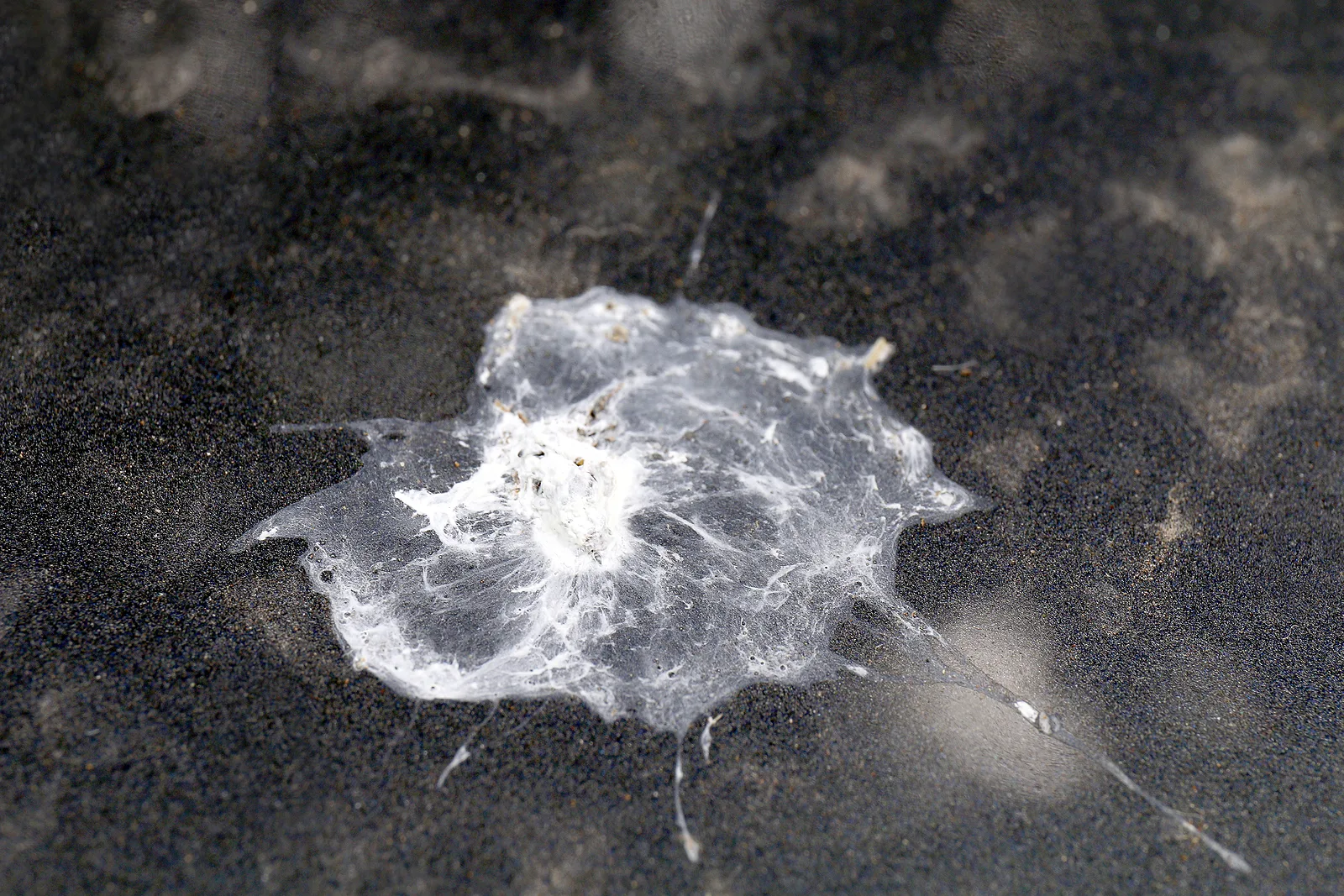
In this guide6 sections
Quick Answer
Bird poop in a pool should be netted out right away, never vacuumed. Then hold free chlorine at 2 ppm with pH 7.5 or lower for 30 minutes, filter running, before anyone swims.
In this article, you'll learn how to clear bird poop from a pool safely. We'll cover removing the droppings, testing the water, and keeping birds out.
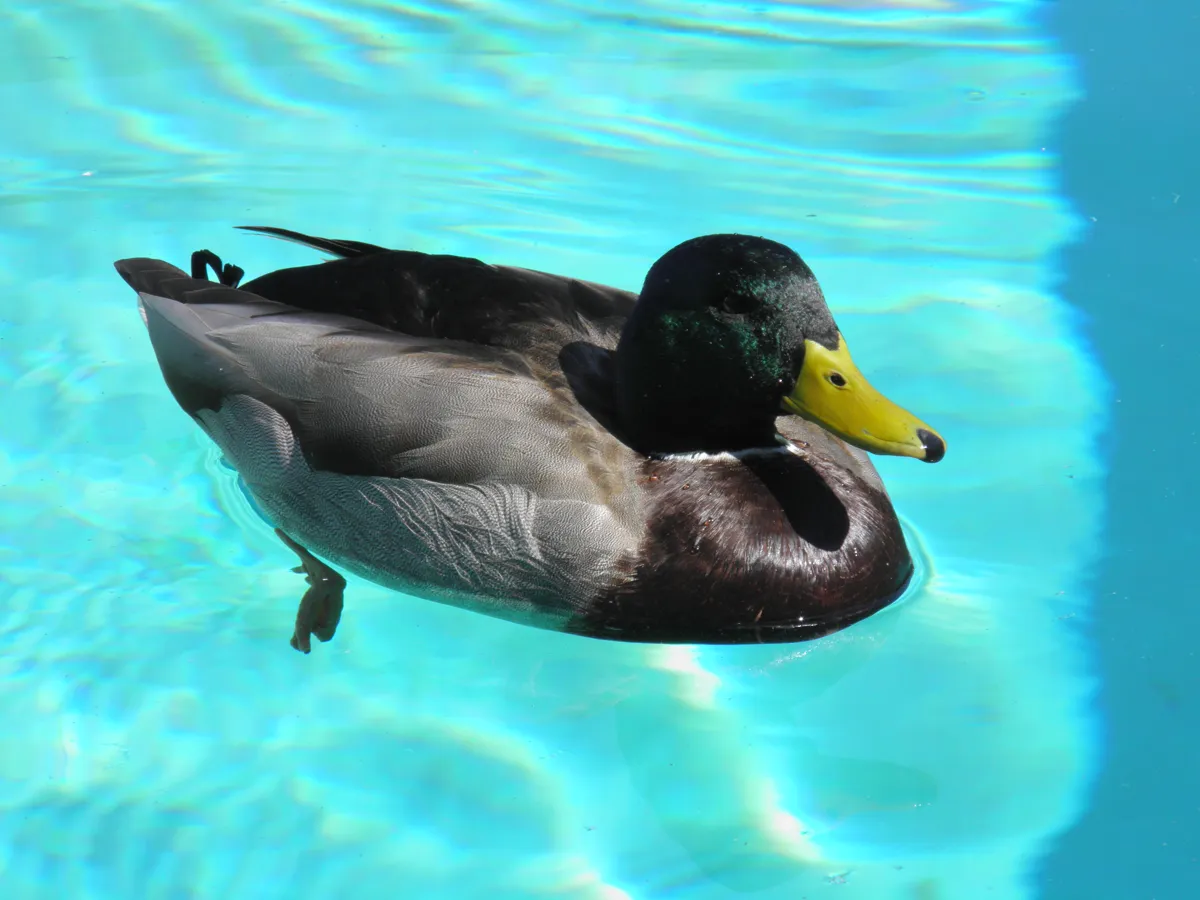
A duck that stops for a swim usually leaves something behind. The cleanup is short, and the CDC has already set the steps.
Is It Safe to Swim With Bird Poop in the Pool?
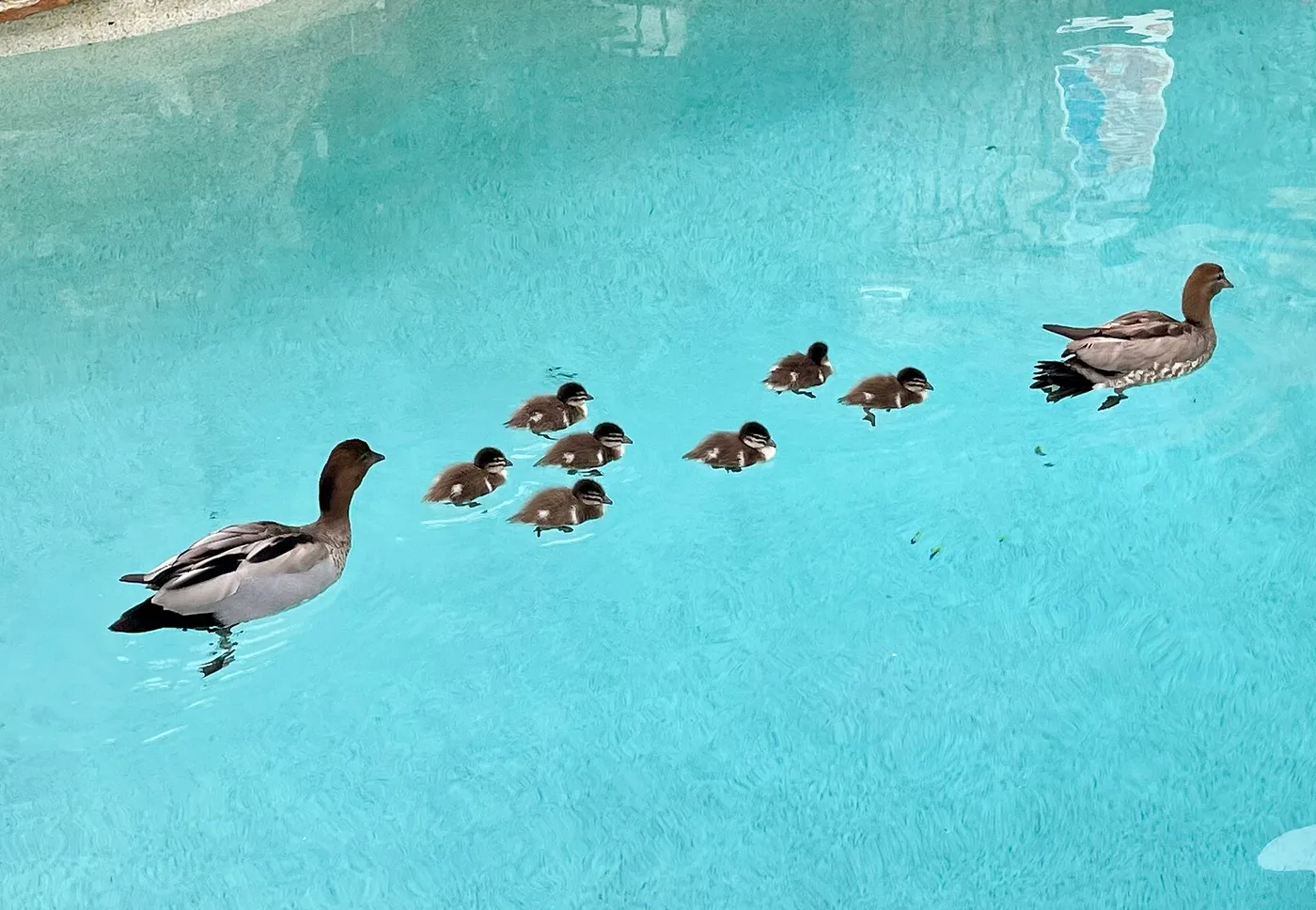
Not yet, but it’s a short wait if you handle it right. Bird droppings, especially from ducks and geese, can carry germs like E. coli, Salmonella, Campylobacter, and Cryptosporidium, which is usually shortened to Crypto. Chlorine kills most of those germs within minutes in a well-maintained pool, so a pool with healthy chlorine is already doing much of the work.
The catch is the poop itself. Solid droppings shield the germs inside from the chlorine, which is why the first job is getting the poop out, not just adding chemicals around it.
Crypto is the one germ worth a plain word. It has a tough outer shell, and it can survive for days even in a properly chlorinated pool. That sounds alarming, but the CDC also says it isn’t aware of any evidence of Crypto spreading directly from birds to people. Do the cleanup properly and the pool can stay full.
How to Clean Bird Poop Out of a Pool
The CDC says to respond the same way you would to solid human poop in the water. In a backyard, that comes down to these steps:
- Close the pool. Get everyone out and keep them out until the water is treated.
- Put on disposable gloves. You’ll be handling the droppings, so don’t do it bare-handed.
- Lift the poop out with a net. Scoop gently so the droppings stay in one piece instead of breaking up in the water.
- Don’t vacuum it. Vacuums can’t be cleaned and disinfected thoroughly, so a vacuum that has sucked up droppings can spread the problem around your pool.
- Clean the debris off the net.
- Remove and dispose of the gloves, then wash your hands with soap and water.
That vacuum rule surprises people, since vacuuming feels like the natural tool for anything on the pool floor. If the droppings have already sunk, a net on a pole still reaches them. Take your time and don’t stir them up.
Once the debris is off, you can leave the net in the pool during the 30-minute disinfection time to disinfect it.
Droppings on the deck are a separate chore with their own method, covered in how to clean bird poop from surfaces. Do that after the water is handled, and keep it from washing back in.
When to Test the Water and When You Can Swim Again
Once the poop is out, the water needs to hit specific numbers and hold them. The CDC says to raise the free chlorine to, or keep it at, 2 ppm, and keep the pH at 7.5 or less. Both need to stay at those levels for 30 minutes, and the filtration system should be operating properly the whole time.
Here’s the checklist:
- Free chlorine is at 2 ppm or higher.
- The pH is 7.5 or lower.
- The filter is running and the pool is circulating.
- The timer has run a full 30 minutes with both numbers holding.
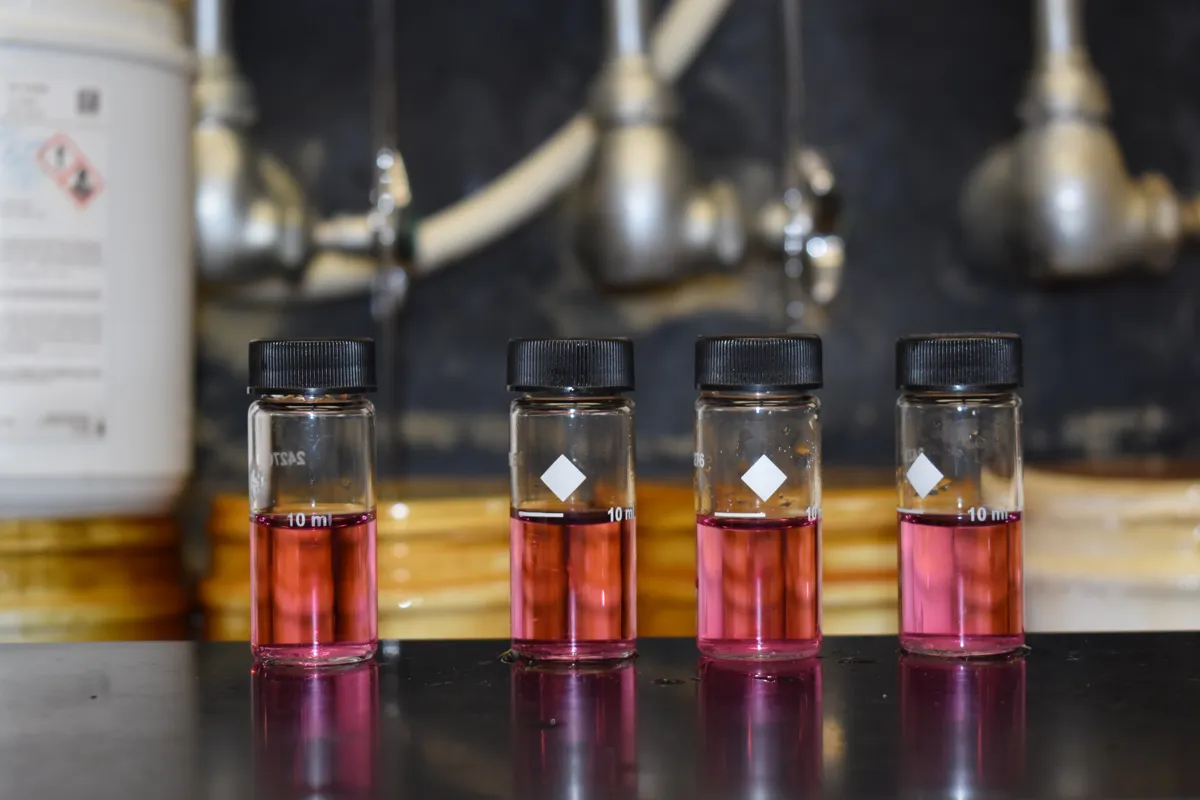
Test with a kit that reads free chlorine and pH. At the end of the 30 minutes, confirm both numbers are still holding. Only after the whole 30 minutes passes at 2 ppm and pH 7.5 or lower is the pool ready for swimmers again.
Two conditions matter. First, the CDC says to keep the water at 77F (25C) or warmer during the disinfection. Second, if you use stabilizer, also called cyanuric acid, disinfection takes longer. If your pool has a lot of it, don’t cut the wait short.
Why “Shocking for Hours” Isn’t the Backyard Answer
You may read advice to crank the chlorine way up and let it sit overnight. That’s what public pool operators do after certain incidents, but the CDC is clear that this does not apply to backyard pools. It also warns that raising chlorine very high for hours increases the risk of chemical injuries, including trouble breathing and chemical burns, if the chemicals are mishandled.
For bird droppings, the cleanup is the net, the 2 ppm target, and 30 minutes. Extra-high chlorine for hours adds the risk of chemical injury, and it isn’t the recommended backyard step.
Stop Birds From Using the Pool
Cleanup gets old fast if the same ducks come back every morning, so spend a little time on prevention. The CDC suggests removing bird feeders and plants that produce nuts, fruits, and berries, and trimming trees and shrubs over the pool. It also says never to feed ducks or geese, and to cut down lawn area near the pool or put up a fence or hedge between the pool and the grass.
Covers, floating decoys, and line grids are the next layer, and how to keep birds away from a pool walks through them. If ducks are the regular visitors, how to get rid of ducks covers the yard side. If geese are the problem, goose poop explains what you’re dealing with.
One legal point shapes every choice here. Most birds, including wild ducks and geese, are protected by the Migratory Bird Treaty Act and state laws, and legal options are limited. A permit may be required for some actions. Stick to deterrents that don’t harm the birds, and call a wildlife professional if a flock keeps coming back despite them.
Images: Mallard duck in a pool by Michael W. Kolton, CC BY-SA 3.0; Free chlorine testing by JonnyTwoDogs, CC BY-SA 4.0. Via Wikimedia Commons. Photos were resized and converted to WebP; no other edits were made.
Frequently Asked Questions
Is it safe to swim in a pool with bird poop?
Not until you've removed the droppings and disinfected the water. Bird poop, especially from ducks and geese, can carry germs like E. coli, Salmonella, Campylobacter, and Cryptosporidium. Net out the poop, bring free chlorine to 2 ppm with pH 7.5 or lower, and keep it there for 30 minutes with the filter running.
How long after bird poop can you swim?
You can swim after the water has held 2 ppm free chlorine at pH 7.5 or lower for 30 minutes, with the filter running properly. Remove the droppings first, because solid poop shields germs from the chlorine. The CDC says to keep the water at 77F (25C) or warmer during the disinfection.
Can you vacuum bird poop out of a pool?
No, you shouldn't vacuum bird poop out of a pool. The CDC says vacuums can't be cleaned and disinfected thoroughly, so use a net to lift the droppings out instead. Rinse debris off the net, and wash your hands with soap and water afterward.
Does chlorine kill germs in bird poop?
Yes, chlorine kills most germs in bird poop within minutes in a well-maintained pool. The exception is Cryptosporidium, a tough parasite that can survive for days even in properly chlorinated water. Solid droppings also protect the germs inside, which is why you remove them before disinfecting.
Is duck poop in a pool dangerous?
Duck poop in a pool deserves a proper cleanup, but it isn't a reason to panic. Duck and goose droppings can carry germs like E. coli, Salmonella, and Cryptosporidium, and most of those are killed by chlorine within minutes. Net the poop out and disinfect the water to the CDC levels before anyone swims.
Free printable PDF
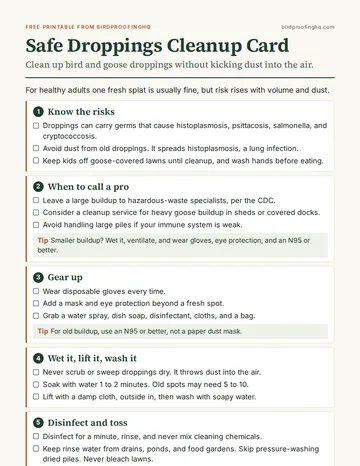
The Safe Droppings Cleanup Card
What to wear, how to wet and lift droppings without breathing the dust, and when a pile is a job for a pro.
Free download right after you sign up. No spam. Unsubscribe any time.