How to Keep Birds Away From Pool Water (Humane Methods)
Contents[hide]
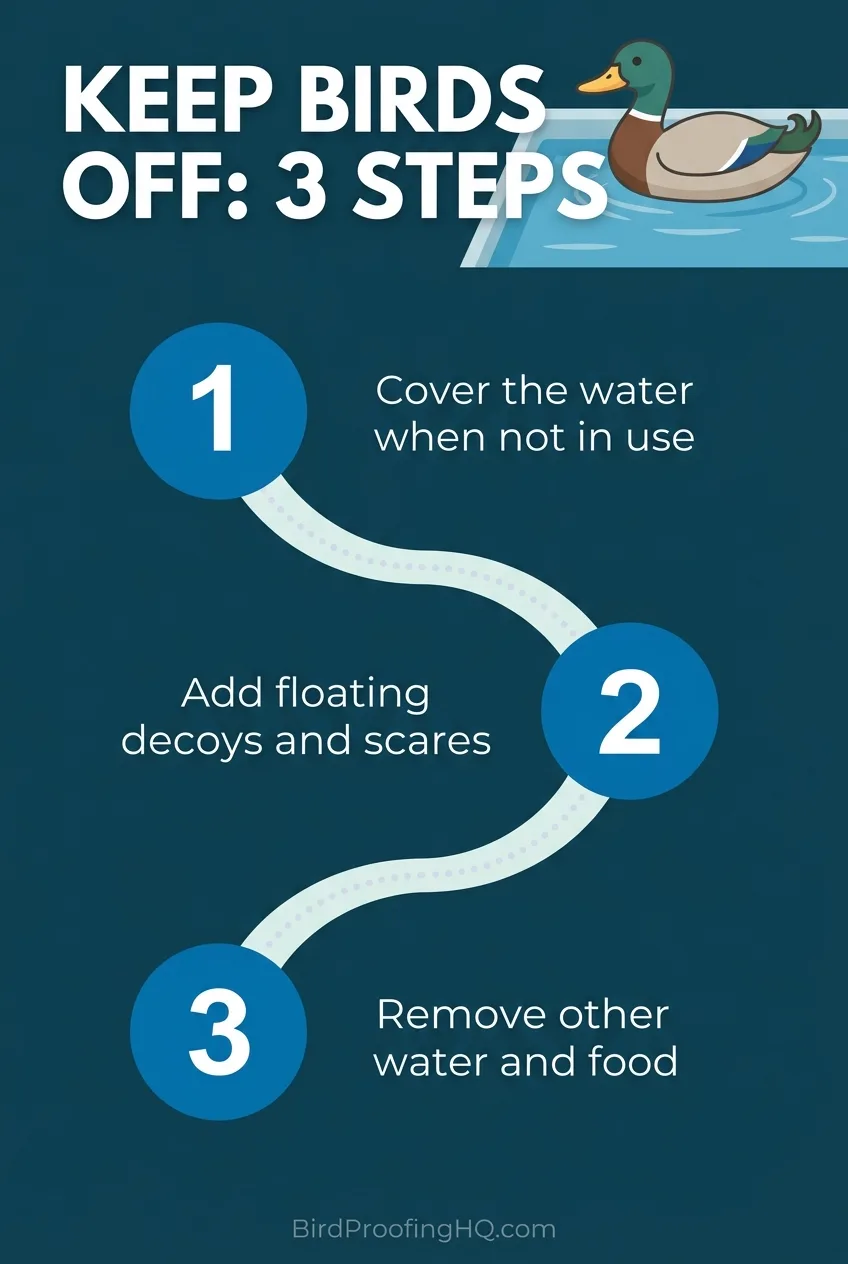
To keep birds away from a pool, cover it when not in use, then remove what draws them: standing water, food, and easy landing spots. Float a predator decoy on the surface, hang reflective objects nearby, and string a fishing-line grid over the water. No single trick holds for long, so run a few at once and move them often.
In this article, you'll learn how to keep birds away from pool water humanely. We'll cover pool covers, open-space deterrents, and deck cleanup.
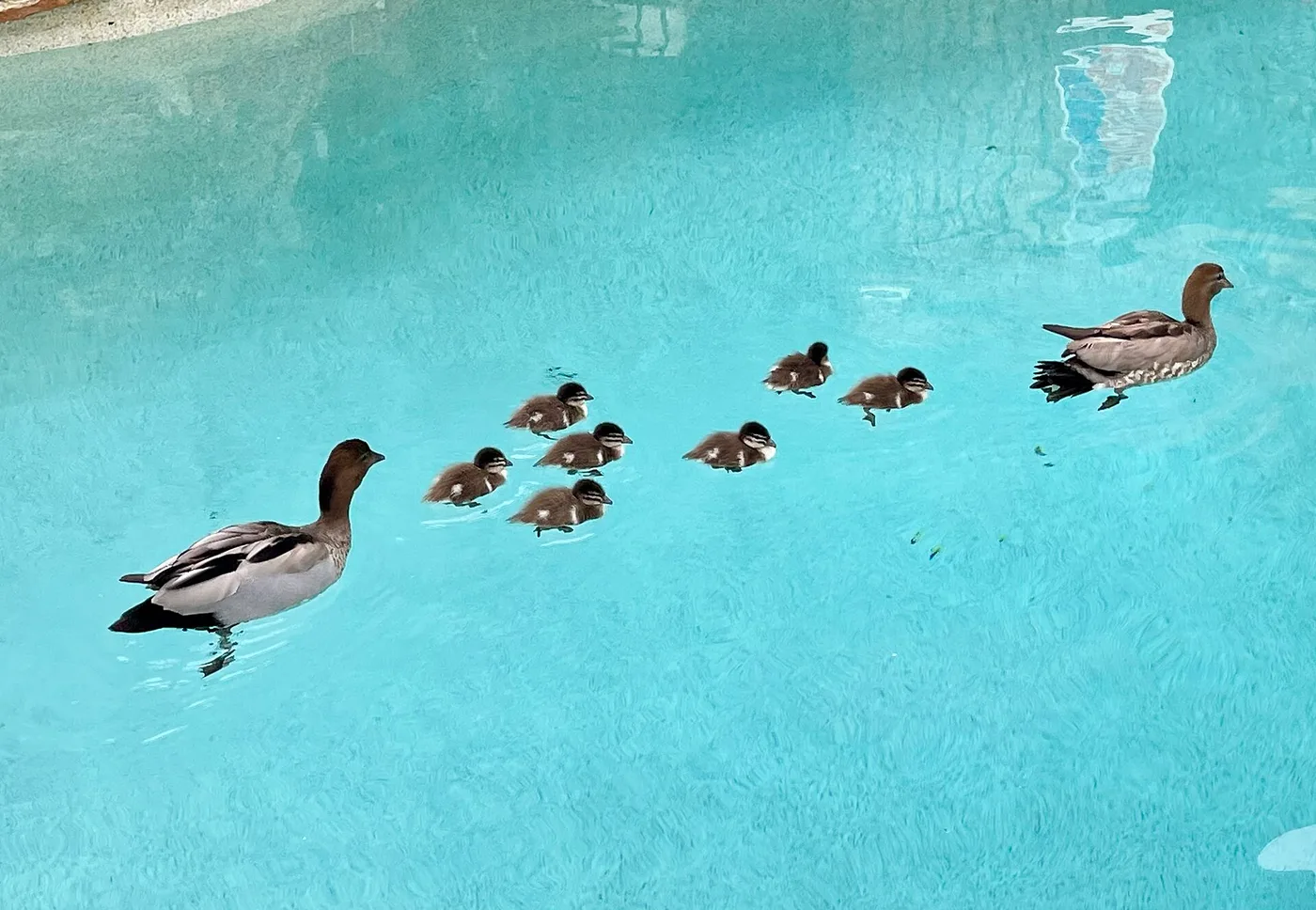
The most common pool visitor is the duck, but pigeons, crows, and small birds drop in too. Whatever the species, the approach is the same, and all of it is humane.
Why Birds Flock to Your Pool
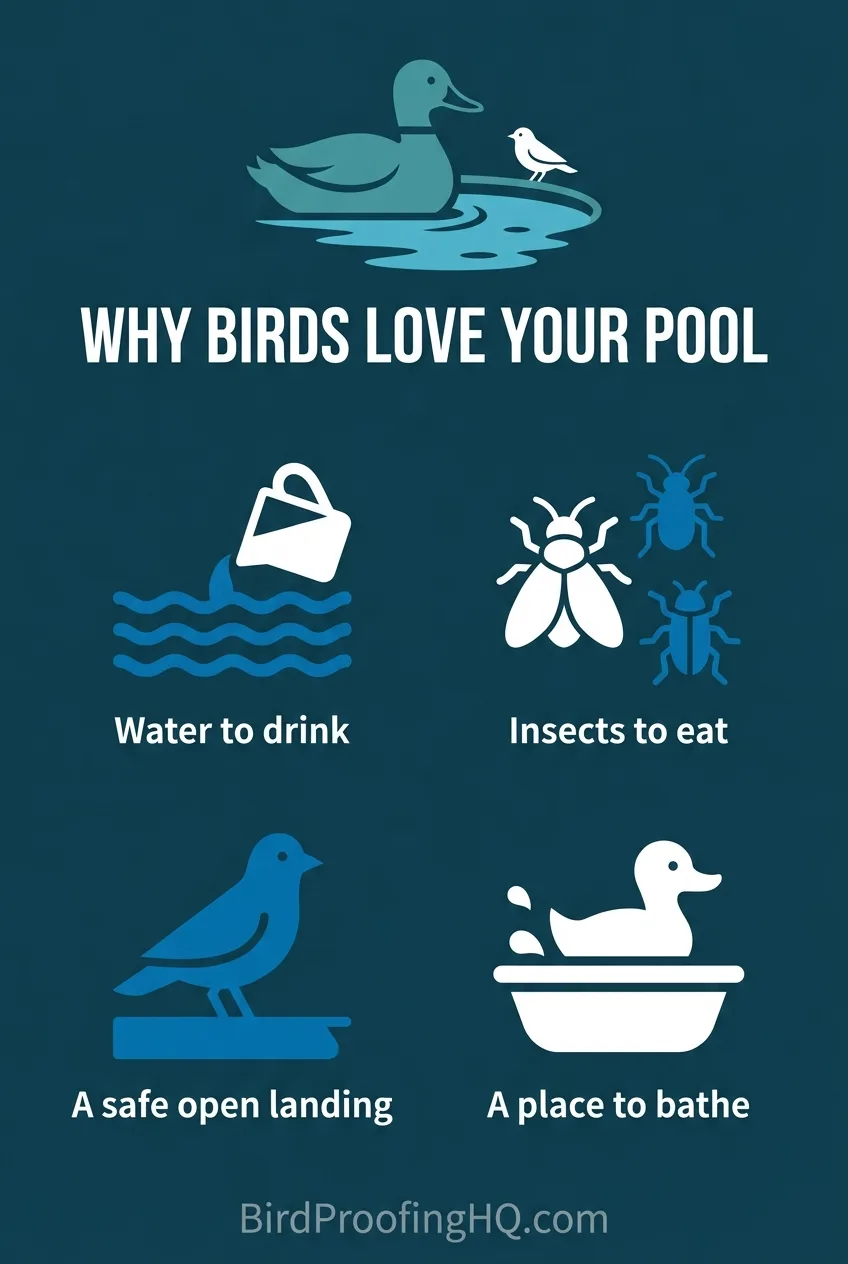
Most birds come to a pool for the obvious reason, water. They use it to drink and bathe, especially during a dry stretch, and they skim insects off the surface for an easy meal. Algae and bugs in a poorly kept pool only add to the menu.
Safety matters too. An open pool offers a wide, clear deck with no cover for predators, which makes it a calm place for birds to land and loaf. Birds are most comfortable in the open, where they can see danger coming. That safety is the part you can break.
Take away the calm, predator-free feel of the pool area and a lot of birds simply move on.
Are Birds in the Pool a Problem?
For most pool owners, yes. The droppings are the worst of it. Bird poop fouls the water and the pool deck, and the mess is the least of it. Droppings can carry bacteria, throw off your water chemistry, and clog the filter and skimmer.
A flock that starts using your pool turns it into a daily cleaning job.
There is a downside for the birds, too. Chlorinated and salt water can irritate their eyes and feathers, and a bird that drinks a lot of treated water can get sick. So keeping birds out is humane as well as tidy, the approach groups like the Humane Society recommend. The goal is simple: make the pool unappealing, never harm the birds.
How to Keep Birds Away From Pool Water
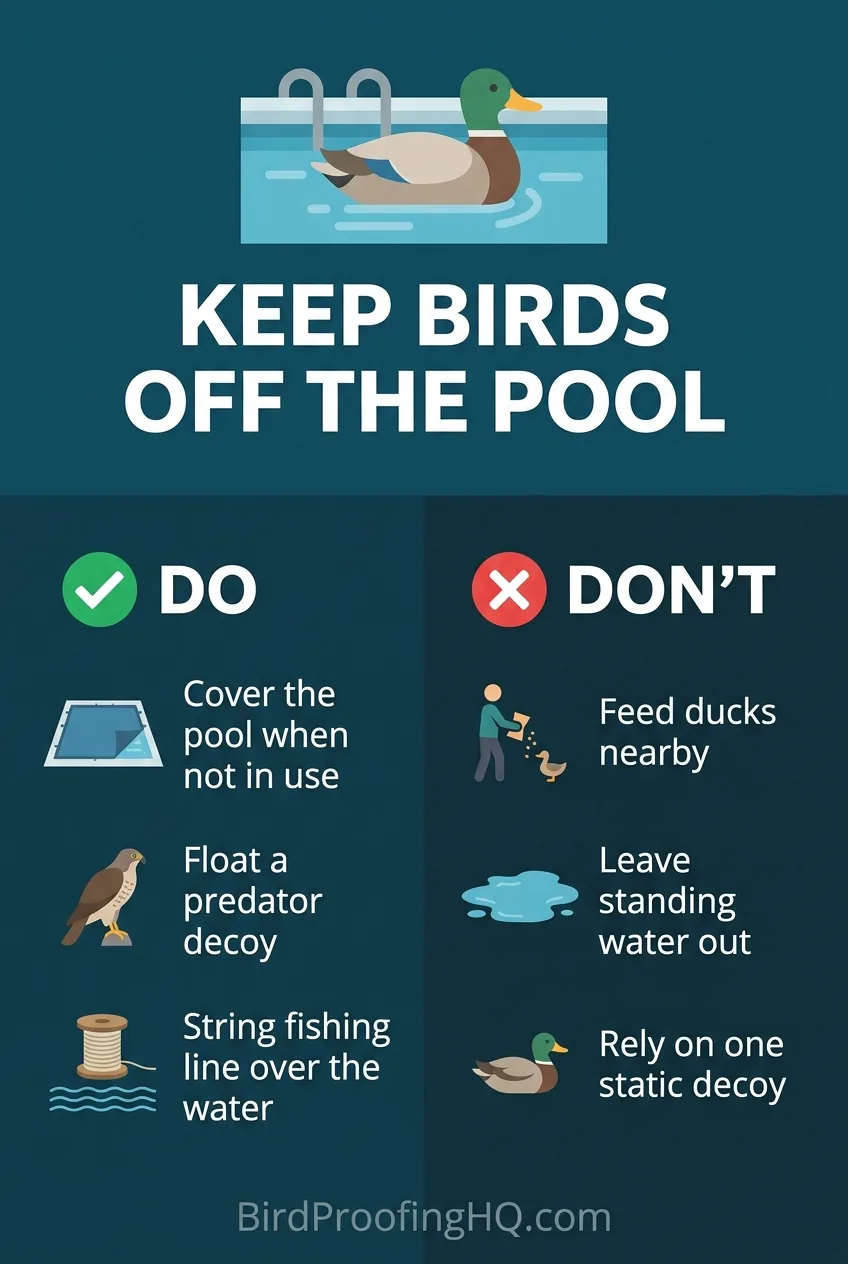
These methods work best stacked, not solo. Start with a barrier over the water, then layer deterrents around it and rotate them so birds never settle.
Cover the Pool
The single most effective move is a pool cover. A bird cannot land on water it cannot reach. A solar cover, a safety cover, an automatic cover, or even a simple tarp shuts the problem down when the pool is not in use. It is the one step that works on every species at once, from ducks to pigeons.
A cover also solves the side problems: less evaporation, fewer leaves, and no droppings landing in the water while you are away. A mesh safety cover is the most durable option for a pool that sits unused for stretches, while a solar cover is the cheapest for daily on-and-off use. If you only do one thing on this list, cover the pool.
Screen Enclosures and Netting
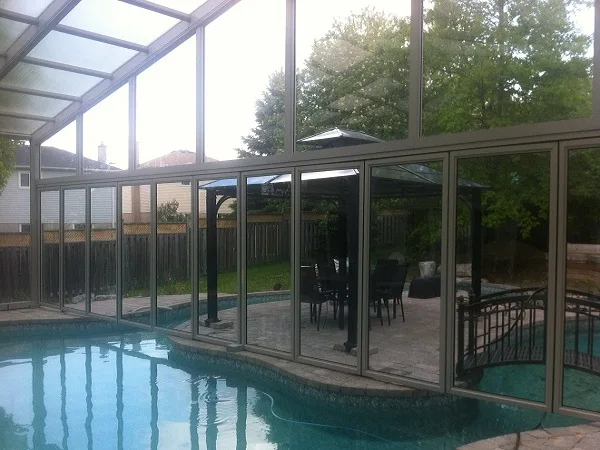
A cover only protects the water. To shut birds out of the whole pool area, you need a barrier overhead. A screen enclosure, the mesh cage you see over pools in warm states, keeps birds off the water and the deck at once. It is the most complete fix, and also the priciest.
For an uncovered pool, netting is the budget version. Stretch bird netting across the top on a frame or cables, and birds simply cannot reach the water. It is less pretty than a screen cage, but it works on ducks, geese, and gulls alike. Both barriers pair well with the deterrents below, which cover the gaps a net or screen can leave at the edges.
Floating Decoys and Fake Predators
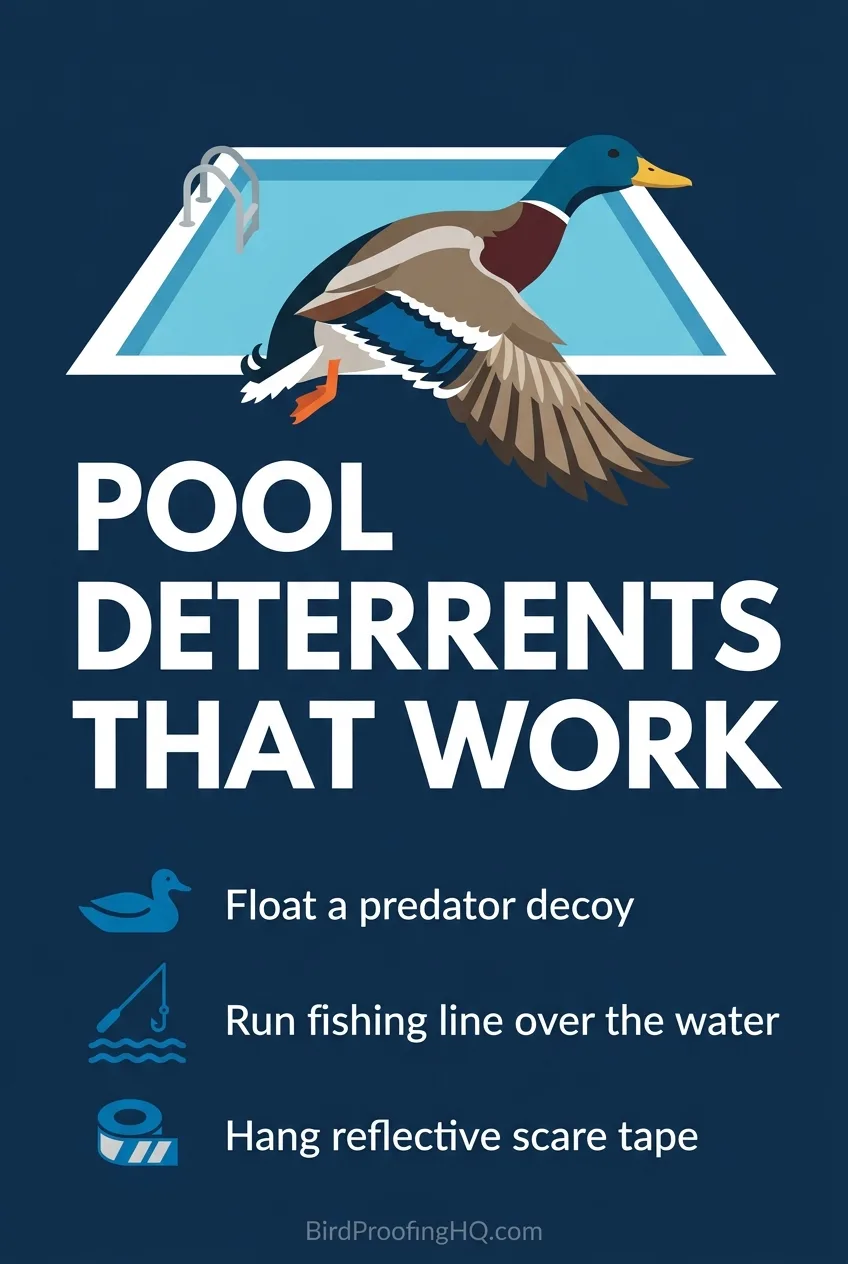
When the pool is open, decoys are the next line of defense. A floating predator decoy is the classic pool tool, and the alligator-head version that drifts on the surface unsettles ducks in particular. On the deck, a plastic owl, a fake heron, or a rubber snake taps into the same fear of natural predators.
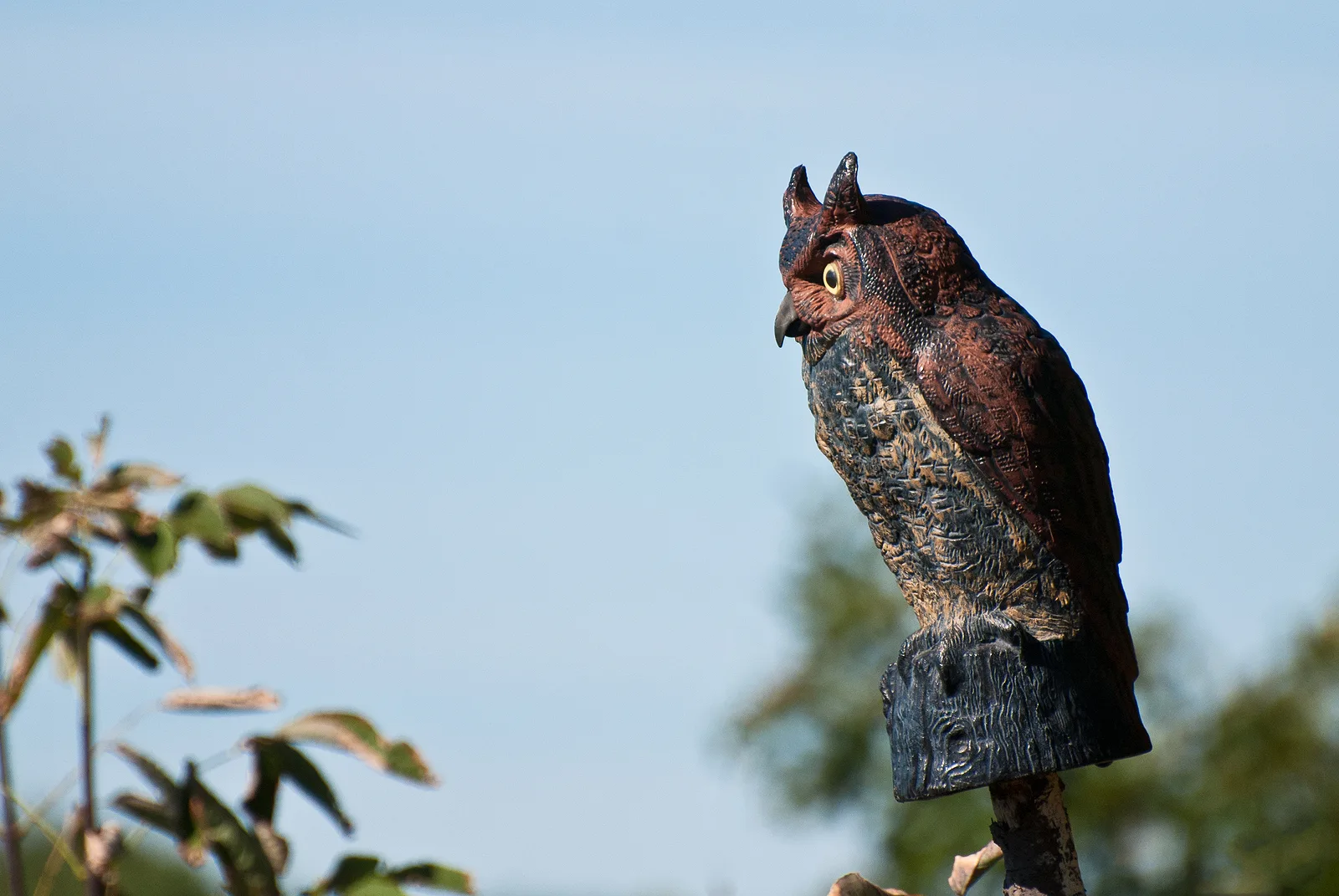
Every decoy has the same weak spot. Birds learn within days that a thing which never moves is harmless. So shift the decoy to a new spot every few days, and turn it to face a different way.
A floating decoy that drifts on its own holds up a bit better, since the movement keeps it believable. Pair a deck decoy with a floating one for the best effect.
Reflective and Moving Deterrents
Most birds spook at sudden flashes of light, so reflective deterrents work well around a pool deck. Hang shiny objects like old CDs, strips of foil, or mylar tape where the sun catches them and the breeze moves them. Scare-eye balloons and wind spinners add the same startling flash with motion.
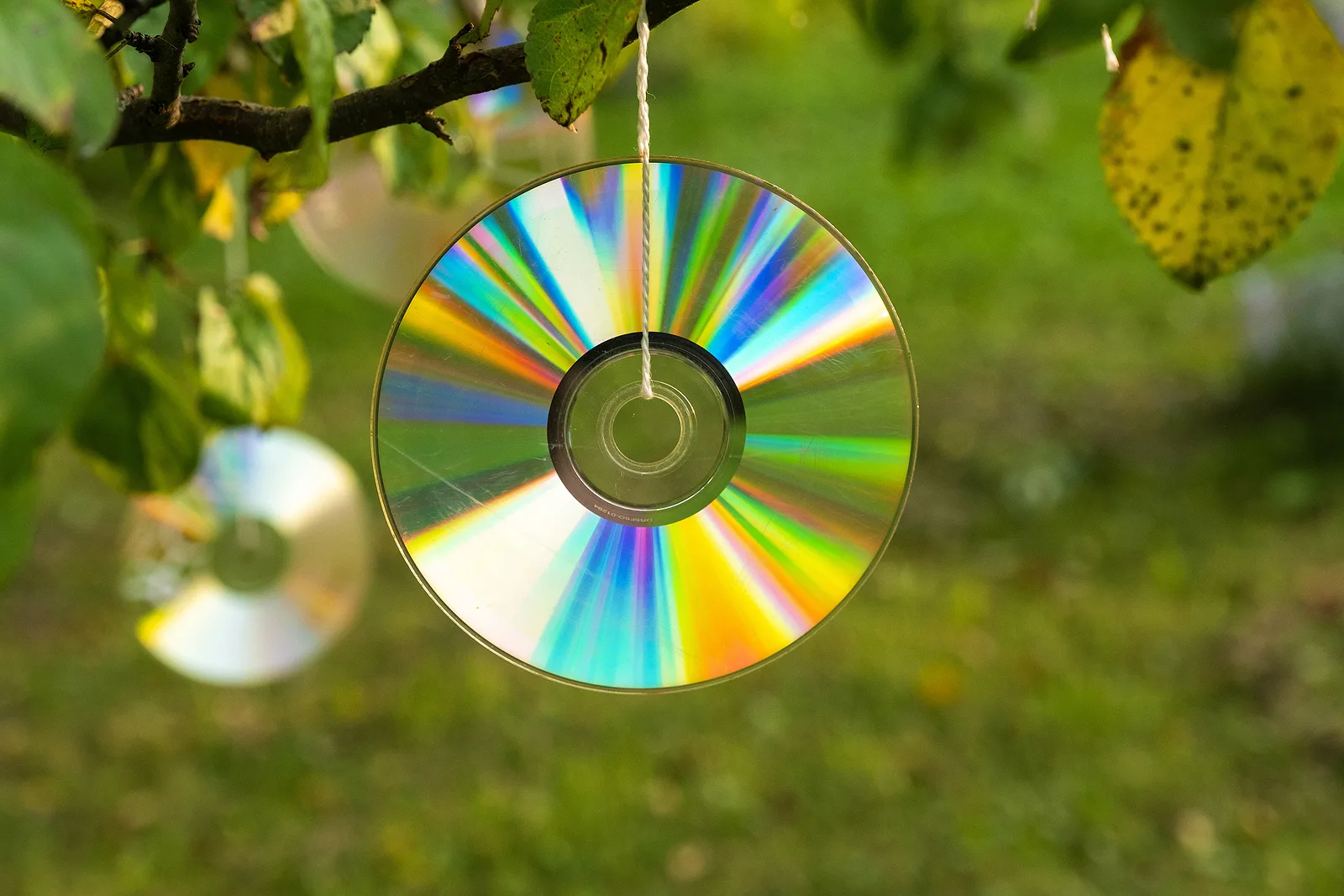
The cheap commercial version is reflective scare tape that twists and crackles in the wind, which adds a bit of noise to the light. Hang several pieces at different heights for better coverage. Like decoys, reflective deterrents fade as birds get used to them, so move them around now and then. A few floating beach balls or pool inflatables add movement on the water too, and bob around enough to keep birds from settling.
The Fishing-Line or Wire Grid
One of the cheapest and most effective pool fixes is almost invisible. Run a grid of fishing line or thin wire a foot or so above the water, tied between posts, hooks, or the deck edges. Birds struggle to land or take off cleanly when there are lines in the way, and they avoid flying through lines they cannot clearly see.
The line is nearly invisible from a few feet away, so it does not ruin the look of the pool, and it costs almost nothing. It works best on smaller or rectangular pools, where the spans are short, and a floating decoy in the water makes a good partner to it. Space the lines about a foot apart for ducks and other large birds.
Motion and Sound Deterrents
A motion-activated sprinkler set near the pool is one of the better active deterrents. A sudden burst of water startles birds off the deck. Because it only fires when something moves, birds do not get used to it the way they do a static decoy. Just point it away from where swimmers walk.
Skip the ultrasonic gadgets. Birds hear in about the same range people do, so the high-pitched sound does little outdoors, and most field tests show no lasting effect. If you want a sound deterrent, a sonic unit that plays real predator or distress calls works better, though birds still habituate to it over time.
Remove the Other Attractions
Deterrents work far better once the pool is not the only thing pulling birds in. Remove competing water like birdbaths, pet bowls, and any standing water nearby, at least while you are breaking the habit. Clear away food sources too: cover trash, sweep up spilled seed, and move bird feeders well away from the pool area.
Trim back overhanging branches that give birds a perch over the water, and clean up droppings promptly so the deck stops smelling like a place birds already use. Keeping the pool clean and properly chlorinated matters too, since clear, treated water has no algae or insects to feed on. The less the whole area offers, the less reason birds have to choose your pool.
Stop Birds Perching on the Deck
Birds do not only land on the water. They perch on railings, ladders, diving boards, screen frames, and patio furniture, then leave droppings all over the deck. Break up those perches the same way you would on a roofline. Run bird spikes or a tight wire along railings and the top of screen frames, and stack or cover any furniture you are not using.
A few feet of spikes on a favorite railing moves birds off it for good. The fewer comfortable edges the pool has, the less birds treat the whole area as a place to hang out.
If Birds Already Fouled the Pool
If a bird does poop in the water, treat it like any other contamination. Scoop out what you can, then raise the chlorine to shock the pool and run the filter for a full cycle before anyone swims. Bird droppings can carry germs like salmonella and E. coli, so skimming alone is not enough.
Brush and vacuum the spot where it settled, then test the water and let the chemistry settle back to normal. The CDC’s guidance on a fouled pool is to shock and wait, not to swim through it. Staying on top of cleanup also stops birds treating your pool as a reliable feeding spot.
When to Call a Pro
Most pool bird problems give way to a cover, a few deterrents, and some rotation. But a stubborn flock of resident ducks or geese, or a pool birds have used for years, can be too much for a do-it-yourself fix. If you have tried the steps here and they keep coming, a humane bird-control or wildlife service can step in.
A pro can install a netting or wire system correctly, and deal with protected species within the law. That last part matters. Geese and most native birds cannot be harmed or have their nests disturbed, so a licensed service clears the problem without breaking bird-protection laws.
Which Birds Are You Dealing With
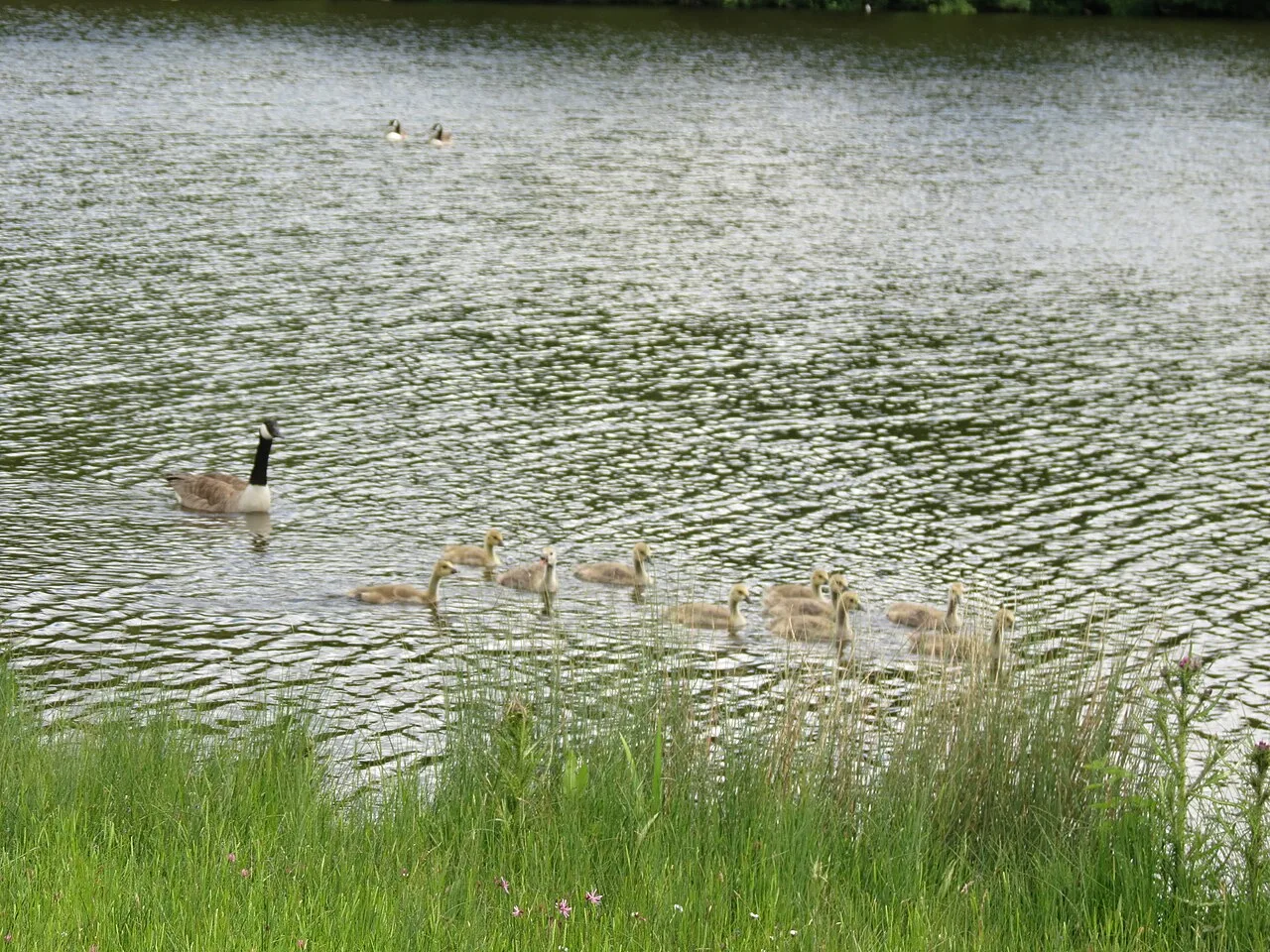
The right fix depends on the bird. Ducks are the most common, drawn to the open water to swim and nest nearby, and they respond best to a cover plus a floating decoy and fishing line. Canada geese treat a pool like a small pond and need the same open-water disruption plus a deterrent on the surrounding lawn. Pigeons and crows usually come to drink and perch on the deck, so reflective scares and removing the water they sip from do most of the work.
Knowing the bird also keeps you on the right side of the law. Most native birds are federally protected, so you cannot harm them or disturb an active nest. Every method here is a humane deterrent, which keeps you legal and is the right way to do it.
Keep Birds Off the Pool for Good
No single deterrent wins on its own. The lasting fix is a small mix you keep fresh and rotate, so birds never get comfortable enough to settle in.
Ducks are the usual pool offenders, so the steps in how to get rid of ducks fit this problem well. You can also layer in bird deterrents or a broader plan for keeping birds away from the whole yard.
Images: Wild ducks in a swimming pool by Kgbo, CC BY-SA 4.0; automatic pool cover by Feynmanrichard, CC BY-SA 3.0; Canada geese on open water by Martin Dawes, CC BY-SA 2.0. All three via Wikimedia Commons. Decoy owl and reflective disc photos and all infographics via BirdProofingHQ.


Free: The 5-Step Bird-Proofing Checklist
Work through the right steps in the right order, before spending money on the wrong deterrents. Printable PDF, straight to your inbox.
No spam. Unsubscribe any time.