Bird Netting Vegetable Garden Setup: Mesh, Hoops, and Pollinator Access
Contents[hide]
- 1. Confirm the Damage Before You Cover Anything
- 2. What Is the Best Way to Keep Birds Away From My Vegetable Garden?
- 3. How to Use Bird Netting in a Vegetable Garden
- 3.1. Should I Put Netting Over My Vegetable Garden?
- 3.2. How to Cover a Vegetable Garden With Netting
- 3.3. Bird Netting Covers: Choose the Mesh
- 3.4. How to Install Netting and Seal the Edges
- 3.5. What Is the Best Way to Join Bird Netting Pieces?
- 3.6. Does Bird Netting Need to Go All the Way to the Ground?
- 4. Pollinator Timing, Inspection, and Wildlife Safety
- 5. Frequently Asked Questions
Quick Answer
Use bird netting over a frame, pull it taut, and seal every edge with one harvest flap. Match the mesh to the smallest bird causing damage, and leave insect-pollinated crops open during bloom.
In this article, you'll learn how to net a vegetable garden without blocking pollinators. We'll cover mesh choices, hoop frames, and pollinator access.
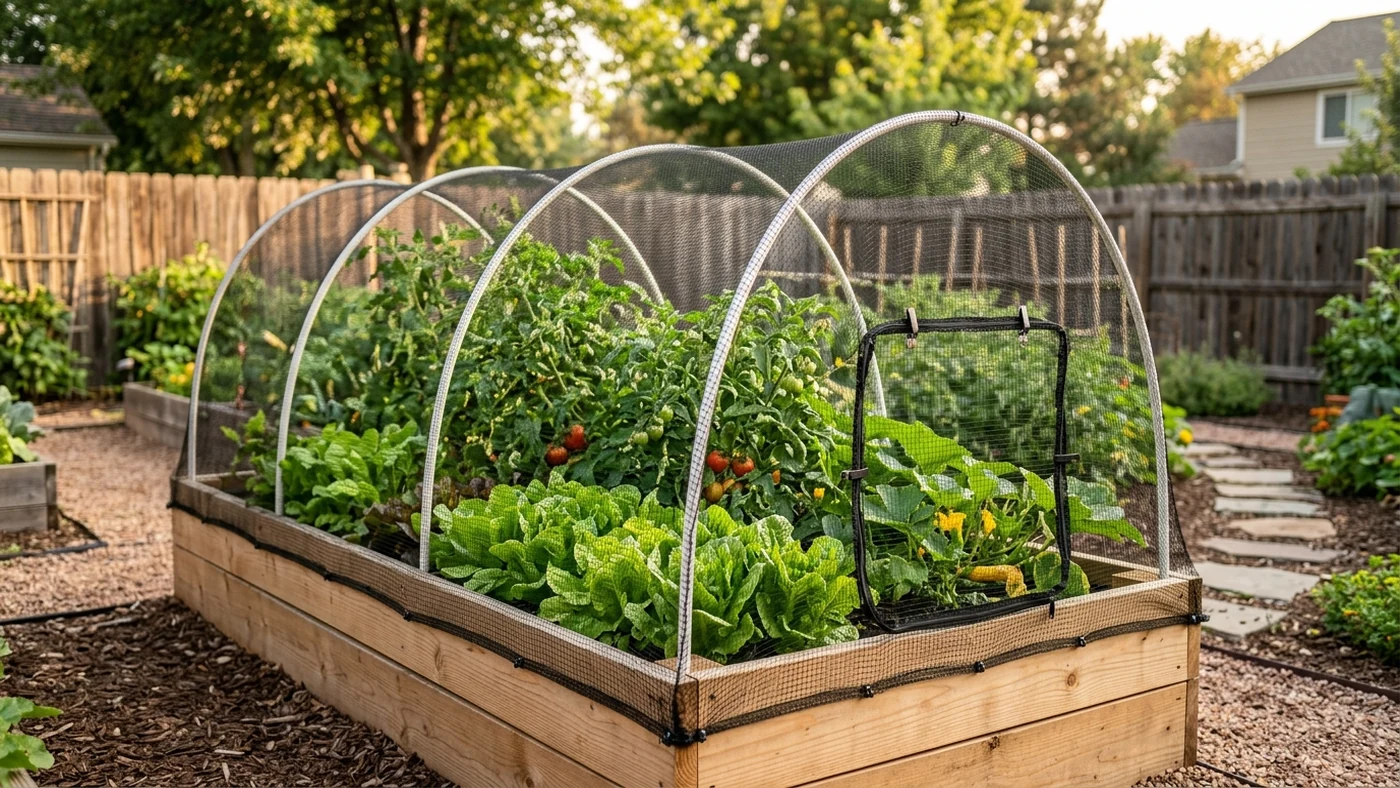
Confirm the Damage Before You Cover Anything
Netting takes real work, so confirm birds are the cause before you commit. Fresh peck marks and birds actively feeding are stronger evidence than damaged fruit alone. Ragged holes in leaves often point to other garden pests, not birds: Oregon State University Extension identifies slime trails and ragged chewing as signs of slug damage. Gnaw marks or fruit that vanishes overnight suggest a different animal. Typical bird pests in a vegetable garden, such as robins, starlings, and crows, are usually easy to catch in the act, so a dawn check or motion camera can settle which visitor you’re dealing with.
Note which crop and growth stage is affected. In early spring, birds often pluck seeds and pull up new seedlings before they root; later in the season the same birds may shift to pecking ripening fruit, so recheck through the year instead of trusting one inspection. Beds near a fence line often get hit first, since birds perch there before dropping in. If only one or two plants are targeted, a small rigid cage over that crop may protect the harvest without putting bird netting over the whole bed.
What Is the Best Way to Keep Birds Away From My Vegetable Garden?
How Does Bird Netting Work?
Bird netting acts as a physical barrier: the mesh openings are small enough to keep a bird’s body from passing through, while light, water, and air still move through the weave. That barrier only works if it’s held clear of the plants and sealed at every edge, which is why setup matters as much as the netting itself. It’s also the short answer to what’s the best way to keep birds away from a vegetable garden: a taut, well-sealed, properly sized cover is the most dependable option, though it takes more setup than lighter deterrents like scare devices.
How to Use Bird Netting in a Vegetable Garden
Should I Put Netting Over My Vegetable Garden?
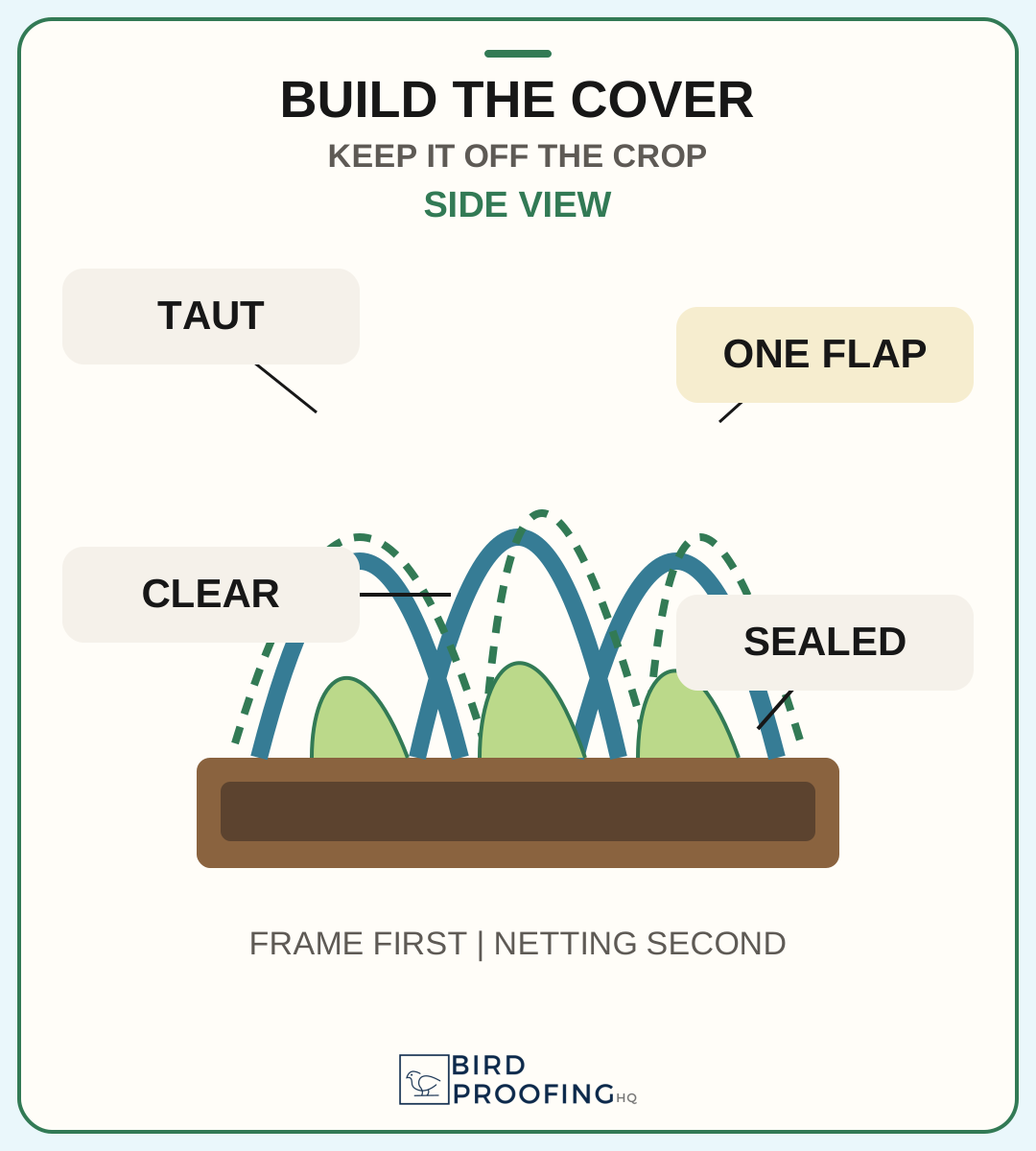
Not directly, whether you’re covering one tomato cage or netting the whole vegetable garden. Pest birds can peck through mesh that rests on foliage, and stems or leaves that grow into slack netting get tangled as they grow. Support bird netting on hoops or a frame instead, with a few inches of clearance above the plants’ mature height, so the mesh only touches the structure, not the crop.
For a single plant, wrap the cage or frame around it rather than draping netting over the foliage itself. About 4 inches of clearance above the outer leaves is a reasonable starting point; increase that gap as the plant grows or if you notice birds reaching through to peck at leaves or fruit. A cover supported this way keeps its shape and holds the mesh away from the plant, so it works as a physical barrier that keeps birds outside instead of a loose drape that can entangle them.
How to Cover a Vegetable Garden With Netting
A well-sealed garden netting setup starts with a frame, not draped netting over the plants themselves. Oregon State University Extension recommends building a frame over blueberry bushes, fastening the netting to it, and pinning the edge to the soil. Supporting bird netting above the canopy keeps ripe fruit away from the openings and makes gaps easier to spot than draping mesh straight over foliage, where birds can reach it from any side.
Match the structure to the bed. Low hoops of PVC pipe go up fast for a single row of seedlings or a short-season crop, anchored with capped metal rebar or smooth stakes. A rigid frame built to the edges of a raised garden bed holds its shape better through wind and is worth the lumber if the bed stays netted most of the year. Bent concrete reinforcement wire or metal fencing panels also hold an arch on their own. A walk-in, fully enclosed garden suits a tomato plant whose tomato vines grow several feet over the season, along with pole beans, grape vines, or other vining plants that need headroom. Size any structure for the plant’s mature height, not its current height, so growth never presses foliage into the mesh.
For one strawberry bed, low hoops or a simple wood frame over the whole bed work well because strawberries stay low and hide fruit under leaves. Birds can find the fruit before you notice the color change. Raspberries and other cane berries ripen higher and need mesh attached on all sides at cane height. A taller frame can cover several garden beds as one enclosure; for an entire garden, keep every seam within reach for repairs.
Bird Netting Covers: Choose the Mesh
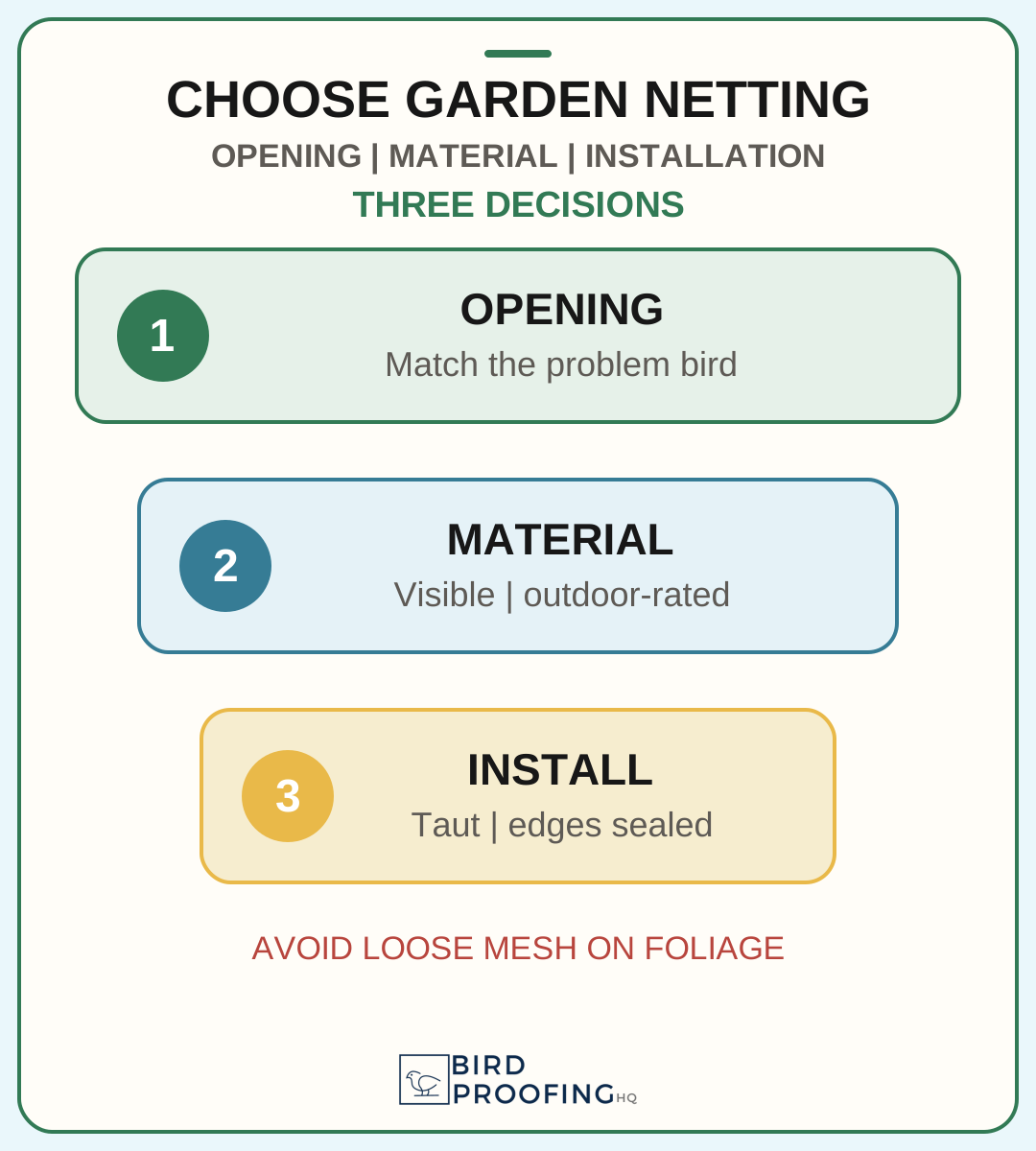
Bird netting covers come in different weights, colors, and opening sizes, so there’s no single correct mesh size for every garden. You can find bird netting at garden centers, hardware stores, and online, usually sold by the roll as plastic netting. Match the opening to the smallest bird species causing damage, and measure it yourself rather than trust the package label, since sizing varies between brands. Choose UV-treated netting for anything you plan to reuse; heavy duty netting labels still need the same material and opening-size check. Use finer insect netting only when you also need to keep bugs out. Keep bird netting off ripe fruit and berry bushes, since persistent birds will peck through wherever it touches. Pick a color you can see clearly against the plants so sag and gaps are easy to inspect, and make sure the cover opens and reseals easily for weeding and harvest. Iowa State University Extension calls supported netting the most effective home protection for blueberries.
Before you buy, weigh the netting weight against how long the cover will stay up. Lightweight plastic netting is flexible enough for temporary hoops, but only netting labeled UV-stabilized and weather-resistant is meant for repeated outdoor use. Heavier, professional-grade netting can hold up better on a permanent enclosure, so judge it by the material specification and warranty printed on the label, not by an unsupported lifespan claim. Measure the frame first and buy one roll with enough length and width to cover it plus extra for seam overlap, since running short mid-installation means an awkward patch. If your frame doesn’t match a standard roll size, look for one custom-sized piece cut to enclose it rather than stitching together several leftover scraps, which multiply the seams and gaps you have to seal and inspect later. Black netting can blend into foliage, but a contrasting color is easier to inspect for sag and gaps, making it the safer choice for a home garden.
How to Install Netting and Seal the Edges
The right support scales with the size of the enclosure. A small bed can rely on the same hoops or stakes described above, but a large walk-in enclosure needs rigid posts set firmly in the ground, secure anchors so the structure can’t shift or lift in wind, and support wire or cord run taut across the top to keep the netting from sagging into the plants. Professional large-span systems typically use tensioned steel support wire and smooth clips attached to rigid posts, walls, or fences; if you can’t safely tension and anchor that kind of system yourself, hire an installer rather than leaving a slack or unsecured cover in place.
Supporting bird netting over wide garden beds takes a rigid frame, since unsupported mesh sags onto the plants. These steps show you how to install netting so it stays taut, sealed, and easy to open, while it continues to prevent birds from reaching the crop.
- Set posts, stakes, or hoops to the plant’s mature height plus a few inches of clearance.
- Drape one continuous sheet of plastic netting over the frame instead of piecing together scraps.
- Pull it taut and overlap any seams by several inches, attaching the sheet at every corner with smooth clips, cord, UV-resistant zip ties, or eye hooks and wire clips on a permanent frame, and cap or turn inward any sharp wire ends so nothing can snag netting, skin, or feathers.
- Pin the netting flush with the soil on all sides, closing any gap where an animal could push underneath.
- Build one flap, sized to reach the entire bed, as the only entry point for watering and harvest.
- Shake the frame and walk the perimeter to check for sag or loose edges before you close the flap behind you.
What Is the Best Way to Join Bird Netting Pieces?
The best way is to avoid joining pieces in the first place: drape one continuous sheet over the frame, since seams are where wind and persistent birds find their way in first. When a single sheet doesn’t cover the whole frame, overlap the edges by several inches, clip or tie them together at close intervals, and attach the overlap at every corner post so it can’t work loose.
Does Bird Netting Need to Go All the Way to the Ground?
Yes. Bring every side down to the soil or mulch surface and pin, clip, or weight it continuously rather than at a few scattered points. A gap at the bottom does not just let birds in; small animals can nose or push underneath just as easily, and a few loose points can turn the whole cover into an entrance.
Recheck the soil-line seal after wind or heavy rain. Birds probe the same weak seam again and again until it gives way. Use bird netting only while crops need protection, then clean, dry, and store it.
Pollinator Timing, Inspection, and Wildlife Safety
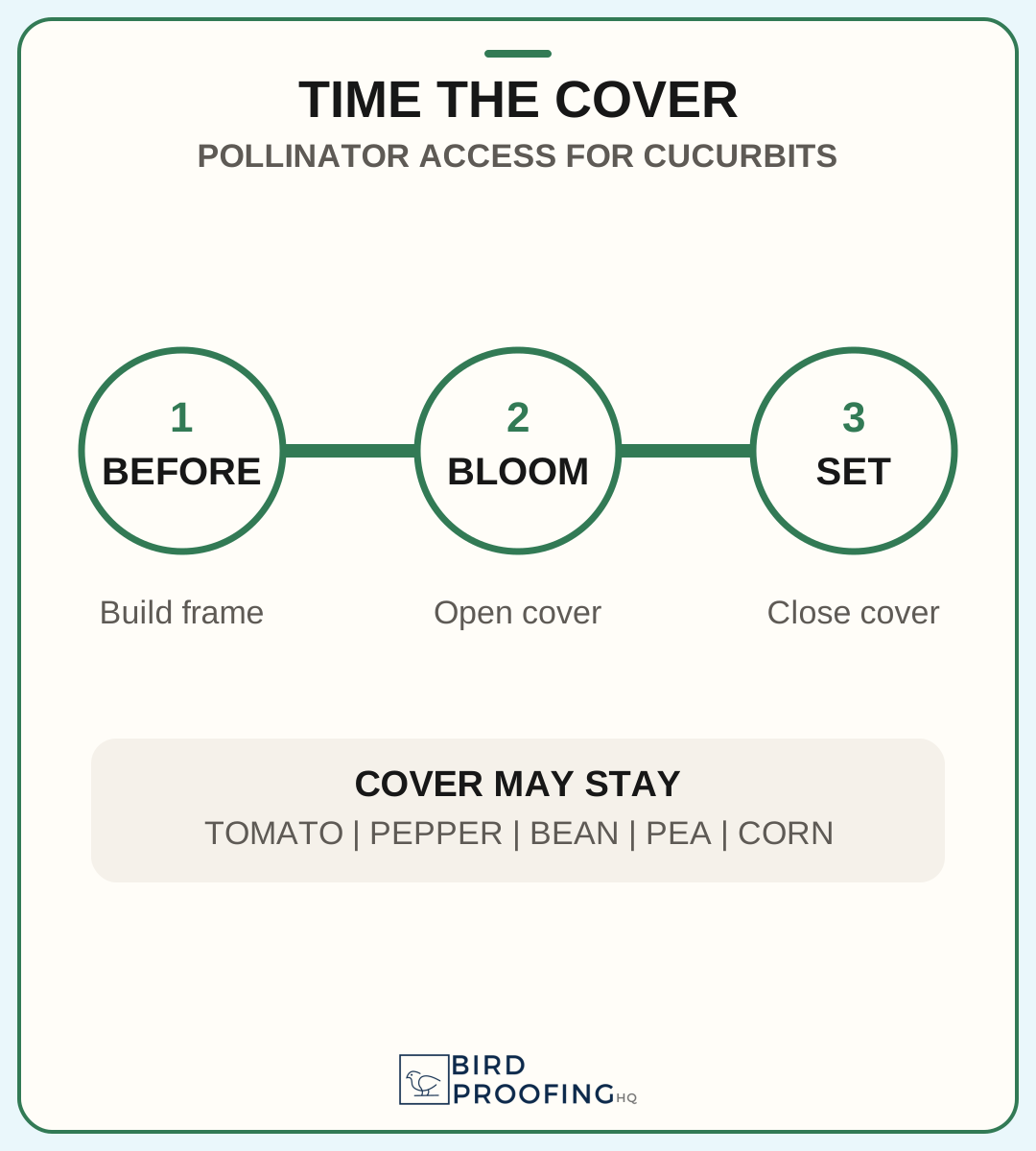
Squash, pumpkins, cucumbers, and melons need insect visits to set fruit; without pollination, they stop producing fruit even if the plants look healthy. The University of Minnesota Extension lists cucumbers, pumpkins, and squash among crops that require pollination. Leave those plants open while they bloom, then close the netting once fruit sets if bird damage is active. Iowa State University Extension classifies beans, peas, peppers, and tomatoes as self-pollinated and sweet corn as wind-pollinated, so those crops can stay covered through bloom without losing yield.
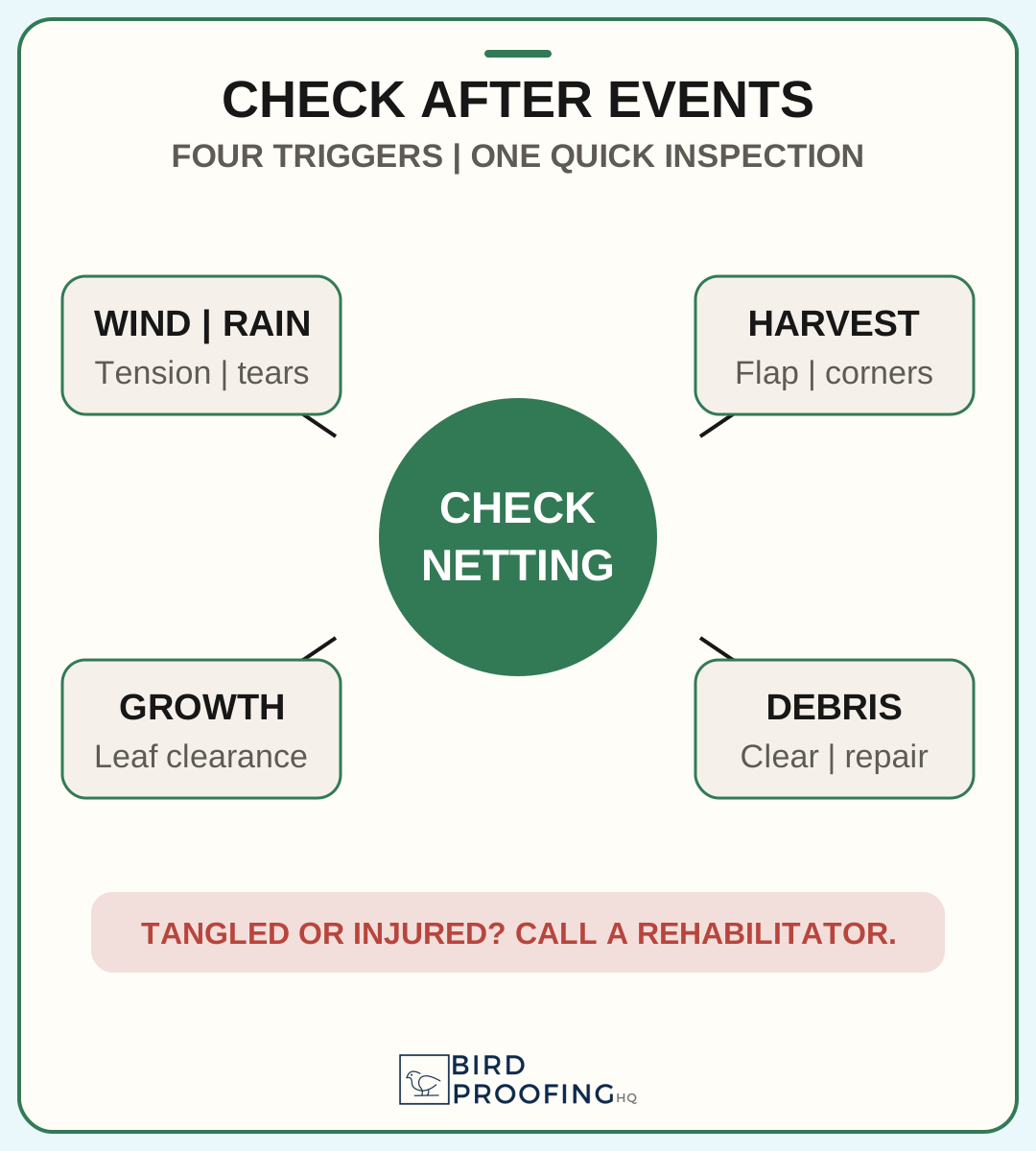
Check Netting Daily, and Again After Any Disturbance
Walk the netting once a day at minimum, checking for trapped or entangled wildlife, sag, tears, gaps, and open corners. Check again after wind, heavy rain, anyone opening the harvest flap, a growth spurt that pushes plants toward the mesh, or debris landing on the frame. Look for sagging pockets, tears, loose ties, and stems touching mesh. Don’t leave bird netting loose over winter; birds and other animals will find their way through a slack cover long before spring.
Can Birds Get Stuck in Bird Netting?
Yes, especially when the mesh is left loose or draped straight over foliage instead of pulled taut on a frame. If a bird is loose inside the enclosure, open the flap and stand back so it can find its own way out. If it’s tangled or injured, don’t attempt treatment. The U.S. Fish and Wildlife Service advises contacting a licensed wildlife rehabilitator or your state wildlife agency and following their instructions.
What Can I Use Instead of Bird Netting?
For a vegetable garden with light pressure, or for just one or two plants, a rigid cage may be simpler to check than a full bed cover. Prompt harvesting, removing nearby food and water attractants, or reflective movement near the bed can also help before you build anything larger. Penn State Extension describes netting as effective for small fruits, with cost, setup, and harvest access as the trade-offs of a sealed barrier. Layered alternatives may not match that level of protection.
Frequently Asked Questions
What Are the Pros and Cons of Bird Netting?
A taut, supported, sealed bird netting cover provides dependable exclusion. The trade-offs are cost, setup, pollinator and harvest access, weather repairs, and entanglement risk if loose mesh is neglected.
Can I Use Bird Netting on My Tomato Plants?
Yes, you can use bird netting over tomatoes, whether you’re covering a single plant or the whole patch. Birds will peck at green tomatoes as well as ripe ones, so waiting for color change doesn’t protect the fruit. Tomatoes self-pollinate, so they don’t need bee visits to set fruit, and the tomato vines can grow tall enough that the frame needs to clear their mature height rather than their current height. Still open the enclosure for pruning, harvest, and daily wildlife checks.
How Often Should I Check Garden Netting?
Check daily, and again after wind, heavy rain, harvest-flap use, growth toward the mesh, or debris impact. Repair sagging pockets, torn seams, and soil-line gaps promptly.
Can I Leave Bird Netting Up All Season?
Yes, while the crop needs protection. Keep bird netting taut and sealed, repair tears promptly, and store it after harvest instead of leaving loose material outside over winter.
Images: the featured garden image and the mesh selection, hoop layout, pollination timing, and netting inspection diagrams are original BirdProofingHQ visuals, created 2026-08-20.
Free: The 5-Step Bird-Proofing Checklist
Work through the right steps in the right order, before spending money on the wrong deterrents. Printable PDF, straight to your inbox.
No spam. Unsubscribe any time.