How to Get Rid of House Finches at Your Feeder (Legally)
Contents[hide]
To get rid of house finches at a feeder, skip the usual safflower swap, since finches eat it just as happily as sunflower. Use a feeder with smaller ports or perches, space feeders apart, and clean them often to stop eye disease. House finches are federally protected, so their nests cannot be touched while active.
In this article, you'll learn how to reduce house finches at feeders legally. We'll cover feeder changes, hygiene controls, and nest rules.
Why Are So Many House Finches at My Feeder?
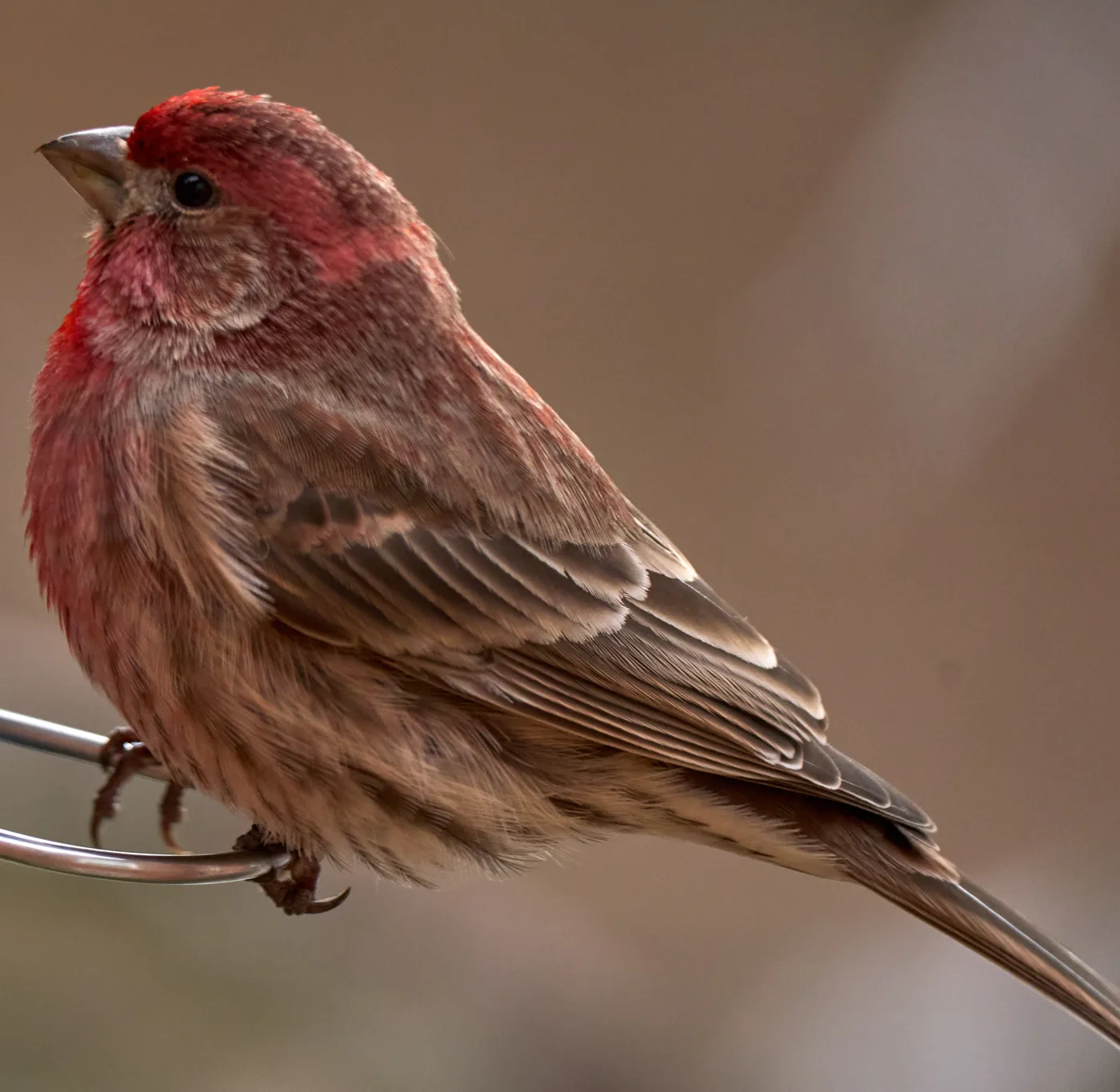
House finches travel and feed in flocks outside of breeding season. Once a group finds a reliable feeder, more tend to follow. Males have a rosy red head, throat, and chest with brown-streaked wings. Females and juveniles are plain brown with heavy streaking on the belly, easy to mistake for a sparrow until you hear the song.
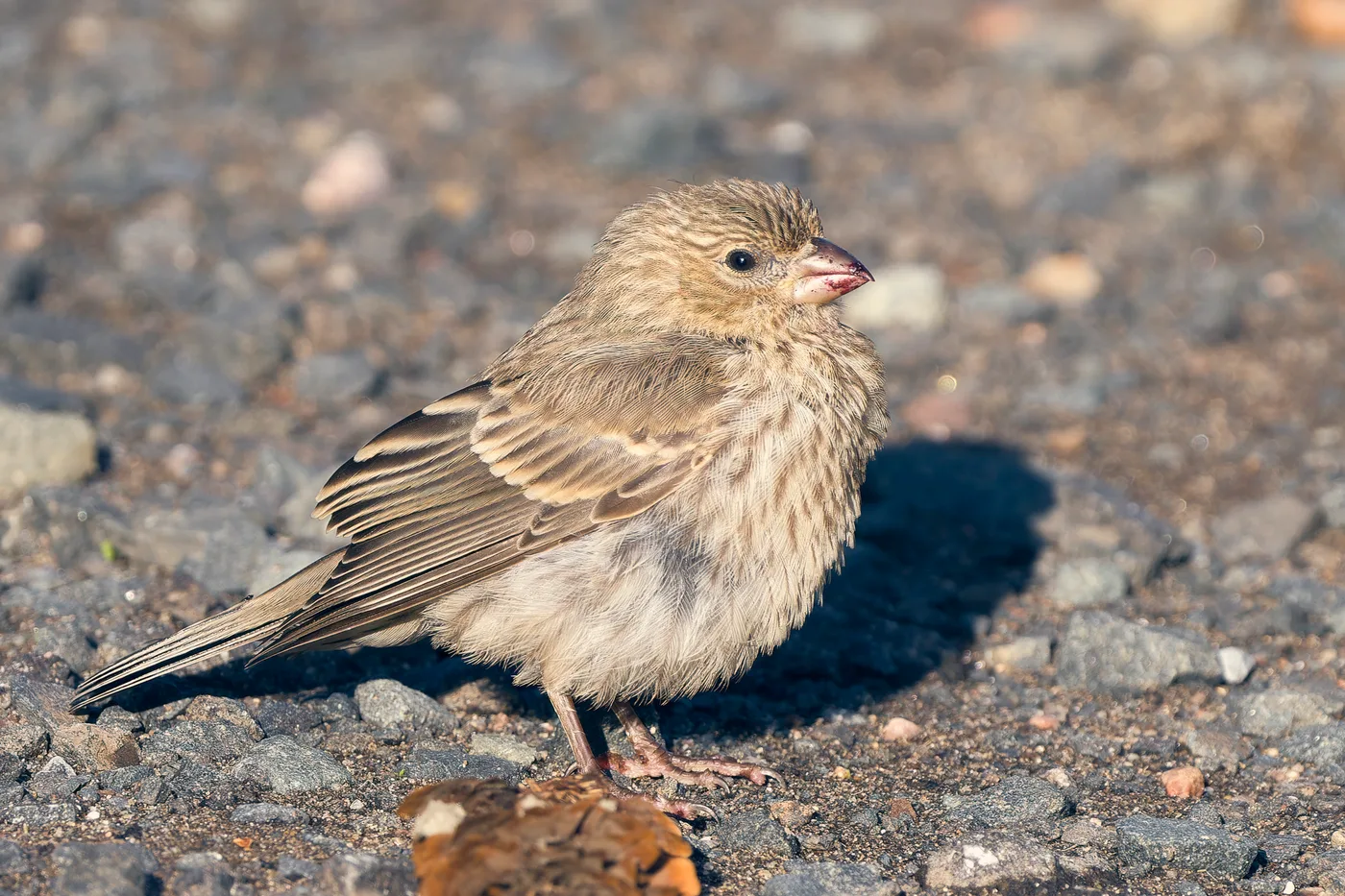
The birds also raise two to three broods in a single season. A pair that nests successfully in spring can have grown young feeding alongside them by midsummer. That is why a small problem in April can look like a real flock by July.
House Finch or Purple Finch?
The two get mixed up often, since both males are red and both visit feeders. A male house finch has red limited to the head, throat, and chest, with plain brown streaking below. A male purple finch is different. Its raspberry red washes across the head, back, and wings, more like the bird was dipped in wine than just wearing a red cap.
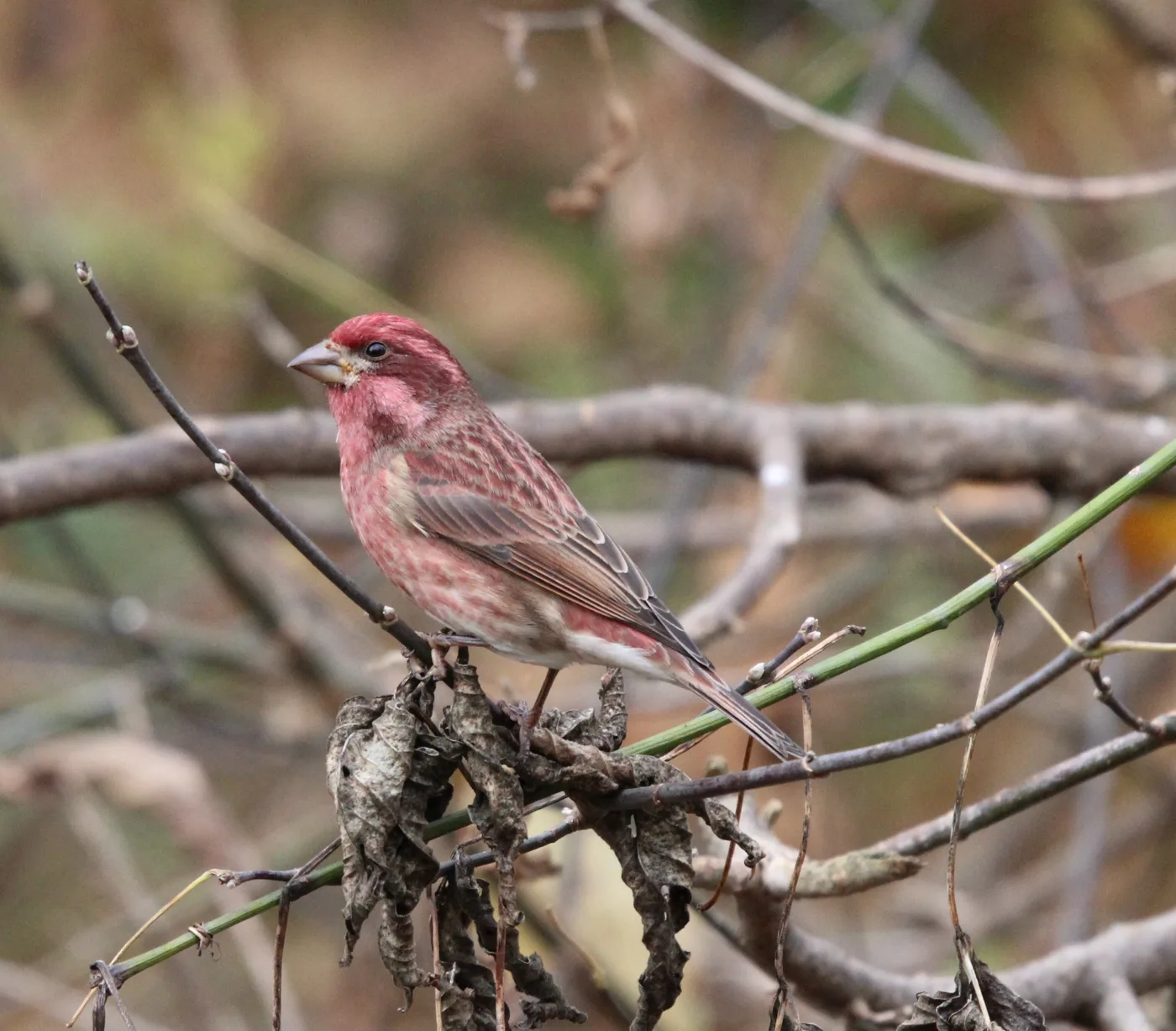
Purple finches are far less common at feeders. They also do not nest around houses the way house finches do. A bird actually nesting in your hanging basket or eave is almost always a house finch.
Are House Finches Protected by Law?
Yes, and the history behind that is stranger than most protected species. House finches are native to the western United States. In the 1940s, dealers illegally caught and sold them in New York pet shops as “Hollywood finches.” Federal agents began investigating under the Migratory Bird Treaty Act. Sellers released their stock rather than get caught with protected birds.
Those released finches took hold and spread across the eastern United States over the following decades, eventually meeting up with the native western population. Cornell Lab of Ornithology now counts the house finch among the most common feeder birds continent-wide. Every one of them, east or west, is protected under the same law their smugglers were trying to dodge.
That matters for anyone with a nest problem. Unlike house sparrows, European starlings, and pigeons, house finches have no legal exemption. Nests, eggs, and chicks cannot be disturbed while active, no matter how the population got there.
How to Get Rid of House Finches at a Feeder
Feeder crowding is the most common complaint, and it needs a different fix than the one that works on other birds.
Does Safflower Seed Keep House Finches Away?
No, and this trips people up because safflower is the standard fix for almost every other feeder nuisance. Grackles, starlings, and cowbirds find its bitter shell unappealing and move on.
House finches do not share that reaction. They eat safflower as readily as sunflower seed. Switching your feed will not thin a finch flock the way it does with those other species.
If safflower already cleared out your grackles or starlings and left the finches behind, that is expected, not a failed fix. The two problems need different solutions.
What Actually Thins a House Finch Flock
Since food-based deterrence does not work on finches, the fix is limiting how many birds can feed at once.
A tube feeder with short perches or small ports lets fewer birds land at a time than an open tray or platform does.
A single large platform feeder invites a dozen finches to crowd shoulder to shoulder. Two or three smaller tube feeders hung 10 feet apart hold the same total birds with far less bunching at any one spot. That helps with both crowding and disease spread.
Taking a feeder down for a week or two during a heavy crowd also breaks the habit. The flock moves on to search elsewhere, and only some birds return.
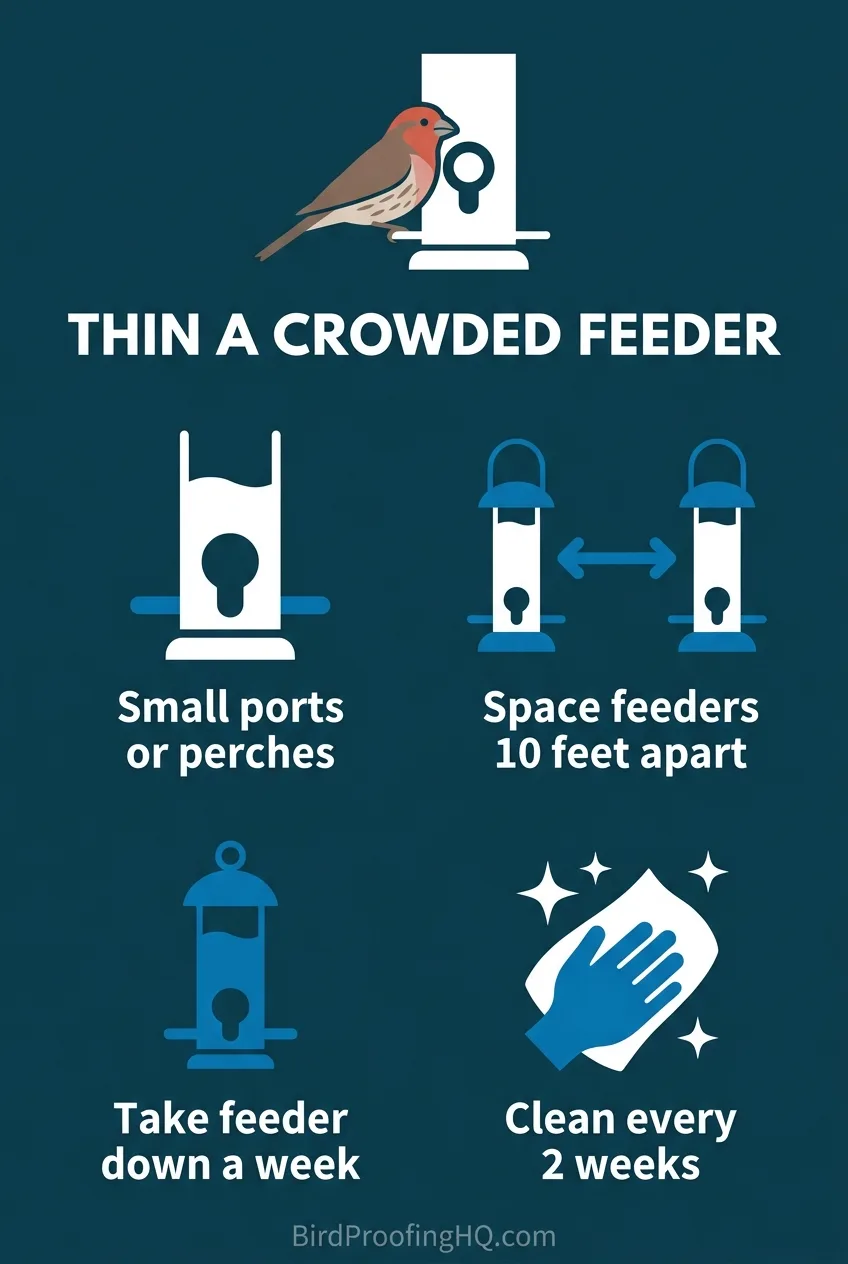
None of these changes require replacing your feeders entirely. Most tube feeders already sold for finches and goldfinches have the small ports this method needs.
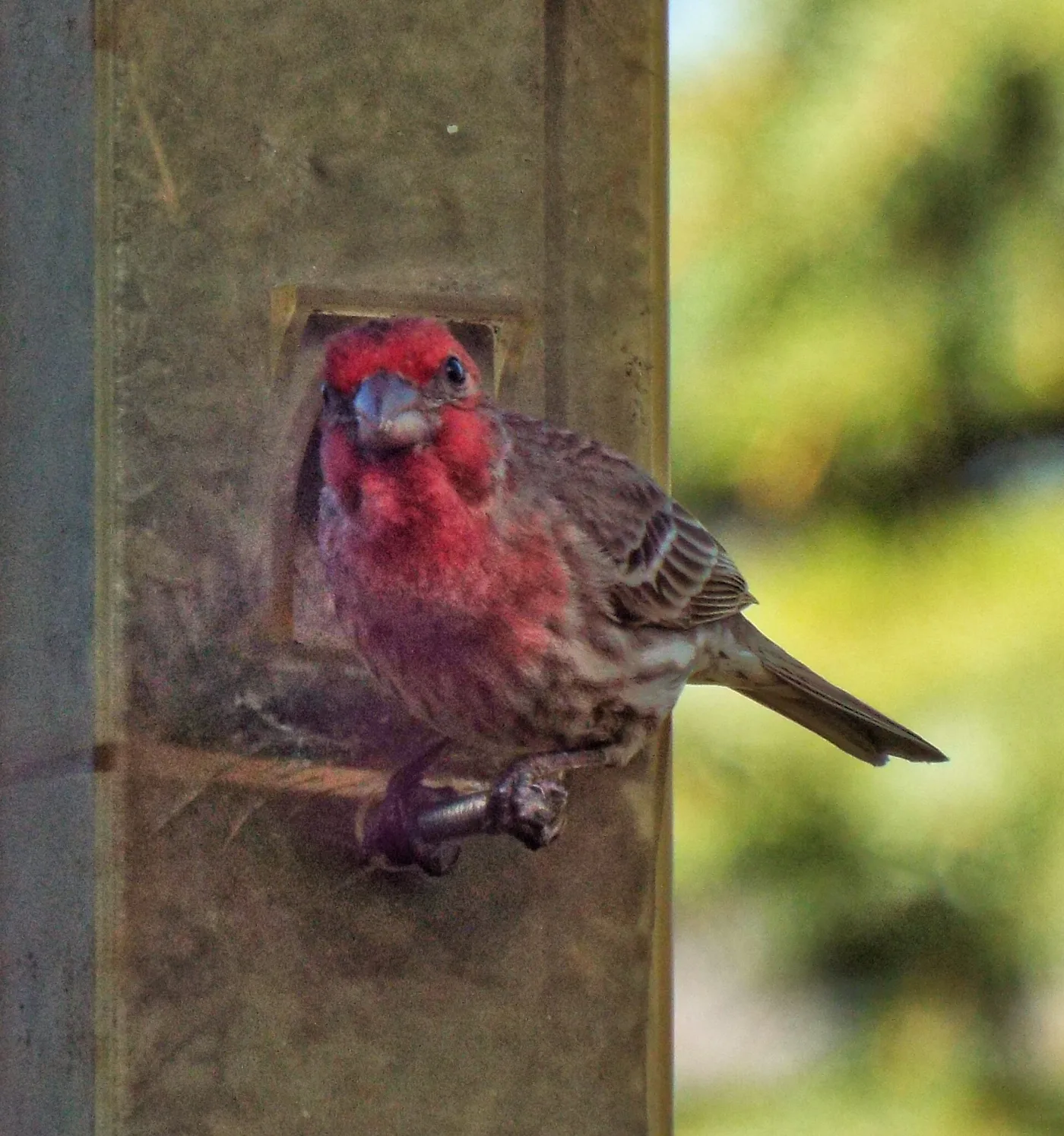
This will not remove house finches from your property entirely, since they are common, wide-ranging birds. The goal is a manageable number at your feeder.
Feeder Hygiene and Eye Disease
The Real Reason to Manage a Crowded Feeder
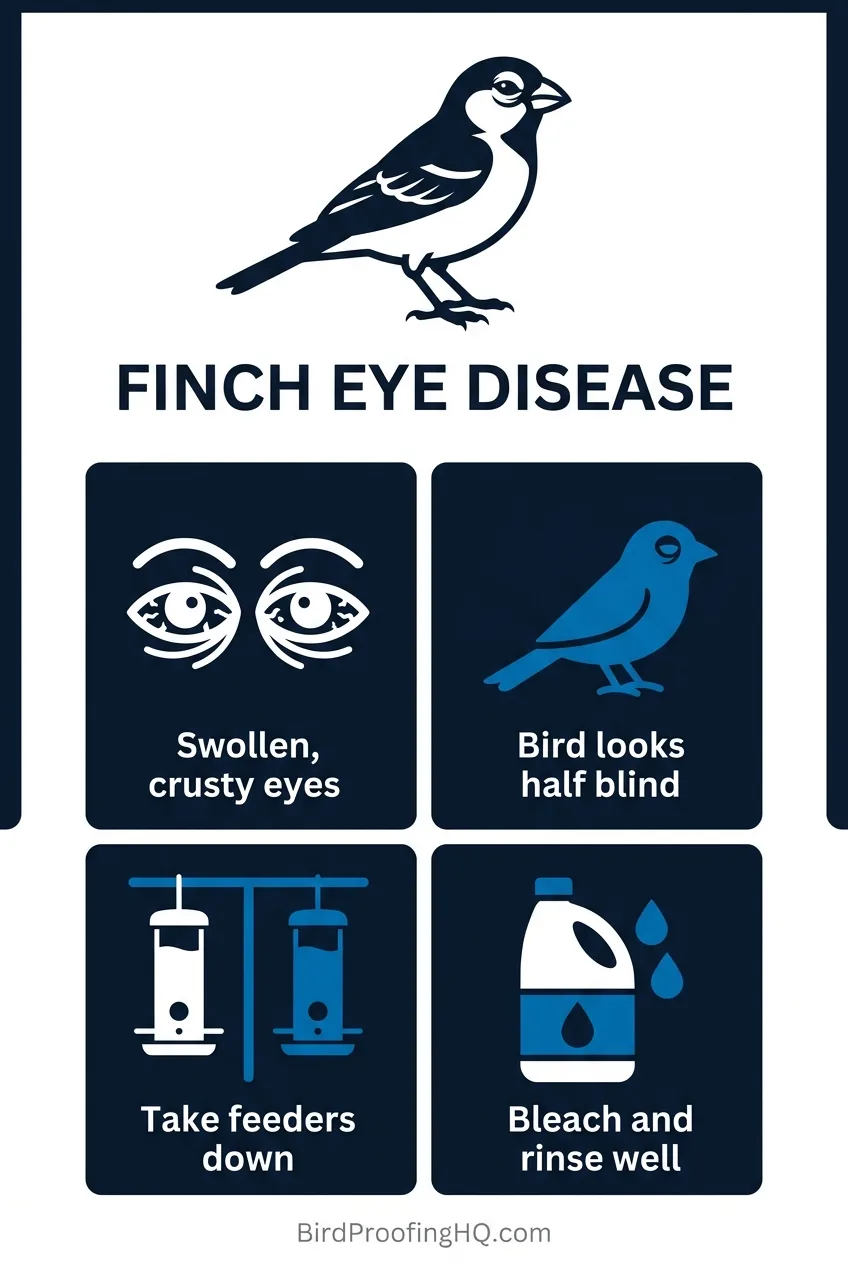
A crowded, dirty feeder spreads more than mess. Mycoplasmal conjunctivitis, a bacterial eye infection, was first documented in house finches around Washington, D.C., in the winter of 1994. It spread through the eastern population within a few years, tracked in real time by Cornell’s Project FeederWatch. Infected birds develop swollen, crusty, or runny eyes and can go nearly blind, unable to spot predators or find food.
The disease spreads at shared feeding and perching spots. A crowded feeder is exactly the kind of place it moves fastest. A finch with swollen or crusted eyes is the real signal to act, not just a big flock.
How to Clean Feeders to Stop Disease Spread
Take feeders down and soak them in a solution of one part household bleach to nine parts water for at least ten minutes. Scrub off any residue, rinse thoroughly, and let the feeder dry completely before refilling and rehanging it.
Do this every two weeks during heavy use, and immediately if you spot a sick bird. Rake up spilled seed and droppings underneath the feeder too, since the ground gets as contaminated as the feeder itself.
Nesting: Prevention and Removal
How to Stop House Finches Nesting Somewhere You Do Not Want
House finches build in dense shrubs, vine-covered trellises, porch lights, wreaths, and building ledges as well as hanging baskets. If a pair has picked a hanging planter, a mesh cover fitted before nesting starts is the fix.
For other spots, act before nest building starts. That means late winter in warm climates and early spring farther north. Thin a dense shrub, take down a wreath for the season, or block a ledge before a pair commits to it.
Once nest building has begun but there are no eggs yet, removing the loose material still works. The birds will typically relocate.
Can You Remove an Old House Finch Nest?
Only once every chick has left the nest and it sits empty. That takes roughly five to six weeks from the first egg. A nest can look abandoned during a parent’s feeding trip and still hold eggs or chicks, so removing an active nest is a federal violation.
Once the nest is confirmed empty, clear out the old material and block the site. A used spot often gets reused the same season for a second or third brood.
Does a Busy Feeder Put House Finches at Risk?
A crowded feeder near a window carries a second risk beyond disease: window strikes. Finches startled off a feeder, or chasing each other for a perch, fly fast and low, and a reflective window looks like open sky from that angle.
Move the feeder within 3 feet of the window or more than 10 feet away to cut down on fatal strikes. At close range, a bird cannot build enough speed to hurt itself; at longer range, it has room to see and avoid the glass. Thinning a crowded feeder with the steps above helps here too, since fewer birds jostling for a perch means fewer panicked, fast departures.
When to Call a Professional
Most house finch problems are manageable with feeder changes and cleaning. Call a wildlife control company for a nest you cannot safely reach, a perch with a heavy dropping buildup, or disease outbreaks that keep returning despite regular cleaning.
Related Reading
House finches are one of many birds drawn to an easy meal. Bird deterrents covers the full toolkit for feeder and yard control, and natural bird repellents breaks down which home remedies actually hold up.
Images: Male house finch at a bird feeder by Quist, CC0. House finch, female by Paul Danese, CC BY-SA 4.0. Purple finch, male by PookieFugglestein, CC0. Watchful house finch at a feeder by David Whelan, CC0. Via Wikimedia Commons.


.jpg)
Free: The 5-Step Bird-Proofing Checklist
Work through the right steps in the right order, before spending money on the wrong deterrents. Printable PDF, straight to your inbox.
No spam. Unsubscribe any time.