How to Keep Birds Out of Hanging Plants (Plus Nesting Fix)
Contents[hide]
To keep birds out of hanging plants, cover the basket with mesh or chicken wire before nesting season. House finches are the main culprit and they scout fast. Act before they pick a spot. Once eggs are laid, the nest is federally protected and you must wait out the full breeding cycle before you can touch it.
In this article, you'll learn how to keep birds out of hanging plants before nesting begins. We'll cover basket barriers, nest timing, and legal limits.
Why Birds Build Nests in Hanging Baskets
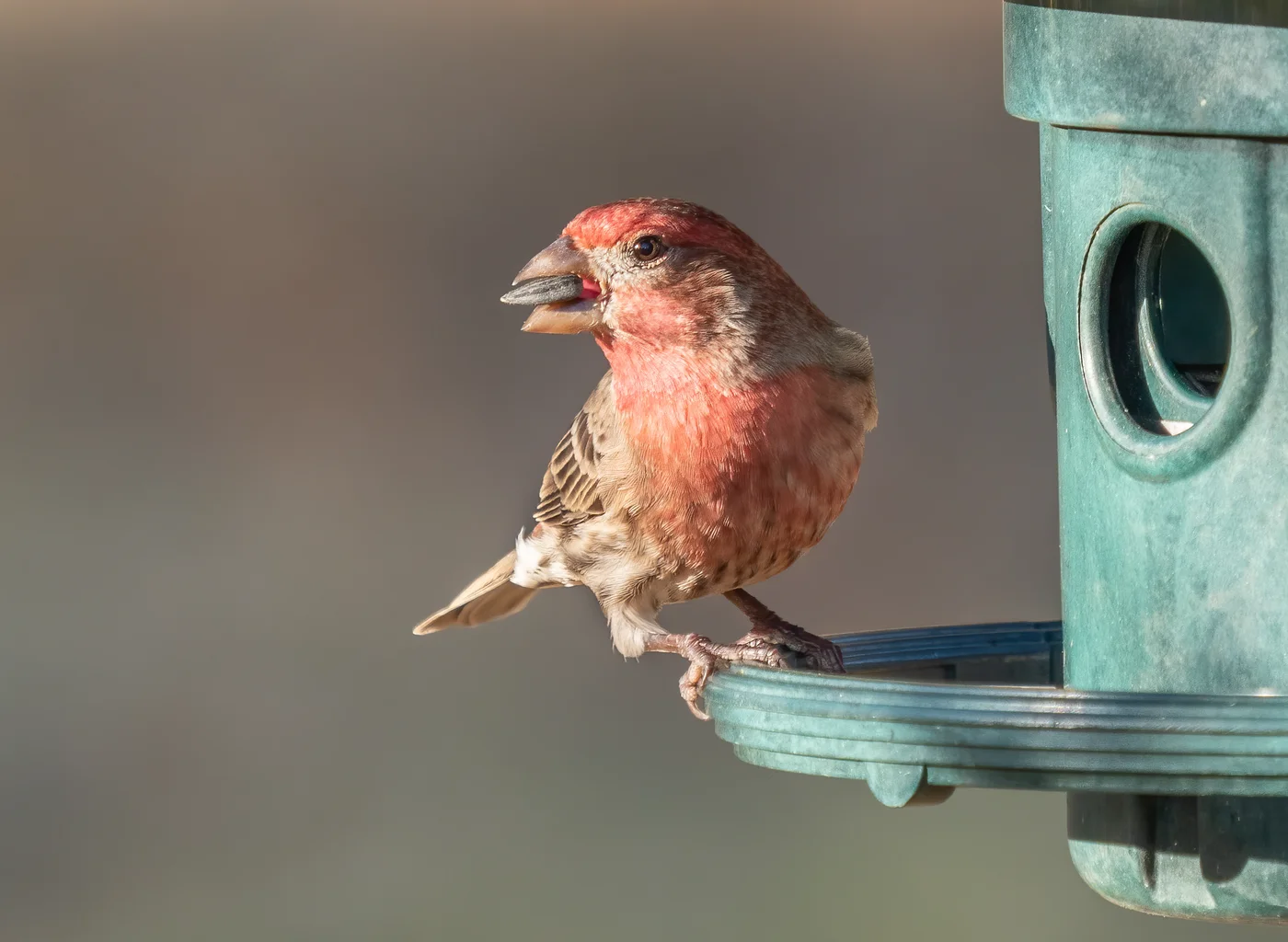
House finches are behind most hanging basket nest problems, especially in the western and central US. The female builds the nest in three to five days using grass, twigs, flower petals, and plant fiber. Once she picks a spot, she is fast and committed.
A hanging basket works in her favor in every way. The deep cup holds a nest securely. Trailing plants create a canopy above, and the soil offers nesting materials she can pull without leaving.
Baskets on a covered porch or under an overhang are especially attractive. House finches actively prefer nesting close to structures and people. For feeder crowding or other house finch problems beyond the basket, the full house finch guide covers those separately.
Other birds also use hanging pots and flower pots occasionally. American robins sometimes build on the lip of a large planter. Mourning doves will settle into low, wide pots. But small, tightly woven nests built deep in the cup of a hanging basket are almost always house finches.
How to Prevent Birds from Nesting in Hanging Plants
The simplest answer to how to keep birds out of hanging plants is to act in January, before they pick a spot. Earlier is always easier.
Cover the basket with mesh. Cut a piece of chicken wire or bird netting to fit over the top like a dome, and secure it to the basket frame with garden wire or zip ties. Leave small gaps for watering. Birds cannot nest in what they cannot access, and a covered basket is simply not worth their time.
Remove nesting materials as soon as you see them. If you spot the first few pieces of dry grass or plant fiber being carried in, pull them out right away. At this stage the birds have not committed, and most will move on rather than start over. Check your baskets daily through February and March.
Tuck in cotton balls with peppermint oil. A few drops of peppermint essential oil on cotton balls pressed into the soil can deter finches during their early scouting phase. Refresh every two days and after rain. It fades fast outdoors, so use this alongside the mesh, not instead of it.

Use rubber snakes or fake owls. Drape a rubber snake over the basket rim or position a fake owl nearby. Both can work when first introduced because a bird that sees a predator will often move on. Move the decoy every two days, because birds learn fast that a snake that never moves is not a real snake. Decoys buy time; they do not solve the problem permanently.
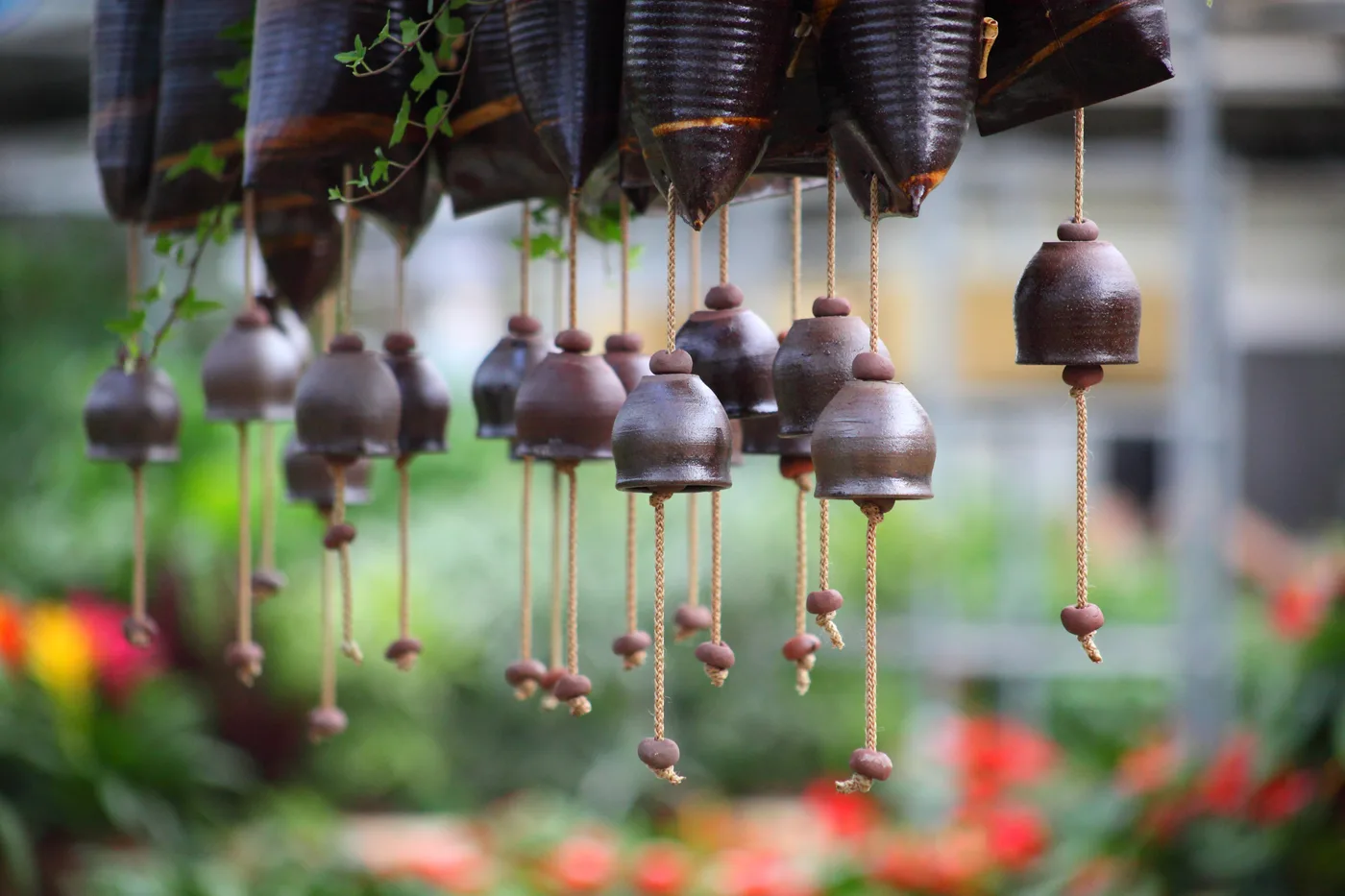
Add wind chimes nearby. The motion and noise make birds cautious about landing. Hang them within a few feet of the basket, and add a strip of reflective tape nearby for extra flash and movement.
If you have a covered porch, bring baskets inside overnight during February and March. Even two weeks of disrupted scouting can push house finches to choose a different site.
What to Do If Birds Have Already Started Nesting

If you see a nest being built but no eggs yet, remove the nesting materials and cover the basket immediately. There is still time.
If you see eggs, stop. House finches are protected under the Migratory Bird Treaty Act, the same law that covers most US songbirds. Removing an active nest with eggs or baby birds is a federal violation, no matter where the nest is. Your hanging basket counts.
Wait it out. The eggs hatch in about 12 to 14 days, and the young birds (sometimes called fledglings) leave around 16 to 19 days after that. The full cycle runs five to six weeks.
House finches can raise two or three broods through spring and into summer. Once the chicks leave, act immediately: remove all nesting materials and install your mesh before the parents start looking for a second site.
The nesting season guide has the full legal picture and what to do before and after a nest is built.
Do Decoys and Scents Actually Hold Up?
Rubber snakes and fake owls work best on first contact. If a finch spots an unfamiliar rubber snake on her first visit to a basket, she will usually go elsewhere. If the snake has been sitting in the same position for a week and she has flown past it every morning, it no longer registers as a threat.
Rotation is the rule with all scare devices. Move the decoy. Vary its position. Some people alternate a rubber snake and a fake owl on a two-day cycle to maintain the uncertainty.
That extends the deterrent effect, but it does not replace mesh.
Peppermint, garlic, and other scent deterrents follow the same pattern. Useful during scouting, unreliable once a bird is committed, gone in a day if it rains. Use them early and refresh them often. The natural bird repellent guide breaks down what each scent actually does and how long it lasts.
For a wider look at barriers, scare tactics, and sprays, bird deterrents covers what holds up and what birds figure out in a week.
Frequently Asked Questions
Why do birds keep nesting in my hanging baskets?
House finches are the most common culprit. The deep cup of a hanging basket mimics a natural nest site. Trailing plants provide cover, and the soil gives them nesting materials right there. Hanging pots on a porch or under an eave are especially popular because finches prefer nesting near structures.
Is it illegal to remove a bird’s nest from a hanging basket?
Yes, if the nest has eggs or young birds. House finches are protected under the federal Migratory Bird Treaty Act. Removing an active nest with eggs or chicks is a federal violation, regardless of where the nest is built. Wait until the fledglings leave, which takes about five to six weeks from the first egg, then remove all the nesting materials and cover the basket.
What is the best way to keep birds from nesting in hanging plants?
Cover the top of the basket with mesh or chicken wire before local birds start scouting nest sites, usually late winter or early spring. Physical barriers work far better than scents or decoys. If you see nesting materials being added but no eggs yet, remove the material right away and birds will usually move on.
Do wind chimes keep birds out of hanging baskets?
They help short-term. Wind chimes create noise and movement that makes birds nervous at first. But house finches that have picked a spot will push through the distraction once they are committed. Use wind chimes alongside a physical mesh barrier, not instead of one.
Will cotton balls with peppermint oil keep birds away from hanging plants?
Briefly. Peppermint oil tucked into the basket soil may deter birds during early spring scouting. The scent fades within a day outdoors and needs refreshing every two to three days through February and March. It works best as a supplement to a physical barrier, not as a standalone fix.
Images: Male house finch by Rhododendrites, CC BY-SA 4.0. Bird feeding chicks in hanging basket by Fyre Mael, CC BY 2.0. Wind chimes by Kim Dae Jeung, CC0, via Wikimedia Commons. Reflective CDs photo via BirdProofingHQ.
2.jpg)
.jpg)

Free: The 5-Step Bird-Proofing Checklist
Work through the right steps in the right order, before spending money on the wrong deterrents. Printable PDF, straight to your inbox.
No spam. Unsubscribe any time.