Birds Nesting in Eaves: What to Do Before You Seal the Gap
Contents[hide]
- 1. Why Birds Build Nests in Your Eaves
- 2. Signs of Birds Nesting in Your Eaves
- 3. Nest on the Eave or Birds Inside the Soffit?
- 4. Is the Nest Active? What the Law Requires
- 5. How to Clear an Eave Nest Safely After the Birds Leave
- 6. How to Seal Eaves Without Blocking Ventilation
- 7. Deter Birds With Exclusion, Not Gadgets
- 8. Eave Exclusion Checklist
- 9. When to Call a Professional
- 10. Frequently Asked Questions
Quick Answer
Birds nesting in eaves usually means an exterior nest under the roof overhang or birds slipping through a gap into the soffit cavity. If the nest is active and belongs to a protected species, you must wait until the young leave before disturbing it.
In this article, you'll learn how to handle birds nesting in your eaves. We'll cover nest identification, legal removal timing, and vent-safe sealing.
Why Birds Build Nests in Your Eaves
The eave is the strip where your roof overhangs the wall. It offers two different kinds of shelter, depending on which side of it a bird uses. Outside, the overhang works like a small roof over a roof. It blocks rain and hides a nest from the sky.
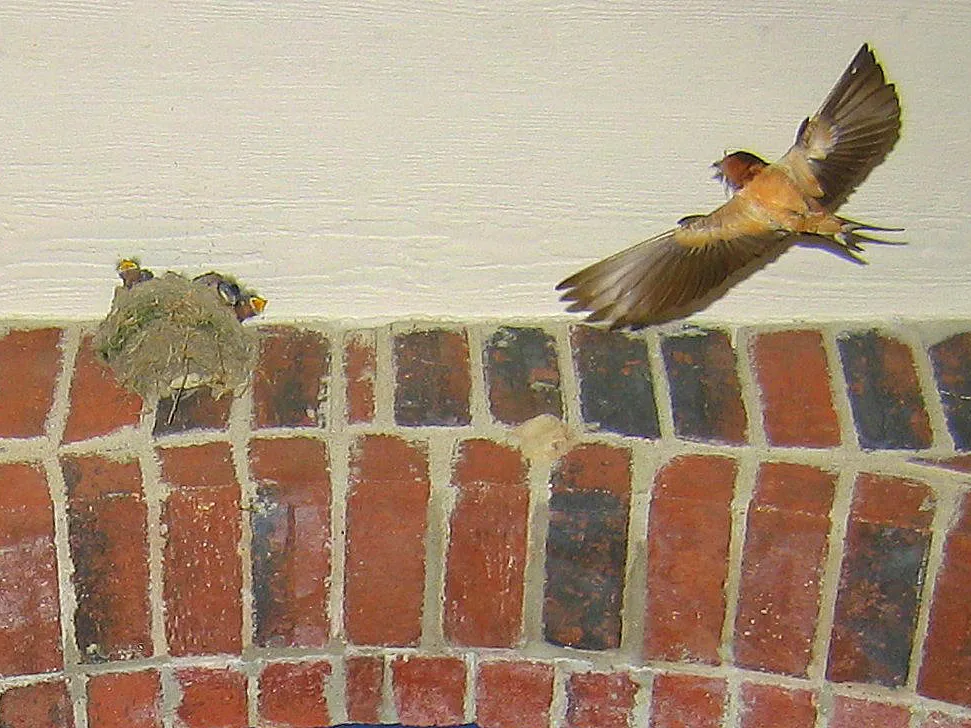
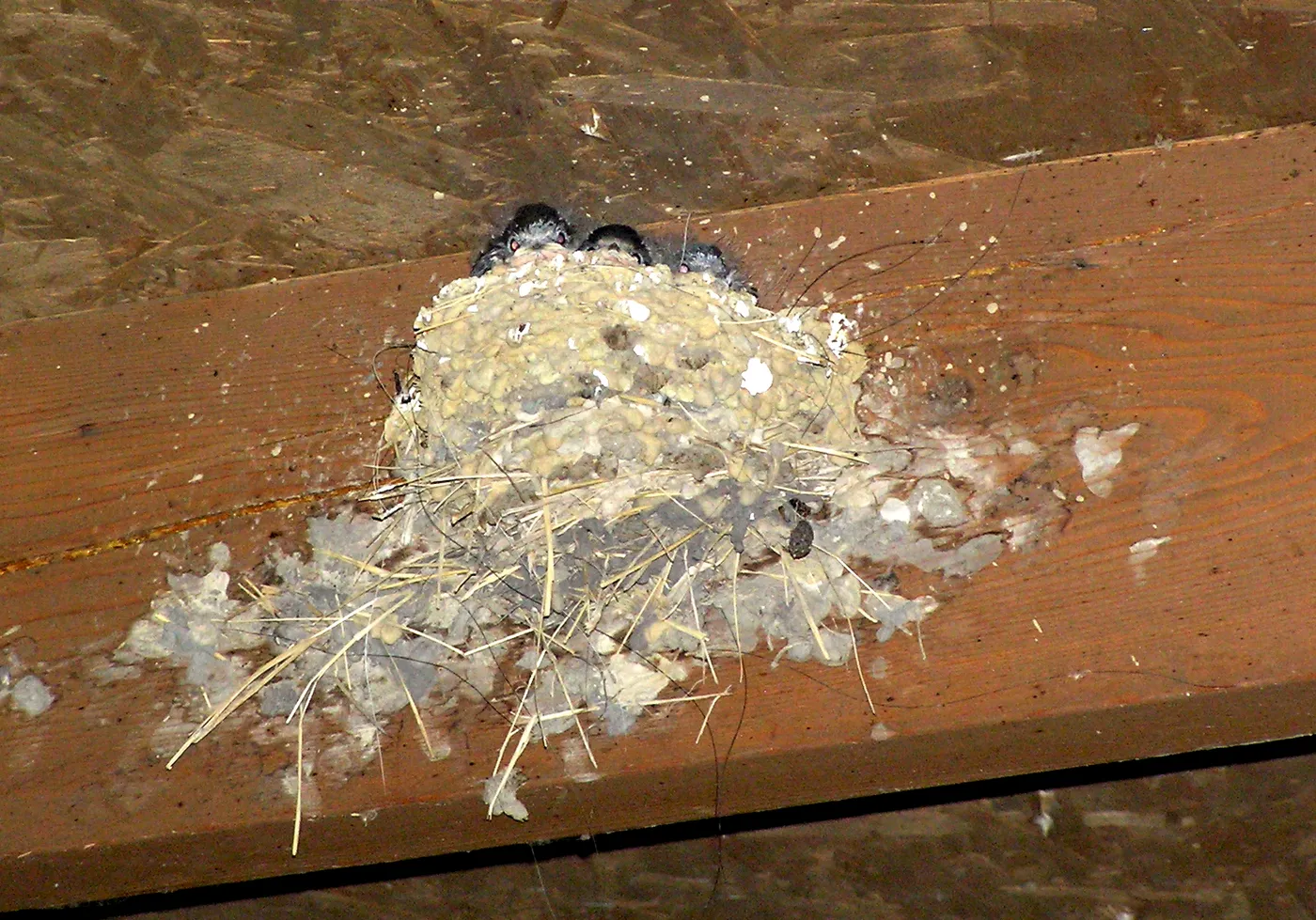
That is why barn swallows and cliff swallows plaster mud nests against the underside of the eave. They stick nesting material to the spot where a beam meets the wall, or along an exposed ledge. House sparrows use those same outer ledges and crevices for a looser twig nest when no cavity is open to them. They will often perch there for days before they start building.
Inside is a different story. The soffit or fascia board sometimes has a gap, a split seam, or a missing vent cover. A bird can slip past the outer trim there, into the hollow space behind it. House sparrows and European starlings favor that route.
A cavity behind the soffit works like a ready-made nest box: dark, dry, and out of reach of most predators. Once a bird gets inside, it has easier access to your attic than your yard. That changes both the risk and the fix.
Most eave nesting activity tracks the local nesting season. Birds return or become active as the weather warms, build over a few weeks, and raise their young before activity tapers off later in the year. Exact timing shifts by species, climate, and region. The reliable signal is watching your own eaves for fresh nesting materials or repeat visits by wild birds, not a date on a calendar. A pair that nests successfully in a gap or on a ledge one year will often try the same spot again the next. That is the real argument for closing an unused opening once it is confirmed empty.
Signs of Birds Nesting in Your Eaves
Most nests under your eaves announce themselves before you ever spot the nest itself. Droppings streaked down the siding or piling up on a windowsill, deck, or walkway below the roofline are usually the first sign. Birds return to the same perch on the eave dozens of times a day while they are building and feeding chicks. Loose twigs, grass, or other nesting debris caught in the gutters or wedged at the corner of the soffit also means a bird has been gathering supplies nearby. That is true even if you have not traced the nest itself yet.
Noise is the other early tip-off, especially for a nest tucked inside the soffit where you cannot see it. Chirping, scratching, or fluttering from the roofline points to activity inside the cavity. It is most noticeable early in the morning or right at dusk, when parents are shuttling food back and forth. It is often the only clue you get before you see any nesting material.
A bird perching repeatedly on the same spot along the eave, rather than passing through, is often scouting or already building. Droppings can also tell you how long a site has been active. If the buildup is heavy enough to leave a stain or a faint ammonia smell under the eave, treat that as a sign of steady use, not a one-time visitor.
Nest on the Eave or Birds Inside the Soffit?
Look before you plan anything. These two situations need different handling, and mixing them up wastes effort or, worse, seals a bird inside.
An exterior nest is easy to confirm. You can see the cup, mud dome, or twig pile stuck to the underside of the overhang, and the birds fly straight to it. This is the more visible, and generally the more manageable, problem.
A soffit entry is quieter. Watch for birds vanishing into a gap where the fascia meets the roofline, instead of landing on a visible nest. Also watch for a dark streak or staining below a small hole, and for faint movement or feeding sounds from inside the soffit with no nest in sight. If birds are going into the structure rather than building on top of it, treat the opening as a cavity entrance, not a spot to plug on sight. If the sound or droppings trail further back toward the roofline, or birds have already reached the open attic space, the job has moved past the eave. At that point you need attic exclusion, meaning the birds must be sealed out of the attic itself rather than just off the eave. That is covered in how to get birds out of your attic.
Is the Nest Active? What the Law Requires
Before you touch either kind of nest, find out whether it is still in use. Under the Migratory Bird Treaty Act, it is illegal to destroy a nest that contains eggs, chicks, or young still dependent on it. That protection covers the native wild bird species the law lists, according to the U.S. Fish and Wildlife Service. Federal policy now calls this an in-use nest, the term the agency adopted in its January 2025 nest guidance. For a homeowner, in-use and active mean the same thing: eggs are present, or chicks are still being fed.
House sparrows and European starlings, the two birds most likely to be using the hidden soffit cavity described above, are the main exception. Both are non-native species the Migratory Bird Treaty Act does not cover, so their nests can legally come out anytime, active or not. Barn swallows and cliff swallows are native and protected, so an active mud nest on the outside of the eave still has to wait. State or local rules can still add protection beyond the federal baseline, so confirm the species before you assume a nest is fair game.
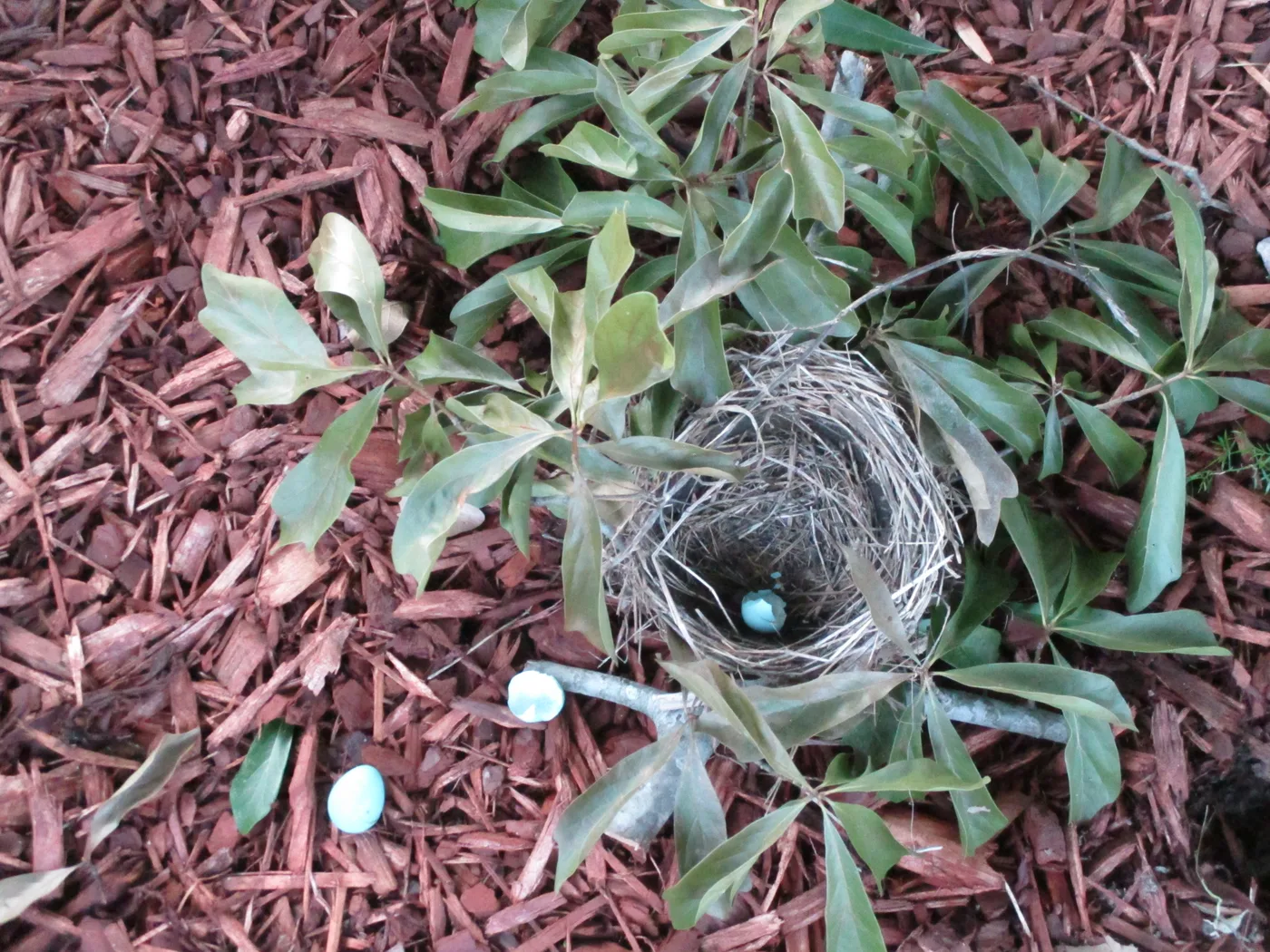
A nest that is empty of eggs and birds can generally be removed. Do not keep the nest itself, since federal rules can restrict possession of nest material. Permits to disturb an in-use nest do exist, but the USFWS reserves them for limited cases such as a genuine health or safety concern. The normal path for a homeowner is to wait. There is no fixed number of days that makes a nest officially abandoned. Watch the opening for several days, especially around dawn and dusk when parents are most active, and only proceed once you see no adult traffic. State and local wildlife rules can add further restrictions, so check with your state wildlife agency if the species or the situation is unclear.
How to Clear an Eave Nest Safely After the Birds Leave
Once you have confirmed the nest is out of use, cleanup is simple for a small, fresh nest and worth handing off for anything bigger. Old, built-up droppings can carry Histoplasma, a fungus that grows in soil enriched by bird waste. It can cause a lung infection called histoplasmosis if disturbed dust gets inhaled, according to the CDC. A few fresh droppings under a small mud or twig nest are a minor concern. A thick, dried accumulation under a nest site that has been used for years is not something to disturb dry.
Wet the material down lightly before you remove it. That keeps dust from becoming airborne while you bag the nest and any loose droppings. Wear gloves, and skip the shop vacuum. An ordinary vacuum can send fine particles back into the air you are breathing. Call a wildlife or pest control professional if the buildup is extensive or has clearly been accumulating for years. Also call one if the eave sits over a doorway or window people pass under, so they can handle it safely.
How to Seal Eaves Without Blocking Ventilation
How you close the opening depends on what kind of opening it is. This is where well-meaning repairs go wrong.
The gap is sometimes just a construction flaw: a warped fascia board, a split seam, or a hole where trim has pulled loose. Close it solidly once you have confirmed no bird is inside. Wood filler, matching trim board, or sheet metal flashing fastened with corrosion-resistant screws keeps the spot from reopening.
If the opening is a soffit vent, do not close it off completely. Those vents are part of the house’s designed airflow, moving air through the attic to manage moisture and heat. Covering one completely can trap humidity and create its own problems. Install a screen or hardware-cloth-style covering over the vent instead. That keeps birds and other pests out while still letting air pass through, and it should be fastened so a bird cannot pry a corner loose. A dryer, bathroom, or kitchen exhaust vent needs a different kind of cover, one that opens and closes with use rather than a fixed screen. See how to remove and prevent dryer vent nests for that fix, instead of the eave repairs described here.
Before closing anything, clear out old nesting materials rather than covering over them. Debris left inside a soffit cavity holds moisture against the wood long after the birds are gone, which becomes its own slow problem. Bring in a roofer or exclusion professional rather than guess if you cannot tell whether an opening is decorative trim or a working vent. The same goes if the repair means working off a ladder at the roofline.
Deter Birds With Exclusion, Not Gadgets
Reflective tape, fake predators, wind spinners, and sound or ultrasonic devices are commonly sold to deter birds from eaves and ledges. A bird that has already picked your roofline as a nesting spot tends to get used to noise and movement quickly, though. None of those devices close the opening a bird is using, so they do not stop birds from coming back, even when they seem to work for a little while. Sticky gels marketed for the same purpose create their own mess. They can trap feathers, insects, or other wildlife that never nested there in the first place, which is a worse outcome than the one you started with.
Closing the actual opening is what works instead. For a wide, open stretch under an eave where birds keep finding a new way in despite a solid patch, professionally fitted netting can block access without closing off the space, according to a University of California pest management guide.
Eave Exclusion Checklist
Once you have confirmed a nest or gap is inactive, work through exclusion in this order:
- Clear out old nesting material before you close anything. Leftover grass, twigs, and mud left in place can draw the next bird back to the same spot.
- Seal or screen the opening as the two sections above describe, based on whether it is a construction gap or a working vent.
- Check your gutters. Droppings and nesting debris that collect there can foul the gutter and contribute to drainage or water problems around the roofline, separate from whatever mess collects directly under the nest.
- Add netting only where a solid patch is not practical, such as a wide open stretch under a long eave.
If birds are working other parts of the house at the same time, how to stop birds from nesting around your home covers the same exclusion logic for porches, ledges, and other openings beyond the roofline.
When to Call a Professional
Some eave jobs are simple weekend fixes. Others are not, and pushing through anyway is how people get hurt or make the problem worse. Call a licensed wildlife control operator or a roofer when:
- The nest or entry point is only reachable by ladder at roofline height, especially on a steep or multi-story roof.
- Birds are already inside the soffit cavity or attic, not just nesting on the surface.
- Droppings have built up heavily or look old, rather than a light scattering under a fresh nest.
- You cannot tell whether an opening is a vent, and closing it wrong risks trapping moisture or blocking airflow the house needs. Call an HVAC technician instead if the birds have reached duct work rather than just the soffit cavity.
A professional can also help with edge cases the law does not spell out clearly. A species you cannot identify, or a nest in a spot with real foot traffic underneath, is a good example. Your state wildlife agency is a good resource whenever the situation falls outside the usual eggs-or-empty test.
Frequently Asked Questions
How do I stop birds from nesting under my eaves?
Inspect the eave and soffit before birds start building in your area, then close unused gaps and fit screening over any working vent. Nesting dates shift with species and region, so watch the actual site rather than working off a fixed calendar date.
What bird is nesting in my eaves?
A mud or twig cup stuck to the underside of the overhang is usually a swallow. Birds that disappear into a gap at the soffit or fascia line, rather than landing on a visible nest, are more likely house sparrows or European starlings using the cavity behind it.
Can I remove a nest that has eggs in it?
Generally no, if the nest belongs to a species the Migratory Bird Treaty Act covers, since it is illegal to destroy an in-use nest that contains eggs, chicks, or dependent young. Confirm the nest is actually active and check whether your state or local rules add further restrictions before you act, or contact your state wildlife agency if there is a genuine health or safety concern.
Will blocking my soffit vents stop birds from nesting there?
Sealing a soffit vent completely can stop birds, but it also blocks air the attic needs for moisture and heat control. Cover the vent with a screen that keeps birds out while still letting air move through instead of sealing it shut.
Images: Barn swallow with nest by Sarum blue, CC BY-SA 3.0; Abandoned Robin Nest by ChasingFeathers, CC BY-SA 4.0; Baby barn swallows by Montanabw, CC BY-SA 4.0. Via Wikimedia Commons.


Free: The 5-Step Bird-Proofing Checklist
Work through the right steps in the right order, before spending money on the wrong deterrents. Printable PDF, straight to your inbox.
No spam. Unsubscribe any time.