How to Get Rid of Chimney Swifts (Legally and Humanely)
Contents[hide]
- 1. Why Can’t You Remove Chimney Swifts?
- 2. How to Tell If It’s Chimney Swifts
- 3. Seasonal Timeline: When Chimney Swifts Come and Go
- 4. Can You Confirm the Chimney Is Actually Empty?
- 5. What If You Use That Fireplace or Furnace?
- 6. Which Chimneys Attract Chimney Swifts?
- 7. When Can You Legally Cap the Chimney?
- 8. What If a Chick Falls Down the Flue?
- 9. A Longer-Term Alternative: Swift Towers
- 10. Related Reading
To get rid of chimney swifts legally, wait until they migrate south in early fall. Then cap the chimney with a wire-mesh guard so they cannot return the following spring. Chimney swifts are federally protected, so an active nest cannot legally be touched before then.
In this article, you'll learn how to manage chimney swifts legally and humanely. We'll cover swift identification, nesting timing, and chimney capping.
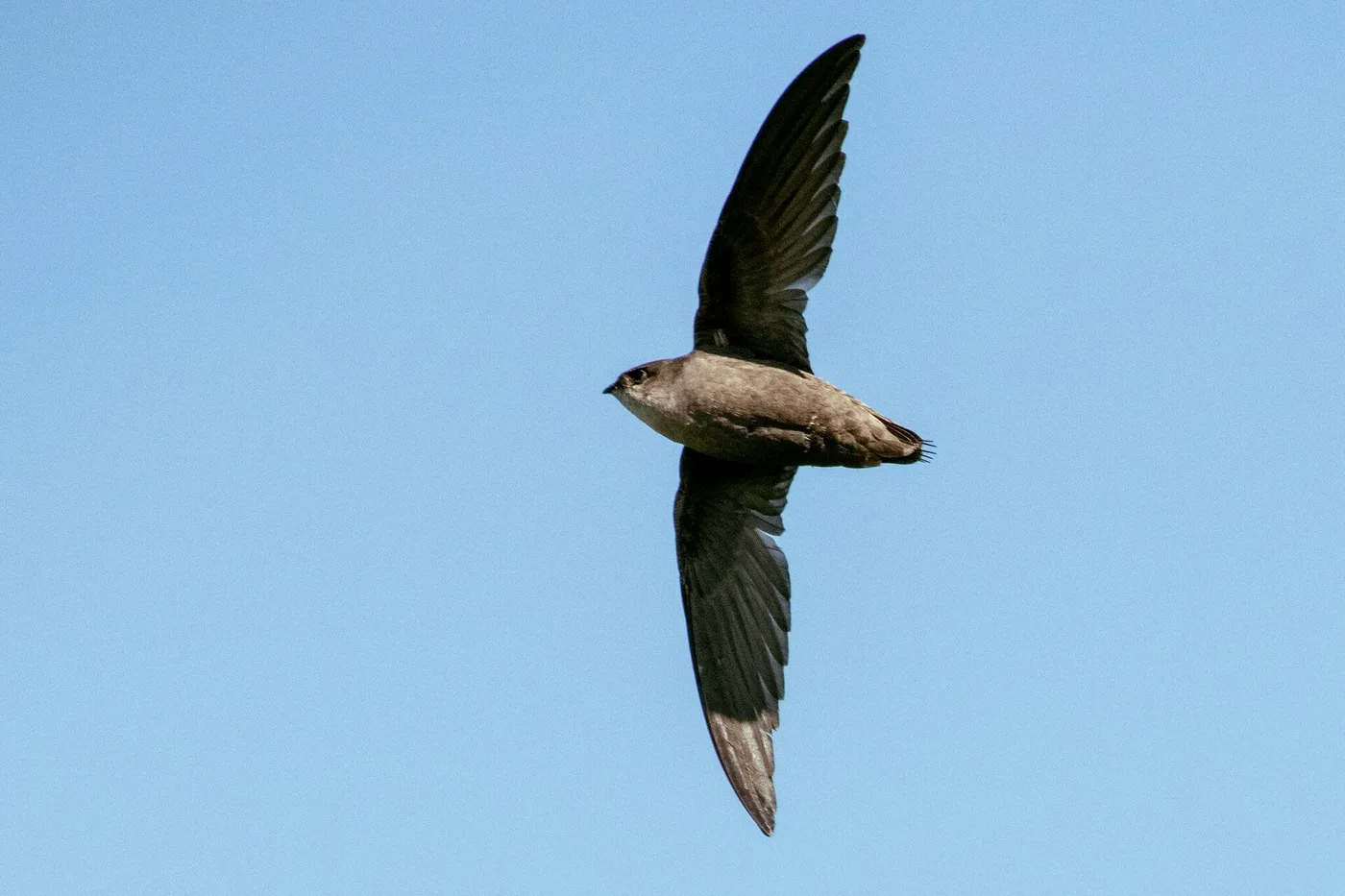
Why Can’t You Remove Chimney Swifts?
Most searches for how to get rid of chimney swifts run into the same wall. The Migratory Bird Treaty Act protects the species, its active nests, and its eggs. Touching, moving, or destroying an active nest is a federal offense. It does not matter how much noise it makes or how inconvenient the timing is.
That protection matters more for chimney swifts than for many other chimney-nesting birds. Old brick chimneys have been their main nesting habitat ever since forests were cleared. Populations have dropped sharply as those chimneys get capped or torn down. Cornell Lab of Ornithology lists the species as being of conservation concern, part of why enforcement stays strict.
A permit to remove an active nest exists on paper, but it is reserved for genuine emergencies, not routine annoyance. In practice, almost nobody gets one for a healthy nest with a normal timeline to fledging.
How to Tell If It’s Chimney Swifts
A soft, rolling chittering sound from inside the flue, sometimes described as a low thunder, is the clearest sign. It gets louder through the season as chicks grow and start begging for food, then falls silent once the young fledge.
Chimney swifts almost never perch the way other birds do. Their feet are built for clinging to a vertical surface, not gripping a branch. That is why they spend nearly their entire life in flight. They land only inside a chimney or hollow tree to roost and nest.
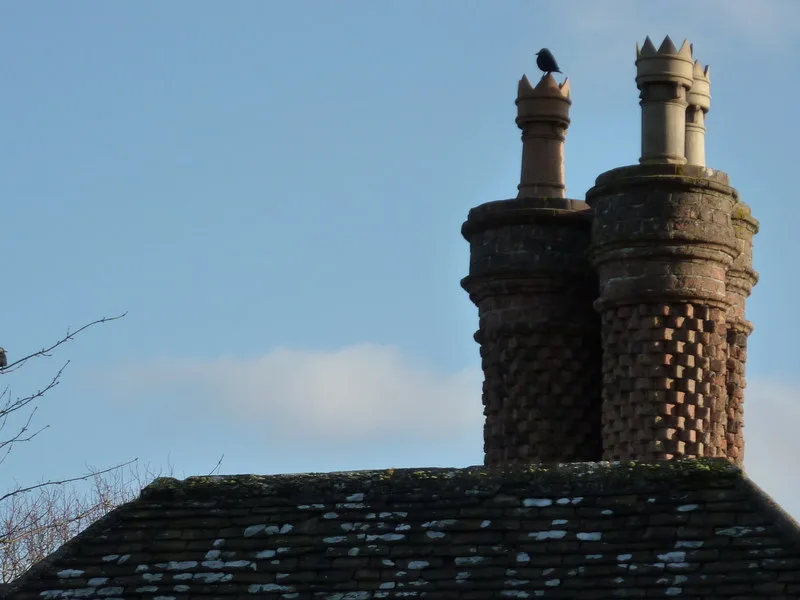
The nest itself is small and easy to miss even if you could see it. It is a half-cup of twigs, snapped off in flight and glued to the flue wall with the bird’s own saliva. It holds together well but never builds into the kind of debris pile other birds leave behind.
Chimney Swifts vs. Other Chimney Birds
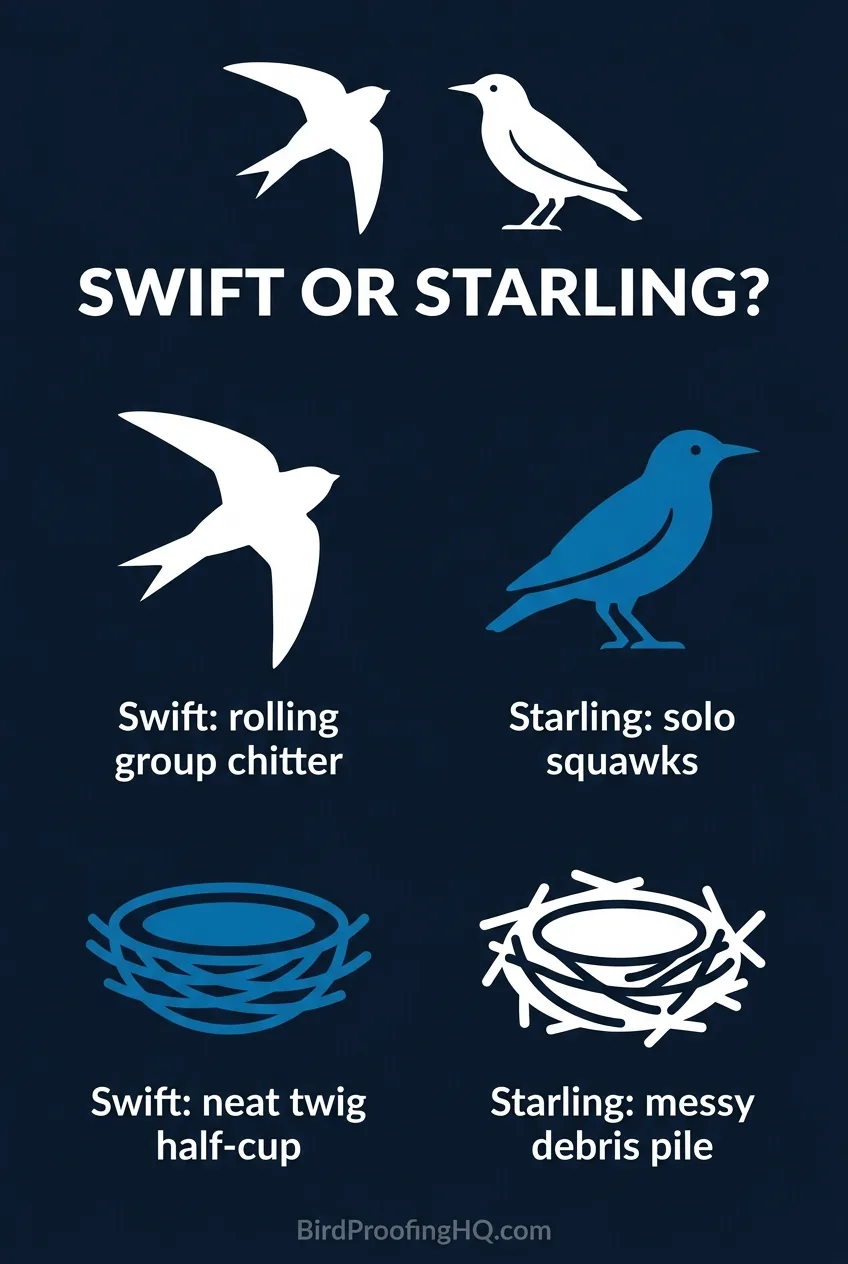
Starlings and house sparrows also nest in chimneys. Neither is federally protected, so their nests can be removed once you have confirmed the species. It is still worth checking for any state or local rule first.
The sound is the fastest way to tell them apart. Starlings and sparrows tend to squawk or chirp individually, while swifts produce that distinctive rolling chitter as a group. A soot-covered pile of loose material also points to starlings, not swifts, whose nests stay small and neat against the flue wall.
Seasonal Timeline: When Chimney Swifts Come and Go
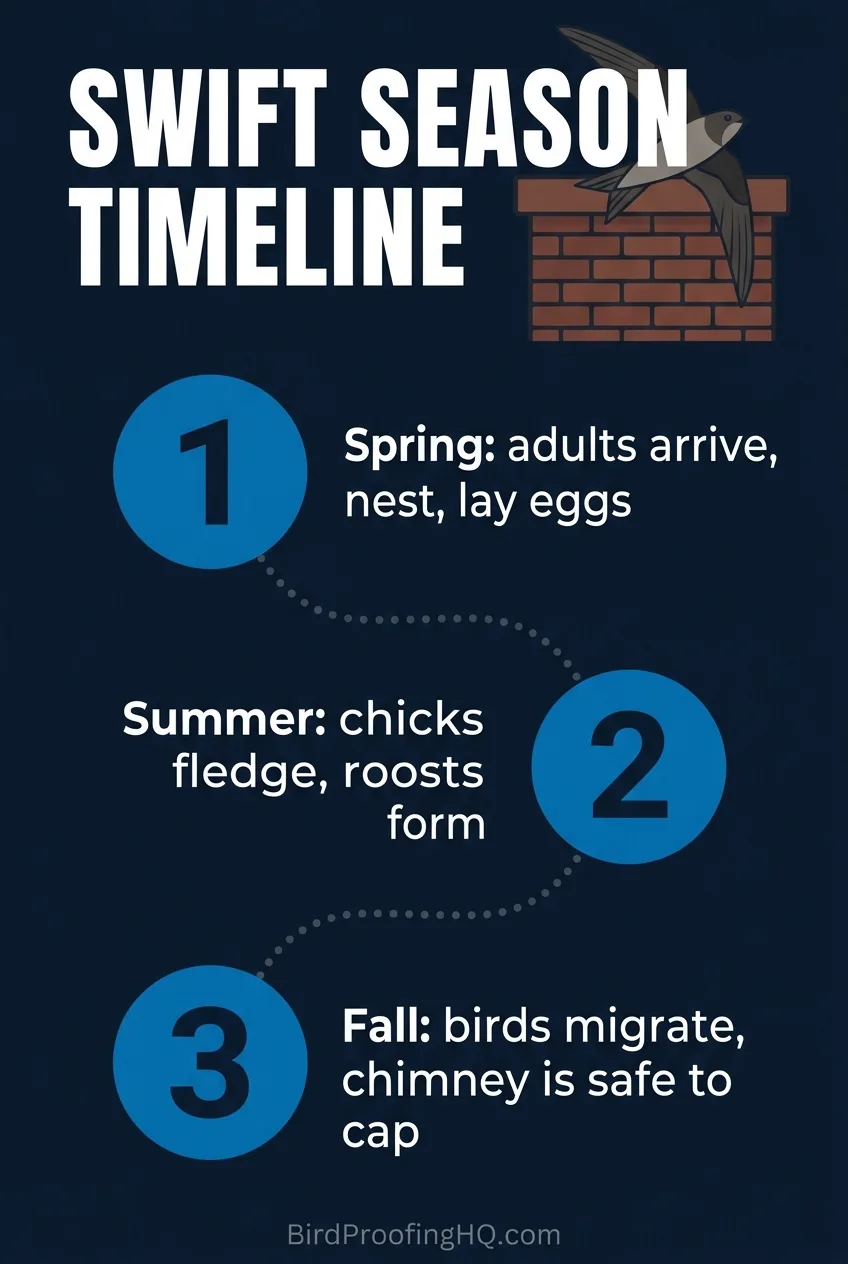
Adults arrive back from South America in April or May and pick a nest site within days. Building the nest, laying eggs, and raising chicks to fledging takes roughly two months. Most chimneys stay active from May through July or early August.
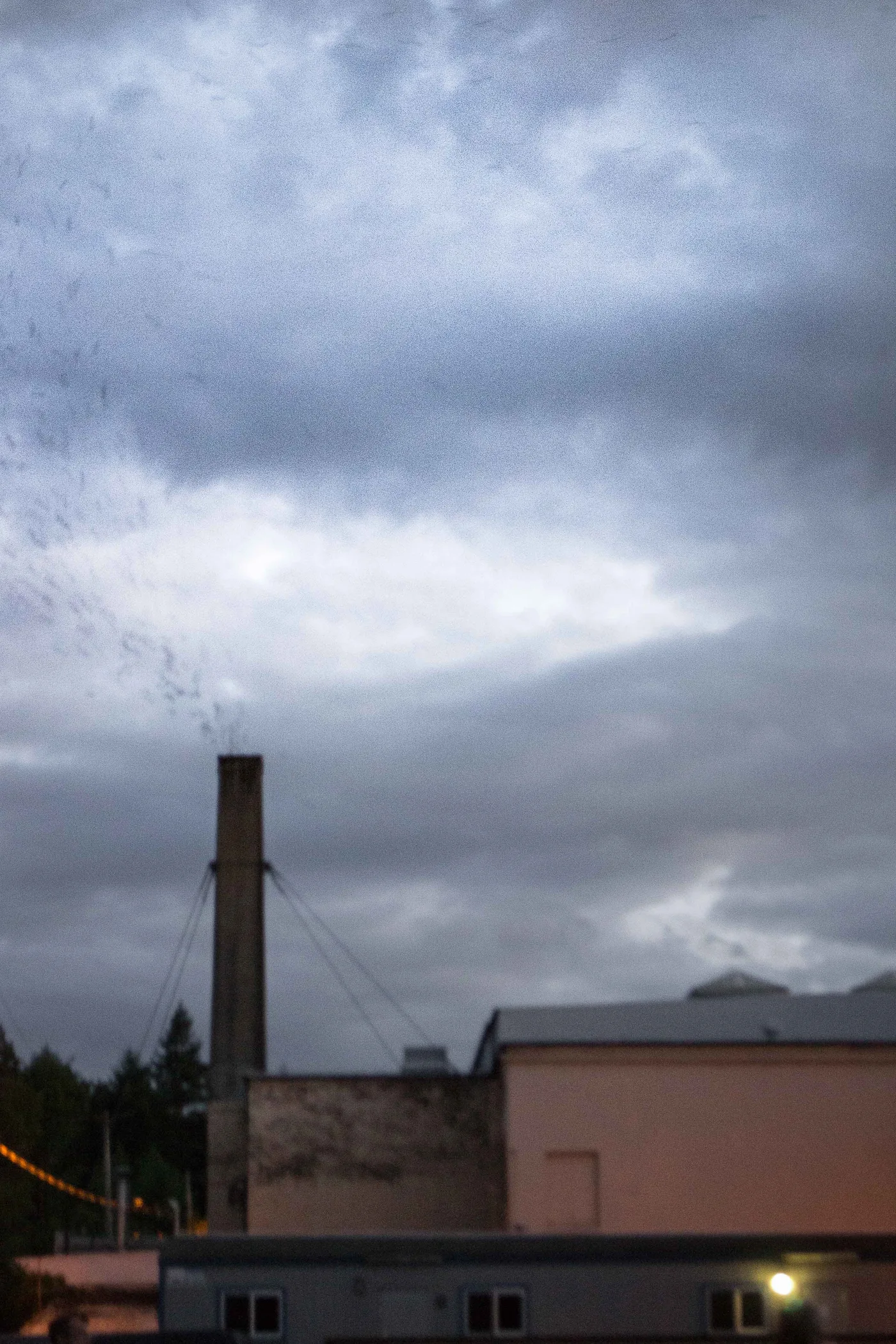
Late summer brings a second wave of activity that has nothing to do with nesting. Migrating swifts, sometimes thousands at once, gather at large chimneys to roost together overnight on their way south. That communal roost can look and sound like a bigger problem than a single nesting pair. It clears out within days to weeks as the birds continue migrating.
By late September or October, the chimney is empty for the year. That gap, roughly October through March in most of the US, is the safe window for an inspection or a cap install.
Chimney swifts also tend to return to a nest site that worked. A pair that nests successfully in your chimney one summer often comes back to the same flue the next year. That is one reason capping matters once you have decided to close a chimney off for good. A cap installed the first winter it is empty heads off years of repeat nesting, rather than just solving this season’s noise.
A Nesting Pair Is Not the Same as a Migration Roost
A single mated pair nests in a chimney each summer and raises one brood. A migration roost is a completely different event. A large group uses the same chimney as an overnight rest stop during spring or fall travel, with no nest built at all. Both are protected, but only the nesting pair sticks around for months.
Can You Confirm the Chimney Is Actually Empty?
Listen at dusk on a few consecutive evenings before assuming the birds are gone. Swifts return to an active roost or nest right around sunset. A quiet chimney at that hour, checked more than once, is a reasonable sign the flue is clear.
A chimney sweep or wildlife professional can confirm it more precisely with a camera scope lowered into the flue. That is worth the cost on a chimney with a history of chimney swifts. Capping over an active nest by mistake is both illegal and hard to undo without removing the new cap.
Does the Timing Shift by Region?
Yes. In the Gulf Coast and Deep South, swifts often linger into late October or November before heading to South America. That pushes the safe capping window later than it is farther north.
In the Upper Midwest and Northeast, the birds tend to clear out by mid to late September, opening the window earlier. When in doubt, use the dusk-listening check above rather than a calendar date, since actual migration timing shifts year to year with the weather.
What If You Use That Fireplace or Furnace?
Never light a fire in a flue with an active nest or roost, and that includes a furnace or water heater that shares the same chimney. Smoke and carbon monoxide can kill birds in the flue, and a blocked or partially blocked chimney is also a real safety risk for the household appliance itself.
If the chimney serves a furnace you rely on daily, schedule a professional inspection as soon as you suspect swifts. Do not wait out the season and hope the appliance keeps venting safely on its own.
Which Chimneys Attract Chimney Swifts?
Rough masonry, brick or unlined stone, gives a swift’s tiny claws and stiff tail feathers something to grip. A smooth metal flue liner does not. Lining an old masonry chimney with metal pipe makes it unsuitable for nesting on its own, even before a cap goes on.
That distinction matters when choosing a fix. A masonry chimney with no liner is the classic setup swifts favor, while a chimney already lined with smooth metal rarely attracts them at all.
You can usually tell which one you have without climbing onto the roof. Shine a flashlight down the flue from the fireplace or roofline. Rough, uneven brick or stone means an unlined masonry chimney.
A smooth, seamless metal tube means a liner is already installed. If you cannot get a clear look, a chimney sweep can confirm the flue type during the same visit as a vacancy check.
When Can You Legally Cap the Chimney?
Wait until the adults and that year’s fledged young have migrated. In most of the US, chimney swifts head south to their wintering grounds in the Amazon Basin by September or early October. The chimney stays reliably empty from then through the following spring.
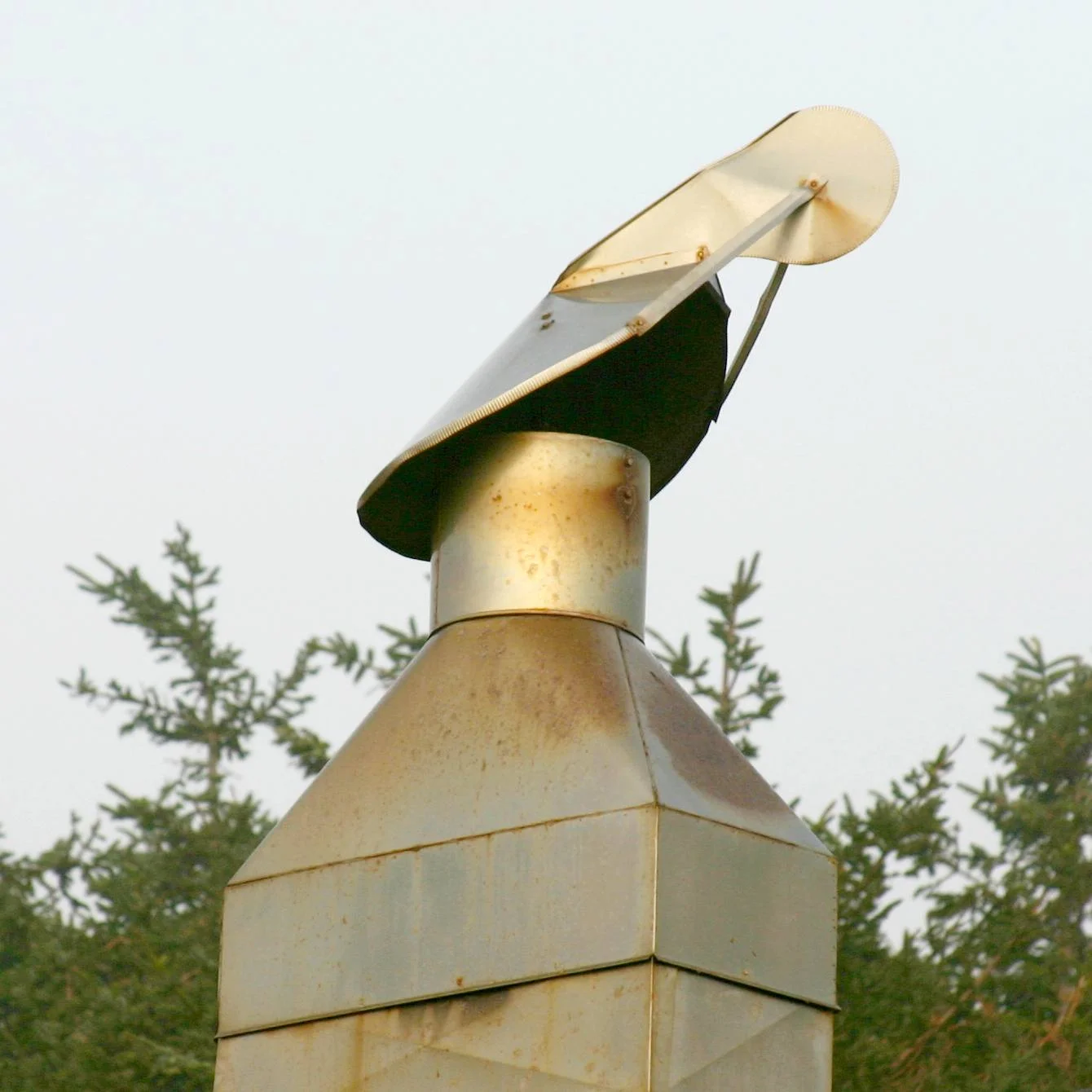
Capping during that window is simple and lasts for years. A wire-mesh chimney cap or cowl blocks the flue opening while still allowing smoke and gases to vent normally. The same cowl designs work for chimney swifts as for any other bird.
Do not cap the chimney while a nest is active, even if it looks empty. Adults leave to forage for long stretches during the day, which can look like the birds are gone when they are not. A cap installed too early can trap a returning adult outside a nest it is still raising chicks in.
A Professional Inspection and Capping Checklist
A chimney sweep or wildlife control company handles the job in a set order. Knowing the steps helps you judge a quote and confirm the work was done right:
- Confirm the flue is empty with a camera scope, not just a dusk listening check.
- Clear any old nest debris from the flue before the cap goes on, so nothing is sealed inside.
- Measure the flue opening so the cap or cowl fits without gaps a bird could squeeze through.
- Install a stainless steel cap, since cheaper materials rust and fail within a few seasons.
- Confirm the cap still allows smoke and gases to vent freely once it is on.
How to Verify the Cap Is Venting Correctly
A cap that blocks birds but also blocks airflow is a hazard, not a fix. After installation, run the fireplace or furnace briefly and check that smoke or exhaust rises cleanly out through the mesh rather than backing up into the room.
Watch for a faint smell of smoke indoors or soot building up faster than usual around the firebox. A furnace that cycles oddly is another warning sign. Any of these means the cap is restricting airflow and needs a second look from whoever installed it.
What If a Chick Falls Down the Flue?
A chick that slips from the nest before it can fly often lands lower, on the smoke shelf or in the fireplace. The surface there is too smooth to climb back up. Scratching or distress calls from the fireplace itself, rather than higher up the flue, usually mean a chick has fallen.
Do not reach into the flue or attempt to retrieve it yourself. Contact a licensed wildlife rehabilitator instead. Handling a protected chick incorrectly, even with good intentions, is both risky for the bird and against the law without the right training.
What If a Swift Gets Into the Room Itself?
Sometimes a fallen bird pushes past the fireplace screen or damper and ends up loose in the living space rather than stuck in the flue. Close the door to that room first, so the bird cannot get further into the house, and keep pets away. Do not try to feed it or release it outside yourself.
Dim the lights and open a single window or door to give it a way out, the same approach used for a bird loose in the house. If it will not leave on its own, or you find a grounded chick that cannot fly, call a licensed wildlife rehabilitator rather than handling a protected bird yourself.
A Longer-Term Alternative: Swift Towers
Communities that want chimney swifts nearby without the flue noise sometimes build a dedicated nesting tower instead. It gives the birds a legal, purpose-built home away from an active chimney. Conservation groups have installed towers at parks, nature centers, and schools across the country.
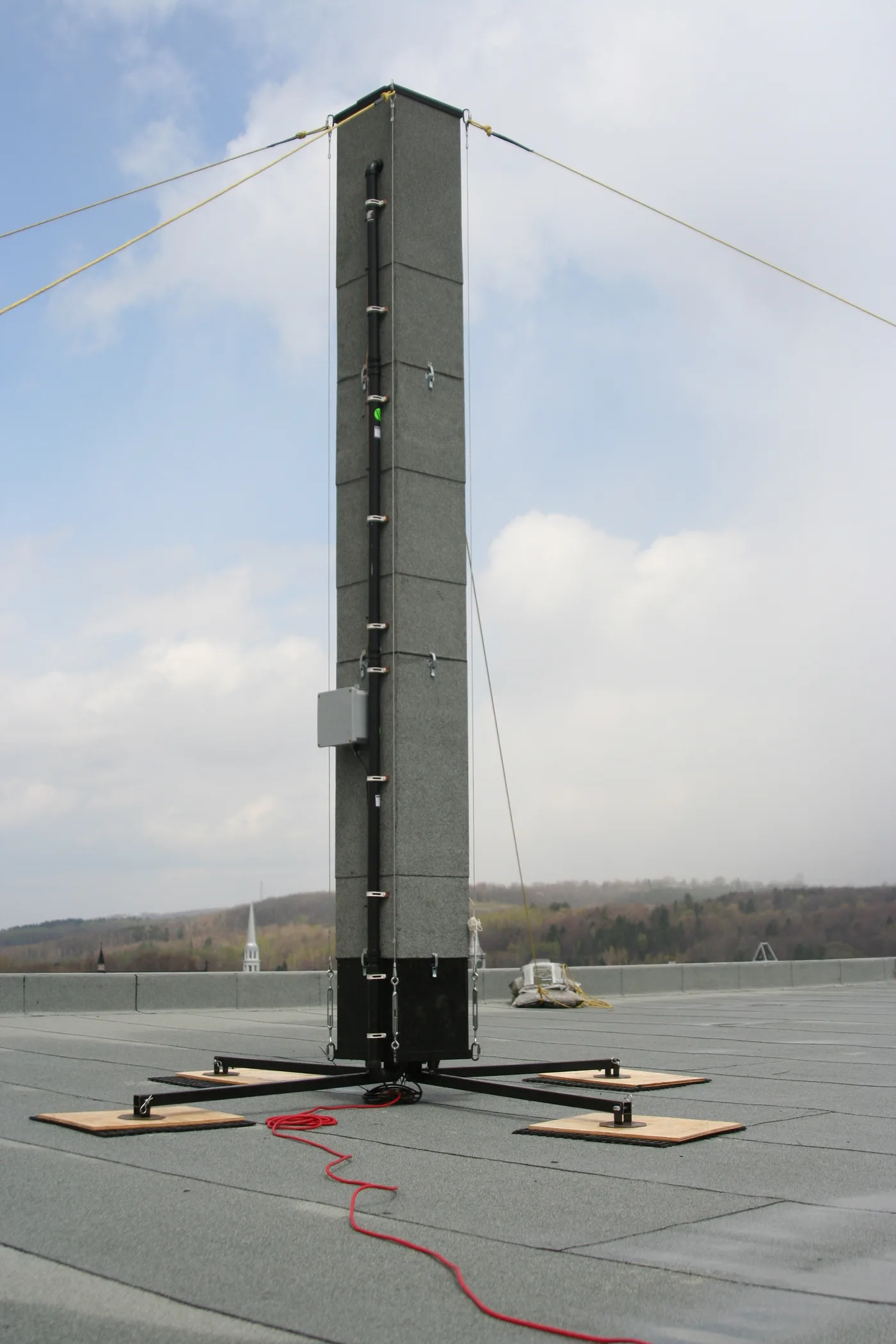
A tower will not stop swifts from investigating your chimney the same season. They choose nest sites based on what is available when they arrive each spring. It is still worth building for a property where an old chimney keeps attracting swifts and a permanent cap is not yet in place.
Or Leave an Unused Chimney Open on Purpose
If you have an old, disconnected chimney that no fireplace or furnace vents through anymore, capping it is not your only option. Leaving it open gives swifts a place to nest without affecting anything you actually use, and it is one of the easier ways a homeowner can support a declining species. This only works safely on a chimney with no active flue use. Never leave a chimney open if it vents a fireplace, furnace, or water heater.
Related Reading
Not certain a chimney swift is what got into your flue? How to get birds out of a chimney covers the full range of species, including the unprotected starlings and sparrows that can be removed right away.
For pricing on a professional cap install or inspection, bird removal cost breaks down typical rates by job type.
Images: Seasonal timeline and swift-vs-starling infographics via BirdProofingHQ. Chimney swift in flight by Adam Jackson, CC0. Roof, chimney pots and bird by Peter Barr, CC BY-SA 2.0. Common chimney cowl, Oregon by Stephen Inoue / R. S. Shaw, public domain. Nesting tower for Chimney Swift by Jean-Sébastien Guénette, CC BY 3.0. Swifts entering Agate Hall chimney by Visitor7, CC BY-SA 3.0. Via Wikimedia Commons.


Free: The 5-Step Bird-Proofing Checklist
Work through the right steps in the right order, before spending money on the wrong deterrents. Printable PDF, straight to your inbox.
No spam. Unsubscribe any time.