How to Keep Birds Away From Your Car
Contents[hide]
Quick Answer
To keep birds away from your car, park away from overhead perches such as branches and wires, cover the side mirrors while it's parked, and clear food, trash, and standing water near the parking spot.
In this article, you'll learn how to keep birds off your car. We'll cover finding the perch, stopping mirror attacks, and cleaning droppings safely.
Start With What Is Above Your Parking Spot
Bird droppings on the same part of a car usually point to a favorite perch. Look straight up before buying anything. Check for a branch, wire, sign, roof edge, or carport beam above the dirty area.
Move the car one space over for a few days if you can. A small move may take it out of the drop zone. It also tells you whether the overhead perch caused the problem.
Garage parking or a fixed roof gives the best protection. If neither is available, choose an open spot away from feeders and busy roosts. Leave any branch with an active nest alone.
Stop Birds Attacking Mirrors and Shiny Paint
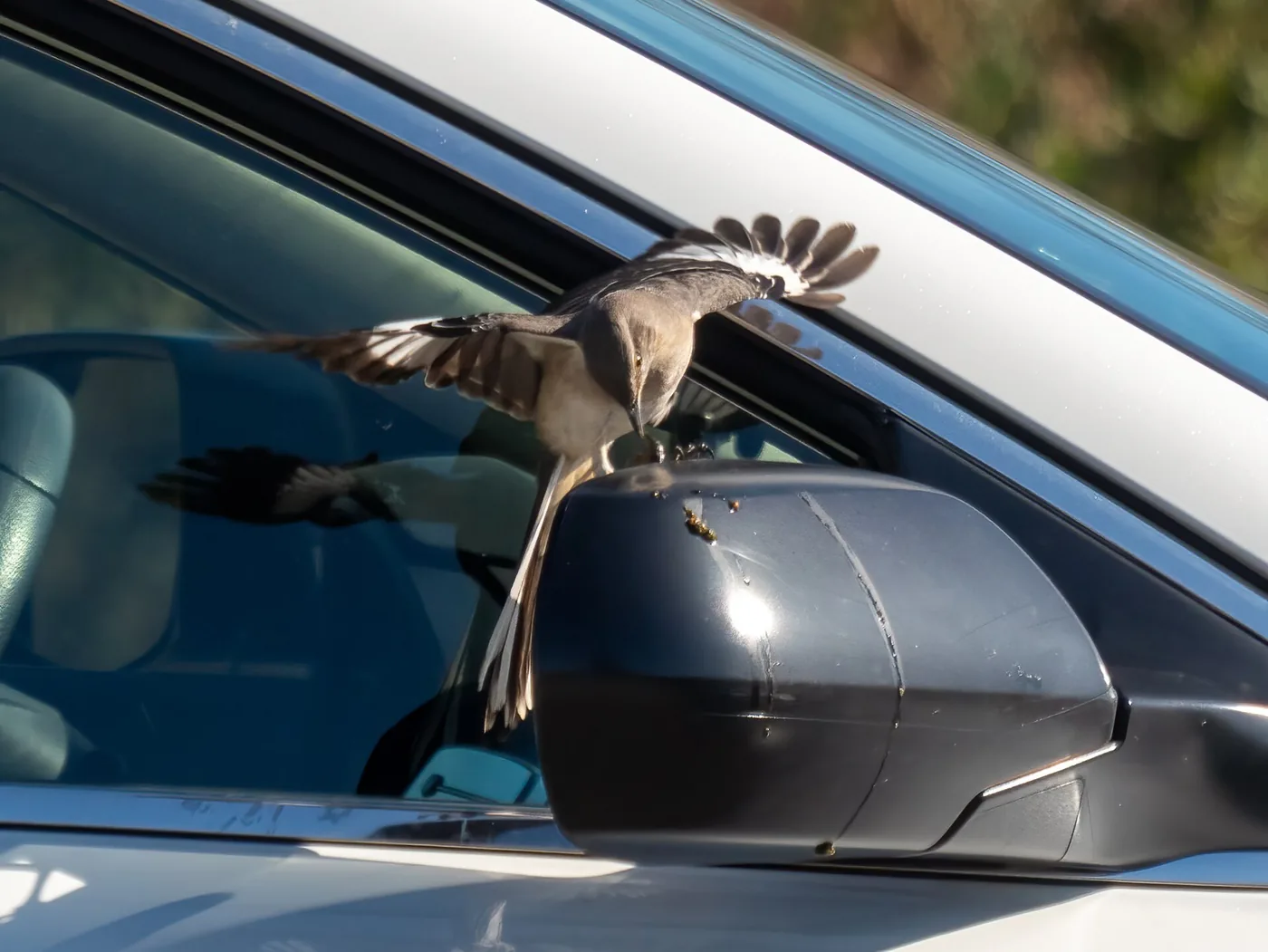
A bird pecking a side mirror is often fighting its own reflection. It sees another bird in its territory and tries to drive it away. The car moves, but the rival always comes back. That is a rough assignment for the bird and your mirror.
Hide the reflection while the car is parked. Fold the mirrors only if your vehicle is designed for it. Otherwise, place a soft opaque cover over each mirror glass. Clips, tape, and rough fabric should stay off the paint.
Remove every cover before driving. Check that the mirror moves and adjusts normally afterward. If the bird also pecks the paint or trim, use a fitted full cover instead.
The Internet Center for Wildlife Damage Management notes that reflections can lead to pecked paint. It also names crows, boat-tailed grackles, and turkey vultures among birds that peck windshield wipers.
When the target is a house pane rather than a vehicle, use the outside-surface window treatment that breaks up the reflection.
Protect Car Paint and Wipers
A clean fitted car cover is the simplest physical barrier for an outdoor vehicle. Choose one made for your car and local weather. Secure it exactly as the maker directs.
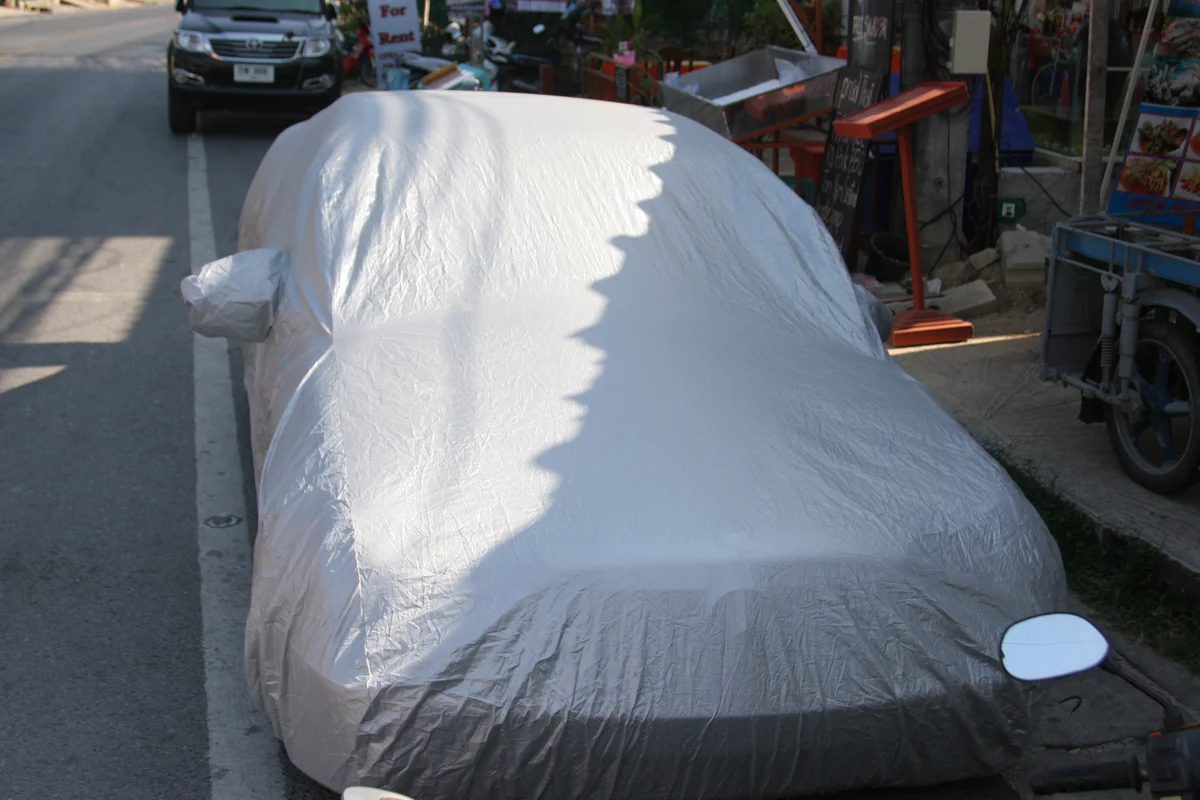
Only pull a cover across a clean car. Trapped grit can rub against the finish when the wind moves the fabric. Use a clean cover, and let the car cool and dry before fitting it.
A loose tarp is not the same thing. It can flap, rub, collect water, or come free. Never attach spikes, netting, wire, glue, or loose reflective strips to the vehicle.
Before each drive, remove the cover and inspect the car. Check the glass, mirrors, wipers, cameras, sensors, and trim. Replace a torn or pecked wiper blade before you need it in rain.
Remove What Keeps Birds Near the Car
Your car may only be the nearest landing spot. The real draw could be a feeder, open trash can, pet bowl, or spilled seed. Clean those up before adding a scare device.
Move bird feeders away from the parking area. Sweep the ground below them, bring pet food indoors, and close trash lids. Pick up fallen fruit and empty buckets, trays, and other standing water nearby.
If birds roost on a fixed ledge above a private parking space, a barrier may help. Install physical bird deterrents on the building, never on the car. Confirm there is no active nest before work begins.
Use Scare Devices as a Backup
A motion-activated sprinkler can help on a private driveway. Aim it across the bird’s approach, not at a road or sidewalk. Skip it where spray can hit neighbors or freeze into ice.
A moving visual scare near the parking area may also help for a while. Change its position so it does not become part of the scenery. Static owls and unmoving shiny objects often lose their effect once birds learn nothing happens.
Use scares to support parking changes, covers, and cleanup. A hard decoy on the roof or loose tape tied to the mirrors can become a scratch or road hazard.
How to Clean Bird Droppings Off Car Paint
Clean droppings soon instead of waiting for the next full wash. Volvo’s hand-washing instructions warn that droppings can quickly damage and discolor paint.
First, park in shade and let the surface cool. Rinse the spot with water so the mess softens and loose grit washes away. Rubbing it first with a dry paper towel can drag grit across the finish.
Next, use car shampoo, plenty of lukewarm water, and a clean soft cloth or sponge. Wipe with light pressure, then rinse the area again. Dry it with a clean soft drying cloth.
Avoid razors, kitchen scrubbers, stiff brushes, and household abrasives. Check your owner’s manual before using any stain remover or wash product. Paint, wraps, matte finishes, cameras, and trim can need different care.
If a mark remains after the surface is clean, stop rubbing. The finish may need a detailer or body shop. For droppings on fabric, concrete, or other materials, use the matching method to clean bird poop without spreading the mess.
Keep the Fix Legal
Covering a parked car, hiding a reflection, and removing food are passive deterrents. They do not require you to touch the bird. The fix should stay hands-off.
The U.S. Fish and Wildlife Service says the Migratory Bird Treaty Act bars the unauthorized take of protected migratory birds. That includes killing or capturing them. State and local rules may add more protection.
USFWS also says you cannot destroy a protected nest that holds eggs or chicks, or while young still depend on it. If you find an active nest or dependent young nearby, stop work and contact your state wildlife agency. Federal protection for birds and nests depends on the species and circumstances.
If the nest is inside the engine area, this is no longer an exterior problem. Follow the safety steps for twigs or a nest under the hood before starting the vehicle.
A Simple Plan for the Next Week
Today, move the car away from the perch and cover the mirrors. Clean any droppings while they are fresh. Then clear food and water around the parking space.
If the mess continues, add a clean fitted cover. Use a motion sprinkler only where it is safe. Check the wipers and mirrors before every drive until the visits stop.
The order matters. Change the spot, hide the reflection, and block the surface first. Gadgets come last.
Images: Northern mockingbird attacking a car-mirror reflection by Rhododendrites, CC BY-SA 4.0; Covered parked car on Phuket Island by Alexander Baranov, CC BY 2.0. Via Wikimedia Commons. Clean-yard photo via BirdProofingHQ.
.jpg)

Free: The 5-Step Bird-Proofing Checklist
Work through the right steps in the right order, before spending money on the wrong deterrents. Printable PDF, straight to your inbox.
No spam. Unsubscribe any time.