How to Keep Birds Away From Windows (and Stop Strikes)
Contents[hide]
- 1. Diagnose Bird-Window Collisions, Reflection Attacks, and Perching
- 2. Bird-Friendly Treatments for Existing Windows
- 3. Cover the Window During a Reflection Attack
- 4. Manage Feeders and Lighting to Prevent Birds From Striking Windows
- 5. How to Help a Bird After a Window Strike
- 6. Frequently Asked Questions
- 6.1. What should I put on a window to keep birds away?
- 6.2. Why do birds keep coming to my window?
- 6.3. Do scare devices like fake owls or reflective tape stop birds from hitting windows?
- 6.4. How do I get rid of birds that keep landing on my windowsill?
- 6.5. What should I do with a bird that hit my window?
Quick Answer
To keep birds away from windows, treat the outside of the window with a full insect screen or a dense pattern that leaves no gap wider than 2 inches. Reflection attacks and sill perching need separate fixes, and window drainage should stay clear either way.
In this article, you'll learn how to keep birds away from windows and prevent strikes. We'll cover reflection fixes, safe deterrents, and injured-bird care.
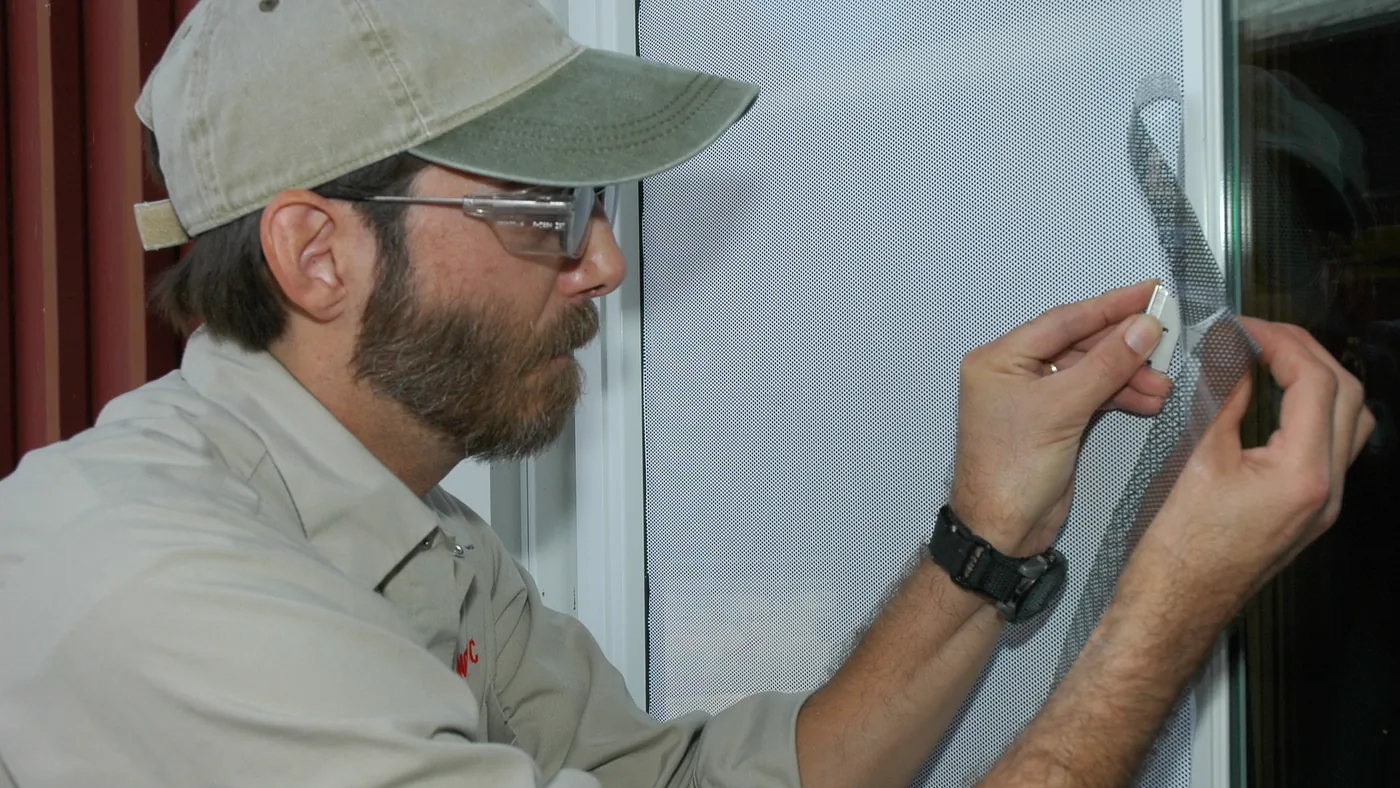
Diagnose Bird-Window Collisions, Reflection Attacks, and Perching
Knowing how to keep birds away from windows starts with identifying the behavior.
A thud at breakfast, a robin pecking the patio door by noon, and a pigeon on the sill by evening can look like one issue. They’re actually three different behaviors, and each needs its own fix.
A window collision happens when a bird sees reflected sky or trees, or open air straight through the glass. It flies at that image at full speed. If two windows line up, close a shade or move houseplants out of that sightline so they do not look like a perch beyond open air. The main fix is still treating the entire dangerous surface from outside.
Repeated lunges, pecks, or fluttering at the same spot mean something else. A territorial bird is fighting its own reflection, not trying to fly through the glass. That calls for covering or breaking up the reflection, not a collision pattern.
A bird standing calmly on a sill isn’t confused by anything. It just found a good landing spot. The fix there is closing off that spot, not treating the glass.
Spot Collision Hotspots on Your Glass Windows
Walk around the house and check panes with a history of strikes. Look at large picture windows, corner windows facing trees or feeders, and sliding glass doors. Check each one in morning, midday, and late-day light. The reflection a bird sees from outside isn’t the view you get standing indoors.
The U.S. Fish and Wildlife Service says bird collisions with glass kill more than one billion birds a year in the United States. Most happen at houses and low buildings, not skyscrapers. Treating dangerous windows at home can reduce bird collisions where most deaths occur.
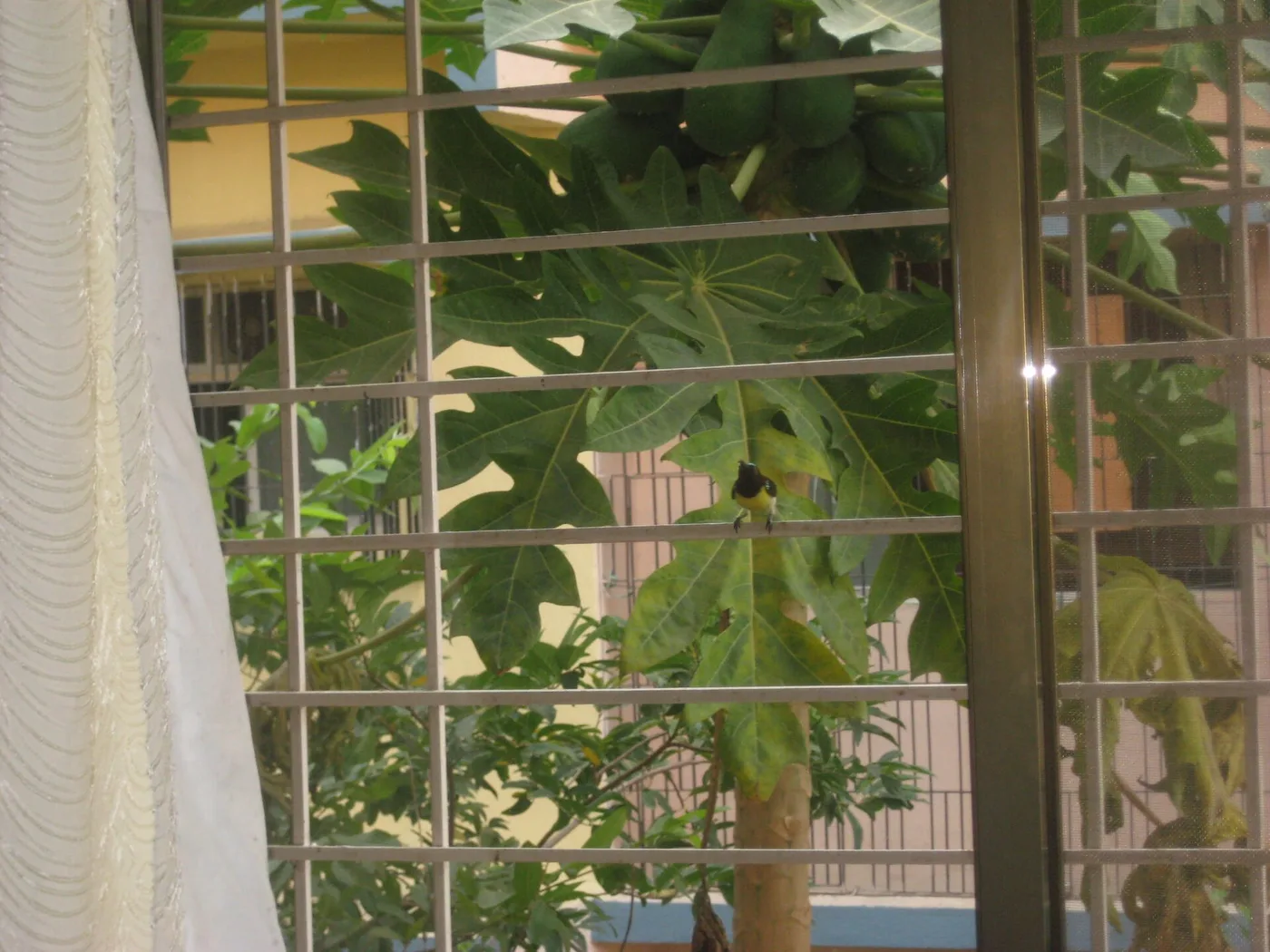
Bird-Friendly Treatments for Existing Windows
For an actual strike risk on existing windows, the fix goes on the outside. That’s where it can break up the reflection before a bird ever commits to it. American Bird Conservancy recommends exterior treatment over anything applied indoors. A full insect screen, purpose-made dot or tape patterns, visible film, tempera paint, or a tensioned cord curtain all work.
Here’s how the main bird-friendly options compare:
| Treatment | Spacing or coverage | Best for | Note |
|---|---|---|---|
| Exterior insect screen | Covers the entire pane | High-risk picture windows | Also cushions an impact |
| Dots, paint, or tape | 2 inches apart, whole pane | Fast, low-cost DIY fixes | Wears down faster in weather |
| Window film | 2-inch pattern, whole pane | Longer-lasting protection | Apply with the same spacing rule |
| Cord curtains (Acopian-style) | About 4 inches apart | Large panes, minimal view change | Tensioned cords across the pane |
| Exterior shades or shutters | Must cover the dangerous area | Combining strike protection with sun control | Shading only the top third isn’t enough |
| Replacement glass with ceramic frit or an etched pattern | Pattern built into the glass | Remodels and new windows | Permanent, but specify bird-friendly spacing before ordering |
Follow the 2-Inch Spacing Rule
The rule that makes any of these treatments work is spacing. Keep dots and lines no more than 2 inches apart in either direction. Dots need to be at least a quarter inch across, and lines at least an eighth inch wide.
Everything should be visible from about ten feet away. Cornell’s Project FeederWatch uses the same limit of 2 inches in its guidance, so this isn’t a one-source rule.
Quick Temporary Paint Patterns and Decals
Tempera paint and purpose-made decals are the fastest bird-safe window treatments to try, since both go on with no tools and wash off or peel away later. For a same-day emergency, a dense pattern drawn with a bar of soap on the outside can work too, but rain and window washing remove it quickly. This is where most DIY attempts fall short. A few decals stuck around an old impact mark still leave most of the glass open. So does one hawk silhouette in the center of the pane.
The pattern doesn’t need to look like a predator or scare anything off. It just needs to make the glass itself impossible to miss, across the entire dangerous area, at the 2-inch spacing above.
Durable Screens, Window Film, and Cord Curtains
A full insect screen mounted outside the glass is one of the most thorough fixes, since it breaks up the reflection across the whole pane and can cushion an impact too. A screen that only covers the bottom half does nothing for the top half, so it needs to cover the entire dangerous area.
External shutters and external sun shades can also protect existing windows, as long as they shade the dangerous area of glass and not just the top third. Visible window film follows the 2-inch pattern rule. High-visibility cord curtains are different: Cornell says Acopian BirdSavers can be spaced about 4 inches apart. Both are longer-lasting alternatives to paint or decals.
What Doesn’t Count as a Bird-Safe Treatment
Don’t confuse any of the above with a reflective bird deterrent like flash tape hung nearby. Those can startle a bird for a moment, but they don’t make the glass itself visible, which is the real problem in a collision. Closing curtains or blinds helps block a view through an empty room, but it won’t stop a bright exterior reflection.
Inspect and Maintain Your Treatment
Check your treatment after storms and after washing the windows. Both can wear tape and tempera paint down faster than you’d expect. A well-installed screen or film should hold up for several years if you keep checking it each season. If you can only treat the inside of a pane, walk outside during the day and confirm the pattern is still visible over the reflection. If it disappears into the glare, it isn’t doing its job.
Cover the Window During a Reflection Attack
A robin or cardinal may land near a window, lunge at the glass, back off, and return. It is defending territory against what looks like a rival bird. It is not trying to fly through the glass.
Hide the reflection with a full exterior screen or an opaque cover. A dense exterior pattern made for collision prevention also breaks up the mirror image.
Leave the treatment up until the bird moves on and stays gone. Taking it down too soon can restart the behavior. If the bird switches windows, extend the cover there too.
Rule Out Look-Alike Problems
A few related problems get mistaken for this one. A bird attacking a car’s side mirror needs a separate car-mirror treatment, since covering a car window all day isn’t practical. General robin aggression away from glass is covered in the robin guide. And a bird drilling into wood siding or a frame near the window is a woodpecker problem, not a reflection problem, and belongs with woodpecker control.
Protect Birds From Sill Perching
A bird standing on a sill does not need glass treatment unless it also strikes the window. Clear away food below the ledge first. Then block the landing surface with a steep slope, tensioned wire, or blunt bird spikes sized for the ledge.
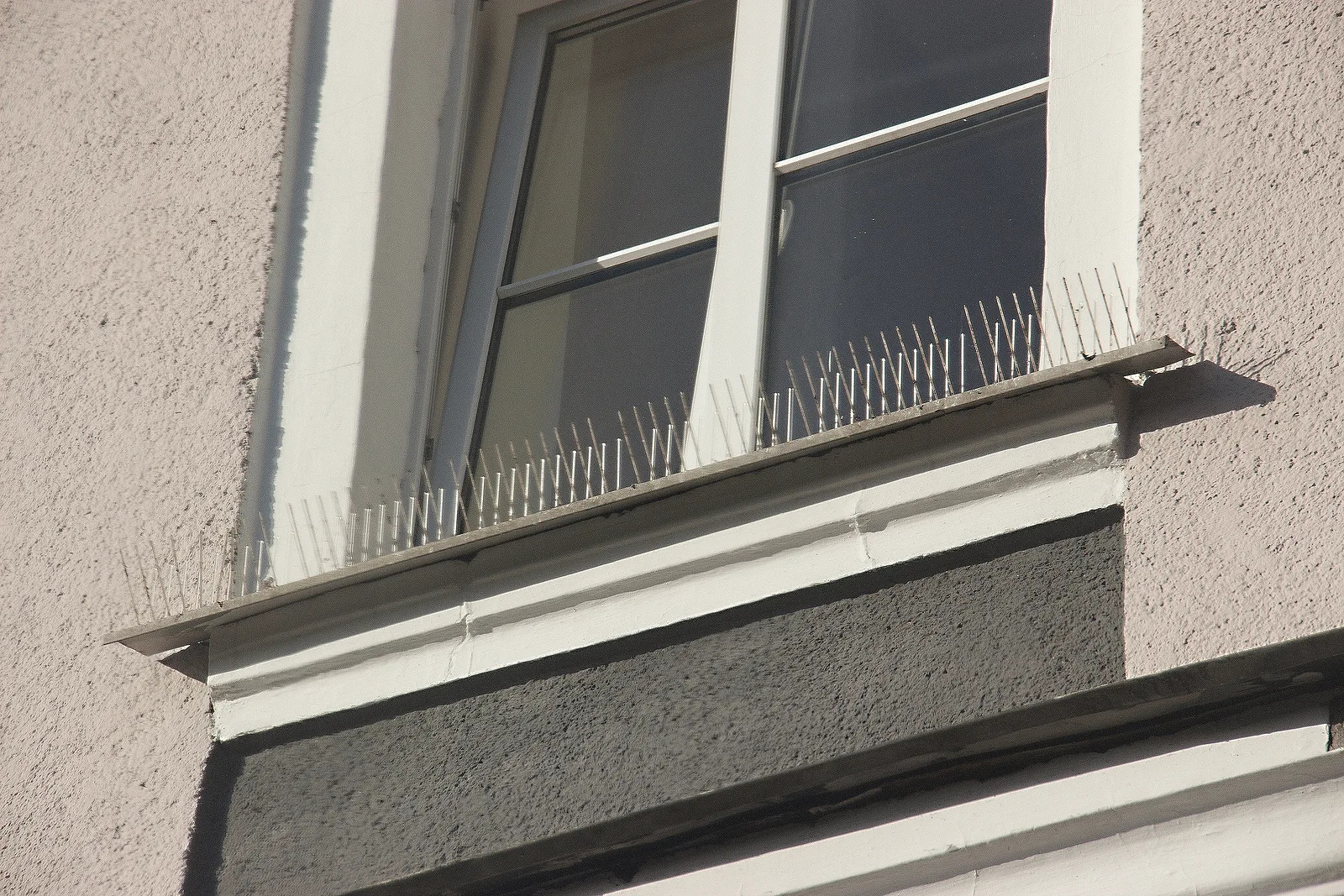
Keep any barrier clear of weep holes, drainage channels, locks, and emergency exits. Never install one over an active nest with eggs or chicks.
For a roofline or building edge, use a broader bird-proofing plan. Our bird deterrent guide explains the main options.
Manage Feeders and Lighting to Prevent Birds From Striking Windows
Move Feeders Out of the Flight Path
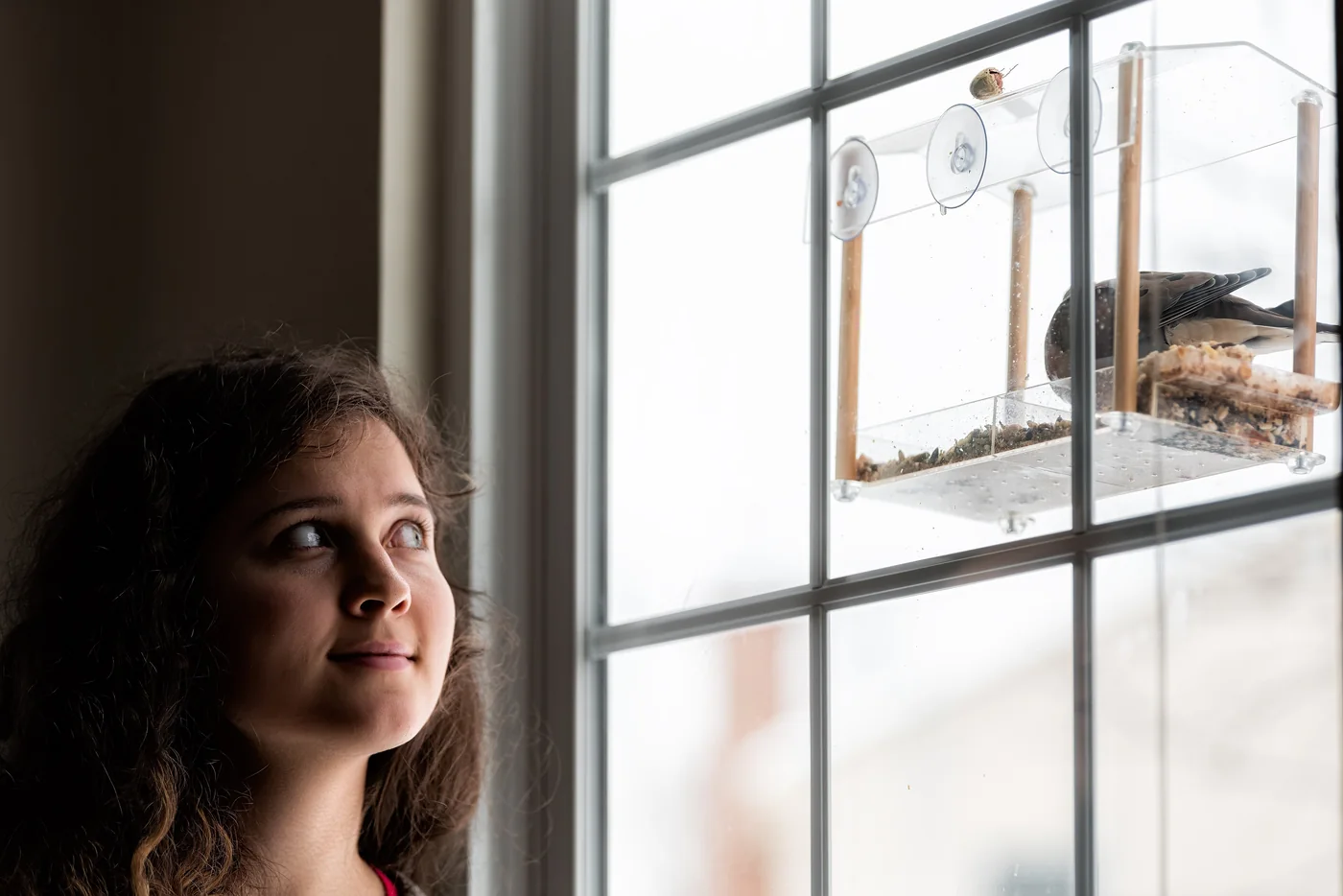
A bird feeder mounted near reflective glass sends more birds through the same dangerous flight path. Address it after treating the glass, not instead of it. Watch where startled birds fly when something spooks them at the bird feeder, and extend the pattern to other glass in that route. Cornell’s ongoing FeederWatch window study is tracking this relationship between feeder placement, glass treatment, and strikes.
Manage Exterior Lighting During Migration
During spring and fall migration seasons, turn off lights you don’t need and close blinds where you can. Artificial light can pull migrating birds off course, especially on foggy or low-cloud nights, and collisions often show up around dawn and dusk. A timer or motion sensor makes this easy to keep up with. This can help prevent window collisions at night, but it remains a supporting step. Most window collisions happen during the day, so lighting changes do not replace a visible pattern on the glass.
How to Help a Bird After a Window Strike
Immediate Steps and Contacting a Rehabilitator
A bird that flies off after a strike isn’t necessarily fine. Internal injuries may not keep it grounded right away. Keep people and pets away, then contact a licensed wildlife rehabilitator.
The Fish and Wildlife Service maintains a rehabilitator locator. Call ahead before transporting an injured bird. If told to contain it, use a dark, ventilated box and offer no food or water. Cornell’s collision guidance gives the same advice.
Finish the Window Fix
Once the bird is handled, go back and finish the pane that caused the strike. Treat the full reflected or see-through area so the next bird doesn’t hit the same spot. A window fix that’s actually working stays visible through weather and regular cleaning. A reflection or perch fix, on the other hand, only needs to last as long as the behavior that made it necessary.
Frequently Asked Questions
What should I put on a window to keep birds away?
Cover the outside of the glass, not the inside. A full insect screen, or a dense pattern of dots, tape, paint, or film spaced no more than 2 inches apart, all work as long as they cover the entire pane. High-visibility cord curtains can be spaced about 4 inches apart.
Why do birds keep coming to my window?
Usually one of two reasons. A bird lunging at the same spot again and again is fighting its own reflection, not trying to fly through the glass, so cover that reflection with a screen or opaque covering. A bird that keeps showing up near a feeder is just following its flight path to food, so move the feeder or extend your pattern to the connecting glass.
Do scare devices like fake owls or reflective tape stop birds from hitting windows?
Not reliably on their own. They can startle a bird for a moment, but they don’t make the glass itself visible, which is what actually causes a collision. A visible pattern across the whole pane works better than a scare device by itself.
How do I get rid of birds that keep landing on my windowsill?
Clear food from below the ledge, then block the landing spot with a steep slope, tensioned wire, or blunt bird spikes sized for the sill. This solves perching. If the same bird is also hitting the glass, treat that separately.
What should I do with a bird that hit my window?
Contact a licensed wildlife rehabilitator first and follow their instructions. If the rehabilitator tells you to contain the bird, use a dark, ventilated box and do not give it food or water.
Images: Application of anti-bird strike film by the U.S. Fish and Wildlife Service, public domain. Sparrow at window by Raman Patel, CC BY 3.0. Bird spikes beside a window © Bigstock, retained under BirdProofingHQ’s existing stock-image license and converted from JPEG to WebP. Window-mounted feeder with Mourning Dove by USFWS Headquarters, public domain. Via Wikimedia Commons unless otherwise noted.


.jpg)
Free: The 5-Step Bird-Proofing Checklist
Work through the right steps in the right order, before spending money on the wrong deterrents. Printable PDF, straight to your inbox.
No spam. Unsubscribe any time.