How to Keep Birds Out of Your Barn: A Practical Guide
Contents[hide]
To keep birds out of your barn, seal every gap larger than half an inch and hang bird netting across open bays. Remove food sources like spilled grain and standing water. Barn swallows are federally protected during nesting season, so timing your exclusion work matters. House sparrows and European starlings have no federal protection and can be controlled year-round.
In this article, you'll learn how to keep birds out of a barn. We'll cover entry exclusion, attractant cleanup, and swallow timing.
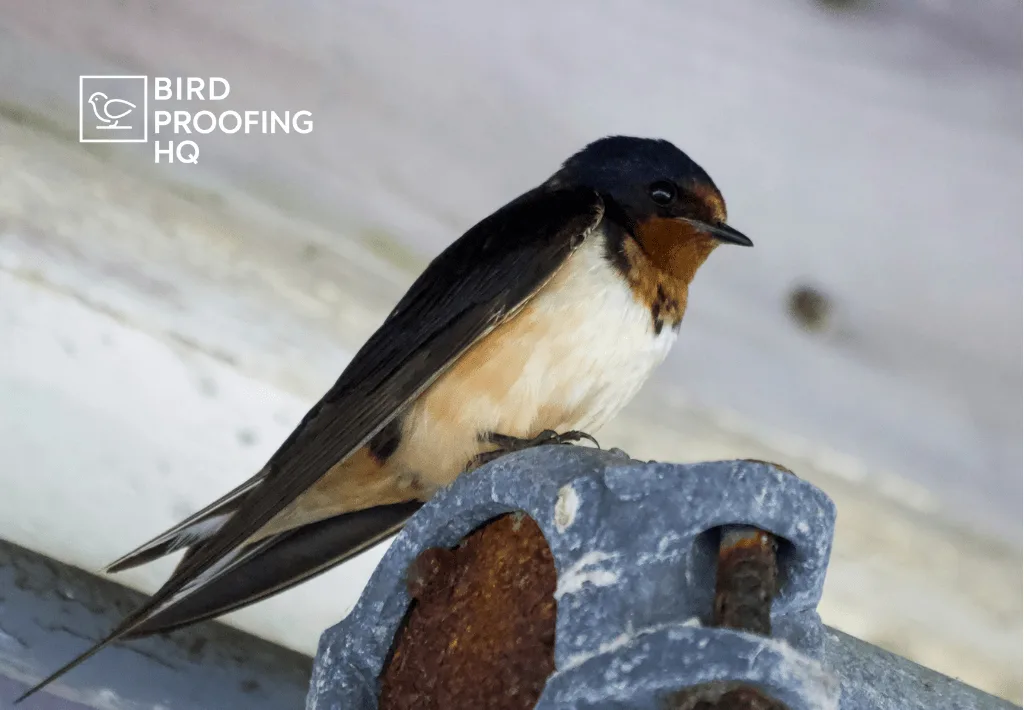
Why Birds Move Into Barns
Barns offer everything pest birds need: shelter from wind, exposed rafters for roosting, and reliable access to grain or feed. Large flocks of European starlings and house sparrows move in fast once they find a consistent food source.
Why Horse Barns and Indoor Arenas Have Extra Challenges
Horse barns and indoor arenas have an added problem. Horses track in hay and grain, water buckets sit open, and tack rooms provide quiet corners for nesting birds. A single pair of sparrows nesting in a hay loft can grow into a colony of thirty. That happens by the end of one breeding season.
Why Bird Control in a Barn Matters
Bird droppings are the most immediate problem. In a horse barn, droppings in feed bins introduce Salmonella and other pathogens. On equipment and vehicles, uric acid eats through paint and finishes within days.
Nesting materials are a fire hazard near hay storage. House sparrows and starlings build bulky nests from dry grass, feathers, and debris. These pile up in electrical junction boxes and near heat lamps, which is bad news near wiring.
Which Bird Species Are in Your Barn?
Identifying the bird species present matters because the rules are different for each.
Barn swallows are native, protected species under the Migratory Bird Treaty Act. You cannot legally remove an active nest, disturb eggs, or harm the birds during nesting season without a federal permit. Nesting typically runs April through August.
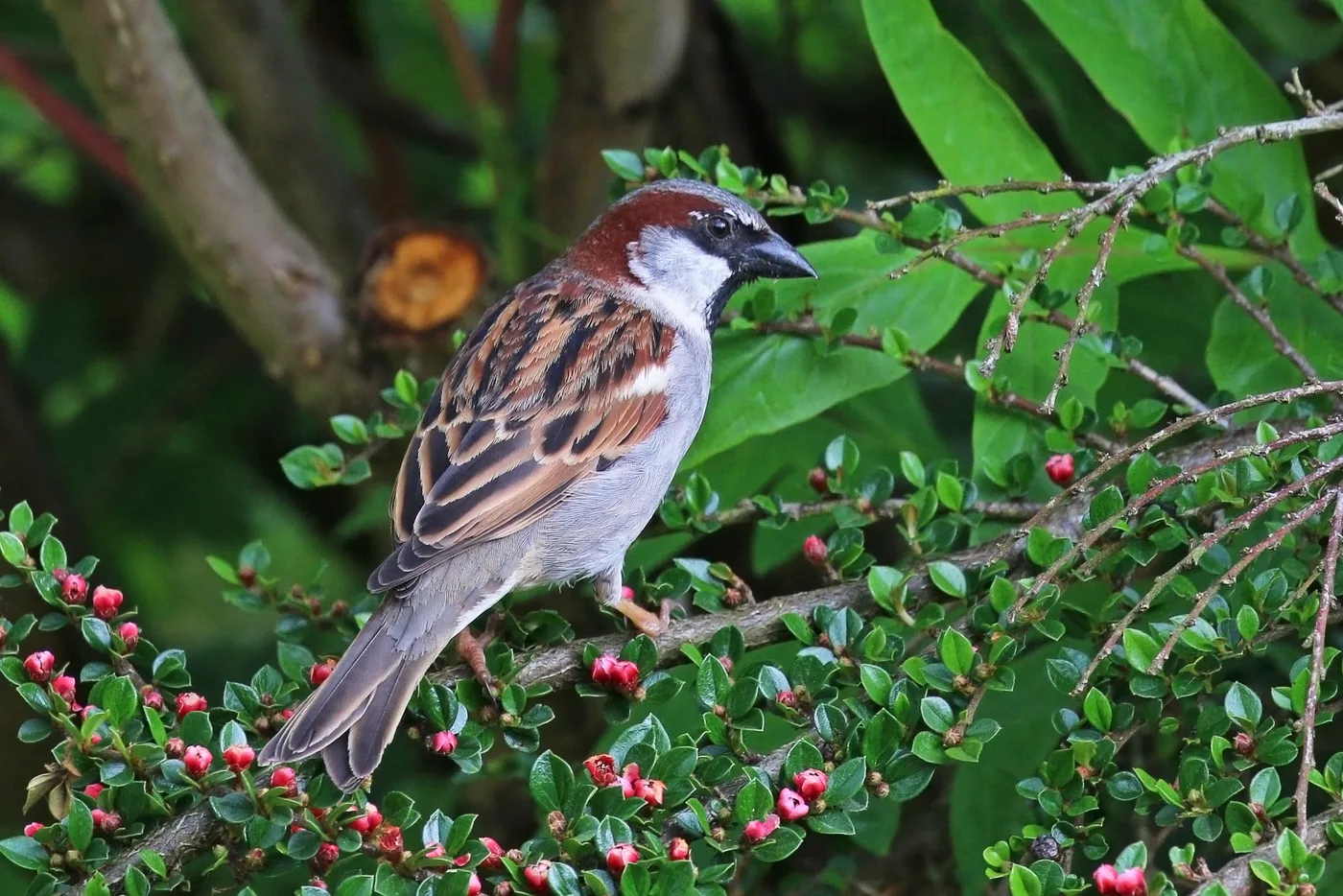
House sparrows are not native to North America and carry no federal protection under the MBTA. You can remove their nests at any time, use live traps, and take other control measures year-round.
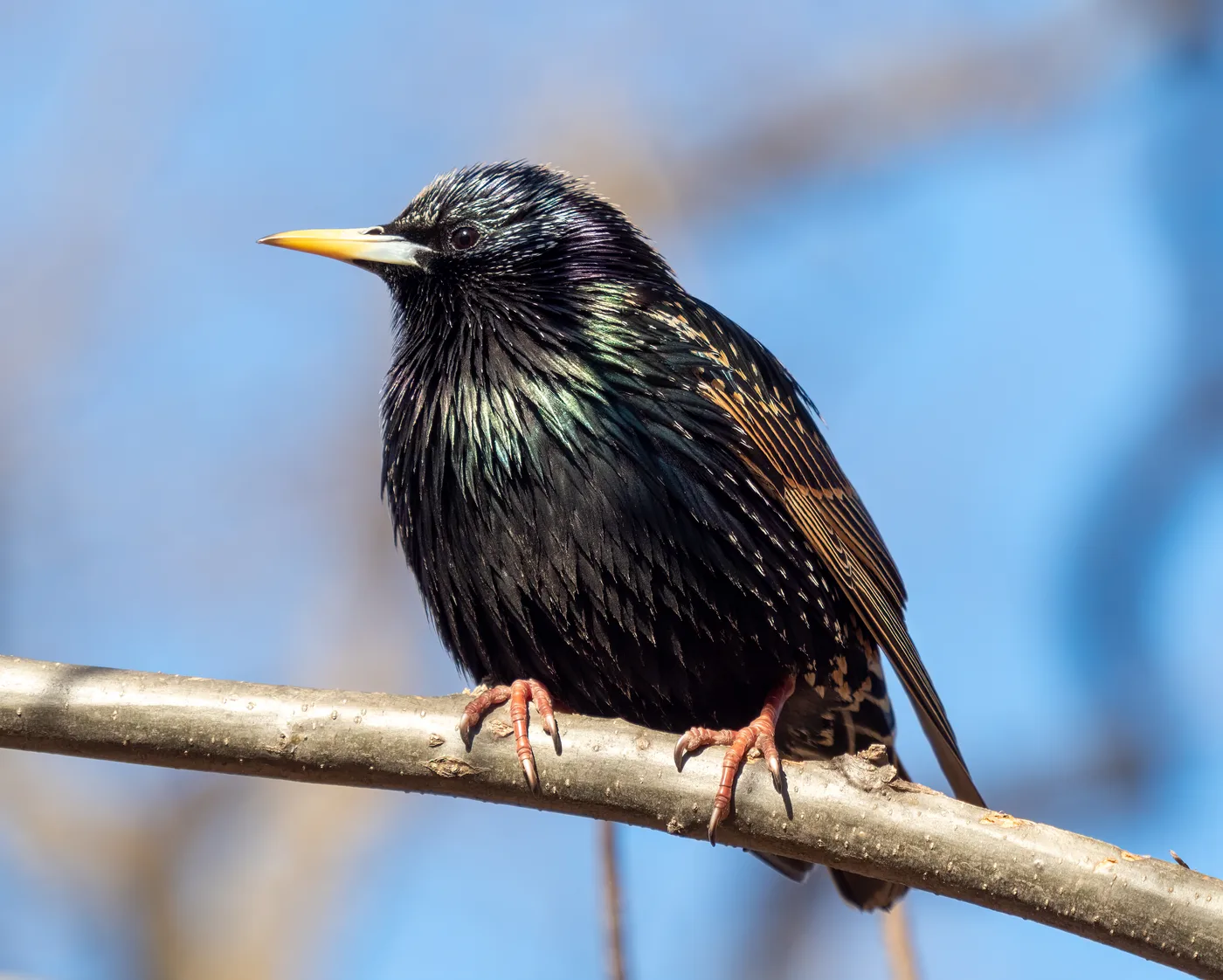
European starlings are also non-native and unprotected federally. They form large flocks in agricultural settings. A flock can reach dozens of birds in a single barn.
How to Keep Birds Out of Barn: Start with Entry Points
Seal Every Gap Larger Than Half an Inch
Barn siding, eaves, and ridge vents are the main entry points for small bird species. Walk the perimeter and mark every gap. Common problem areas include:
- Open soffits where the roof meets the wall
- Gaps around exhaust fans and ventilation pipes
- Deteriorated siding with knot holes or splits
- Uncapped ridge vents along the roof peak
If birds can get through them, the rest of the plan will keep failing.
Use galvanized hardware cloth with half-inch mesh or smaller to cover these openings. It holds up to weather and animal contact better than plastic screening. For metal buildings, stainless steel mesh is the most durable option.
For stall doors and large barn doors, stretch bird netting across the top of the opening. It gives you airflow and light without giving birds free entry.
Install Bird Netting Across Open Bays
Bird netting is the most effective way to keep birds out of a barn interior without sealing it completely. For large open bays or hay lofts, stretch heavy-duty polypropylene netting horizontally across the upper portion of the space. Suspend it from cables or a beam-mounted track system.
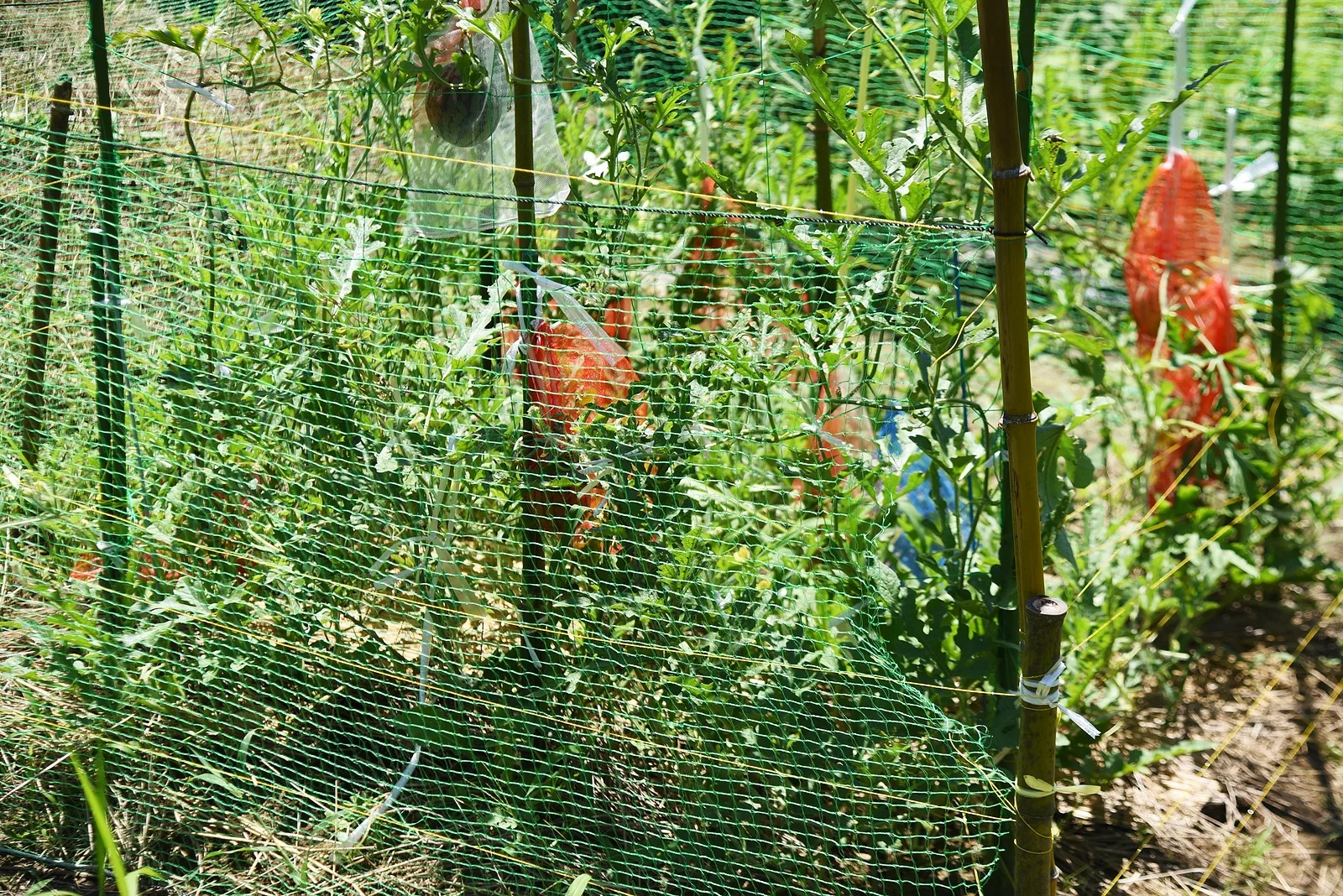
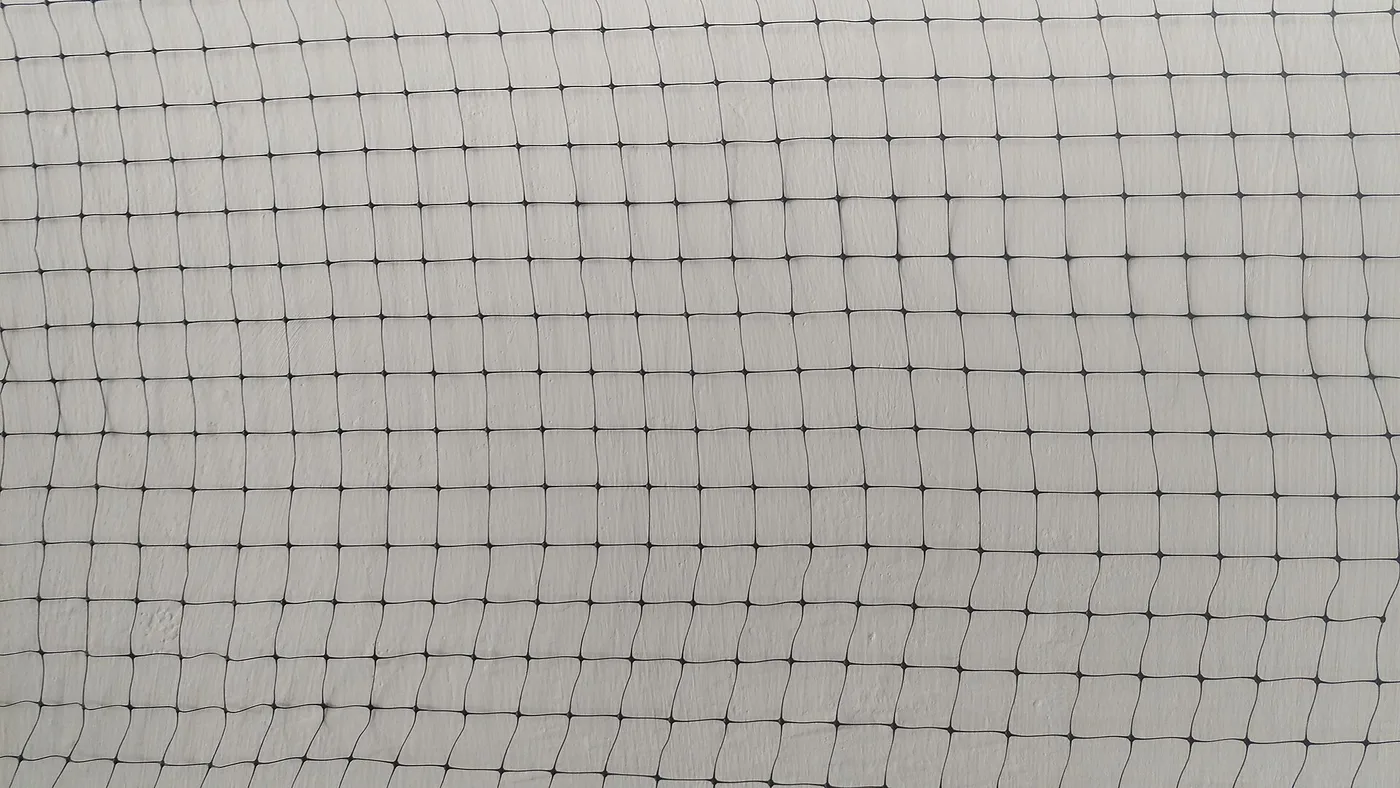
Use a mesh size of three-quarters of an inch or smaller to deter birds like sparrows. Starlings need mesh no larger than one inch, but matching the smaller sparrow size covers both species at once.
The net needs to be taut and sealed at every edge. A loose edge or a gap at the wall junction undoes the whole installation. Inspect the netting twice per year for tears or pull-aways.
Use Bird Spikes on Rafters and High-Traffic Ledges
Bird spikes do not solve the problem across an entire barn. But they work well at specific roost spots where droppings concentrate. Install them on exposed ceiling beams, window ledges, and the edges of hay loft floors where birds land before flying further inside.
Spikes on the ten highest-traffic spots can push a large flock to relocate, especially when combined with netting at the entry points.
For rafters where spikes would be too expensive to install across a large span, monofilament fishing line strung in a grid is a low-cost alternative. Run 50-lb monofilament at 2-inch intervals across heavily used beams. Birds land, feel the flex, and move on. It is not as durable as a commercial wire system, but it goes up in an afternoon and costs almost nothing.

How to Remove Feeding Areas and Reduce Attractants
Any bird pest control plan that skips food removal is going to struggle. Starlings and sparrows will tolerate nearly any deterrent if the food payoff is high enough.
- Seal grain in metal-lidded bins
- Sweep up spilled feed daily around horse stalls
- Fix dripping water sources and cover troughs when not in use
- Move outdoor feeding stations at least 50 feet from the barn
Reducing the food supply does not immediately clear the birds, but nothing else on this list works as well while an easy meal is still sitting there.
Barn Swallows: The Protected Species Problem
Barn swallows are the bird most associated with farm buildings. They are also the ones where you have the least legal room once nesting starts.
Timing Your Exclusion Work
The legal window for barn swallow exclusion is fall through early spring. That means after all young birds have left and before returning adults arrive in April.
In October and November, after swallows have migrated south, block the entry points they used. Cover open barn door gaps with netting at the top. Apply bird-slope panels to the rafters and interior ledges they nested on. A smooth, angled surface gives them no place to attach a mud nest.
If a swallow nest is already active with eggs or chicks, you must wait. The complete nesting cycle runs about 45 days from the first egg to fledgling departure. A second brood in the same summer is common, so timing matters. Barn swallow timing and legal options covers the full calendar.
Why Barn Swallows Return to the Same Barn Each Year
Barn swallows are creatures of habit. The same birds come back to the exact spot every spring after wintering in South America. Their offspring often settle nearby. Old mud nests act as anchors for new construction, so a nest left in place is practically an invitation to return.
Remove every old nest the same week the swallows leave in August or September. Then seal the surface before they return.
Installing Deterrents Before Nesting Season
Before swallows return in spring, hang visual deterrents like predator decoys or reflective flash tape near their previous nest sites. Move decoys every two to three days so the birds do not habituate to them. Bird slope panels installed along the rafters are the most durable long-term option because they physically prevent mud attachment.
Controlling House Sparrows and European Starlings
Year-Round Nest Removal
For house sparrows and European starlings, you can remove nests and eggs at any time without a permit. Do it immediately and consistently. Both bird species will rebuild in the same spot if you remove a nest and leave the site accessible.
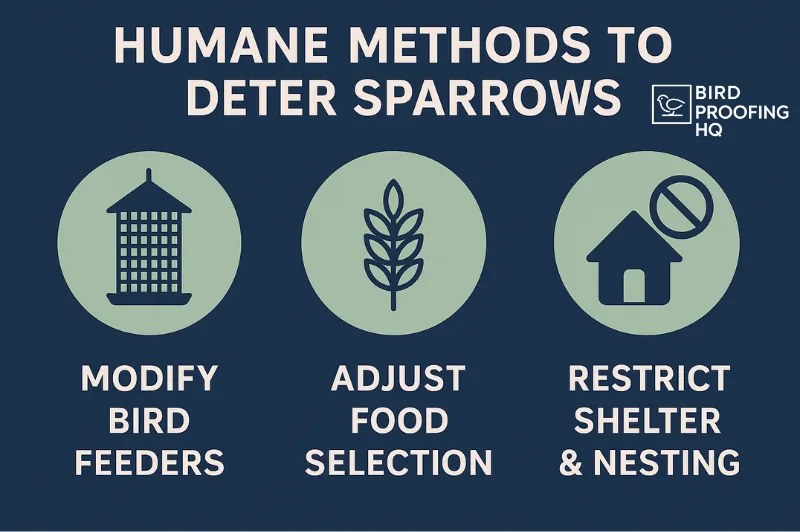
After removing a nest, install hardware cloth over the opening or apply bird-slope panels to the ledge. The goal is to make the location unusable so the birds move on. Both the how to get rid of sparrows and how to get rid of starlings guides cover species-specific methods in more detail.
Live Trapping for Established Colonies
Repeating live traps baited with grain are effective for reducing established house sparrow colonies in barns. Place them near active feeding areas and check them daily. Agricultural supply stores carry traps designed for this purpose.
European starlings respond to live trapping too. It works best in late fall and winter when wild food is scarce. Trapping is fastest when combined with sealing the entry points that let the colony establish.
Using Visual Deterrents Between Nest Removals
Predator decoys and reflective flash tape slow down a sparrow or starling colony while the main exclusion work goes in. A great horned owl decoy on a rafter or hay loft ledge spooks small birds enough to disrupt roosting.
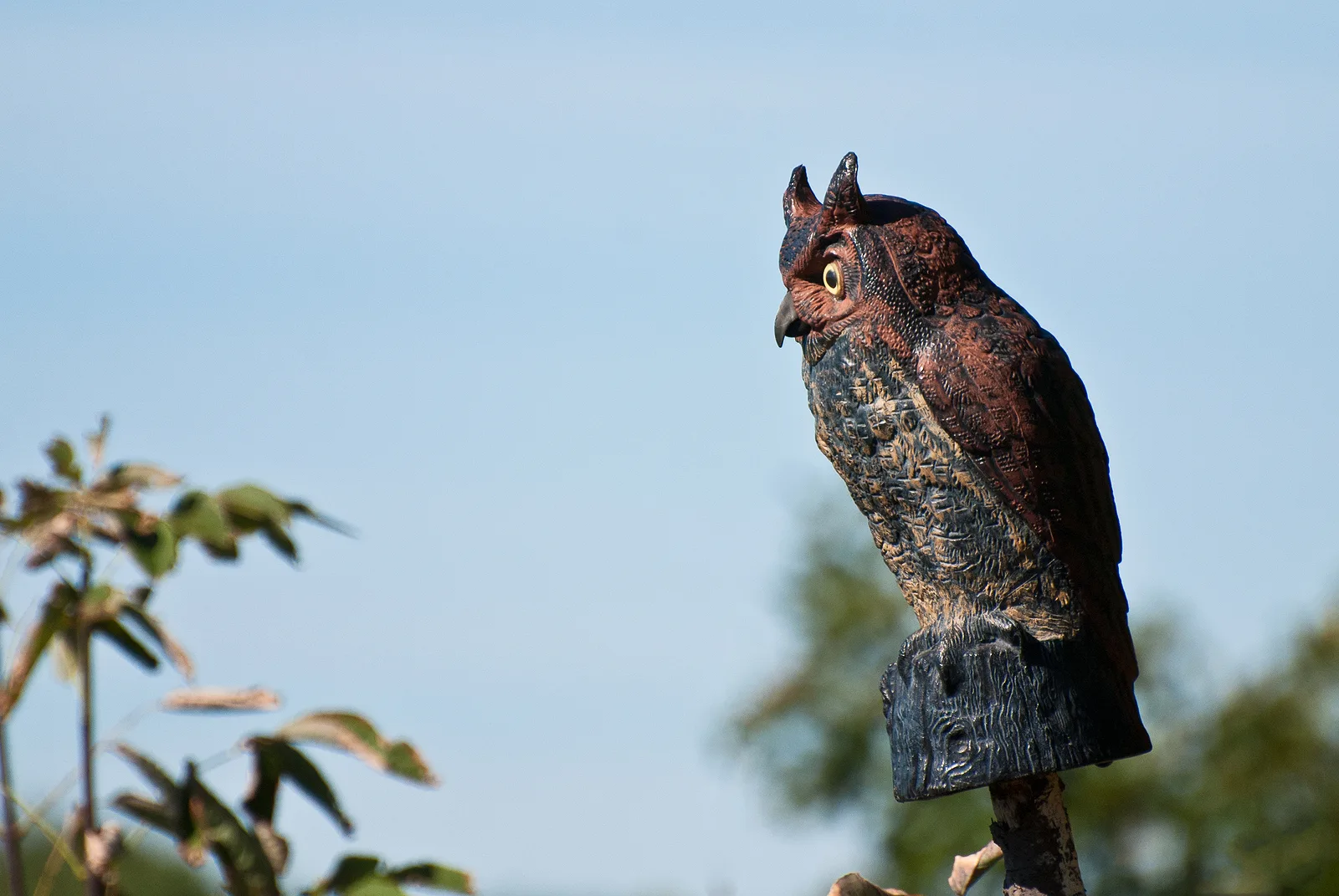
Move any decoy every two to three days, because birds habituate fast. A decoy that stays in one place stops working within a week. Visual deterrents do not replace exclusion, but they buy time while the netting and mesh go in.
When to Call a Pest Control Professional
A severe infestation can be beyond what one person can manage. A large flock of starlings roosting communally in an indoor arena or agricultural barn may number in the hundreds. That scale requires systematic exclusion, sanitation, and habitat changes. Breathing air contaminated with dry droppings also carries a histoplasmosis risk, so protective gear is not optional in heavily infested spaces.
A bird-proofing specialist can assess the building and set up the netting and exclusion work at scale. Broader bird control strategies for multiple areas of your property are in the keep-birds-away guide.
Images: Barn swallow via Wikimedia Commons. House sparrow male by Charles J. Sharp, CC BY-SA 4.0. European starling perched by Rhododendrites, CC BY-SA 4.0. Bird netting on grapevines by Mark Smith, CC BY 2.0. Via Wikimedia Commons. Infographic by BirdProofingHQ.
_male_2.jpg)
.jpg)

Free: The 5-Step Bird-Proofing Checklist
Work through the right steps in the right order, before spending money on the wrong deterrents. Printable PDF, straight to your inbox.
No spam. Unsubscribe any time.