In this guide9 sections
- 1. Which Swallow Built This Nest?
- 2. Is Anyone Using the Nest?
- 3. If the Nest Is Active or Uncertain: Protect the Porch and Wait
- 4. Once It’s Empty: Clean Off the Attachment Point
- 5. Stopping a Return at the Porch Light
- 6. Stopping a Return Under the Eave
- 7. What to Skip
- 8. Quick Decision Checklist
- 9. Frequently Asked Questions
Quick Answer
To handle swallows nesting on porch lights and eaves, leave the nest alone if it holds eggs or chicks, or if you can't tell, and catch the droppings below it. Once it's empty, remove the mud and install a barrier before new birds arrive.
In this article, you'll learn how to handle a swallow nest over your porch. We'll cover identifying the nest, checking if it's active, and timing the fix.
Which Swallow Built This Nest?
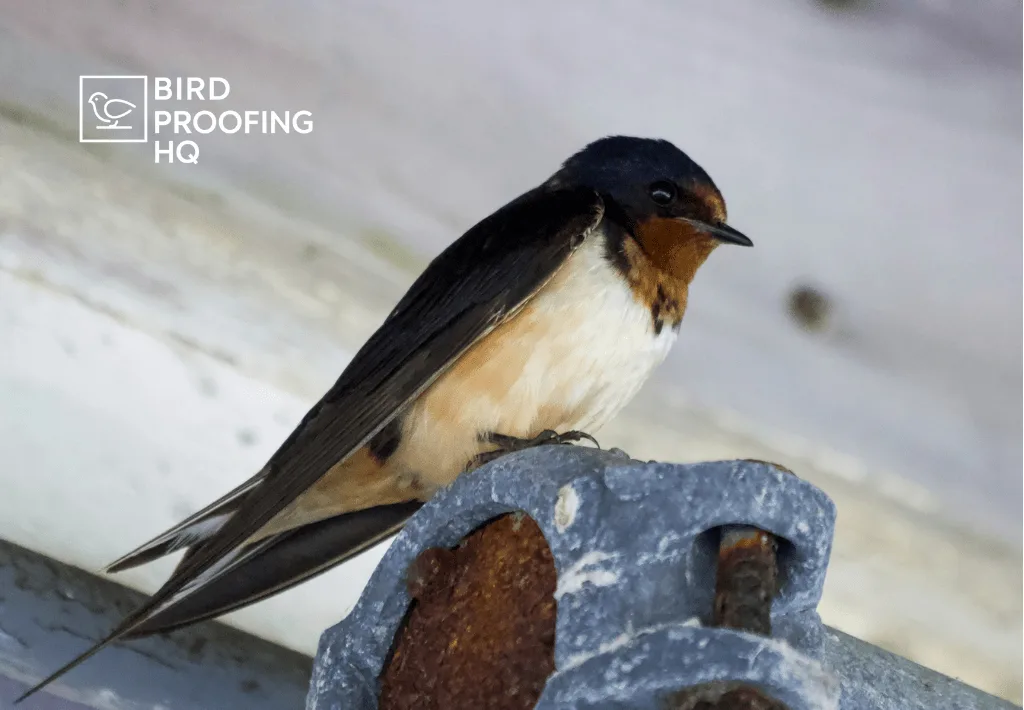
Barn swallows and cliff swallows are the two that move onto porches, and both nest on building eaves. You can tell them apart by the shape of the mud.
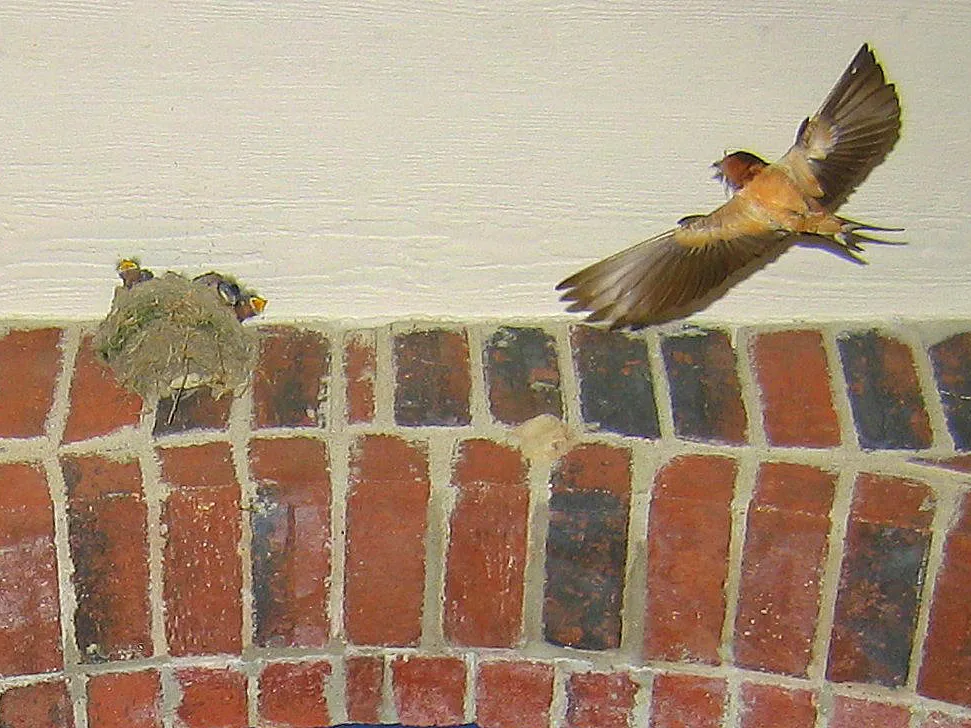
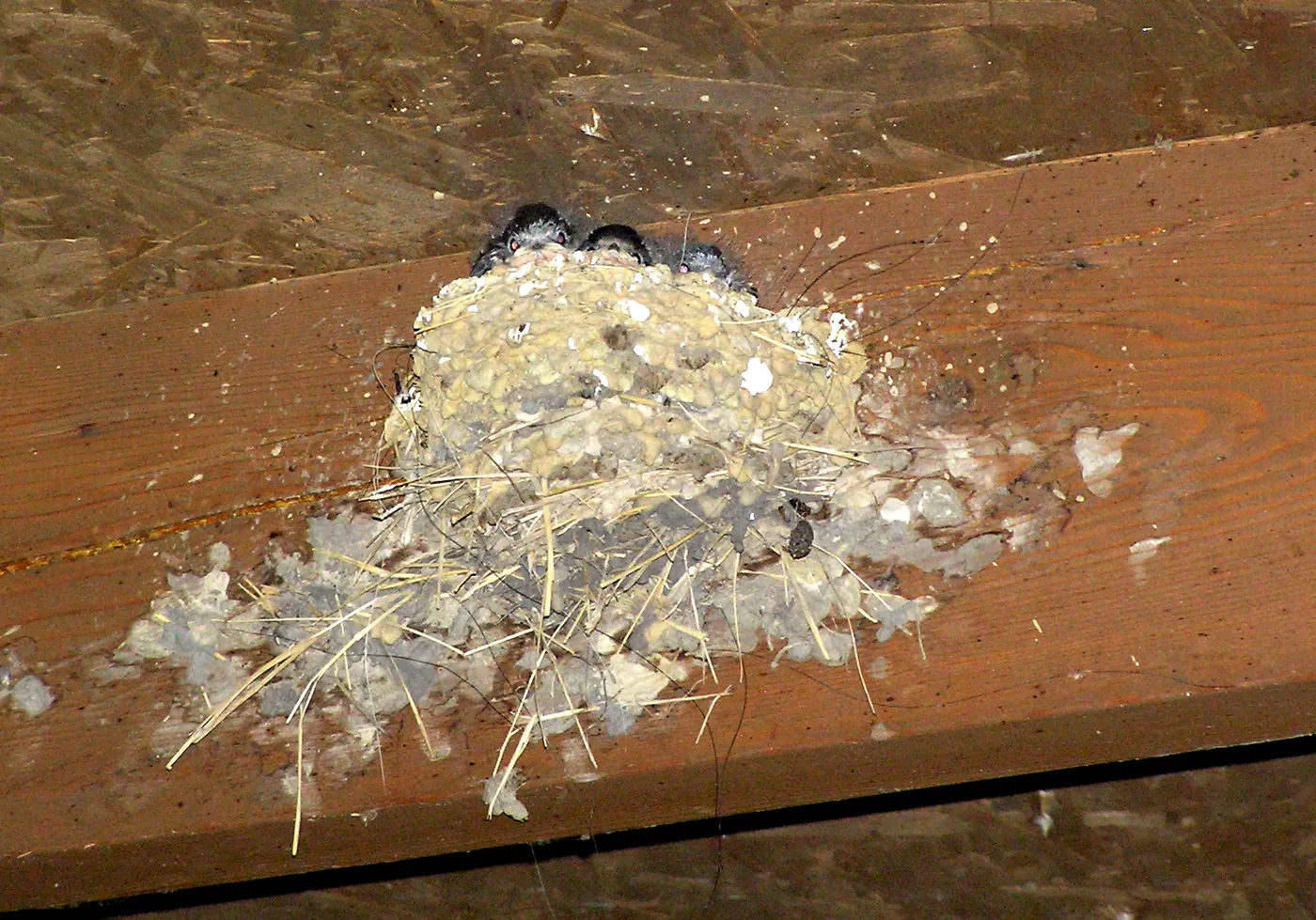
A barn swallow builds an open cup, like a small bowl stuck to a surface. Cornell describes these nests on eaves, rafters, and crossbeams, which is why a porch light can be such a good match. The fixture gives the bird a flat shelf with a roof over it, and the wall behind the shelf gives the mud something to grip.
A cliff swallow builds a closed, gourd-shaped nest with a small opening, set where a wall meets an overhang, usually in a colony. If you see several closed mud nests in a row along the top of a wall, you likely have cliff swallows, and the job is bigger than one light fixture.
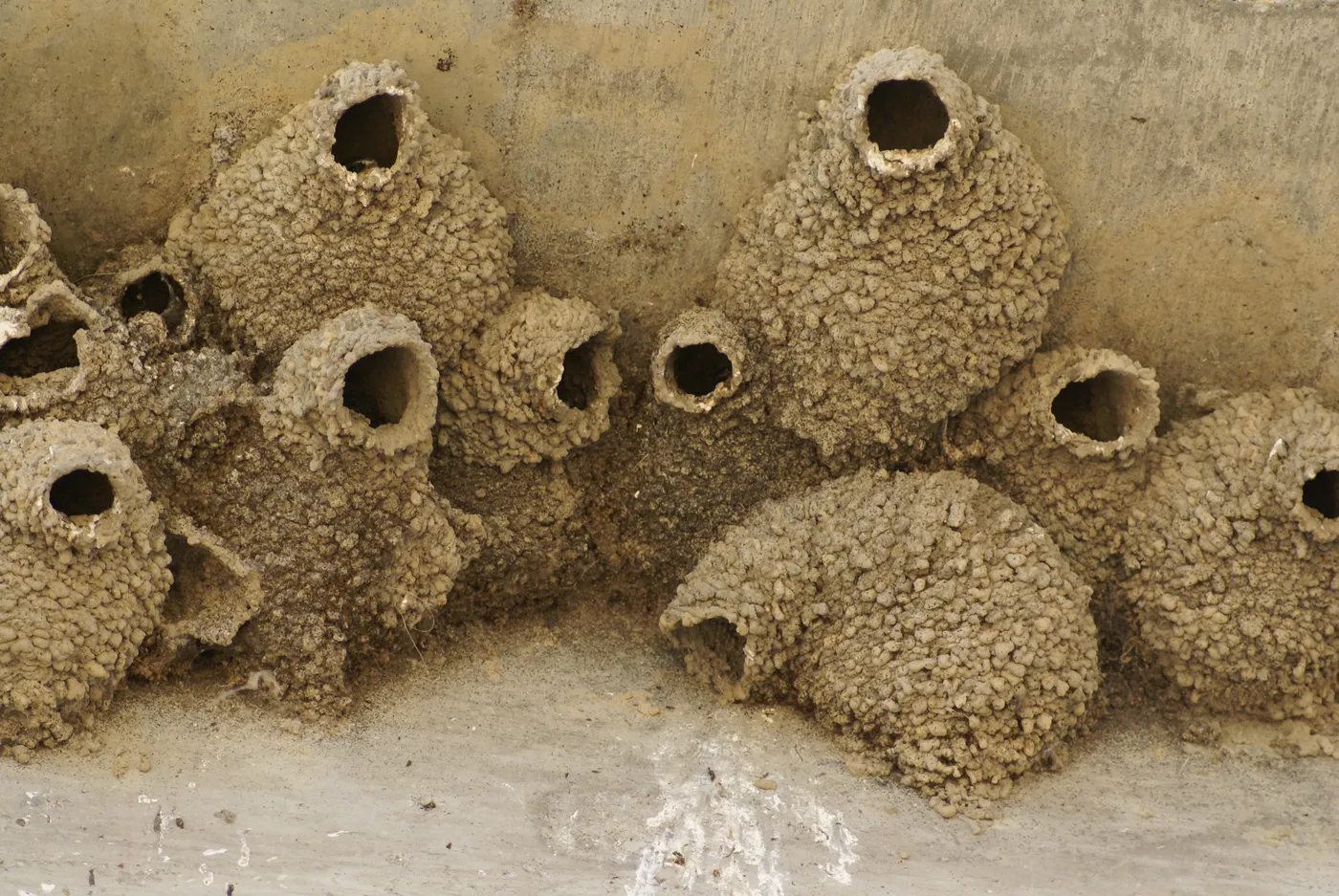
Mud that doesn’t fit either shape could belong to a phoebe or another bird. The mud nest identification page walks through those look-alikes. The steps below apply to barn and cliff swallows.
Is Anyone Using the Nest?
This decides everything else, because active nests with eggs or chicks may not be touched or destroyed without a permit. Swallows are protected migratory birds, and the protected-status page covers the legal side in more detail.
You can check without touching anything. Stand back near the door and watch the nest for ten or fifteen minutes in the morning or evening, when parents are busiest. These are signs someone is home:
- An adult sits low in the cup, or flies straight to the nest and stays.
- Adults come and go with insects in their beaks.
- You hear thin chirping when a parent lands, or see small heads or beaks above the rim.
- Fresh droppings or bits of shell are collecting below the nest.
If you see none of these, the nest is not necessarily empty. Eggs sit quietly, and the parent may be away feeding.
Adults carrying mud are a different case. A nest that is still being built and has no eggs can be washed away, and the birds may need to be discouraged repeatedly. That only holds when you can clearly see it is egg-free, such as a few mud pellets or a low rim you can look straight into. You can’t see inside a cup on a light fixture above your head, and a pair that has been building for a while may already have laid eggs. A nest you can’t see into is an uncertain nest, not an egg-free one.
For an uncertain nest, the Fish and Wildlife Service says to wait until the nest is inactive. Stop and don’t touch it. Call a wildlife rehabilitator, your state wildlife agency, or a qualified bird-control professional if the uncertainty goes on.
If the Nest Is Active or Uncertain: Protect the Porch and Wait
Until the birds are done, the goal is a porch that stays usable. Keep the entry route open. Don’t hang netting, tape, or anything else that stops the parents from reaching the nest.
Droppings are the main complaint. Washington’s wildlife agency says a catch board under an occupied nest can manage them, as long as it doesn’t interfere with access and you clean it. A simpler version is newspaper on the ground below the nest, or a cover over a car parked there. Replace the paper and rinse or wipe the board regularly so it doesn’t turn into a smelly mess. Wear gloves, and wash your hands after cleaning.
Foot traffic is the other problem. Parents may flush off the nest when someone walks right under it, which is stressful for them and a little startling for you. If you can, use another door for a while, or at least keep the visits short and quiet.
If the nest sits on a light fixture, leave the fixture as it is. Don’t pull, rewire, or move it while birds may be using the nest.
Once It’s Empty: Clean Off the Attachment Point
Only treat the nest as inactive after you’ve watched long enough to be confident the birds are gone, and that nothing remains inside. If you’re not sure, wait. Federally, an inactive empty nest can be destroyed without a permit, but state rules can be stricter, so look up your state wildlife agency’s rules before you start.
The reason to do this promptly is that old nests and mud traces are best removed before birds arrive, and mud traces are the part people miss. A rough patch of dried mud can make the spot look ready for the next pair.
For a small nest, the CDC advises avoiding dry dust and dampening the material during potentially dusty cleanup. Wear gloves and an N95 respirator, then work in this order: wet the nest, scrape it off, bag it, put the bag in the trash, and scrub off whatever residue is left on the wall or fixture. Large accumulations of droppings are a job for professional cleanup, and a lot of mud on a high eave may mean it’s time to bring in someone equipped to work at height.
Don’t assume the date. Swallows in your area arrive on their own schedule, so the practical rule is to do the cleaning and install the barrier before birds show up and start building. If they’re already carrying mud, stop and go back to the section above. Remove or block the spot only if you can confirm the nest is egg-free and still under construction. If you can’t, leave it alone.
Stopping a Return at the Porch Light
The fix at a porch light is removing the flat shelf. A swallow needs something level to build on, so a smooth, sloped cover over the top of the fixture or the ledge behind it takes that away. Smooth flashing or plastic can remove the attachment point, which gives mud less to hold onto.
Two cautions matter more than the cover itself:
- Don’t trap heat. A light needs air around it, so a cover that blocks ventilation can overheat the fixture and become a fire risk.
- Don’t alter the fixture’s wiring or housing yourself. If the guard needs to be attached to the fixture or the fixture needs to be changed, an electrician should do it.
A cover that sits on the ledge and slopes away from the wall leaves the fixture itself alone, and it’s the safer idea. Keep it clear of the fixture’s vents and hot surfaces, and put it up only when the nest is gone and before the birds return, or while a nest is clearly egg-free and still being built.
Stopping a Return Under the Eave
Eaves need something different, because the corner between the wall and the overhang is what gives swallows their anchor. There are two ways to deal with it.
A smooth barrier fills or slopes the corner so mud can’t get a grip. Washington’s wildlife agency describes properly installed barriers that remove the attachment point, and it says to install them only before birds arrive, during egg-free construction, or after the birds leave.
Netting works for a larger open eave, but it has to be taut. Low, reachable eaves may be a DIY job only if you can install it taut and safely. Wrinkles or folds can trap birds, and a sagging pocket in the middle is an easy way for netting to go wrong. If you can’t pull it tight across the whole run, don’t hang it.
Eaves above a porch roof or second story are high work, so hire a professional, and ask how they keep the netting tight and how they check for birds before they close anything off. The broader guide to getting rid of barn swallows and the page on birds nesting in eaves cover wider exclusion jobs.
What to Skip
Sprays and similar products are a waste. The Fish and Wildlife Service says repellents are ineffective and no toxicants are registered for swallow control. Poison is also a legal and safety problem, and it is not an option.
Fake owls, plastic snakes, and anything else meant to scare birds are unlikely to work. Dangling streamers and CDs fall in the same category, and they add clutter to your porch. Loose netting is the worst of the group, because birds can get caught in it.
Quick Decision Checklist
- Is the mud an open cup or a closed gourd? Open is probably a barn swallow. Closed and grouped is probably cliff swallows.
- Are adults sitting on the nest, or feeding young? Treat the nest as active and leave it.
- Is it a bare rim of mud, and can you clearly see it holds nothing? It’s an egg-free nest under construction, which can be washed away. Check your state’s rules first.
- Can’t tell, or can’t see inside? Treat it as uncertain. Don’t touch it. Wait, or call a wildlife rehabilitator, your state wildlife agency, or a qualified bird-control professional.
- Active or uncertain nest: keep access open, catch droppings, avoid the spot where you can, and leave the fixture alone.
- Confirmed empty: check your state’s rules, scrape the mud and traces, then install a smooth cover or taut barrier before birds return.
- Porch light: don’t block ventilation, and call an electrician for anything that touches the fixture.
- High eave: call a professional.
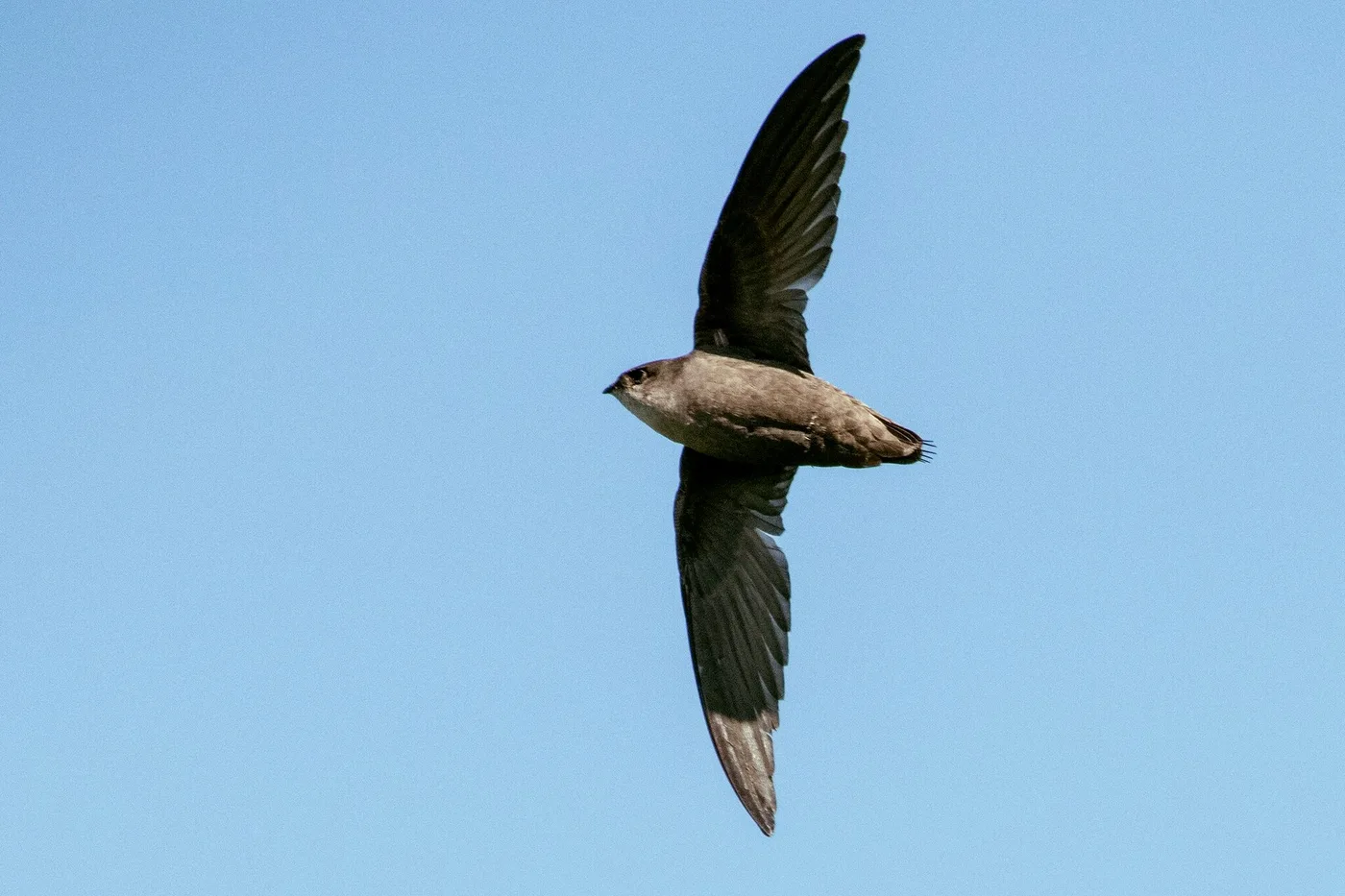
Images: Barn swallow with nest by Sarum blue, CC BY-SA 3.0. Baby barn swallows by Montanabw, CC BY-SA 4.0. Cliff swallow colony by Ron Hinchley, CC BY-SA 3.0. All via Wikimedia Commons.
Frequently Asked Questions
Can I knock down a swallow nest on my porch light?
Only if you are sure it is empty. The U.S. Fish and Wildlife Service says active nests with eggs or chicks may not be touched or destroyed without a permit, while an inactive, empty nest can be destroyed without a federal permit. An egg-free nest that is still under construction can also be washed away. State rules can be stricter, so check them first. If you can't tell whether there are eggs or young, leave the nest alone, wait and watch, or ask a wildlife rehabilitator, your state wildlife agency, or a qualified bird-control professional.
How do I keep swallow droppings off my porch?
Catch them instead of moving the nest. Lay newspaper or a tray below it and swap it out often, or set a catch board under the nest as long as it doesn't get in the way of the birds or of anyone using the door. Cover a car or porch furniture that sits below. Clean up regularly so droppings don't build up.
How do I tell a barn swallow nest from a cliff swallow nest?
Look at the shape. A barn swallow builds an open mud cup on an eave, beam, or light fixture shelf. A cliff swallow builds an enclosed, gourd-shaped mud nest where a wall meets an overhang, and usually builds in a group. One nest alone is more likely a barn swallow, and a cluster of closed nests points to cliff swallows.
When can I remove the mud and block the spot?
Once the nest is empty and the birds are done with it, and before new birds arrive and start building. A nest that is clearly still under construction and egg-free can also be washed away, though you need to be sure nothing is inside. Dates vary by species and region, so watch your own porch instead of trusting a calendar date. Nobody should seal, net, or cover a nest while eggs or young may be inside, and if you can't tell, wait.
Will a spray or a fake owl keep swallows off my porch?
No. The Fish and Wildlife Service says repellents are ineffective and that no toxicants are registered for swallow control. Washington's wildlife agency also says scare gadgets are unlikely to work. Removing the attachment point with a smooth barrier or properly installed netting is the approach those agencies describe.
Can I put netting under my eave myself?
Only if the eave is low enough to reach safely from the ground or a stable platform, you can keep the netting tight, and no birds are nesting there. Loose or wrinkled netting can trap birds. Most eaves above a porch roof or second story are better left to a professional who works at height.
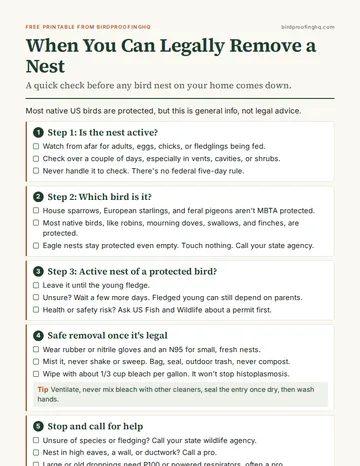
Free printable PDF
When You Can Legally Remove a Nest
A one-sheet check for active versus empty nests, which birds are protected, and what to do while you wait.
Free. We email it to you right away.