In this guide8 sections
Quick Answer
A mud nest stuck to a wall or beam in North America is usually a barn swallow's open cup or a cliff swallow's enclosed gourd with a small opening, often in a cluster.
In this article, you'll learn how to tell mud nest builders apart. We'll cover nest shape and placement, colony clues, and when to leave it alone.
Start With the Shape: Open Cup or Closed Gourd
Two questions sort out most mud nests. Can you see straight into it from below, and is it alone or part of a row?
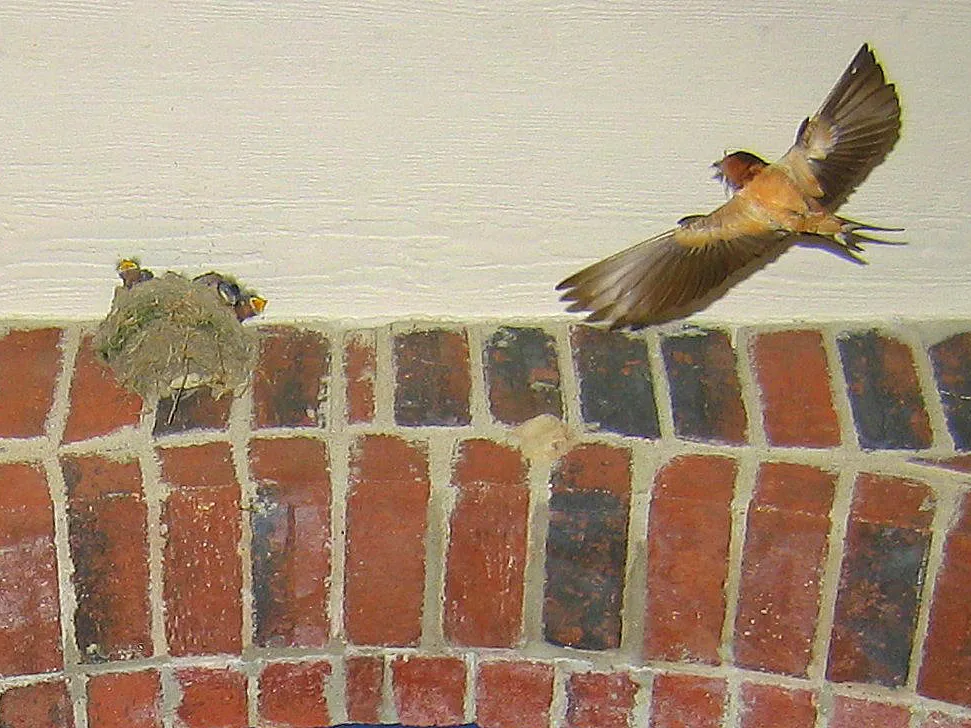
An open cup that looks like a bowl cut in half and glued to a wall is the classic barn swallow nest. Cornell’s life history for the Barn Swallow describes mud mixed with grass, shaped into an open half-cup against a wall or a full cup on a beam, about 3 inches across and 2 inches deep. It’s lined with grass and feathers, and the birds choose spots like eaves, rafters, bridges, and culverts. Usually it’s one pair at one spot.
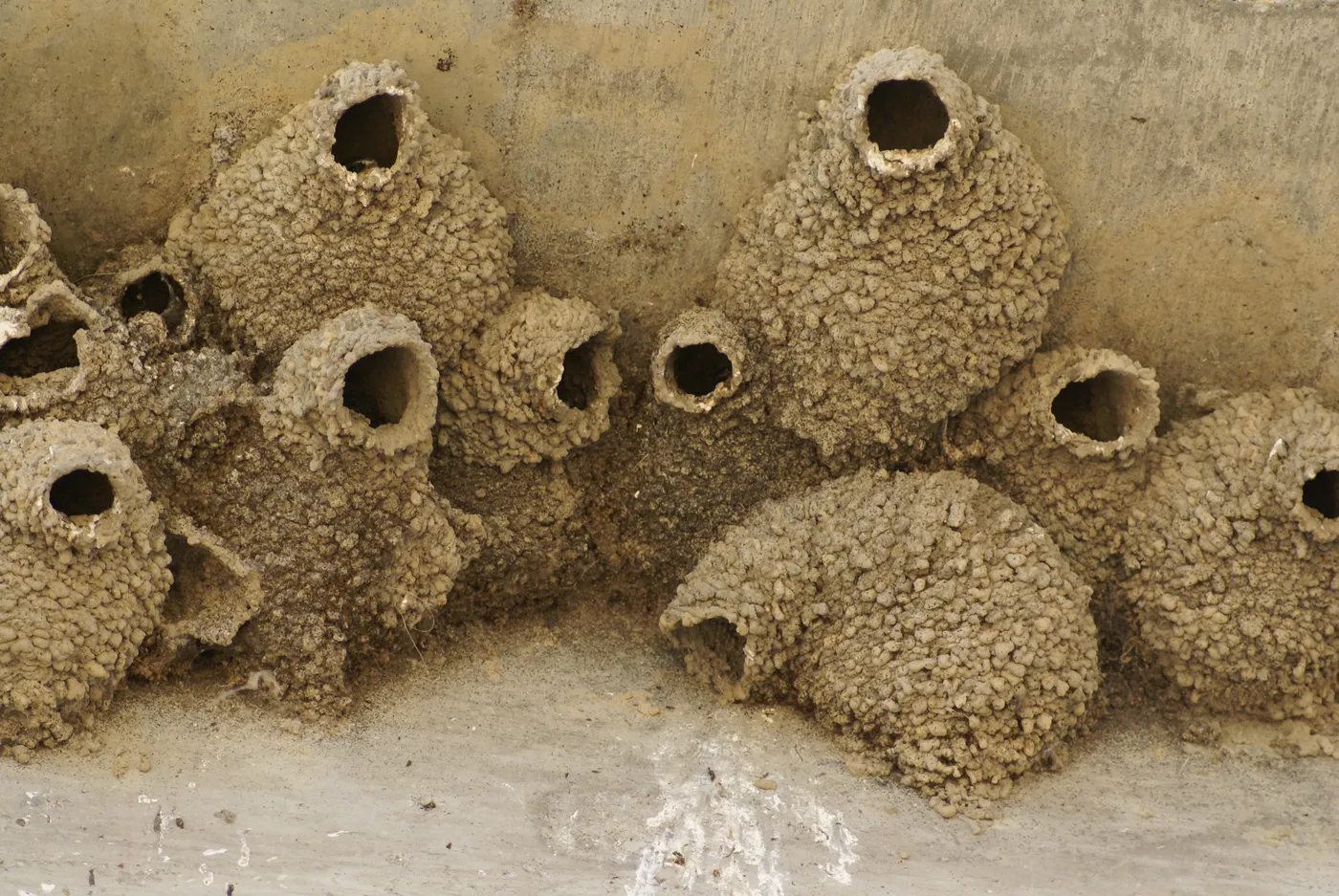
A closed nest that looks like a small jug stuck to the wall, with a narrow opening, is a cliff swallow. Cornell’s Cliff Swallow page says these gourd-shaped nests take about 900 to 1,200 mud pellets and go where a wall meets an overhang. They’re commonly built in colonies on eaves, bridges, dams, and cliffs, so a dozen jugs shoulder to shoulder under one roofline is a very strong clue.
Quick Comparison
| Nest shape | Typical placement | Grouping | Likely builder |
|---|---|---|---|
| Open half-cup or cup, mud and grass | Wall, beam, rafter, eave, bridge, culvert | Often one pair, sometimes a few | Barn swallow |
| Enclosed gourd with a small opening | Where a wall meets an overhang, eaves, bridges, dams | Usually a colony | Cliff swallow |
| Open cup with a solid mud base, plus moss and leaves | Sheltered niche under a bridge, in a barn or culvert | Single nest | Eastern phoebe |
| Grass-and-twig cup with mud inside the walls, lined with fine grass | Tree or shrub, sometimes gutters, eaves, or light fixtures | Single nest | American robin |
| Cavity or housing nest, mud only as a lip | Inside a cavity or martin house | Colony housing possible | Purple Martin |
| Closed mud nest under eaves (Old World) | Eaves and ledges in Europe and elsewhere | Often grouped | House martin |
Treat the table as a starting point. A nest alone doesn’t always prove the species, especially an old, damaged one, so look for the bird, too.
Confirming Swallows by Watching the Birds
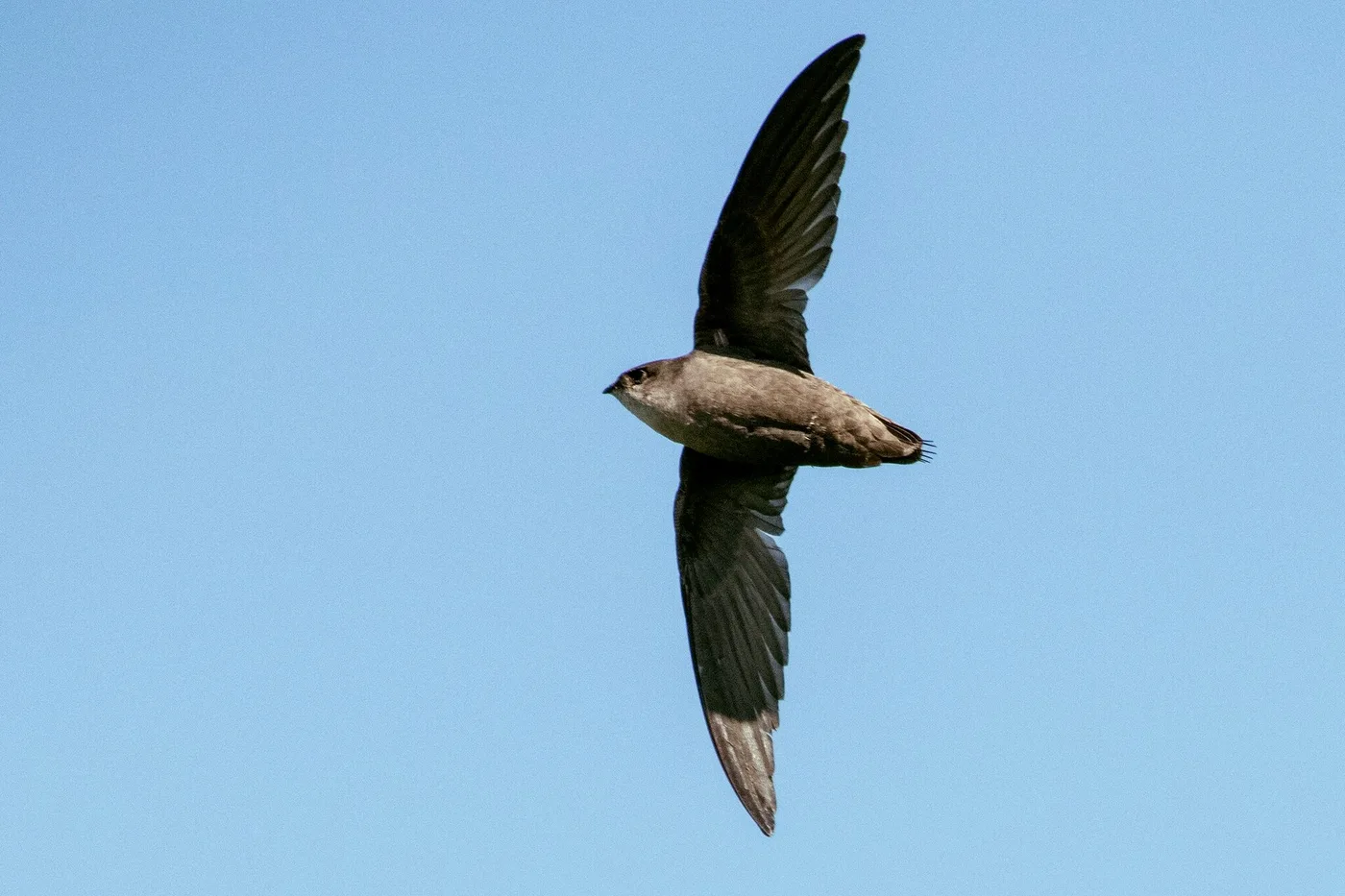
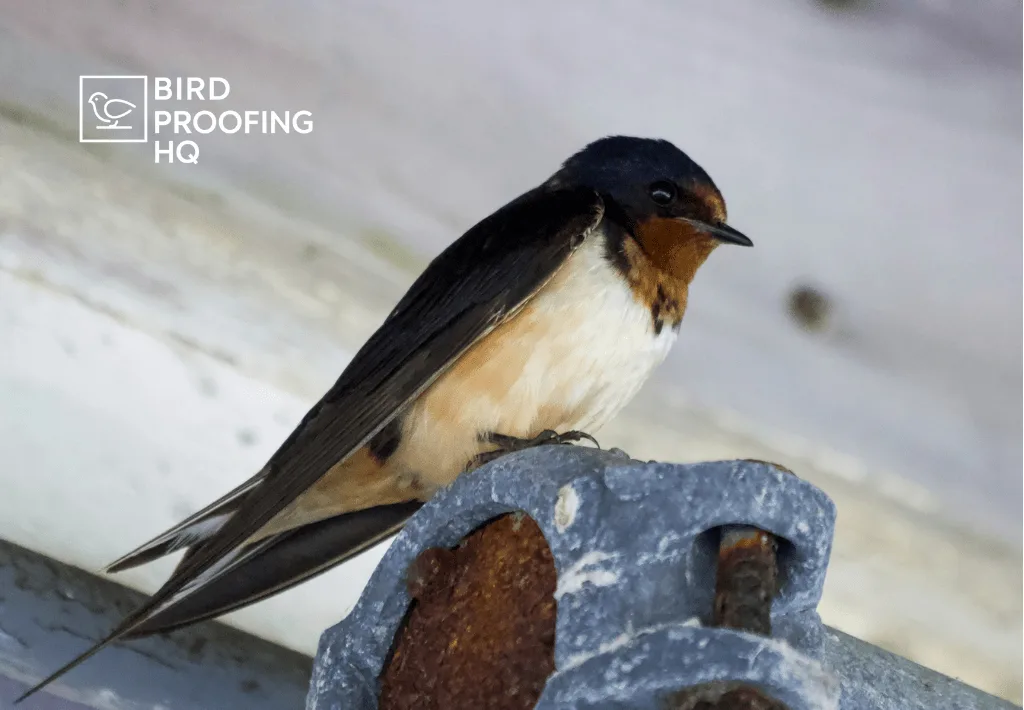
If the nest is old or damaged, the adults can settle it. Watch from a window, or from across the yard with binoculars, for 10 to 15 minutes. Barn Swallows have a deeply forked tail. Cliff Swallows have a squared tail and a buffy rump, and a pale forehead patch is common, so a bird with a squared tail and buffy rump going in and out of a gourd-shaped nest is the stronger confirmation.
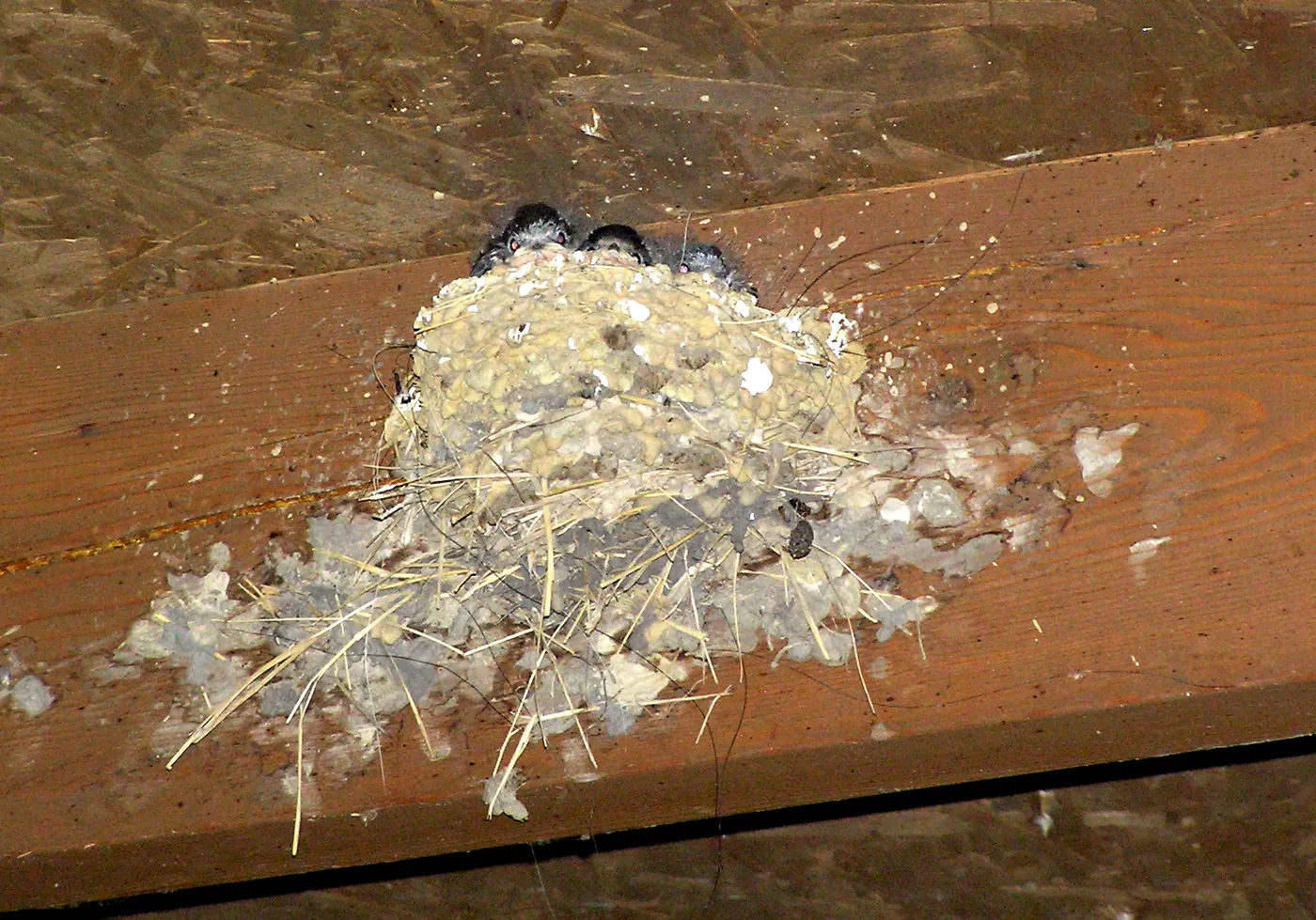
Both swallows use sheltered overhangs on buildings, so the setting alone won’t separate them. The nest shape and grouping will, and so does scale. One or two open cups over a porch light is a small job, while a long row of gourds on a commercial building is a big one. For the porch-light case, see swallows nesting on a porch.
If you’re ready to decide what to do about either, the barn swallow removal guide and the general swallow guide cover that side.
The Purple Martin Correction
Purple Martins turn up in a lot of nest searches, but they don’t build the familiar mud cup stuck to the outside of a wall. The Purple Martin Conservation Association says they use twigs, straw, bark, mud, and green leaves inside cavities or martin housing. A flat nest may have a mud lip, but that sits inside a compartment or cavity.
So a mud nest on your siding isn’t a Purple Martin’s. Martins use hollow-gourd housing (man-made gourds hung on a pole, not a mud nest shape), martin houses, or natural cavities.
House Martins Are an Old World Answer
In the UK and Europe, the mud nest under the eaves belongs to the house martin. The RSPB describes house martins building them there. That’s accurate in their range, but it’s not the usual answer in the United States. For a US house, cliff swallows are the closer match for an enclosed mud nest under the eaves.
Mud Lookalikes: Phoebes and Robins
Two common birds use mud but build something that looks different once you’re close.
Eastern phoebe. Audubon’s Eastern Phoebe entry describes an open cup with a solid mud base, plus moss, leaves, and grass. Look for it under bridges, in barns, in culverts, or in a similar sheltered niche. Moss and other green plant material worked into the cup are the main field clue, since a swallow nest is mud and grass without that green layer.
American robin. Cornell’s American Robin life history says the female presses dead grass and twigs into a cup, reinforces it with soft mud, then lines it with fine dry grass. Robins usually nest in trees and shrubs, but they also use gutters, eaves, and outdoor light fixtures. From the outside, a robin nest looks like grass and twigs. The mud is hidden inside the walls of the cup, while a swallow nest shows bare mud on the outside.
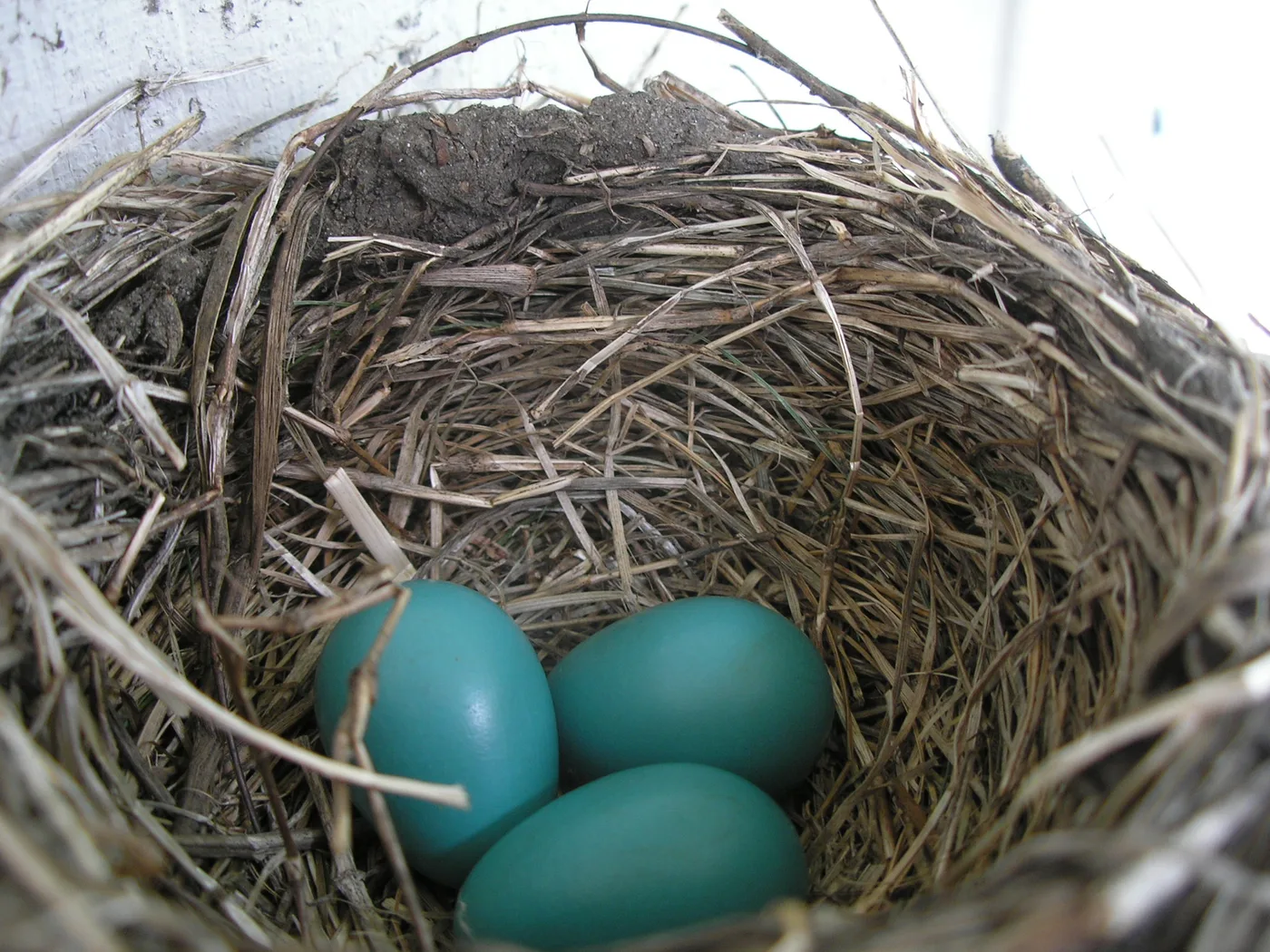
Blue eggs in a cup in a shrub point to a robin. Robins set their cup on a fork or ledge instead of plastering it to a vertical wall the way swallows do. For the wider family of nest types, the types of bird nests page lays out cups, cavities, and platforms side by side.
Leave It Alone or Look Closer
Once you have a likely builder, the next move is the same for all of them: stay back and watch. Don’t touch the eggs or chicks, and don’t poke at the nest to check inside. A few minutes of watching from a distance may show adults going in and out, which is a good sign the nest is active. Seeing nothing during one short watch does not prove the nest is empty, since adults can be away feeding. Check again at different times of day, and assume it’s active when you’re unsure.
The legal reason is real. The U.S. Fish and Wildlife Service says it’s illegal to destroy a migratory bird nest that contains eggs or chicks, or one with young still dependent on it. Homeowners are told to wait until a nest is inactive, and permits to remove an in-use nest are limited. Native birds like these generally fall under that rule, and the barn swallow protection guide explains how it applies to barn swallow nests. An abandoned nest is a different situation from an active one, but when you can’t tell which you have, assume it’s active.
Look closer if the nest sits above a door, over a car, or on a surface where droppings collect. Those are good reasons to plan for next season, not to disturb this one. For timing, tools, and what’s allowed, go to the bird nest removal guide. If the nest is tucked under a roofline, the guide to birds nesting in eaves covers that specific spot.
Images: Barn swallow with nest by Sarum blue, CC BY-SA 3.0. Cliff swallow colony by Ron Hinchley, CC BY-SA 3.0. Baby barn swallows by Montanabw, CC BY-SA 4.0. Robin cup nest by Dima Sergiyenko, CC BY-SA 4.0. All via Wikimedia Commons.
Frequently Asked Questions
What bird builds an open mud cup on a wall or beam?
Most often a barn swallow. Its nest is a half-cup stuck against a wall or a fuller cup set on a beam, about 3 inches across and 2 inches deep, lined with grass and feathers. An Eastern phoebe is another common builder of an open cup with a mud base, but it adds moss and is built in a sheltered niche, such as under a bridge or in a barn.
What bird builds an enclosed mud nest with a small hole?
A cliff swallow. Its gourd-shaped nest is built from roughly 900 to 1,200 mud pellets where a wall meets an overhang, and the nests are usually packed together in a colony. A single enclosed nest is still a cliff swallow clue, but colonies are the stronger sign.
Do Purple Martins build mud nests?
Not the kind you see plastered to a wall. Purple Martins nest in cavities or martin housing and use twigs, straw, bark, mud, and green leaves. A flat nest may have a mud lip, but it sits inside the cavity or compartment, not on the outside of your building.
What bird builds a mud nest under the eaves in Europe?
The house martin. It builds a closed mud nest under eaves and ledges across the Old World, including the UK. It is not the usual answer in North America, where cliff swallows fill that role.
Is a robin nest a mud nest?
Not from the outside. A robin presses dead grass and twigs into a cup, reinforces it with soft mud, then lines it with fine dry grass. The mud is hidden in the walls, so the nest looks like grass and twigs. It is usually in a tree or shrub, though robins also use gutters, eaves, and light fixtures.
Can I remove a mud nest from my house?
Only once it is inactive. It is illegal to destroy a migratory bird nest that holds eggs, chicks, or young that still depend on it, and permits for removing an in-use nest are limited. Watch from a distance until the birds are gone, then see the removal guide for what to do next.
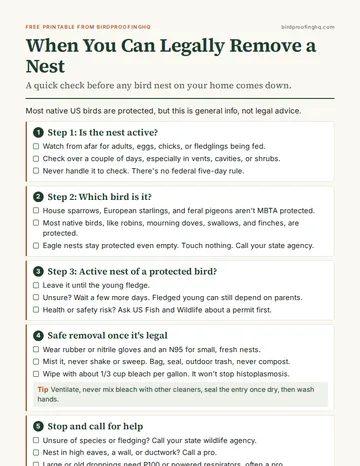
Free printable PDF
When You Can Legally Remove a Nest
A one-sheet check for active versus empty nests, which birds are protected, and what to do while you wait.
Free. We email it to you right away.