In this guide6 sections
Quick Answer
No, there's no independent research showing woodpecker deterrent paint stops woodpeckers. A Cornell housing survey found less damage on painted than stained wood, but fixing why the bird is pecking matters most.
In this article, you'll learn whether woodpecker paint is worth buying. We'll cover what the research shows, finding the cause, and repainting the right way.
Does Woodpecker Deterrent Paint Work?
No one has shown that it does. An extension expert answering a homeowner’s question said some products are mixed into paint and others are a topical treatment over paint you’ve already applied. He talked with several paint companies, and none could tell him whether the products are effective. He couldn’t find any information about effectiveness either.
The marketing is easy to find, though. One seller, Bird B Gone, describes its BeakGuard product as a woodpecker paint and elastomeric acrylic finish (a stretchy, weather-resistant coating) that uses “taste-aversion technology.” The seller says it applies like latex paint and recommends two coats at about 180 square feet per gallon.
Those are the seller’s marketing claims, not test results. Two coats across a whole side of a house is a lot of product to put on something nobody has independently tested, and nothing in the evidence justifies buying it on the marketing alone.
What the Research Says Paint Actually Does
The strongest evidence points at ordinary paint, not special paint. A Cornell study of houses near Ithaca, New York found that the chance of woodpecker damage was:
- 72% for stained wood siding
- 29% for painted wood siding
- 10% for non-wood siding
The worst case was a stained house in a heavily wooded yard, at 97%. Siding type mattered too, with grooved plywood hit hardest (73%) and shakes next (60%). Because the study found an association rather than proof that paint itself prevents damage, treat these figures as a guide to where risk is highest, not a guarantee. The authors recommend skipping stain sealants, especially earth tones, on wooden houses in lightly to heavily wooded yards. The Internet Center for Wildlife Damage Management gives the same advice for earth-tone-stained houses in wooded areas.
So if your house is stained and getting hit, switching to ordinary paint is a reasonable choice.
Find Out Why the Woodpecker Is Pecking First
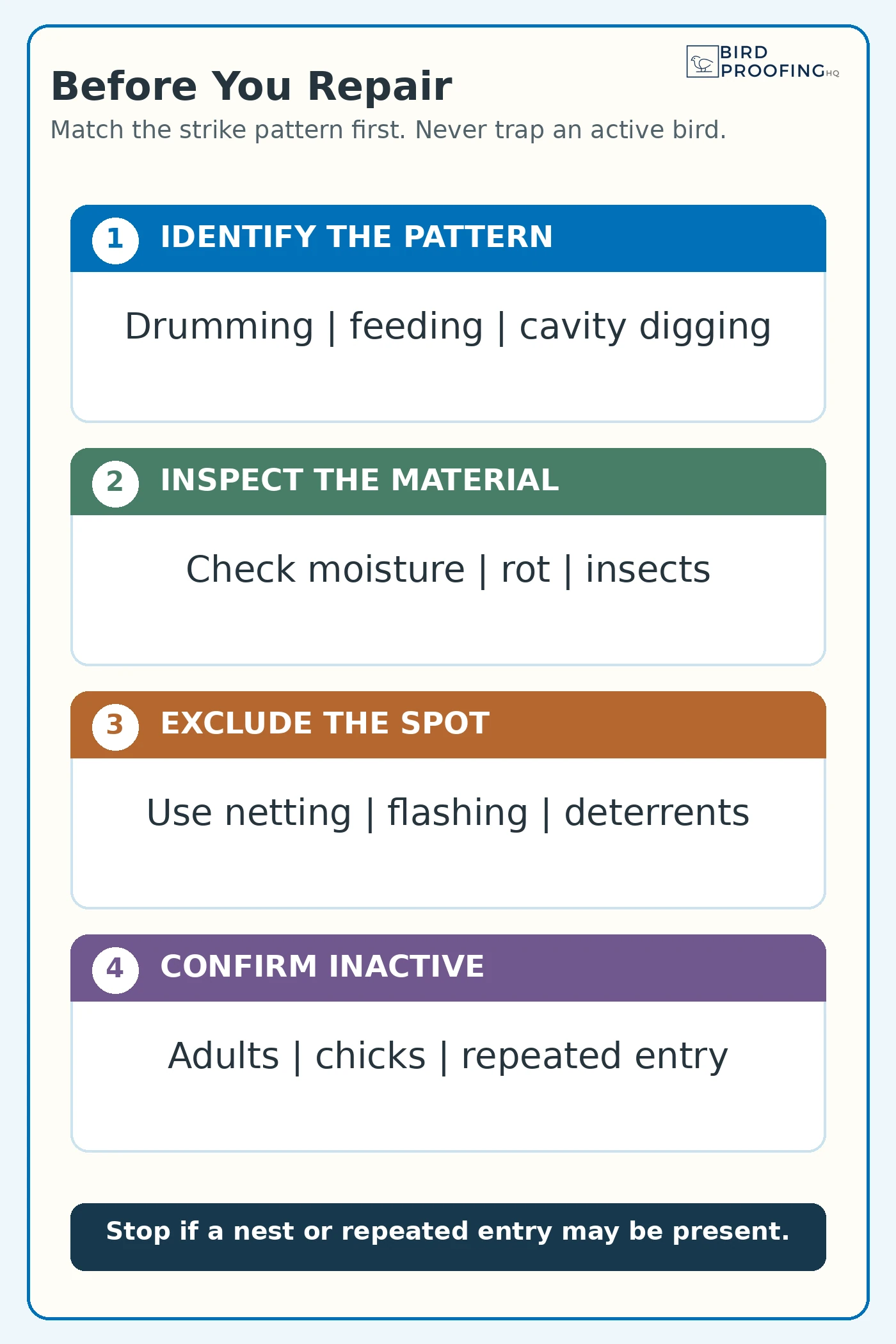
Paint can’t fix the reason behind the pecking, and the reasons differ. University of California IPM explains the main building-conflict causes:
- Drumming to claim territory or attract a mate.
- A nest or roost cavity.
- Feeding on insects in the siding.
- Storing acorns. Acorn Woodpeckers do this.
The insect case is different, because the bird is after what lives in the wood. If bugs are living in the wood, the bird keeps coming back for them, and you may need an exterminator. Repainting over an active infestation leaves the food source in place. If you aren’t sure which of the four you have, why woodpeckers peck wood goes through the signs in more detail.
What Works Better Than a Paint Additive
In a 2007 Cornell study, reflective streamers eliminated damage at half of 16 test sites. Plastic owls and recorded distress calls did not provide lasting control. Nothing worked every time, and only the streamers worked with any consistency.
When a bird keeps returning to one spot, physical barriers are more dependable. Before you flash, net, or fill any hole, watch it and confirm it has no bird, nest, eggs, or young inside. If it may be active, or you can’t tell, leave it open and contact your state wildlife agency or a licensed wildlife-control professional.
- Netting. It has to be taut and held at least 3 inches from the siding.
- Metal flashing. Cover the damaged area with aluminum flashing or metal sheathing and paint it to match the siding.
- Prompt repairs. Once you’ve confirmed the hole is empty, fix it quickly. Colorado State Extension says large holes should be repaired fast, because woodpeckers aren’t easily driven off once they’re established.
Skip sticky repellents such as Tanglefoot and Roost-No-More. Colorado State Extension warns they can trap or injure birds. For the full list of methods and how to combine them, see how to get rid of woodpeckers.
If You’re Repainting Anyway
Here is a practical order:
- Deal with insects first. If insects are the cause, get them treated before you cover anything.
- Fill the holes, but only once you know they are empty. Look closely and watch the hole for a while to confirm no bird is inside and that it holds no nest, eggs, or young. If it is empty, plug it with wood putty, or use flashing over bigger damage. If a bird or nest is present, or you cannot tell, leave the hole open and get the help described above before sealing it.
- Choose paint over stain. Use ordinary paint rather than stain, and skip earth-tone stain sealants if your yard is wooded.
- Treat an additive as an optional extra. If you decide to try one, don’t count on it, and keep the netting or flashing in place on the spots being hit.
One legal point governs everything here. Woodpeckers are protected under federal law, and a nest can be removed only when it holds no eggs or young. Check for birds before you close any hole, and stick to methods that don’t hurt them. If a hole may be active, or you are unsure, leave it open.
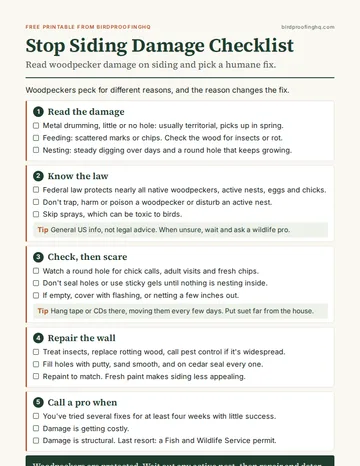
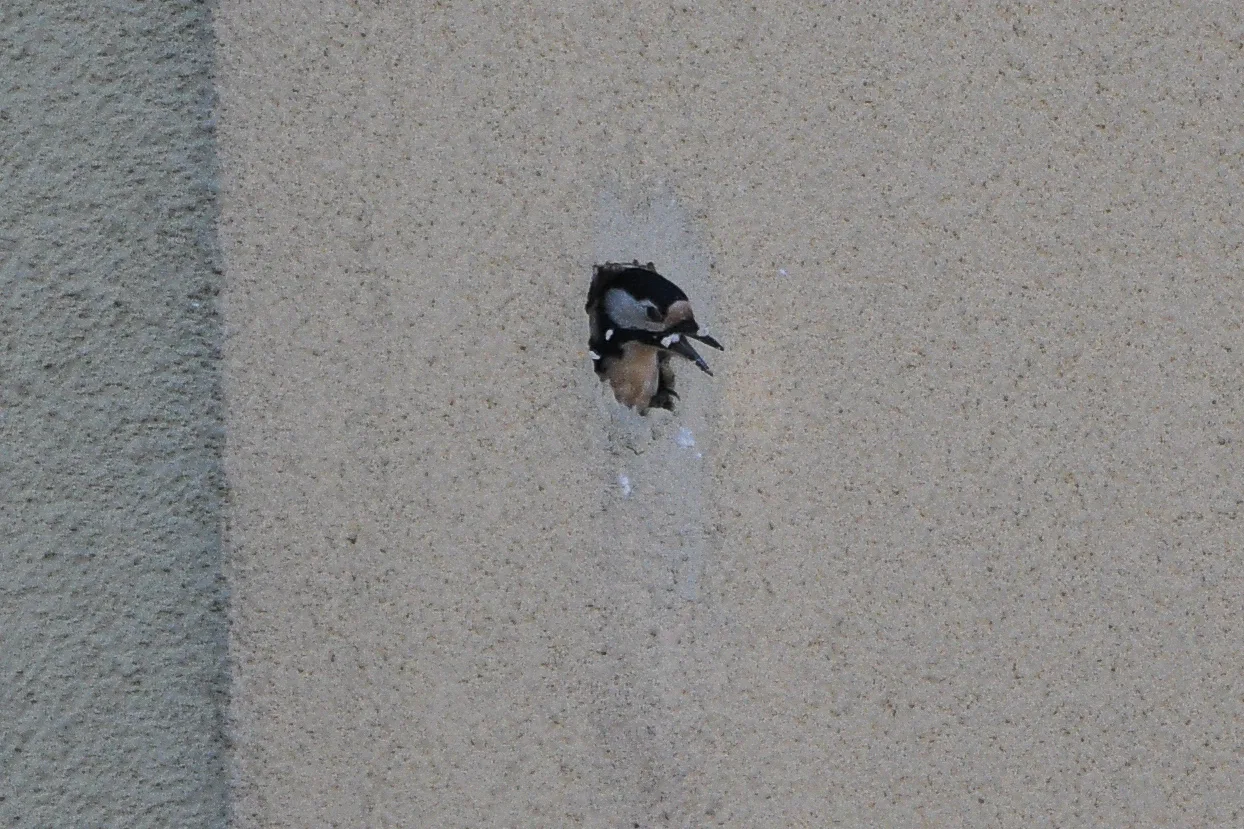
Images: Woodpecker in a house wall by David Weiss, CC BY-SA 4.0. Via Wikimedia Commons. Photo resized and converted to WebP. Infographic by BirdProofingHQ.
Frequently Asked Questions
Does woodpecker deterrent paint work?
There's no independent research showing that it does. An extension expert who asked several paint companies about these products said none could say whether they were effective. The claims you see come from sellers, not from tests.
Does painting wood siding keep woodpeckers away?
Painted houses were damaged less often than stained ones. A Cornell study of houses near Ithaca, New York found damage on 29% of painted wood houses versus 72% of stained ones. That is an association, not proof that paint itself prevents damage.
Why is a woodpecker pecking holes in my siding?
Usually for one of four reasons: drumming to claim territory or attract a mate, digging a nest or roost hole, feeding on insects living in the wood, or storing acorns.
What actually stops woodpeckers from damaging a house?
Fix the cause first, then add physical protection. If insects are the draw, deal with them. Before you put taut bird netting (set at least 3 inches from the siding) or metal flashing over a damaged spot, confirm the hole holds no bird, nest, eggs, or young. If you're unsure, leave it open and contact your state wildlife agency or a licensed wildlife-control professional. Reflective streamers stopped damage at half of the test sites in a Cornell study.
Is it legal to harm a woodpecker that's damaging my house?
Harming or killing a woodpecker is illegal without the required permit. Colorado State says lethal control requires a federal permit. Woodpeckers are protected under federal law, and a nest can be removed only when it has no eggs or young. Stick to deterrents and repairs that don't hurt the birds, and avoid sticky repellents because they can trap and injure birds.
Free printable PDF
The Stop Siding Damage Checklist
Read the holes, work out why the woodpecker is there, and fix your siding in the right order without breaking the law.
Free. We email it to you right away.