In this guide8 sections
Quick Answer
Woodpeckers pecking metal are usually drumming, a territory and mate signal that works because metal rings loudly, not a search for food. It's common in spring and usually harmless, but check for holes before assuming that.
In this article, you'll learn why woodpeckers drum on metal and what to do. We'll cover reading the sound, inspecting from the ground, and safe deterrents.
Why Woodpeckers Choose Metal
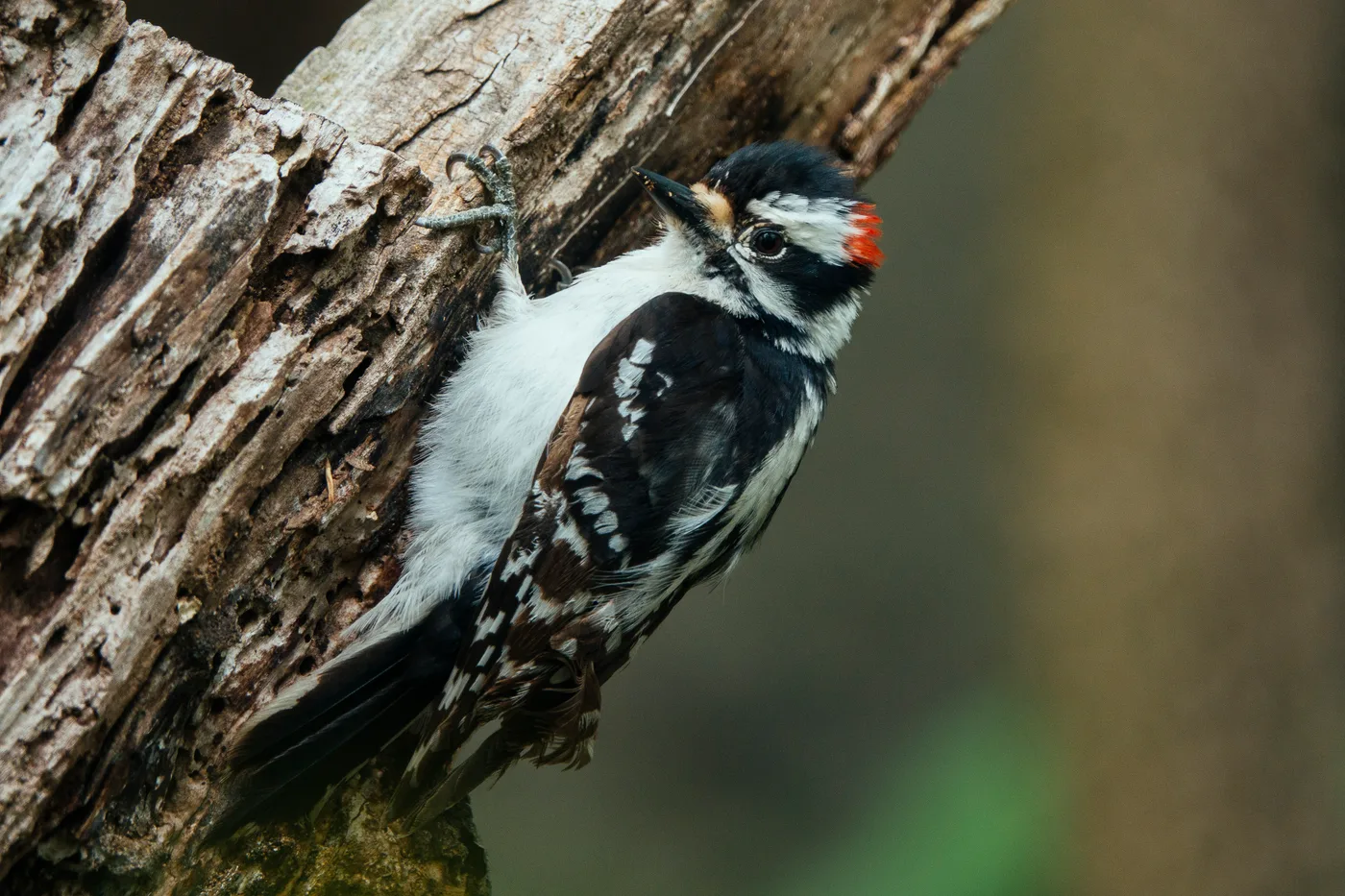
A gutter, downspout, chimney cap, or rooftop vent works like a drum. The thin metal rings, and the sound carries a long way. UC IPM notes that woodpeckers prefer loudly resonant surfaces for drumming and often pick metal gutters, downspouts, chimney caps, and rooftop ventilators. Both males and females do it.
The point is the noise. UC IPM describes this rhythmic tapping on hard surfaces as breeding behavior used to proclaim territory, and Colorado State Extension says drumming attracts mates and establishes or defends territory. A bird that finds your chimney cap rings louder than any tree on the block has found a better megaphone, and that’s about all it means.
That also answers the insect question. Rapid tapping on bare metal does not by itself establish an insect problem in your house. Insects come into the picture only when the marks are in wood, which we’ll get to below. For the broader picture of why these birds peck wood, trees, and cavities, see why woodpeckers peck wood.
Reading the Sound and the Marks
Sound and marks together tell you more than either one alone. Use this table as a starting point, and keep in mind that a bird can change behavior from one week to the next.
| What you hear or see | Likely behavior | Next move |
|---|---|---|
| Fast, rattling bursts on metal, often at dawn, with pauses between | Drumming | Confirm there are no holes, then follow the response steps below |
| Dents or scuffed paint on a gutter, cap, or flashing, but no holes through the material | Drumming | Same as above. Cosmetic damage is common |
| Rows of small holes in wood trim, fascia, or siding | Feeding | Inspect the wood for moisture or insects, and see repairing woodpecker holes in siding |
| A larger round hole that grows over several days | Nest or roost cavity | Stop and watch before you do anything. Don’t seal it |
Drumming on resonant metal generally causes little significant damage, while holes, furrows, or excavation point to another behavior, according to Connecticut DEEP.
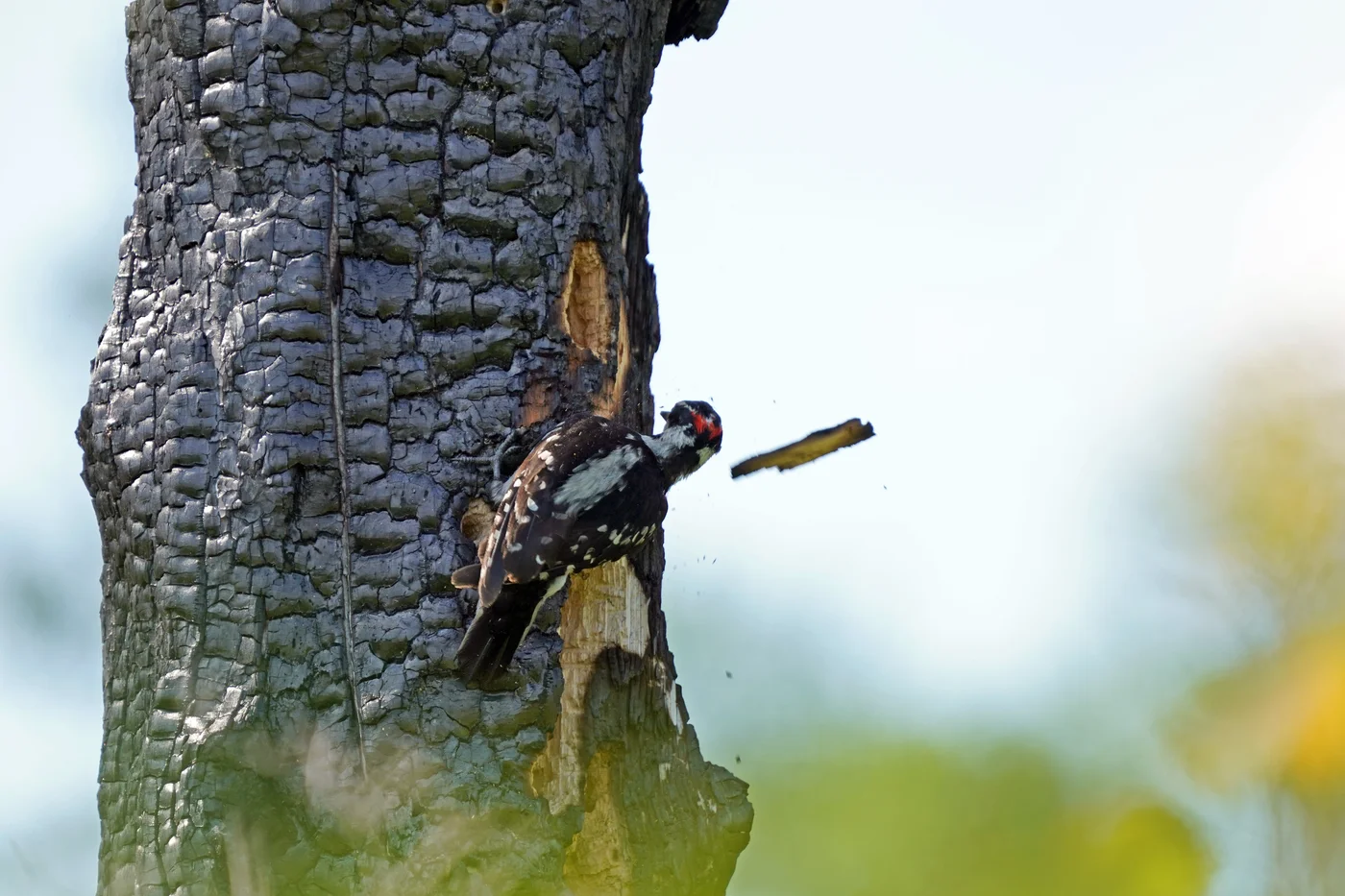
The photo above shows what digging looks like on wood. It’s not metal drumming, and it’s the contrast to keep in mind. Drumming is loud and leaves a surface mostly intact. Excavating throws chips and leaves an opening.
When It Happens
Drumming is mainly a spring behavior, most common in the early morning and late afternoon, and the same bird may return to the same spot at the same hour for days. Expect it to last several weeks, as Connecticut DEEP describes. If a bird started yesterday, it probably won’t be gone by tomorrow without help, and it probably won’t last all summer either. In Colorado it usually ends by July 1, but treat that as a regional pattern and not a deadline, since a mild climate or a late nesting season can stretch it.
Inspect From the Ground First
You don’t need a ladder to learn most of what matters, and you shouldn’t climb one for this. Walk around the house in the morning when the bird is active and look at each of these spots from the ground:
- The metal itself. Look for dents, scuffed paint, or bright scratches along the gutter, downspout, chimney cap, flashing, or vent hood. Scuffs or light marks, together with rapid, resonant bursts of tapping, support drumming. A hole or torn metal needs a closer look and a professional repair assessment.
- Wood next to the metal. Check fascia boards, soffits, trim, and siding within a few feet. Rows of small holes, a furrow, or a growing round hole means the bird isn’t just drumming.
- Below the strike site. Fresh wood chips or sawdust on the ground or on a deck suggest active digging. Bare metal doesn’t leave chips.
- Where the bird lands. Binoculars help. Note the exact spot, because that’s where any deterrent will go. A single favorite perch matters more than the whole roofline.
- Time and pattern. Write down when the tapping starts and how long each burst runs. Rapid bursts with pauses suggest drumming.
If you find a round opening that’s getting bigger, a nest cavity may be under way. Don’t seal or repair it until you’re sure it’s empty.
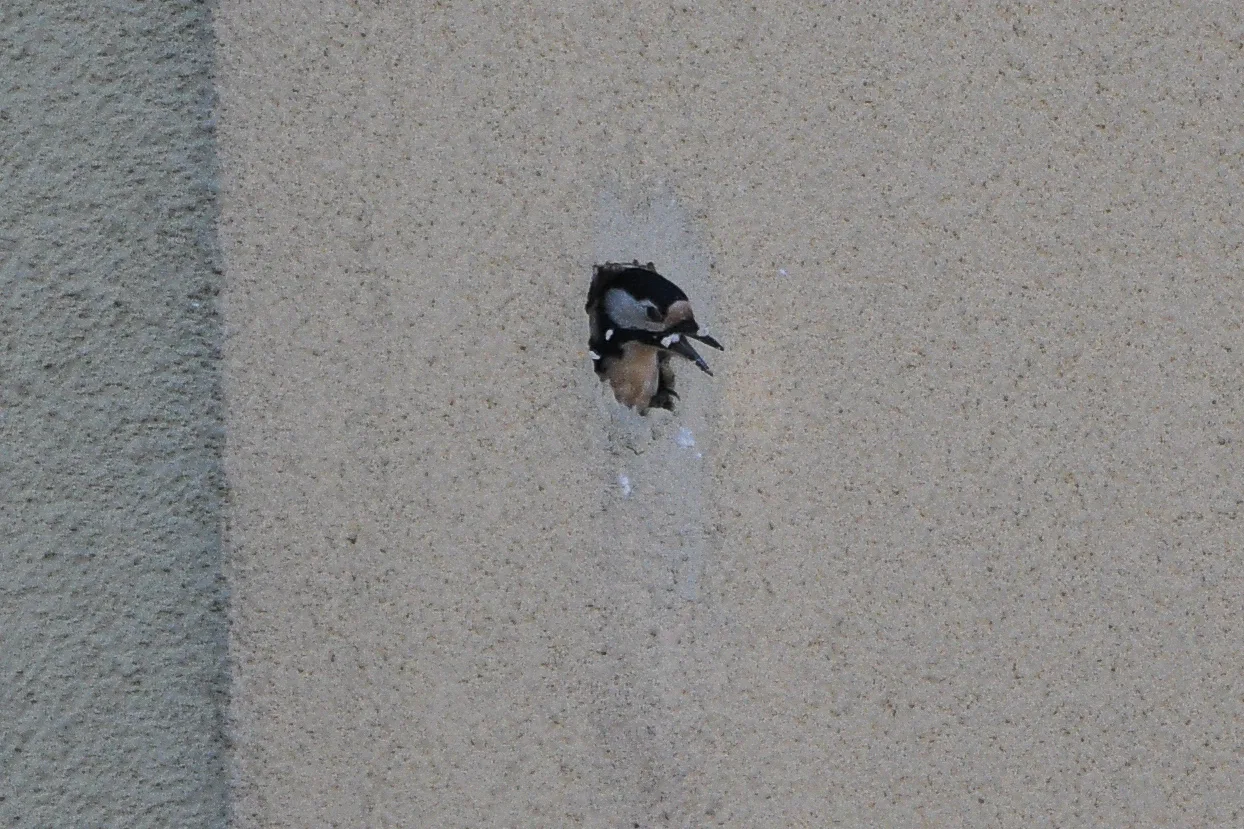
That photo shows a woodpecker at a real wall cavity. Once the activity looks like this, you’re no longer dealing with simple drumming, and the fix is repair and exclusion, not just noise control.
What to Try, in Order
Start with the gentlest step and move up only if it fails. Colorado State Extension says prompt action matters because an established bird is harder to move, so don’t wait weeks to try the first step.
Watch and Confirm
For the first day or two, just confirm the pattern. Note the surface, the time of day, and whether any holes appear. If it’s only drumming on metal and the noise is tolerable, waiting it out is a legitimate choice, since the damage is usually minor.
Hang Moving Reflective Material at the Exact Spot
If you can reach the area safely from the ground, hang reflective streamers or shiny tape so they flutter near the strike site. Cornell’s guidance on house hammering reports that reflective streamers stopped damage at about half of the sites tested, while owl models and distress calls didn’t give lasting control. Treat them as a reasonable first try, not a fix. Place them at the spot the bird actually uses, and expect to adjust.
Cover or Change the Surface, Without Blocking Anything
UC IPM says hardware cloth or chicken wire around a metal drumming surface may help, but the bird may shift to a nearby unprotected spot. That’s worth knowing before you invest in a cover. If a downspout is the target, a covered downspout may just send the bird to the gutter next to it.
Any cover has to leave the system working. Never obstruct a vent, flue, drain, or appliance exhaust. A gutter must still drain, a roof vent must still breathe, and a chimney or furnace flue must still carry exhaust out. A chimney cap can get very hot when the appliance below it is running, so don’t wrap one in anything yourself.
Call the Right Tradesperson
Some of these surfaces aren’t a homeowner’s job. If the strike site is on a steep or high roof, on a chimney, on a vent connected to a furnace or water heater, or near an antenna or electrical hardware, hire the relevant professional. That might be a roofer, a chimney professional, an HVAC technician, an electrician, or a wildlife-control professional. They can install a cover or deterrent where you shouldn’t be reaching.
What Not to Do
- Don’t use sticky gels. They can trap and injure birds.
- Don’t poison, trap, or shoot. Woodpeckers are protected, and the US Fish and Wildlife Service says native US birds, including woodpeckers, along with their nests and eggs, are covered by the Migratory Bird Treaty Act.
- Don’t disturb an active nest. If there’s a hole and any chance a bird is using it, leave it alone.
- Don’t block drains, stuff vents, or wrap a hot chimney cap. Each one trades a noise problem for a drainage, moisture, fire, or carbon monoxide risk.
- Don’t seal any opening a bird might be nesting in. Confirm it’s empty first.
When the Problem Is Bigger Than Noise
Drumming alone is mostly an annoyance. These signs mean you’ve got something else to deal with:
- A hole through the metal, or digging into the wood next to it.
- Chips on the ground that keep showing up.
- A round opening that’s getting bigger.
- Tapping that continues well past the usual spring window, with marks appearing in wood.
At that point you’re looking at feeding or cavity work, and the response shifts to inspecting and repairing the wood. If the wood is soft or damp, fix that, since the bird may be a symptom. The full set of woodpecker deterrents covers the longer plan.
Frequently Asked Questions
Why Is a Woodpecker Pecking My Metal Gutter?
Most likely it’s drumming. Woodpeckers pick loudly resonant surfaces such as metal gutters, downspouts, chimney caps, and rooftop vents to announce their territory and attract a mate, and both males and females do it. It’s typically not feeding, and it usually leaves little more than noise and scuffed paint.
Does Woodpecker Drumming on Metal Mean I Have Insects?
Not by itself. Drumming is a territory and mate signal, not feeding, so tapping on bare metal doesn’t tell you anything about insects. Insects become a question when you find rows of small holes or digging in wood trim or siding nearby.
How Long Will a Woodpecker Keep Drumming on My Roof or Gutter?
Drumming is mostly a spring behavior, often early in the day and again late in the afternoon. Expect it to last several weeks. In Colorado it usually ends by July 1, but your timing may differ by climate and species.
Will a Woodpecker Damage My Gutters or Downspouts?
Drumming on resonant metal generally causes little significant damage. You may see scuffed paint or a few dents. Holes, furrows, or digging point to a different behavior, so check from the ground for those marks, especially on wood trim, fascia, and siding near the metal.
What Is the Best Way to Stop a Woodpecker From Drumming on Metal?
Act early, because an established bird is harder to move. Hang moving reflective material, such as streamers, at the exact spot if you can reach it safely, and treat it as a first try that works at some sites and not others. Hardware cloth or chicken wire around the spot may help if it doesn’t block a vent, flue, or drain and you can reach it safely, though the bird can shift to a nearby unprotected spot. Leave chimneys, appliance vents, and high roofs to a professional.
Is It Legal to Harm a Woodpecker That’s Drumming on My House?
No. Woodpeckers, their nests, and their eggs are protected under the Migratory Bird Treaty Act. Don’t trap, poison, shoot, or harm them, and don’t disturb an active nest.
Images: Downy woodpecker on a tree by Mvrcie, CC BY-SA 4.0. Hairy woodpecker excavating a burned tree by USFWS Midwest Region, public domain. Woodpecker in a house wall by David Weiss, CC BY-SA 4.0. The Creative Commons photos were resized and converted to WebP.
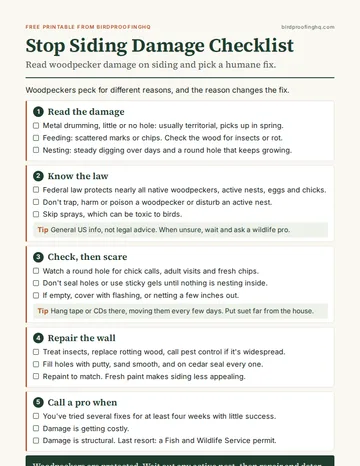
Free printable PDF
The Stop Siding Damage Checklist
Read the holes, work out why the woodpecker is there, and fix your siding in the right order without breaking the law.
Free. We email it to you right away.